
Liu Bang (256–195 BC), known posthumously as Emperor Gaozu, was the founding emperor of the Western Han Dynasty and the first ruler of the Han Dynasty (202 BC–220 AD). Rising from a humble background, he defeated powerful rivals during the collapse of the Qin Dynasty and established a political system that shaped China for centuries. His reign marked the beginning of one of the most influential dynasties in Chinese history.
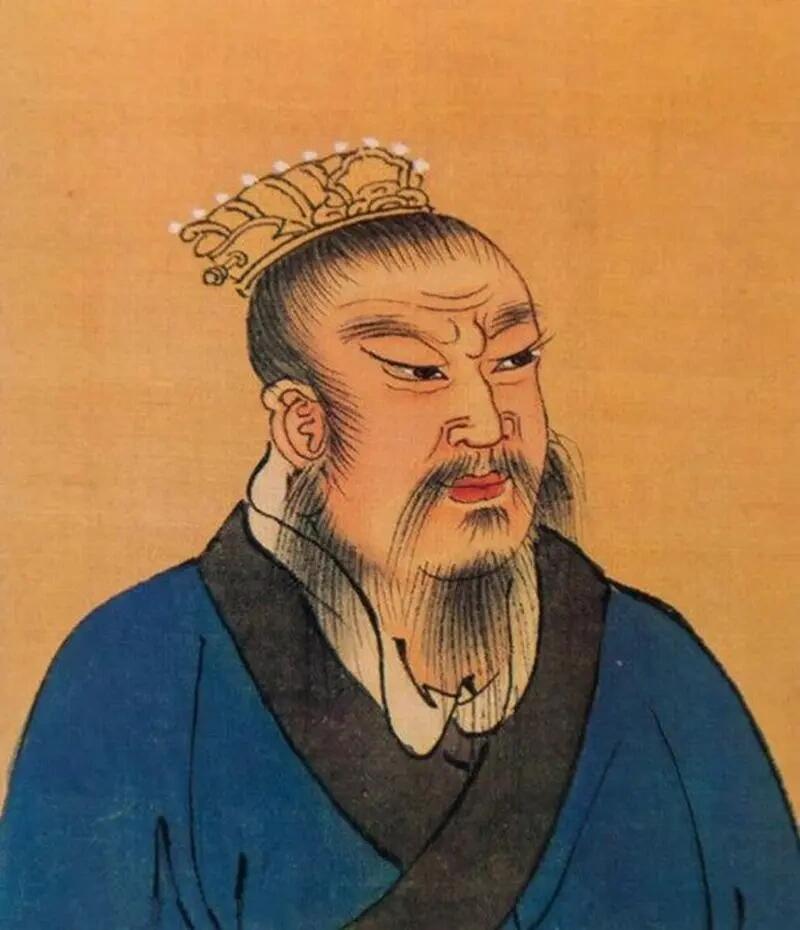
Early Life and Background
Liu Bang was born into a peasant family in Pei County (present-day Jiangsu Province). In his youth, he was often regarded as carefree and lacking ambition, spending little time on formal study. He later served as a low-ranking local official in Sishui, where he became familiar with grassroots society and local governance.
A turning point in his life came when he witnessed the grand procession of Qin Shi Huang, the First Emperor of Qin. Deeply impressed, Liu Bang reportedly remarked that only a true man deserved such power and authority. From then on, his leadership qualities and personal charisma gradually emerged.
Rebellion Against Qin and the Chu–Han Contention
In 209 BC, widespread uprisings broke out against the harsh rule of the Qin Dynasty. Liu Bang joined the rebellion and allied with other anti-Qin forces, including Xiang Yu. In 206 BC, Liu Bang led his army into Xianyang, the Qin capital, bringing the Qin Dynasty to an end.
Following the collapse of Qin, Liu Bang and Xiang Yu entered a four-year struggle for supremacy, known as the Chu–Han Contention. One of the most famous episodes during this period was the Hongmen Banquet, where Xiang Yu attempted to assassinate Liu Bang but hesitated, allowing Liu to escape with the help of his followers.
By skillfully accepting advice from capable subordinates such as Zhang Liang, and by uniting various forces opposed to Xiang Yu, Liu Bang eventually gained the upper hand. In 202 BC, Xiang Yu was defeated and committed suicide, securing Liu Bang’s final victory.
Establishment of the Western Han Dynasty
In 202 BC, Liu Bang proclaimed himself emperor and established the Han Dynasty, with Chang’an (modern Xi’an) as its capital. This period is historically known as the Western Han Dynasty.
After ascending the throne, Liu Bang abolished the harsh legal system of the Qin and replaced it with more lenient laws favored by the people. He reduced agricultural taxes, encouraged soldiers to return to farming, and focused on restoring social stability after years of warfare. These pragmatic policies allowed the economy to recover rapidly and laid a solid foundation for long-term prosperity.
Leadership Style and Historical Legacy
Although Liu Bang was not without flaws, he was widely admired for his ability to recognize talent, accept honest advice, and adapt his strategies to changing circumstances. His leadership helped transform a war-torn land into a stable empire.
By founding the Han Dynasty, Liu Bang established political and cultural traditions that endured for more than four centuries. The term “Han people” and Han culture both trace their origins to the dynasty he created, highlighting his lasting influence on Chinese civilization.
Changling Tomb: Mausoleum of Liu Bang
Changling Tomb, the burial site of Liu Bang and his empress Lü Zhi, is located north of modern Xi’an and east of Xianyang. Built on elevated ground, the mausoleum complex once formed part of the imperial landscape of the early Han period. Today, it remains an important historical site for understanding Western Han royal tomb architecture.
Historical Significance of Liu Bang
Liu Bang’s journey from a commoner to emperor remains one of the most remarkable success stories in Chinese history. His ability to unite people, restore order, and govern with flexibility ensured the survival and success of the Han Dynasty, making him one of China’s most influential emperors.