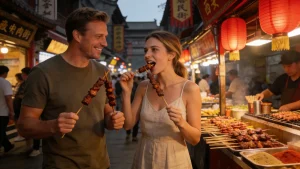
If you have only one meal in Xi’an, it must be Roujiamo . Often dubbed the “Chinese Hamburger,” this street food staple is arguably the world’s oldest sandwich, with roots tracing back over 2,200 years to the Warring States period. While it shares a basic structure with the Western burger—meat inside bread—the soul of Roujiamo lies in its ancient braising techniques and its “shatteringly” crispy bun.
Roujiamo is the cornerstone of any Xi’an culinary tour. To see how this dish fits into a broader 3-day exploration of the Terracotta Warriors and Ancient City Walls, be sure to consult our master guide.
The Name: “Meat Sandwiching Bread?”
The name Roujiamo is a grammatical curiosity. Literally translated, Rou means meat, Jia means to sandwich or press, and Mo is the bread. Strictly speaking, it means “meat is sandwiched by bread.” Locals say the name was flipped from “Mo Jia Rou” (bread sandwiching meat) centuries ago because the original phrasing sounded like “the bread is being eaten by meat” in the local dialect—a bad omen for a hungry diner!
The Anatomy of a Masterpiece
A perfect Roujiamo is a balance of two elements: the Mo (bun) and the Rou (meat).
1. The Bread (Mo)
In 2026, you will encounter two primary styles of buns in Xi’an:
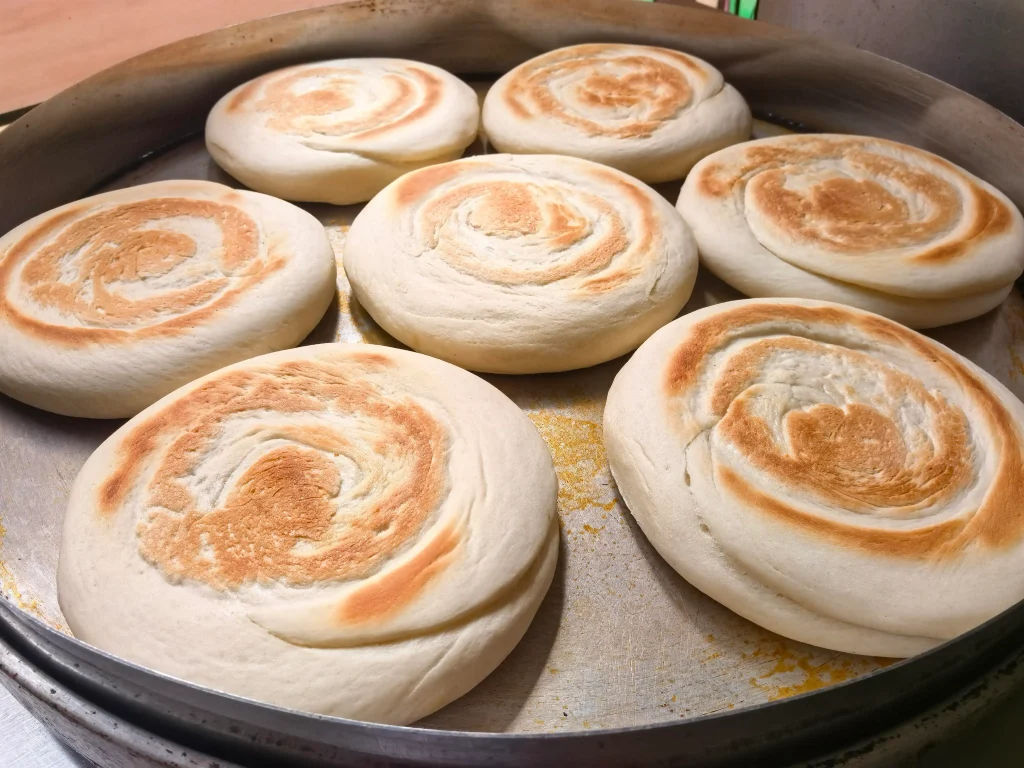
- Baijimo : The classic choice. This leavened dough is pan-fried and then baked in a clay oven. A high-quality Baijimo features a “iron ring” (brown circle), “tiger’s back” (mottled pattern), and “chrysanthemum heart” (the center swirl). It is dense, chewy, and designed to soak up gravy without falling apart.
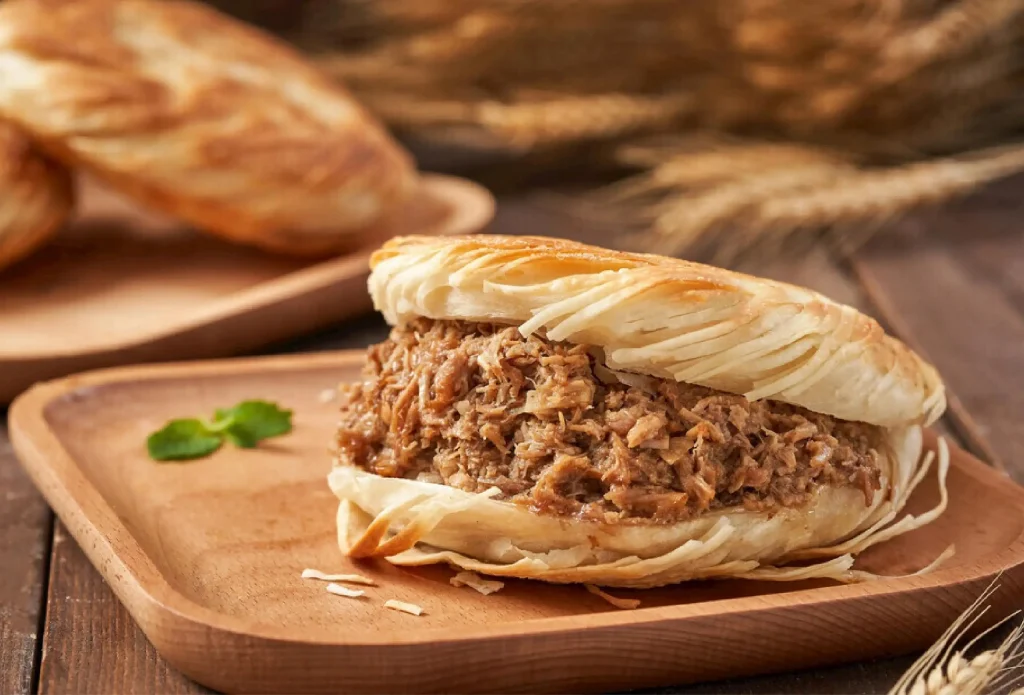
- Lao Tong Guan : The “modern” favorite. This unleavened bun is brushed with oil, rolled into a spiral, and baked until it becomes a series of flaky, golden layers that shatter when you bite them.
2. The Meat (Rou)
The meat is braised for hours in a “master sauce” containing up to 20 different spices, including star anise, cassia bark, and Sichuan peppercorns.
- Outside the Muslim Quarter: You will find La Zhi Rou , which is succulent pork belly simmered until the fat melts into the lean meat.
- Inside the Muslim Quarter: Following halal traditions, vendors use cured beef or lamb (La Niurou/Yangrou) seasoned heavily with cumin and chili oil.
2026 Pro-Tips for Ordering
- Ask for “Yōuzhì” : This means “premium.” For a few extra RMB, you get a larger portion of meat, often with a better ratio of lean to fat.
- The Vegetarian Version: If you don’t eat meat, look for Caijiamo . This version replaces the meat with a colorful array of seasoned potato shreds, seaweed, boiled eggs, and pickled vegetables.
- Eat it Hot: Roujiamo is designed to be eaten immediately while the bun is still hot and crispy. The contrast between the cold air of a Xi’an winter and the steaming juice of the meat is a core part of the experience.
Where to Find the Best Roujiamo in Xi’an
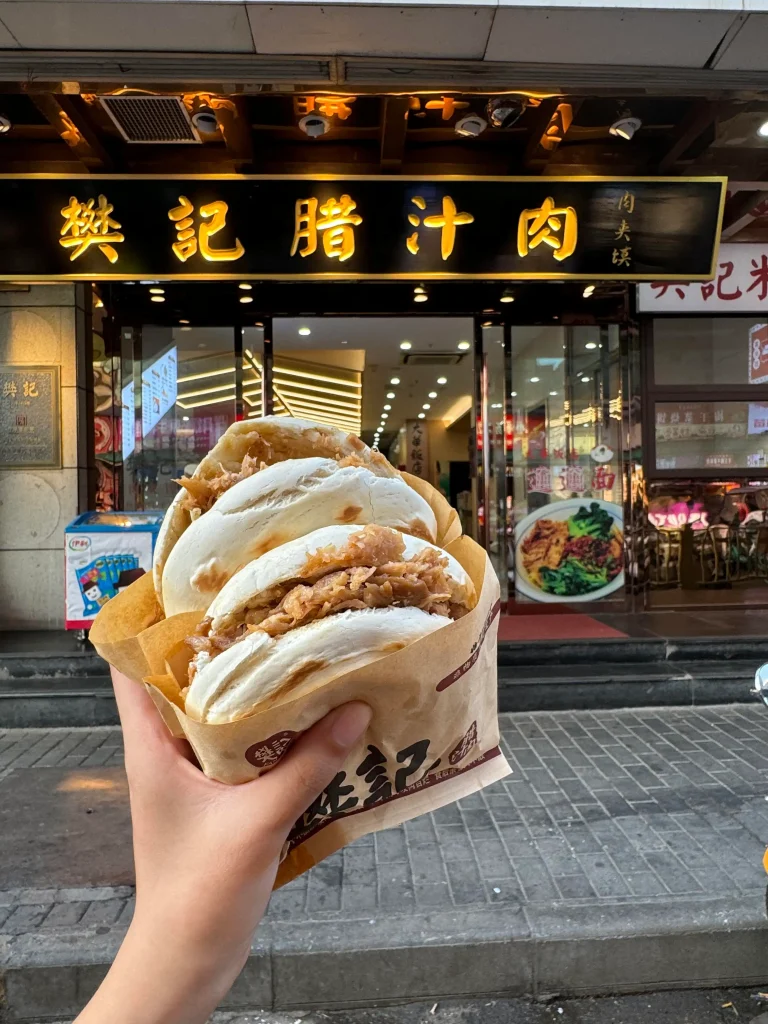
- Fan Ji La Zhi Roujiamo : An institution with over 60 years of history near the Drum Tower.
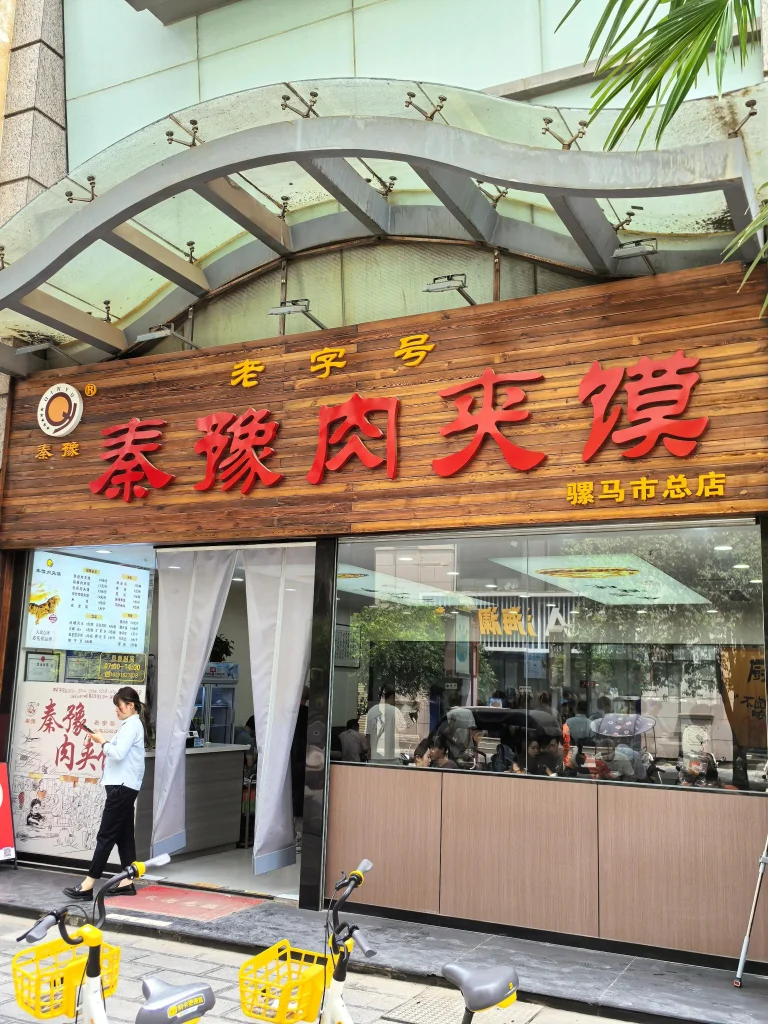
- Qin Yu Roujiamo : Featured on A Bite of China, this spot is famous for its extremely crispy Baijimo. Arrive before 1:00 PM, as they often sell out early!
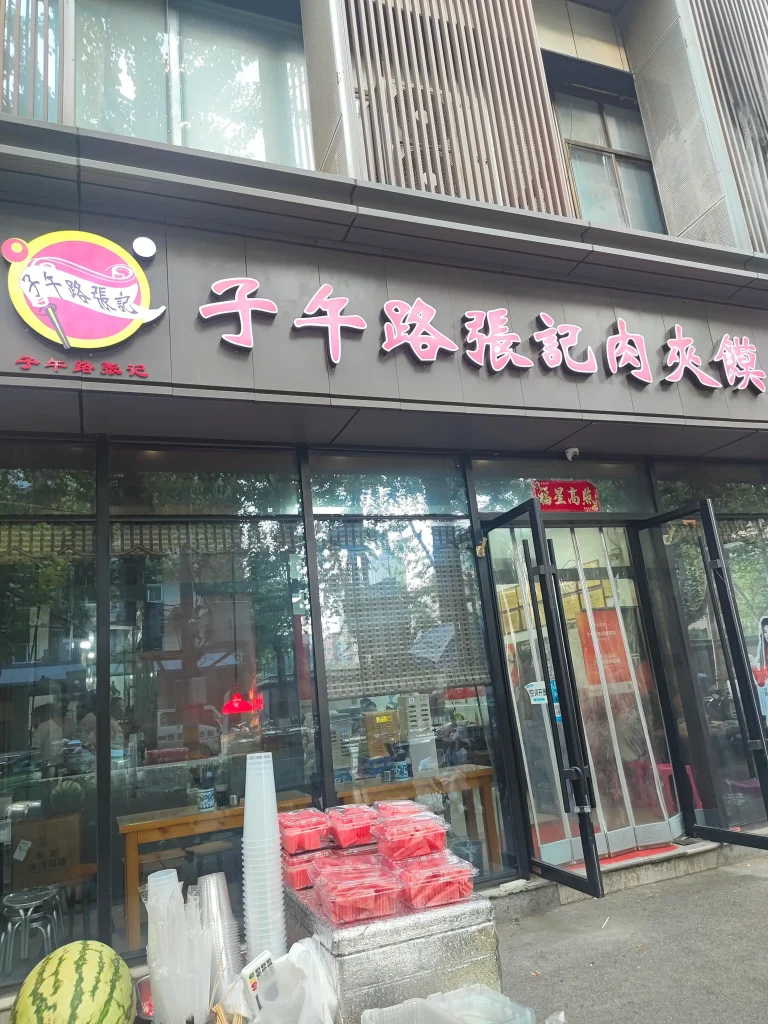
- Zi Wu Lu Zhang Ji : A dependable local chain known for consistency and its 24-hour branches.
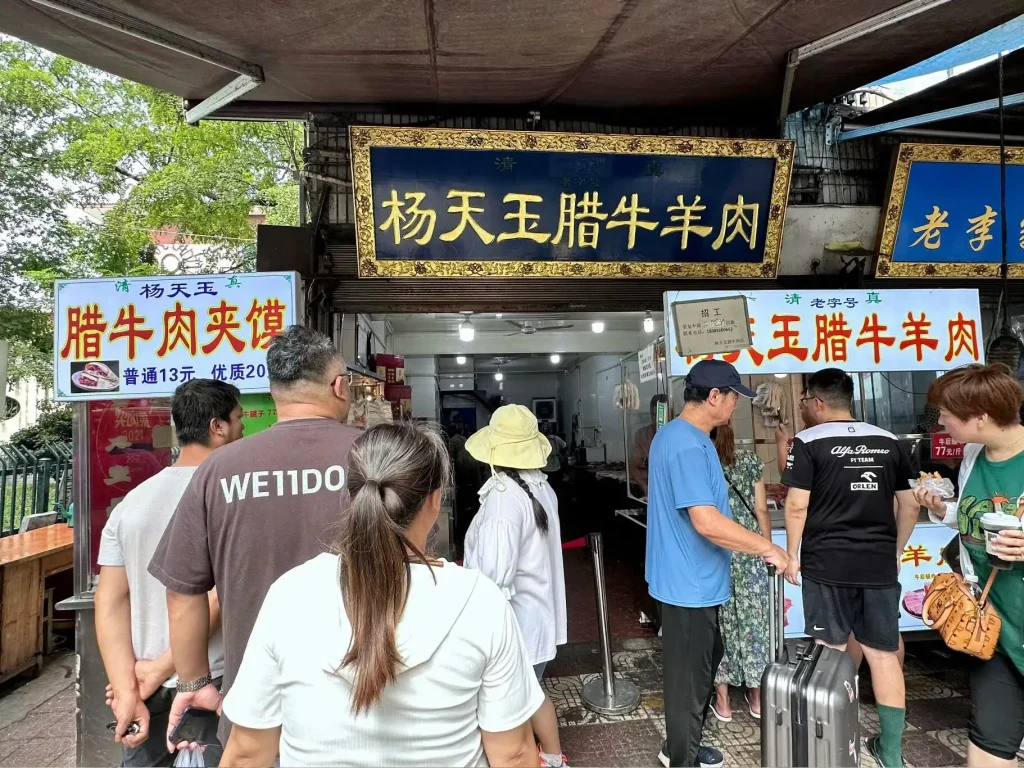
- Yang Tianyu : Located in the Sajinqiao area of the Muslim Quarter, this is the gold standard for cured beef Roujiamo.
From the Wall to the Stall
After you finish descend at the South Gate (Yongning Gate). You are only a 10-minute walk from several top-rated Roujiamo stalls, making it the perfect post-cycle reward.
👉 If you’re planning your first visit, start with our Ultimate Xi’an Travel Guide for First-Time Visitors, which shows how food fits into sightseeing days.