From snow-capped Tibetan peaks to tropical rainforests on the Laotian border — all in a single Chinese province. Here’s how to plan a trip you’ll never forget.

Picture this: you’re sipping Pu’er tea on a wooden balcony in an 800-year-old town, watching the morning mist lift off a glacial lake, while snow-capped mountains tower in the distance. Two days later, you’re eating grilled fish wrapped in banana leaves at a night market where the air smells of lemongrass and charcoal, surrounded by tropical palms and the sounds of Dai folk music. Same province. Same trip.
That’s Yunnan — a place so geographically and culturally diverse that traveling through it feels less like visiting one Chinese province and more like crossing an entire continent. Tucked into China’s far southwest corner, bordering Vietnam, Laos, and Myanmar, Yunnan is home to snow mountains that rival the Himalayas, ancient towns that predate most European cathedrals, 25 distinct ethnic minority groups with living traditions, and a food scene that will rewrite everything you think you know about Chinese cuisine.
Whether you’re a first-time visitor to China or a seasoned traveler looking for something beyond the usual Beijing-Shanghai circuit, this Yunnan travel guide will walk you through everything you need to plan an unforgettable trip: where to go, when to visit, what to eat, how to get around, and the cultural context that will make every experience richer.
What this guide covers: Why Yunnan deserves a spot on your bucket list → Geography & regions → Best time to visit → Top destinations → Ethnic cultures → Food & cuisine → Transport → Practical tips → Suggested itineraries.
Why Visit Yunnan? 5 Reasons This Province Is Unlike Anywhere Else in China
China is vast, and choosing where to go can feel overwhelming. So why should Yunnan be at the top of your list? Here are five reasons that set it apart — not just from other Chinese provinces, but from most places on Earth.
1. Landscapes That Shift from Tibetan Plateaus to Tropical Rainforests
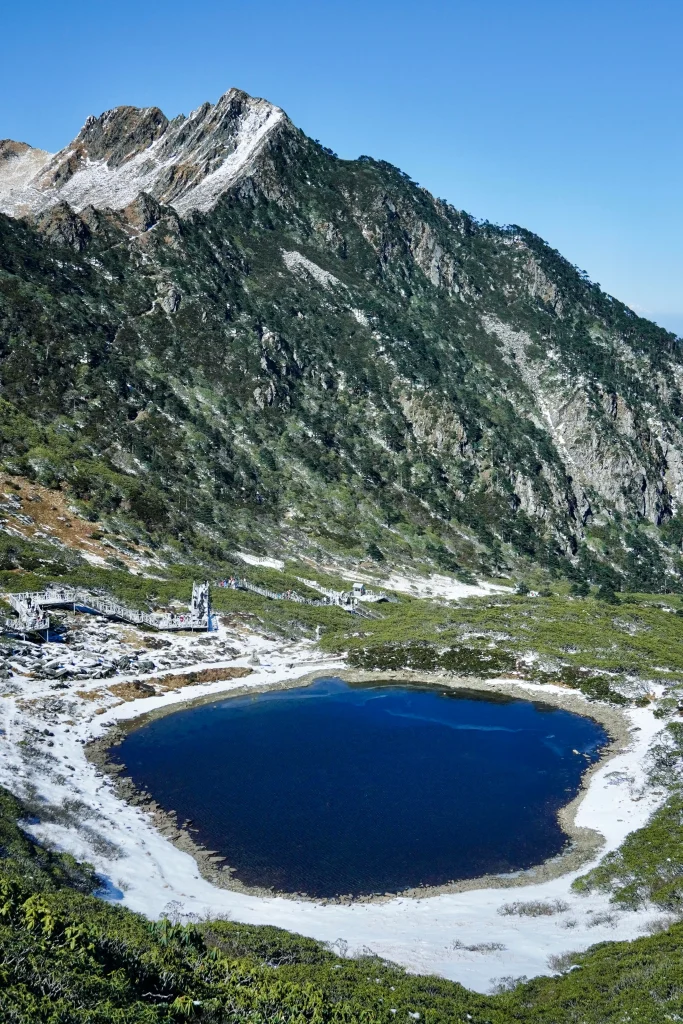
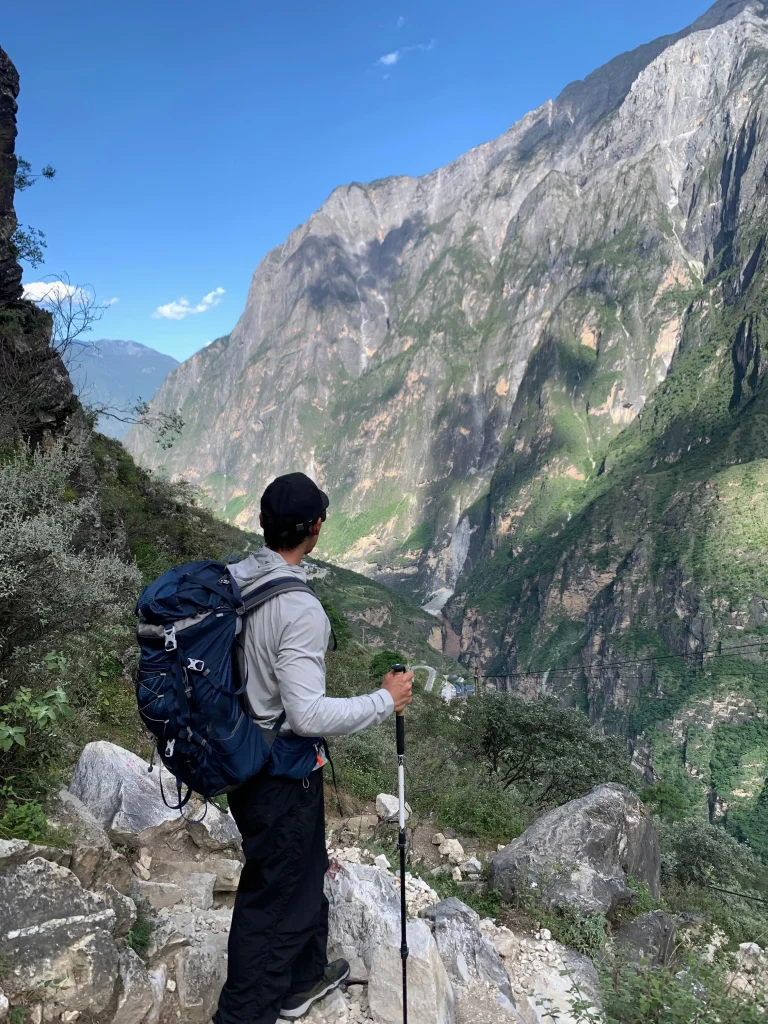
Yunnan’s elevation ranges from 76 meters in the far south to 6,740 meters at the peak of Kawagebo (Meili Snow Mountain) in the north. That’s the equivalent of traveling from Thailand to the Swiss Alps without ever crossing a border. In a single week, you can trek through one of the world’s deepest gorges at Tiger Leaping Gorge, cycle around a highland lake framed by marble mountains, and wander through a rainforest where wild Asian elephants still roam.

2. Home to 25 Ethnic Minority Groups with Living Traditions
Yunnan isn’t a cultural museum — it’s a place where 25 distinct ethnic minorities continue to practice centuries-old traditions as part of daily life. The Naxi people of Lijiang still use the world’s only surviving pictographic writing system. The Dai communities near the Laotian border celebrate their New Year by splashing water on everyone in sight. The Mosuo people at Lugu Lake maintain one of the last matriarchal societies on the planet. This isn’t heritage preserved behind glass; it’s culture you can walk into, sit down with, and share a meal.

3. A Food Scene That’s China’s Best-Kept Secret
Forget everything you think you know about Chinese food. Yunnan’s cuisine is built on wild mushrooms foraged from mountain forests, cheese made from goat’s milk (yes, cheese — in China), flowers stirred into omelets, and flavors that borrow as much from Southeast Asia as from the Chinese heartland. It’s a food lover’s paradise that most Western travelers have never heard of, and the Yunnan food guide we’ve put together will make sure you don’t miss a single dish.
4. Ancient Towns That Feel Genuinely Untouched
While some of China’s famous old towns have been polished into tourist-friendly theme parks, Yunnan still has places where the cobblestones feel real and the local grandmothers selling herbs at the morning market have been doing so for decades. Towns like Shaxi — a former caravan stop on the ancient Tea Horse Road — and the scholarly town of Jianshui offer an authenticity that’s increasingly hard to find.

5. World-Class Trekking and Outdoor Adventures
From the legendary Tiger Leaping Gorge hike — consistently ranked among the world’s top treks — to multi-day pilgrimages through sacred valleys beneath Meili Snow Mountain, Yunnan is an outdoor lover’s dream. And you don’t have to be an expert: there are gentle cycling routes around Erhai Lake, easy nature walks through Pudacuo National Park, and scenic drives through landscapes that will have you stopping the car every ten minutes.

Yunnan at a Glance: Geography, Climate & Regions
Understanding Yunnan’s geography is the key to planning a smart itinerary. The province sits in China’s far southwest, roughly the size of Germany and Spain combined, sharing international borders with Vietnam, Laos, and Myanmar. But it’s the internal diversity that matters most for travelers.
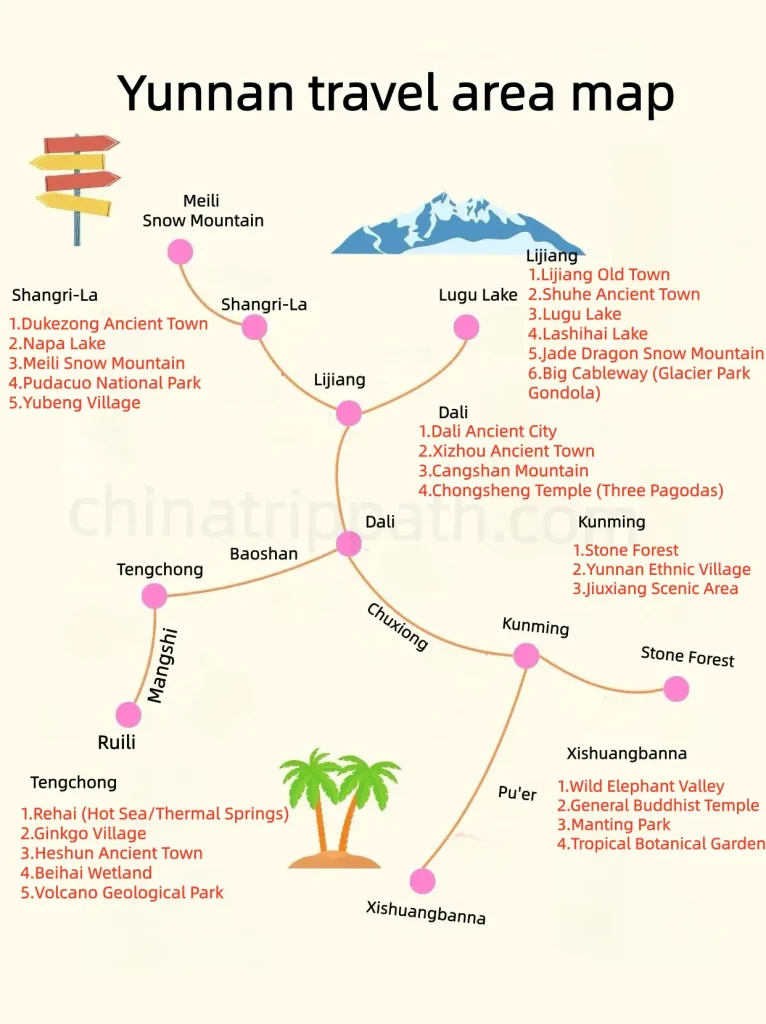
Think of Yunnan as four distinct travel zones, each with its own personality:
The Northwest: Tibetan Highlands
Shangri-La, Meili Snow Mountain, and the upper reaches of the Yangtze. This is high-altitude territory (3,200m+) with Tibetan monasteries, yak-butter tea, and landscapes that could double for the Himalayas. Expect cool summers and freezing winters.
The Central Corridor: Ancient Town Country
Dali and Lijiang sit at moderate elevations (1,900–2,400m) with mild, spring-like weather for most of the year. This is the cultural heartland — Bai and Naxi traditions, UNESCO heritage sites, and the classic Yunnan experience most first-time visitors come for.
The South: Tropical Yunnan
Xishuangbanna and the areas near the borders of Laos and Myanmar are warm and humid year-round. Think tropical rainforests, Dai minority villages, night markets with Southeast Asian flavors, and a vibe closer to northern Thailand than to anything you’d expect in China.
The East: Karst Country & Red Earth
Kunming (the provincial capital), the otherworldly Stone Forest, the spectacular Yuanyang Rice Terraces, and the fiery red landscapes of Dongchuan. This region is drier, with dramatic geology and some of Yunnan’s most photogenic scenery.
A helpful way to think about climate: Kunming is often compared to San Diego — mild and sunny year-round, earning it the nickname “Spring City.” Shangri-La’s winters feel more like Colorado. And Xishuangbanna? That’s closer to Chiang Mai. One province, three completely different wardrobes.
Best Time to Visit Yunnan (Season-by-Season Breakdown)
The honest answer? There’s no single “best” time — it depends on where you’re going and what you want to see. Yunnan’s extreme elevation differences mean that when it’s freezing in Shangri-La, it can be beach weather in Xishuangbanna. Here’s a season-by-season guide to help you choose.
Spring (March – May): Flowers, Terraces & Perfect Weather
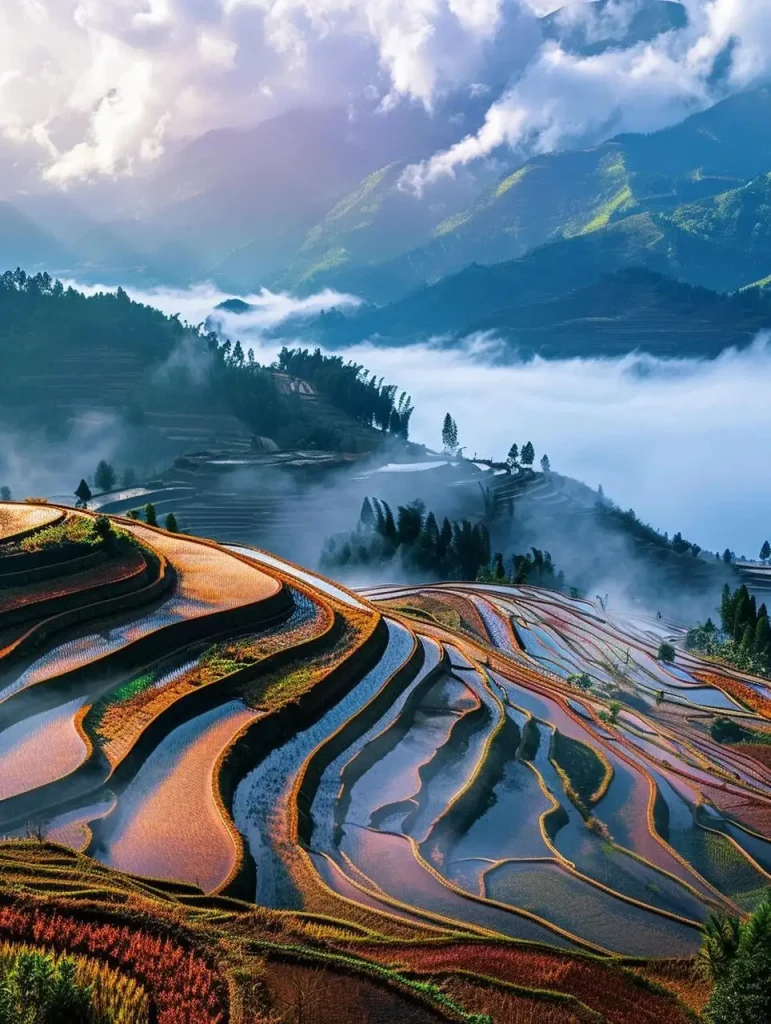
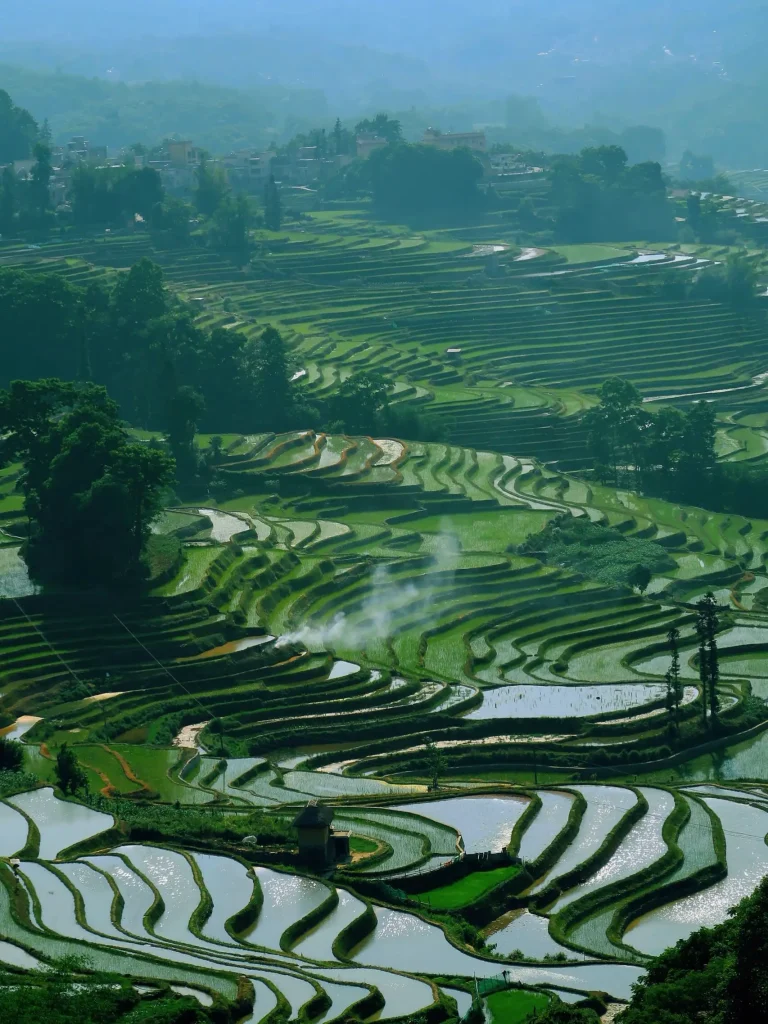
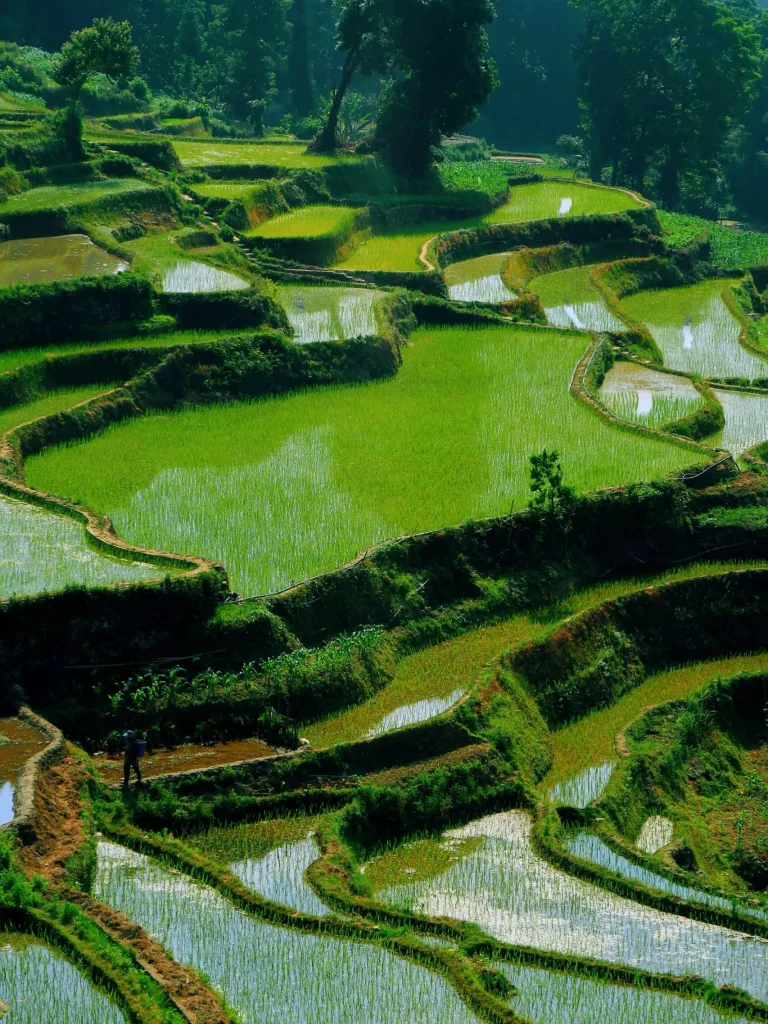
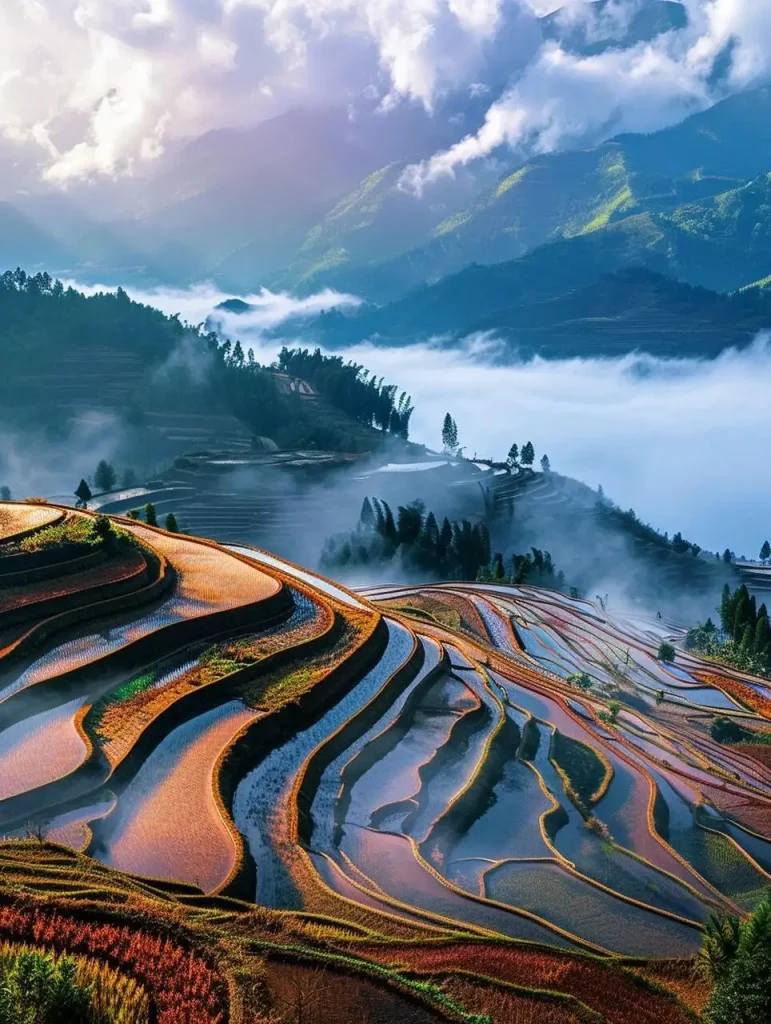
This is when Yunnan earns its Chinese name — “South of the Colorful Clouds.” The Yuanyang rice terraces are filled with water, turning into thousands of mirrors reflecting the sky. The rapeseed flower fields of Luoping explode into a sea of gold. Cherry blossoms line the streets of Dali and Kunming. It’s arguably the most photogenic time to visit, and the weather across most of the province is warm and dry.
Summer (June – August): Lush, Green & Mushroom Season
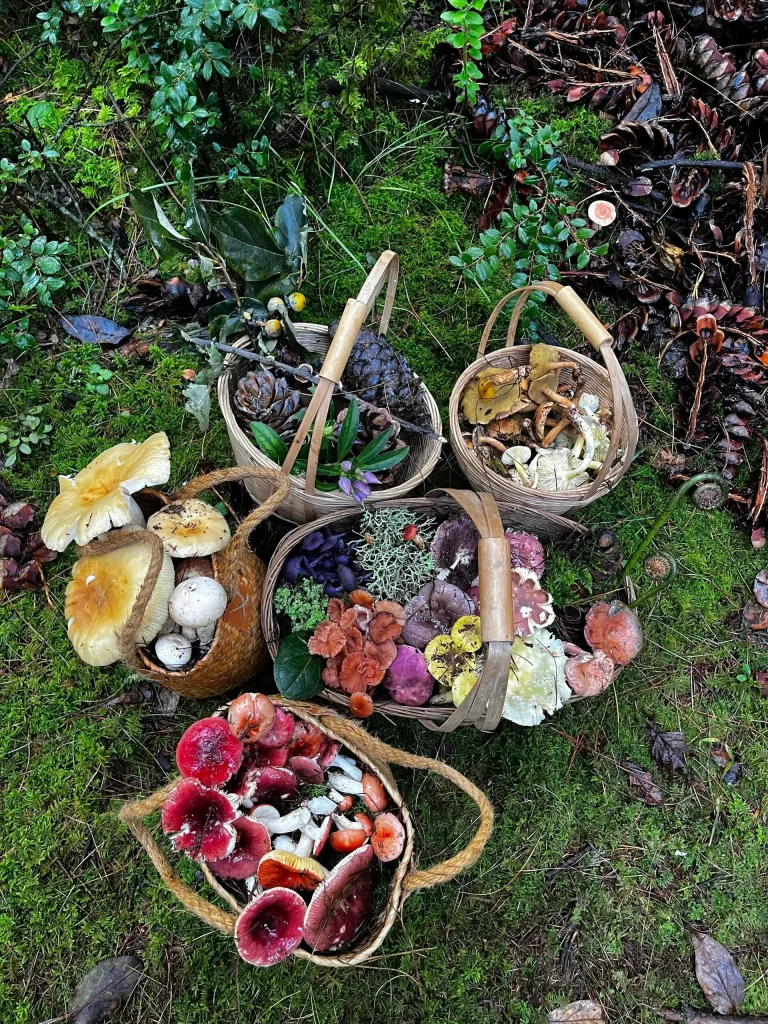
This is monsoon season, so expect afternoon showers — but also the lushest, greenest landscapes of the year. Higher-altitude destinations like Shangri-La and Lijiang stay pleasantly cool (a major draw for domestic tourists escaping China’s brutal summer heat elsewhere). The real highlight? It’s wild mushroom season. From June to October, Yunnan’s forests produce over 800 species of edible fungi, and mushroom hot pot becomes a near-religious experience.
Autumn (September – November): Clear Skies & Golden Light
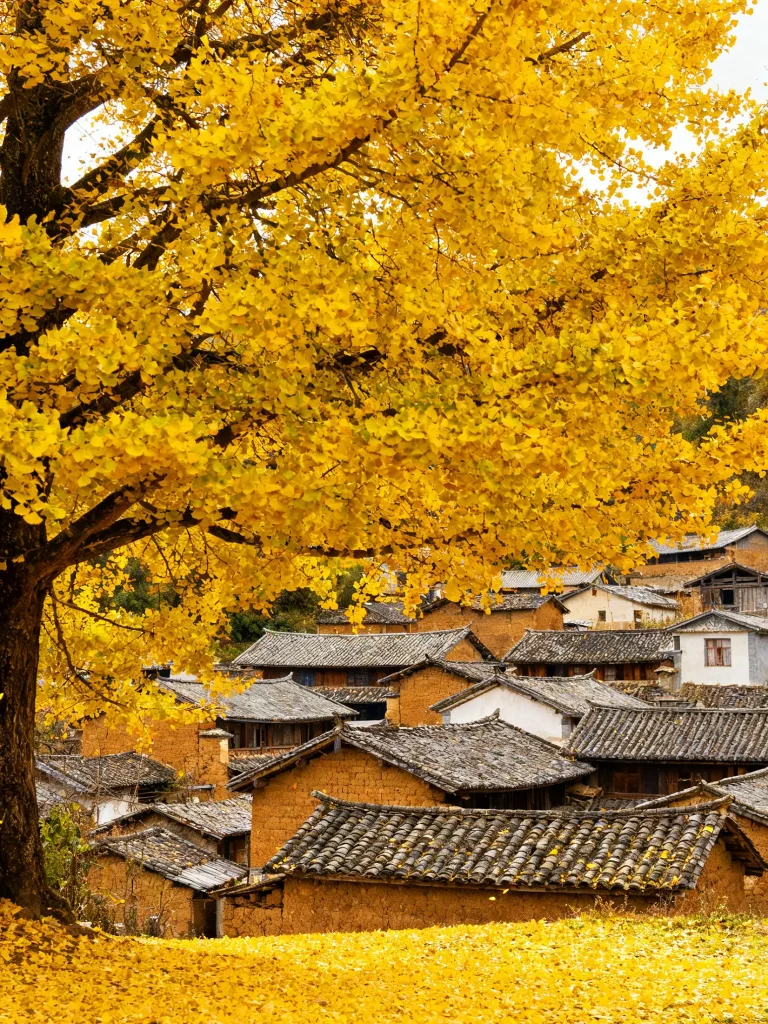
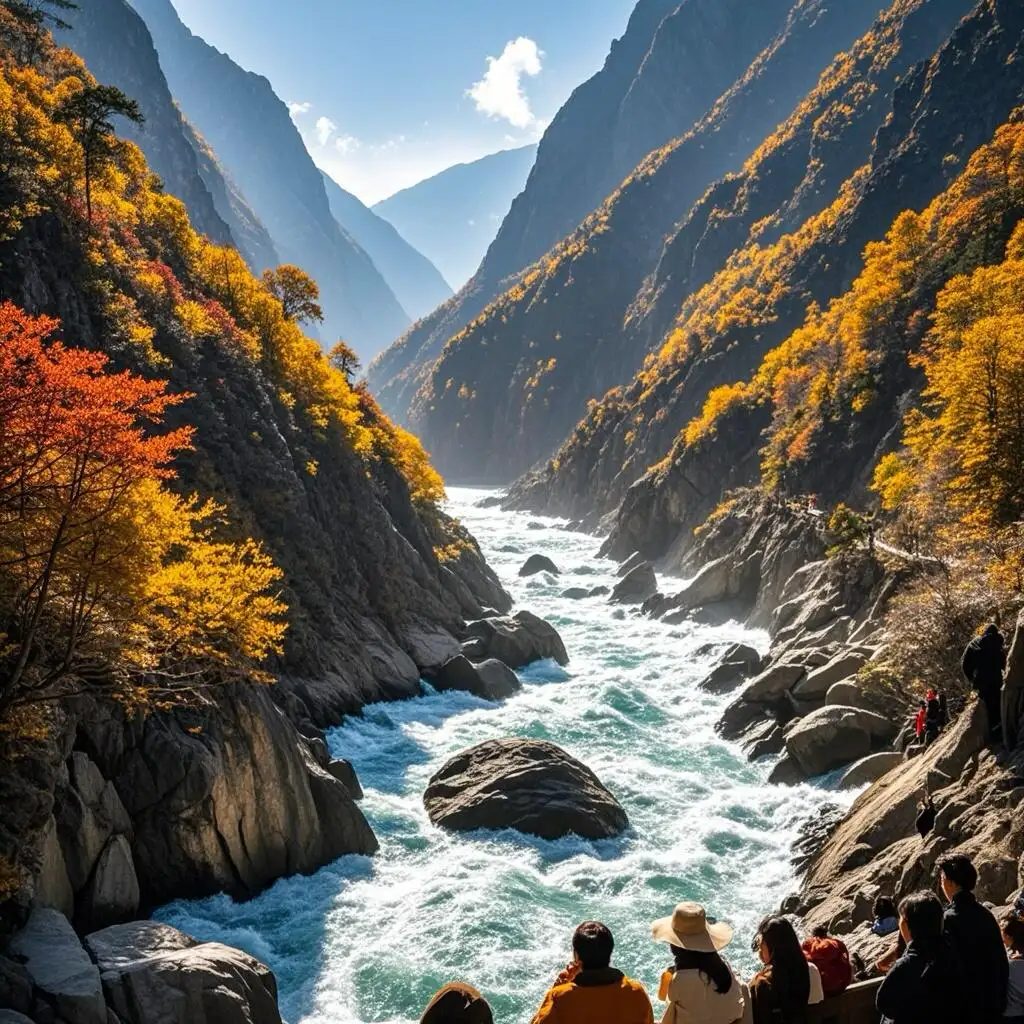
Many seasoned Yunnan travelers consider this the sweet spot. The monsoon fades, leaving behind crystal-clear skies and golden light that photographers dream about. It’s the best season for trekking — Tiger Leaping Gorge and the Yubeng Village trek are at their finest. The ginkgo trees in Tengchong turn brilliant yellow, and the autumn harvest paints Yuanyang’s terraces in warm amber tones.
Winter (December – February): Snow Mountains & Tropical Escapes
Winter is when Yunnan’s extremes really shine. Head north to Meili Snow Mountain for the clearest views of the year — the sacred peak of Kawagebo is most likely to reveal itself between December and February. Meanwhile, in the far south, Xishuangbanna stays warm (20–25°C), making it a perfect winter escape. Crowds are at their lowest, and prices drop significantly.


⚠️ Dates to avoid: China’s National Day holiday (October 1–7) and Chinese New Year (late January or February) bring massive domestic tourism. Prices double, attractions are packed, and accommodation books out months in advance. If possible, plan around these dates. For more on timing your trip around Yunnan’s ethnic festivals — like the Dai Water Splashing Festival in April or the Yi Torch Festival in July — check our festival guide.
Top Destinations: Where to Go in Yunnan
Yunnan has enough destinations to fill a month of travel, but most first-time visitors focus on the “golden route” — a well-connected chain of cities and towns running from Kunming in the east to Shangri-La in the northwest. Here’s a quick look at the must-visit destinations, with links to our detailed guides for each.
Kunming — The Spring City Starting Point
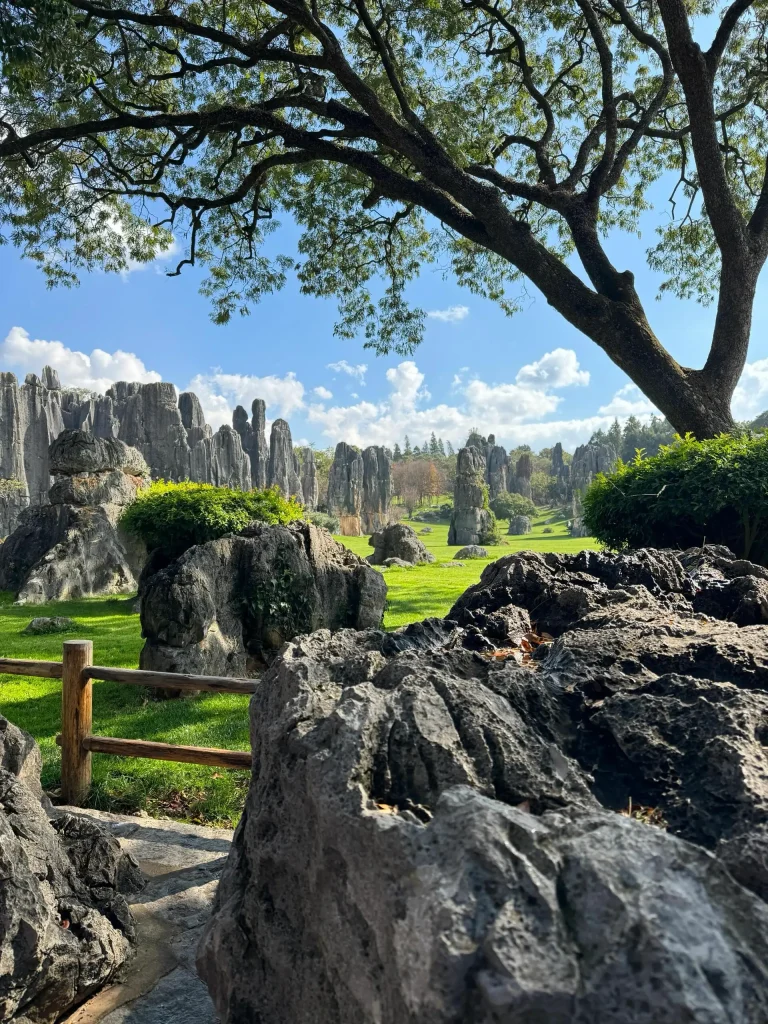
Most Yunnan trips begin in the provincial capital, and Kunming deserves more than just a layover. Spend a morning at the surreal Stone Forest — a UNESCO Geopark where 270-million-year-old limestone pillars rise from the earth like a petrified forest. Back in town, stroll around Green Lake Park where locals practice tai chi and feed the migrating black-headed gulls in winter. The Yunnan Provincial Museum offers an excellent crash course in the region’s ethnic diversity before you head out to experience it firsthand. For the complete rundown, see our Kunming travel guide.
Dali — Slow Living Between Mountains and Lake
If Lijiang is Yunnan’s postcard, Dali is where people actually move to. Ringed by the Cangshan Mountains and the mirror-calm waters of Erhai Lake, Dali has quietly become one of China’s most beloved slow-travel destinations — a place where backpackers, digital nomads, and retirees coexist in a town that still feels genuinely lived-in. Cycle the scenic western shore of Erhai Lake, wander through the marble-paved lanes of Dali Ancient Town, and make time for Xizhou — a quieter Bai village where you can sip the traditional three-course tea and watch artisans hand-dye indigo fabrics.

Lijiang — UNESCO Heritage & Snow Mountain Views
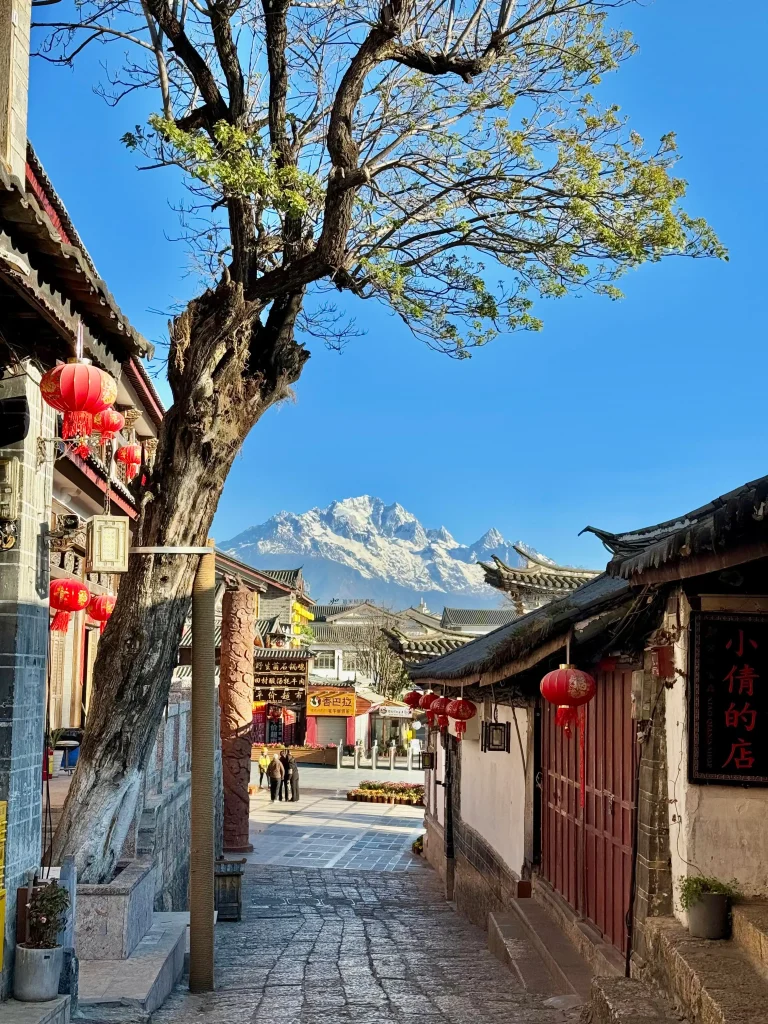
Lijiang Old Town is the one image of Yunnan that most people have seen: a web of cobblestone lanes, traditional wooden houses, and canals fed by mountain snowmelt, with the 5,596-meter Jade Dragon Snow Mountain looming behind it all. Yes, it’s touristic — but step off the main drag and the magic is still there. Don’t miss the quieter Baisha Village, where you can see centuries-old murals that blend Buddhist, Taoist, and Naxi Dongba imagery in ways found nowhere else. Our Lijiang travel guide covers the best things to do, where to eat, and how to escape the crowds.
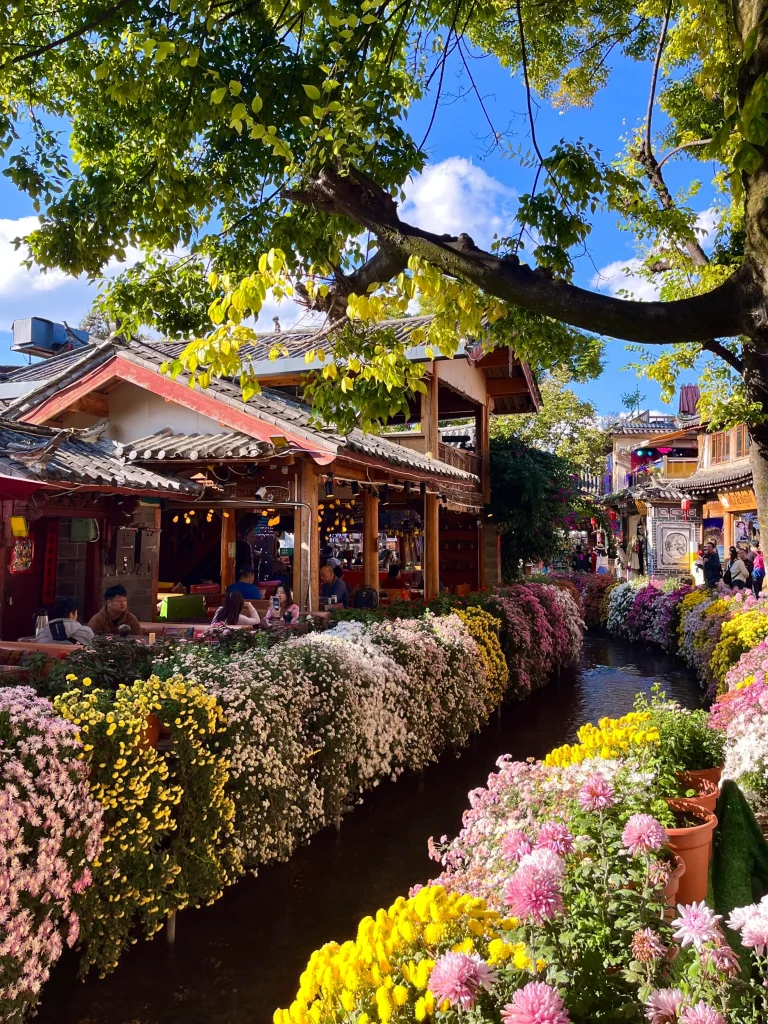
Shangri-La — Gateway to Yunnan’s Tibetan World
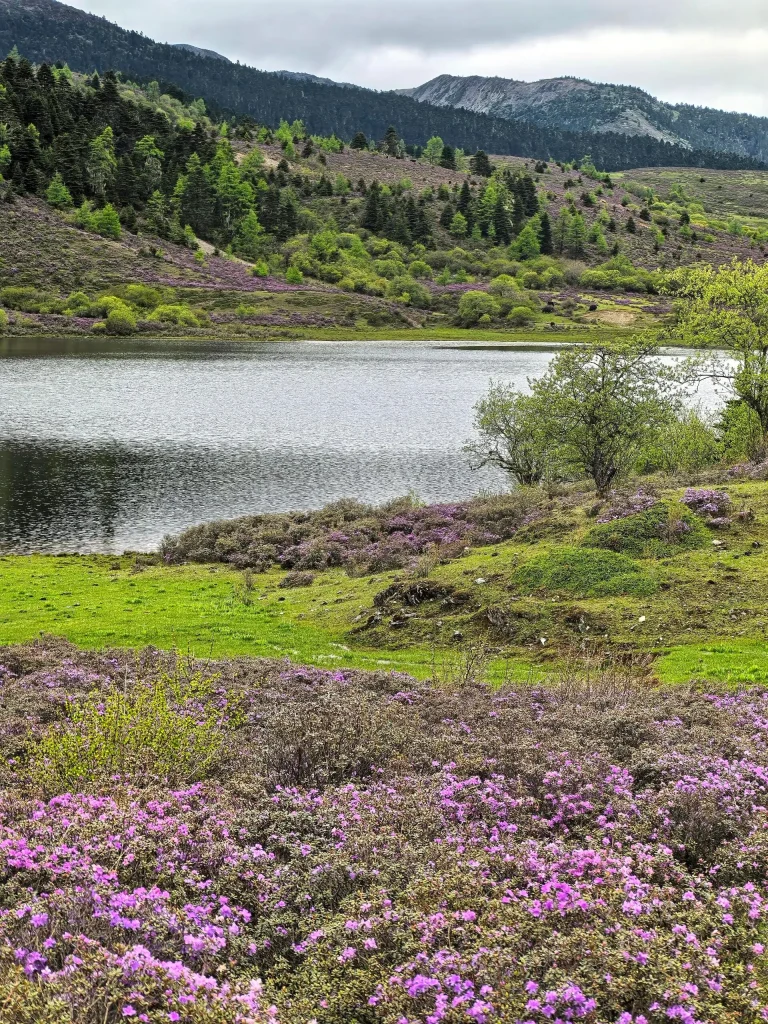
The name may come from a fictional utopia, but Shangri-La is very real — and very different from anywhere else in Yunnan. At 3,300 meters, the air is thin and the landscape is vast: golden grasslands, prayer-flag-strewn passes, and the enormous Songzanlin Monastery, often called the “Little Potala Palace.” The reconstructed Dukezong Old Town is worth an evening stroll, and Pudacuo National Park offers gentle boardwalk hikes through pristine highland forests.

Xishuangbanna — China’s Tropical South
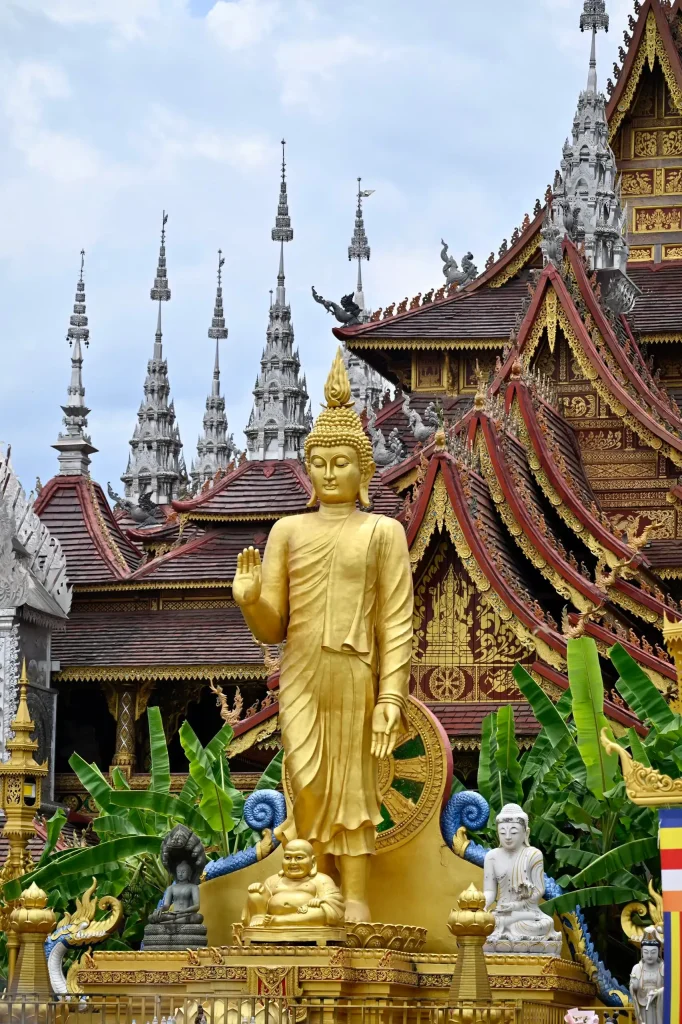
Tucked against the borders of Laos and Myanmar, Xishuangbanna feels like a different country entirely. This is the homeland of the Dai ethnic minority, whose stilted bamboo houses, Buddhist temples, and legendary Water Splashing Festival give the region a distinctly Southeast Asian character. Explore the incredible Tropical Botanical Garden, visit Wild Elephant Valley for a chance to see Asian elephants in the wild, and spend an evening at Jinghong’s night market where Dai grilled fish and pineapple rice are the stars.
Beyond the Golden Route: Hidden Gems
If you have more than a week, Yunnan rewards the curious. The ancient Tea Horse Road town of Shaxi feels like Dali did 20 years ago. The Yuanyang Rice Terraces, carved by the Hani people over 1,300 years, are a UNESCO World Heritage site of staggering beauty. The fiery red landscapes of Dongchuan look like a painter’s palette spilled across the hillsides. And the remote Nujiang Valley — still barely touched by tourism — offers some of the most dramatic canyon scenery in all of China.
Not sure which destinations to combine? Our recommended Yunnan itineraries for 7, 10, and 14 days will help you build the perfect route.
Yunnan’s Ethnic Cultures: 25 Minorities & Living Traditions
Many travelers come to Yunnan for the scenery and leave talking about the people. This province is home to 25 of China’s 56 recognized ethnic minority groups — the highest concentration in the country — and their cultures aren’t relics of the past. They’re woven into everyday life: in the architecture, the food, the festivals, and the way people greet you in the street.
Here are some of the cultures you’ll encounter on a Yunnan journey.
The Naxi People of Lijiang
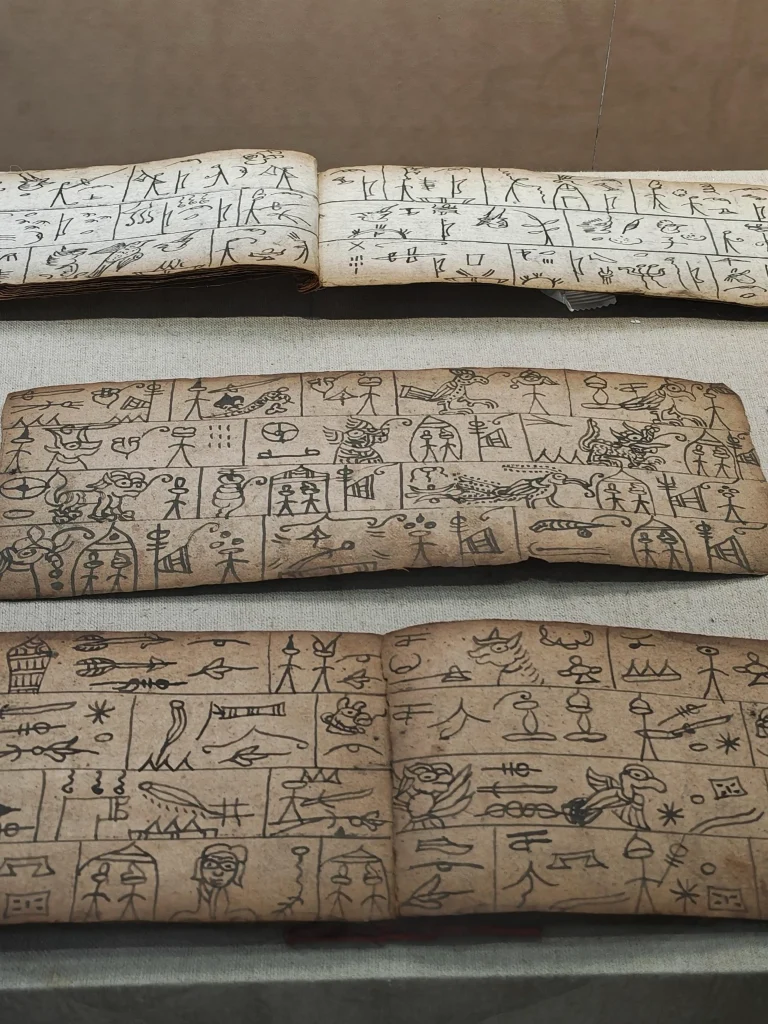
The Naxi are the soul of Lijiang. Their Dongba culture centers on a pictographic writing system — the only one still in active use anywhere in the world. Visit the Dongba Culture Museum in Lijiang to see these 1,000-year-old symbols, then head to Baisha Village to watch Dongba priests at work. The haunting Naxi Ancient Music, performed by elderly musicians using instruments and scores that date back centuries, is an experience you won’t find anywhere else.
The Bai People of Dali
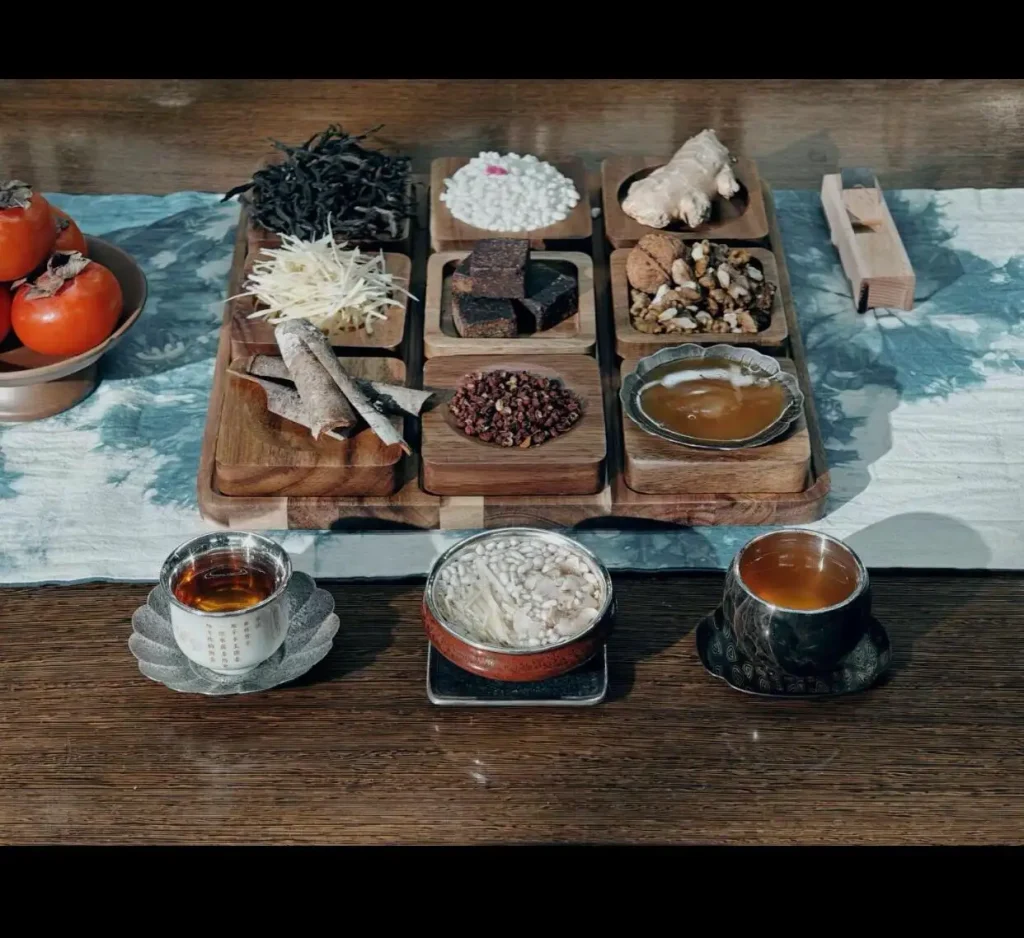
The Bai are Dali’s indigenous community, known for their distinctive white-walled architecture, their mastery of marble carving, and one of China’s most charming cultural rituals: the three-course tea ceremony (san dao cha), where the first cup is bitter, the second is sweet, and the third is “reflective” — meant to represent the stages of life. In Zhoucheng village near Dali, you can watch (and try) the traditional tie-dye craft that has been passed down through Bai families for generations.
The Dai People of Xishuangbanna
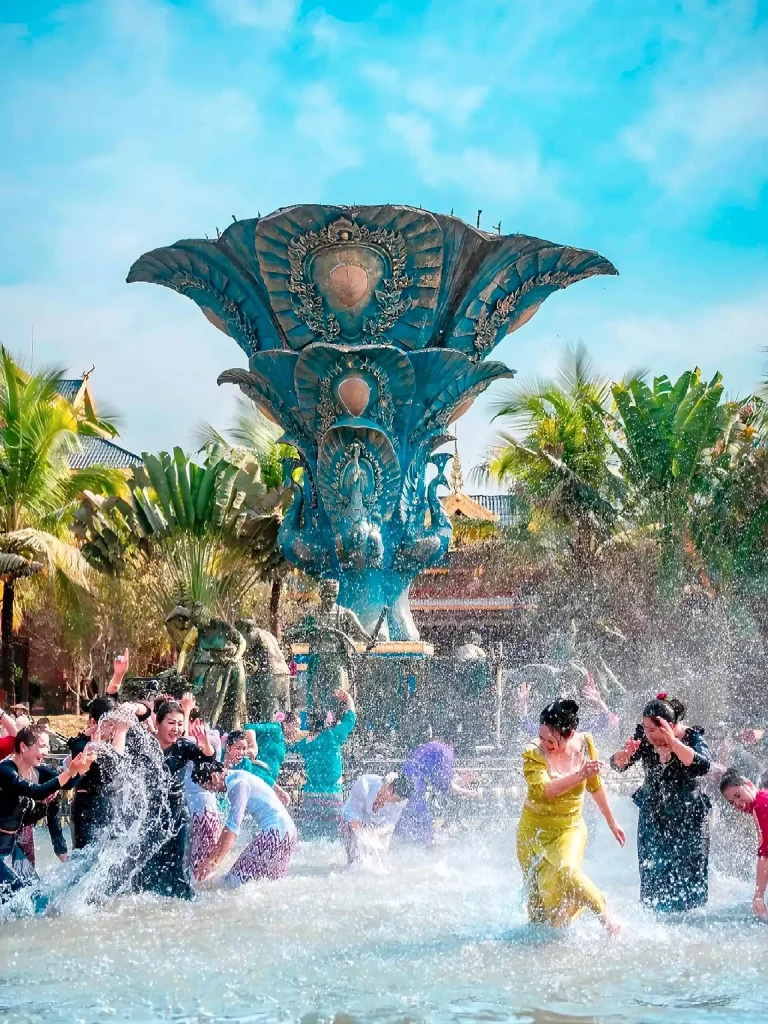
The Dai ethnic group shares deep cultural roots with the Thai and Lao peoples — you’ll notice the similarities immediately in the temple architecture, the script, and the food. The Water Splashing Festival (held in mid-April) is their New Year celebration and one of the most joyous events you’ll ever witness: entire towns take to the streets with buckets, hoses, and water guns. Getting soaked is the whole point — it’s believed to wash away bad luck.
The Yi People & The Torch Festival
The Yi are one of Yunnan’s largest minority groups, known for their vibrant embroidered clothing and their reverence for fire. The Torch Festival, held in late July or early August, has been called the “Oriental Carnival” — three days of torch parades, bullfighting, wrestling, and all-night bonfires that illuminate the mountain darkness. The largest celebrations happen in Chuxiong and the Stone Forest area near Kunming.

The Mosuo People of Lugu Lake
On the serene shores of Lugu Lake, straddling the Yunnan-Sichuan border, the Mosuo people maintain one of the world’s last matriarchal societies. Property passes through the female line, and the Mosuo practice a “walking marriage” (zou hun) system — couples don’t live together but instead maintain their own family homes. It’s a fascinating social structure that challenges everything most visitors assume about traditional societies.

For a deeper dive into Yunnan’s cultural tapestry — including the Hani people who carved the Yuanyang terraces, the Tibetan communities of the northwest, and the ancient Tea Horse Road that connected it all — explore our Yunnan culture guide.
What to Eat in Yunnan: A Taste of China’s Most Diverse Cuisine
Here’s a confession: the food might be the single best reason to visit Yunnan. This is not the stir-fried, MSG-heavy Chinese food that most Westerners picture. Yunnan’s cuisine is built on fresh herbs, wild foraged ingredients, Southeast Asian influences, and — perhaps most surprisingly — dairy. It’s a food culture as diverse as the province itself, and it will change what you think Chinese food can be.
Here’s a taste of what’s waiting for you.
The Dishes You Can’t Miss
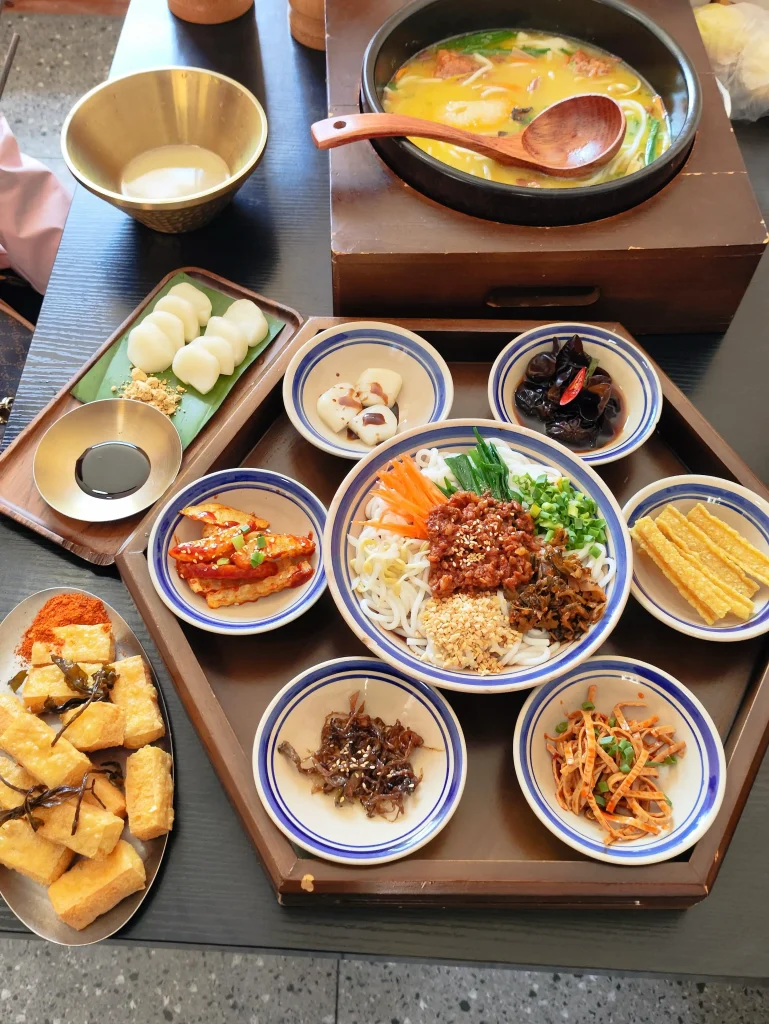
Crossing the Bridge Rice Noodles (Guoqiao Mixian) — Yunnan’s most iconic dish, and an interactive dining experience. A bowl of scorching-hot chicken broth is brought to your table, and you add the ingredients yourself: paper-thin slices of raw pork or chicken, quail eggs, vegetables, tofu skin, and finally the silky rice noodles. The boiling broth cooks everything in seconds. Behind the dish is a charming love story — ask your server about it.
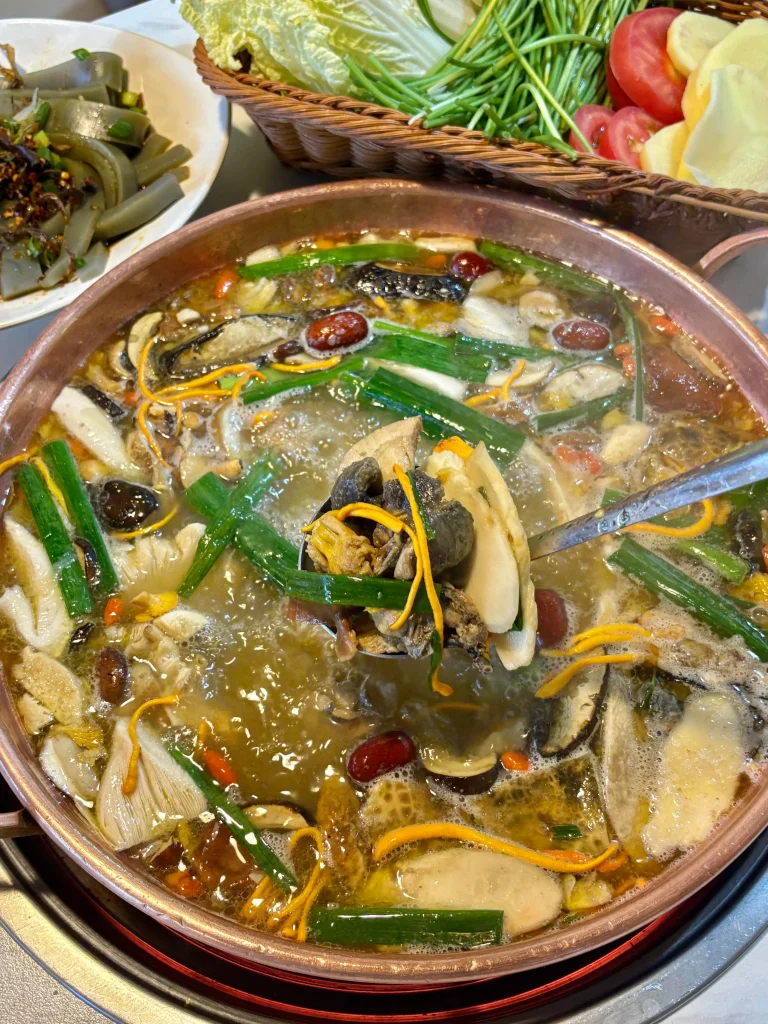
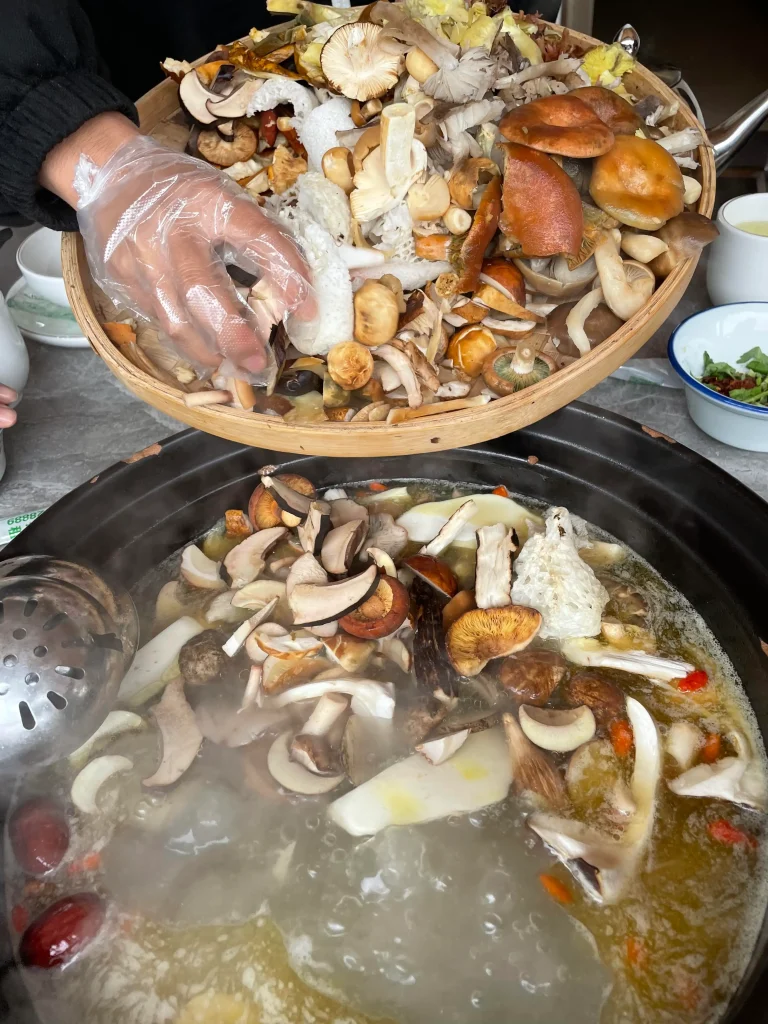
Wild Mushroom Hot Pot — Yunnan produces more edible mushroom species than perhaps any other place on Earth. From June to October, restaurants serve up bubbling hot pots loaded with matsutake, porcini, termite mushrooms, and dozens of varieties you’ve never heard of. The umami depth is extraordinary. Just make sure you eat at a reputable restaurant — some wild mushrooms can cause hallucinations (seriously).
Steam Pot Chicken (Qiguoji) — A whole chicken is steamed inside a specially designed Jianshui clay pot with a central chimney. The steam condenses into the purest, most concentrated chicken soup you’ll ever taste — no water is added. It’s ancient engineering meets comfort food.

Rubing — Yunnan’s Cheese — If you’ve ever wondered why China doesn’t have a cheese tradition, Yunnan is the exception. The Bai people make rubing from goat’s milk — a firm, non-melting cheese similar to halloumi. It’s pan-fried until golden and served with a sprinkle of salt and chili, or drizzled with local rose-petal jam. For Western visitors who miss cheese on the road, this is a revelation.

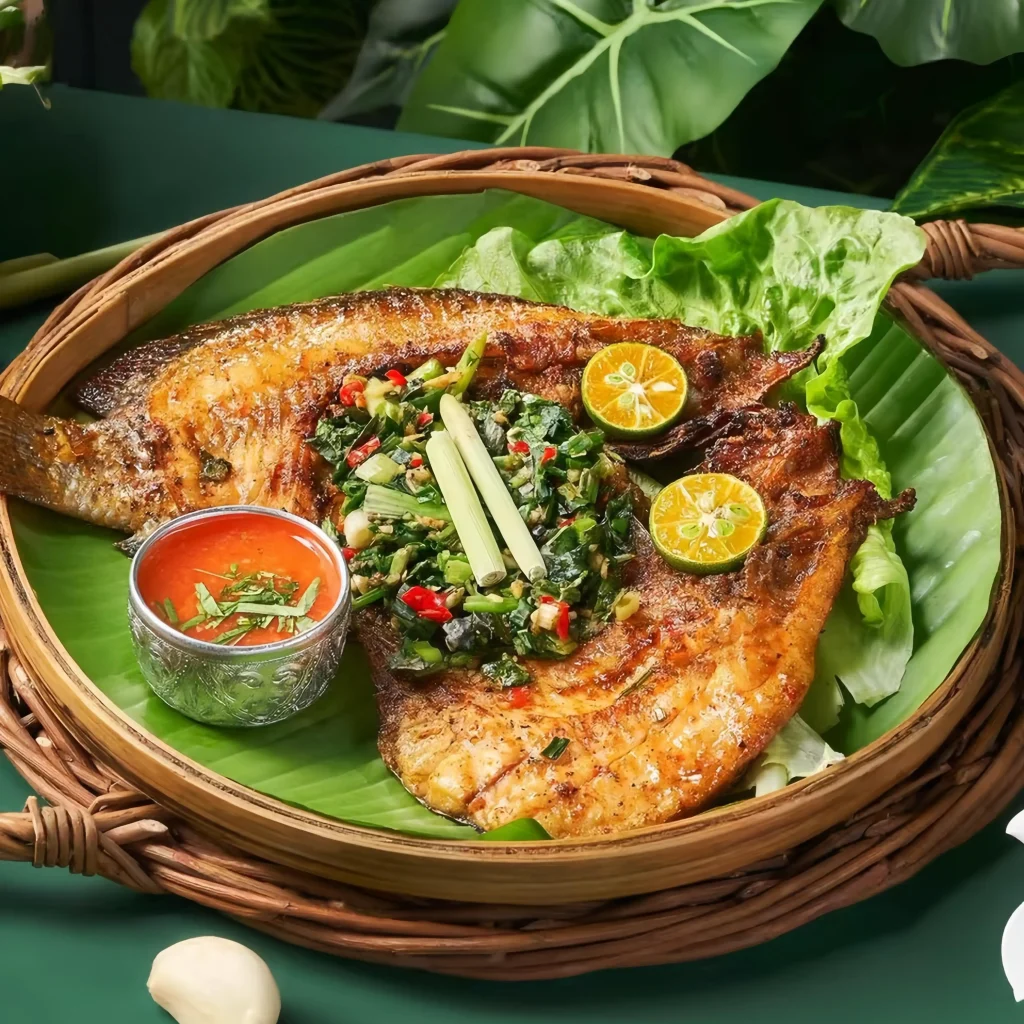
Dai Grilled Fish — In Xishuangbanna, freshwater fish is stuffed with lemongrass, chili, and herbs, then grilled over charcoal until the skin is crispy and the flesh falls apart. Dipped in a spicy-sour Dai sauce, it’s the dish that makes you realize Yunnan’s food has more in common with Southeast Asia than with Beijing.
Don’t Leave Without Trying
Erkuai (grilled rice cakes), rose cakes (flaky pastries filled with edible rose petals), Xuanwei ham (Yunnan’s answer to prosciutto), mint-infused potato dishes, flower omelets, pineapple rice served inside a carved pineapple, and — for the adventurous — deep-fried insects at the Xishuangbanna night markets.
And don’t forget to drink: Pu’er tea, the aged fermented tea that originated in Yunnan’s mountains, is one of the world’s great teas. A visit to a traditional teahouse for a proper tasting session is an experience in itself.
How to Get to Yunnan & Get Around
Getting to and around Yunnan is easier than you might expect — and it’s getting better every year thanks to China’s rapid infrastructure expansion. Here’s the practical breakdown.
Getting to Yunnan
By air: Kunming Changshui International Airport (KMG) is the main gateway, with direct international flights from Bangkok, Singapore, Kuala Lumpur, Seoul, and other Asian cities. From elsewhere, fly into a major Chinese hub (Beijing, Shanghai, Guangzhou, or Chengdu) and connect to Kunming — domestic flights take 2–3.5 hours. Lijiang and Xishuangbanna also have airports with growing domestic route networks.
By train: China’s high-speed rail network now connects Kunming to major cities nationwide. The Beijing–Kunming route takes around 10 hours; Shanghai–Kunming about 11 hours. Overnight sleeper trains are also available and can be a comfortable, scenic alternative.
Getting Between Cities
Yunnan’s internal train network has improved dramatically. Key routes and approximate travel times by high-speed rail: Kunming → Dali: approximately 2 hours. Kunming → Lijiang: approximately 3.5 hours. Kunming → Xishuangbanna (Jinghong): approximately 3.5 hours. Dali → Lijiang: approximately 1.5 hours.
For Shangri-La, you’ll transfer from Lijiang by bus (around 4 hours) or take a private transfer. For more remote destinations like Yuanyang, Dongchuan, or the Nujiang Valley, hiring a private car and driver is the most practical option and more affordable than you’d expect.
Getting Around Within Cities
Apps you’ll need: Trip.com for booking trains and flights (English interface), DiDi for ride-hailing (China’s Uber equivalent), and Amap (Gaode) or Baidu Maps for navigation — note that Google Maps does not work in China.
In Dali and Lijiang, the old towns are wonderfully walkable. For longer trips around Erhai Lake, rent an e-bike or bicycle — it’s one of the most popular things to do. In Kunming and Xishuangbanna, DiDi is cheap and reliable.
Essential Travel Tips for Visiting Yunnan
A few practical things to sort out before you arrive — these will save you time, stress, and the occasional awkward moment.
Visa & Entry. As of 2025, China has significantly relaxed its visa requirements. Citizens of France, Germany, Italy, Spain, and several other countries enjoy 30-day visa-free stays. US, UK, and Canadian passport holders can visit for up to 6 days visa-free under the transit policy. The 144-hour visa-free transit policy covers around 60 nationalities. Requirements change frequently, so always check the latest policy before booking.
Money & Payment. China is almost entirely cashless. Locals pay for everything — from restaurant meals to street food to temple entrance fees — using WeChat Pay or Alipay. As a foreign tourist, you can now link an international credit card to either app. We strongly recommend setting this up before you arrive. Carry a small amount of cash as backup for very rural areas.
Altitude Awareness. Shangri-La sits at 3,300m, and some mountain passes exceed 4,000m. Altitude sickness is a real concern. The smart approach: start your trip in Kunming (1,890m) to acclimatize for a day or two, then gradually move higher. Stay hydrated, avoid alcohol on your first night at altitude, and take it slow. If you’re heading to Shangri-La directly from a low-altitude city, consider carrying altitude sickness medication.
Language. English is not widely spoken outside international hotels in Kunming and Lijiang. Download a translation app (Google Translate works offline if you pre-download the Chinese pack), save key phrases in your notes app, and learn the absolute essentials: hello (nǐ hǎo), thank you (xiè xie), how much? (duō shǎo qián?), and the lifesaver — a screenshot of your hotel’s address in Chinese characters to show taxi drivers.
Internet & Connectivity. Most Western apps and websites — including Google, Instagram, WhatsApp, and Facebook — are blocked in China. Get a VPN before you arrive (download it at home; you can’t access VPN websites once in China). Alternatively, purchase a Chinese eSIM or SIM card that includes VPN access. For navigation, use Amap or Baidu Maps instead of Google Maps.
What to Pack. Yunnan’s elevation differences mean you’ll need layers. Even in summer, evenings in Lijiang and Shangri-La can be chilly. Pack a light rain jacket for monsoon season, sunscreen (the high-altitude UV is fierce), comfortable walking shoes, and a power bank — you’ll be using your phone constantly for payments, navigation, and translation.
Food Safety. Street food in Yunnan is generally safe — choose busy stalls with high turnover. The one serious warning: wild mushrooms. Only eat them at established, reputable restaurants. Every year, cases of mushroom poisoning make the news. A proper mushroom hot pot restaurant knows exactly which species are safe.
Plan Your Yunnan Adventure
Yunnan is one of those rare places that lives up to the hype — and then exceeds it. Whether you come for the mountains, the food, the cultures, or simply to experience a part of China that feels like nowhere else on Earth, you’ll leave with stories, photographs, and flavors that stay with you for years.
Ready to start planning? Here’s where to go next:
Build your route: Check our recommended Yunnan itineraries for 7, 10, and 14 days — complete with daily plans, transport tips, and accommodation suggestions.
Go deeper on destinations: Explore our detailed city guides for Kunming, Dali, Lijiang, Shangri-La, and Xishuangbanna.
Discover the culture: Read our Yunnan culture guide for a deeper look at the ethnic minorities, festivals, and history that make this province extraordinary.
Eat your way through: Our Yunnan food guide will make sure you don’t miss a single essential dish.
A: A minimum of 7 days will cover the classic Kunming–Dali–Lijiang–Shangri-La route comfortably. With 10–14 days, you can add Xishuangbanna, the Yuanyang Rice Terraces, or trekking at Tiger Leaping Gorge. Yunnan easily rewards 2–3 weeks if you want to explore off-the-beaten-path destinations.
A: Yes. Yunnan is one of the safest regions in China for solo travelers, including women traveling alone. Violent crime is extremely rare. The main risks are altitude sickness at higher elevations and the occasional stomach upset from trying new foods. Use common sense, keep copies of important documents, and you’ll be fine.
A: It depends on your nationality. As of 2025, citizens of many European and Asian countries can visit China visa-free for 15–30 days. Others may qualify for the 144-hour visa-free transit policy. US, UK, and Canadian passport holders have a 6-day visa-free option. Check your country’s latest entry requirements before booking, as policies are frequently updated.
A: Yes, but it requires some preparation. English is limited outside major tourist hotels. Download a translation app with an offline Chinese pack, save key phrases and your hotel address in Chinese characters, and consider hiring a local guide for remote areas. The train booking app Trip.com has a full English interface, and DiDi (ride-hailing) works with an English-language setting.
A: There’s no single best month — it depends on your interests and itinerary. March to May offers the best weather overall with spring flowers and filled rice terraces. September to November brings clear skies ideal for trekking and photography. June to August is lush and green but rainy. December to February is quietest with great snow mountain views and warm southern escapes.