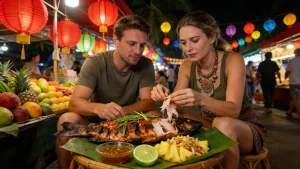
Forget everything you think you know about Chinese food. Yunnan will rewrite it — one wild mushroom hot pot, one bowl of crossing-the-bridge noodles, and one bite of pan-fried goat cheese at a time.
Here’s a confession that every honest Yunnan traveler will eventually make: the food was the best part. Not the snow mountains. Not the ancient towns. Not the sunrise over the rice terraces — though all of those are spectacular. The food. The moment you realize you’re eating pan-fried goat cheese made by a Bai grandmother in a town where cheese has no business existing in China. The night you sit at a bubbling mushroom hot pot in Kunming and taste umami so deep it feels like the earth itself is flavoring the broth. The afternoon in Xishuangbanna when you bite into a whole grilled fish stuffed with lemongrass and wonder whether you’re still in China or have somehow drifted into northern Thailand.
Yunnan’s cuisine doesn’t fit any of the boxes that most visitors carry with them. It’s not Cantonese, Sichuan, or Shanghai. It’s not even one cuisine — it’s a dozen, shaped by 25 ethnic minority groups who each brought their own ingredients, techniques, and flavors to the table. The result is the most diverse food scene in China, built on wild-foraged mushrooms, fresh herbs, Southeast Asian spices, dairy (yes, in China), flowers you’d normally find in a garden, and a tea culture older than most civilizations.
This guide covers the essential dishes, the regional specialties, the street food you should chase, and the practical tips you need to eat your way across the province without missing a thing. If you’re still in the planning stage, our ultimate Yunnan travel guide covers logistics from visas to transport, and our Yunnan culture guide will help you understand the ethnic traditions that shape every dish.
What this guide covers: Why Yunnan food is different → The 5 signature dishes → Eating by region (Kunming, Dali, Lijiang, Xishuangbanna) → Street food → Yunnan’s cheese tradition → Wild ingredients & seasonal eating → Pu’er tea culture → Eating like a local → Tips for adventurous eaters.
Why Yunnan’s Cuisine Is Unlike Anything Else in China
If Chinese cuisine were a family, Yunnan would be the eccentric cousin who traveled the world and came back with impossible stories that all turned out to be true. Most Chinese regional cuisines share a common culinary DNA — soy sauce, rice wine, wok technique, a handful of foundational flavors. Yunnan’s food draws from an entirely different gene pool.
Three things make it unique:
Geography as pantry. Yunnan spans from tropical lowlands at 76 meters elevation to Himalayan peaks above 6,000 meters. That vertical range produces an astonishing variety of ingredients that no other Chinese province can match: tropical fruits and lemongrass in the south, highland herbs and yak meat in the north, and — in the forested middle elevations — the richest wild mushroom harvest on the planet. The province is sometimes called “the kingdom of plants,” and its kitchens prove it.
Ethnic diversity as flavor engine. Each of Yunnan’s 25 minority groups developed cuisine based on what grew in their specific valley, elevation, and microclimate. The Bai people of Dali invented cheese. The Dai people of Xishuangbanna cook with banana leaves and lemongrass. The Hani people of Yuanyang ferment soybeans into a pungent paste that anchors their mountain diet. The Tibetan communities in Shangri-La drink butter tea and eat dried yak strips. One province, a dozen culinary traditions, zero repetition.
The Southeast Asian bridge. Yunnan shares borders with Vietnam, Laos, and Myanmar, and the food reflects it. Walk into a Xishuangbanna kitchen and you’ll see galangal, fish sauce, sticky rice, and grilled meats wrapped in leaves — flavors that feel more Bangkok than Beijing. This cross-border influence, combined with Yunnan’s own indigenous ingredients, creates combinations that exist nowhere else in the world.
The bottom line: if you think you know Chinese food, Yunnan will prove you wrong. And you’ll enjoy every bite of the education.
The 5 Signature Dishes Every Visitor Must Try
You could eat in Yunnan for a month and barely scratch the surface — but these five dishes define the cuisine. Miss any of them and you’ll have a hole in your trip.
1. Crossing the Bridge Rice Noodles (Guòqiáo Mǐxiàn)
This is it — Yunnan’s most iconic dish, its national ambassador, the one that locals will ask if you’ve tried before recommending anything else.
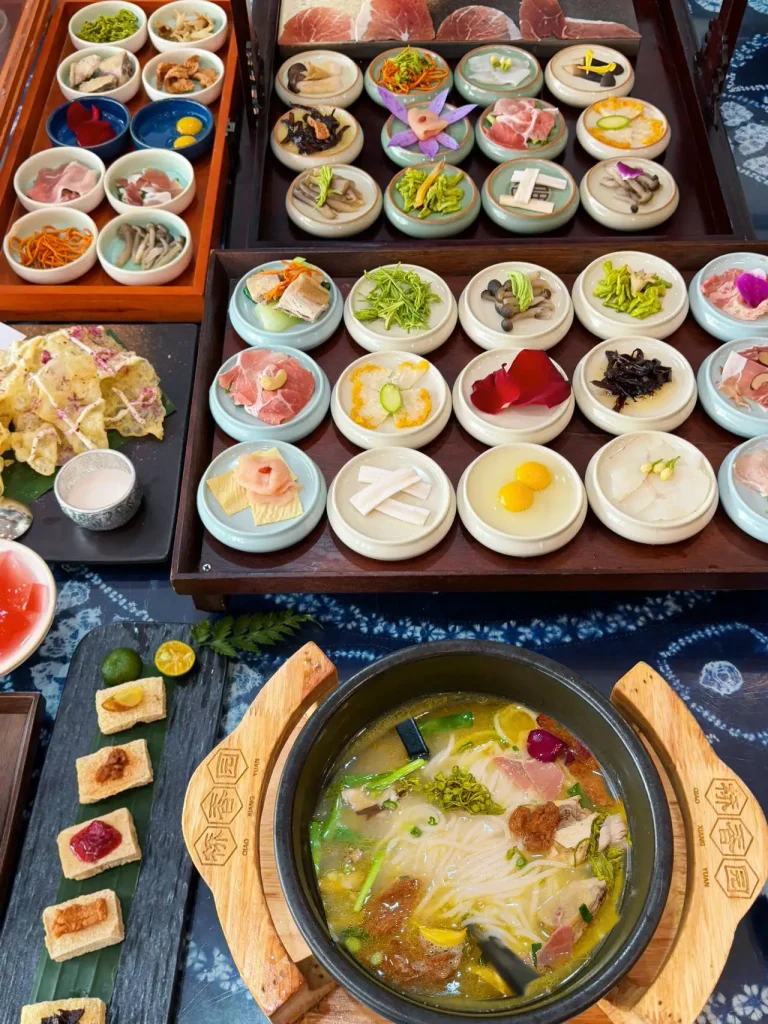
The concept is interactive and slightly theatrical. A bowl of chicken broth arrives at your table, its surface sealed by a thin layer of oil so hot that it doesn’t even steam — which tricks you into thinking it’s cooler than it is. (It’s not. It’s scalding.) Alongside the bowl come a dozen or more small plates: paper-thin slices of raw chicken or pork, quail eggs, chrysanthemum petals, tofu skin, ham, chives, and finally the star — silky, springy rice noodles. You add the ingredients one by one, and the boiling broth cooks everything in seconds right at your table.
The dish originated in the city of Mengzi in southeastern Yunnan, and the love story behind it — about a wife who figured out how to keep soup hot during the long walk across a bridge to her scholar husband — is inseparable from the experience. The most extravagant restaurant versions come with 20+ ingredient plates and premium broth; street-stall versions are simpler but still delicious. In Kunming, Jianxin Garden on Baita Road is a local institution.
For the full history, the best restaurant picks across the province, and how to distinguish a tourist-trap bowl from the real thing, read our Crossing the Bridge Rice Noodles guide.
2. Wild Mushroom Hot Pot (Yě Shēng Jūn Huǒguō)
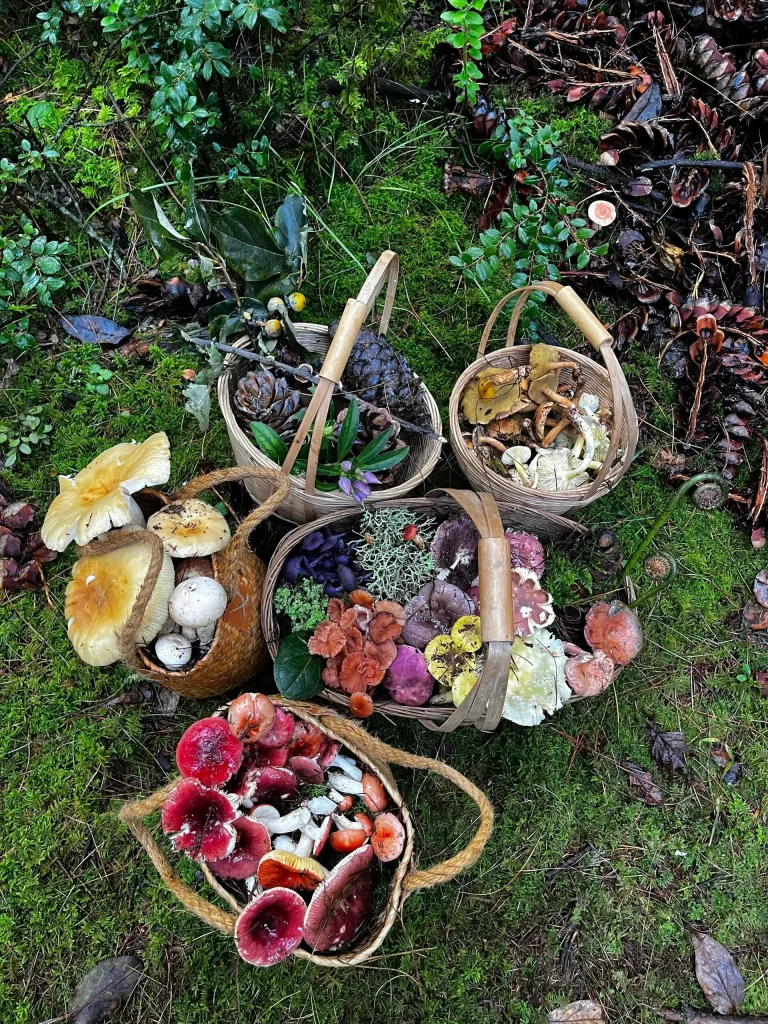
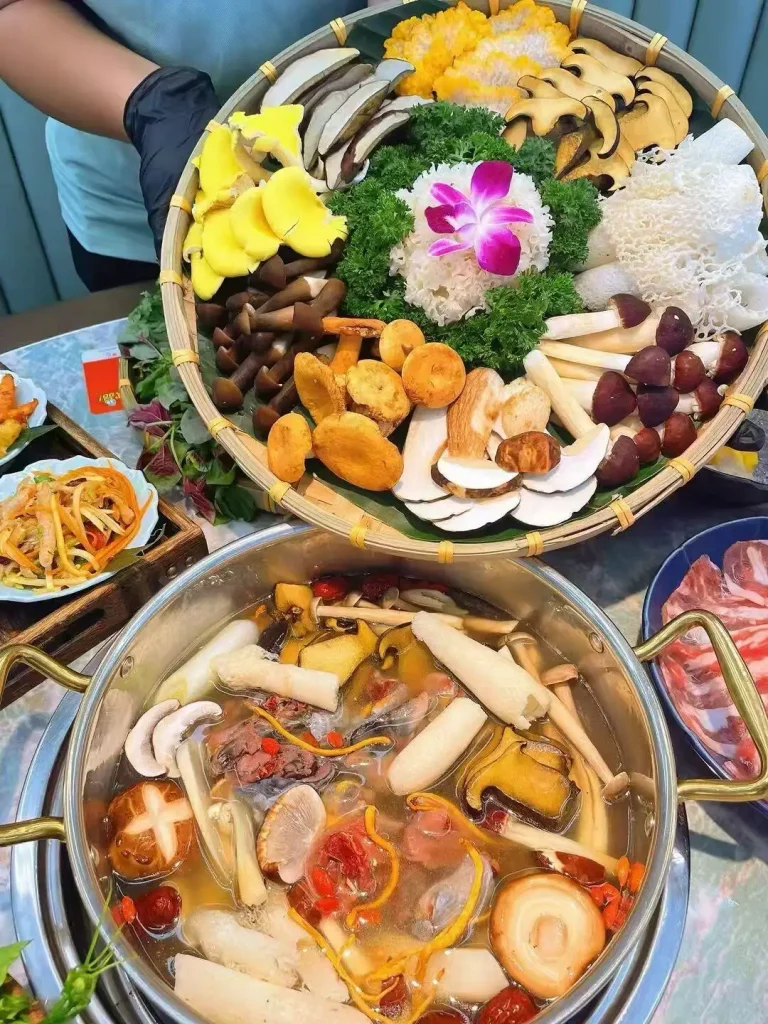
Between June and October, something extraordinary happens in Yunnan’s mountain forests. The summer monsoon triggers the most prolific wild mushroom harvest on Earth — over 800 edible species, more than any other single region in the world. Matsutake, porcini, chanterelles, chicken-oil mushrooms (jīyóu jūn), termite mushrooms (jīzōng), goose-egg mushrooms, green-head mushrooms, and dozens of varieties that don’t even have English names all flood into the markets and restaurants.
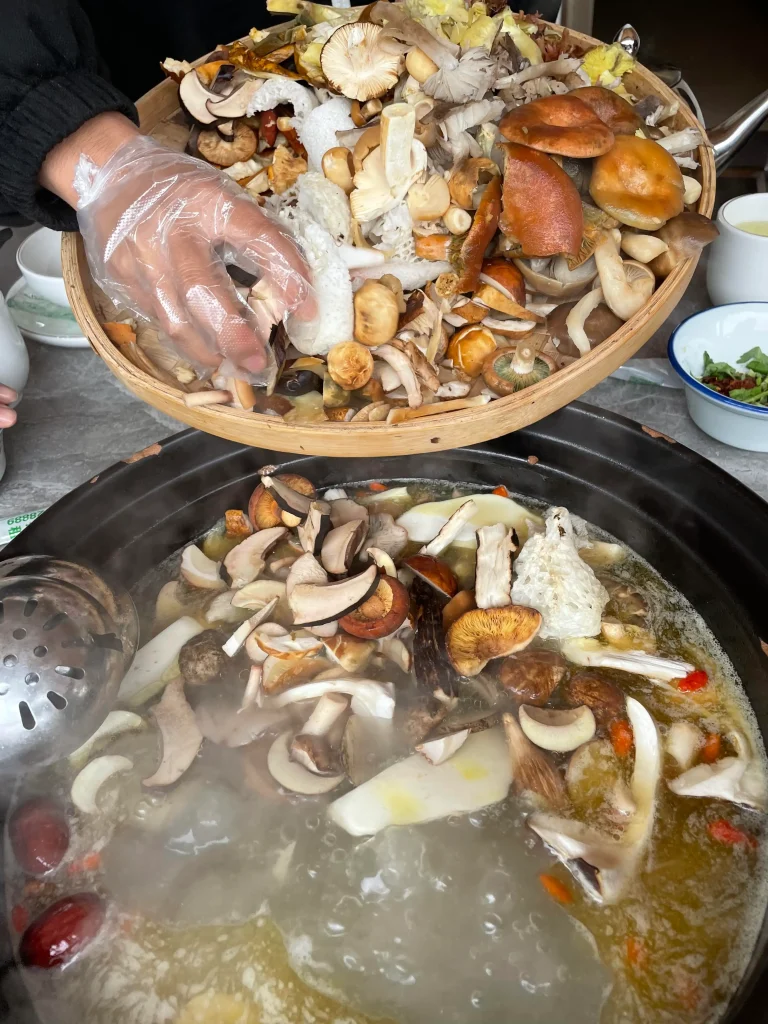
The centerpiece experience is the mushroom hot pot. A bubbling cauldron of rich, umami-heavy broth arrives at your table, and you feed it a rotating selection of fresh wild mushrooms — each with its own texture, flavor, and cooking time. The depth of flavor is extraordinary: earthy, meaty, slightly sweet, with an umami punch that no cultivated mushroom can match. It’s the kind of meal that recalibrates your sense of what food can taste like.
A critical safety note: some wild Yunnan mushrooms are psychoactive, and every summer the local news runs stories about “the season’s first mushroom poisoning.” Eat wild mushrooms only at established, reputable restaurants where experienced staff know exactly which species are safe and how long each variety needs to cook. Kunming’s Guanshang neighborhood has the highest concentration of dedicated mushroom restaurants. Our wild mushroom season guide covers species identification, the best restaurants, and what to expect.
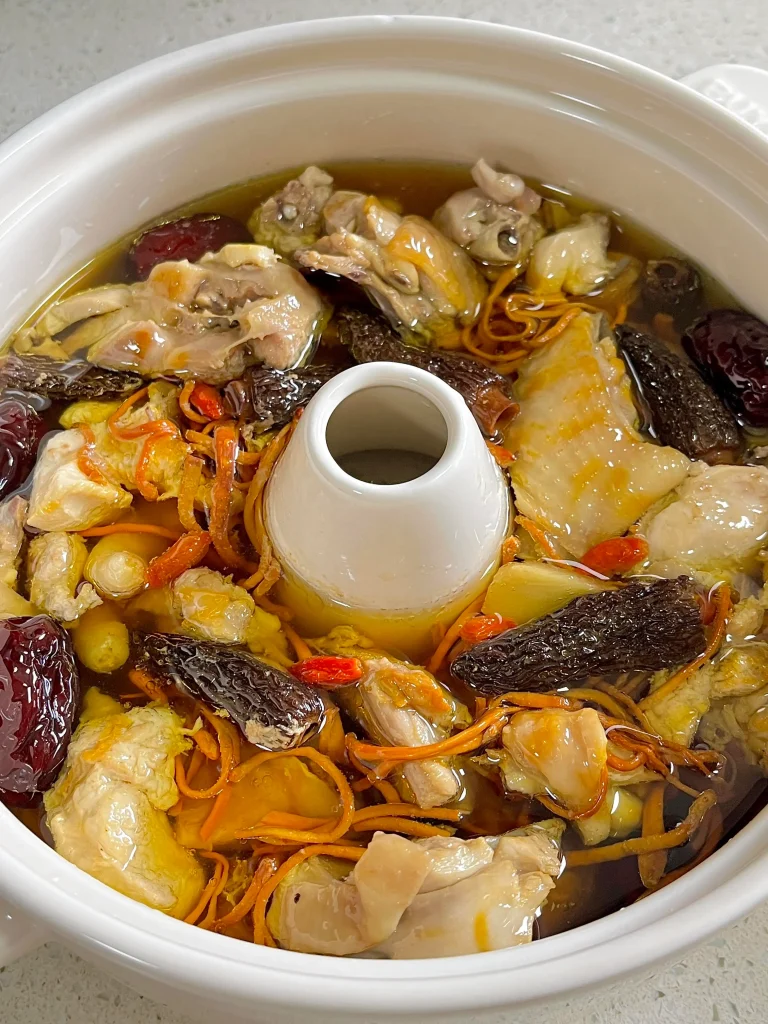
3. Steam Pot Chicken (Qìguō Jī)
If crossing the bridge noodles are Yunnan’s showpiece and mushroom hot pot is its seasonal obsession, steam pot chicken is its soul food — the dish that Yunnanese people think of when they think of home.
The technique is ancient and elegantly simple. A whole free-range chicken is placed inside a specially designed clay pot from Jianshui — a town in southeastern Yunnan that has been producing these pots for centuries. The pot has a central chimney, and when set over boiling water, steam rises through the chimney, condenses on the lid, and drips back down onto the chicken. No water is ever added directly. The result, after hours of slow steaming, is the purest, most concentrated chicken soup you will ever taste — liquid gold that captures the essence of the bird with nothing diluted and nothing added.
The best versions are made with Yunnan free-range chickens (tǔ jī), which have a flavor intensity that factory-farmed birds can’t approach. Some restaurants add ginseng, goji berries, or Yunnan’s prized pseudo-ginseng (sānqī) for a medicinal variation. Others add matsutake mushrooms during mushroom season, creating a combination of clean poultry flavor and deep earthy umami that’s almost unreasonably good.
You’ll find steam pot chicken across the province, but the most authentic versions — made in genuine Jianshui clay pots — are in Kunming and Jianshui itself. For the full story of the dish, the pot, and our restaurant picks, see our steam pot chicken guide.
4. Dai Grilled Fish (Kǎo Yú)
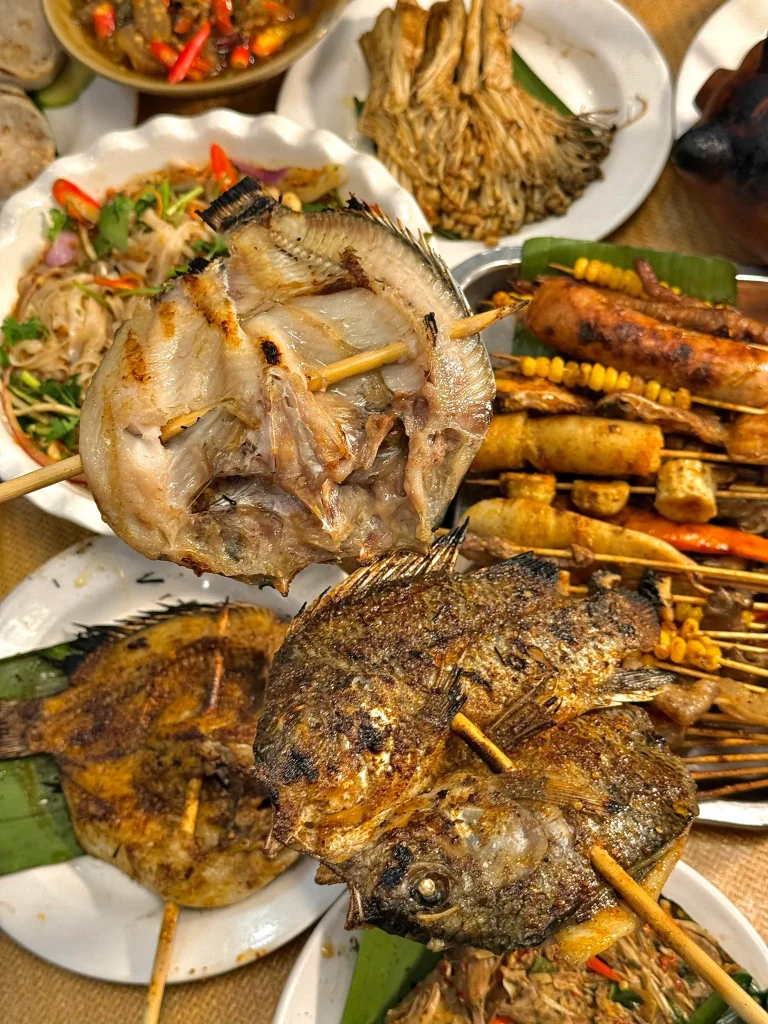
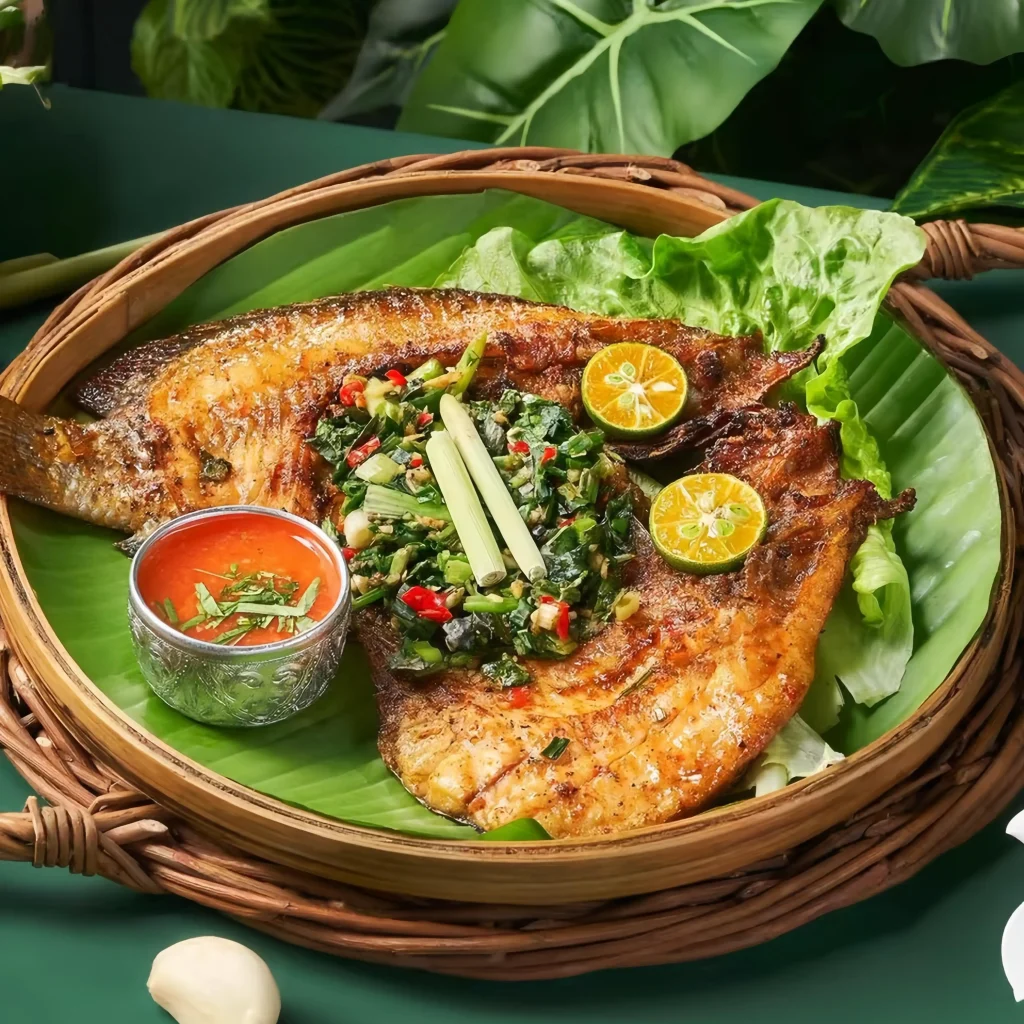
Walk through any night market in Xishuangbanna and your nose will lead you to this dish before your eyes do. Whole freshwater fish — typically Nile tilapia or local river fish — is butterflied, stuffed with a fragrant paste of lemongrass, galangal, cilantro, chili, garlic, and wild herbs, then clamped in a bamboo frame and grilled slowly over charcoal until the skin shatters and the flesh is falling-apart tender.
The Dai people have been cooking fish this way for centuries, and it’s the single dish that best captures Yunnan’s identity as the bridge between China and Southeast Asia. The flavors — sour, spicy, herbal, smoky — are more reminiscent of northern Thailand than anything you’d find in eastern China. The dipping sauce, a fiery blend of chili, lime, fermented fish paste, and fresh herbs, ties it all together.
The Manting Road night market in Jinghong is the most famous spot, but smaller stalls in Dai villages often produce the most memorable versions. Combine with pineapple rice, bamboo-tube sticky rice, and a local Lancang River beer for the definitive Xishuangbanna evening. Our Xishuangbanna food guide covers the best night markets, stalls, and the full range of Dai cuisine.
5. Erkuai — Yunnan’s Breakfast of Champions
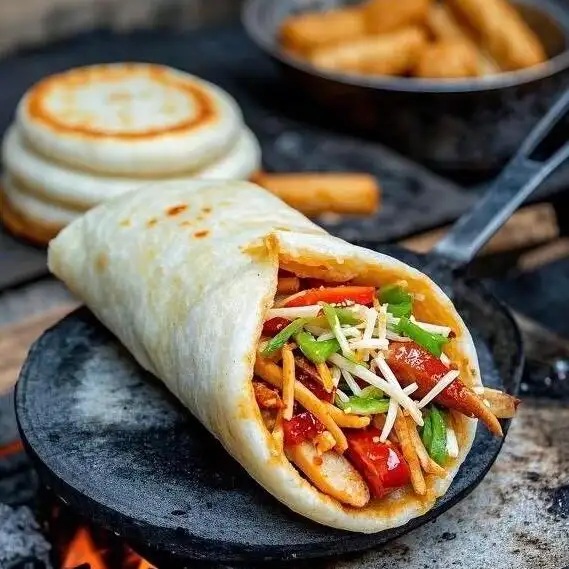
If crossing the bridge noodles are Yunnan’s most famous dish, erkuai is its most eaten one. These dense, chewy rice cakes — made from steamed then pounded glutinous rice — are to Yunnan what bread is to France: the foundational carb that shows up at every meal, in every form, across the entire province.
At breakfast stalls in Kunming, erkuai is grilled over charcoal until the surface blisters and the inside turns molten-soft, then slathered with chili paste, fermented bean sauce, and wrapped around a crunchy fried dough stick (yóutiáo). In Dali, it’s sliced into thin strips and stir-fried with ham and vegetables. In some mountain areas, it’s served in soups. The texture is unlike anything in Western cuisine — chewier than rice, denser than bread, with a satisfying pull that becomes addictive once you develop the taste.
You’ll find erkuai at street food stalls everywhere in the province, and it costs almost nothing — usually 5–8 yuan (less than $1). It’s the quintessential Yunnan snack, the one that locals eat daily and tourists often walk past without knowing what they’re missing. Don’t walk past it.
Eating by Region: A City-by-City Food Map
One of the joys of traveling through Yunnan is that the food changes dramatically every time you move to a new city. Here’s what to eat where.
Kunming — The Capital’s Greatest Hits
As the provincial capital and transportation hub, Kunming is where all of Yunnan’s regional cuisines converge. It’s the best city in the province for sampling everything in one place, especially if your time is limited.
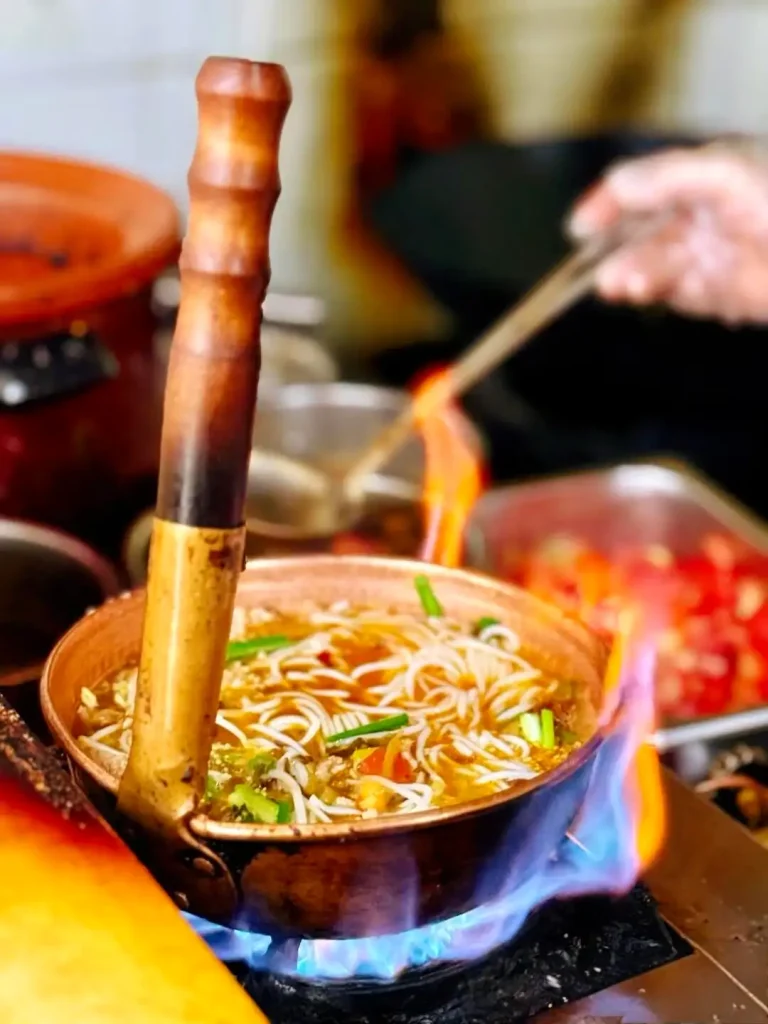
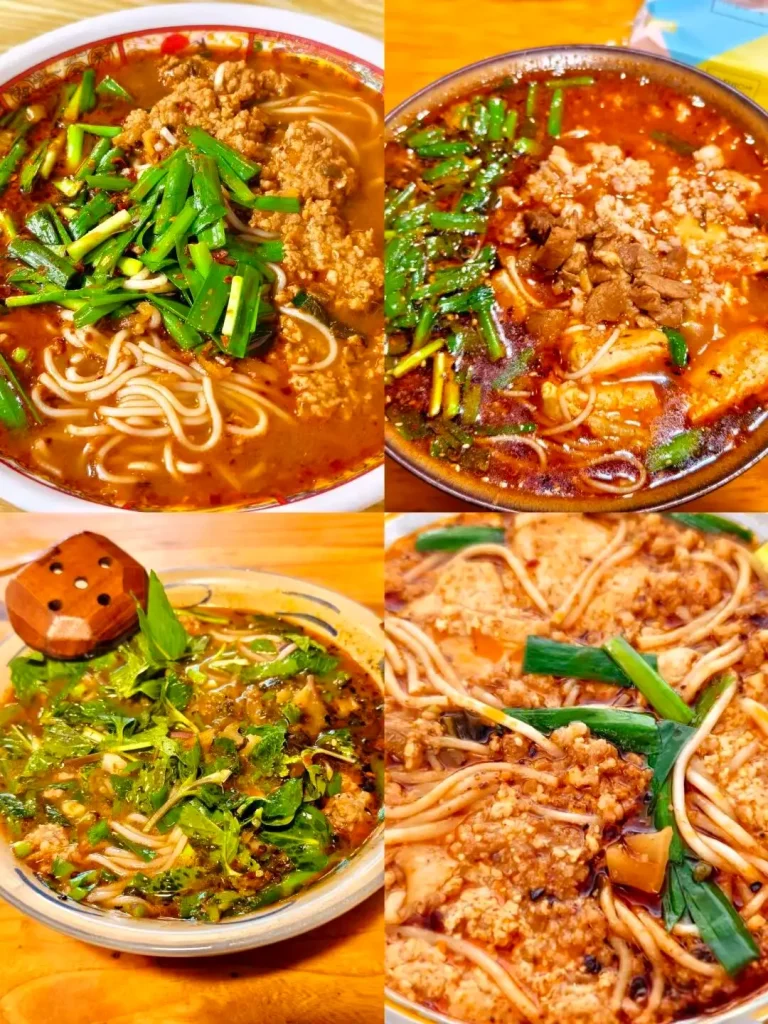
Must-eat experiences: crossing the bridge rice noodles at a traditional restaurant (the city has hundreds of variations, from 15-yuan street bowls to 200-yuan banquet versions), wild mushroom hot pot during season (June–October), steam pot chicken at a Jianshui-style restaurant, grilled erkuai for breakfast from any busy street stall, and Kunming’s own signature — small pot rice noodles (xiǎo guō mǐxiàn), where a single-serving clay pot of noodle soup is cooked over a fierce flame at blinding speed, arriving at your table still bubbling.
Don’t miss the food streets: Guanshang for mushrooms, Nanqiang Jie for street snacks, and the area around the Bird & Flower Market for casual daytime eating. Our Kunming travel guide has a full food section with maps.
Dali — Bai Cuisine & Erhai Lake Flavors
Dali’s food is shaped by the Bai people and by what Erhai Lake and the Cangshan Mountains provide. The flavors are subtler and more dairy-forward than the rest of the province — this is where Yunnan’s unique cheese tradition lives.
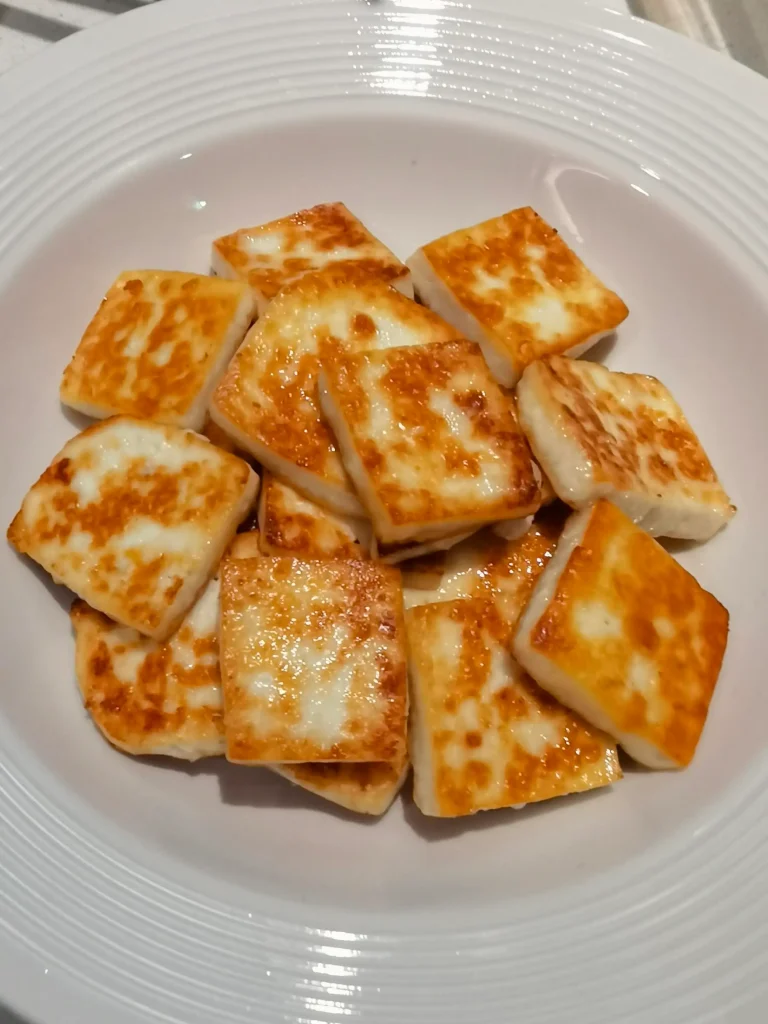
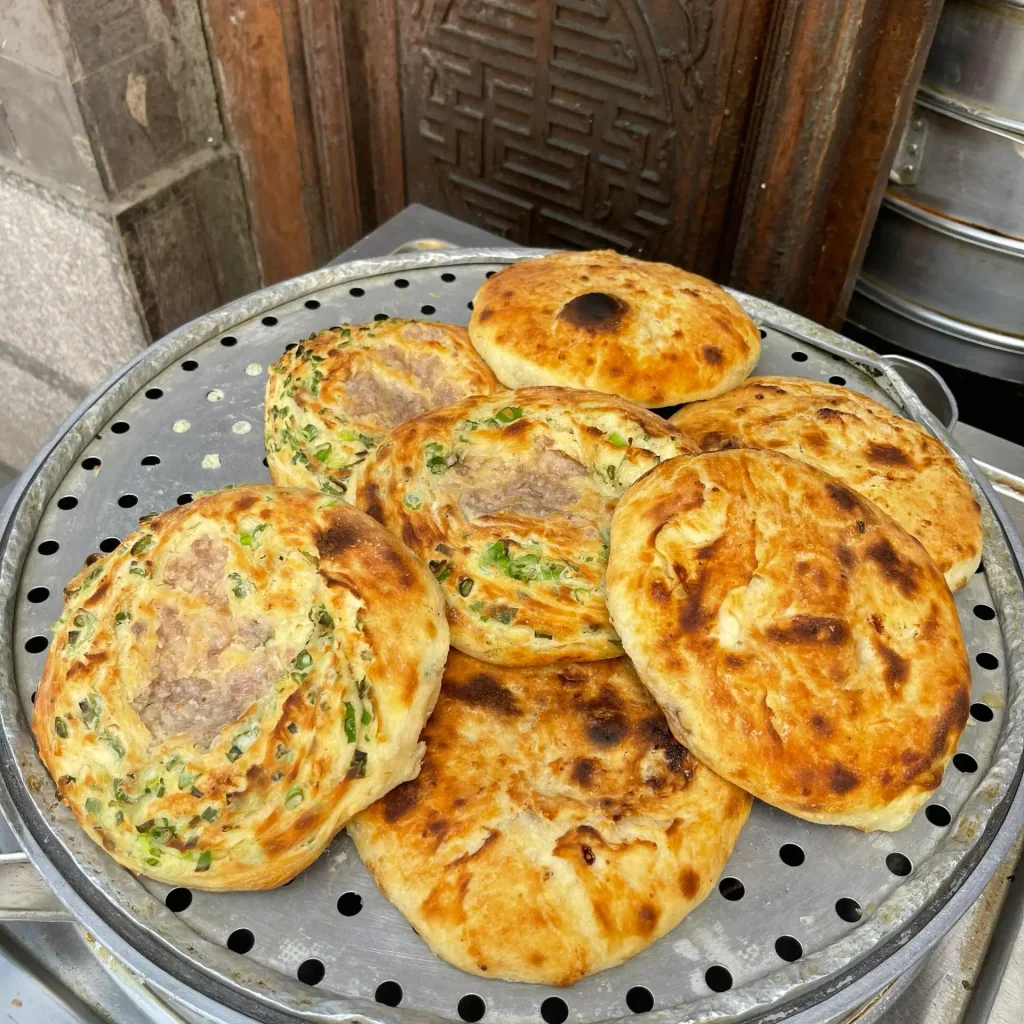
Must-eat experiences: pan-fried rubing (goat’s milk cheese) drizzled with rose jam, rushan (milk fan) — a thin sheet of stretched dried cheese fried until crispy, Erhai lake fish cooked sour (suān là yú), the Bai three-course tea ceremony in Xizhou (first cup bitter, second sweet, third reflective — read more in our Bai culture guide), and the famous Xizhou baba — a flaky, pan-fried flatbread stuffed with either savory (ham, green onion) or sweet (rose, brown sugar) fillings that’s become Dali’s unofficial street food mascot.
The morning market in Xizhou, on the western shore of Erhai Lake, is one of Yunnan’s best food experiences — Bai grandmothers selling fresh rubing still warm from the mold, stalls frying erkuai over charcoal, vendors piling up herbs and wild vegetables you can’t identify. Go hungry and early. Our Dali food guide covers every dish, market, and restaurant you need.
Lijiang — Naxi Flavors & High-Altitude Comfort Food
Lijiang sits at 2,400 meters, and the food reflects the altitude — hearty, warming, built for cold mountain evenings. The Naxi people shaped the local cuisine, which leans heavier on preserved meats, starchy staples, and slow-cooked dishes than the lighter fare of Dali or Xishuangbanna.
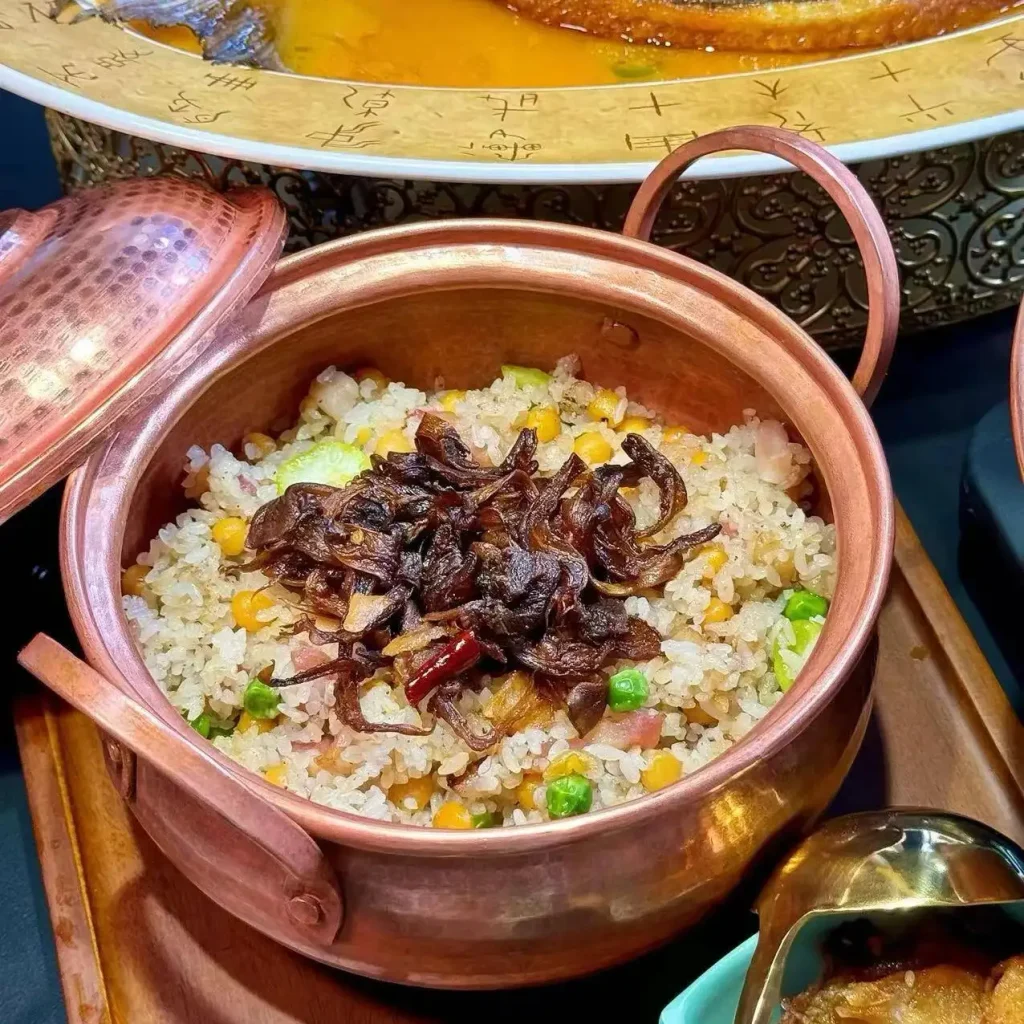
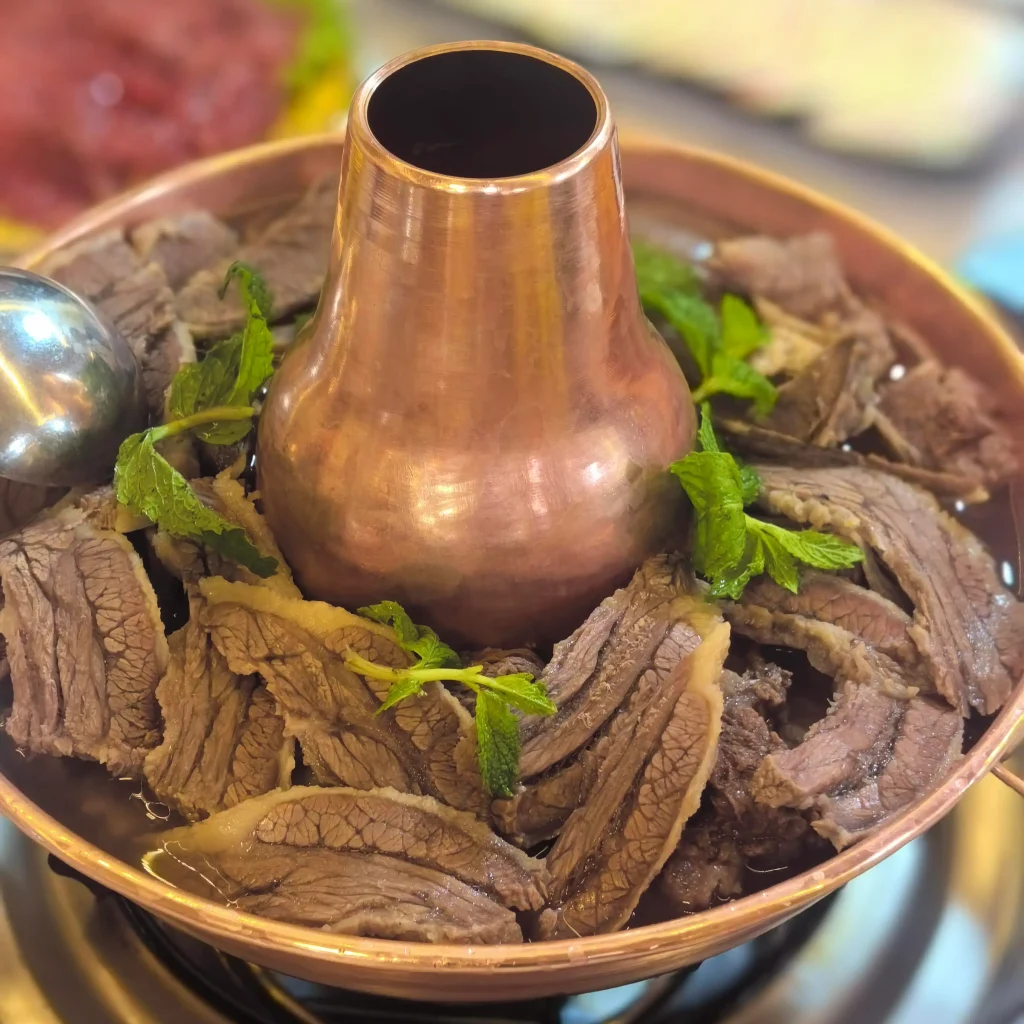
Must-eat experiences: Naxi copper pot rice (tóng guō fàn) — rice, cured meat, vegetables, and mushrooms cooked together in a heavy copper pot over coals, arriving at the table sizzling and crusted at the bottom. The crusty rice layer (guōba) at the bottom of the pot is the best part — crispy, smoky, and deeply satisfying. Also try: Lijiang baba (a Naxi flatbread quite different from the Xizhou version), yak meat hot pot, and jidou liangfen — a savory jelly made from chickpea flour, cut into strips, and dressed with chili, vinegar, and Sichuan pepper. It’s served cold, and on a warm afternoon in the Old Town, it’s the perfect snack.
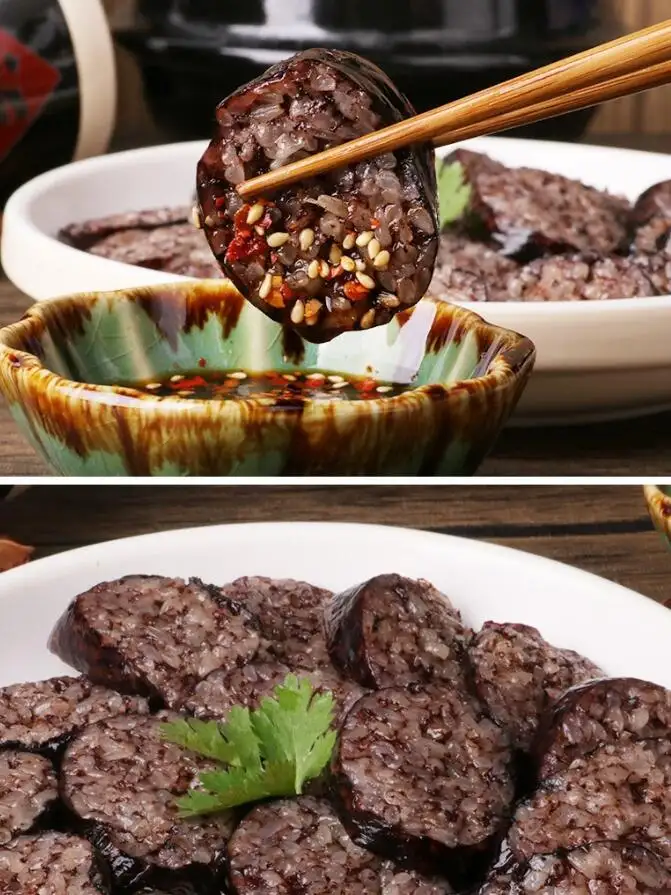
For the adventurous: Naxi blood sausage (xuè chángzi) — pig blood, rice, spices, and herbs stuffed into intestine casing and fried — is a local delicacy that rewards open-mindedness. Our Lijiang food guide covers the full Naxi culinary tradition and the best places to eat in and around the Old Town.
Xishuangbanna — Southeast Asia on a Chinese Plate
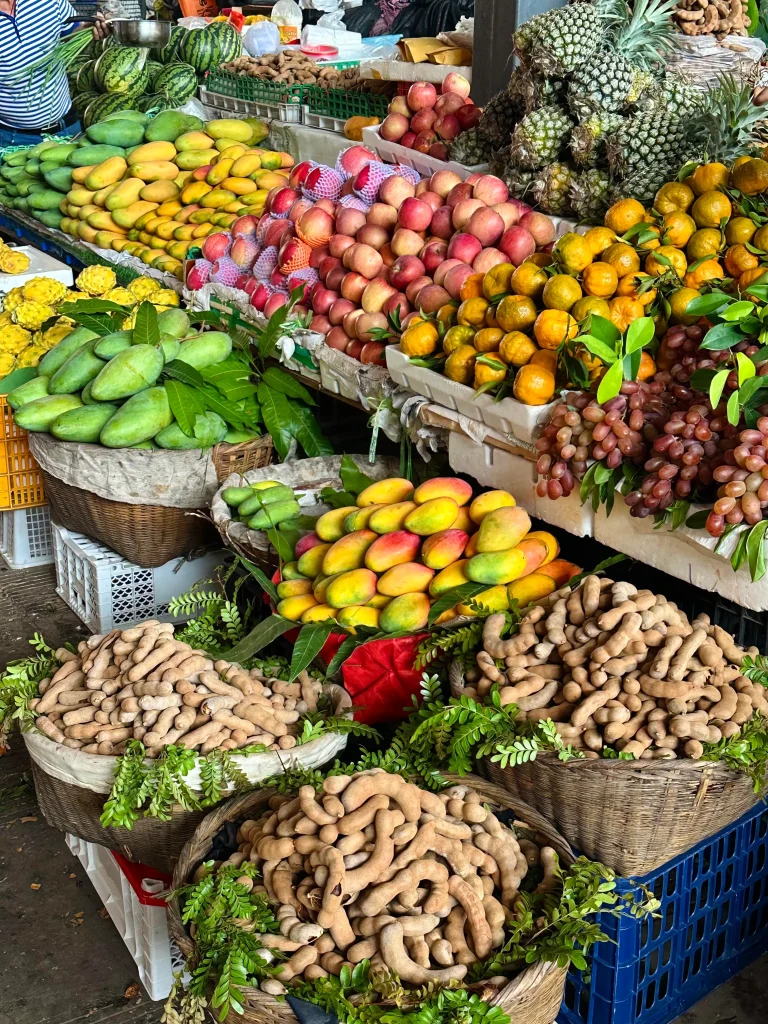
If Yunnan’s food scene were a spectrum, Xishuangbanna would be at the farthest end from anything you’d recognize as “Chinese.” The Dai people cook with banana leaves, lemongrass, galangal, wild basil, and a fermented fish sauce that could pass for a Thai pantry staple. The tropical climate delivers ingredients that don’t exist elsewhere in the province: jackfruit, dragon fruit, passion fruit, mangosteen, and a dizzying variety of tropical herbs.
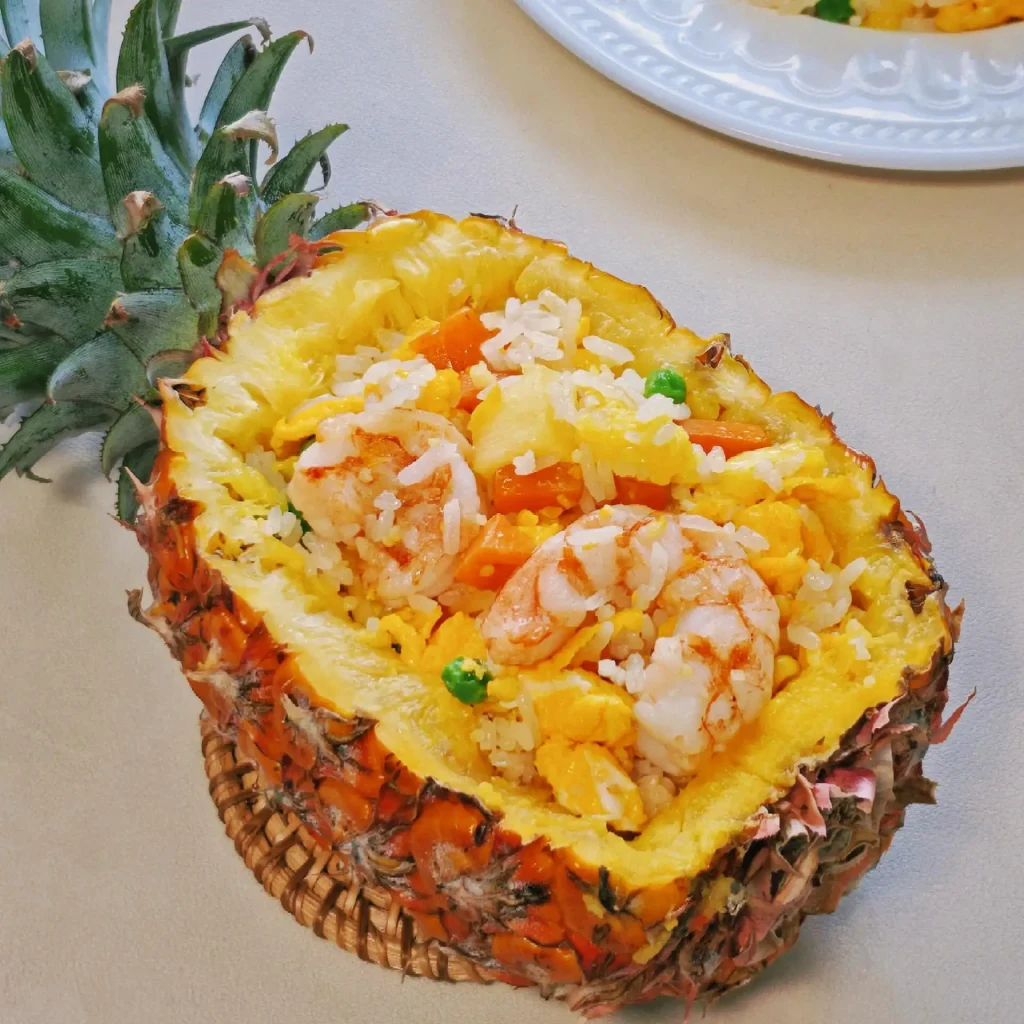
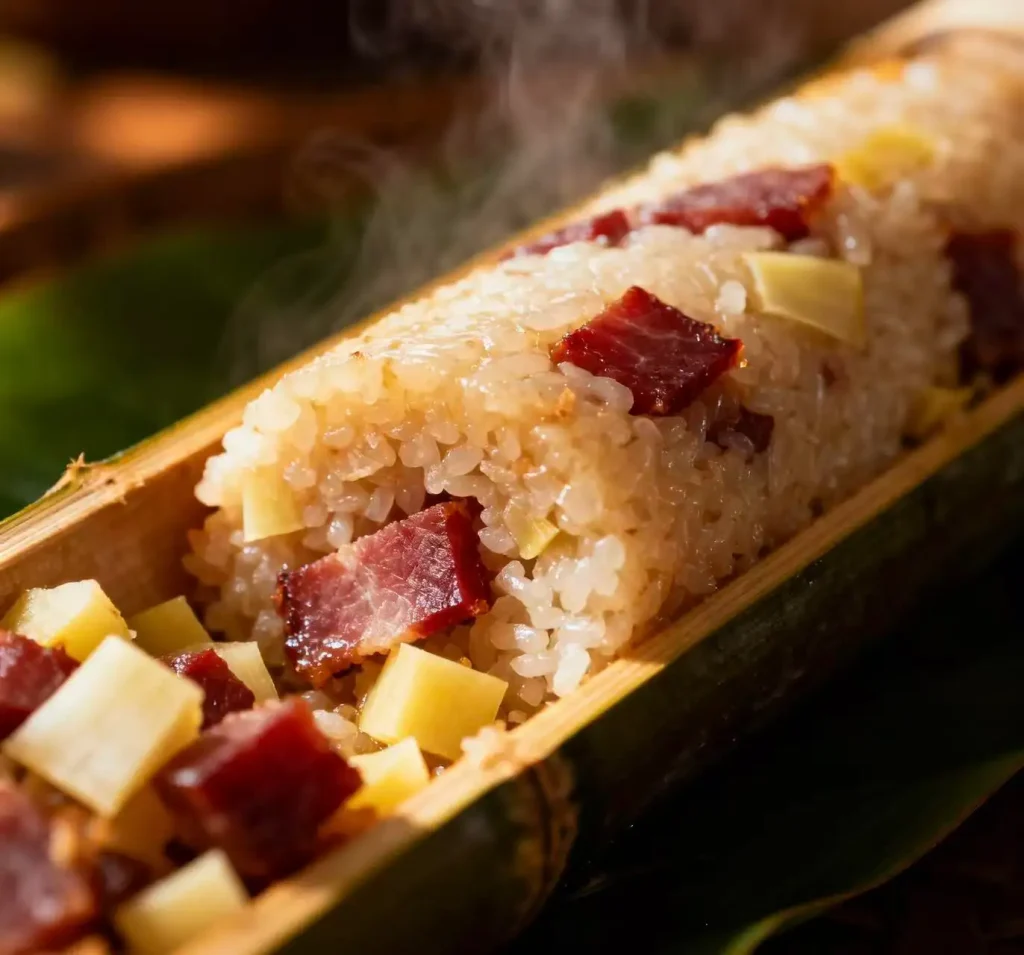
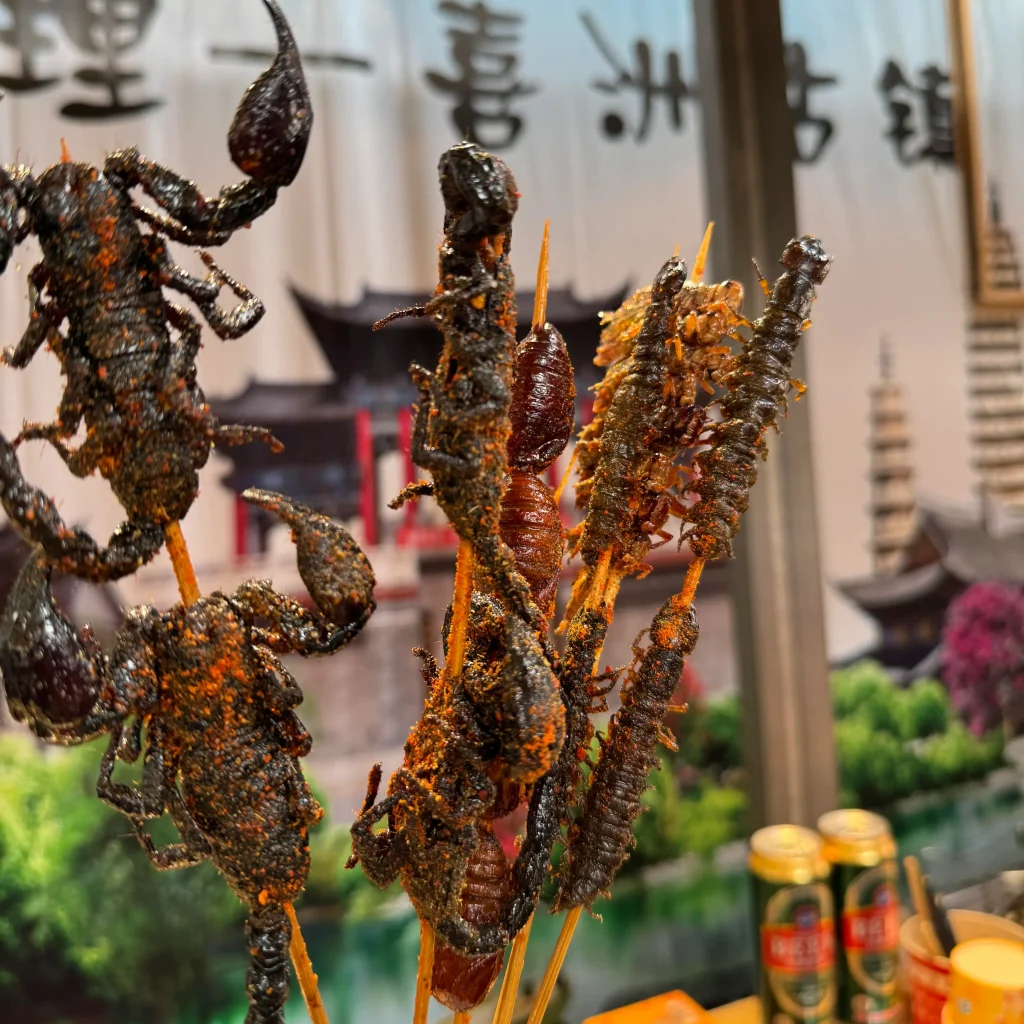
Must-eat experiences: Dai grilled fish (the dish described above — skip it at your peril), pineapple rice (served inside a carved-out pineapple), sticky rice steamed in bamboo tubes (zhútǒng fàn), Dai-style raw lime beef (a tartare-like dish for adventurous eaters), sour bamboo shoot soup, and grilled meats wrapped in banana leaves at the night markets. For the truly fearless: fried bamboo worms, silk pupae, and water beetles arranged in glistening piles at the more adventurous stalls.
The night markets of Jinghong — particularly the Manting Road market and the more local Gasa Road market — are the center of the food universe here. Go after 7 PM, bring an empty stomach and an open mind, and eat until you can’t move. The full breakdown is in our Xishuangbanna food guide, and our Xishuangbanna travel guide puts the food into a broader itinerary context.
Shangri-La — Highland Cuisine on the Tibetan Plateau
At 3,300 meters, the food turns Tibetan. The flavors are denser, the portions heavier, and the cooking traditions drawn from the harsh realities of high-altitude life where calories matter and growing seasons are short.
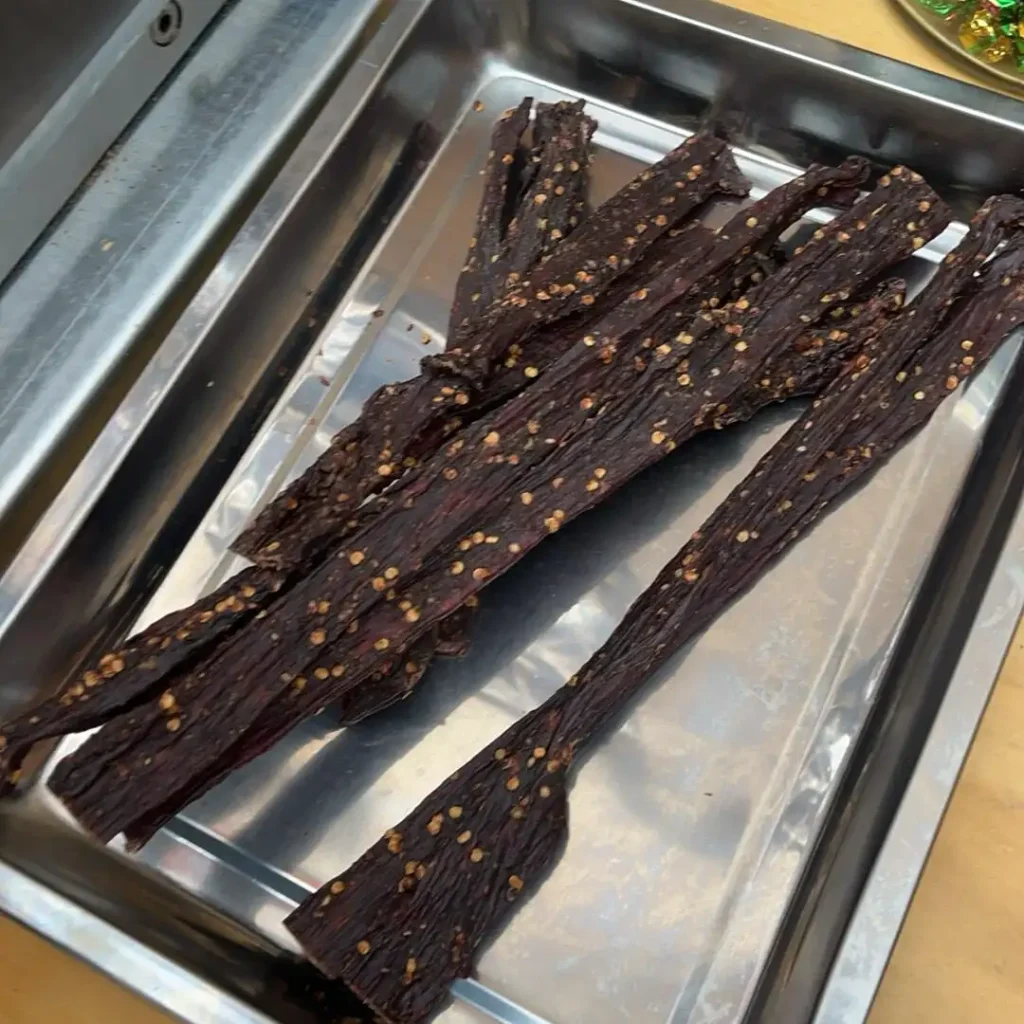
Must-try experiences: yak meat — served dried in strips (like a deeply flavorful jerky), stewed in hot pots, or stir-fried with wild vegetables. Butter tea (sū yóu chá) — made from yak butter, salt, and tea leaves churned together into a rich, savory brew that Tibetans drink all day. First-time visitors usually find it challenging; by the third cup, many are converts. Tsampa — roasted barley flour mixed with butter tea into a dough-like ball — is the staple food of the Tibetan highlands and an experience every visitor should try at least once.
The yak meat hot pot restaurants in Dukezong Old Town are the best introduction to highland cuisine, and several guesthouses serve traditional Tibetan breakfasts. Our Shangri-La travel guide includes food recommendations alongside the full destination guide. For a deeper understanding of the Tibetan culture behind the food, see our culture article.
Street Food: The Real Soul of Yunnan Eating
If the signature dishes are Yunnan’s main act, the street food is its soul. In every city, every town, every morning market across the province, you’ll find vendors whose entire career has been dedicated to perfecting a single snack. And it’s at these stalls — not in the restaurants — where you’ll eat some of your most memorable meals.
Here’s a taste of what to look for:
Grilled erkuai — Charcoal-grilled rice cakes wrapped around fried dough sticks, smeared with chili paste and fermented bean sauce. Breakfast in Kunming. Cost: 5 yuan.
Xizhou baba — Flaky Bai flatbread, either sweet (rose and sugar) or savory (ham and green onion), pan-fried in a shallow oil bath until golden and shatteringly crispy. Breakfast in Dali.
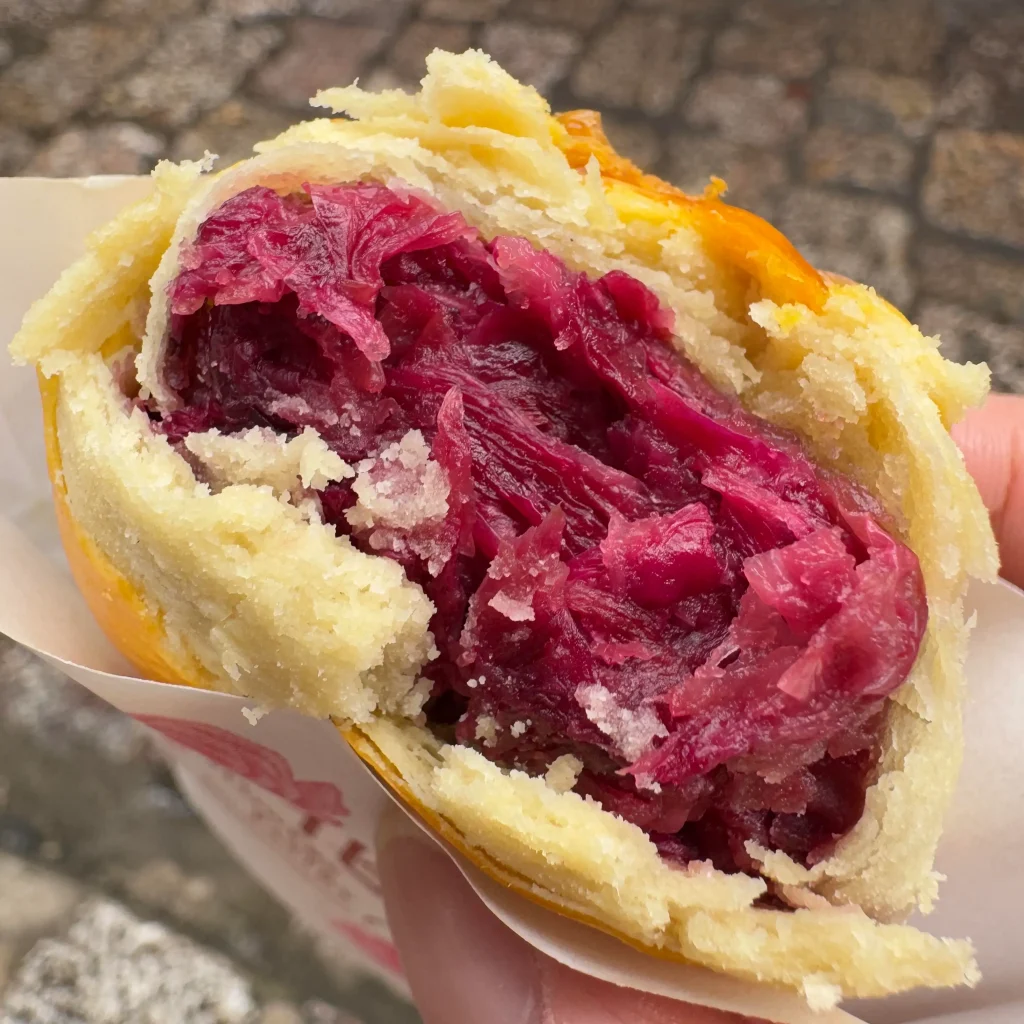
Rose cakes (méiguī bǐng) — Flaky pastry shells filled with a fragrant, jammy paste made from Yunnan’s famous edible roses. The best ones come from bakeries in Kunming that use real roses and butter (not the industrial versions sold in tourist shops). Yunnan’s most giftable food.
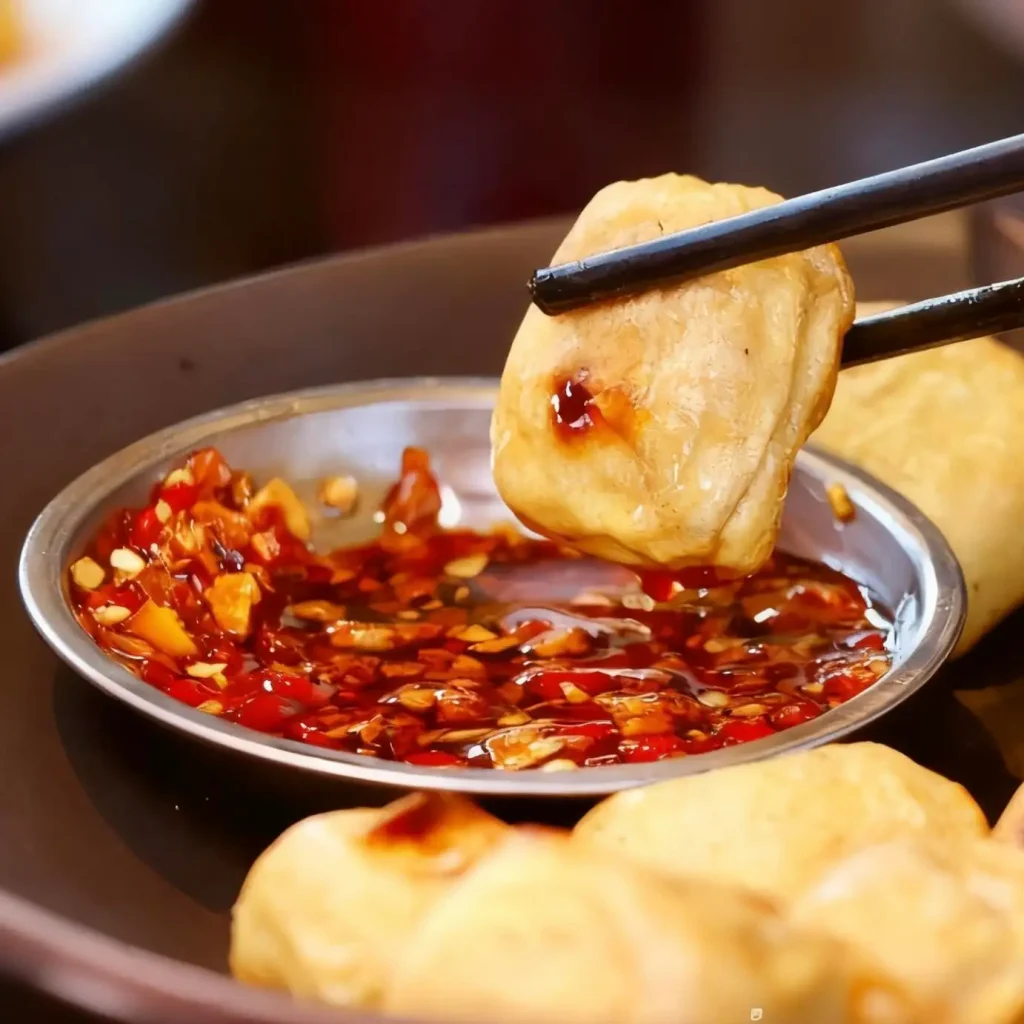
Jianshui grilled tofu — In the town of Jianshui, vendors grill tiny cubes of locally made tofu over charcoal until the outside is blistered and crispy and the inside turns custardy-soft. Dipped in a dry chili-and-cumin powder, it’s one of the best bites in the province. You can eat a dozen for under 10 yuan.
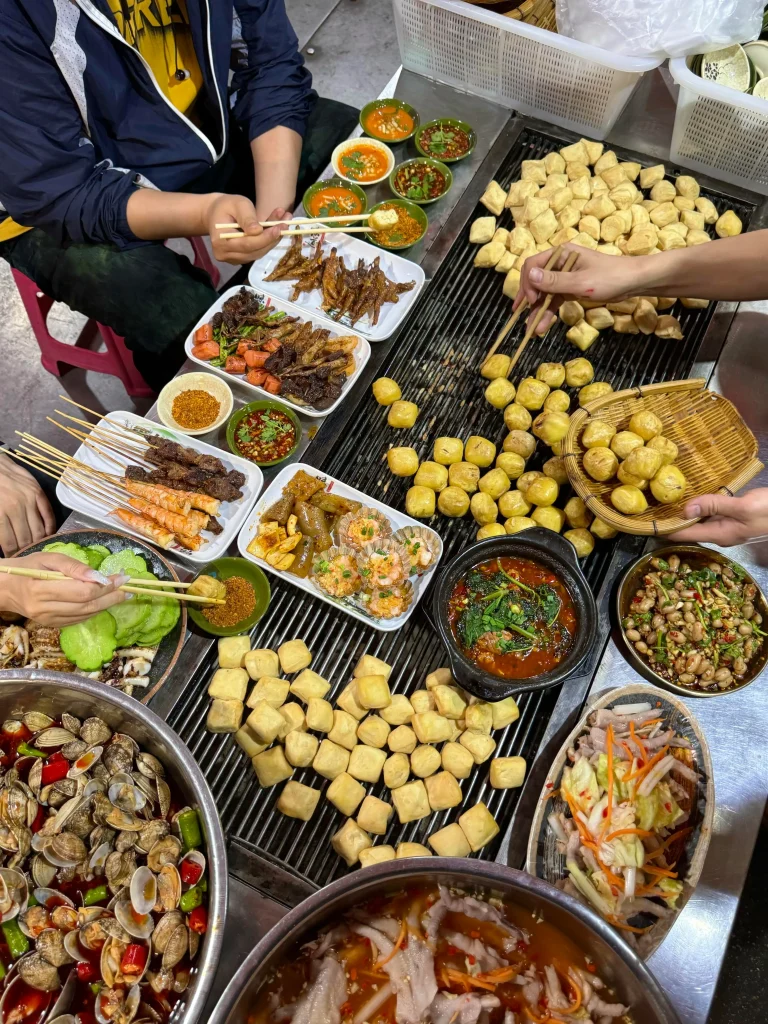
Barbecue everything — Yunnan’s shaokao (barbecue) culture is intense. Night markets and street-side grills serve everything from lamb skewers to squid to potato slices to whole fish, all cooked over charcoal and dusted with cumin, chili, and Sichuan pepper.
Doufen (chickpea jelly) — A cold savory snack served all over the province: chickpea starch set into a jelly, cut into strips or noodle shapes, and dressed with chili oil, vinegar, garlic, and crushed peanuts. Refreshing, cheap, and dangerously addictive.
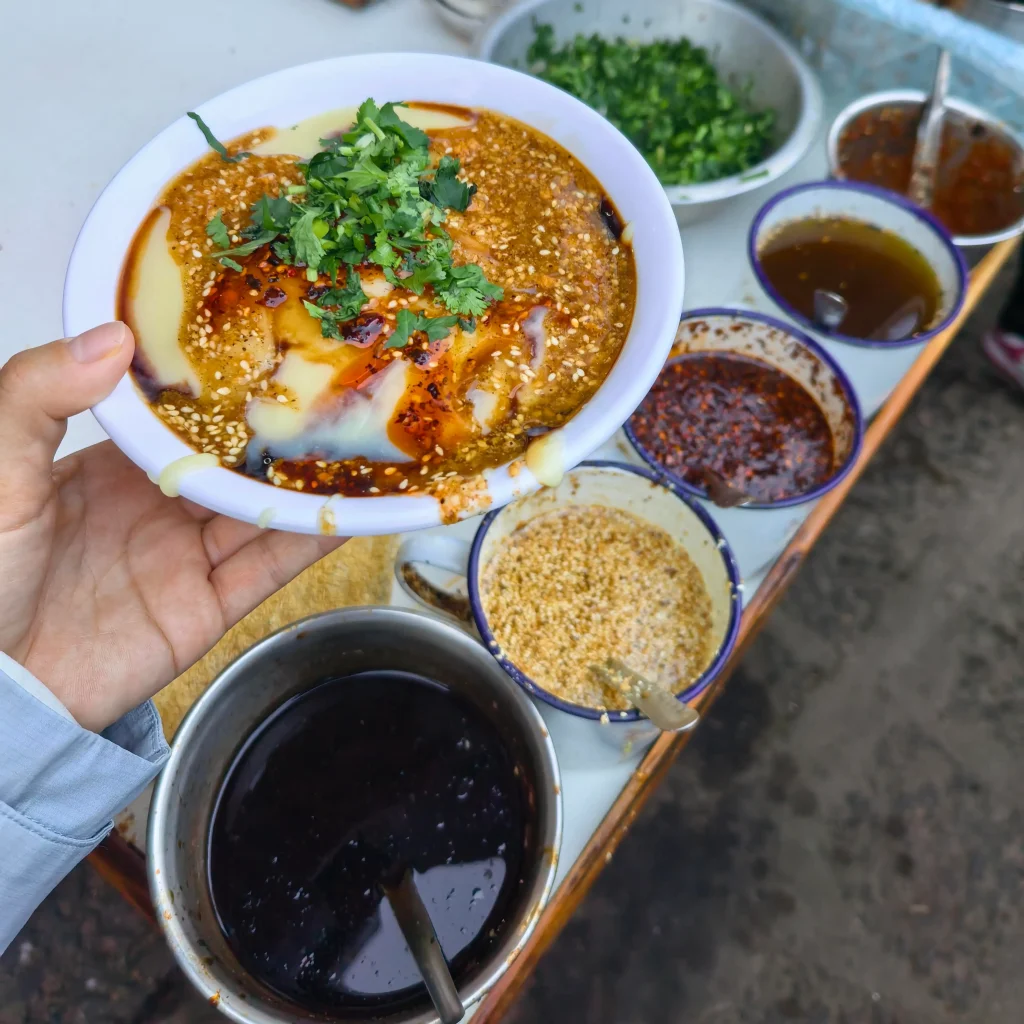
For the full rundown — including 15 essential snacks with photos, locations, and prices — dive into our Yunnan street food guide.
Yunnan’s Cheese: China’s Most Unlikely Dairy Tradition
Here’s a fact that surprises nearly every visitor: Yunnan has cheese. Real cheese. And it’s been making it for centuries.
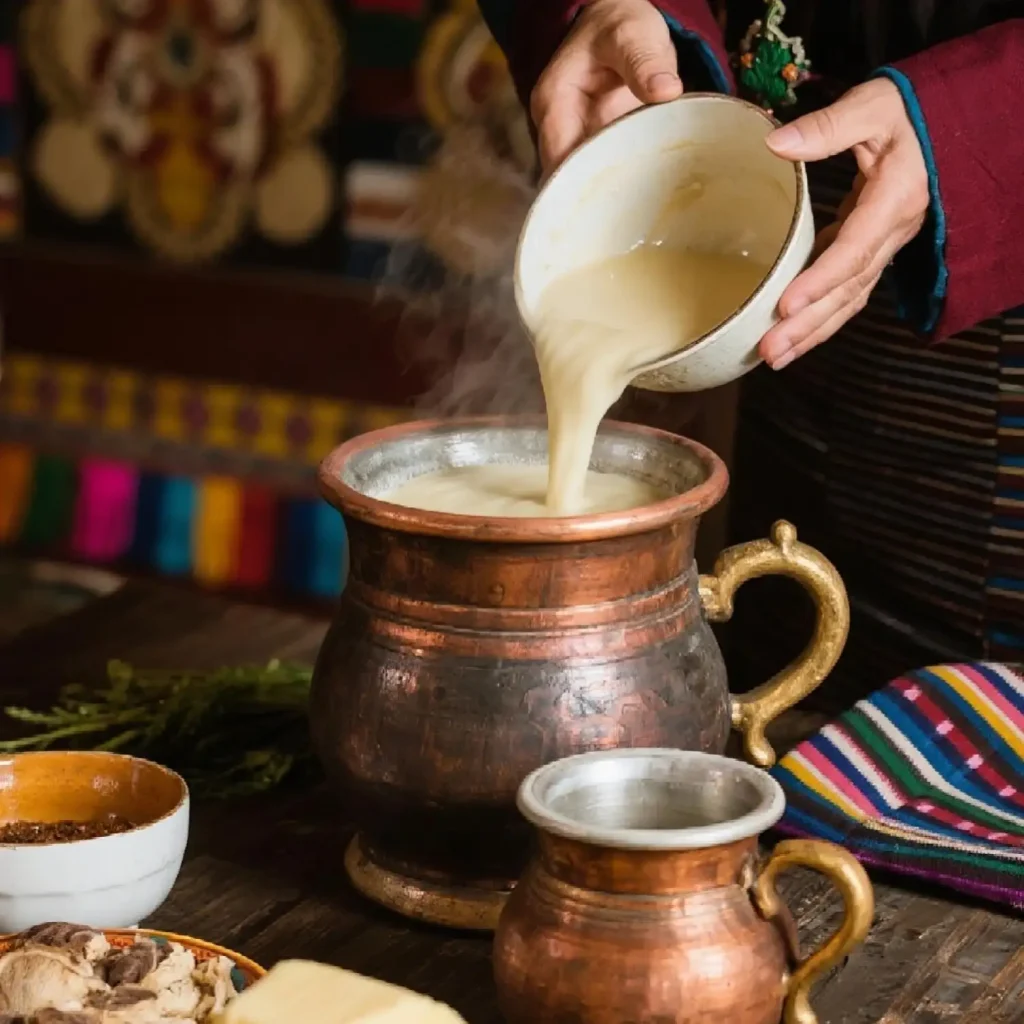
China is not a dairy country. Across the vast majority of the nation, cheese simply doesn’t exist in the culinary tradition — which makes Yunnan’s Bai people a genuine anomaly. In the Dali region, Bai families have been producing rubing — a firm, white goat’s milk cheese — for generations. The process is straightforward: fresh goat’s milk is curdled with acid (traditionally vinegar or sour papaya juice), pressed into flat cakes, and served fresh.
What makes rubing special isn’t its complexity — it’s its versatility and its sheer improbability. Pan-fried until the outside turns golden-brown and slightly crispy while the inside stays soft and squeaky (think halloumi), it’s served with a sprinkle of salt and chili, or — in the version that converts even skeptics — drizzled with local rose-petal jam. The contrast of savory cheese and floral sweetness is the kind of combination that sounds wrong and tastes revelatory.
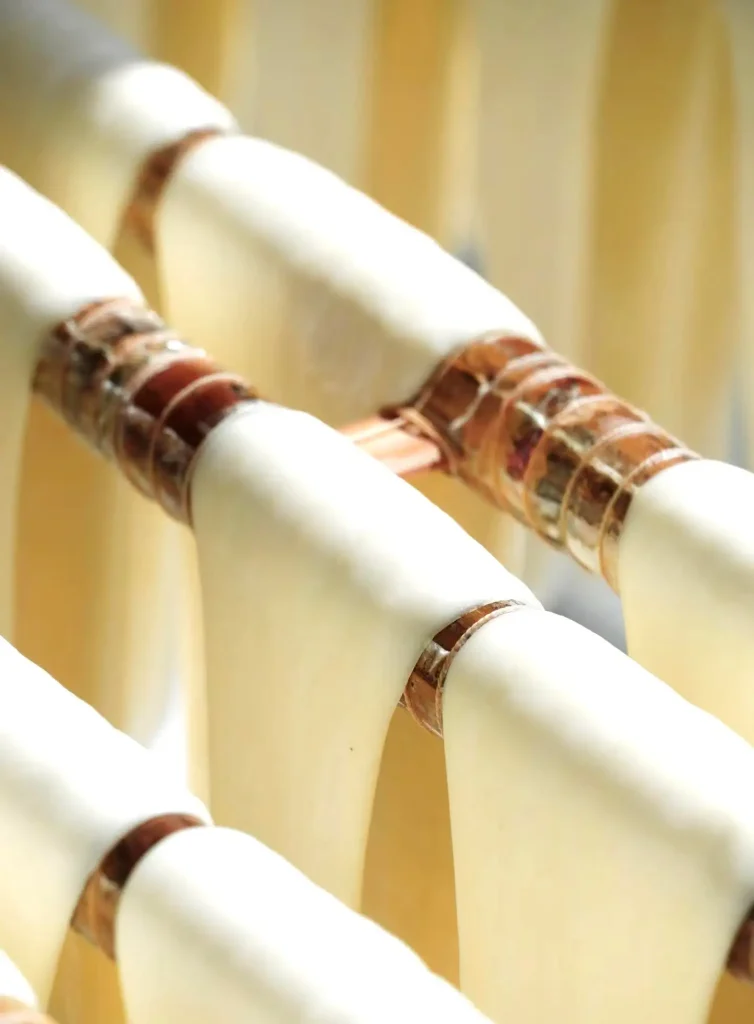
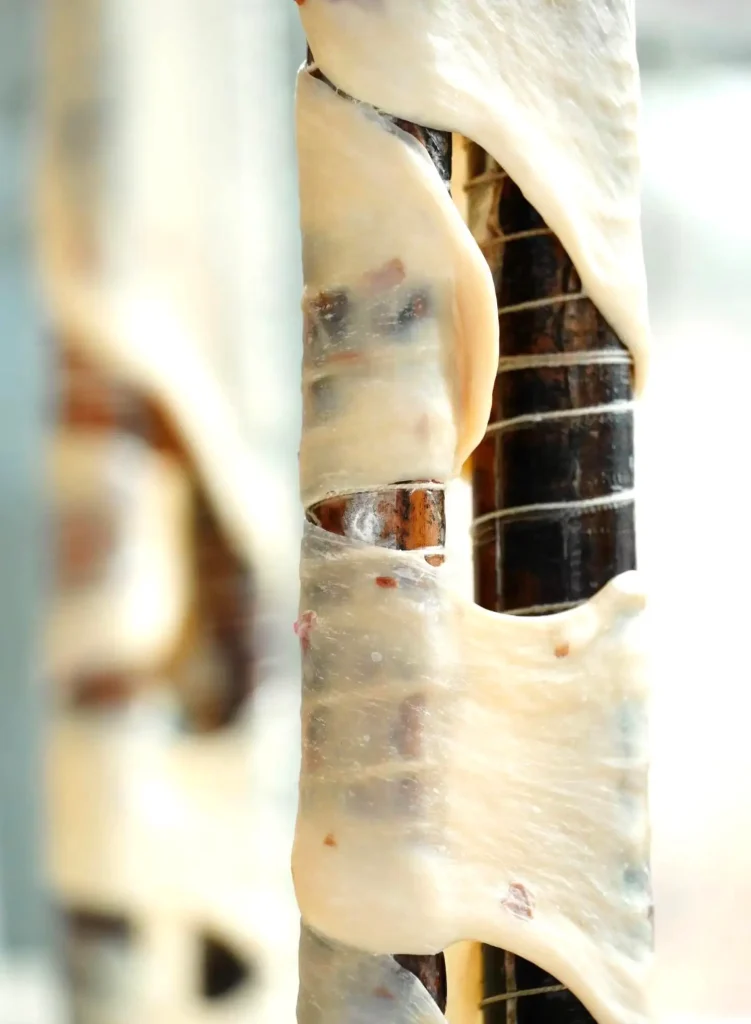
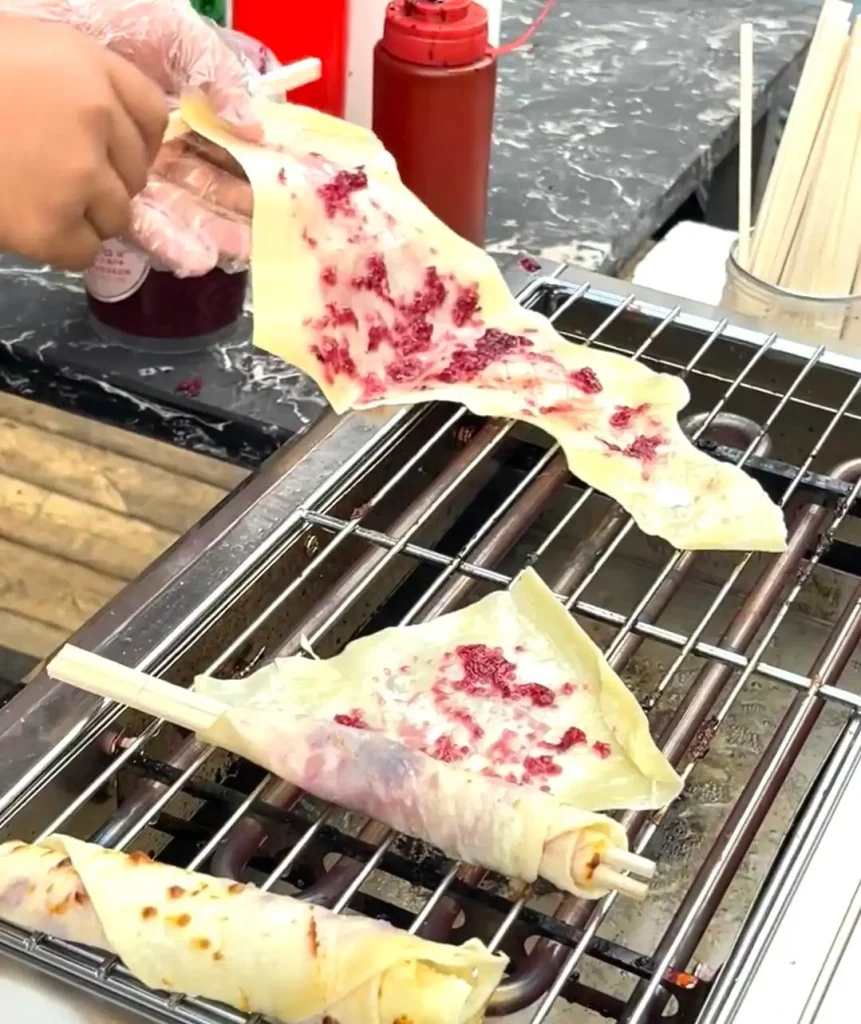
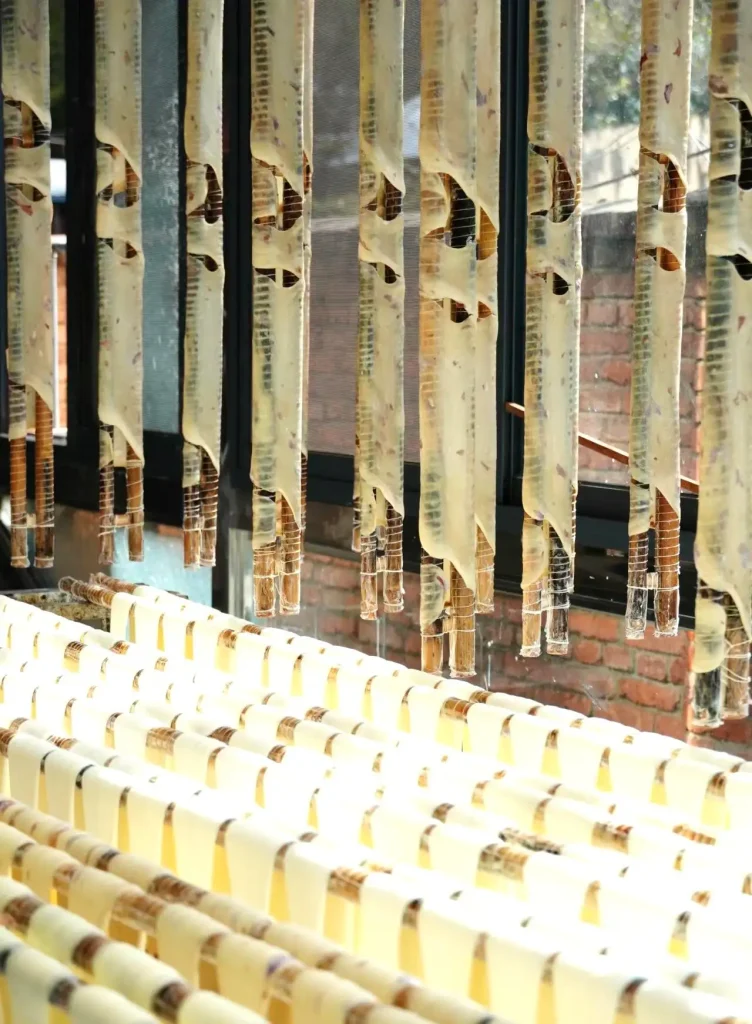
Then there’s rushan (rǔshān) — “milk fan.” Heated milk is stretched and pulled into thin, wide sheets, then draped over bamboo frames to dry in the sun. The result looks like a giant potato chip made of cheese. It’s eaten fried (crispy and slightly caramelized), grilled, or wrapped around sweet fillings. In Dali’s streets, you’ll see vendors frying rushan into golden rolls — one of the province’s most photogenic snacks.
The question everyone asks: why does Yunnan have cheese when no other part of China does? The most likely answer is a combination of the Bai people’s pastoral goat-herding tradition and the influence of Central Asian and Southeast Asian cultures along the ancient Tea Horse Road. Whatever the reason, it’s one of the most delightful culinary surprises in all of Chinese food.
For the full story — including where to find the best rubing, how rushan is made, and the cultural history behind China’s only cheese tradition — see our Yunnan cheese guide.
Wild Ingredients & Seasonal Eating
Yunnan’s food isn’t just cooked differently — it’s sourced differently. The province’s extraordinary biodiversity means that a significant portion of what you eat here was gathered from forests, mountains, and roadsides rather than farmed. Understanding this wild-to-table philosophy is key to understanding why the food tastes the way it does.
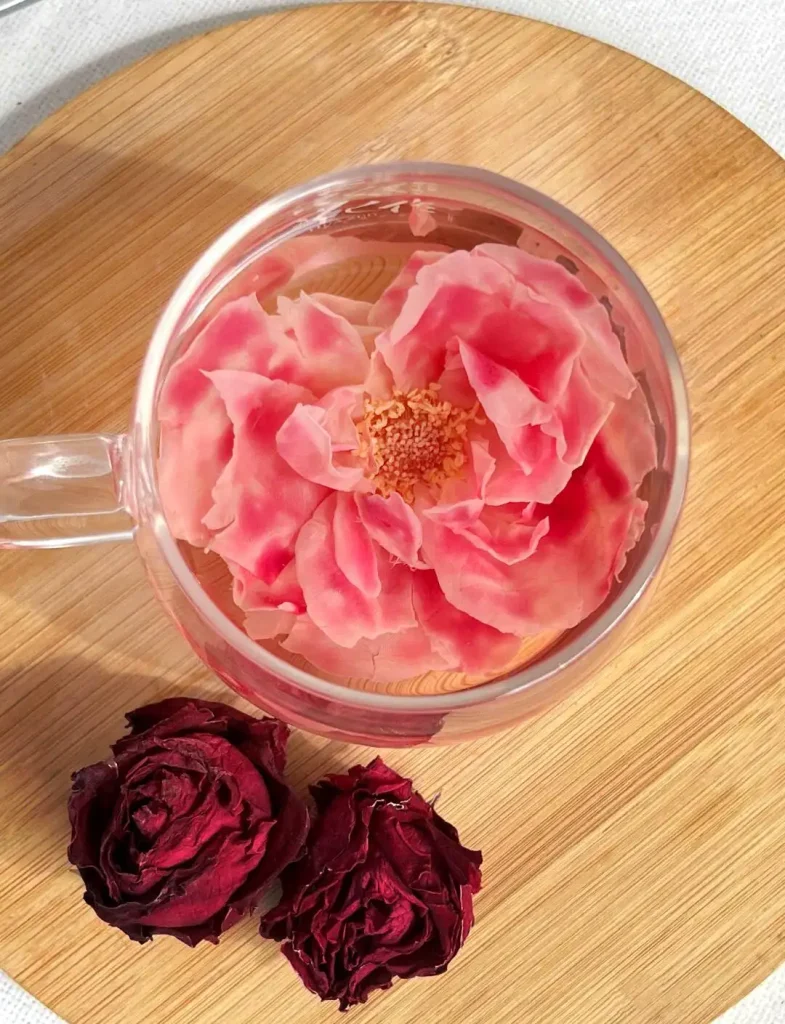
Flowers on the plate. Yunnan uses edible flowers more casually and more creatively than anywhere else in China. Jasmine, chrysanthemum, and rose petals show up in salads, omelets, cakes, and teas. In spring, the golden-yellow flowers of the kapok tree are stir-fried with eggs. The white flowers of the banana plant are used in Dai soups. Rose petals — from the famous Yunnan edible roses grown near Kunming — are the star ingredient in rose cakes, rose jam, rose tea, and rose-infused everything. If you visit in spring, the flower dishes multiply exponentially.
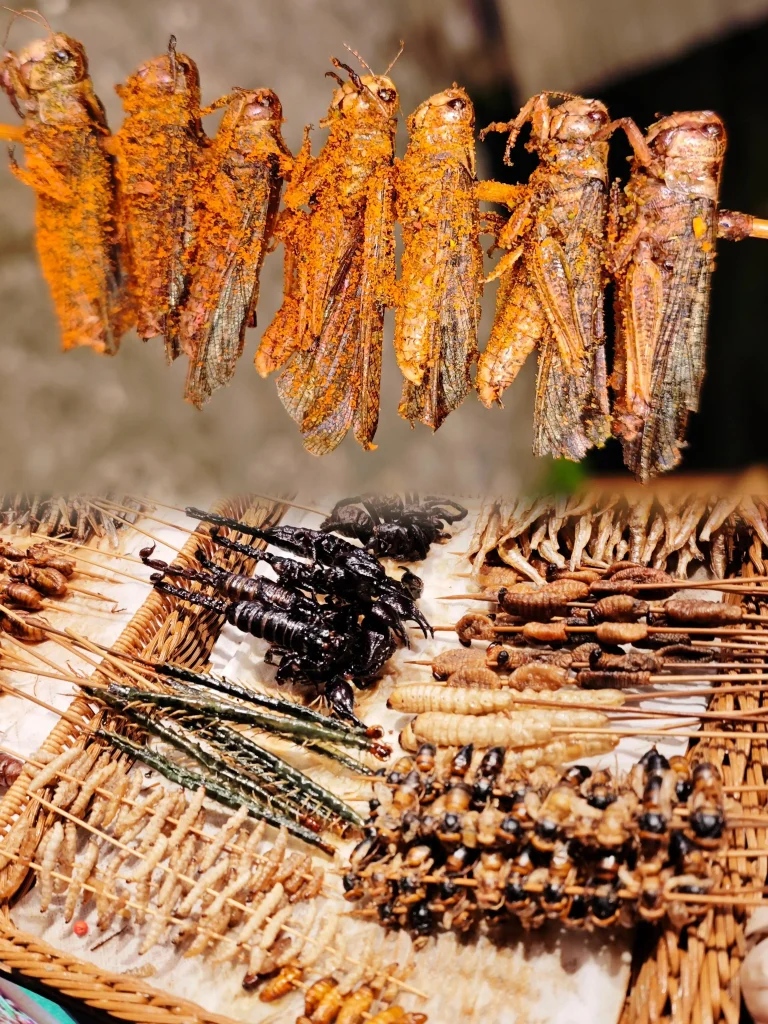
Insects and the adventurous plate. In Xishuangbanna and some parts of the Nujiang Valley, edible insects are not a novelty — they’re a protein source with deep cultural roots. Fried bamboo worms (zhú chóng) are the gateway: mild, slightly nutty, with a crispy exterior. Water beetles (more pungent), silk pupae (creamy inside), and fried crickets are the next level. You’ll find them at night market stalls, often displayed in neat rows next to more familiar grilled meats. No one will judge you for skipping them — but the locals who do eat them consider them a treat, not a dare.
The mushroom factor. We’ve covered the hot pot, but wild mushrooms infiltrate every corner of Yunnan’s cuisine during season. You’ll find them in stir-fries, soups, rice dishes, cold salads, and even dried and powdered into seasonings. The wild mushroom culture of Yunnan is so central to the province’s identity that the arrival of mushroom season is treated like a holiday — restaurants change their menus, markets transform, and the entire province seems to rearrange its eating habits around whatever the forests are producing.
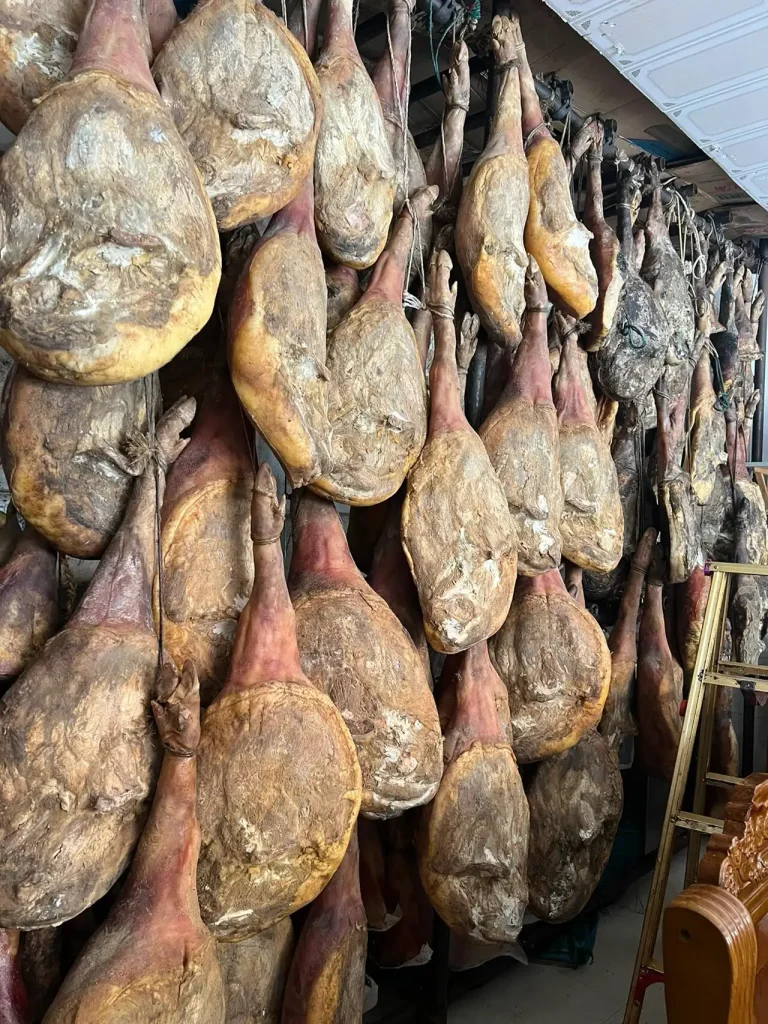
Xuanwei ham. This air-cured ham from northeastern Yunnan is often compared to Spanish jamón ibérico or Italian prosciutto, and the comparison isn’t generous — it’s accurate. Aged for one to three years in the dry mountain air, Xuanwei ham develops a complex, slightly sweet, deeply savory flavor that shows up sliced thin as an appetizer, diced into stir-fries, or used as a flavor foundation in soups. It’s one of Yunnan’s great food exports, though it always tastes best eaten where it’s made.
Pu’er Tea: The Culture in Every Cup
You can’t write a Yunnan food guide without writing about tea, because in Yunnan, tea isn’t a beverage — it’s a cultural institution that predates most of the dishes in this article by centuries.
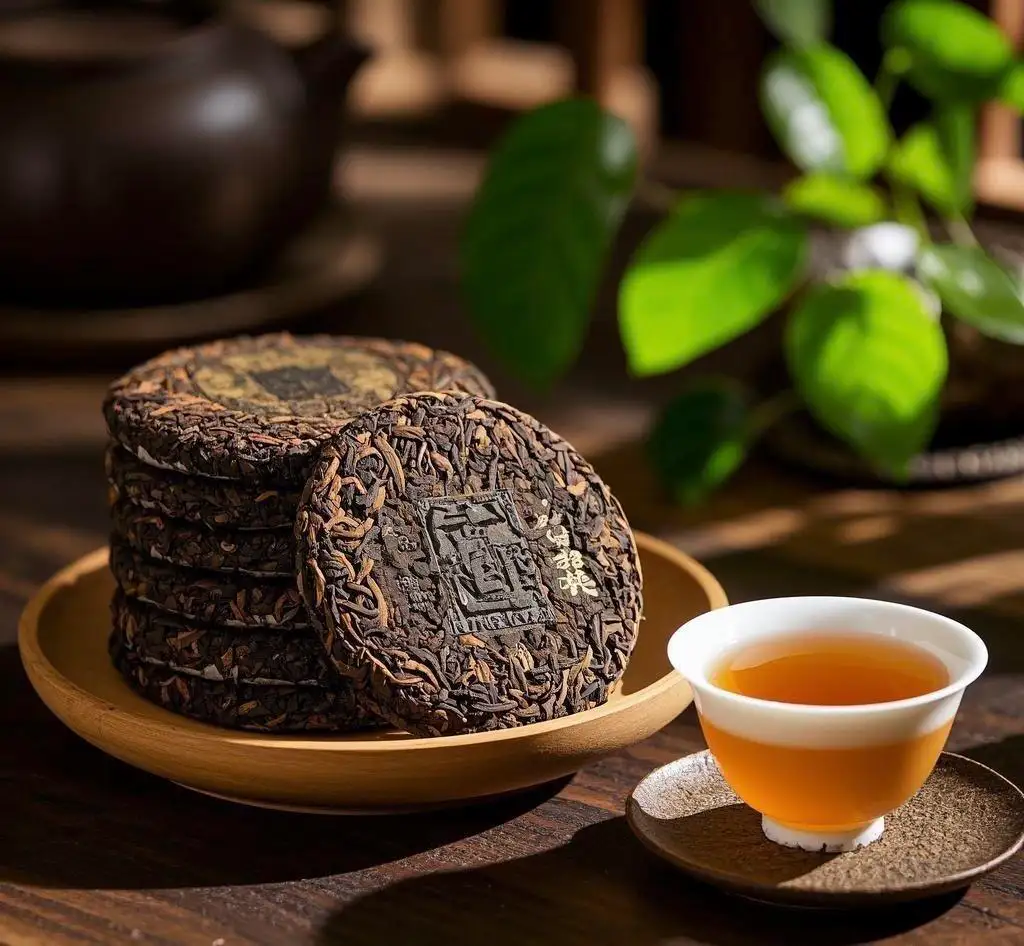
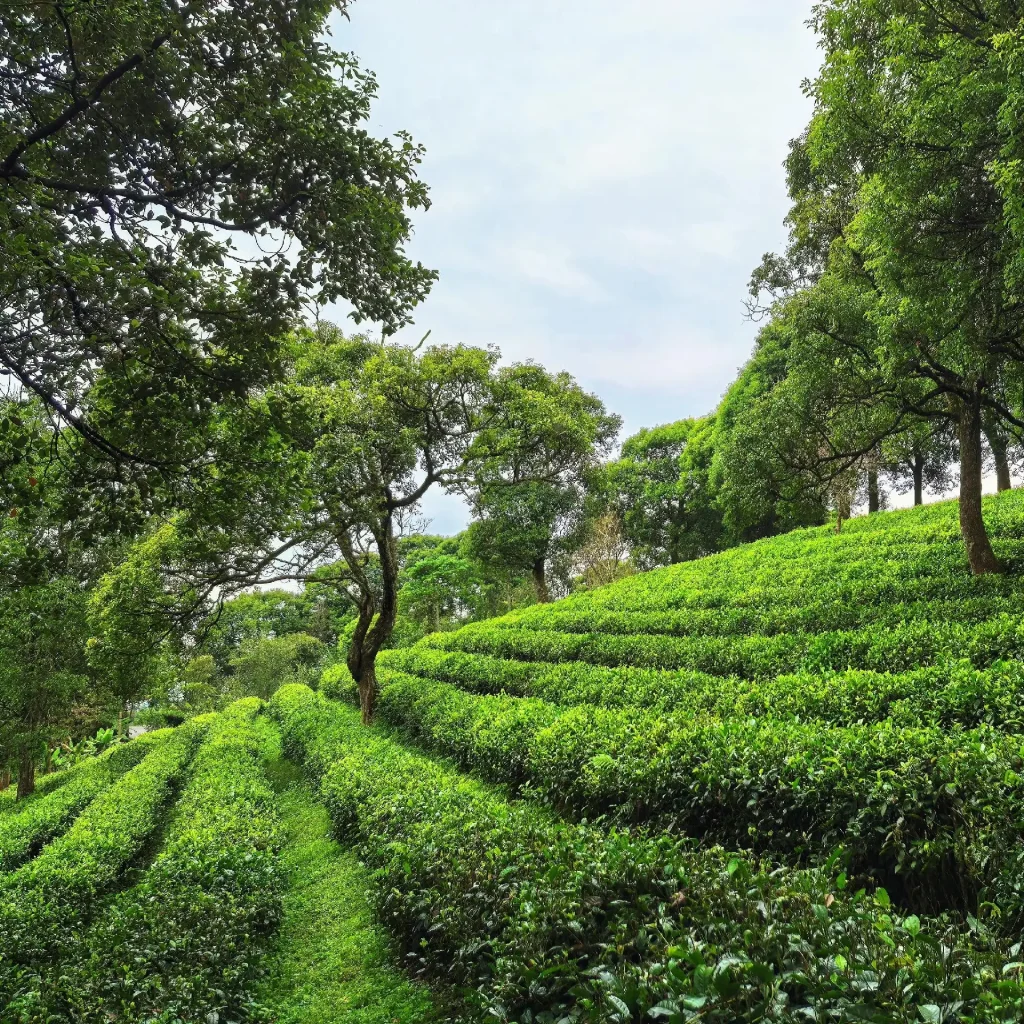
Yunnan is the birthplace of Pu’er tea — the aged, fermented tea that has been produced in the province’s ancient mountain forests for over a thousand years and that today commands prices at international auctions that rival fine wine. The tea mountains of Xishuangbanna and Pu’er city are home to trees that are 500, 800, even over 1,000 years old — still producing leaves, still tended by the same ethnic minority communities (Bulang, Hani, Dai) whose ancestors planted them.
For travelers, the tea culture shows up in two ways. First, the teahouse experience. In virtually every Yunnan town, you can sit down in a traditional teahouse and participate in a gongfu cha ceremony — a skilled tea master brews Pu’er through multiple steepings, each one revealing different flavors: earthy, sweet, floral, woody, with a lingering sweetness in the throat that tea connoisseurs call “huigan.” It’s meditative, social, and addictive.
Second, the tea itself as a souvenir and obsession. The world of Pu’er is deep: sheng (raw) versus shu (cooked/ripe), single-mountain-origin versus blended, young cakes versus aged cakes worth thousands of dollars. It’s easy to go down the rabbit hole, and many visitors do. The ancient Tea Horse Road that once carried Pu’er to Tibet now carries its story to the world.
For a complete tasting guide, buying advice, market navigation, and a primer on Pu’er varieties — including how to avoid common tourist scams — our 【Pu’er and Yunnan tea guide】C9 has everything you need. And for the deeper cultural and historical context, our Pu’er tea culture article connects the tea to the communities, landscapes, and trade routes that produced it.
Eating Like a Local: Practical Tips for Foreign Visitors
Yunnan’s food scene is one of the most exciting and accessible in all of China, but a few practical tips will help you navigate it with confidence. For the full breakdown — including menu translations, allergy communication, and tipping etiquette — see our eating like a local guide.
Order by pointing. Most local restaurants have either picture menus or display dishes at the front. Point-and-order is perfectly acceptable and often more effective than trying to read a Chinese menu. In smaller towns where even picture menus are rare, walk into the kitchen, look at what’s available, and point at what looks good. No one will mind.
Follow the crowds. The busiest stall is almost always the best one. This rule is universal, but it’s especially true in Yunnan, where food stall vendors often specialize in a single item perfected over decades. If there’s a line, join it.
Eat early at markets. Morning markets in Yunnan are food events, not just shopping trips. Arrive between 7 and 9 AM for the freshest rubing, the hottest erkuai, and the widest selection of wild vegetables. By 10 AM, the best vendors have sold out.
Use WeChat or Alipay to pay. Most street stalls and restaurants are cashless. Set up a Chinese mobile payment app before you arrive — our Yunnan travel guide explains how.
Don’t fear the spice — but respect it. Yunnan food is spicy, but not in the face-melting Sichuan way. The heat is more herbaceous, often built on fresh chili and Sichuan pepper rather than dried chili paste. That said, if you have a low spice tolerance, learn the phrase “bú yào là” (no spicy) or “wēi là” (mildly spicy). Most restaurants will happily adjust.
Wild mushroom safety. We’ve said it before and we’ll say it again: eat wild mushrooms only at established restaurants, never from unknown sources, and never — ever — attempt to forage and cook your own. Yunnan’s forests contain some of the most potent toxic mushrooms on the planet alongside the edible ones, and the locals who know the difference have been learning since childhood.
The adventurous eater’s mindset. Yunnan rewards curiosity. The weirdest-looking dish on the table is often the most delicious. The stall with no English signage is often better than the one with a translated menu. The grandmother who hands you something unidentifiable and nods encouragingly is offering you a gift. Say yes as often as you can.
Plan Your Yunnan Food Adventure
You could eat your way across Yunnan for a month and still leave with a list of dishes you didn’t get to. But even a week, planned around the right cities and the right season, will give you meals you’ll remember for years.
Here’s where to go next:
Dive into the signature dishes: Our detailed guides cover Crossing the Bridge Rice Noodles, wild mushroom season, and steam pot chicken — with full histories, restaurant picks, and insider tips.
Eat by city: Explore our destination-specific food guides for Dali, Lijiang, and Xishuangbanna — each covering the must-eat dishes, best restaurants, and market recommendations for that region.
Graze the streets: Our Yunnan street food guide covers 15 essential snacks with photos, prices, and locations across the province.
Go deep on specialties: Learn the story behind Yunnan’s cheese tradition and the ancient world of Pu’er tea.
Master the logistics: Our eating like a local guide covers ordering, food safety, dietary restrictions, and dining etiquette for foreign visitors.
Build your route: Not sure which cities to combine? Our recommended Yunnan itineraries for 7, 10, and 14 days map out routes that hit the best food destinations. And for the full planning picture — visas, transport, apps, and budget — return to our ultimate Yunnan travel guide.
Understand the culture behind the food: Yunnan’s food and culture are inseparable. Our Yunnan culture guid explains the ethnic traditions that shape every dish, and the top things to do in Yunnan includes several food experiences in its must-do list.
Crossing the Bridge Rice Noodles (guoqiao mixian) is Yunnan’s most iconic dish — a build-your-own noodle soup where you add raw ingredients to a bowl of scalding chicken broth. Other signature dishes include wild mushroom hot pot (June–October), steam pot chicken, Dai grilled fish, and the Bai-made goat’s milk cheese called rubing.
Yunnan food is moderately spicy — less intense than Sichuan or Hunan cuisine, but most dishes include some chili. The heat tends to be fresh and herbaceous rather than mouth-numbing. You can always ask for “bú yào là” (no spicy) or “wēi là” (mild spicy). Dali and Shangri-La tend to be milder, while Xishuangbanna’s Dai cuisine and Kunming street food can be fiery.
Yes, generally. Choose busy stalls with high turnover, avoid anything that’s been sitting out for a long time, and trust your nose. The one serious safety concern is wild mushrooms — eat them only at established restaurants with experienced staff, never from unknown sources. Stomach upsets are possible with any new cuisine, so ease into the more adventurous dishes.
Yunnan is one of the easier places in China to eat vegetarian. The Buddhist tradition means many towns have dedicated vegetarian restaurants (often near temples). Wild mushroom dishes are naturally meat-free and incredibly satisfying. Tofu preparations are abundant. The challenges: many “vegetable” dishes include lard or meat stock, and communication can be tricky in smaller towns. Learn “wǒ chī sù” (I eat vegetarian) and check our eating tips guide for more.
June through October is wild mushroom season — the single most exciting food period. Spring (March–May) brings edible flower dishes and the freshest produce. Autumn is harvest season for new-crop Pu’er tea. Winter brings Xuanwei ham season and hearty hot pots. There’s no bad time to eat in Yunnan, but mushroom season is the peak food pilgrimage.
Pu’er is a fermented, aged tea produced exclusively in Yunnan from large-leaf tea trees. It comes in two main types: sheng (raw) and shu (ripe/cooked). Pu’er improves with age — some cakes from the 1950s–1970s sell for tens of thousands of dollars. Yunnan’s ancient tea mountains, some with trees over 1,000 years old, are where all authentic Pu’er originates. It’s one of the world’s great teas and a quintessential Yunnan cultural experience.