Where Bai culture meets backpacker bohemia, marble mountains rise above an alpine lake, and the pace of life slows to exactly the speed you need.

There’s a reason people come to Dali for three days and stay for three months. Some of them never leave at all. The old joke among China’s backpacker community is that Dali has a gravitational pull — something in the combination of mild highland air, the vast mirror of Erhai Lake, the snow-streaked peaks of the Cangshan range, and the easy-going Bai culture that makes the rest of the world feel very far away and not particularly urgent.
Dali is Yunnan’s cultural heartland. For over 500 years, the Dali Kingdom ruled this region as an independent Buddhist state, and the legacy is everywhere: in the Three Pagodas that have stood for a millennium, in the Bai people’s white-walled architecture, in the three-course tea ceremony that doubles as a philosophy lesson. Today, the ancient town has evolved into an unlikely fusion — traditional Bai village meets international creative community, with independent bookshops, craft breweries, and artist studios nestled among 600-year-old courtyard homes.
This guide covers everything you need to plan your time in Dali: where to go, what to eat, how to get around, and how to understand the culture that makes this place magnetic. If you’re building a broader Yunnan itinerary, our ultimate Yunnan travel guide has the big-picture logistics, and our top things to do in Yunnan helps you decide how Dali fits alongside other destinations.
What this guide covers: Why Dali is special → Dali Ancient Town → Erhai Lake circuit → Cangshan Mountain → Xizhou & Zhoucheng → Shaxi day trip → Bai culture → What to eat → Getting there & around → Practical tips.
Dali Ancient Town (Dàlǐ Gǔchéng)
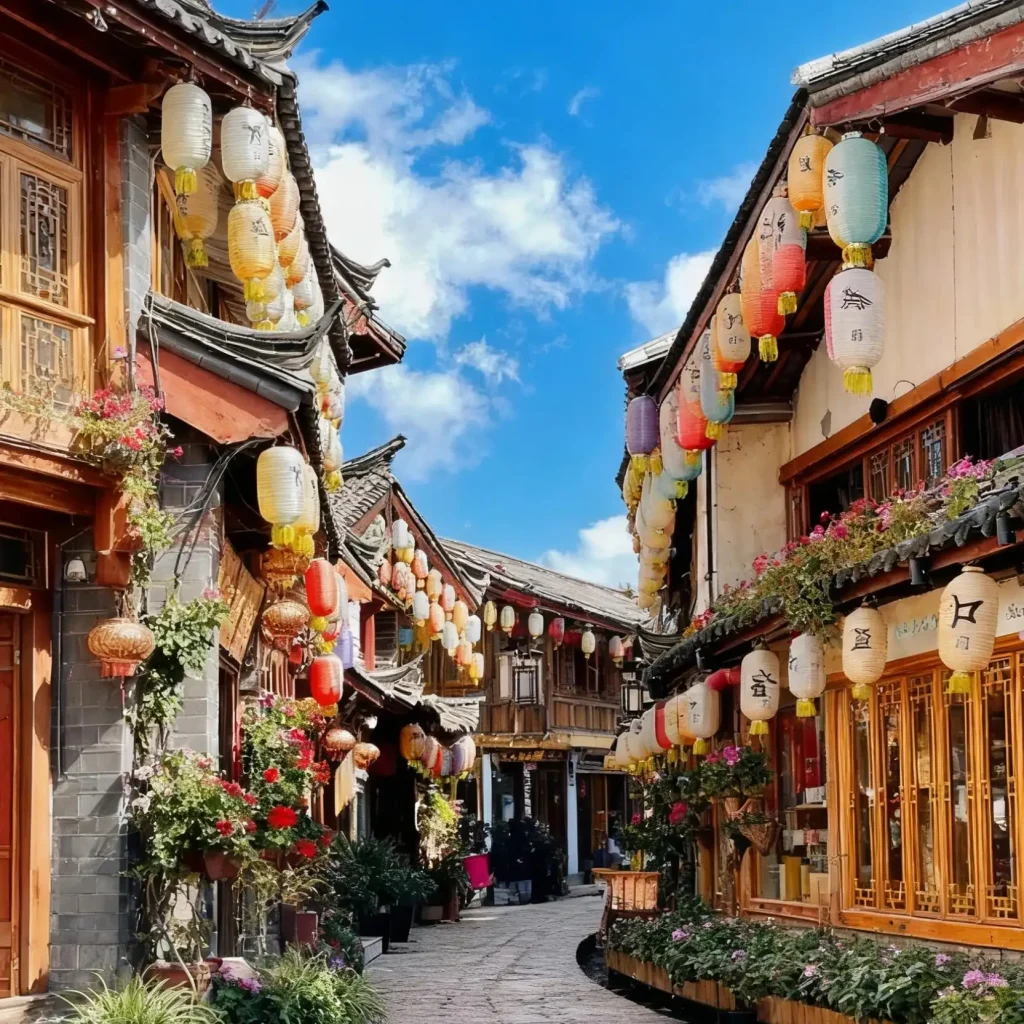
The walled old town is where most travelers base themselves, and for good reason. Founded during the Ming Dynasty, its grid of stone-paved streets runs between whitewashed Bai-style buildings under the dramatic backdrop of Cangshan’s peaks. Renmin Road (the main east-west artery) is the busiest commercial street — tourist shops, restaurants, and bars — but the real charm is in the quieter side streets north of Renmin Road, where elderly Bai women sell vegetables from doorsteps and cats sleep in courtyards that haven’t changed in centuries.
Key sights within the old town: the South Gate (Nán Mén), which you can climb for a view over the town toward Erhai Lake. The Catholic Church — a surreal blend of Bai architecture and European religious iconography, reflecting Dali’s cosmopolitan history. The Five Flowers Building (Wǔ Huá Lóu), the symbolic center of the old town. And Foreigner’s Street (Yáng Rén Jiē), the original backpacker strip that launched Dali’s international reputation in the 1990s.
But the truth is: the best thing about Dali Ancient Town isn’t any single sight. It’s the atmosphere. Rent a bicycle, get lost in the side streets, stop for Bai tea in a courtyard, watch the light change on Cangshan in the late afternoon. Dali teaches you to slow down.
Erhai Lake: The Heart of Dali
Erhai (“Ear-shaped Sea”) is one of China’s most beautiful highland lakes — 42 kilometers long, fringed by Bai fishing villages, backed by the 4,000-meter Cangshan range, and reflecting a sky so wide it feels like the whole world has opened up. The lake is Dali’s soul: everything here — the food, the villages, the culture — revolves around it.
Cycling the Erhai Loop
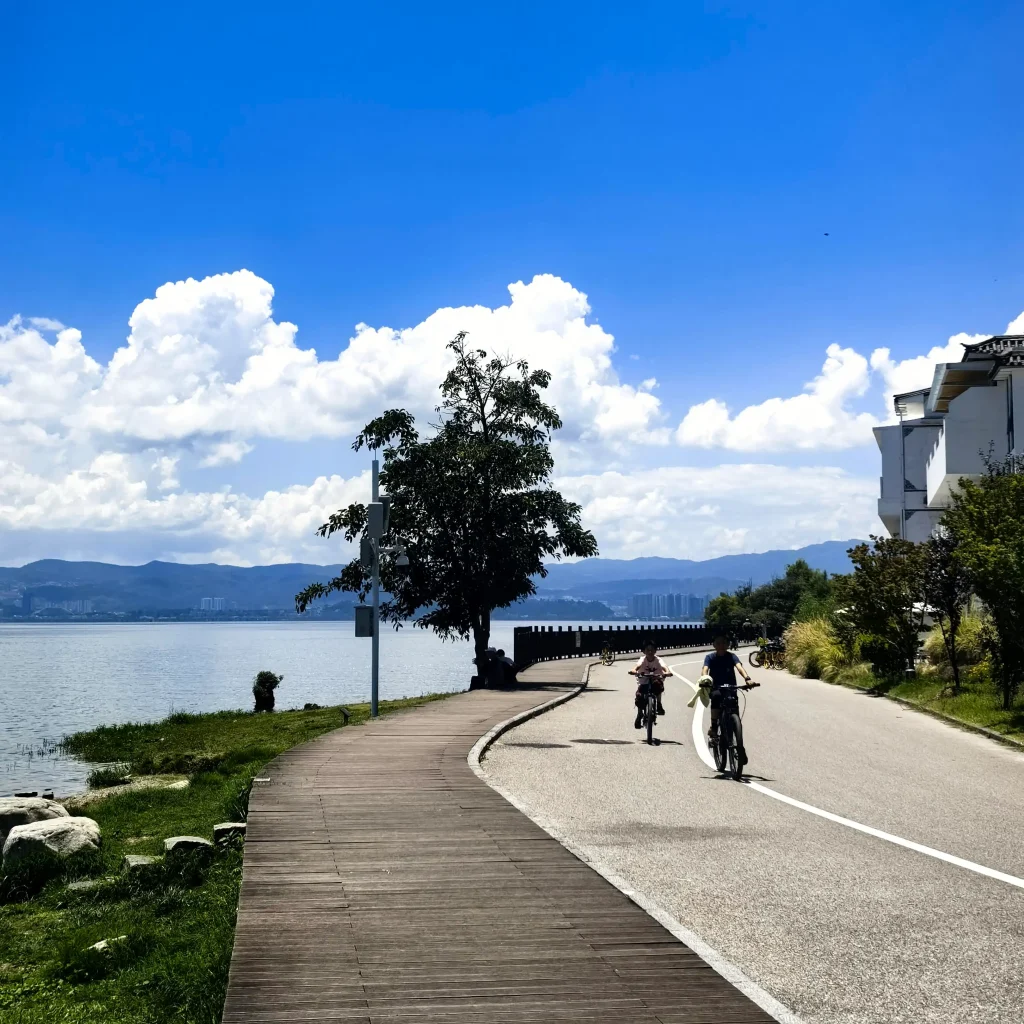
The 130-kilometer circuit around Erhai Lake is one of Yunnan’s classic experiences. You can ride the full loop in one long day on an e-bike (rent one in Dali Ancient Town for 50–80 yuan/day), but two days with an overnight in Shuanglang is better. The eastern shore — quieter, less developed, with Bai fishing villages and fields of garlic and beans stretching to the water’s edge — is the more scenic half.
Shuanglang: The Erhai Showpiece
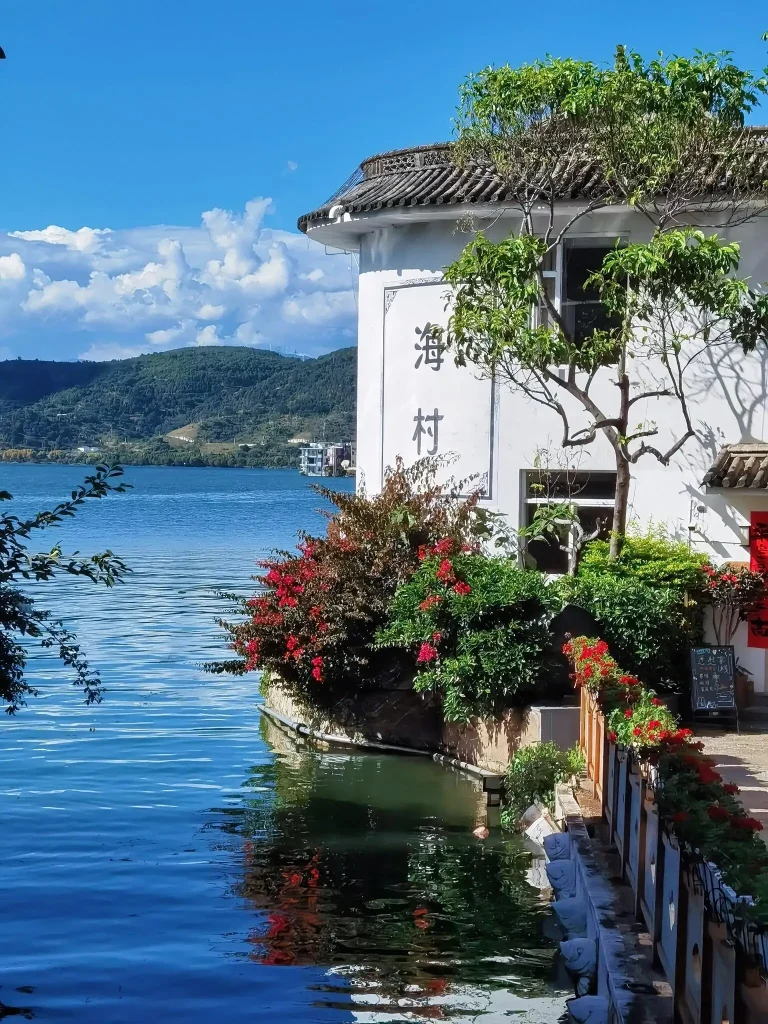
Once a quiet fishing village, Shuanglang has become Dali’s most photographed lakeside town. Boutique hotels and coffee shops now line the waterfront, and the views — looking west across the lake toward Cangshan at sunset — are genuinely world-class. Come for the photography, but stay long enough to walk beyond the main strip to the original village streets where fishermen still mend nets.
Wase Market
Every Monday, the town of Wase on Erhai’s eastern shore hosts one of Yunnan’s most vibrant rural markets. Bai, Yi, and Hui traders converge to sell everything: live chickens, handwoven textiles, medicinal herbs, silver jewelry, and stacks of rubing (Bai goat cheese) still warm from the press. It’s chaotic, colorful, and deeply authentic — the kind of experience that tourist Dali sometimes obscures.
Cangshan Mountain: 19 Peaks Above the Clouds
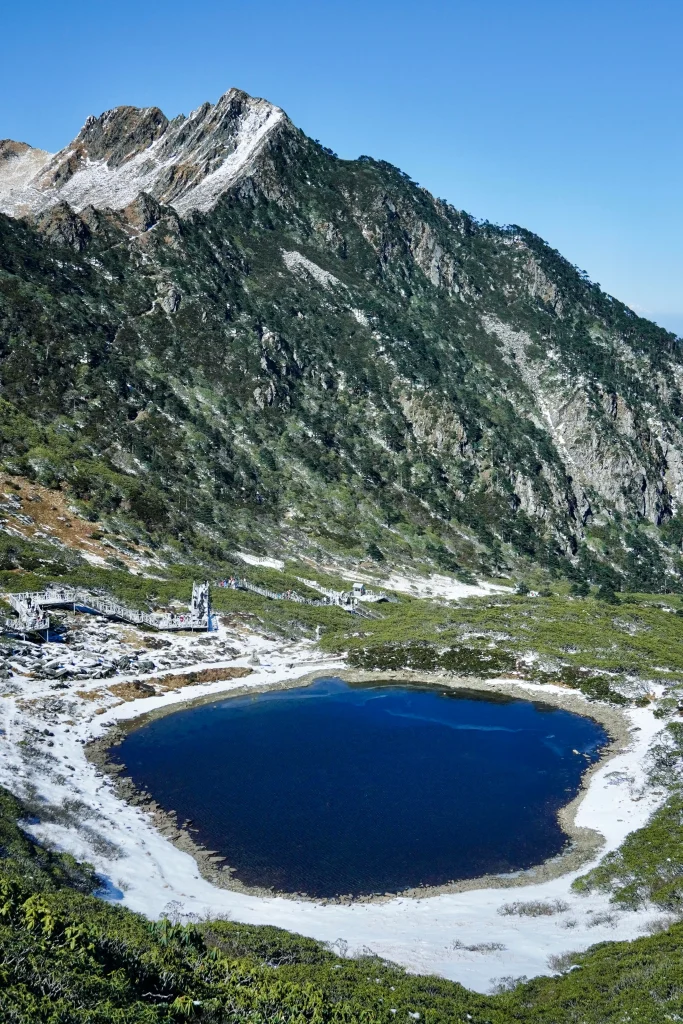
The Cangshan range — 19 peaks stretching along Erhai’s western shore, the highest reaching 4,122 meters — is Dali’s dramatic backdrop and its playground. Several trails and cable cars provide access.
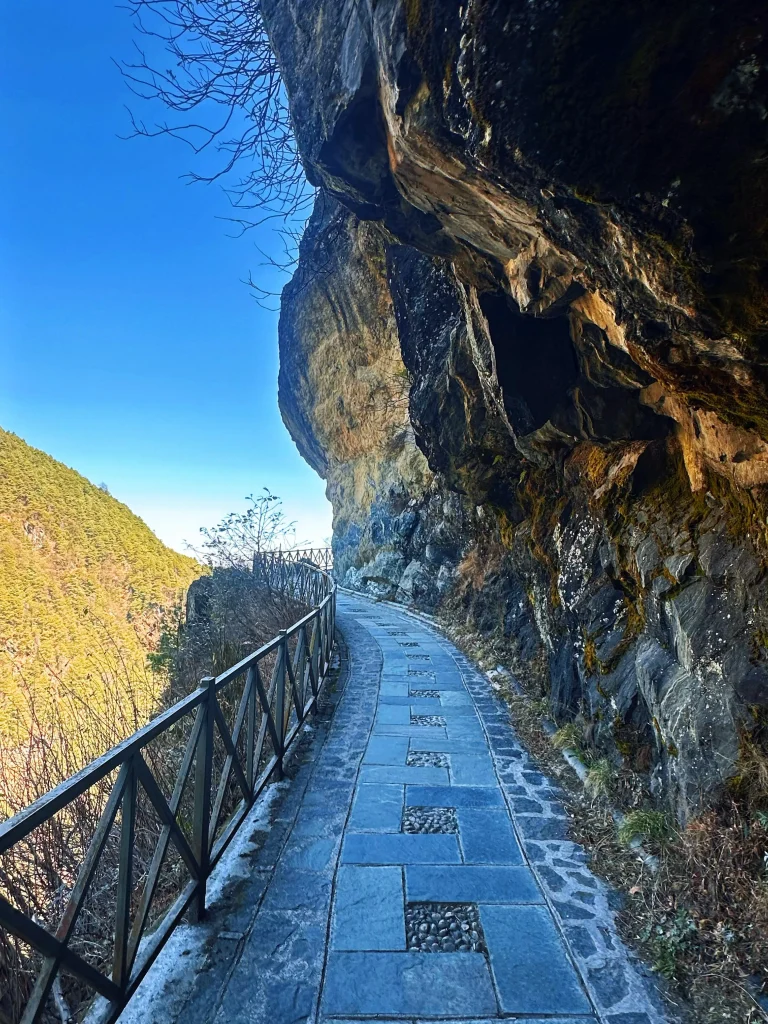
Cangshan Cable Car to Washburn Temple: The most popular access point. The gondola rises from the edge of the old town to the mid-mountain zone, where trails wind through cloud forest past waterfalls and ancient Buddhist temples. The Zhonghe Trail, running horizontally along the mountainside with views over the lake and old town, is one of Yunnan’s most scenic easy walks.
The Jade Belt Path (Yùdài Lù): An 18-kilometer trail that traverses the mid-section of Cangshan from north to south, connecting several temples and scenic valleys. Most hikers do a section rather than the whole thing — the stretch from Zhonghe Temple to Qingbi Creek is the highlight, offering views that switch between misty forest and sweeping lake panoramas.
For serious hikers: Summit attempts are possible but require preparation and possibly a local guide. The trails above 3,500 meters are steep, unmarked, and weather-dependent.
Xizhou, Zhoucheng & the Villages Around Dali
Xizhou: Bai Architecture & the Three-Course Tea
Twenty kilometers north of the old town, Xizhou is where Dali’s Bai culture feels most alive. The town’s historic mansions — built by wealthy Bai merchants during the Qing Dynasty — showcase the finest traditional Bai architecture in the province: white walls, gray tiles, elaborate wood carvings, and courtyard gardens designed around feng shui principles. Several mansions are open to visitors, including the Yan Family Compound.
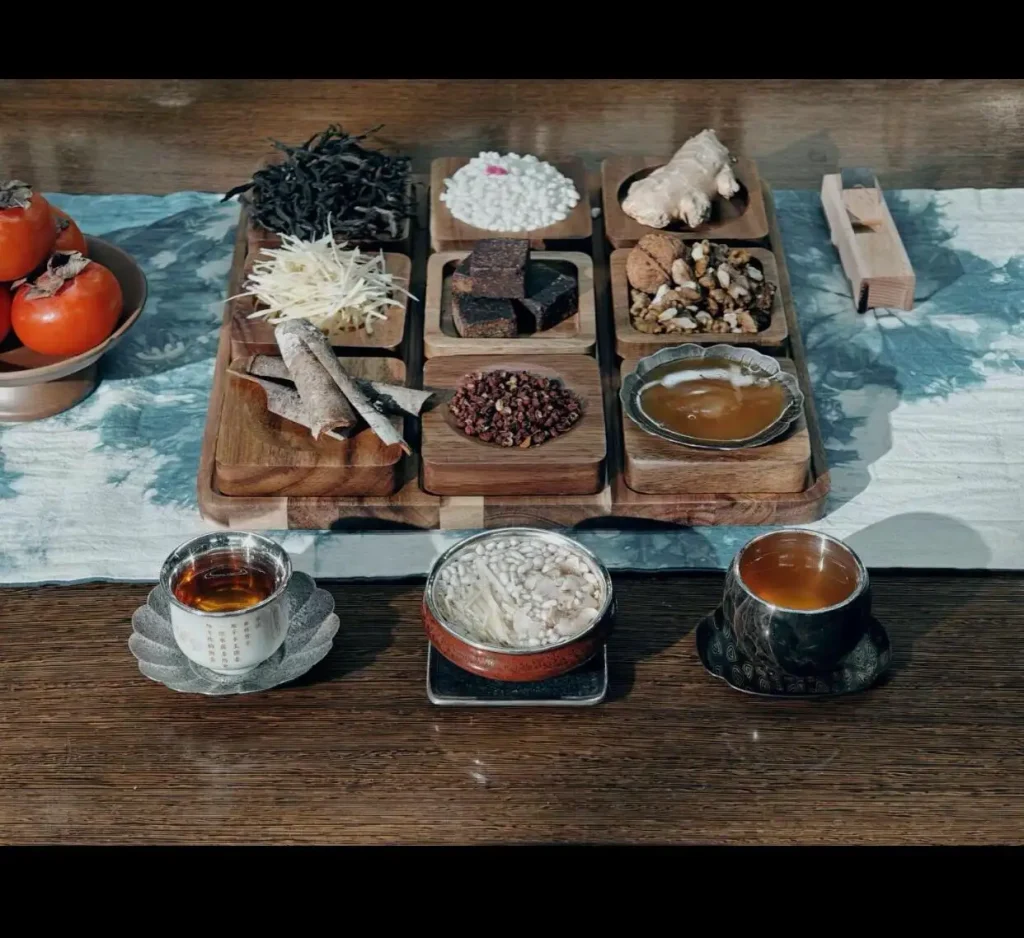
But the real highlight is the three-course tea ceremony (sān dào chá). Hosted in a traditional courtyard, a Bai tea master serves three cups: the first bitter (representing hardship), the second sweet (representing reward), and the third “lingering” (representing reflection). It’s part hospitality, part life philosophy — and one of Yunnan’s most memorable cultural encounters. Read more about this tradition in our Bai people of Dali guide.
The Xizhou morning market is also exceptional — Bai grandmothers selling fresh rubing cheese still warm from the mold, stalls frying the famous Xizhou baba (flaky flatbread), and vendors piling wild herbs. Come before 9 AM.
Zhoucheng: The Tie-Dye Village
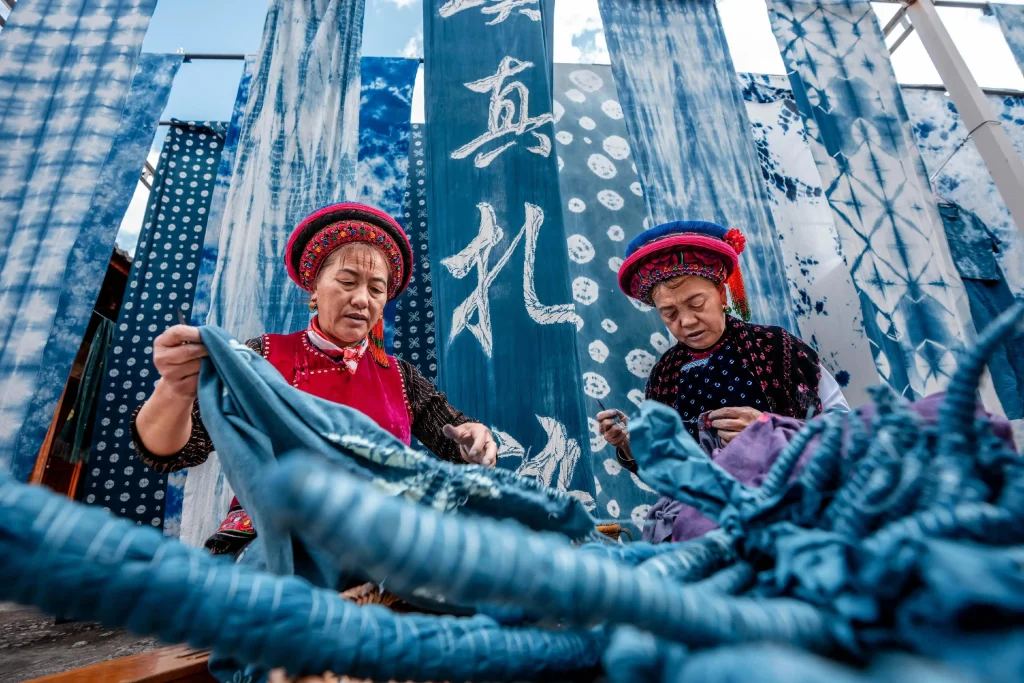
Five kilometers from Xizhou, the village of Zhoucheng is the center of Bai tie-dye (zhā rǎn) — a craft that has been practiced here for over 1,000 years. Bai women hand-tie intricate patterns into white cotton fabric, then dip the bundles into vats of plant-based indigo dye. The resulting blue-and-white patterns have become Dali’s visual signature. Several workshops offer hands-on experiences where visitors can make their own tie-dye piece.
Shaxi: A Tea Horse Road Time Capsule
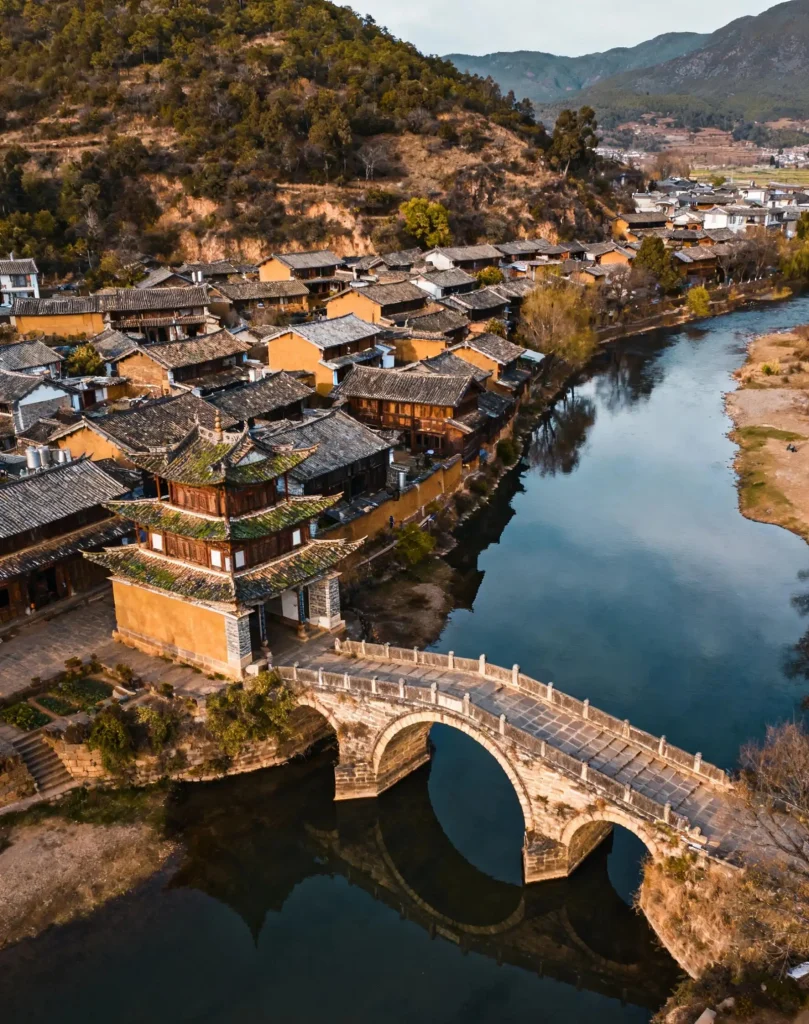
Two hours north of Dali, the ancient town of Shaxi is one of Yunnan’s most rewarding hidden gems. A former caravan hub on the Tea Horse Road, Shaxi’s cobblestone market square and 600-year-old Xingjiao Temple have been carefully restored, creating a living window into the era of the mule trains. It’s the antidote to Dali’s growing tourism — quieter, more atmospheric, and deeply steeped in history. An overnight stay is recommended.
Dali’s Historical Landmarks
The Three Pagodas of Chongsheng Temple
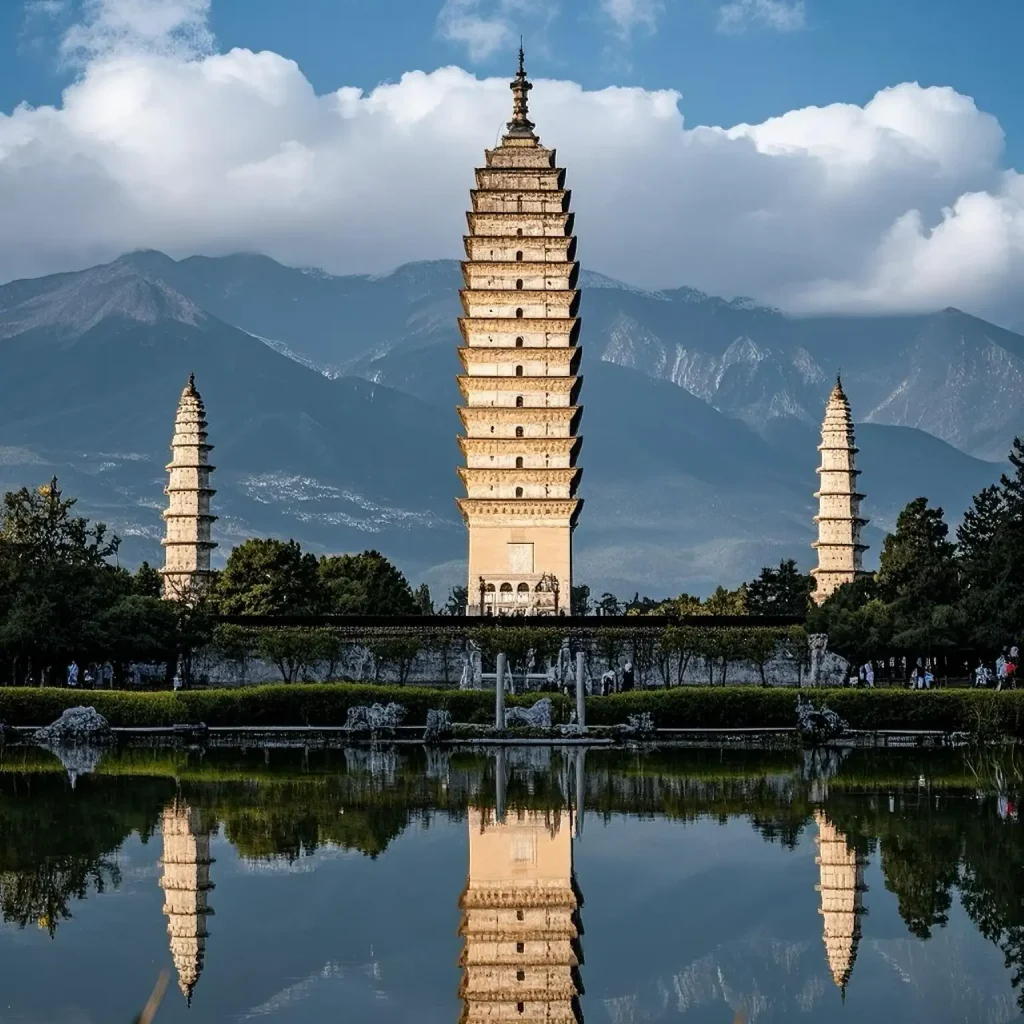
Dali’s most iconic image: three white pagodas standing against the Cangshan mountains, reflected in a pond. The main pagoda, at 69 meters, was built in 836 AD during the Nanzhao Kingdom period — making it older than most European cathedrals. The smaller flanking pagodas were added a century later. Behind the pagodas, the restored Chongsheng Temple complex climbs the hillside in a series of grand courtyards. The view from the top, looking down over the pagodas to Erhai Lake, is one of Yunnan’s great panoramas.
Third Month Fair (Sān Yuè Jiē)
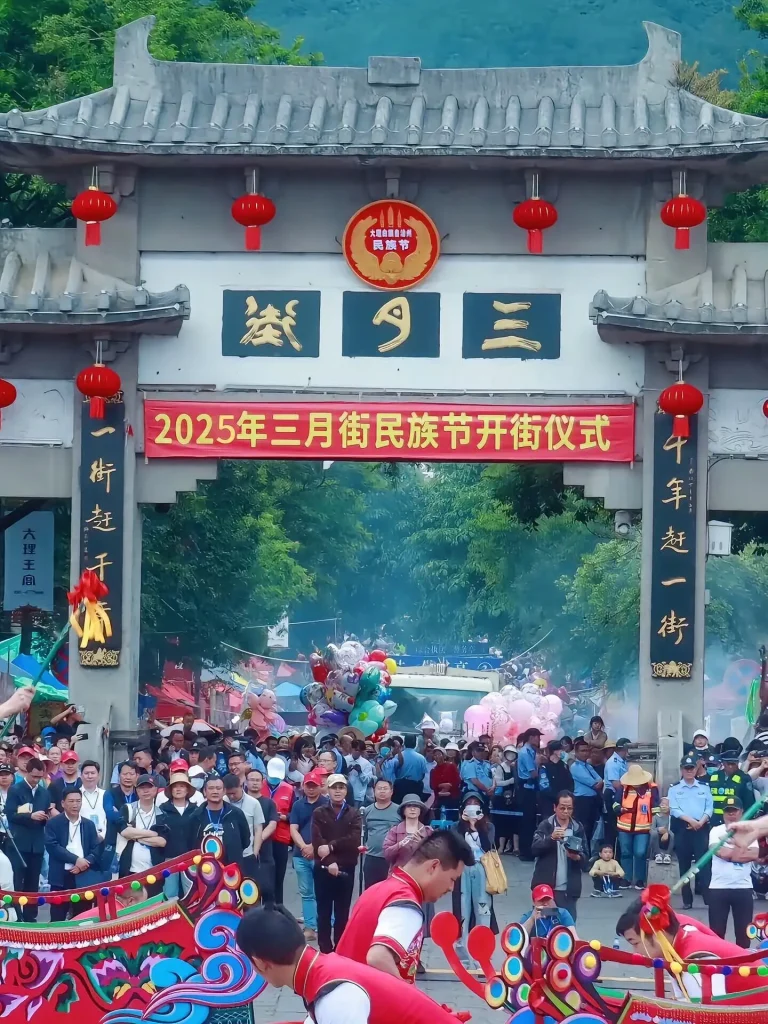
Every March or April (by the lunar calendar), the Bai people hold their biggest annual gathering: a massive market, horse-trading fair, and cultural festival that has taken place at the foot of Cangshan for over 1,000 years. Music, traditional Bai opera, food stalls, wrestling matches, and merchants from across the province converge for a week of celebration. If your visit overlaps, don’t miss it. Check our Yunnan festivals guide for exact dates.
What to Eat in Dali
Dali’s food is shaped by the Bai people and by what Erhai Lake and Cangshan provide. For the full rundown, see our Dali food guide. Essentials:
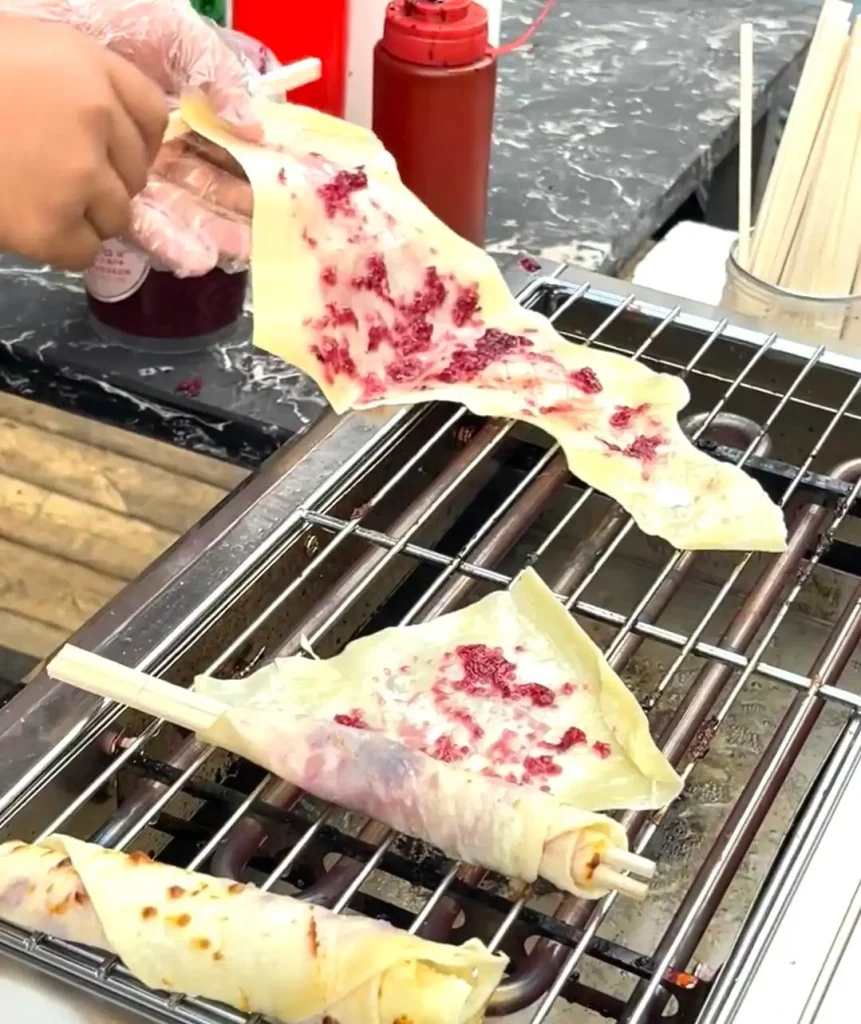
Rubing & Rushan: Dali’s famous Bai-made goat cheese — rubing is pan-fried until golden and served with rose jam or chili salt; rushan is stretched into thin sheets, fried crispy, and eaten as a street snack. Both are unique to this region.
Xizhou Baba: Flaky, pan-fried Bai flatbread — sweet (rose, sugar) or savory (ham, green onion). The stalls in Xizhou are the original and best.
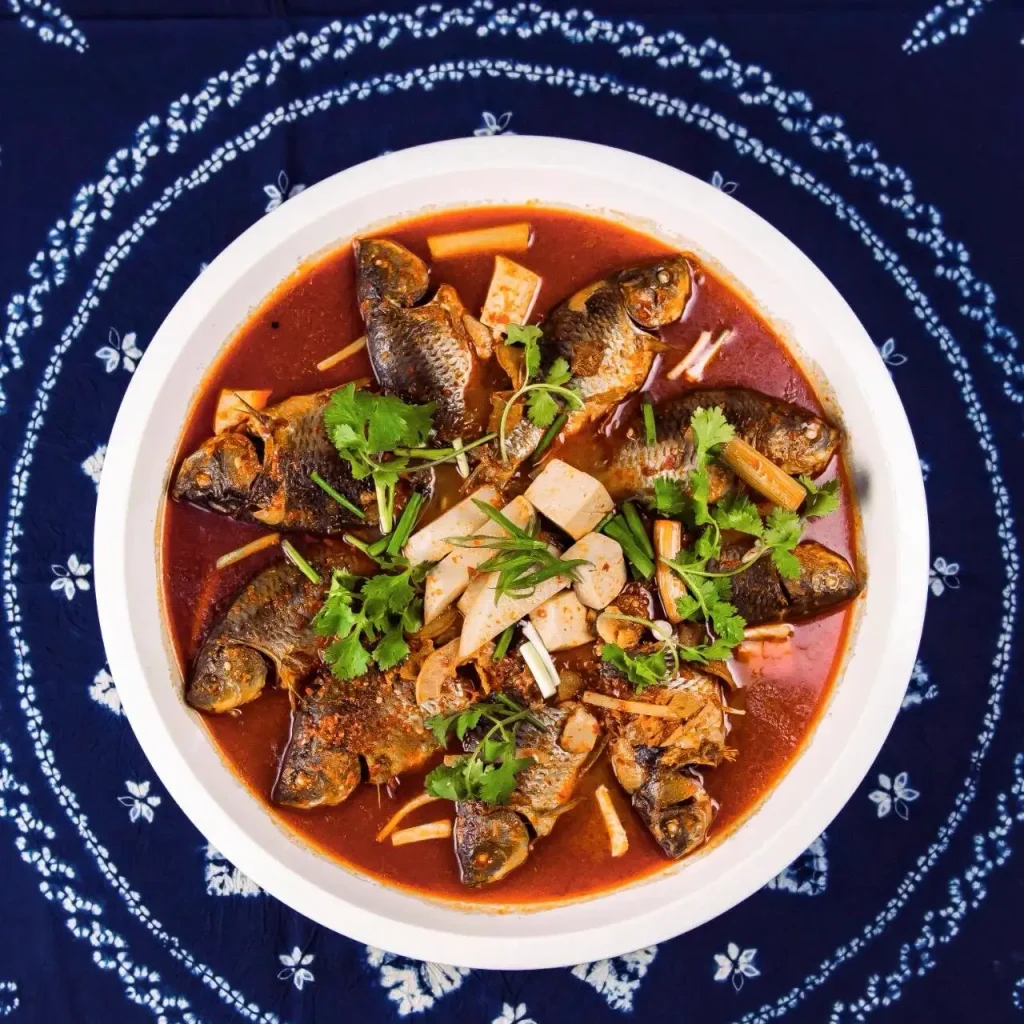
Erhai Fish: Freshwater fish from the lake cooked sour (suān là yú) with tomatoes, chili, and vinegar — tangy, warming, and perfectly paired with a bowl of rice.
Three-Course Tea: Already described above, but it’s as much a culinary experience as a cultural one. The bitter-sweet-reflective progression is genuinely moving.
Wild Mushrooms (in season): Dali’s mountain forests produce excellent wild mushrooms June–October. Several restaurants in the old town serve mushroom hot pots.
Getting to Dali & Getting Around
From Kunming: High-speed train to Dali Station (2 hours, ~150 yuan). From the station, a 30-minute bus or taxi reaches the ancient town.
From Lijiang: Train (1.5 hours) or bus (2.5 hours). An easy connection — many travelers combine both cities.
Getting around Dali: The ancient town is fully walkable. For Erhai Lake and surrounding villages, rent an e-bike (50–80 yuan/day) from shops on Boai Road. Didi works here for longer distances. Local bus No. 6 connects the ancient town to Xizhou.
For multi-city route planning, our Yunnan itinerary guide maps out how Dali fits into 7, 10, and 14-day routes.
Practical Tips for Visiting Dali
Best time to visit: March–May (spring flowers, Third Month Fair) and September–November (clear skies, golden light) are optimal. Summer (June–August) is rainy season — still beautiful, but expect afternoon showers. Winter is dry and mild but cooler at altitude.
How many days: 3–4 days is ideal. Day 1: Dali Ancient Town. Day 2: Erhai Lake circuit (or half-circuit with Shuanglang). Day 3: Xizhou + Zhoucheng. Optional Day 4: Cangshan hike or Shaxi day trip.
Altitude: Dali sits at 1,980 meters — similar to Kunming. No altitude concerns for most visitors.
Cultural context: Understanding 【Bai culture and traditions】Sub-B makes every Dali experience richer. Read our culture guide before you visit.
They’re different. Dali is more laid-back, bohemian, and culturally immersive — better for relaxed cycling, Bai culture experiences, and a creative/backpacker scene. Lijiang has more dramatic mountain scenery (Jade Dragon Snow Mountain), a UNESCO Old Town, and is the gateway to Tiger Leaping Gorge and Shangri-La. Most travelers visit both — the train between them takes 1.5 hours.
3–4 days is ideal. You need at least a full day for the Erhai Lake area, a day for the ancient town and Cangshan, and a day for Xizhou/Zhoucheng villages. A fourth day allows for a Shaxi day trip or deeper exploration.
Parts of it, yes — Renmin Road in the ancient town and Shuanglang can feel commercialized, especially during Chinese holidays. But step off the main streets and into the northern lanes, or visit Xizhou, Zhoucheng, or the eastern shore of Erhai, and you’ll find genuinely authentic Bai life. Dali has managed to absorb tourism while keeping its cultural heart intact.
The Chongsheng Three Pagodas complex costs ¥75 (as of 2024). The ticket includes the temple grounds behind the pagodas. Early morning visits offer the best light for photography and fewer crowds.
Yes. The full loop is about 130 km. On an e-bike, it’s doable in one long day (7–8 hours of riding). A more relaxed approach is to ride the scenic eastern shore in one day and return by bus or ride the western shore the next day. The e-bike rental shops in the ancient town can advise on routes.