A town where Naxi elders still play music older than most European nations, ancient rooftops cascade toward a snow-capped mountain, and canal water carries the sound of another century.
Lijiang is one of those rare places where the beauty is so overwhelming that it creates its own problem: there are moments, standing on a rooftop terrace in the Old Town as the afternoon light turns Jade Dragon Snow Mountain gold, when you understand exactly why 10 million tourists visit each year — and also why some travelers complain that the magic has been commercialized away.
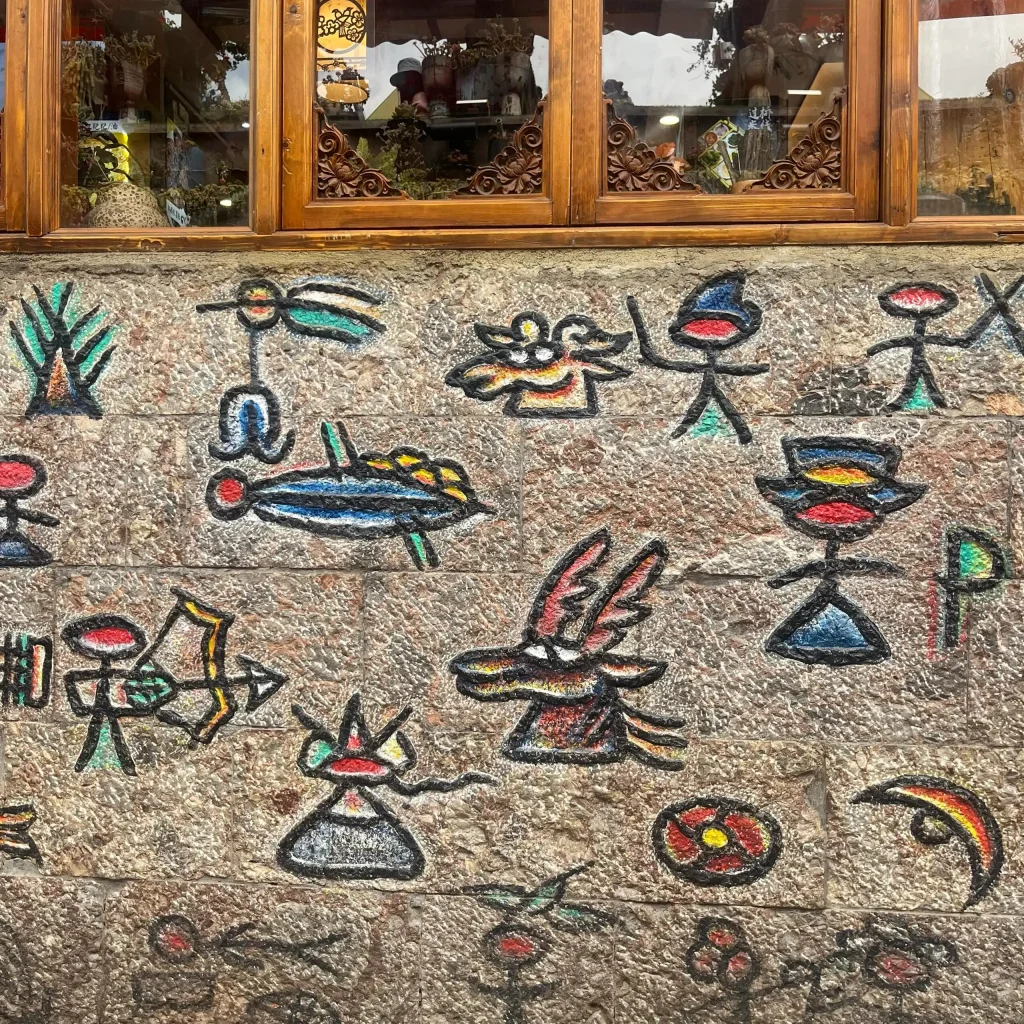
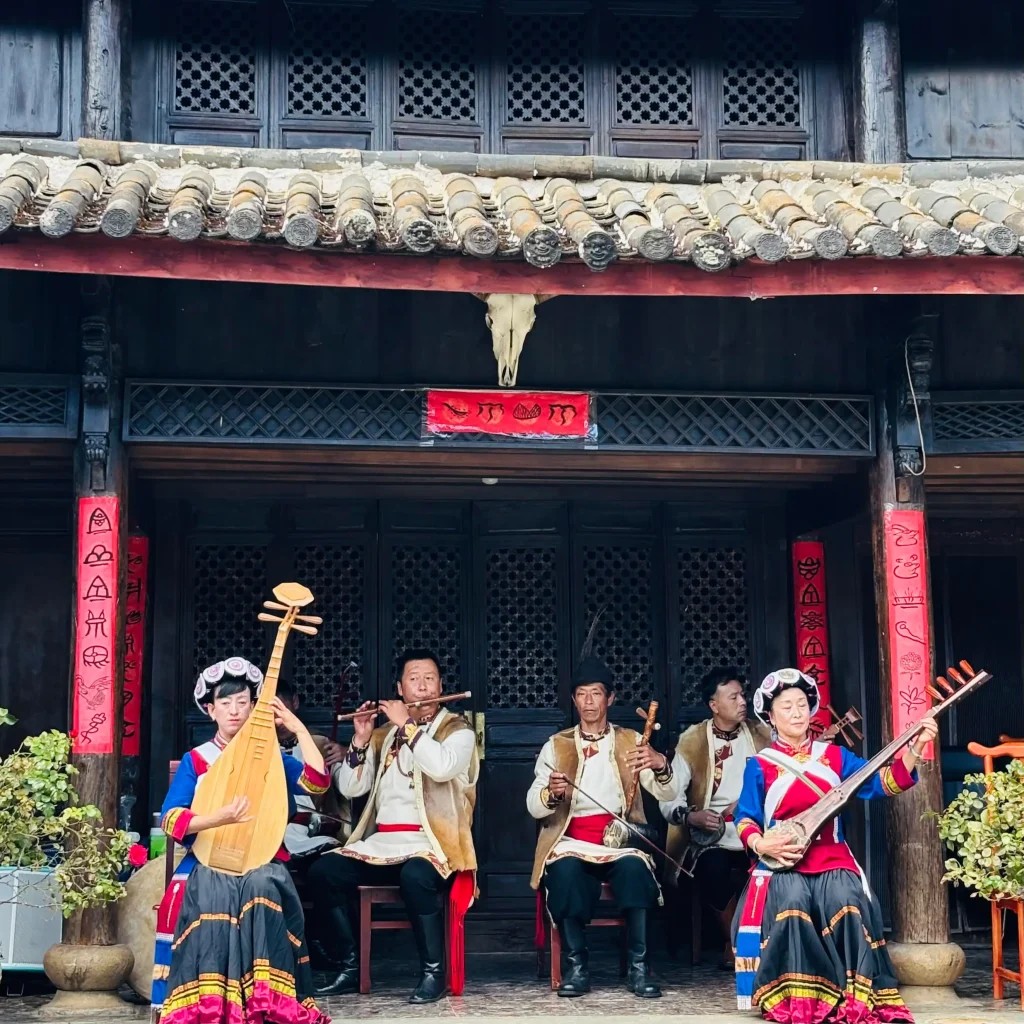
The truth is more nuanced. Yes, Lijiang’s UNESCO-listed Old Town has tourist shops on its main streets. But the Naxi culture that built this place over 800 years ago is still very much alive — in the Dongba pictographic script you’ll see painted on shop signs, in the ancient music ensembles that perform nightly, in the grandmother tending her courtyard garden on a side street you’d never find without getting lost. And Lijiang is the gateway to some of Yunnan’s most dramatic landscapes: the glacial mass of Jade Dragon Snow Mountain, the legendary Tiger Leaping Gorge, and the remote shores of Lugu Lake.
This guide will help you navigate all of it. For the big-picture Yunnan planning, our ultimate Yunnan travel guide covers logistics, while the top things to do in Yunnan helps you prioritize across the province.
What this guide covers: Lijiang Old Town → Baisha & Shuhe → Jade Dragon Snow Mountain → Tiger Leaping Gorge → Lugu Lake → Naxi culture → What to eat → Getting there & around → Practical tips.
Lijiang Old Town (Dàyán Gǔchéng)
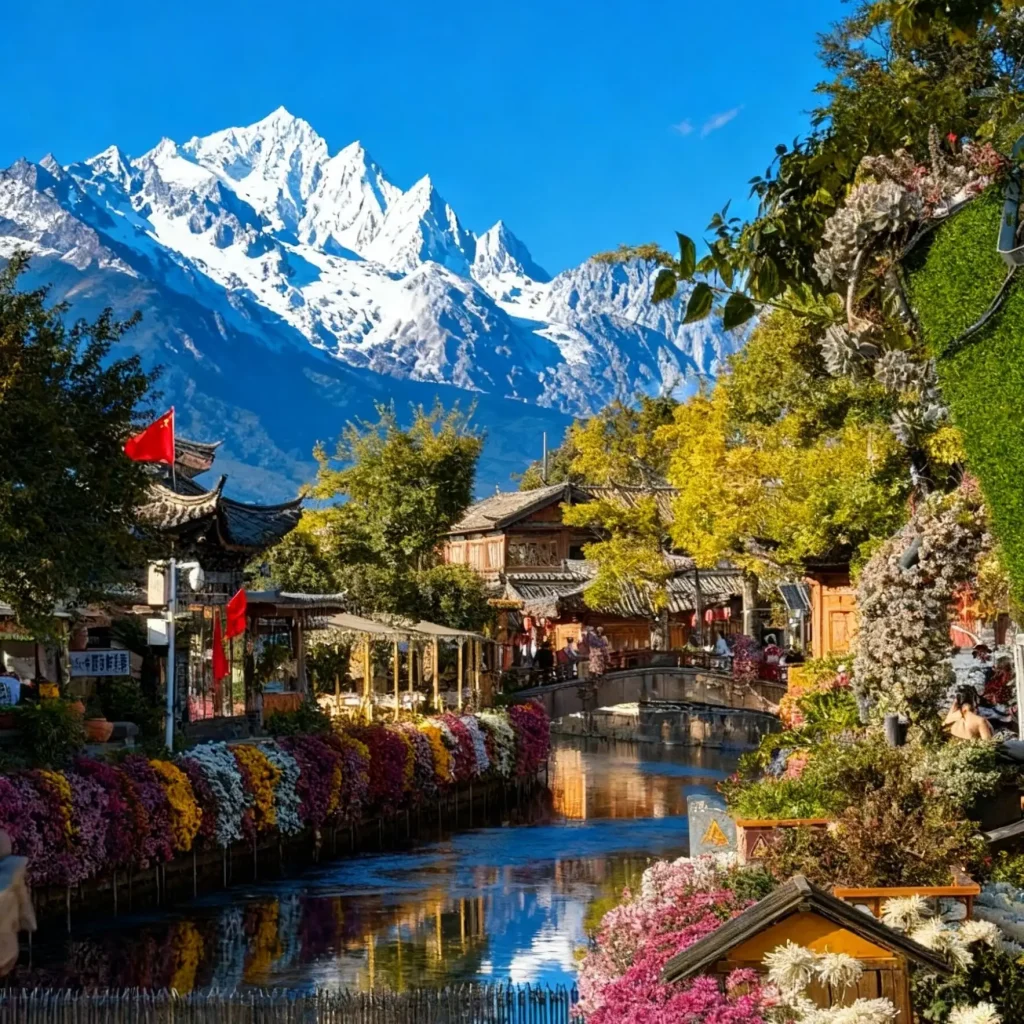
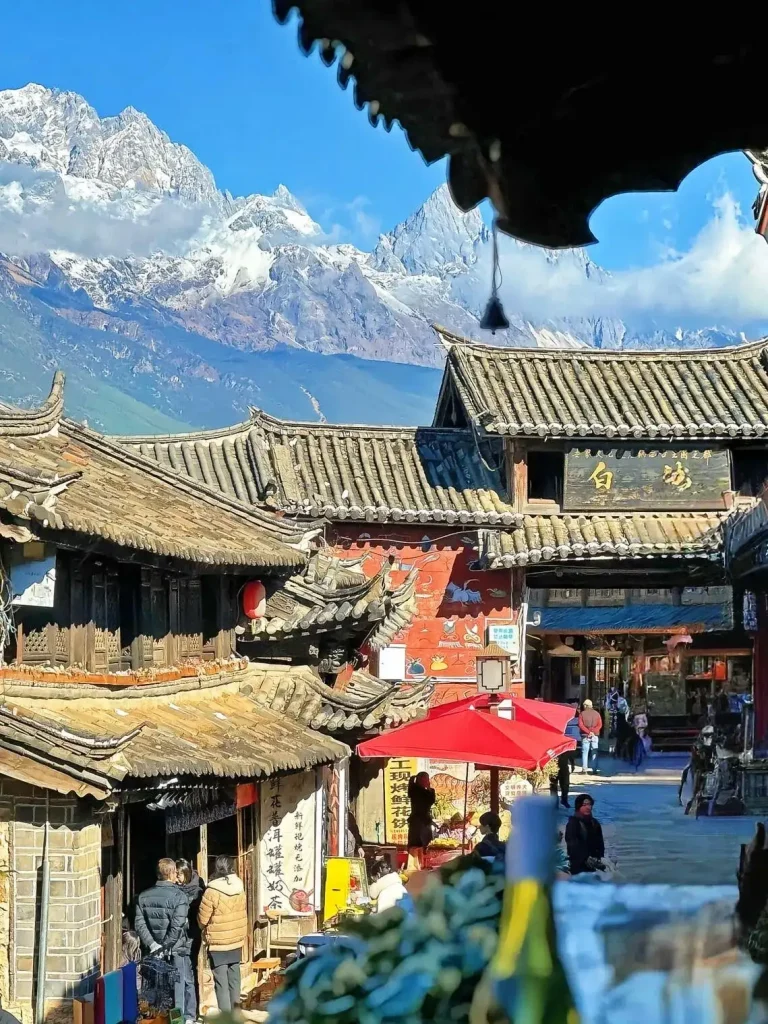
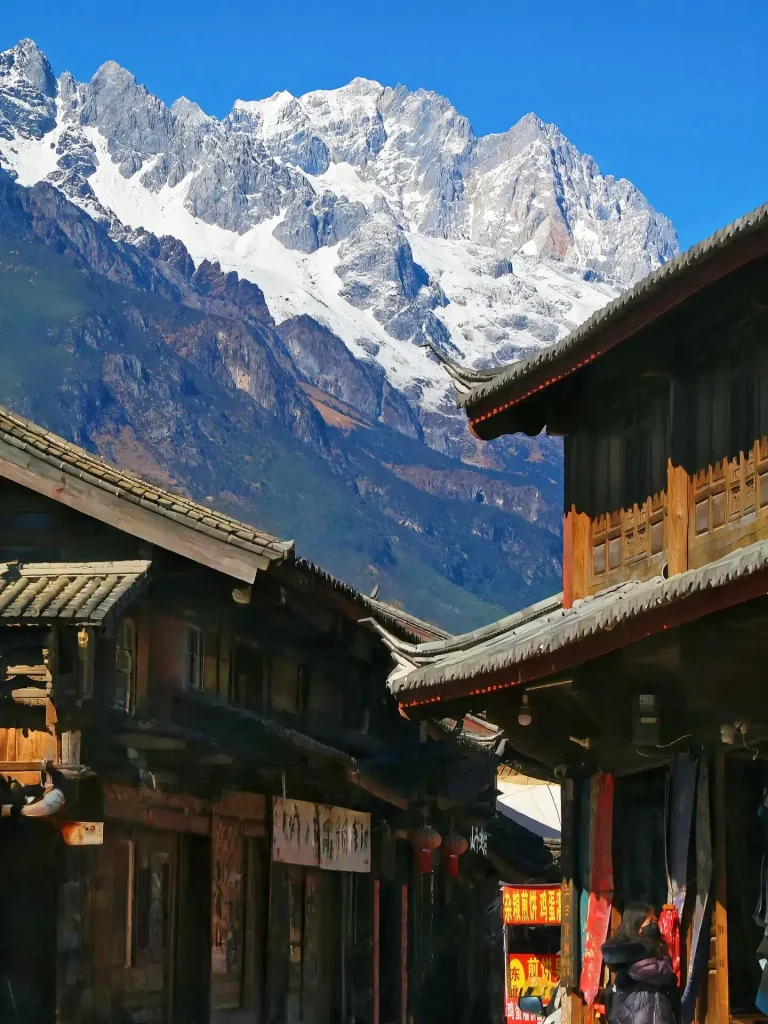
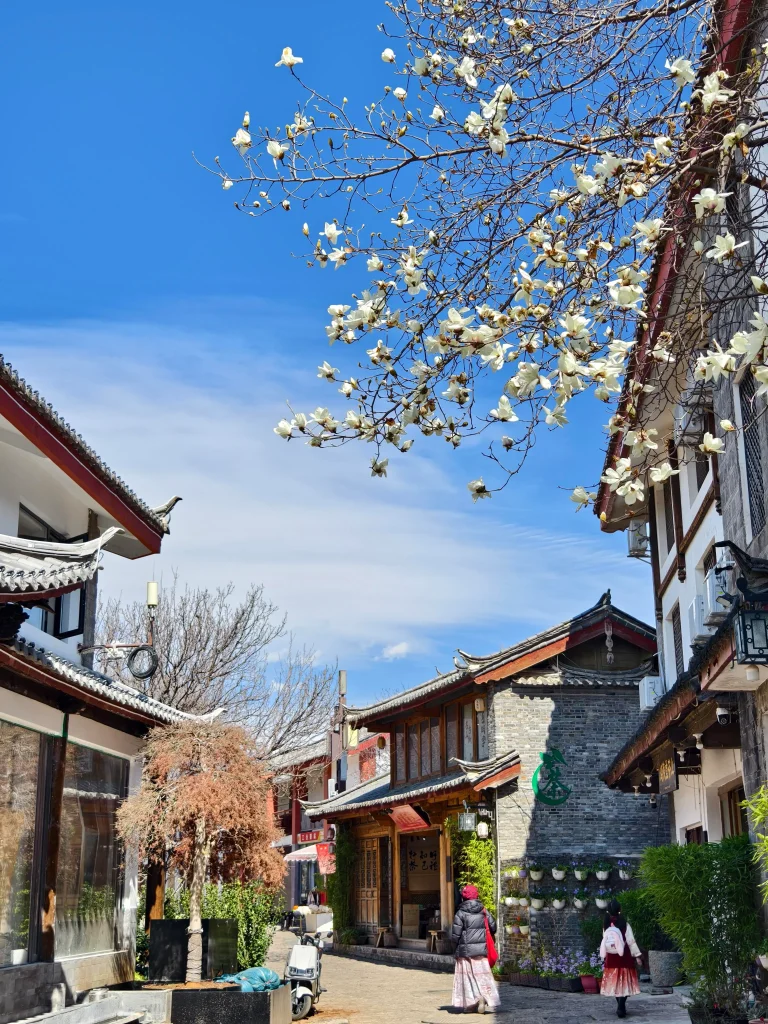
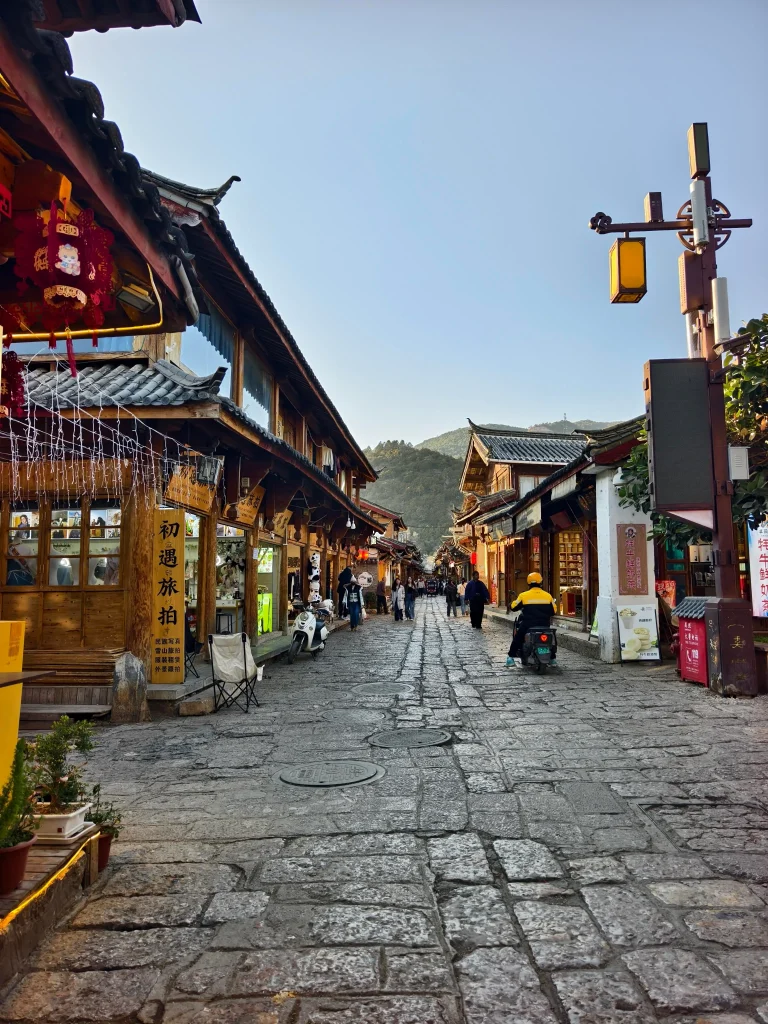
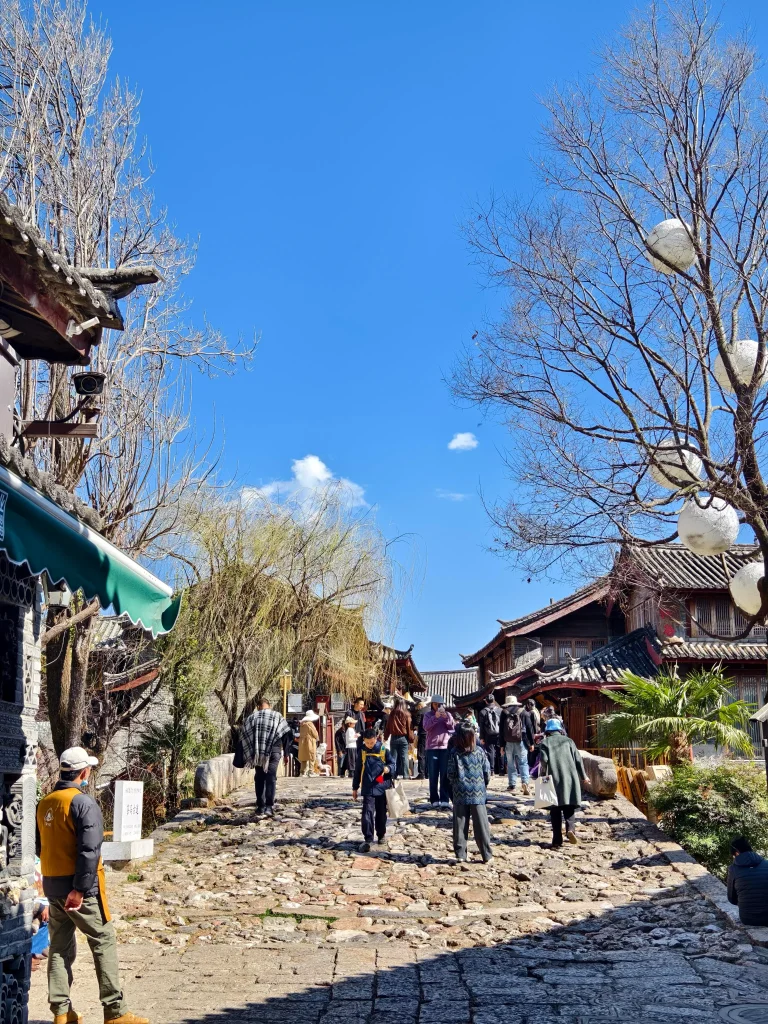
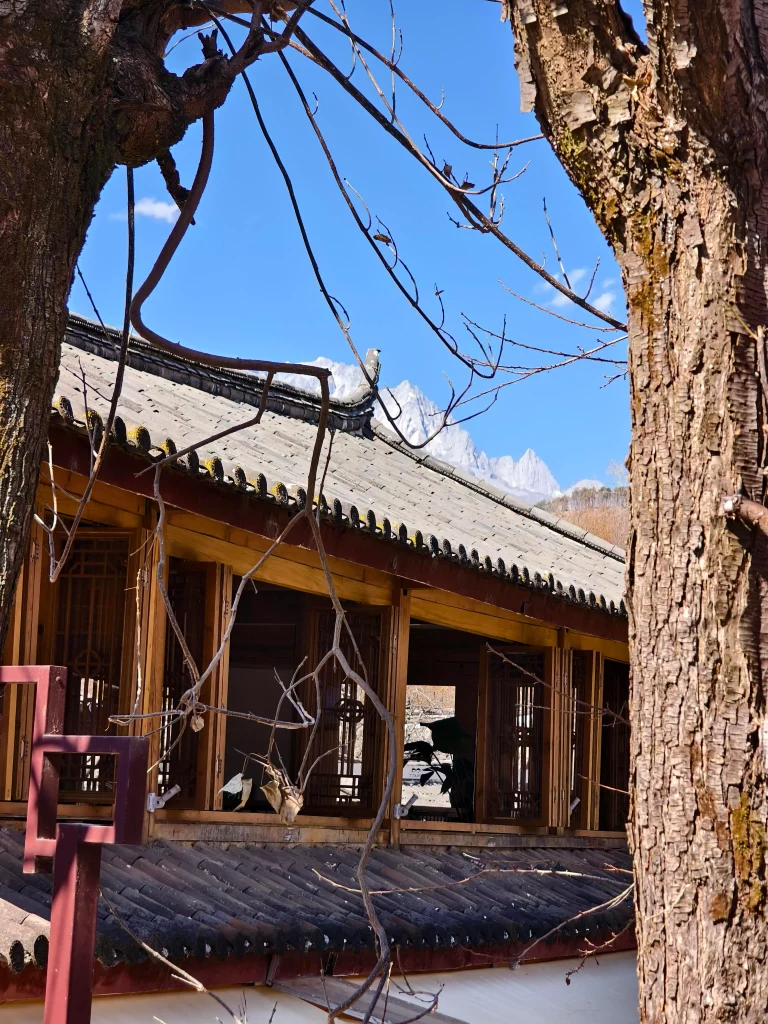
Lijiang’s Old Town — formally called Dayan — has been a UNESCO World Heritage Site since 1997, and the reasons are immediately visible. A labyrinth of cobblestone streets, arched bridges, and wooden Naxi buildings cascades down a gentle hillside, laced with canals fed by the Black Dragon Pool spring above. There are no cars, no modern high-rises within the walls, and at every turn, the white mass of Jade Dragon Snow Mountain floats above the tile rooftops like a painted backdrop.
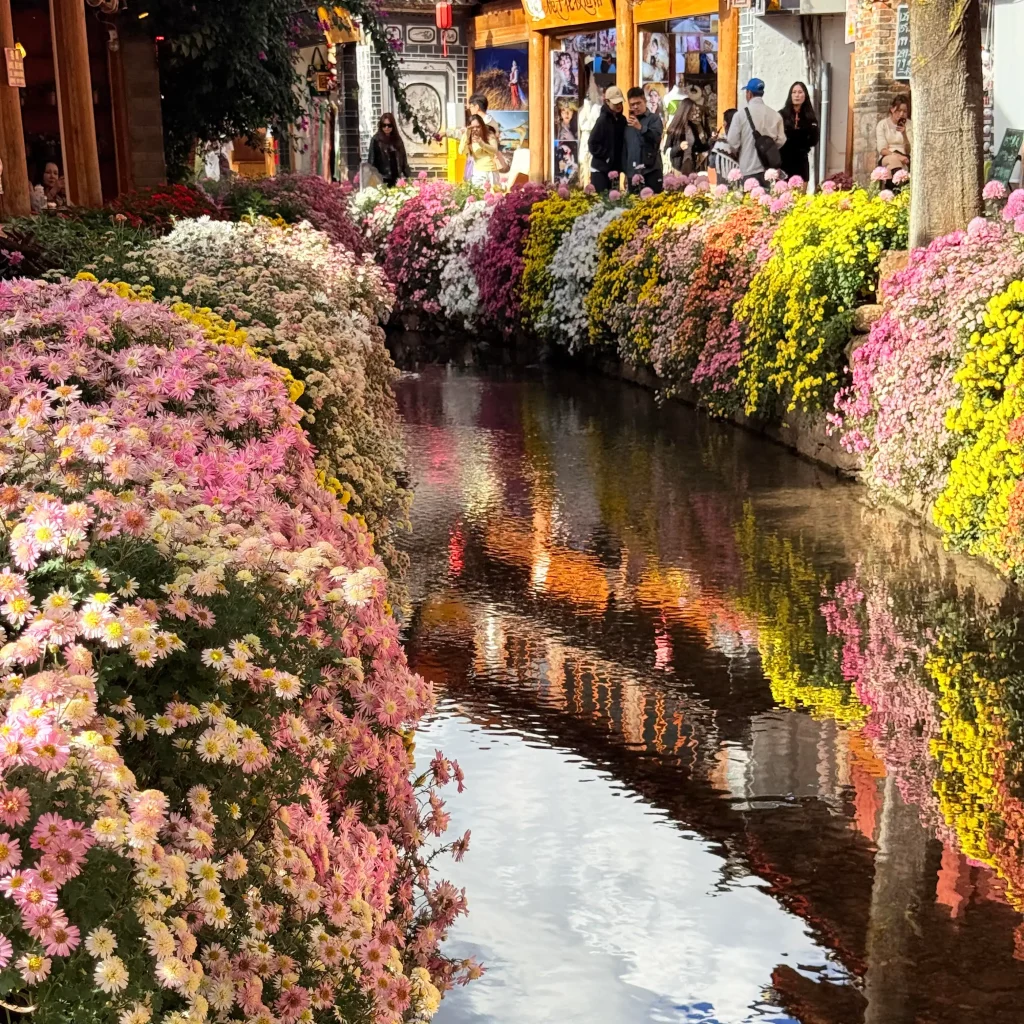
The Old Town is best explored without a map. The main arteries — Sifang Street (the central square), Qiyi Street, and Wuyi Street — are the commercial spine, lined with shops, bars, and restaurants. But the real magic is in the residential lanes to the north and east, where Naxi families still live behind wooden doors, where laundry hangs over canals, and where the tourist noise fades to the sound of flowing water and birdsong.
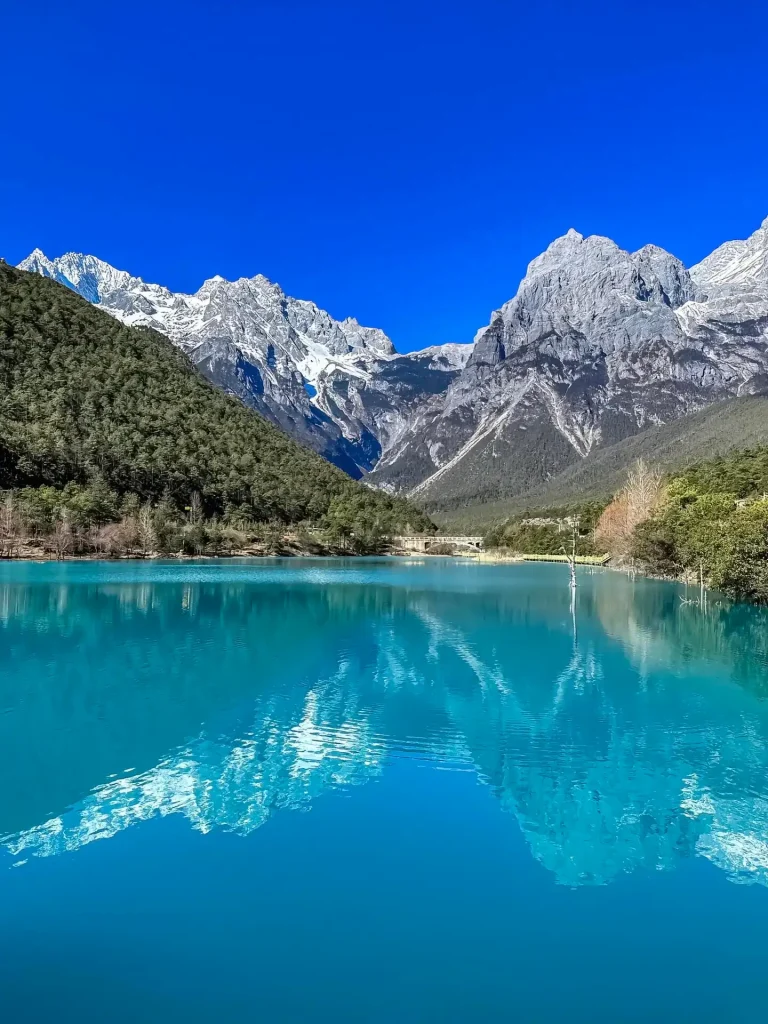
Key sights: The iconic Water Wheels at the Old Town entrance. Mu Palace (Mù Fǔ), the restored seat of the Naxi hereditary rulers, which provides the best historical context for Lijiang’s Naxi heritage. Wangu Tower on Lion Hill, the highest point in the Old Town and the spot for the classic rooftop-panorama photo. And Black Dragon Pool (Hēilóng Tán), just outside the northern gate, where the reflection of Jade Dragon Snow Mountain in the pool is one of China’s most photographed scenes.
Baisha & Shuhe: Lijiang’s Quieter Sides
Baisha Ancient Town
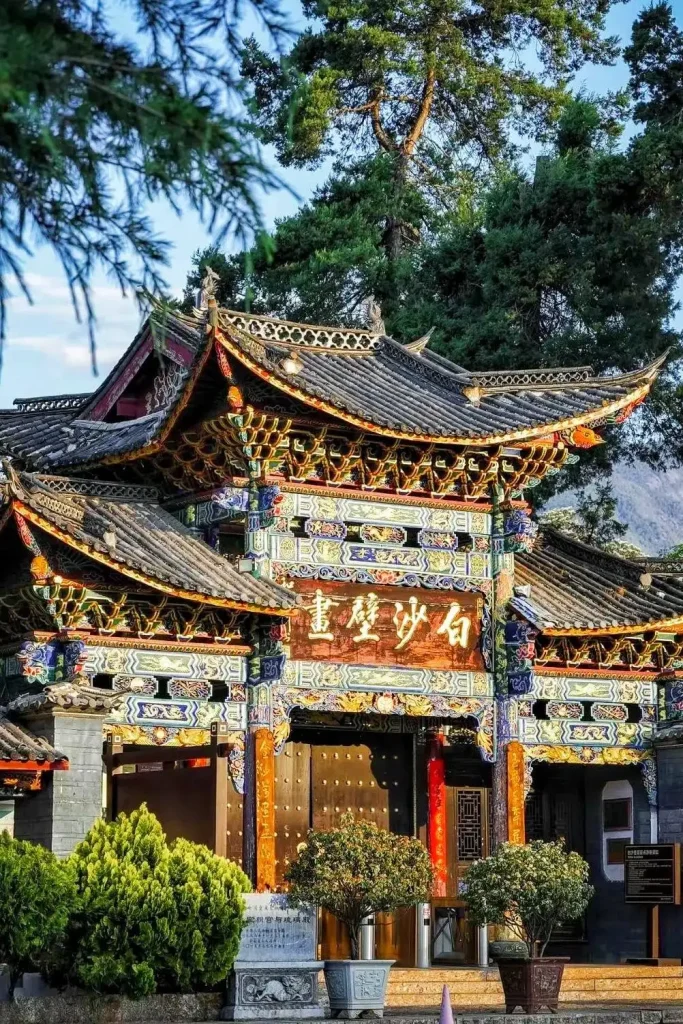
If the Old Town is Lijiang’s public face, Baisha is its private soul. This small village, 10 kilometers north, was the original Naxi capital before Dayan — and it feels like stepping back to what Lijiang must have been 30 years ago. The pace is gentle, the streets are quiet, and the cultural sights are extraordinary.
The Baisha Murals — painted between the 14th and 17th centuries — are the highlight. Spread across several temple halls, they blend Buddhist, Daoist, and Dongba religious imagery in a style found nowhere else in China. Nearby, you can visit Dongba priests in their workshops, watch them paint pictographic manuscripts, and buy authentic Dongba art directly from the makers.
Getting to Baisha from the Old Town takes 20 minutes by bicycle — the flat road runs through fields with Jade Dragon Snow Mountain growing larger with every pedal stroke.
Shuhe Ancient Town
Shuhe, 4 kilometers from Dayan, is often described as “what Lijiang used to be” — a smaller, quieter old town with similar Naxi architecture but a fraction of the crowds. The central square, the old leather workshops (Shuhe was historically a leather-working town), and the willow-lined canals make it a pleasant half-day visit. Several excellent guesthouses here offer a more peaceful alternative to staying in the main Old Town.
Jade Dragon Snow Mountain (Yùlóng Xuěshān)
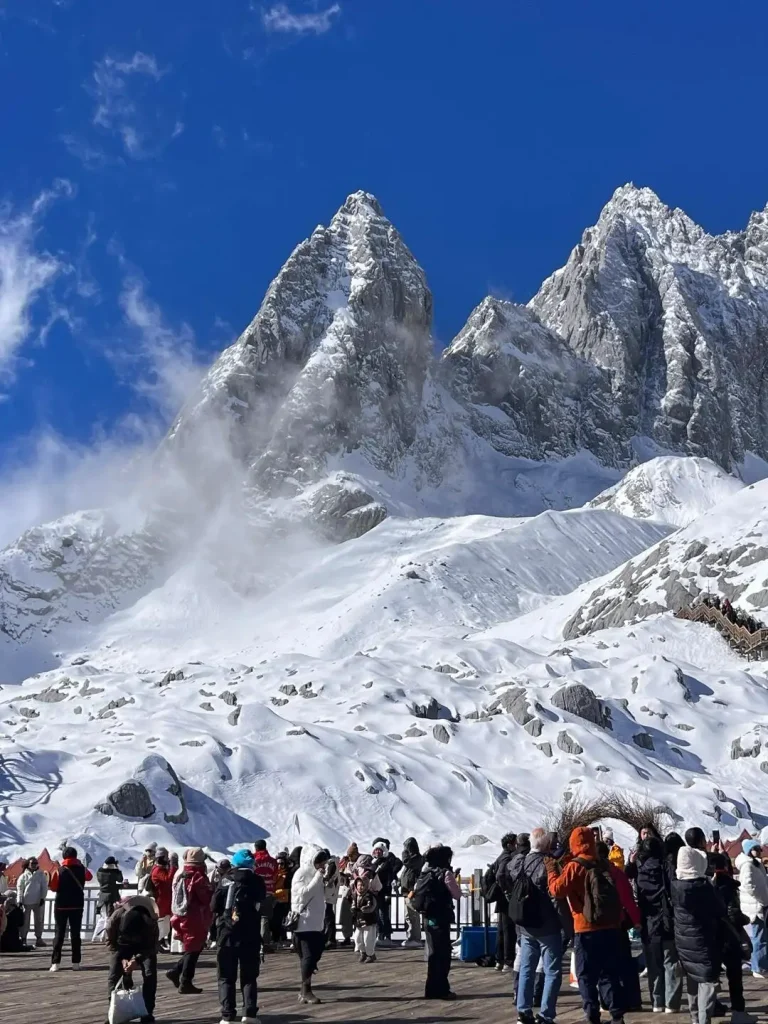
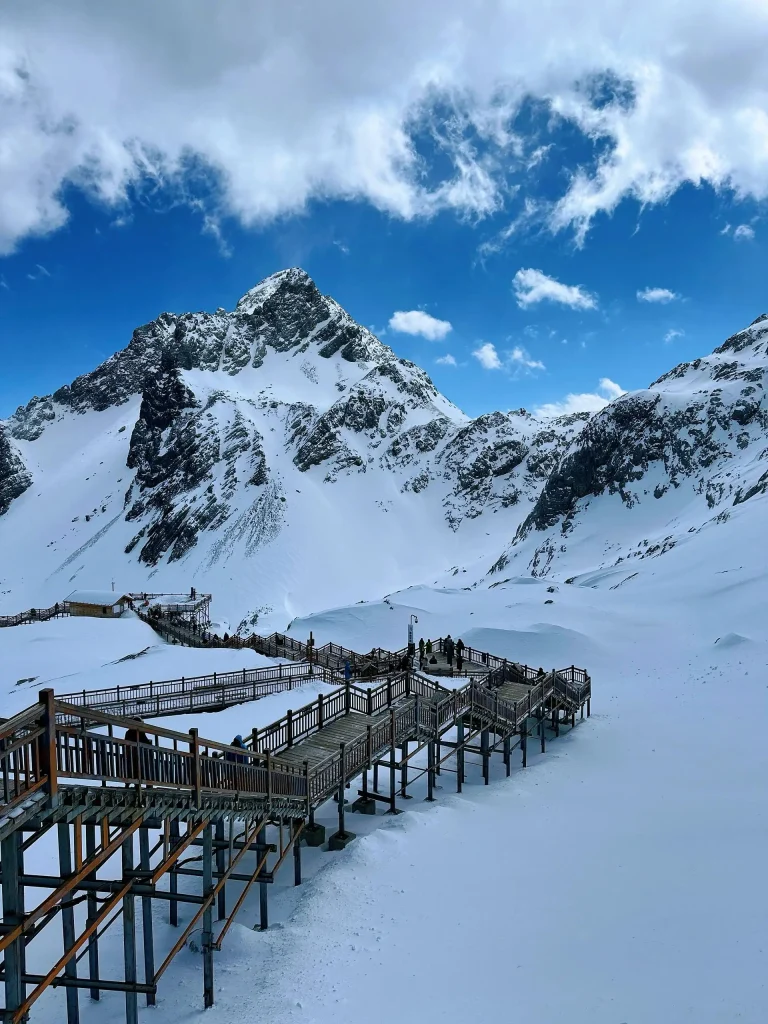
The glacial peak that dominates Lijiang’s skyline — 5,596 meters at its summit, never successfully climbed — is one of the most accessible high-altitude mountain experiences in China. You don’t need to be a mountaineer to get close: a cable car whisks visitors to 4,506 meters, where a boardwalk leads to a viewing platform with panoramic views of the glacier, the surrounding peaks, and — on clear days — an infinity of mountains receding into Tibet.
Practical details: The mountain park entry fee is ¥100 plus ¥120 for the glacier cable car (as of 2024). Tickets often sell out in peak season — book a day ahead through your hotel or online. The altitude is real: at 4,500+ meters, you’ll feel breathless, and some visitors get headaches. Oxygen canisters are sold at the base station (buy one as insurance). Move slowly at the top.
Other areas to explore: Blue Moon Valley (Lányuè Gǔ), at the base of the mountain, is a series of turquoise pools formed by snowmelt — the color is almost unnaturally vivid. Ganhaizi Meadow, at 3,100 meters, offers wide grasslands with mountain views and is the setting for the “Impression Lijiang” outdoor performance directed by Zhang Yimou.
Day Trips & Side Trips from Lijiang
Tiger Leaping Gorge
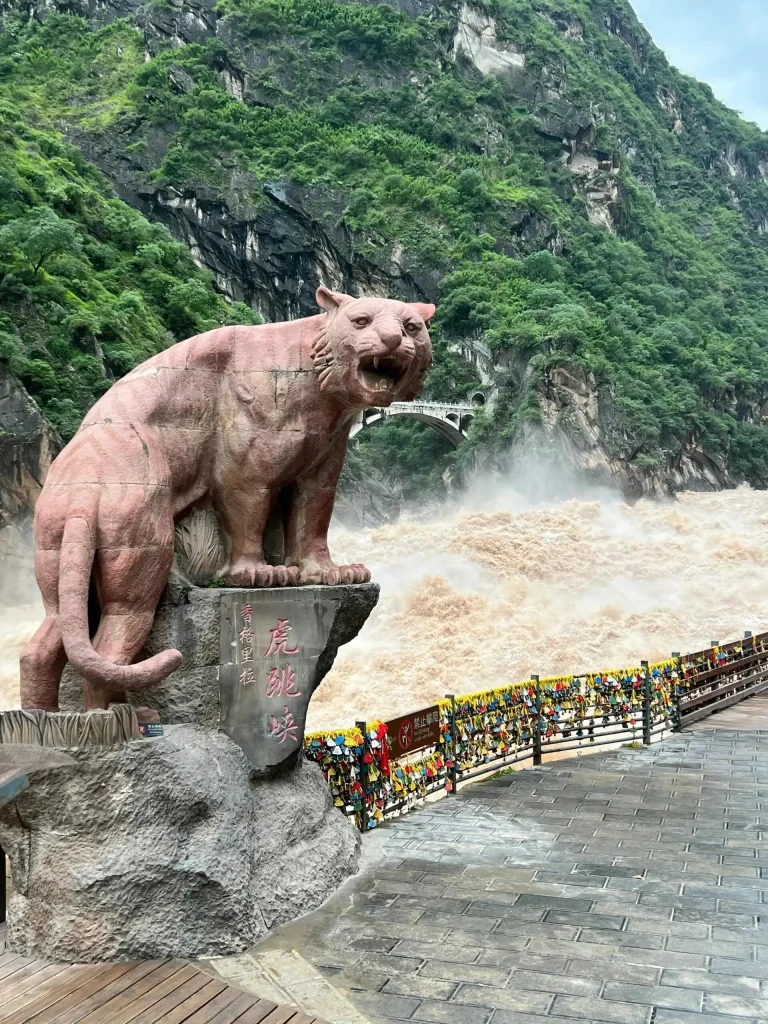
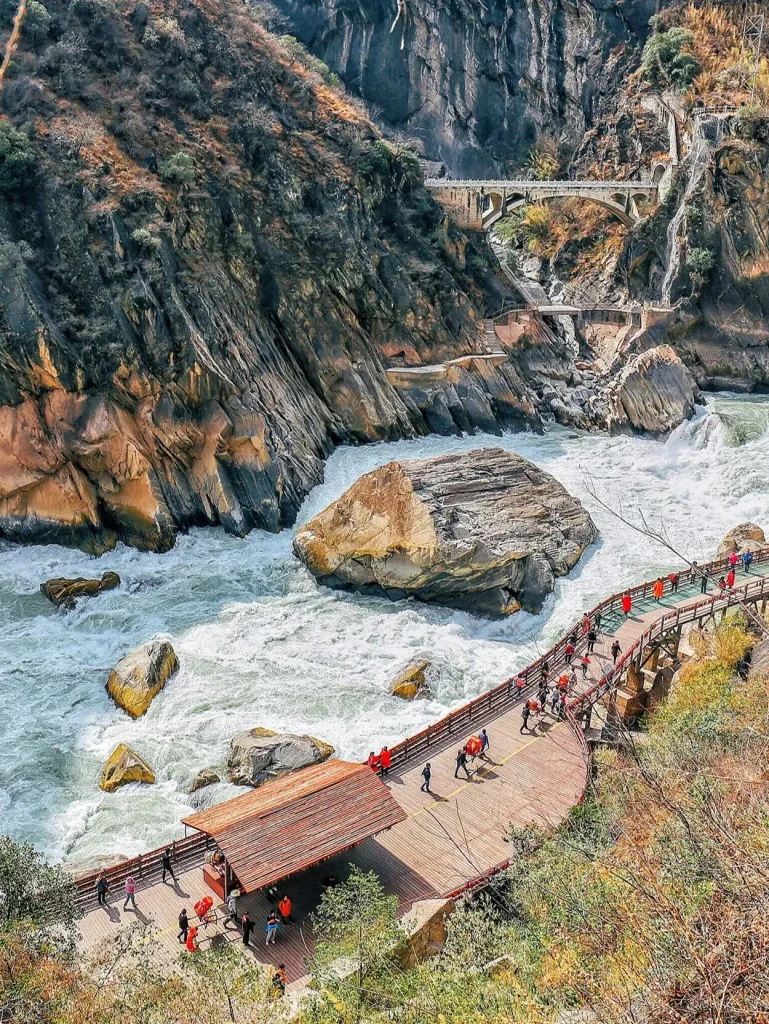
Two hours north of Lijiang, Tiger Leaping Gorge is one of the world’s deepest and most spectacular river gorges — and the two-day high trail hike along its rim is consistently ranked among the top treks on the planet. The Jinsha River (upper Yangtze) thunders 3,900 meters below snow-capped peaks, and the trail passes through Naxi farming villages, mountain guesthouses, and viewpoints that will stop you in your tracks. Our Tiger Leaping Gorge hiking guide has the complete trail breakdown.
Lugu Lake
Five hours east of Lijiang (or 1 hour by air to Ninglang), Lugu Lake sits on the Yunnan-Sichuan border — a deep blue alpine lake surrounded by mountains and home to the Mosuo people, one of the last matrilineal societies on Earth. The lake, the culture, and the isolation create an experience unlike anything else in Yunnan. Budget two nights minimum.

Shangri-La Connection
Many travelers continue north from Lijiang to Shangri-La (4 hours by bus), passing through Tiger Leaping Gorge territory. The route — from Naxi lowlands to Tibetan highlands — is one of Yunnan’s most culturally dramatic transitions.
Naxi Culture: The Soul of Lijiang
Lijiang without the Naxi is just another pretty old town. With them, it’s something extraordinary. The Naxi people have lived in this region for over 1,400 years, developing a culture so distinct that it has been recognized by UNESCO not once but twice — the Old Town as a World Heritage Site, and the Dongba manuscripts as a Memory of the World treasure.
The Dongba script is the headline: the world’s only pictographic writing system still in active ceremonial use. Each symbol is a miniature drawing — a man, a horse, the sun, a mountain — and watching a Dongba priest paint these symbols with a brush is one of Yunnan’s most unforgettable cultural encounters.
But Naxi culture extends far beyond the script. The Naxi Ancient Music — performed nightly by ensembles of elderly musicians using instruments and scores from the Tang and Song dynasties — preserves pieces that have been lost everywhere else in China. The Naxi Sanduo Festival in February honors the Naxi patron deity with a full day of rituals, horse racing, and communal feasting.
For the complete story — Dongba religion, the script, the music, and how to experience Naxi culture respectfully — read our Naxi and Dongba culture guide. And for the broader cultural context, our Yunnan culture guide explains how the Naxi fit into the province’s 25 ethnic groups.
What to Eat in Lijiang
Lijiang’s cuisine is hearty, warming, and shaped by altitude — built for cold mountain evenings. For the full guide, see our Lijiang food guide.
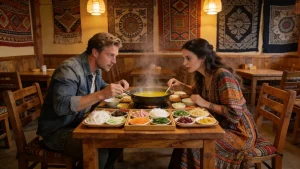
Naxi Copper Pot Rice (Tóng Guō Fàn): Rice, cured meat, mushrooms, and vegetables cooked together in a heavy copper pot over coals. The crispy rice layer at the bottom (guōba) is the best part.
Lijiang Baba: A Naxi flatbread — different from the Xizhou version — pan-fried and served with honey or savory fillings. Sold at street stalls throughout the old town.
Jidou Liangfen: A cold chickpea jelly dressed with chili, vinegar, and Sichuan pepper — the perfect afternoon snack on a warm day.
Yak Meat Hot Pot: Available in the old town restaurants, particularly those catering to travelers heading to or returning from Shangri-La. Rich, gamey, and deeply warming.
Pu’er Tea: Lijiang’s teahouses brew excellent Pu’er from Yunnan’s ancient tea mountains — a tasting session is a meditative afternoon activity.
Getting to Lijiang & Getting Around
From Kunming: High-speed train (3–3.5 hours, ~220 yuan) or flight (1 hour). The train is scenic and affordable.
From Dali: Train (1.5 hours) — an easy, frequent connection. Many travelers visit both cities.
From Shangri-La: Bus (4 hours through mountain scenery) or flight (45 minutes).
Getting around Lijiang: The Old Town is car-free and walkable. Rent a bicycle for Baisha and Shuhe (the roads are flat). Organized day trips or Didi are the easiest options for Jade Dragon Snow Mountain. Long-distance buses to Tiger Leaping Gorge and Lugu Lake depart from Lijiang Bus Station.
For multi-city route planning, see our Yunnan itinerary guide for 7, 10, and 14 days.
Practical Tips for Visiting Lijiang
Best time to visit: April–May and September–October offer clear skies, mild temperatures, and the best mountain views. Summer (June–August) is rainy season — the rice paddies are green but clouds often obscure Jade Dragon Snow Mountain. Winter (December–February) is cold but dry with reliably clear mountain views.
How many days: 3–4 days minimum. Day 1: Old Town exploration. Day 2: Jade Dragon Snow Mountain. Day 3: Baisha + Shuhe. Day 4: Tiger Leaping Gorge day trip (or begin a 2-day trek). Add 2 extra days for Lugu Lake.
Old Town maintenance fee: Lijiang charges a ¥50 “ancient city maintenance fee” that may be checked at certain entry points. Payment is valid for 30 days.
Altitude: Lijiang sits at 2,400 meters. Most visitors feel fine, but take it easy on Day 1 — especially if heading to Jade Dragon Snow Mountain (4,500m) the next day. Avoid alcohol and heavy meals the first evening.
Crowds: The Old Town is busiest during Chinese national holidays (October 1–7, Chinese New Year, May 1–5). Visit early morning or late evening for the quietest experience. The side streets north of Qiyi Street are always calmer than the main tourist arteries.
The main streets of the Old Town are busy, especially during Chinese holidays. But Lijiang is a large area — Baisha village, the northern residential lanes, and Shuhe Ancient Town are much quieter. The key is knowing where to look: the Naxi culture, the mountain scenery, and the surrounding villages are all genuinely world-class. Go beyond the main shopping streets and you’ll find the real Lijiang.
Yes. A cable car takes you to 4,506 meters, where a boardwalk leads to a glacier viewing platform — no hiking required. Blue Moon Valley at the base is also accessible by shuttle bus. The only physical challenge is the altitude, so move slowly and consider buying an oxygen canister.
Buses run from Lijiang Bus Station to Qiaotou (the gorge entrance) in about 2 hours (¥35–40). You can also hire a private car for more flexibility. Most hikers start the high trail at Qiaotou and finish at Tina’s Guesthouse on Day 2, then take a bus back. Our Tiger Leaping Gorge guide has the full logistics.
For atmosphere: the northern part of the Old Town (quieter, more residential). For convenience: near Sifang Square (central, easy access to everything). For budget: Shuhe Ancient Town (lower prices, peaceful). All areas are within cycling distance of each other.
If you have time, yes — they complement each other perfectly. Dali is about lakeside relaxation and Bai culture; Lijiang is about Naxi heritage and mountain scenery. The train between them takes 1.5 hours, making a combined visit easy.