Where the Hani people carved mountains into mirrors — 1,300 years of hand-built terraces that UNESCO calls a masterpiece of human ingenuity, and photographers call the most beautiful landscape in China.
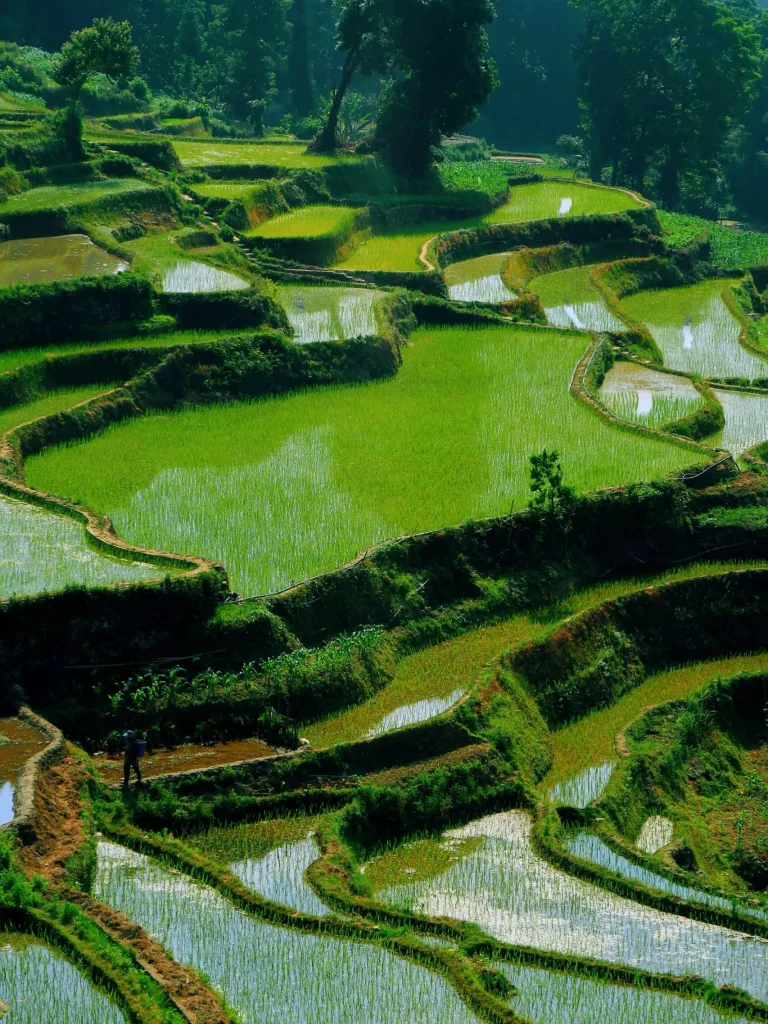
There are landscapes that are beautiful, and then there are landscapes that rewrite your understanding of what humans are capable of creating with their hands. Yuanyang’s rice terraces belong to the second category. Over 1,300 years, the Hani people carved more than 3,000 cascading terraces into the steep slopes of the Ailao Mountains in southeastern Yunnan — a staircase of water and earth that descends from misty cloud forests at 2,000 meters to river valleys far below.
UNESCO inscribed them as a World Heritage Site in 2013, calling the terraces “an exceptional reflection of a resilient land management system” — which, while accurate, misses the poetry. When the terraces are flooded between November and April, each one becomes a mirror: reflecting sky, clouds, and sunrise colors in thousands of irregular silver pools that climb the mountainsides in patterns so intricate they look designed by a computer but were drawn by hand, by generations of Hani farmers who knew every contour of their mountains by heart.
This guide covers everything you need to plan your visit: the best viewpoints, photography timing, the Hani villages, practical logistics, and how to combine Yuanyang with a broader Yunnan itinerary. For the big-picture planning, see our ultimate Yunnan travel guide and our top things to do in Yunnan.
What this guide covers: Why Yuanyang is unmissable → Best viewpoints → Photography seasons & timing → Hani culture → The villages → Getting there → Where to stay → How many days → Practical tips.
The Four Great Viewpoints
Yuanyang’s terraces are spread across a large area, and the experience revolves around four main viewpoints — each offering a different perspective and best at a different time of day.
Duoyishu — The Sunrise King
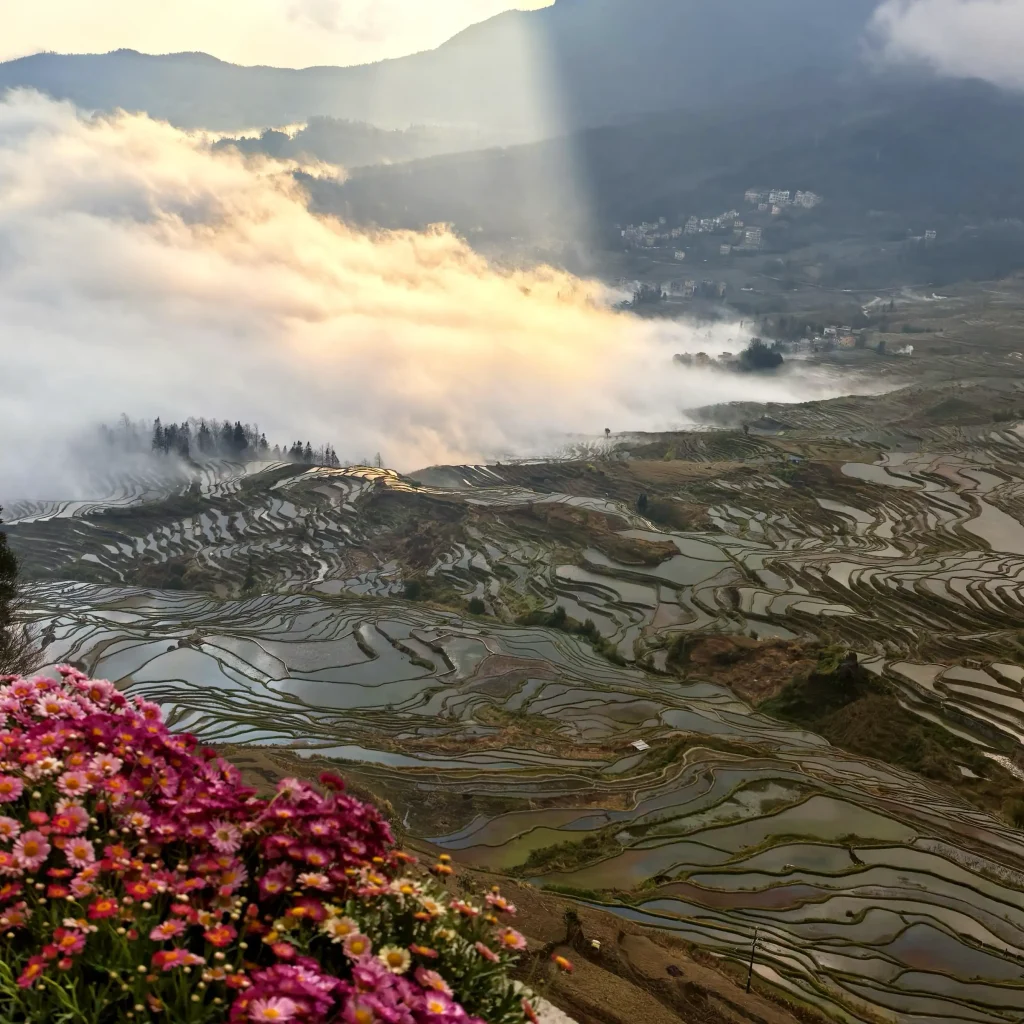
This is the viewpoint that made Yuanyang world-famous. Facing east over a vast amphitheater of terraces, Duoyishu delivers what many photographers consider the finest sunrise in China. As the first light hits the flooded terraces, the entire mountainside ignites — thousands of water-filled pools turning gold, then pink, then silver as the sun climbs. On misty mornings, clouds drift between the terraces, creating a sea-of-clouds effect that looks digitally composed but is entirely real.
Arrive at least 30 minutes before sunrise to secure a spot at the main viewing platform. In peak season (January–March), the platform gets crowded with photographers — tripods, telephoto lenses, and a respectful silence as the light arrives. The side trails to the left of the main platform offer less crowded perspectives.
Bada — The Sunset Stage
On the opposite side of the valley from Duoyishu, Bada faces west and is the premier sunset location. The terraces here are among the most extensive — over 14,000 mu (nearly 1,000 hectares) of carved mountainside stretching toward the horizon. As the afternoon light turns golden, the terraces glow in bands of amber and bronze, with the Hani villages perched on the ridgelines like silhouettes cut from paper.
Bada is also the most accessible viewpoint — a paved road leads to several overlooks at different elevations, allowing you to shift perspective during the golden hour.
Laohuzui (Tiger’s Mouth) — The Dramatic Drop
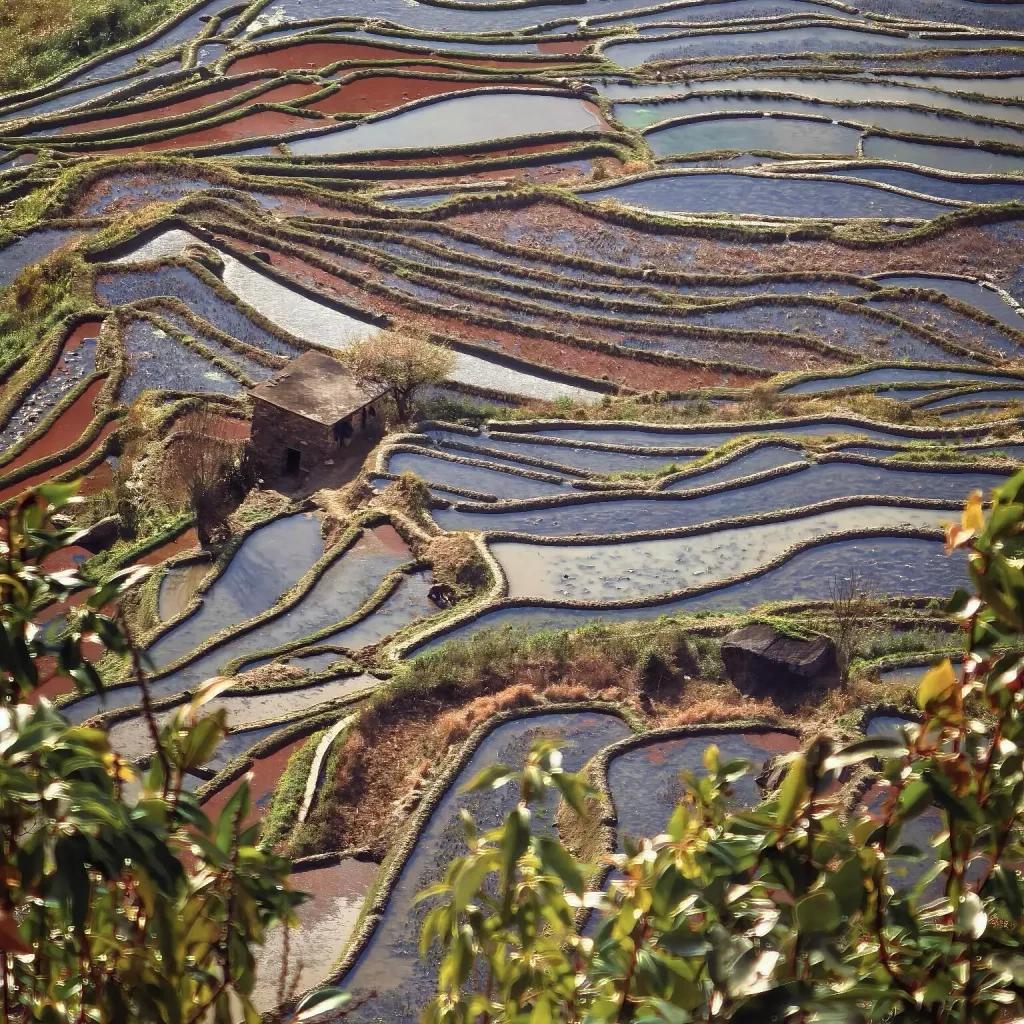
The most vertigo-inducing viewpoint. The terraces here plunge steeply into a deep valley, creating a concentric pattern that resembles a massive amphitheater or, as the name suggests, the open jaws of a tiger. The depth and scale are breathtaking — hundreds of terrace levels dropping away below your feet. Best in the afternoon when side-lighting emphasizes the contours.
Longshuba — The Intimate Garden
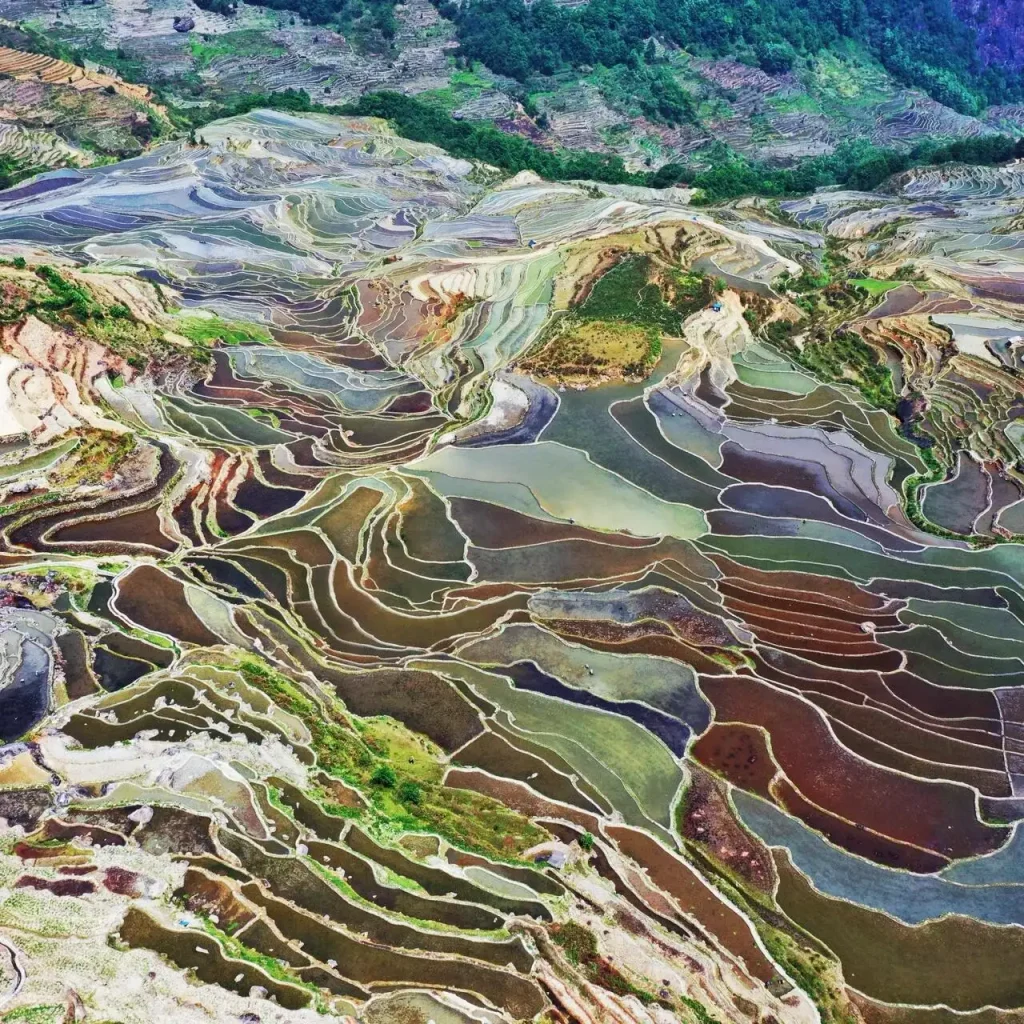
Smaller and less visited than the others, Longshuba offers an intimate view of terraces at close range — you can see individual paddy walls, water buffalo working the fields, and Hani farmers tending their plots. It’s the best viewpoint for human-scale photography (portraits, working scenes) rather than grand landscapes. Good at any time of day.
When to Visit: Seasons & Photography Timing
November–April (flooding season): THE time to visit. The terraces are filled with water, creating the mirror effect that defines Yuanyang’s global reputation. The peak photography window is January–March — water levels are highest, morning mists are most frequent, and the light quality is extraordinary. This is when the professional photographers come.
May–June (planting season): The terraces turn vivid green as rice seedlings are planted. Beautiful in a completely different way — emerald carpets instead of silver mirrors. Fewer visitors and clearer weather than the flooding season.
July–September (growing season): Lush green terraces, but the rainy season means clouds, mist, and unpredictable light. Dramatic when conditions align, frustrating when they don’t.
October (harvest season): The terraces turn golden as rice ripens. Stunning for 2–3 weeks before harvest, then the terraces are emptied and reflooded.
Daily timing: Sunrise at Duoyishu (arrive 30 min early) and sunset at Bada are the two non-negotiable slots. Midday light is flat and less photogenic — use that time to visit Hani villages, eat lunch, or rest. Late afternoon (3–5 PM) at Tiger’s Mouth or Longshuba catches excellent side-lighting.
The Hani People: Architects of the Terraces
The terraces didn’t build themselves, and understanding the Hani people who created them transforms the visual experience into something much deeper. The Hani have lived in the Ailao Mountains for over 1,300 years, developing an extraordinary land management system that UNESCO describes as a “harmonious integration of the needs of food production, water management, ecological protection, and the social and religious life of the community.”
The system works like this: old-growth forest at the mountain summit captures moisture from clouds. Water filters down through the forest into an intricate network of hand-dug channels that distributes it evenly across thousands of terraces. The terraces retain water for rice cultivation, and the overflow descends to the river valleys below, where it evaporates, rises, and forms new clouds — a closed-loop cycle that has sustained the Hani for a millennium.
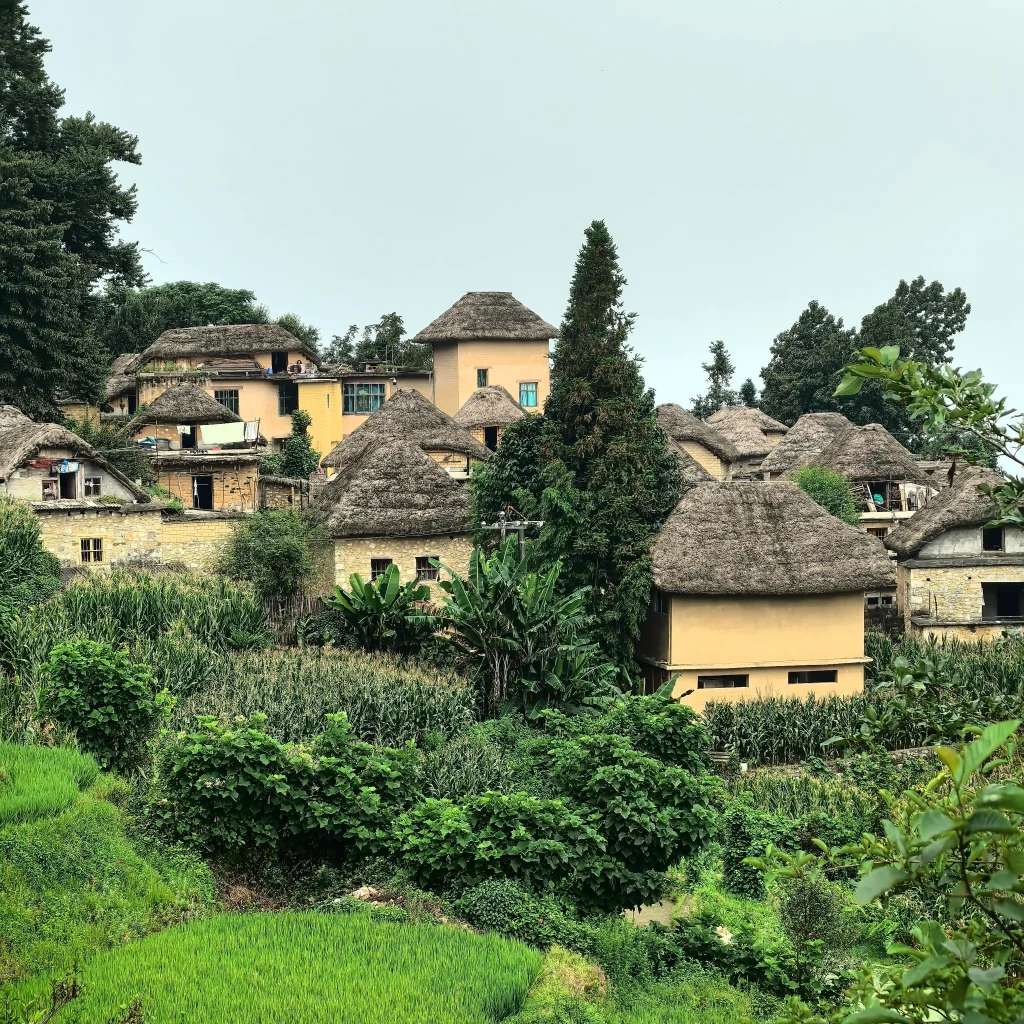
Hani villages are built into the slopes above the terraces — clusters of mushroom-shaped houses (thatched or tile-roofed) that blend into the landscape. The villages are remarkably self-sufficient: rice from the terraces, vegetables from kitchen gardens, fish raised in the flooded paddies, and pigs fed on rice bran. The Hani calendar, festivals, and spiritual rituals are all tied to the rice-growing cycle.
For the broader context of Yunnan’s ethnic minority cultures and how the Hani fit into the province’s extraordinary diversity, read our Yunnan culture guide. The Hani Angmatu (New Year) festival, celebrating the rice harvest, is one of Yunnan’s most colorful cultural events — details in our Yunnan festivals guide.
Exploring the Hani Villages
Qingkou Village: The most accessible Hani village for visitors. Traditional mushroom houses, a small museum explaining the terrace system, and a forest trail where you can see the water-channel network that feeds the terraces. Locals sometimes offer home-cooked Hani meals — accept if invited.
Shengcun: A morning market town where Hani, Yi, and Miao traders converge on market days (every 5 days on the traditional calendar). The market is a cultural event — traditional dress, live poultry, medicinal herbs, fermented tofu, and rice wine. Arrive before 9 AM.
Azheke Village: One of the best-preserved traditional Hani villages, with over 60 mushroom houses. It’s quieter and more atmospheric than Qingkou, with excellent terrace views from the village edge. A few families offer simple homestays.
Walking the terraces: The most rewarding way to experience Yuanyang is on foot. Trails connect the viewpoints to nearby villages, descending into the terraces themselves. Walking among the paddy walls — water shimmering on both sides, frogs chirping, the mountains rising above — is an experience that no viewpoint can replicate. Wear sturdy shoes with grip (the terrace walls are slippery).
Getting to Yuanyang
From Kunming: The most common route. Bus from Kunming South Bus Station to Yuanyang Xinjie (the main town, 5–6 hours, ¥140–180). Alternatively, take the high-speed train to Jianshui (1.5 hours) and then a bus from Jianshui to Yuanyang (2.5 hours) — this route lets you combine Yuanyang with Jianshui Ancient Town for an excellent 3–4 day itinerary through southeastern Yunnan.
By hired car: A private car from Kunming (¥600–800) gives maximum flexibility and lets you stop at viewpoints along the way. Recommended if splitting costs with other travelers.
Getting around Yuanyang: The viewpoints are spread across a wide area. Local minivans and shared buses connect Xinjie town to Duoyishu, Bada, and other viewpoints (¥5–15 per trip), but schedules are irregular, especially for pre-dawn sunrise trips. Renting a car or hiring a local driver (¥200–300/day) is the most practical option for serious photography.
For multi-city route planning, our Yunnan itinerary guide includes a southeastern Yunnan loop combining Yuanyang with Jianshui and Kunming.
Where to Stay & How Many Days
Base yourself in Duoyishu village for the most convenient sunrise access. Several family-run guesthouses and small hotels offer simple, clean rooms with terrace views for ¥100–300/night. Being right at the sunrise viewpoint means you can roll out of bed, walk 5 minutes, and be in position — a huge advantage over staying in Xinjie town (30 minutes away).
Xinjie (Yuanyang New Town): More hotel options and restaurants, but further from the viewpoints. Better as a transit stop than a photography base.
How many days: 2 nights / 3 days is the sweet spot. Day 1: Arrive, afternoon at Bada or Tiger’s Mouth for sunset. Day 2: Sunrise at Duoyishu, village visits and terrace walks, sunset at Bada. Day 3: Second sunrise attempt (weather permitting), then depart. Serious photographers often stay 4–5 days to wait for perfect conditions.
Practical Tips
Weather is everything. Yuanyang’s terraces depend on light and water to create their magic. The best conditions — flooding + clear sunrise — are never guaranteed. Come prepared to stay an extra day if clouds obscure your first attempt. The misty conditions that occasionally block sunrise can also create extraordinary cloud-sea effects, so every morning is worth an early alarm.
Pack warm layers. Yuanyang sits at 1,400–2,000 meters, and pre-dawn viewpoint waits in January can be cold (5–10°C). Bring a warm jacket, gloves, and a hat for sunrise outings.
Eat local. Hani cuisine is simple and delicious — rice, stir-fried wild vegetables, tofu, pork, and rice wine. The restaurants in Duoyishu and Xinjie serve authentic local food at very low prices. For broader context on Yunnan’s regional eating, see our Yunnan food guide.
Respect the landscape. Don’t walk on terrace walls (they’re fragile and essential infrastructure). Ask before photographing Hani villagers. Stay on marked paths. The terraces are not a theme park — they’re a working agricultural system that feeds real families.
Combine with Jianshui. The ancient town of Jianshui — with its 600-year-old Confucius temple, Qing Dynasty mansions, and legendary grilled tofu — is 2.5 hours from Yuanyang and makes a perfect 1–2 day extension.
January to March is the peak photography season — terraces are flooded and reflect the sky like mirrors. November–April is the broader flooding season. May–June offers vivid green planting scenes. October delivers golden harvest colors. The worst time is mid-rainy season (July–August) when clouds often block views.
Direct bus from Kunming South Bus Station (5–6 hours, ¥140–180). A better option: high-speed train to Jianshui (1.5 hours), then bus to Yuanyang (2.5 hours) — this lets you visit Jianshui Ancient Town along the way. Hired car from Kunming takes 4–5 hours.
2 nights / 3 days is ideal for most visitors — enough for 2 sunrise attempts, sunset sessions, and village visits. Serious photographers often stay 4–5 days to wait for perfect light conditions.
Yes. A multi-day pass covering all four main viewpoints costs ¥100 (as of 2024). The ticket is valid for multiple entries over several days. Keep your ticket — it’s checked at each viewpoint.
Yes, but it’s more challenging. Shared minivans connect Xinjie town to the viewpoints, but schedules are irregular and don’t run pre-dawn for sunrise. Hiring a local driver (¥200–300/day) is recommended, especially for photography-focused trips.