No province in China — and few places on Earth — concentrates as much human cultural diversity into a single region. Here’s how to understand and respectfully experience Yunnan’s 25 ethnic minority communities.
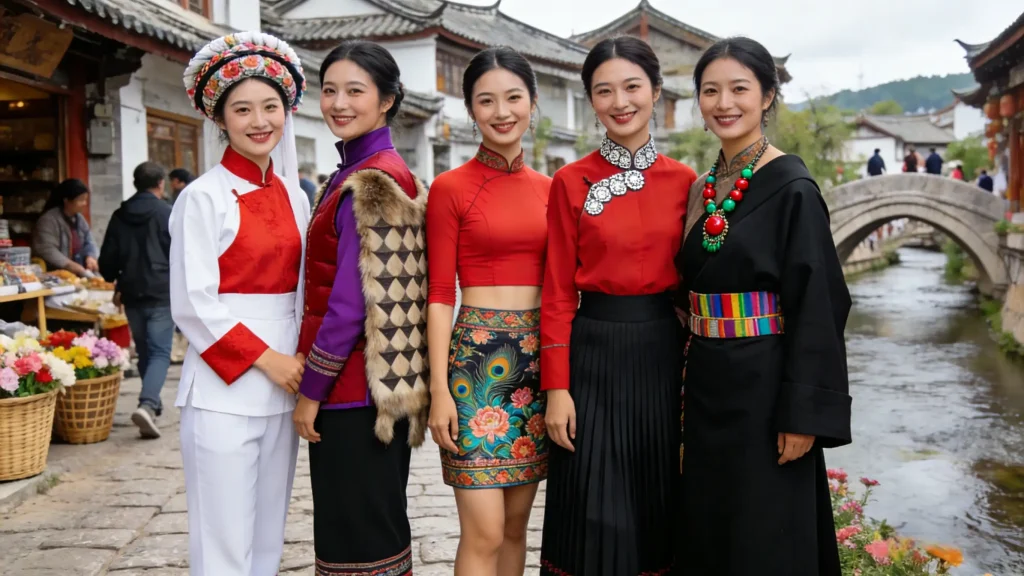
China officially recognizes 56 ethnic groups. Twenty-five of them — nearly half — call Yunnan home. And unlike many parts of the world where indigenous cultures have been reduced to museum exhibits and gift-shop crafts, Yunnan’s minority communities are living, breathing, and evolving. The Naxi people of Lijiang still use the world’s only surviving pictographic writing system. The Dai communities of Xishuangbanna practice Theravada Buddhism with the same intensity as their cousins in Thailand. The Bai people of Dali still build homes according to architectural principles refined over a millennium. The Mosuo at Lugu Lake maintain one of Earth’s last matrilineal societies.
This isn’t cultural tourism at its most superficial — it’s the rare opportunity to encounter traditions that have survived because they’re still meaningful to the people who practice them. This guide introduces the major ethnic groups you’ll encounter across Yunnan, explains their traditions and where to find them, and offers guidance on how to engage respectfully. For the big-picture planning, see our ultimate Yunnan travel guide, and for how Yunnan’s cultures fit into the broader context of the province’s history and traditions, read our Yunnan culture guide.
What this guide covers: Yunnan’s ethnic landscape → The major groups in depth → Where to experience each culture → Festival calendar highlights → How to engage respectfully → Ethical considerations.
Understanding Yunnan’s Ethnic Landscape
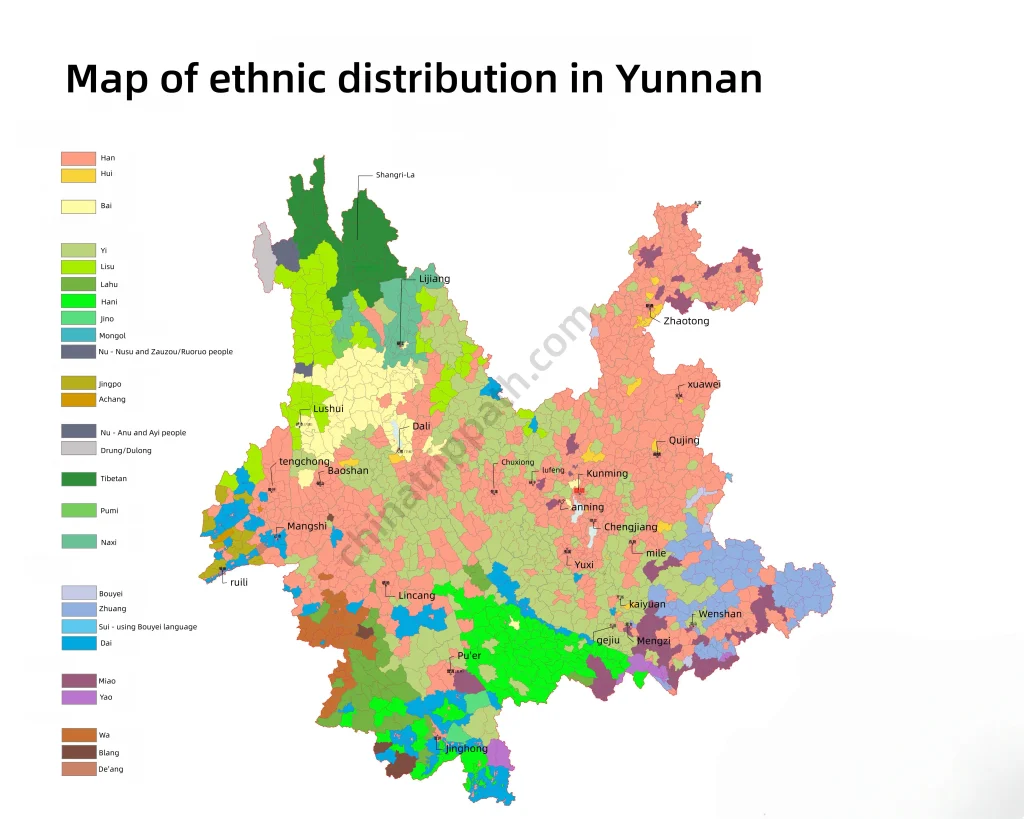
Yunnan’s extraordinary ethnic diversity is a consequence of geography. The province’s extreme terrain — deep gorges, high plateaus, dense rainforests, remote valleys — created natural barriers that allowed distinct communities to develop in relative isolation for centuries. Groups that migrated south from the Tibetan Plateau settled in the highlands. Communities with Southeast Asian roots established themselves in the tropical lowlands. Traders along the Tea Horse Road created cultural crossroads in the valleys between.
The result is a cultural mosaic unlike anything else in China. Within a single day’s drive, you can move from Tibetan Buddhist monasteries to Theravada Buddhist pagodas, from matrilineal societies to patriarchal clans, from pictographic writing systems to oral storytelling traditions. Each group has its own language (sometimes multiple dialects), its own architecture, its own cuisine, its own textile patterns, and its own relationship with the land.
China’s official classification recognizes 25 ethnic minority groups in Yunnan (plus the Han Chinese majority). Some, like the Yi, number over 5 million in Yunnan alone. Others, like the Dulong in the far northwest, number fewer than 7,000. The groups you’re most likely to encounter as a traveler — and the ones this guide covers in most depth — are the Bai, Naxi, Dai, Yi, Tibetans, Hani, Mosuo, and several others concentrated around Yunnan’s main travel destinations.
The Major Groups: Who They Are & Where to Find Them
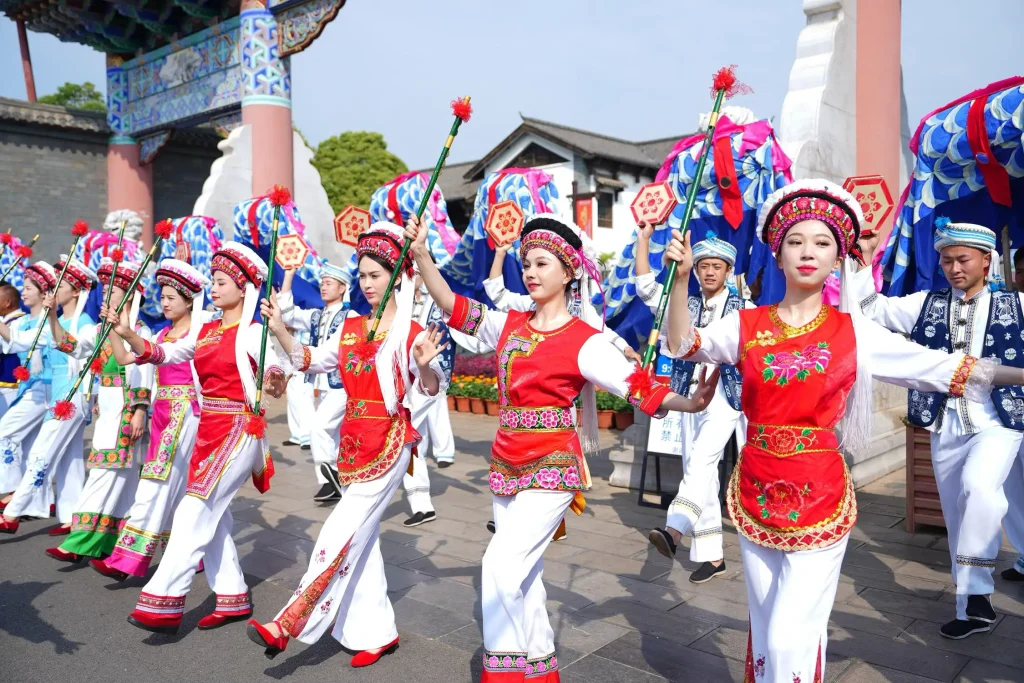
The Bai — Dali & Erhai Lake
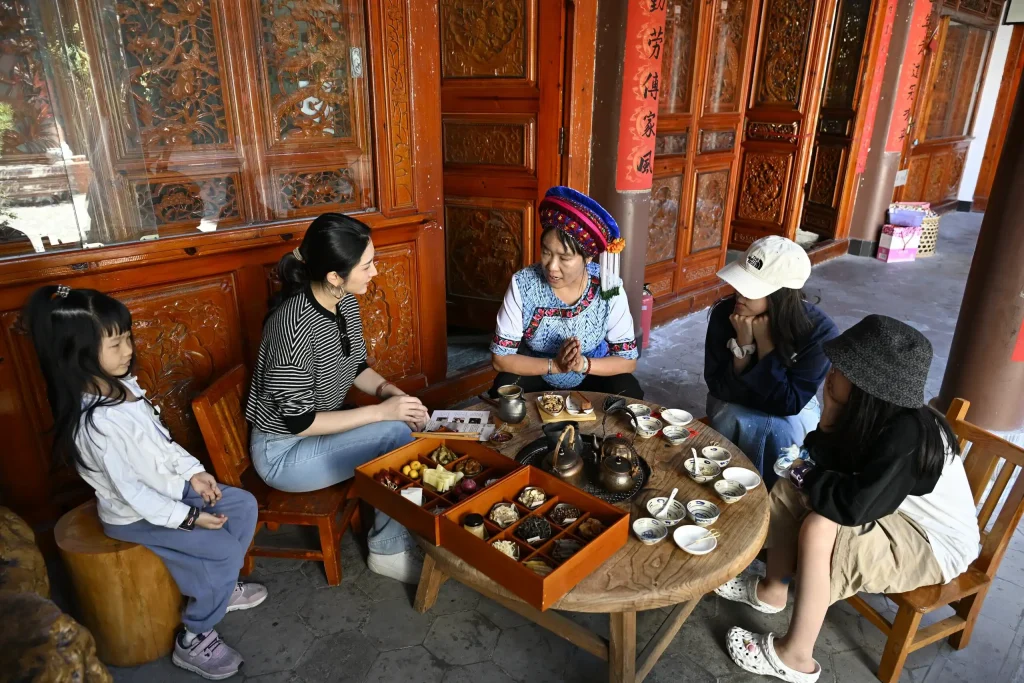
Population in Yunnan: ~1.6 million. The Bai are Yunnan’s master builders and the cultural architects of Dali. Their distinctive white-walled, gray-tiled courtyard homes — with the signature “three rooms and one screen wall” (sān fáng yī zhào bì) design — define the visual identity of the Dali region. Bai culture is rich in ritual hospitality: the three-course tea ceremony (sān dào chá), where bitter, sweet, and reflective cups are served in sequence, is a philosophy lesson disguised as afternoon tea.
The Bai are also renowned for their textile arts — particularly the indigo tie-dye (zhā rǎn) of Zhoucheng village — and for their musical traditions, including the raosanling pilgrimage songs. Their annual Third Month Fair in Dali has been running for over 1,000 years. For the complete guide to Bai culture, architecture, and where to experience it, read our Bai people of Dali guide.
The Naxi — Lijiang & Surrounding Valleys
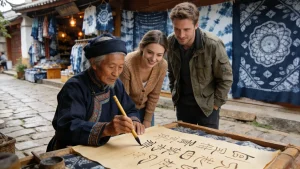
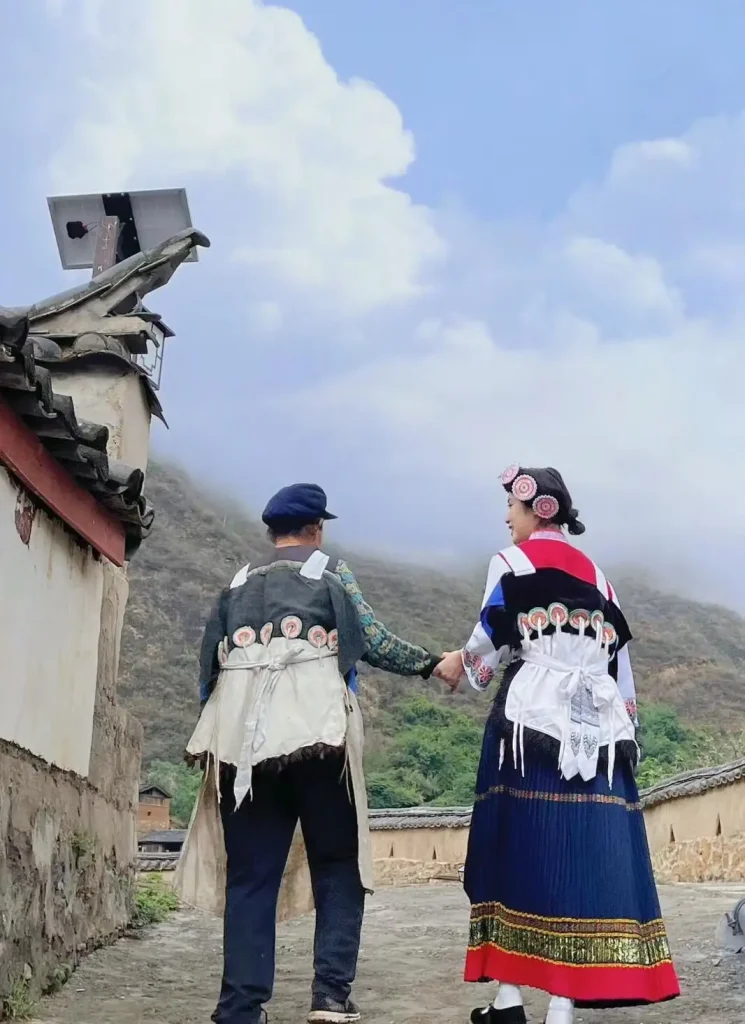
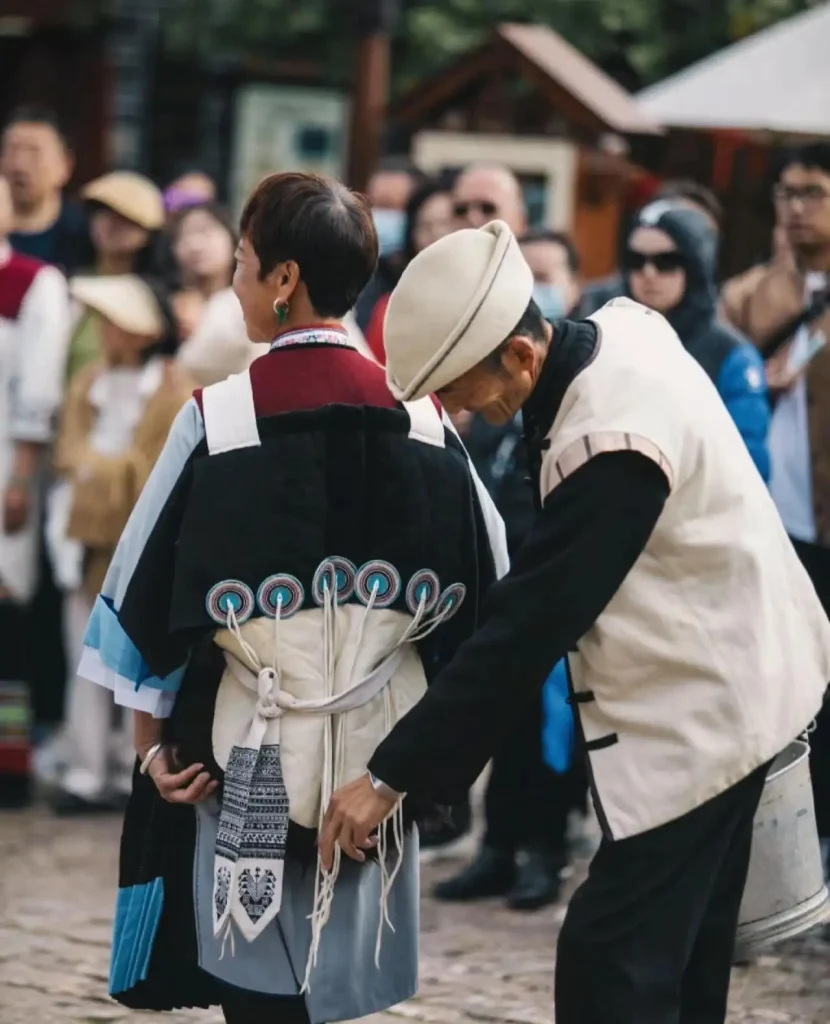
Population in Yunnan: ~310,000. The Naxi are Yunnan’s most culturally distinctive minority, famous worldwide for the Dongba writing system — the only pictographic script still in active use on Earth. Each character is a miniature drawing: a man, a horse, the sun, a dancing demon. The Naxi also preserve an extraordinary musical tradition — ensembles of elderly musicians performing pieces from the Tang and Song dynasties that have been lost everywhere else in China.
The Naxi homeland is rLijiang, where their culture shaped the UNESCO-listed Old Town, and the surrounding towns of Baisha and Shuhe. For the full exploration of Dongba religion, the script, the music, and how to experience Naxi culture respectfully, see our Naxi and Dongba culture guide.
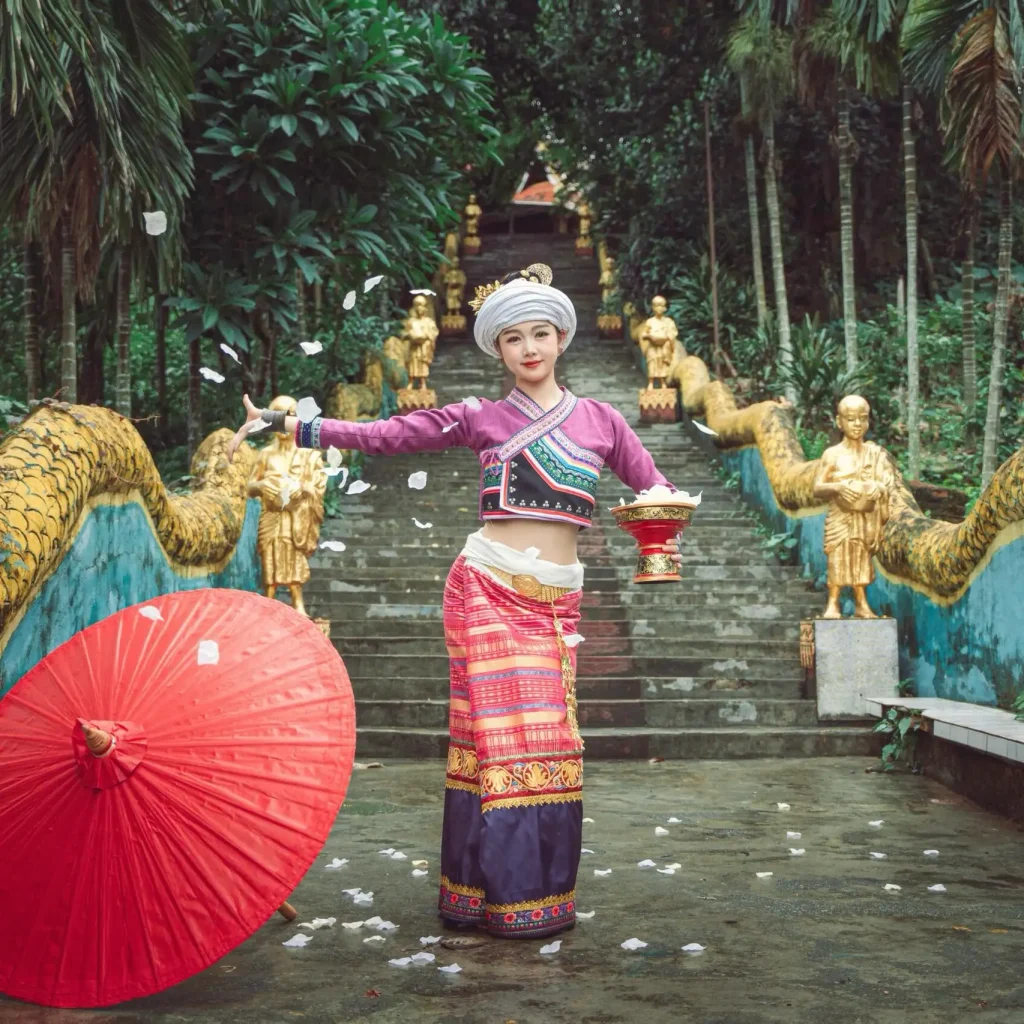
The Dai — Xishuangbanna & Dehong
Population in Yunnan: ~1.2 million. The Dai are culturally and linguistically related to the Thai and Lao peoples, and their communities in Xishuangbanna feel more like Southeast Asia than China. Theravada Buddhist temples with golden spires, stilted bamboo houses, and a cuisine built on lemongrass, fish sauce, and banana-leaf grilling define the Dai experience. The Water Splashing Festival in April — the Dai New Year — is China’s most joyous celebration. Full details in our Dai people guide.
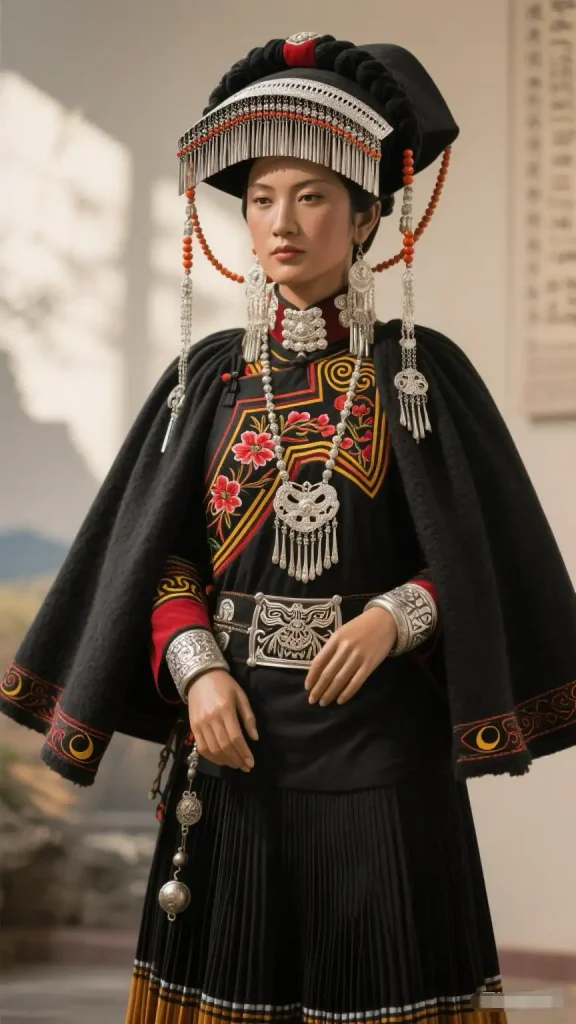
The Yi — Across Yunnan
Population in Yunnan: ~5 million — the province’s largest minority group. The Yi are an ancient people with a written script dating back over 1,000 years, a complex caste system, and a fire-worship tradition that culminates in the spectacular Torch Festival each July or August. The Sani people (a Yi branch) are the custodians of the Ashima legend at the Stone Forest. Yi communities are spread across much of Yunnan, with concentrations in Chuxiong, the Stone Forest area, and Weishan near Dali.
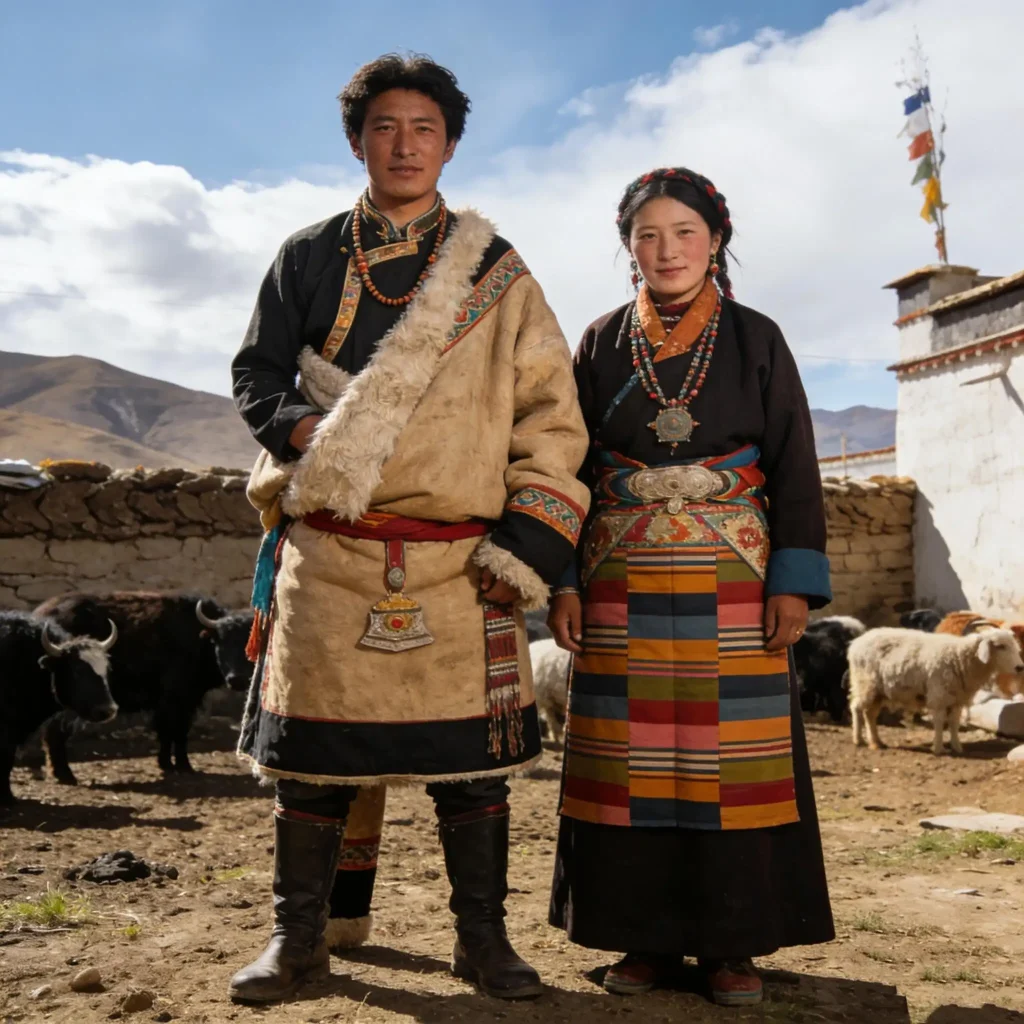
The Tibetans — Shangri-La & Deqin
Population in Yunnan: ~150,000. Yunnan’s Tibetan communities, concentrated in the northwest around Shangri-La and Deqin, practice a vibrant form of Tibetan Buddhism centered on Songzanlin Monastery. Yak herding, butter tea, tsampa, prayer flags, and the communal guozhuang dance define daily life. For the full cultural guide, see our Tibetan culture in Shangri-La guide.
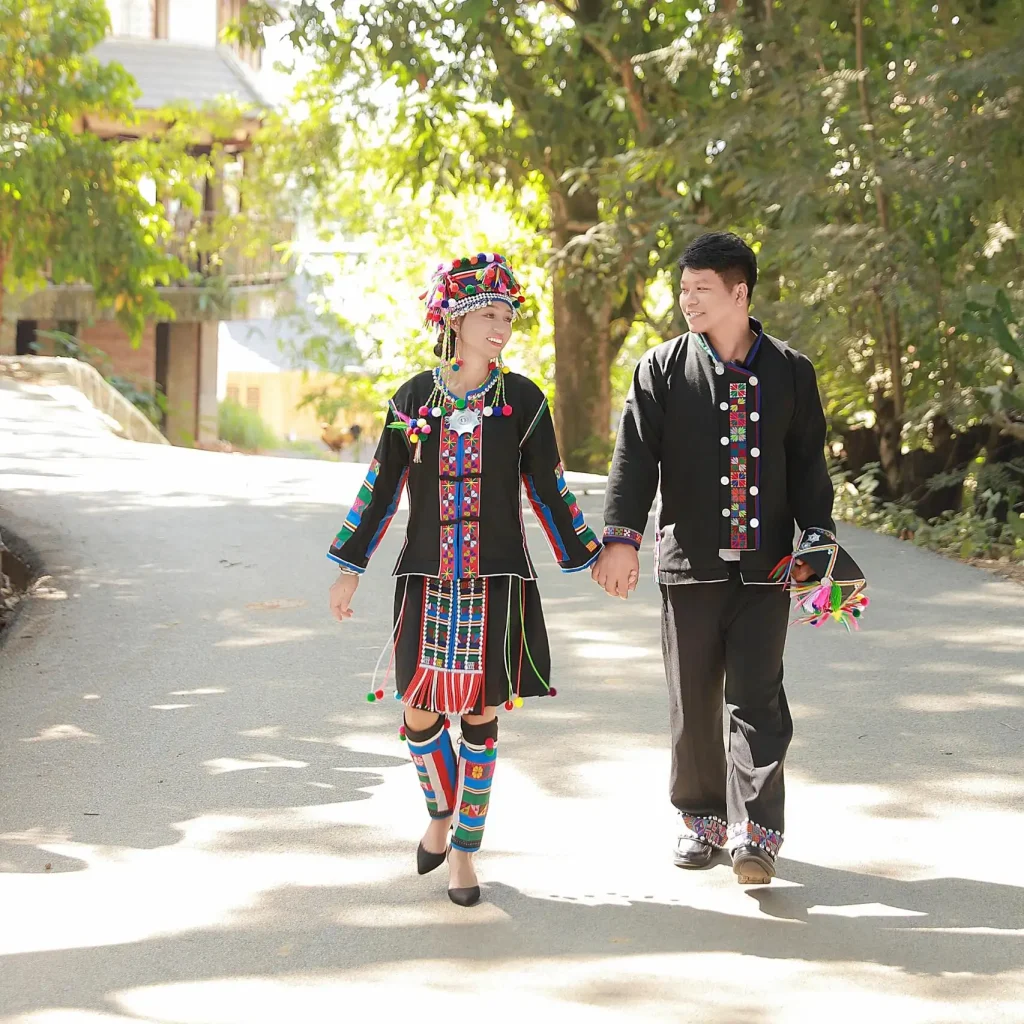
The Hani — Red River & Ailao Mountains
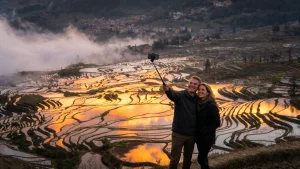
Population in Yunnan: ~1.6 million. The architects of the Yuanyang Rice Terraces — one of the most extraordinary landscapes on Earth. The Hani have built and maintained 3,000+ terraces over 1,300 years using a closed-loop water management system that UNESCO calls a masterpiece. Their mushroom-shaped thatched houses, rice-based cuisine, and Angmatu (New Year) festival are all deeply tied to the rice-growing cycle.
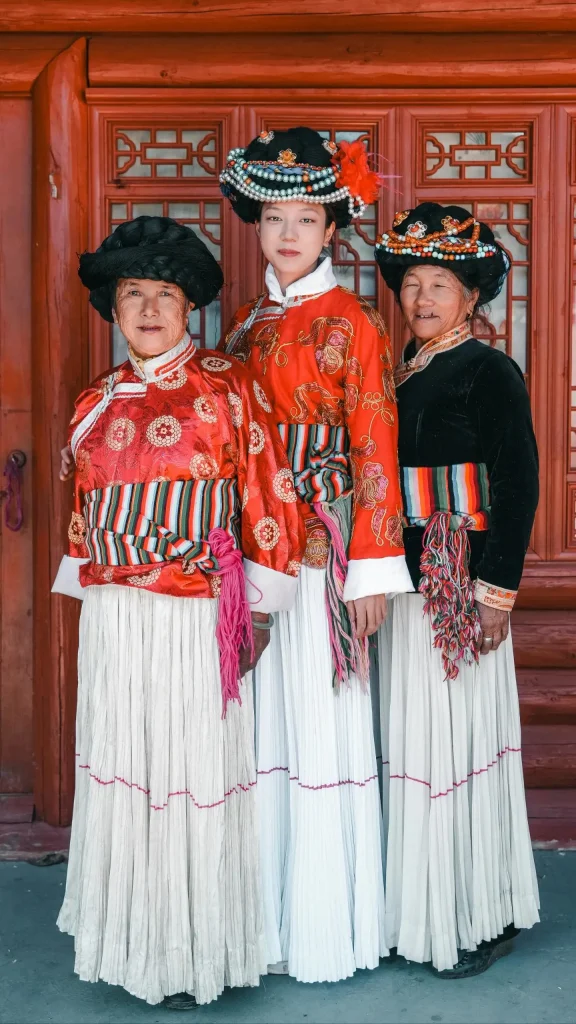
The Mosuo — Lugu Lake
Population: ~40,000. Technically classified as a branch of the Naxi, the Mosuo consider themselves a distinct group — and culturally, they are. The Mosuo practice “walking marriage” (zǒu hūn), where couples maintain separate households and children are raised in the mother’s family home. Women head the households, manage finances, and inherit property. Their homeland, Lugu Lake on the Yunnan-Sichuan border, is one of China’s most culturally fascinating destinations.
Other Notable Groups
The Lisu (~670,000): Mountain dwellers of the Nujiang Valley known for their crossbow skills, polyphonic singing, and the extraordinary Knife-Pole Festival where men climb poles studded with blades. Our Yunnan hidden gems guide covers the Nujiang region.
The Wa (~400,000): Living along the Myanmar border in Ximeng and Cangyuan, the Wa are famous for their wooden drum dance, bull-skull decorations, and the Mokun (Wooden Drum) Festival. Their traditions, once linked to headhunting, have evolved while retaining powerful ritual energy.
The Jingpo (~150,000): Based in the Dehong region near Myanmar, known for the Munao Zongge — a mass dance festival where thousands move in synchronized patterns guided by painted poles marking traditional choreography.
The Pumi (~45,000): A Tibeto-Burman group near Lugu Lake, practicing a blend of Tibetan Buddhism and indigenous animism, known for their worship of sacred mountains and white stone rituals.
The Dulong (~7,000): One of China’s smallest ethnic groups, living in the remote Dulong Valley in Yunnan’s far northwest. Historically known for women’s facial tattoos (now discontinued), the Dulong River valley is one of the most biodiverse and isolated regions in the province.
The Hui (~700,000): Muslim communities concentrated in Kunming, Dali, and towns along historic trade routes. The Hui are culturally Han Chinese but practice Islam, and their mosques, halal restaurants, and distinctive cuisine (particularly beef and lamb dishes) add an important dimension to Yunnan’s food scene.
Festival Calendar: When Culture Comes Alive
The best time to experience Yunnan’s ethnic diversity at its most vibrant is during festivals — when communities gather, dress in their finest, and practice traditions that have been passed down for centuries. For the complete guide with exact dates and how to plan around them, see our top 5 Yunnan festivals guide. Here are the highlights:
Water Splashing Festival (Dai): April 13–15. The Dai New Year in Xishuangbanna — three days of joyous water-throwing, dragon boat racing, and temple ceremonies. China’s most fun festival.
Torch Festival (Yi/Bai): Late July or August (lunar calendar). Fire worship, bonfire dancing, wrestling, and bullfighting across the Stone Forest, Dali, and Chuxiong regions. Three days of flame and spectacle.
Third Month Fair (Bai): March/April (lunar calendar). A 1,000-year-old market, horse-trading fair, and cultural celebration at the foot of Cangshan Mountain in Dali.
Naxi Sanduo Festival: February (lunar calendar). The Naxi people honor their patron deity with rituals, horse racing, and communal feasting in Lijiang.
Knife-Pole Festival (Lisu): February. In the Nujiang Valley, Lisu men climb poles studded with sharp blades and walk across hot coals as acts of spiritual devotion.
How to Engage Respectfully
Yunnan’s ethnic minorities are not museum exhibits. They are living communities with agency, pride, and a complex relationship with tourism. Here’s how to engage in ways that honor both the culture and the people:
Ask before photographing. This is the single most important rule. Many villagers, especially elderly people, are uncomfortable being photographed by strangers. A smile and a gesture toward your camera — waiting for a nod — costs nothing and shows respect. If someone declines, accept it gracefully.
Learn a few words. Even “hello” and “thank you” in the local language (not just Mandarin) generates enormous goodwill. Your guesthouse host can teach you.
Buy directly. When buying handicrafts — tie-dye, embroidery, silver jewelry, tea — buy from the makers rather than middlemen. In Zhoucheng, Baisha, and village markets, the vendors are often the artisans themselves.
Don’t treat ceremonies as performances. If you witness a religious ceremony, festival ritual, or family celebration, observe respectfully and follow the lead of other attendees. Don’t push to the front for photos. If you’re invited to participate, follow instructions.
Understand the “ethnic village” model. Some attractions marketed as “ethnic villages” are essentially theme parks — hired performers in costume, manufactured experiences. Others, like the Dai villages in Ganlanba or Xizhou’s Bai community, are real places where tourism coexists with daily life. This guide focuses on the latter.
Support community-based tourism. Choose guesthouses run by minority families, eat at local restaurants, hire local guides. Your spending directly supports cultural preservation when it goes to the community rather than outside operators.
Understanding the Broader Context
It’s important to approach Yunnan’s ethnic diversity with both appreciation and nuance. China’s relationship with its ethnic minorities is complex — involving recognition and support alongside assimilation pressures. Tourism has brought economic benefits to many minority communities but also commercialization that can dilute traditions. Younger generations in some communities are choosing urban careers over traditional lifestyles, while others are finding creative ways to adapt ancient practices to modern life.
The most meaningful travel experiences in Yunnan come from engaging with these realities honestly — celebrating what’s extraordinary, supporting what’s sustainable, and recognizing that the cultures you encounter are not frozen in time but are dynamic, evolving, and owned by the people who practice them.
For how these cultures connect to the landscapes, food, and travel experiences across Yunnan, explore our other guides: Yunnan food guide for how ethnic diversity shapes the cuisine, and our Yunnan itinerary guide for building routes that incorporate meaningful cultural encounters.
Yunnan is home to 25 of China’s 56 officially recognized ethnic minority groups — nearly half — making it the most ethnically diverse province in China. The largest groups include the Yi (~5 million in Yunnan), Bai (~1.6 million), Hani (~1.6 million), and Dai (~1.2 million). Some groups, like the Dulong, number fewer than 7,000.
It depends on which culture interests you most. Dali for Bai culture (three-course tea, tie-dye, architecture), Lijiang for Naxi (Dongba script, ancient music), Xishuangbanna for Dai (Buddhist temples, Water Splashing Festival), Shangri-La for Tibetan (monasteries, highland traditions), and Yuanyang for Hani (rice terraces, village life). Planning around festivals provides the most immersive experiences.
Yes, when done thoughtfully. Visit real communities rather than theme-park-style attractions. Ask before photographing people. Buy handicrafts directly from artisans. Choose community-run guesthouses and local guides. Don’t treat ceremonies as performances. Most minority communities welcome respectful visitors — tourism often supports cultural preservation when money flows to the community.
The Water Splashing Festival (Dai, April) in Xishuangbanna is the most joyous and accessible. The Torch Festival (Yi/Bai, July/August) is the most dramatic. The Third Month Fair (Bai, March/April) in Dali is the most culturally rich. All three are extraordinary. See our festivals guide for exact dates and planning tips.
Not for major destinations like Dali, Lijiang, or Xishuangbanna. But for remote areas — the Nujiang Valley, Pu’er tea mountains, Dulong Valley — a local guide is highly recommended for both logistics and cultural context. Even in accessible areas, a local guide transforms the experience from sightseeing into genuine cultural understanding.Yunnan ethnic minorities