The master builders and gracious hosts of Yunnan’s cultural heartland — where a three-cup tea ceremony encodes a life philosophy, indigo dye tells stories in cloth, and courtyard homes have stood for centuries.
If you’ve visited Dali, you’ve already experienced Bai culture — even if you didn’t realize it. The white-walled houses lining the cobblestone streets? Bai design. The three-course tea served in courtyard guesthouses? A Bai ceremony. The blue-and-white tie-dye fabric hanging in shop windows? A Bai craft with 1,000+ years of history. The very layout of the ancient town — nestled between Erhai Lake and the Cangshan Mountains — follows principles the Bai have understood for a millennium.
With a population of approximately 1.6 million in Yunnan, the Bai are one of the province’s largest and most culturally influential minority groups. They’ve lived in the Dali region for over 3,000 years — long enough to have built and ruled the Nanzhao and Dali Kingdoms, powerful Buddhist states that controlled much of Southwest China for five centuries. That imperial legacy is still visible in the monumental Three Pagodas, the sophisticated architecture, and a cultural self-assurance that makes the Bai quietly distinctive among Yunnan’s many ethnic communities.
This guide explores the traditions, arts, and daily life that make the Bai people extraordinary — and where to experience them at their most authentic. For how the Bai fit into Yunnan’s broader cultural landscape, see our ethnic minorities guide and Yunnan culture guide.
What this guide covers: Who the Bai are → Three-course tea ceremony → Architecture → Tie-dye tradition → Bai festivals → Food & cuisine → Where to experience Bai culture → Practical tips → FAQ.
The Three-Course Tea Ceremony: Philosophy in Three Cups
If there is a single experience that captures the essence of Bai culture, it’s the three-course tea ceremony (sān dào chá). More than a ritual, more than hospitality, it’s a life philosophy served in three cups — and it’s one of the most memorable cultural encounters in all of Yunnan.
The First Cup: Bitter (Kǔ)
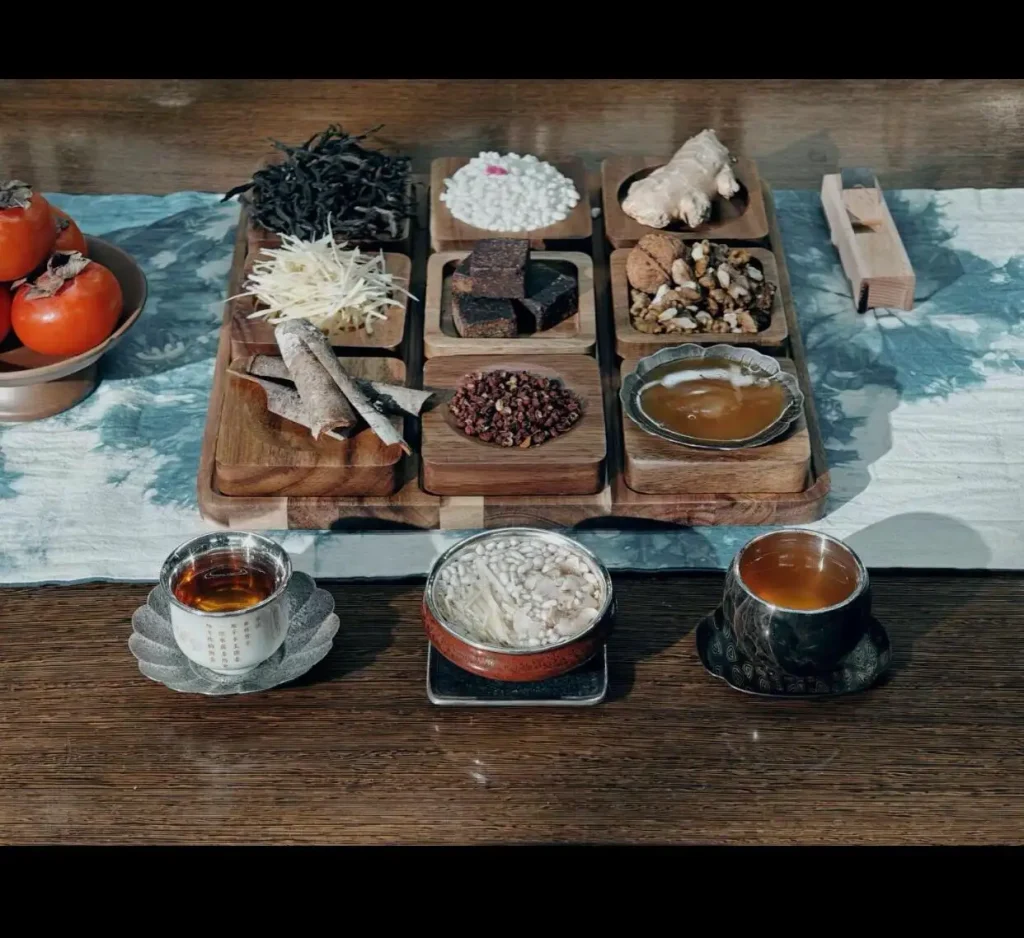
A small cup of intensely bitter tea, roasted over an open flame until the leaves crackle and the flavor concentrates to a deep, almost medicinal bitterness. This cup represents the hardships of life — the struggles and difficulties that everyone must face. Drink it slowly. The bitterness is the point.
The Second Cup: Sweet (Tián)
A warmer, sweeter cup blended with walnuts, brown sugar, sesame, and sometimes rose petals. After the shock of the first cup, the sweetness arrives as a relief — representing the rewards that follow perseverance. The contrast with the first cup is deliberate and striking.
The Third Cup: Lingering (Huí Wèi)
The final cup is complex — slightly bitter, slightly sweet, with honey, Sichuan pepper, and ginger creating a flavor that lingers long after the last sip. It represents the reflective stage of life: looking back on both hardship and joy with the wisdom of experience. The Chinese term “huí wèi” means “aftertaste” — and the Bai believe that the best things in life, like the best flavors, are the ones that stay with you.
Where to experience it: The most authentic three-course tea ceremonies are in Xizhou, 20 km north of Dali Ancient Town. Several traditional courtyard homes host ceremonies with a Bai tea master who explains each cup’s symbolism (¥30–80 per person). The Yan Family Compound and the Bai cultural center both offer excellent experiences. Avoid the mass-produced tourist versions in the Ancient Town — the Xizhou versions, served in intimate courtyards to small groups, are incomparably better.
Bai Architecture: Building for a Millennium
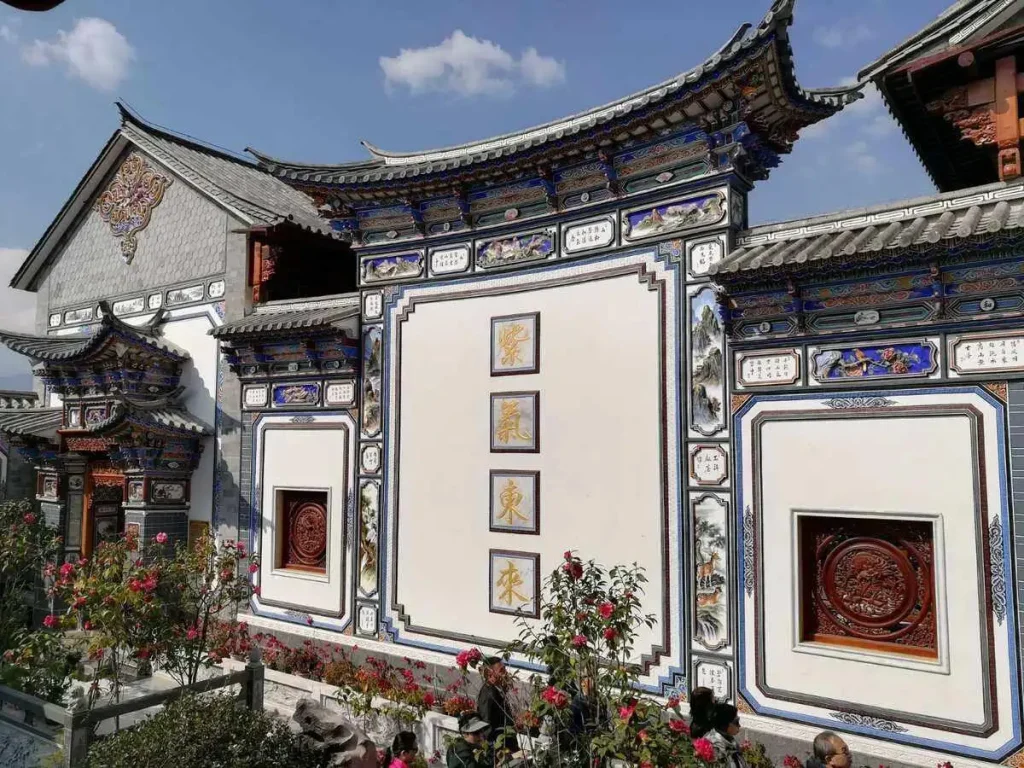
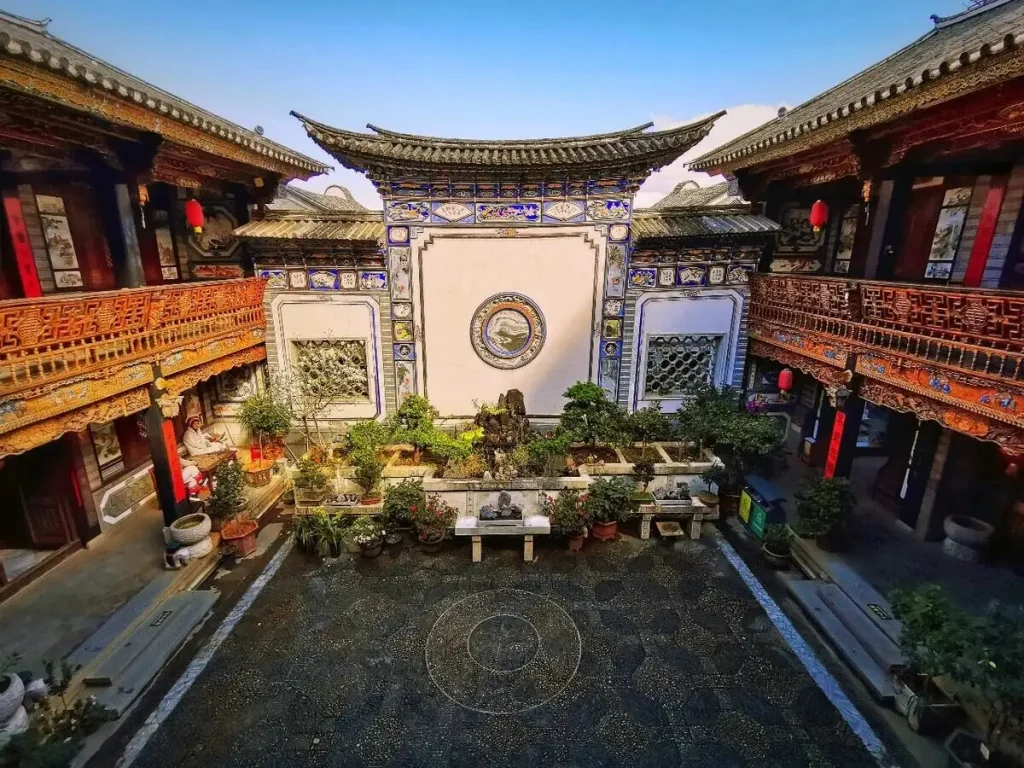
The Bai are Yunnan’s master architects, and their buildings are the visual signature of the Dali region. The traditional Bai home follows the “three rooms and one screen wall” (sān fáng yī zhào bì) design — three buildings arranged around a courtyard, with a decorative screen wall (zhào bì) on the fourth side reflecting light and blocking wind.
The Design Principles
White walls: The dominant visual feature. Bai homes are plastered in white lime — symbolizing purity and cleanliness — with gray-tiled roofs creating the crisp contrast that defines Dali’s streetscapes. The screen wall is often painted with landscapes, calligraphy, or auspicious symbols.
Wood carvings: Doors, window frames, eaves brackets, and courtyard pillars are intricately carved with floral, animal, and geometric patterns. The carving quality indicates the family’s wealth and status — some homes have carvings that took master craftsmen years to complete.
Courtyard gardens: Every Bai home centers on an internal courtyard with ornamental plants, fruit trees, and often a small pond. The courtyard is the family’s living room — where meals are eaten, guests received, and afternoon tea brewed.
Feng shui orientation: Bai homes are traditionally oriented east-west, with the main rooms facing the courtyard garden. The screen wall is positioned to deflect malevolent spirits (which, in Chinese cosmology, can only travel in straight lines). The relationship between the house, the mountain (Cangshan), and the lake (Erhai) is also carefully considered.
Where to See the Finest Examples
Xizhou: The best-preserved Bai architecture in Yunnan. The Yan Family Compound, Dong Family Compound, and several other merchant mansions from the Qing Dynasty showcase the pinnacle of Bai design — grand courtyards, elaborate carvings, and screen walls painted by master artists.
Dali Ancient Town: The northern residential lanes (away from Renmin Road) still contain authentic Bai homes. The Catholic Church — blending Bai architecture with European religious elements — is a fascinating cultural hybrid.
Zhoucheng: Five km from Xizhou, known primarily for tie-dye (see below), but also has excellent traditional Bai architecture in a less-visited setting.
Bai Tie-Dye: A Thousand Years of Blue and White
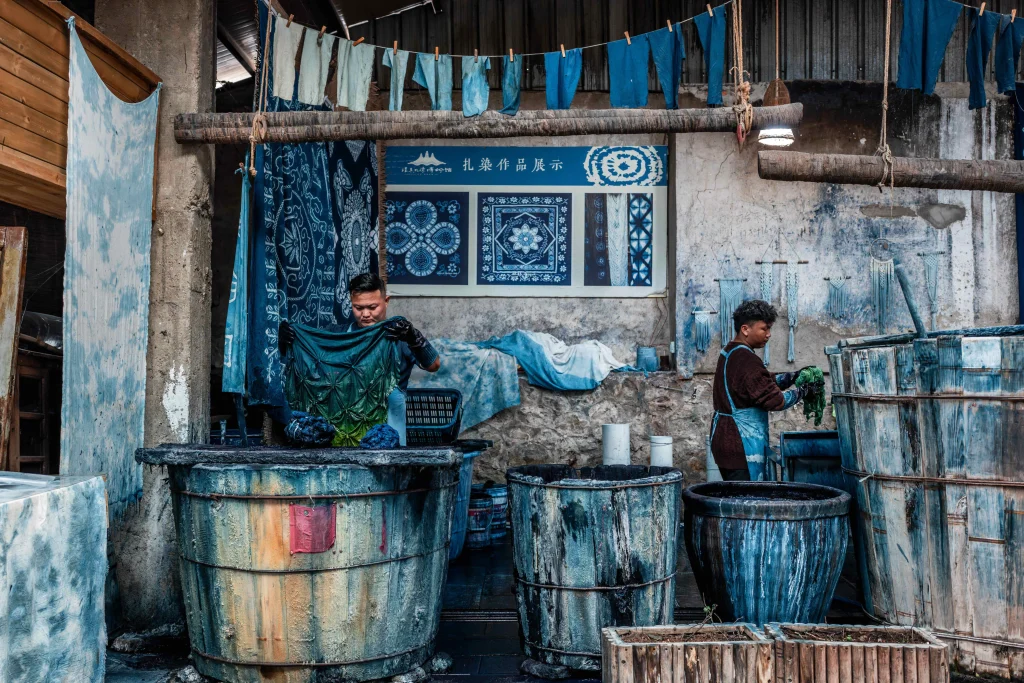
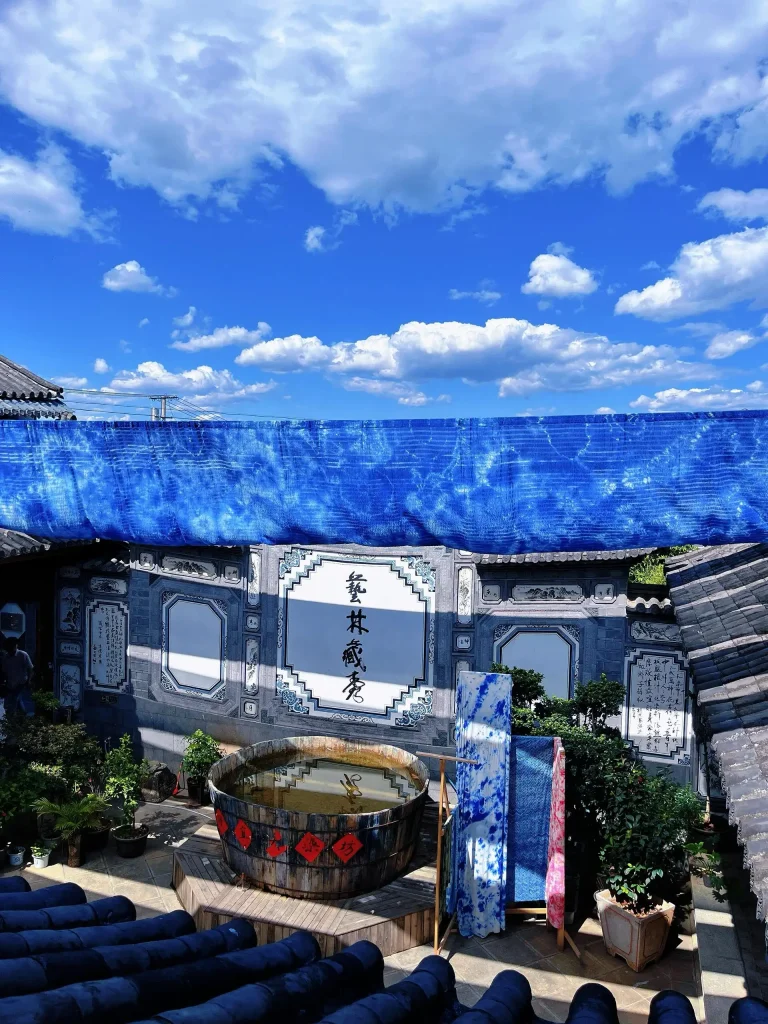
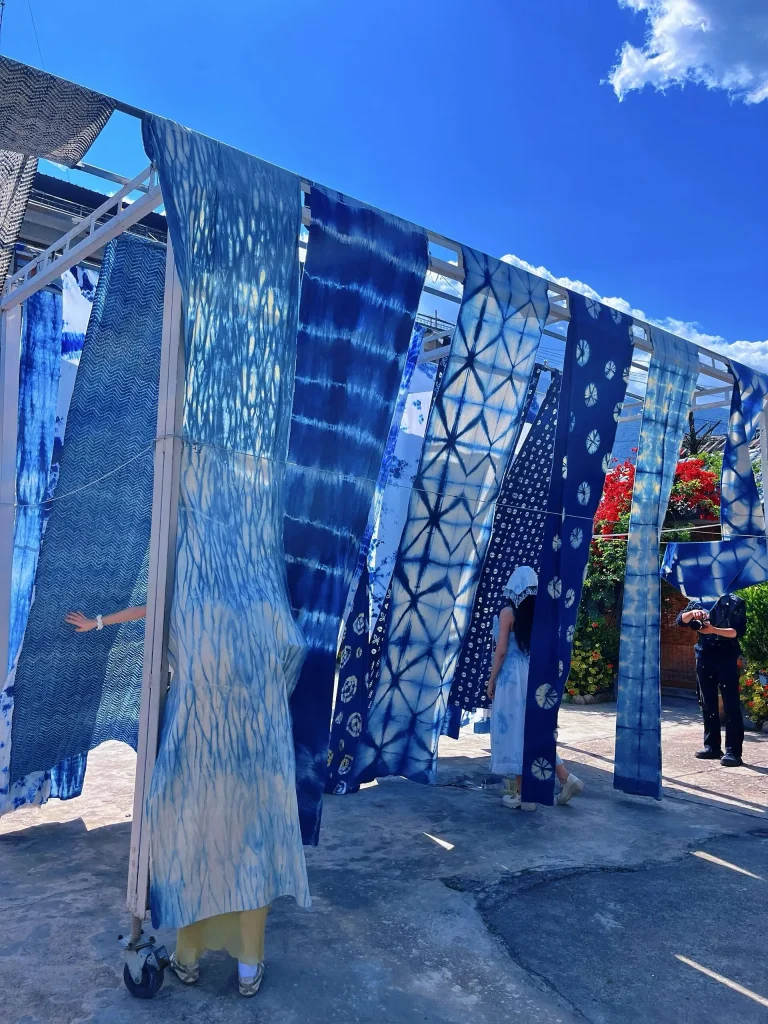
The blue-and-white tie-dye (zhā rǎn) that hangs from shopfronts and guesthouse walls throughout Dali is not a tourist invention — it’s a living craft tradition that the Bai of Zhoucheng have practiced for over 1,000 years. The process is simple in principle and endlessly complex in execution: white cotton fabric is hand-tied, stitched, or clamped into intricate patterns, then submerged in vats of plant-based indigo dye. When the ties are removed, the un-dyed areas reveal the pattern in white against the deep blue background.
The range of patterns is extraordinary — butterflies, flowers, phoenixes, fish, geometric abstractions — and each is hand-tied by Bai women who have learned the techniques from their mothers and grandmothers. A single tablecloth can require days of tying before it enters the dye vat.
Zhoucheng Village is the center of the tradition. Several workshops welcome visitors to try the process — you tie your own design, dip it in the indigo vat, and take home a unique piece. The hands-on experience (¥50–100) takes about 1–2 hours and is one of Dali’s most rewarding activities. Walking through Zhoucheng on a sunny day, with blue-and-white fabrics drying on lines against the white Bai houses and the backdrop of Cangshan, is one of Yunnan’s most photogenic moments.
The indigo dye itself comes from the Banlangen plant (Isatis indigotica), which the Bai cultivate locally. The fermentation process — converting plant leaves into a usable dye — is its own craft requiring skill and patience. Industrial dyes have largely replaced plant-based indigo in cheaper commercial products, so ask for “zhíwù rǎn” (plant-dyed) if you want the genuine article.
Bai Festivals: When the Community Gathers
The Third Month Fair (Sān Yuè Jiē)
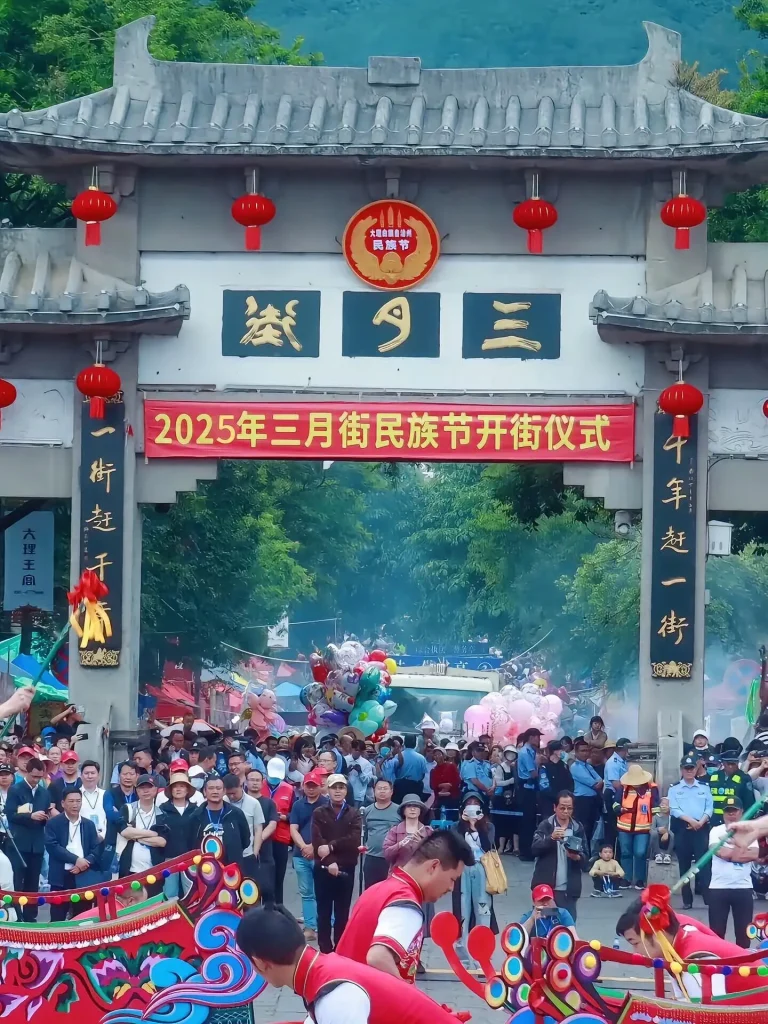
The biggest Bai celebration — a week-long market, horse-trading fair, and cultural festival held annually at the foot of Cangshan Mountain in Dali, dating back over 1,000 years. Originally a Buddhist gathering, it evolved into a massive commercial and social event where Bai communities from across the region converge. Traditional Bai opera, folk singing, wrestling matches, horse racing, and an enormous market selling everything from medicinal herbs to handmade tools. Held in March or April (lunar calendar). For exact dates and planning tips, see our festivals guide.
Raosanling (Rào Sānlíng)
A unique Bai pilgrimage festival held between the 23rd and 25th of the 4th lunar month. Thousands of Bai villagers walk a three-day circuit between temples, singing, dancing, and making offerings. The procession songs — multi-voice harmonies unique to the Bai — are a remarkable musical tradition. The festival is less known to tourists than the Third Month Fair but is considered by Bai themselves to be their most culturally significant observance.
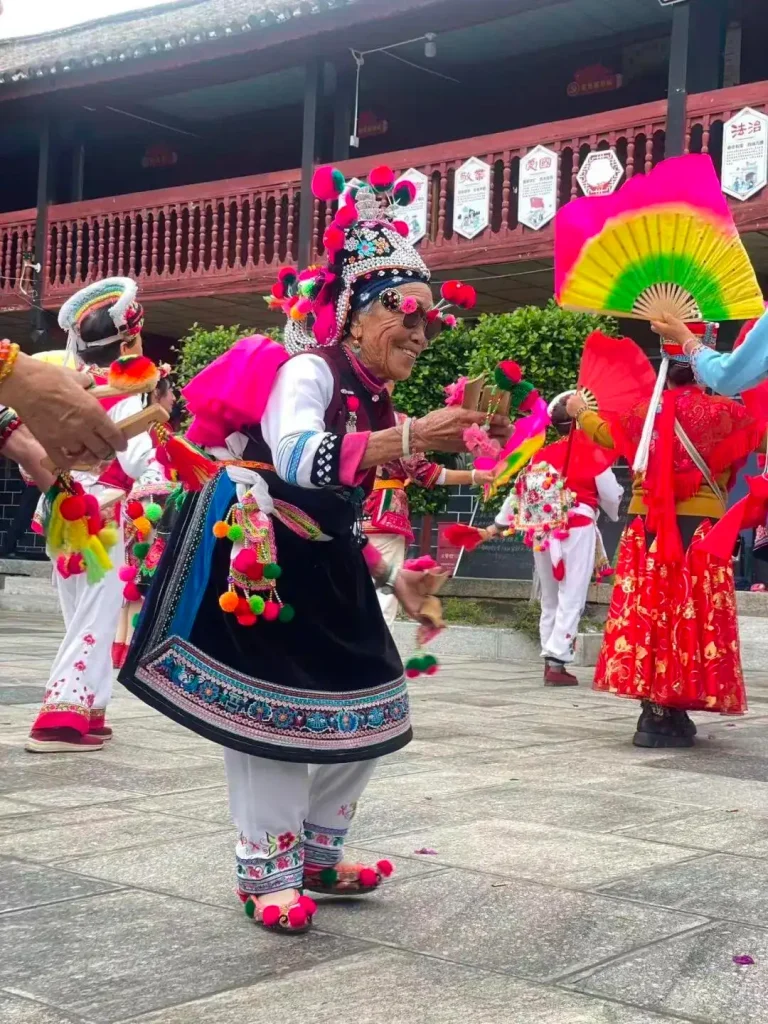
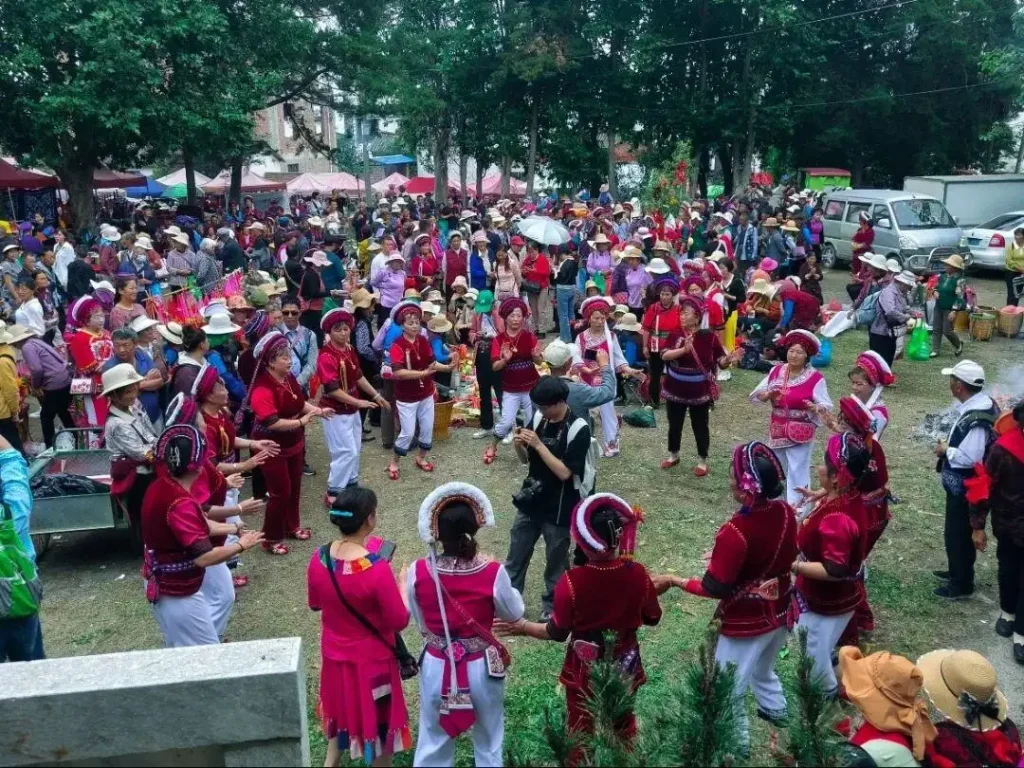
Torch Festival (Huǒ Bǎ Jié)
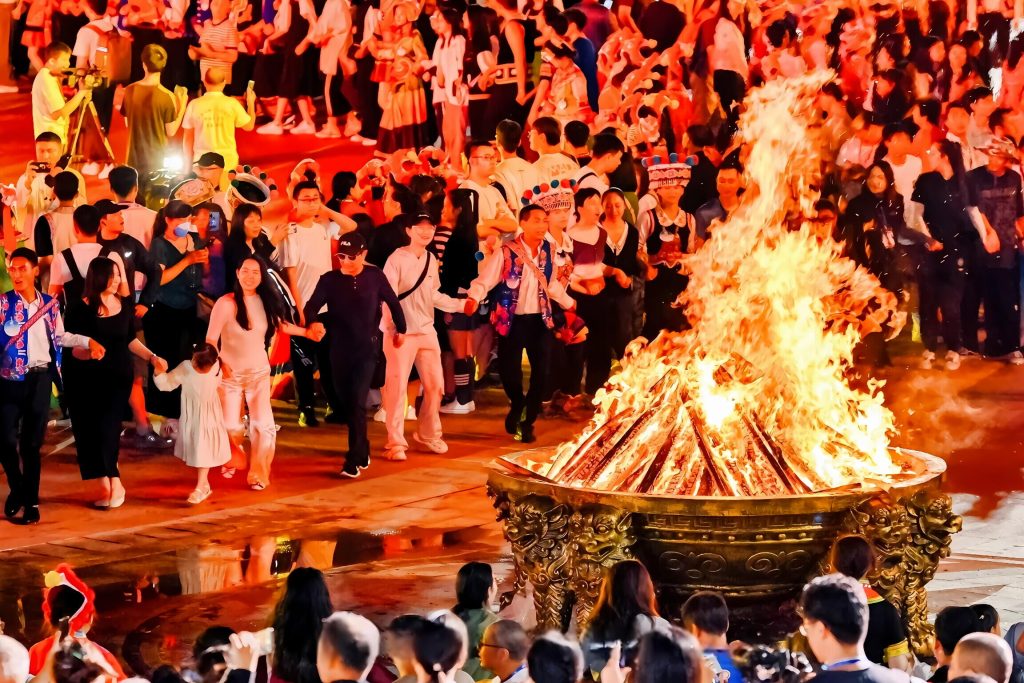
While primarily a Yi tradition, the Bai also celebrate the Torch Festival with bonfires, dancing, and community gatherings in late July or early August. In Dali, the celebration has a distinctly Bai character — with Bai music, food stalls, and costumes.
Bai Food Culture
Bai cuisine is shaped by Erhai Lake, Cangshan Mountain, and a dairy tradition unique in China. For the full guide, see our Dali food guide. Cultural highlights:
Rubing & Rushan: The Bai are one of the only Chinese ethnic groups with an indigenous dairy tradition — and Yunnan’s cheese culture is their creation. Rubing is a fresh goat cheese, pan-fried until golden and served with rose jam or chili salt. Rushan is milk stretched into thin sheets, dried, and eaten fried as a crispy street snack. Both are unique to the Dali region and unmissable.
Xizhou Baba: A flaky, multi-layered flatbread — sweet (rose, sugar) or savory (ham, scallion) — cooked in a pan until golden and crispy. The stalls in Xizhou’s morning market are the original and best.
Erhai Fish: Freshwater fish from the lake, most commonly cooked sour (suān là yú) with tomatoes, chili, and vinegar. Tangy, warming, and perfectly paired with steamed rice.
Bai Eight-Bowl Feast (Bā Dà Wǎn): The traditional Bai banquet served at weddings, festivals, and community celebrations — eight dishes served in large bowls, including braised pork, stewed chicken, fried fish, and vegetable dishes. Ask at restaurants in Xizhou for a version.
Where to Experience Bai Culture
Xizhou: The essential Bai culture destination. Three-course tea ceremonies, the finest traditional architecture, Xizhou baba, and the morning market. Budget at least half a day. 20 km north of Dali Ancient Town (Bus No. 6 or bicycle, 40 min). Our Dali travel guide covers the full logistics.
Zhoucheng: The tie-dye capital. Hands-on workshops, Bai fabric artisans, and a village atmosphere less touristy than Xizhou. 5 km from Xizhou.
Dali Ancient Town: The old town itself is a Bai creation — the architecture, layout, and street culture are all Bai heritage. The northern residential streets are the most authentic.
Wase Market: Every Monday on Erhai’s eastern shore, Bai and other communities converge for one of Yunnan’s most vibrant rural markets. Traditional dress, live poultry, fresh rubing cheese, and herbal medicines. Arrive before 9 AM.
Shaxi: Two hours north of Dali, this Tea Horse Road town has a strong Bai cultural presence — the Xingjiao Temple, Bai courtyard guesthouses, and a Friday market. Our hidden gems guide covers Shaxi in depth.
A Bai cultural tradition serving three cups of tea that represent stages of life: the first bitter (hardship), the second sweet (reward), the third lingering with complex flavor (wisdom and reflection). The best place to experience it is in Xizhou, 20 km from Dali Ancient Town, where courtyard ceremonies with Bai tea masters cost ¥30–80 per person.
Zhoucheng village, 25 km north of Dali Ancient Town, is the center of the 1,000-year-old tie-dye tradition. Several workshops offer hands-on experiences where you tie your own design and dip it in indigo dye (¥50–100, 1–2 hours). Ask for plant-dyed (zhíwù rǎn) pieces for the authentic product.
A 1,000-year-old Bai festival held in March or April (lunar calendar) at the foot of Cangshan Mountain. It combines a massive market, horse trading, Bai opera, folk singing, wrestling, and cultural performances. It’s the most important Bai community gathering of the year and one of Yunnan’s great cultural events.
Yes. The Bai were the dominant ethnic group of both the Nanzhao Kingdom (738–902 AD) and the subsequent Dali Kingdom (937–1253 AD). These powerful Buddhist states ruled much of Southwest China. The Three Pagodas, monumental temple complexes, and sophisticated architectural traditions in modern Dali are direct legacies of this imperial past.
The signature design is ‘three rooms and one screen wall’ — three buildings arranged around a courtyard with a decorative screen wall on the fourth side. White lime walls, gray-tiled roofs, intricate wood carvings, and feng-shui-oriented courtyard gardens define the style. The finest examples are in Xizhou, where Qing Dynasty merchant mansions have been beautifully preserved.