From three-day water wars to midnight bonfires, barefoot blade-climbing to thousand-year-old horse fairs — Yunnan’s festivals are not spectator events. They’re invitations to join.
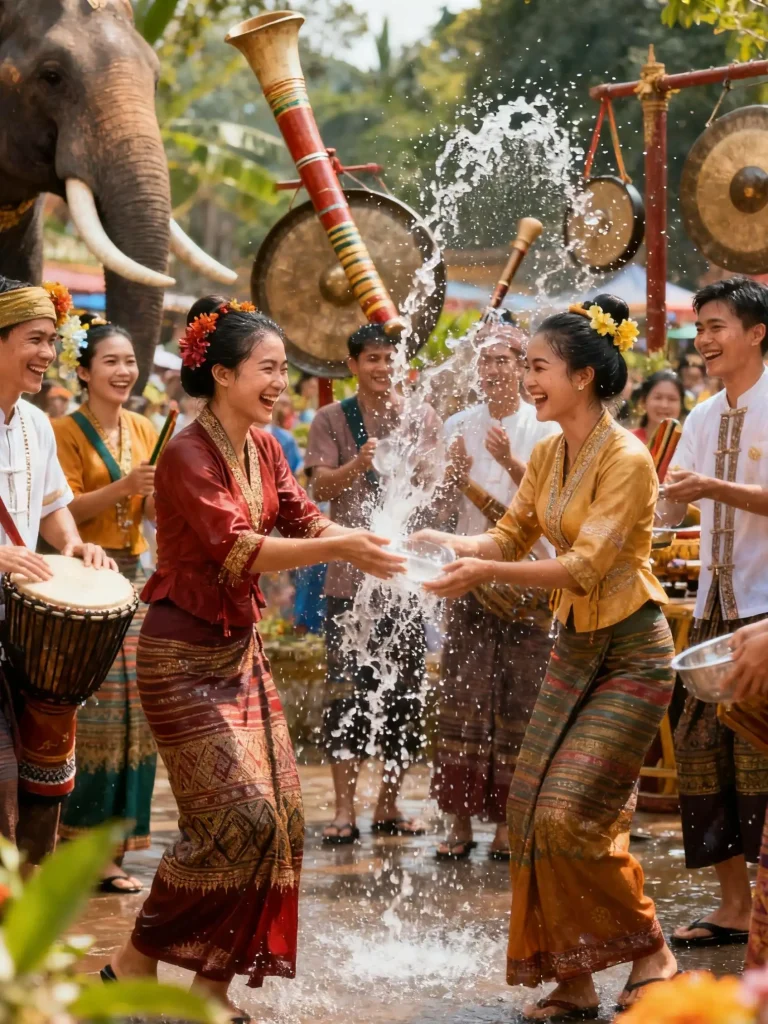
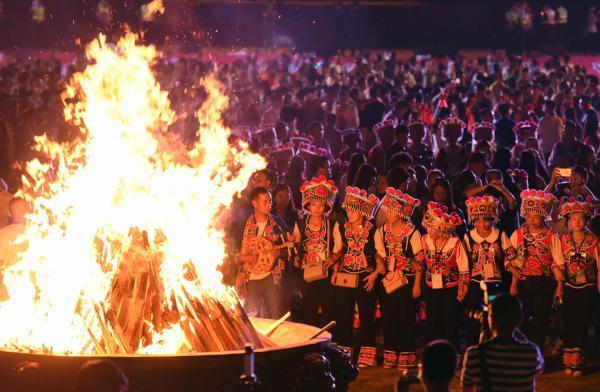
Yunnan has 25 ethnic minority groups, and nearly every one of them has at least one major annual festival. Some have several. The festival calendar is so packed that no matter when you visit, there’s a good chance something extraordinary is happening somewhere in the province. But five festivals stand above the rest — not just for their spectacle (though the spectacle is real), but because they offer the deepest window into the cultures that make Yunnan unlike anywhere else on Earth.
These aren’t sanitized performances staged for tourists. They’re living celebrations — rooted in centuries of tradition, powered by genuine community participation, and open to visitors who want to do more than watch from the sidelines. If you can time your Yunnan trip around one of these events, your experience will be transformed. For the big-picture trip planning, see our Yunnan itinerary guide and our ultimate Yunnan travel guide.
What this guide covers: The 5 must-experience festivals → When & where → What to expect → How to participate → Practical planning tips → Quick-reference calendar.
1. The Water Splashing Festival (Pō Shuǐ Jié) — Dai New Year
When: April 13–15 (dates can shift slightly by the Dai calendar)
Where: Xishuangbanna (Jinghong is the epicenter), also celebrated in Dehong
Ethnic group: Dai
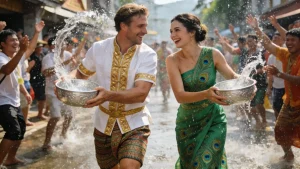
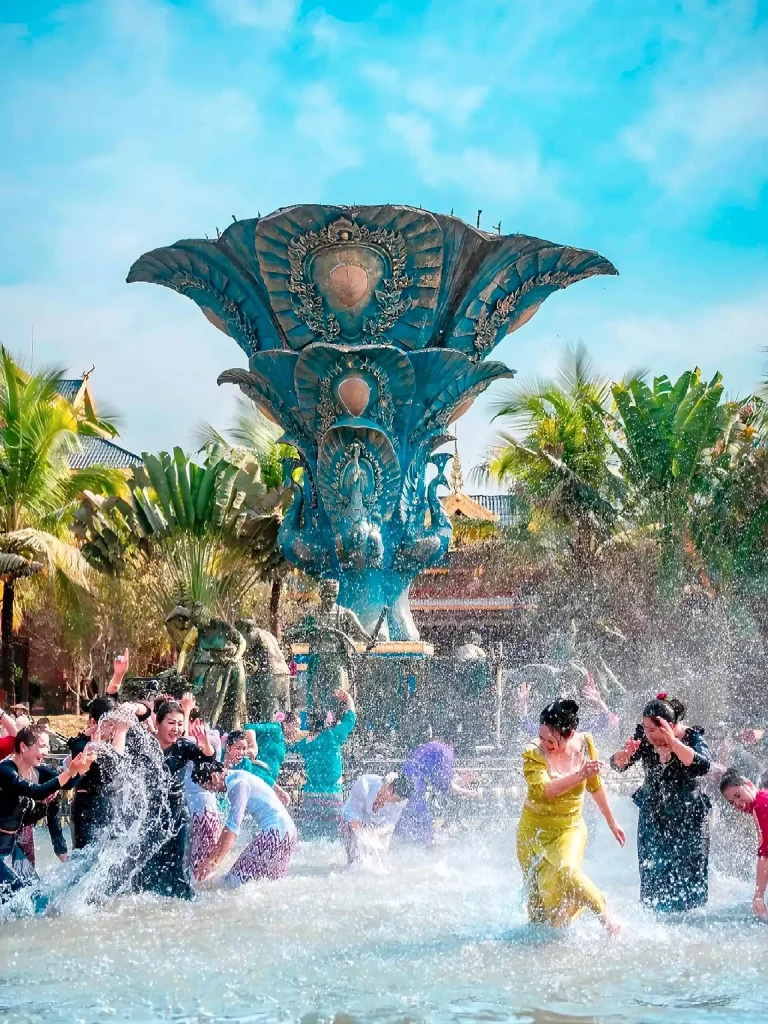
The most joyous festival in China — three days where the entire city dissolves into gleeful water warfare, and getting soaked is a blessing. The Water Splashing Festival is the Dai New Year, and it combines sacred Buddhist temple ceremonies with the most uninhibited public celebration you’ll find anywhere in the country.
What Happens
Day 1 (Sǎng Hān): The farewell to the old year. Temple ceremonies, markets, and a building sense of anticipation. In the evening, paper lanterns are released over the Lancang River — thousands of glowing lights drifting into the night sky.
Day 2 (Sǎng Ěn): Dragon boat races on the Lancang River — long, narrow boats powered by dozens of paddlers, racing to the roar of crowds on the banks. The energy is electric.
Day 3 (Sǎng Hān Mǎ): The main event. The entire city becomes a water arena. Buckets, hoses, water guns, trucks with barrels — nobody is spared. Monks, police, grandmothers, tourists — everyone gets drenched, and everyone is laughing. Splashing water is a blessing: the more water, the more good fortune.
How to Participate
You don’t choose to participate — participation chooses you. The moment you step outside your hotel on Day 3, you’re in the game. Tips: waterproof your phone and passport (ziplock bags, mandatory). Wear clothes you don’t mind getting soaked. Bring a towel and dry change. Don’t carry anything that can’t get wet. Buy a water gun at a street stall for ¥10–30 to upgrade from victim to combatant. And smile — refusing water is considered bad form.
Booking note: Book accommodation 2–3 months in advance. The festival draws millions of visitors from across China. Hotels triple in price; hostels sell out completely. Arrive a day early to soak in the pre-festival atmosphere and visit the temple ceremonies that tourists often miss.
2. The Torch Festival (Huǒ Bǎ Jié) — Fire Worship
When: 24th–26th of the 6th lunar month (usually late July or early August)
Where: Stone Forest (Shilin), Dali, Chuxiong, and Yi/Bai communities across Yunnan
Ethnic group: Yi (primary), also Bai, Naxi, and other groups
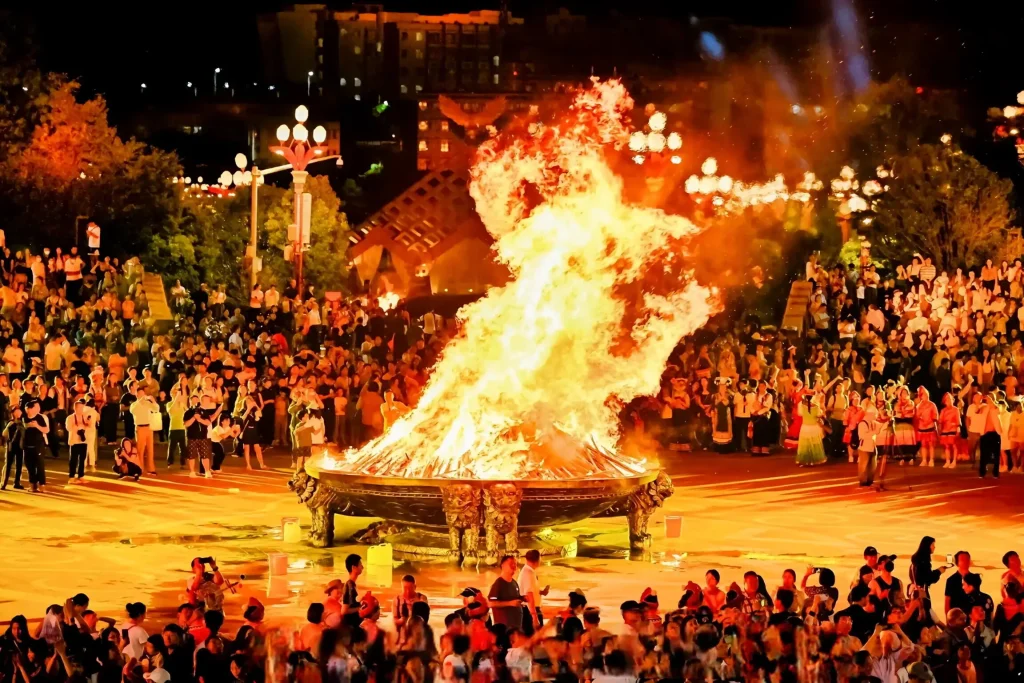
If the Water Splashing Festival is Yunnan’s most joyful celebration, the Torch Festival is its most dramatic. For three nights, communities across the province light massive torches — some towering 20 meters — and celebrate with bonfires, wrestling, bull-fighting, horse racing, and dancing that continues until dawn. The festival has roots in an ancient fire-worship tradition and is one of the oldest continuously observed celebrations in Southwest China.
What Happens
Day 1: The lighting of the grand torch. Each village or community erects a massive central torch — often a pine tree decorated with fruit, flowers, and banners — and ignites it at dusk. Families also light smaller torches at their doorsteps to ward off evil spirits and welcome good fortune.
Day 2: The day of games and competition. Bull-fighting (bulls against bulls, not human matadors), wrestling matches, horse racing, and archery. In the Chuxiong region, the competitions are particularly fierce and attract participants from across the Yi homeland.
Day 3: The night of fire. Communities gather around bonfires for mass dancing — concentric circles of hundreds of people stepping in rhythm, faces lit by flame, the music of erhu and drums driving the movement. Visitors are pulled in by the hand. By midnight, the boundary between local and stranger has dissolved entirely.
Best Locations
Stone Forest: The Sani (Yi branch) celebration at the Minor Stone Forest is the most visually spectacular — flames against the ancient limestone pillars. It’s also the most accessible from Kunming (1.5 hours).
Chuxiong: The Yi heartland, 2 hours west of Kunming. The most culturally authentic celebrations with the best competitions and largest community participation. Less tourist infrastructure but more genuine.
Dali: The Bai version of the Torch Festival, celebrated in and around the Ancient Town. Smaller in scale but beautiful, with Bai music, food stalls, and street dancing.
3. The Third Month Fair (Sān Yuè Jiē) — Dali’s Millennium Market
When: 15th–21st of the 3rd lunar month (usually late March to mid-April)
Where: Foot of Cangshan Mountain, Dali
Ethnic group: Bai (primary), with participation from Yi, Hui, Naxi, and others
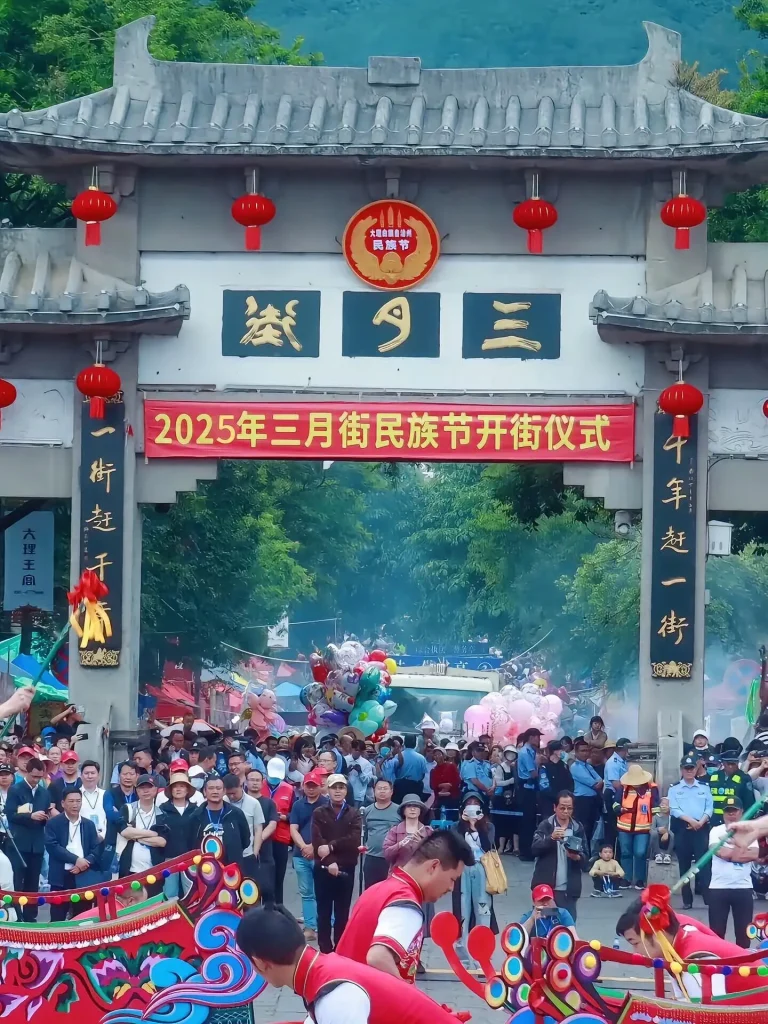
For over 1,000 years — since the days of the Nanzhao Kingdom — the Bai people have gathered at the foot of Cangshan Mountain in Dali for a week-long event that blends commerce, culture, and community into one of Southwest China’s great traditions. Originally a Buddhist pilgrimage, the Third Month Fair evolved into a massive trade fair where merchants from across the region brought horses, tea, medicinal herbs, fabrics, and metalwork to exchange.
What to Experience
The market: Hundreds of stalls selling everything from Bai silver jewelry and tie-dye to dried mushrooms, herbal medicines, handmade tools, and live animals. It’s a serious commercial event — not a tourist bazaar — with genuine deals and real negotiations.
Cultural performances: Bai opera (bái jù), folk singing competitions, Bai three-course tea demonstrations, and traditional instrumental music. The Raosanling pilgrimage songs, performed by multi-generational groups, are haunting.
Sports: Horse racing, wrestling, and crossbow archery. The horse races — held on a flat field near the Cangshan foothills — draw skilled riders from Bai and Yi communities across the region.
Atmosphere: This is the Dali event that locals care most about. Bai families come from every surrounding village. The week has a genuine community energy that the tourist season lacks — old friends reuniting, business being conducted, cultural pride being expressed.
4. The Naxi Sanduo Festival — Honoring the Warrior God
When: 8th day of the 2nd lunar month (usually late February or March)
Where: Lijiang and surrounding Naxi communities
Ethnic group: Naxi
Sanduo is the Naxi patron deity — a warrior god who, according to Naxi mythology, protects the community from enemies and natural disasters. On the 8th day of the 2nd lunar month, the Naxi celebrate with their most important annual festival: a day of rituals, feasting, horse racing, and community bonding that reveals a side of Naxi culture that the Old Town’s tourist shops completely obscure.
What Happens
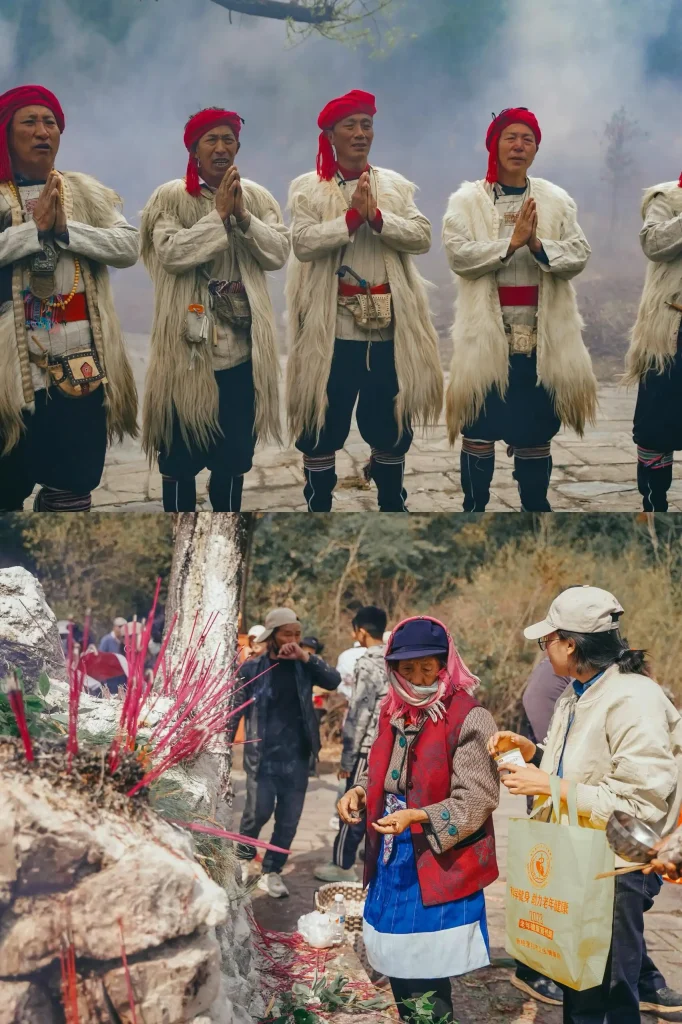
Morning: Families prepare offerings (incense, food, rice wine) and travel to the Sanduo Temple (Běiyuè Miào), north of Lijiang, where Dongba priests conduct the Sacrifice to Sanduo — the most important ceremony in the Dongba religious calendar. The priests chant from pictographic manuscripts, offering prayers for community protection and prosperity.
Afternoon: Outdoor celebrations — horse racing, archery, and Naxi folk singing at the temple grounds and in the Old Town. Families gather for communal meals of Naxi copper-pot rice and other traditional dishes.
Evening: Community bonfires and dancing in the Old Town — a more intimate, local version of the tourist-oriented performances held nightly.
Why It Matters
The Sanduo Festival is the most authentic Naxi cultural experience available to visitors — far more so than the commercialized Old Town scene. The Dongba ceremony at the temple is one of the few opportunities to see practicing Dongba priests conducting a major ritual, and the community atmosphere reveals the collective identity behind the individual artisans and shopkeepers you encounter during normal visits.
Attending requires some planning — ask your guesthouse for the exact date and location each year, as the festival follows the lunar calendar. For the deeper Naxi cultural context, including Dongba religion and the ancient music tradition, see our dedicated guide. For Lijiang travel logistics, see our destination guide.
5. The Knife-Pole Festival (Dāo Gān Jié) — Walking on Blades
When: 8th day of the 2nd lunar month (same as Sanduo; usually late February or March)
Where: Nujiang Valley (Liuku and surrounding Lisu villages)
Ethnic group: Lisu
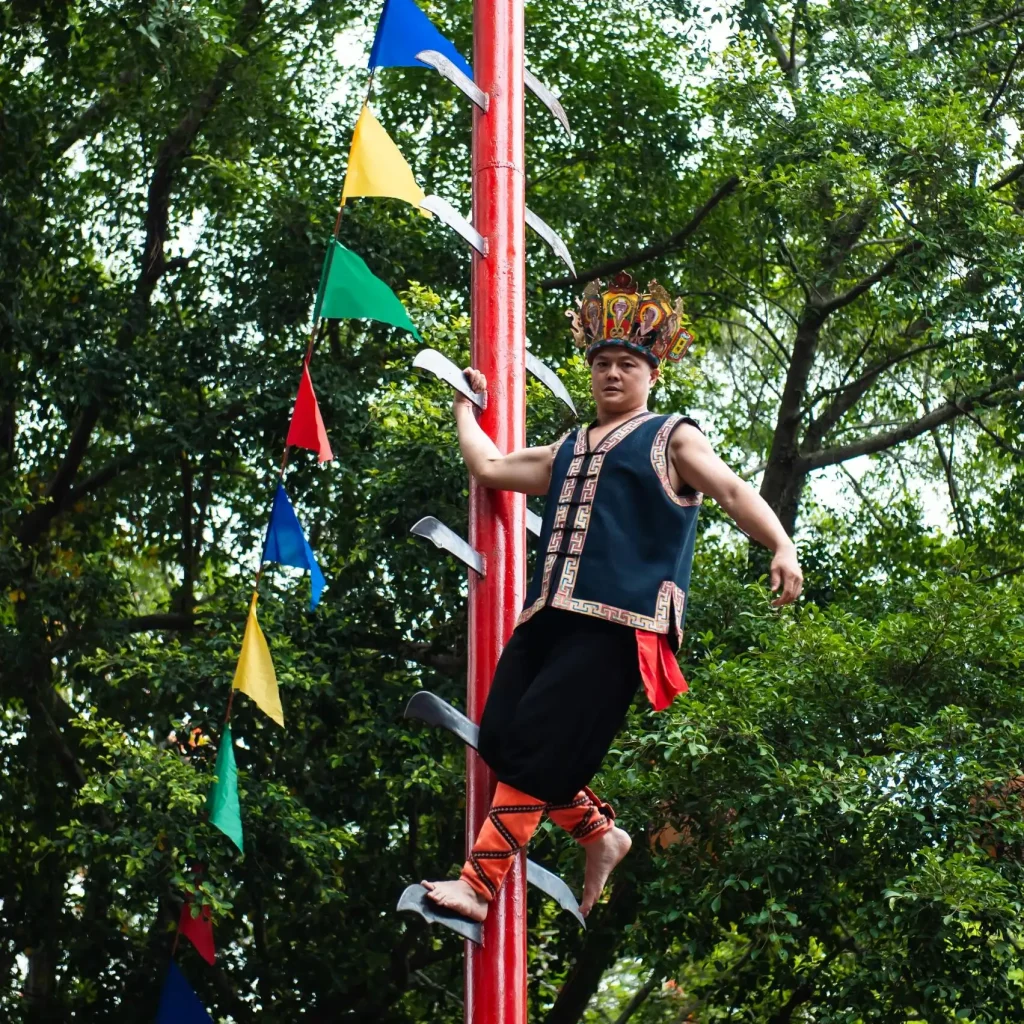
The most physically extreme and visually astonishing festival in Yunnan — and possibly in all of China. During the Knife-Pole Festival, Lisu men climb 20-meter poles studded with 72 razor-sharp knife blades, barefoot, as an act of spiritual devotion. The evening before, the same men walk across beds of red-hot charcoal. It sounds impossible. It’s real. And it’s profoundly moving.
What Happens
Day 1 — Stepping on Fire (Xià Huǒ Hǎi): At dusk, a large bonfire is built and allowed to burn down to a bed of glowing coals. Lisu men, their feet bare, walk slowly and deliberately across the coals while onlookers chant and drums beat. The fire walkers show no sign of pain — they’ve prepared through ritual fasting and meditation. The atmosphere is charged with collective spiritual energy.
Day 2 — Climbing the Knife Pole (Shàng Dāo Shān): A pole 20 meters tall is erected, with 36 pairs of knife blades (72 total) inserted as rungs. Lisu men climb the pole barefoot, stepping on the blade edges, reaching the top to set off firecrackers and make offerings to the mountain spirits. The crowd below watches in reverent silence, breaking into celebration when each climber descends safely.
The Cultural Context
The festival honors a Ming Dynasty Lisu hero named Wang Ji who resisted oppression and was executed by being forced to walk through fire and climb blades. The modern festival transforms his suffering into a symbol of Lisu courage, spiritual purity, and communal resilience. Performing the rites is an honor, undertaken after careful spiritual preparation, and the climbers are revered as embodiments of community strength.
The Nujiang Valley — one of Yunnan’s most remote and least-visited regions — is the heartland of the Lisu people. The Nujiang area is covered in our hidden gems guide. Getting there requires commitment (fly to Baoshan from Kunming, then bus to Liuku), but the festival and the surrounding landscapes make it one of Yunnan’s most unforgettable experiences.
Quick-Reference Festival Calendar
Yunnan festival dates follow the Chinese lunar calendar, so dates shift each year relative to the Western calendar. Check the exact dates before booking. Here’s the annual cycle:
February–March (lunar 2nd month): Naxi Sanduo Festival (Lijiang) ● Lisu Knife-Pole Festival (Nujiang)
March–April (lunar 3rd month): Bai Third Month Fair (Dali, week-long)
April 13–15: Dai Water Splashing Festival (Xishuangbanna) — fixed dates, not lunar
Late July–early August (lunar 6th month): Yi/Bai Torch Festival (Stone Forest, Dali, Chuxiong, 3 days)
Other notable festivals: Hani Angmatu/New Year (October–November, Yuanyang) ● Jingpo Munao Zongge (January, Dehong) ● Wa Wooden Drum Festival (April, Cangyuan) ● Mosuo Turning Mountain Festival (July, Lugu Lake)
For the broader cultural context of these celebrations, see our Yunnan ethnic minorities guide and our Yunnan culture guide. For building festivals into your trip, use our Yunnan itinerary guide.
Practical Tips for Attending Festivals
Book early. Accommodation near festivals fills fast — 2–3 months ahead for the Water Splashing Festival, 1 month for others. Prices spike during peak festivals.
Arrive a day early. The pre-festival atmosphere — temple preparations, community cooking, costume making — is often more intimate and culturally revealing than the main events.
Join in. These are participatory events. Dance when invited. Splash back when splashed. Accept the cup of rice wine. The people hosting these festivals want visitors to participate — standing on the sidelines with a camera is the least rewarding way to experience them.
Dress appropriately. For temple ceremonies: cover shoulders and knees. For Water Splashing: clothes you don’t mind getting soaked. For Torch Festival: nothing that catches fire easily. Common sense goes a long way.
Be patient with logistics. Festival periods strain local transport — buses are packed, traffic is heavy, schedules are disrupted. Build buffer time into your plans. Hire a car when possible.
Respect the sacred. Many festivals have deeply religious dimensions alongside the public celebrations. Observe temple rituals quietly. Don’t push through ceremony spaces for photos. Ask before photographing individuals. The joy is in the participation, not the documentation.
For pure joy: the Water Splashing Festival in Xishuangbanna (April). For dramatic spectacle: the Torch Festival (July/August). For cultural depth: the Third Month Fair in Dali (March/April). If you can only choose one, the Water Splashing Festival is the most accessible and the most fun — it requires no cultural knowledge to enjoy, just a willingness to get soaked.
Late July or early August — the 24th to 26th of the 6th lunar month. Exact dates shift each year. The biggest celebrations are at the Stone Forest (near Kunming), Chuxiong (Yi heartland), and Dali. Check the lunar calendar for your travel year.
Absolutely. Most festivals welcome visitor participation — especially the Water Splashing Festival (everyone gets splashed), the Torch Festival (join the bonfire dancing), and the Third Month Fair (shop, eat, watch performances). For more intimate events like the Sanduo Festival or Knife-Pole Festival, respectful observation is usually appropriate, with participation when invited.
Festival dates follow the Chinese lunar calendar, so they shift relative to the Western calendar each year. The Water Splashing Festival is an exception — it’s fixed at April 13–15. For others, check a Chinese lunar calendar converter online, or ask your hotel/guesthouse upon arrival. Tourist information centers in Kunming, Dali, and Lijiang can provide current-year dates.
Yes — especially for the Water Splashing Festival (book 2–3 months ahead). For the Torch Festival and Third Month Fair, booking 3–4 weeks ahead is usually sufficient. Accommodation prices increase during festivals — budget 50–100% more than normal rates.