Before the Silk Road was famous, Yunnan’s mule caravans were carrying compressed tea across the highest trade route on Earth — from tropical plantations to Tibetan monasteries, through gorges deeper than the Grand Canyon.
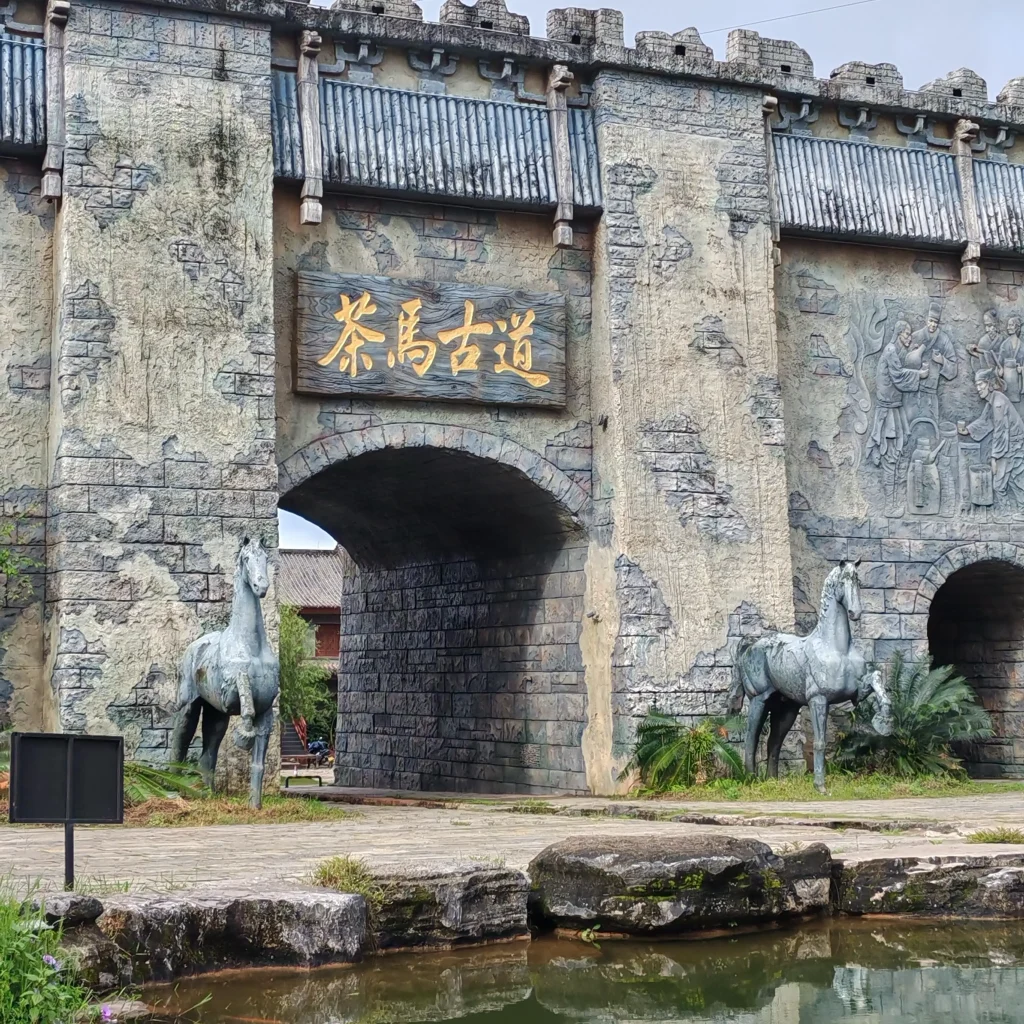
Long before containers and cargo ships, one of the world’s most extraordinary trade networks ran through some of the most extreme terrain on Earth. The Tea Horse Road (Chámǎ Gǔdào) — a web of mule trails connecting Yunnan’s tea plantations to the Tibetan Plateau, and onward to Nepal, India, and Southeast Asia — was the lifeline that carried compressed tea to Tibet, brought Tibetan warhorses south, and created a cultural corridor that shaped every community along its path for over a thousand years.
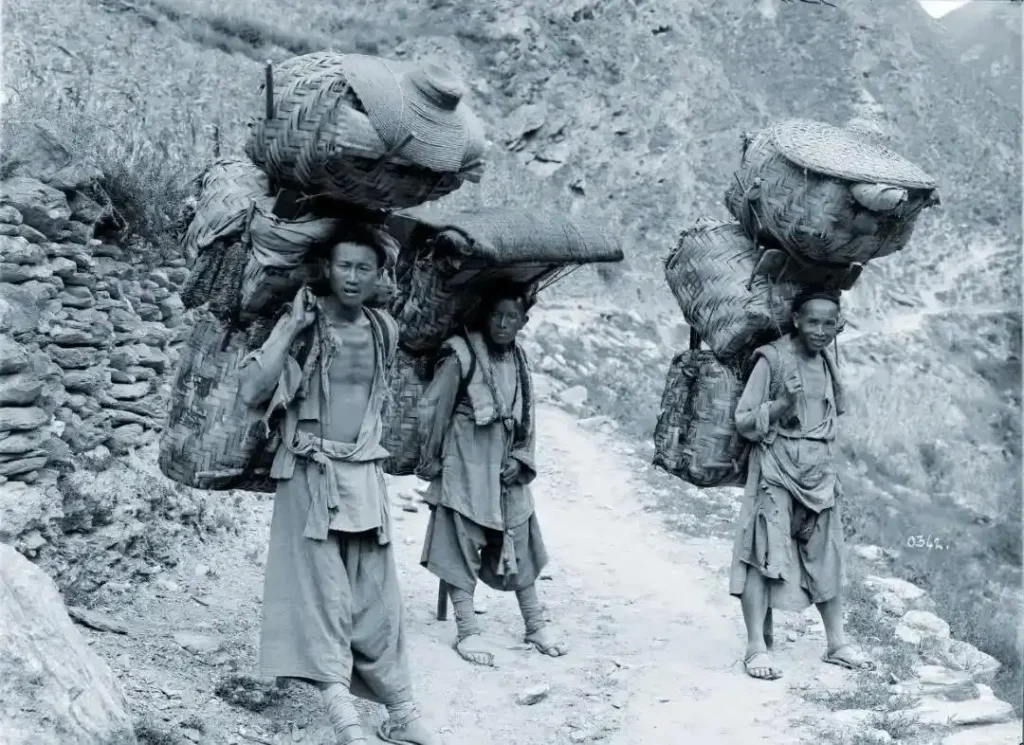
The route was not one road but many: narrow paths carved into cliff faces above roaring rivers, stone-paved trails climbing through 4,000-meter passes, and muddy tracks winding through rainforests where leeches were a bigger threat than bandits. Mule caravans of 100+ animals, led by professional muleteers called mǎguō, traveled for months at a time, sleeping in roadside inns, trading at market towns, and slowly, steadily moving millions of kilograms of tea — the compressed brick tea (zhuān chá) that was, for Tibetans, as essential as bread.
Today, the Tea Horse Road is experiencing a renaissance of scholarly and tourist interest. Several key towns along the route — most notably Shaxi — have been beautifully preserved, and tracing sections of the old road offers one of Yunnan’s most rewarding cultural travel experiences. For the big-picture Yunnan planning, see our ultimate Yunnan travel guide.
What this guide covers: What was the Tea Horse Road → Historical origins → The route through Yunnan → Key stops you can visit today → Tea & the trade → Cultural legacy → How to trace the road → FAQ.
What Was the Tea Horse Road?
The Tea Horse Road was a network of overland trade routes that connected the tea-producing regions of Yunnan (and to a lesser extent Sichuan) with Tibet, and from Tibet onward to Nepal, India, and Central Asia. Active from the Tang Dynasty (7th century) through the mid-20th century, it was one of the oldest and most geographically challenging trade routes in human history — predating the more famous maritime Silk Road by several centuries.
The core exchange was simple: tea for horses. Tibet’s high-altitude, butter-heavy diet created an existential need for tea — the tannins in tea aid digestion and its stimulant properties sustain energy at altitude. But tea doesn’t grow above 3,000 meters. Meanwhile, Yunnan and Sichuan needed horses for warfare and transport, and Tibet’s highland breeds were among the finest in Asia. The trade was so strategically important that Chinese dynasties regulated it through official “tea-horse offices” (chámǎ sī) that controlled prices and quotas.
But tea and horses were just the headline products. The caravans also carried salt, sugar, medicinal herbs, furs, gold, silver, jade, textiles, and — most importantly — ideas. Buddhism traveled south along the road from Tibet. Theravada Buddhism traveled north from Southeast Asia. Confucian scholarship moved west from the Chinese heartland. The Tea Horse Road was not just a trade route — it was the cultural transmission line that made Yunnan the extraordinary crossroads it remains today.
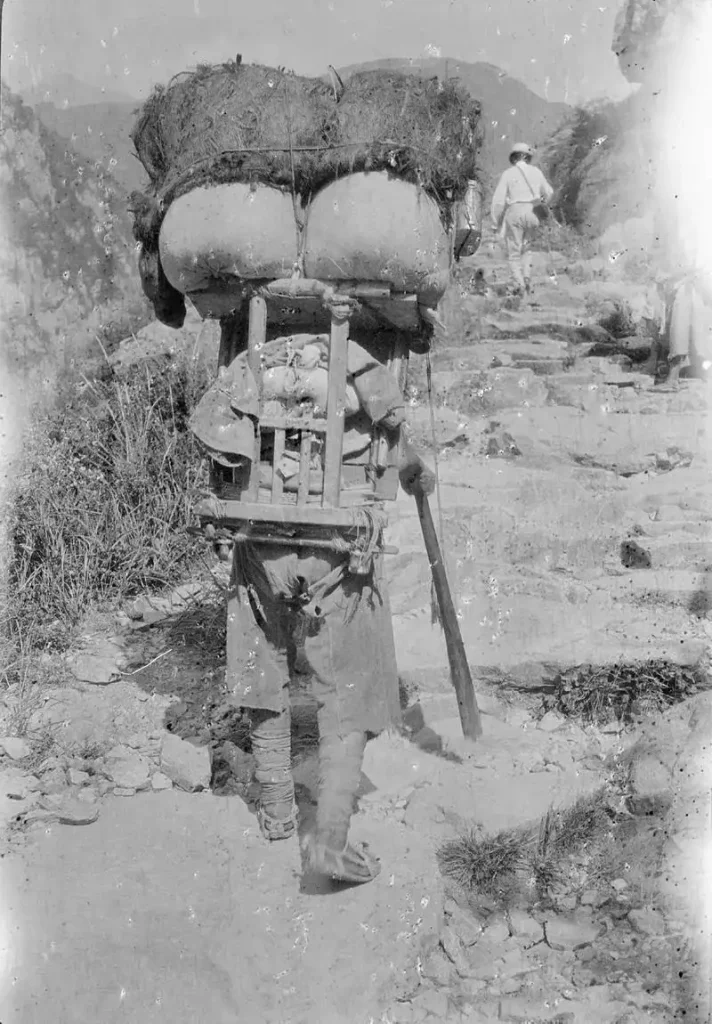
The Route Through Yunnan
The Yunnan section of the Tea Horse Road began in the tea-growing regions of Xishuangbanna and Pu’er in the tropical south, where ancient tea trees produced the raw material. From there, compressed tea bricks were loaded onto mule trains that followed two main routes northward:
The Western Route: The primary route climbed from the tea country through Dali — the great commercial hub where caravans converged from multiple directions — then continued north through Shaxi, Lijiang, and into the Tibetan highlands via Shangri-La and Deqin, eventually reaching Lhasa. This route covered approximately 2,300 kilometers and took caravans 3–4 months one way.
The Southern Route: A branch extended southeast from Pu’er toward Vietnam and Laos, carrying tea to Southeast Asian markets. Another branch ran west from Dali toward Myanmar and India through the Dehong region.
Along these routes, a network of market towns developed — places where caravans rested, resupplied, traded goods, and exchanged news. These towns became cultural crossroads where Bai, Naxi, Tibetan, Yi, Hui, and Han communities mixed, creating the multicultural character that defines Yunnan today.
Key Tea Horse Road Towns You Can Visit Today
Shaxi: The Best-Preserved Caravan Town
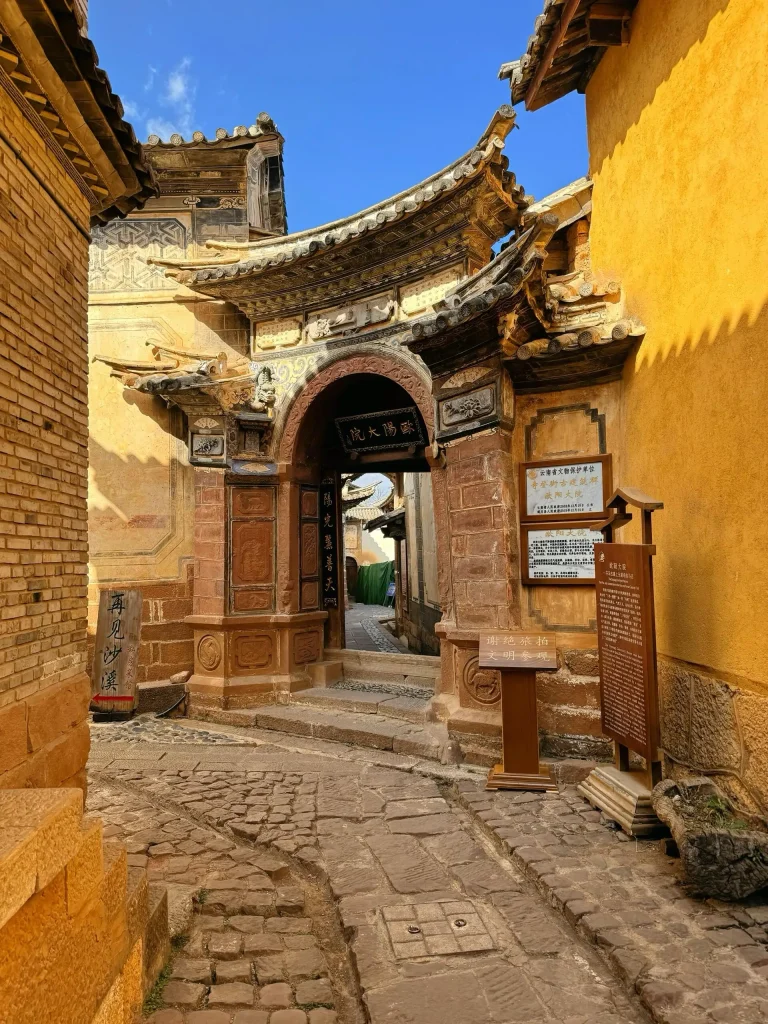
Two hours north of Dali, Shaxi is the crown jewel of Tea Horse Road heritage. This small town in the Jianchuan Valley was a crucial overnight stop for caravans traveling between Dali and Lijiang, and its Sideng Market Square — in continuous use for over 500 years — is the most intact caravan-era marketplace surviving on the entire route.
The square is anchored by the 600-year-old Xingjiao Temple, whose courtyard once served as a caravanserai where muleteers stabled their animals and slept on the temple’s wooden balconies. The Swiss-Chinese restoration of Shaxi (led by architect Jacques Feiner) is a masterpiece of sensitive conservation — the original stones are untouched, the buildings repaired rather than rebuilt, and the atmosphere is authentic rather than manufactured.
On Friday market days, the square fills with Bai and Yi traders selling produce and handicrafts — a scene that hasn’t fundamentally changed in centuries. The surrounding valleys offer excellent hiking and cycling along preserved sections of the original stone-paved mule trail.
Dali: The Great Crossroads
Dali was the Tea Horse Road’s greatest commercial hub — the city where caravans from the tea country, Tibet, Southeast Asia, and interior China all converged. The Bai people who controlled Dali leveraged this position to build immense wealth, and the merchant mansions of Xizhou — built by Bai traders who made their fortunes on the tea trade — are the architectural legacy of that prosperity.
The Third Month Fair in Dali, still held annually for over 1,000 years, originated as a Tea Horse Road trading event where merchants from across the route gathered for a week of commerce and cultural exchange.
Lijiang: The Naxi Trading Post
Lijiang was the northern gateway to the Tibetan world. The Naxi rulers of Lijiang facilitated (and taxed) the tea trade, enriching themselves as intermediaries between Chinese and Tibetan cultures. The Old Town’s canal-side architecture — designed for both living and commerce — reflects a city built around trade. Shuhe Ancient Town, 4 km from Dali, was specifically a leather-working center that processed hides from the Tibetan horse trade.
Shangri-La & Deqin: Into the Highlands
From Lijiang, the road climbed into the Tibetan highlands through Shangri-La — the transition point where Chinese tea met Tibetan demand. Songzanlin Monastery, the great Tibetan Buddhist monastery near Shangri-La, was both a religious center and a commercial depot where tea was redistributed to monasteries and communities deeper in Tibet. The final section — from Deqin past Meili Snow Mountain and onward to Lhasa — was the most dangerous, crossing multiple passes above 4,500 meters.
Tea & the Trade: What Was Carried
The Tea Horse Road moved far more than its name suggests, but tea was always the foundation — specifically, the compressed brick tea and cake tea that we now call Pu’er.
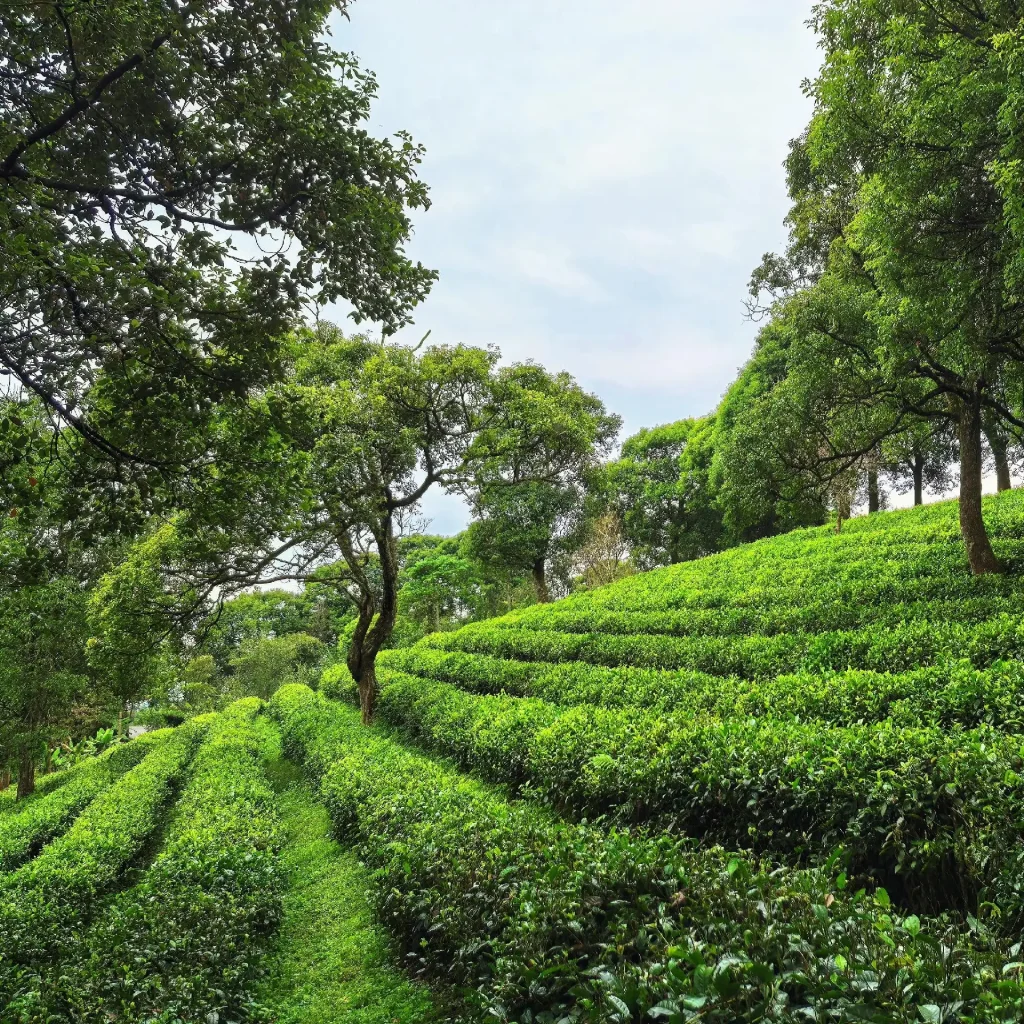
Why compressed? Raw tea leaves are too bulky and fragile for mule transport over months-long journeys. Yunnan’s tea producers developed techniques for steaming, pressing, and drying tea into dense bricks (zhuān chá) and cakes (bǐng chá) that were compact, durable, and — crucially — improved with age. The months of transport, with the tea exposed to varying humidity and temperature, actually enhanced its flavor through natural fermentation. This is the origin of Pu’er’s famous aging tradition: the road itself was the first aging chamber.
The horse trade: Tibetan horses — small, hardy, sure-footed breeds adapted to high altitude — were essential for Chinese military campaigns. During the Song Dynasty, the tea-horse exchange was so strategically important that the government established official exchange ratios: one warhorse for 100 jin (approximately 60 kg) of tea.
Other goods: Salt (essential for highland diets), sugar, medicinal herbs, silk, and metal tools traveled north. Furs, gold, musk, caterpillar fungus (cordyceps), and Tibetan religious artifacts traveled south. The Bai merchants of Dali traded marble and silver. The Naxi of Lijiang traded leather goods. The road was a complete economic ecosystem.
For the full story of Pu’er tea — from ancient trees to your cup and for a tea tasting and buying guide, see our dedicated articles.
Cultural Legacy: How the Road Shaped Yunnan
The Tea Horse Road’s greatest legacy isn’t commercial — it’s cultural. The route created the conditions for Yunnan’s extraordinary diversity by connecting communities that would otherwise have remained isolated.
Religious exchange: Tibetan Buddhism traveled south along the road to Shangri-La and influenced the Naxi. Theravada Buddhism traveled north from Southeast Asia to the Dai regions. Chinese Buddhism spread west through Dali. The Nanzhao and Dali Kingdoms — which ruled Yunnan for five centuries — adopted Buddhism specifically through contacts facilitated by the tea trade.
Architectural influence: The merchant wealth generated by the trade funded the elaborate Bai mansions of Xizhou, the Naxi courtyard homes of Lijiang, and the monastery complexes of Shangri-La. Without the tea trade, these architectural treasures wouldn’t exist.
Culinary exchange: The road carried not just tea but food traditions. The Yunnan food scene — with its remarkable blend of Chinese, Tibetan, and Southeast Asian influences — is a direct product of the Tea Horse Road’s cultural mixing.
Ethnic mixing: The Hui Muslim communities found throughout Yunnan — in Kunming, Dali, Shaxi, and many smaller towns — established themselves as traders and innkeepers along the Tea Horse Road. Their mosques, cuisine, and cultural contributions are a living legacy of the route.
How to Trace the Tea Horse Road Today
You can’t walk the entire route (it spans thousands of kilometers), but you can visit the key nodes and walk preserved trail sections:
Best itinerary: Kunming → Dali (the great hub) → Shaxi (the preserved caravan town, 2 nights) → Lijiang (the northern gateway) → Shangri-La (the Tibetan transition). This follows the western route and covers the most culturally rich sections in 7–10 days.
Walkable trail sections: Near Shaxi, several kilometers of original stone-paved mule trail survive and are walkable. The Shibaoshan grottoes (45 min from Shaxi) are carved into cliffs along the ancient route. Near Dali, sections of the trail between Xizhou and Zhoucheng can be traced. Ask locally for directions — the trails aren’t always marked.
Tea origin visit: For the southern starting point, visit the ancient tea mountains of Xishuangbanna where the Pu’er tea journey began. The Jingmai Ancient Tea Forest — a UNESCO-listed landscape — is the most spectacular tea-producing landscape on the route.
For combining these stops into a structured trip, see our Yunnan itinerary guide.
A network of ancient overland trade routes connecting Yunnan’s tea-producing regions to Tibet, and onward to Nepal, India, and Southeast Asia. Active from the 7th century to the mid-20th century, it was one of the world’s oldest and most challenging trade routes. Mule caravans carried compressed tea north and brought Tibetan horses south, along with salt, herbs, furs, and cultural exchange.
Shaxi (2 hours north of Dali) is the best-preserved caravan town, with a 500-year-old market square and restored caravanserai. Dali, Lijiang, and Shangri-La were all major stops. Near Shaxi, several kilometers of original stone-paved trail survive. The ancient tea mountains of Xishuangbanna mark the route’s southern origin.
The Tea Horse Road is why Pu’er tea exists in its current form. Tea was compressed into bricks and cakes specifically for mule transport over the road’s months-long journeys. The natural fermentation that occurred during transport — exposure to varying humidity and temperature — gave Pu’er its distinctive aged character. The road was literally the first aging chamber.
The main route from Yunnan’s tea regions to Lhasa covered approximately 2,300 kilometers and took caravans 3–4 months one way. Caravans typically consisted of 100+ mules led by professional muleteers who made the journey multiple times per year.
Absolutely. Shaxi is the best-preserved Tea Horse Road town in existence — a carefully restored caravan marketplace with a 600-year-old temple, original cobblestone streets, and Friday market. It’s 2 hours from Dali, easily accessible, and offers excellent guesthouses and hiking. Budget at least 2 nights.