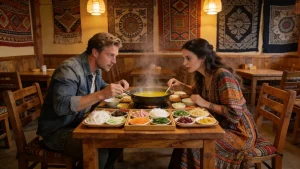
Every June, Yunnan goes mushroom-mad — 900 species burst from the red earth after the first monsoon rains, markets overflow with fungal treasure, and every restaurant serves hot pots that would cost a small fortune anywhere else on Earth.
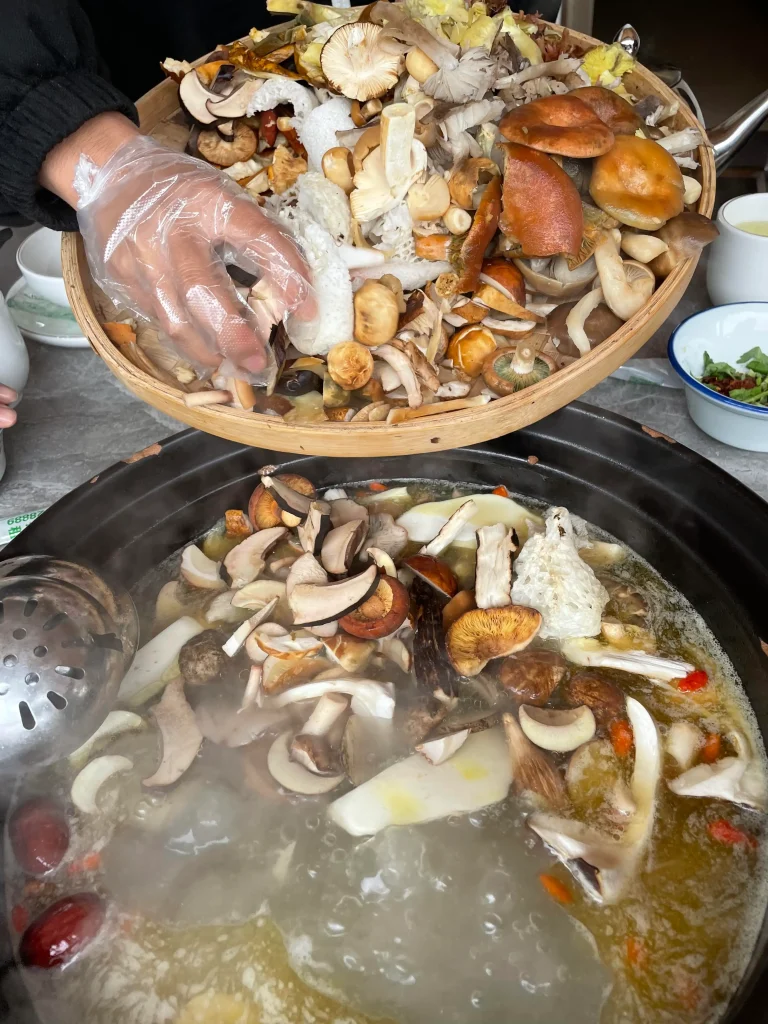
Yunnan produces approximately 50% of China’s wild mushrooms — and during the wet season (June–September), the province transforms into the greatest wild mushroom destination on Earth. Over 900 edible species grow in Yunnan’s forests, from the globally prized matsutake (sōngróng) and porcini (niúgānjūn) to the locally beloved chicken-fat mushroom (jīzōngjūn) and the hallucinogenic “see-little-people mushroom” (jiàn shǒu qīng) that sends hundreds of Yunnanese to the hospital every year — and that they eat again the next season anyway.
This guide covers the mushroom experience: what to eat, when, where, and how to navigate one of the world’s most exciting seasonal food events. For the full Yunnan food picture, see our Yunnan food guide.
What this guide covers: Why Yunnan is mushroom paradise → The key species → Wild mushroom hot pot → Where to eat → Markets → Season & timing → Safety → FAQ.
Why Yunnan Is the Mushroom Capital
Three factors create Yunnan’s fungal abundance: the province’s extraordinary biodiversity (spanning tropical to alpine ecosystems), the monsoon rains that arrive in June and soak the red earth daily, and the vast forests — pine, oak, chestnut — that provide the symbiotic root networks mushrooms need to fruit. The result is a concentration of wild mushroom species unmatched anywhere in the world.
Mushroom gathering is a Yunnan tradition stretching back centuries. In rural communities, entire families head to the forests after rain, returning with baskets of species they’ve known since childhood. In Kunming, the municipal government publishes annual safety guides with pictures of dangerous species — a uniquely Yunnanese public health measure. And on social media, “mushroom season” generates its own genre of Yunnan content: joyful hauls, spectacular dishes, and the annual round of “I ate jiàn shǒu qīng and saw little people” hospital-bed selfies that have become a beloved dark comedy tradition.
The Stars: Key Species to Know
Jīzōngjūn (Chicken-Fat Mushroom): The queen of Yunnan mushrooms. White, delicate, with a rich flavor that genuinely recalls the best chicken broth — hence the name. Extremely prized and expensive (¥200–800/kg depending on quality and season timing). Pan-fried in butter or oil with just salt is the classic preparation. Yunnan’s most celebrated single ingredient.
Niúgānjūn (Porcini/Boletus): Multiple species, from the familiar European-style porcini to the local “black niúgānjūn” that’s among the most flavorful mushrooms in existence. Meaty, earthy, substantial. The backbone of mushroom hot pot and stir-fries. More affordable (¥40–120/kg) and widely available.
Sōngróng (Matsutake): Globally famous and globally expensive. Yunnan produces most of China’s matsutake, with the finest coming from the forests around Shangri-La and the Tibetan highlands. Aromatic, firm, with a distinctive pine-and-spice fragrance. Charcoal-grilled slices with just salt are the purist’s preparation. Fresh matsutake can reach ¥1,000+/kg in early season.
Gānbājūn (Dried-Bar Mushroom): Ugly, shaggy, and utterly delicious — one of the most unique flavors in the mushroom world. The texture is chewy and almost meat-like; the flavor is intensely umami with smoky, earthy notes. Stir-fried with green chili and dried chili is the canonical preparation. Expensive (¥300–1,000/kg) and worth every yuan.
Jīyóujūn (Chanterelle): Golden, apricot-scented, and familiar to European mushroom lovers. Yunnan’s chanterelles are excellent — less expensive than in Europe and available in enormous quantities. Wonderful in stir-fries, soups, and hot pot.
Zhúsūn (Bamboo Fungus): A dramatic-looking mushroom with a lacy white skirt that grows on bamboo. Mild flavor, silky texture. Used in elegant soups and the famous steam pot chicken.
Wild Mushroom Hot Pot: The Essential Experience
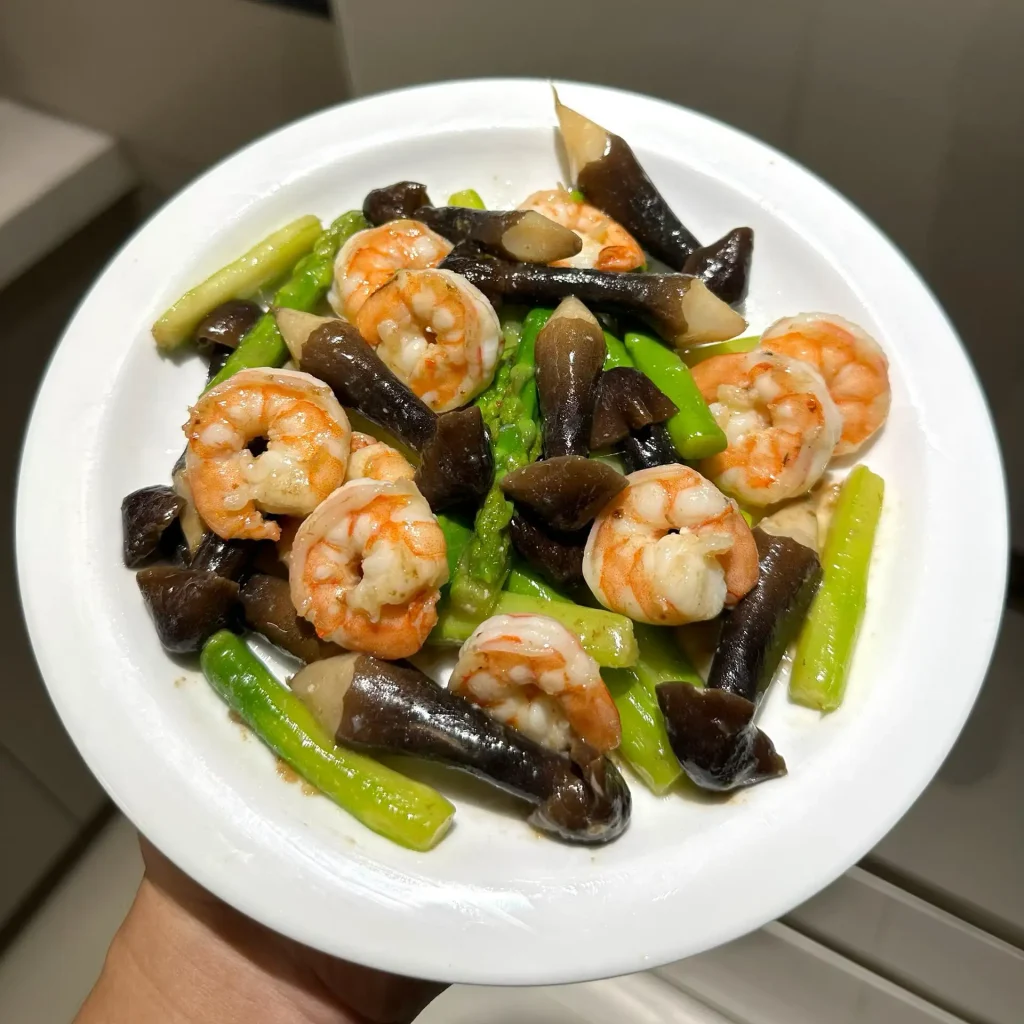
The must-do mushroom experience in Yunnan is the wild mushroom hot pot (yě shēng jūn huǒ guō) — a bubbling pot of rich broth (usually chicken or bone stock) into which a spectacular assortment of fresh wild mushrooms is added at the table. A typical restaurant offers 8–15 mushroom varieties, each brought to the table in separate baskets, identified, and added in sequence based on cooking time.
The ritual: the server adds the mushrooms for you (important — some species need longer cooking to neutralize mild toxins), the pot simmers for 20–30 minutes, and then you begin eating. The broth, now infused with the combined essence of a dozen mushroom species, is the real treasure — by the end of the meal, it’s one of the most complex, deeply flavored liquids you’ll ever taste. Many diners drink the broth as soup after the mushrooms are finished.
Where to eat mushroom hot pot in Kunming: Kunming is mushroom hot pot central. The restaurants along Guanshang Road (Guānshàng) and in the Beichen area specialize in mushroom hot pot during season. A good meal for two runs ¥150–400 depending on which species you order. The restaurants are packed every evening in season — arrive before 6 PM or expect to wait.
Outside Kunming: Dali, Lijiang, and especially Shangri-La (for matsutake) all have excellent mushroom restaurants in season. Local markets everywhere sell fresh mushrooms that guesthouse kitchens will sometimes cook for you.
Markets: Where to See the Mushroom Spectacle
Kunming Mucun Wild Mushroom Market : The largest wholesale wild mushroom market in China. During peak season (July–August), the daily turnover is measured in tons. Hundreds of vendors display dozens of species — it’s a visual and aromatic spectacle even if you don’t buy anything. Open from early morning (best before 9 AM when the freshest stock arrives).
Kunming Pianluodian Market: A wet market in the city center with excellent retail mushroom stalls. More accessible than Mucun and good for buying small quantities.
Regional markets: The morning markets in Dali, Xizhou, and Shangri-La all have mushroom sections during season. Shangri-La’s market is particularly good for matsutake — you’ll see Tibetan gatherers bringing in the morning’s haul from the surrounding forests.
Season & Timing
Peak season: July–August. The monsoon rains are fully established, and mushroom production is at its height. This is when the greatest variety is available and prices are (relatively) lowest.
Shoulder season: June and September. Fewer species but still excellent eating. Early June brings the first jīzōngjūn — the most anticipated moment in the Yunnan food calendar.
Off-season: October–May. Fresh wild mushrooms are unavailable (with rare exceptions). Dried mushrooms, preserved mushrooms, and mushroom-oil products are available year-round and make excellent souvenirs.
If you’re planning a Yunnan trip specifically for mushrooms, our Yunnan itinerary guide shows how to build a summer route that maximizes mushroom experiences.
Safety: The Serious Part
Yunnan’s annual mushroom poisoning statistics are real — hundreds of people are hospitalized each year, and fatalities occur. The vast majority of cases involve foragers who misidentify wild species at home, not restaurants. Still, basic precautions:
Eat at established restaurants. Reputable mushroom hot pot restaurants and markets know their species. Don’t buy from random roadside vendors unless you’re with a knowledgeable local.
Don’t forage yourself unless you’re with an experienced local guide. Yunnan has dozens of toxic species that resemble edible ones.
Trust the server. In mushroom hot pot restaurants, the server controls when mushrooms go in and when you start eating. They know cooking times. Follow their lead.
Some species require thorough cooking. Several popular Yunnan mushrooms (including some niúgānjūn varieties) contain compounds that are neutralized by heat but can cause gastrointestinal distress if undercooked. This is why mushroom hot pot restaurants insist on simmering for 20+ minutes before eating.
For eating adventurously but safely in Yunnan, our dining tips guide has more detail.
Peak season is July–August, when the monsoon rains produce the greatest variety and volume. June and September are shoulder months with fewer species but still excellent eating. Fresh wild mushrooms are unavailable October–May.
Kunming is the epicenter — restaurants along Guanshang Road and in the Beichen area specialize in mushroom hot pot during season. A meal for two costs ¥150–400. Shangri-La is best for matsutake. Dali and Lijiang also have good mushroom restaurants in season.
Yes, at established restaurants and markets. Reputable mushroom hot pot restaurants and market vendors know their species and cooking requirements. Don’t forage yourself, don’t buy from unverified roadside vendors, and follow the server’s instructions on cooking times.
Matsutake (sōngróng) can reach ¥1,000+/kg in early season. Jīzōngjūn (chicken-fat mushroom) runs ¥200–800/kg. Gānbājūn (dried-bar mushroom) reaches ¥300–1,000/kg. Porcini (niúgānjūn) is more accessible at ¥40–120/kg.
Yes. Dried porcini, matsutake, chanterelles, and bamboo fungus are available year-round in Yunnan markets and make excellent gifts. Mushroom-infused chili oil is another popular souvenir. Check your country’s customs regulations for dried food imports.