Dali’s food is as distinctive as its scenery — a dairy tradition unique in China, freshwater fish from Erhai Lake, flatbreads that rival anything in Central Asia, and a cheese culture that predates European contact by centuries.
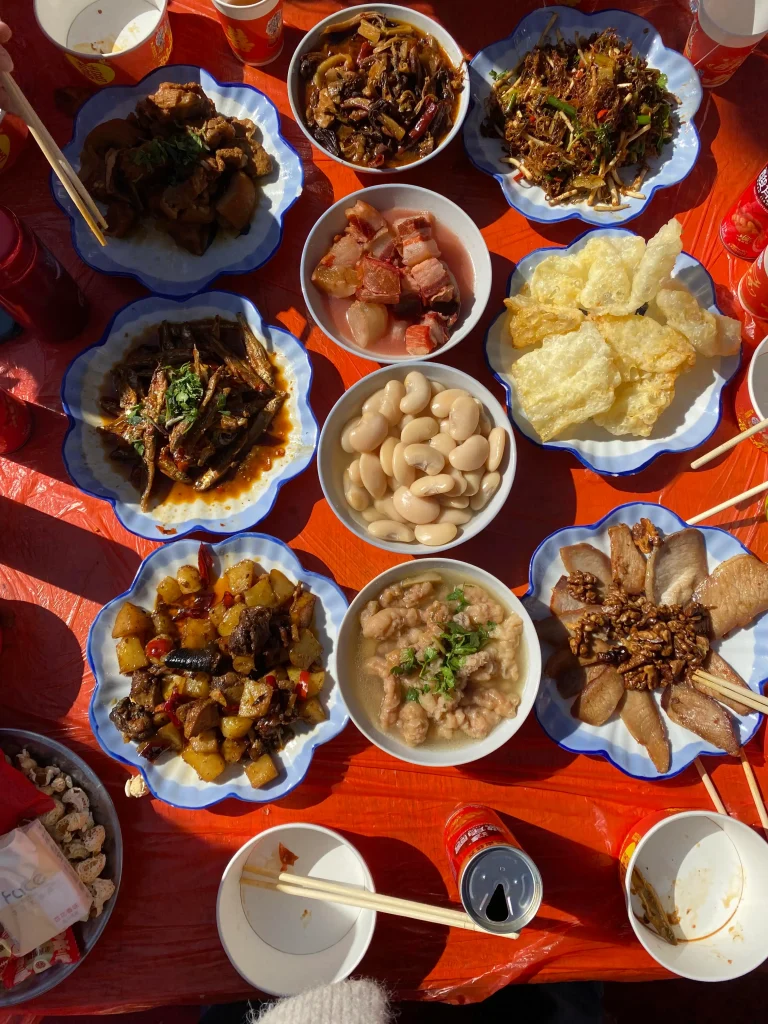
Every Yunnan city has its own food personality, but Dali‘s is the most distinctive. The Bai people who have shaped this region for over a millennium developed a cuisine that’s unlike anything else in China — and several of their signature creations exist nowhere else on Earth. Rushan and rubing cheeses, made from goat and cow milk using techniques that no other Chinese ethnic group practices. Xizhou baba, a flaky flatbread that could hold its own against Turkish börek or Indian paratha. Erhai fish, cooked sour with tomatoes and vinegar in a style that nods to Southeast Asia. And an eight-bowl banquet tradition that turns weddings and festivals into culinary marathons.
This guide covers the essential Dali eating experiences — what to order, where to find it, and the cultural stories that make each dish meaningful. For the full Yunnan food picture, see our Yunnan food guide. For Dali travel planning, see our destination guide.
Rushan & Rubing: Dali’s Legendary Cheeses
Dali has something no other region in China has: an indigenous dairy tradition. The Bai people are one of the very few Chinese ethnic groups who historically raised livestock for milk and developed techniques for transforming it into cheese — a fact that fascinates food historians and delights visitors from dairy-loving cultures. For the full story, see our dedicated Yunnan cheese guide.
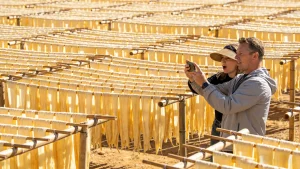
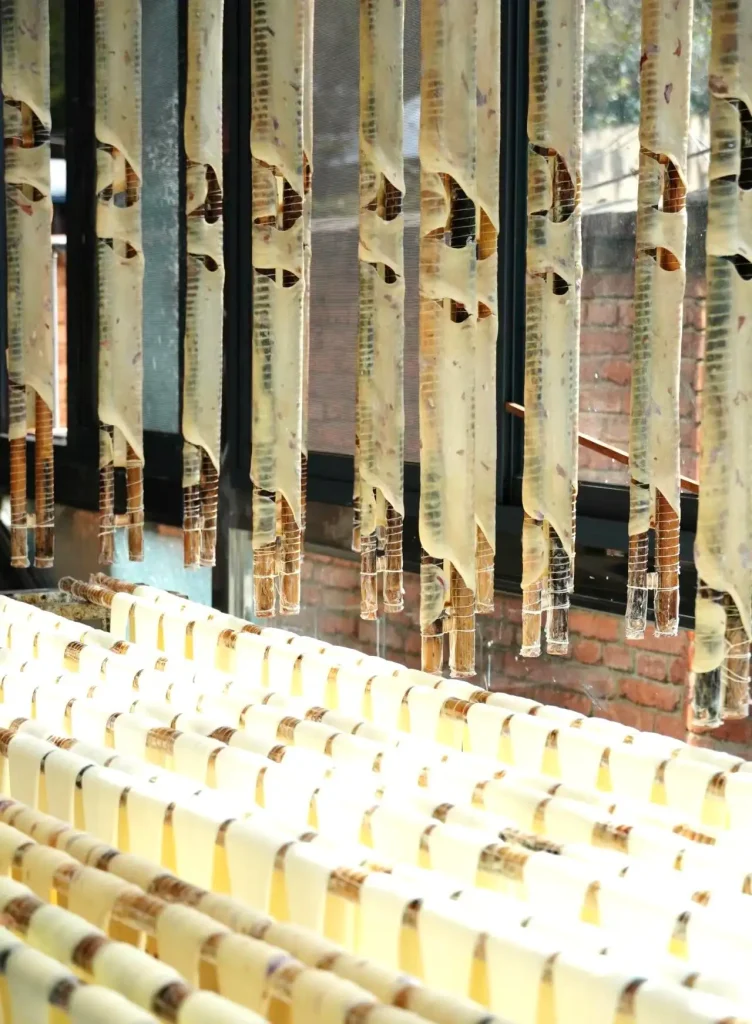
Rushan (Milk Fan): Cow’s milk is heated with an acidic solution (traditionally a sour plum vinegar), causing it to coagulate. The resulting curds are stretched by hand into thin, elastic sheets — using a technique remarkably similar to Italian mozzarella-stretching — then draped over bamboo sticks to dry in the sun. The dried sheets can be deep-fried (crispy, tangy, served with rose jam or condensed milk), grilled, or rolled around sweet or savory fillings. The texture is unique — crunchy exterior, slightly chewy interior — and the flavor has a mild tang that’s instantly addictive.
Rubing (Milk Cake): A fresh goat’s milk cheese, pressed into firm blocks and pan-fried until golden on the outside and soft within. Served with rose jam, chili salt, or just plain. The closest Western comparison is fried halloumi, but rubing has a more delicate, milky flavor. Every restaurant in Dali serves it; the best versions come from village stalls where the cheese was made that morning.
Xizhou Baba
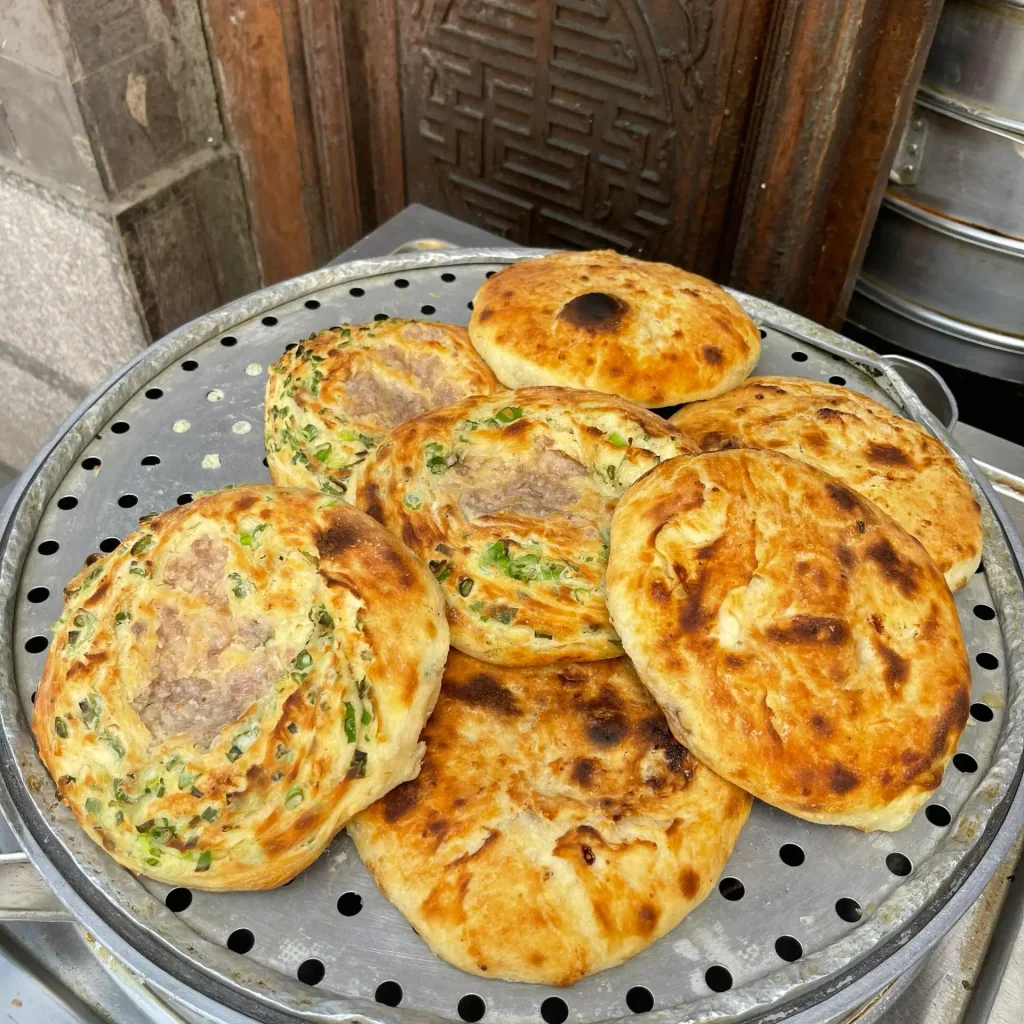
The flaky flatbread of Xizhou village is Dali’s most beloved snack — and with good reason. Multiple layers of dough are folded with filling (sweet: rose sugar, brown sugar; or savory: minced pork, ham, scallion), then cooked between two flat metal pans with charcoal heat above and below. The result: a golden, crispy, multi-layered bread that shatters when you bite through the crust into the soft, fragrant interior.
Where: The original stalls in Xizhou’s morning market square are the definitive version (¥5–8). Avoid the mass-produced versions sold in Dali Ancient Town’s tourist streets — they’re smaller, less fresh, and twice the price.
Erhai Fish (Ěrhǎi Yú)
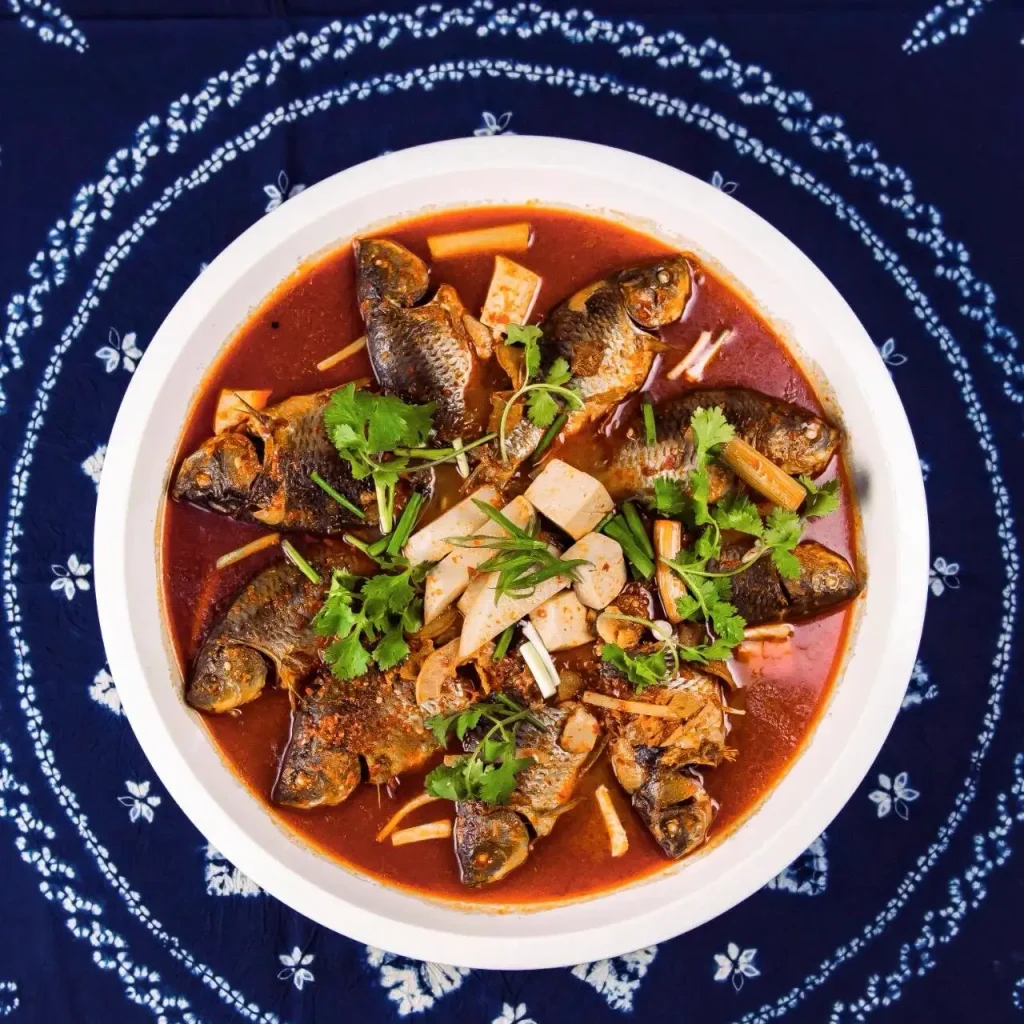
Erhai Lake’s freshwater fish — particularly the small, bony but flavorful varieties caught by Bai fishermen — are the basis of several Dali signature dishes.
Sour Fish (suān là yú): Fish cooked in a tangy broth of tomatoes, pickled vegetables, chili, and vinegar. Bright, warming, and the perfect accompaniment to steamed rice. The Dali equivalent of comfort food.
Grilled Fish (kǎo yú): Small whole fish, grilled crispy over charcoal and served with chili-salt dipping powder. Best from lakeside restaurants in Shuanglang or the eastern shore.
Sand Pot Fish (shāguō yú): Fish simmered in a clay pot with tofu, vegetables, and a milky bone broth. Hearty and deeply flavored.
Bai Eight-Bowl Feast & Other Essentials
Bā Dà Wǎn ( Eight-Bowl Feast): The traditional Bai banquet served at weddings and festivals — eight large bowls of braised pork, stewed chicken, fried fish, ham, tofu, and vegetables. Ask at restaurants in Xizhou for a family-style version (¥100–200 for a table).
Washed Sand Potato (xǐ shā yángyù): Potatoes mashed and stir-fried until they disintegrate into a silky, golden purée — richer than Western mashed potatoes, with a crispy base. A Dali comfort-food staple.
Dali craft beer: Dali has developed a small but excellent craft beer scene — Bad Monkey, Dali Beer, and several brewpubs in the Ancient Town serve locally brewed ales and lagers that pair perfectly with Bai cuisine.
For the Bai cultural context that shaped this cuisine — three-course tea, architecture, festivals — see our culture guide. For Dali’s travel logistics, our destination guide has everything.
Rushan (fried milk-fan cheese) and rubing (pan-fried goat cheese) are Dali’s most unique foods — available nowhere else in China. Xizhou baba (flaky flatbread) is the beloved snack. Erhai sour fish is the signature main course. Try all four for the complete Dali food experience.
Xizhou village (20 km north of the Ancient Town) for baba, rushan, and three-course tea. The Ancient Town’s northern residential lanes for local Bai restaurants. Shuanglang for lakeside grilled fish. Avoid the most touristy restaurants on Renmin Road — look for places packed with Chinese diners.
Moderately. Bai cuisine uses chili but isn’t as fiery as Sichuan or Hunan food. Erhai sour fish has a gentle heat. Grilled tofu dipping powder is spicy but you control how much you use. If you’re sensitive to spice, tell your server ‘wēi là’ (slightly spicy) or ‘bù là’ (no spice).