
History of Silk Road
The Silk Road was one of the most influential trade networks in human history. From around the 2nd century BC to the 14th century AD, this vast overland route connected East Asia with Central Asia, the Middle East, and Europe. Originating in Chang’an (today’s Xi’an) and stretching toward the Mediterranean world, the route facilitated not only commercial exchange but also the spread of cultures, technologies, and ideas. Because silk was among the most valuable goods transported along the route, the German geographer Ferdinand von Richthofen later named it the “Silk Road” in the 19th century.
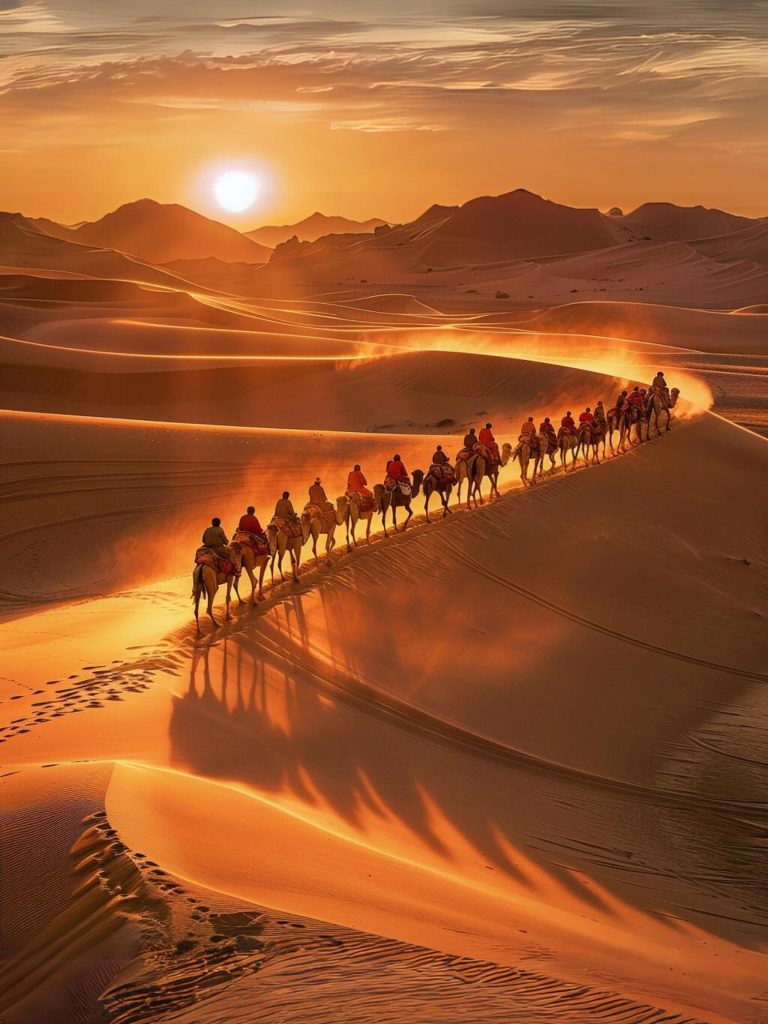
The Formation of the Silk Road in the Han Dynasty
The Silk Road began to take shape during the Western Han Dynasty. Diplomat Zhang Qian’s expeditions to the Western Regions opened direct contacts between China and Central Asia. His journeys laid the foundation for stable trade routes across deserts and mountain corridors. To protect these routes, the Han government strengthened military defenses and established administrative control in the northwest, which significantly promoted long-distance trade and cultural interaction.
During the Eastern Han period, generals such as Ban Chao further consolidated China’s influence in the Western Regions. With improved security, caravans carrying silk, jade, and other goods traveled more frequently between East and West.
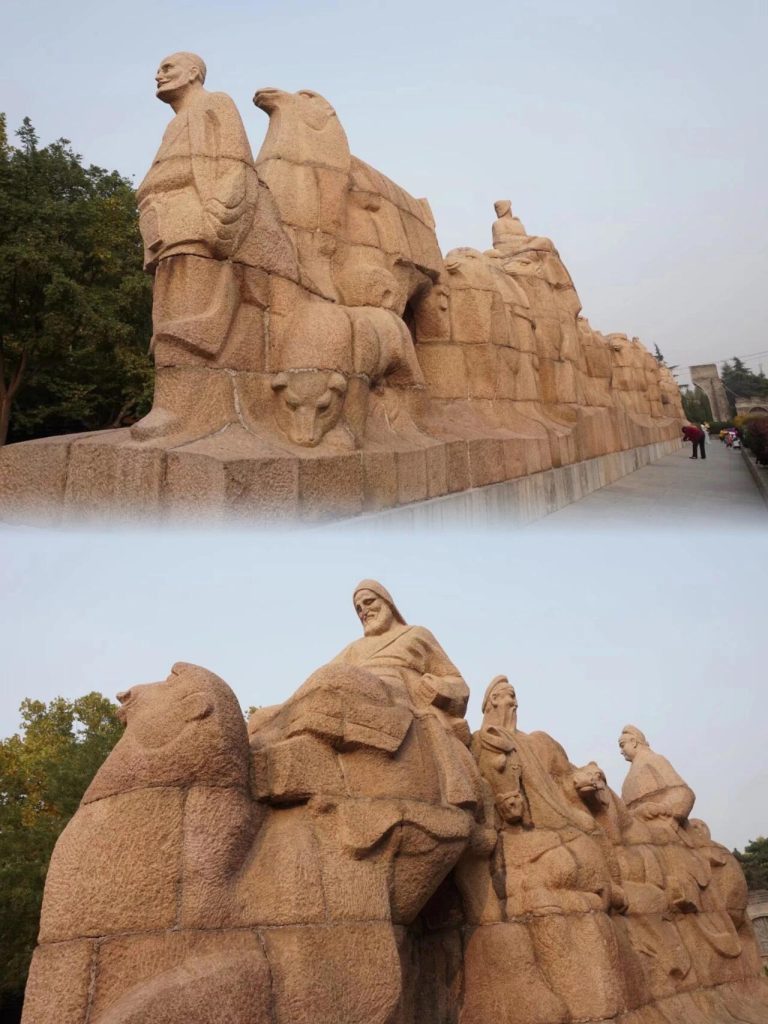
The Golden Age in the Tang Dynasty
The Tang Dynasty marked the most prosperous era of the Silk Road. Economic strength, political stability, and an open cultural atmosphere allowed trade and communication to flourish. Merchants, monks, and envoys traveled across Eurasia, bringing foreign religions, art forms, and technologies into China while exporting Chinese inventions and products abroad. Before internal conflicts weakened the empire, the Silk Road reached its peak as a global corridor of exchange.
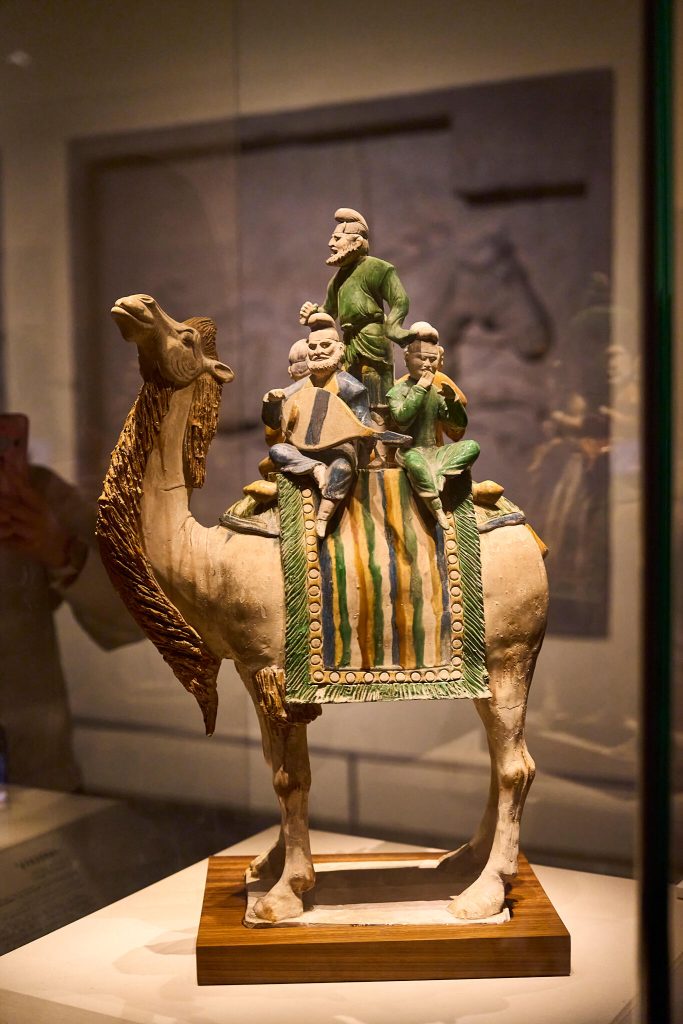
Revival under the Yuan Dynasty
The establishment of the Yuan Dynasty revived the Silk Road once again. Under Mongol rule, large territories across Asia were unified, reducing barriers to travel and trade. Improved infrastructure and official protection made long-distance journeys safer than ever before. During this period, famous travelers such as Marco Polo journeyed to China and introduced detailed accounts of the East to Europe, strengthening mutual understanding between civilizations.
Decline and Historical Legacy
With the advancement of maritime navigation, sea routes gradually replaced overland trade. Although the Silk Road lost its economic dominance, its historical significance endured. For centuries, it served as a bridge connecting civilizations, enabling the exchange of goods, beliefs, and knowledge across continents. Today, the Silk Road remains a powerful symbol of early globalization and cultural cooperation.