Eating hotpot in Chongqing is more than a meal; it is a rite of passage. However, for many international travelers, the legendary “Mala” (numbing and spicy) broth can be a sensory overload that leads to the dreaded “hotpot tummy” the next day.
Don’t let the fear of spice keep you away. With the right strategy, you can enjoy this culinary masterpiece without the burn. Here is your ultimate survival guide.
1. The Ordering Strategy: Don’t Be a Hero
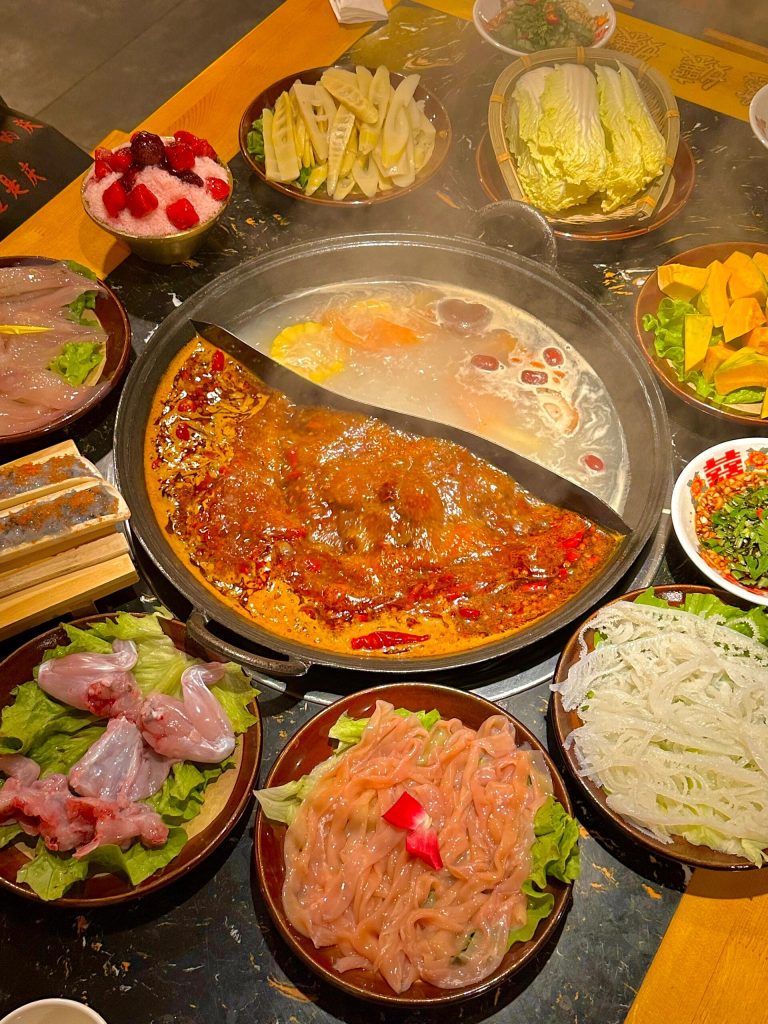
The most important decision happens before you even pick up your chopsticks.
- Order the “Yuan Yang” (鸳鸯) Pot: This is a split pot with two sides. One side is the fiery red broth, and the other is a mild, savory soup base like Tomato, Mushroom, or Pork Bone. This gives you a “safe zone” to retreat to if the spice becomes too much.
- Specify Your Spice Level: In Chongqing, even “Mild” is extremely hot by global standards.
- Wei Wei La (微微辣): Very, very mild. (Recommended for beginners).
- Wei La (微辣): Mildly spicy. (Still has a significant kick).
- Avoid the “Jiugongge” (九宫格): The traditional 9-grid pot is usually 100% spicy tallow broth. Unless you are a spicy food veteran, stick to the split pot.
2. The “Oil Dip” Barrier: Your Stomach’s Best Friend
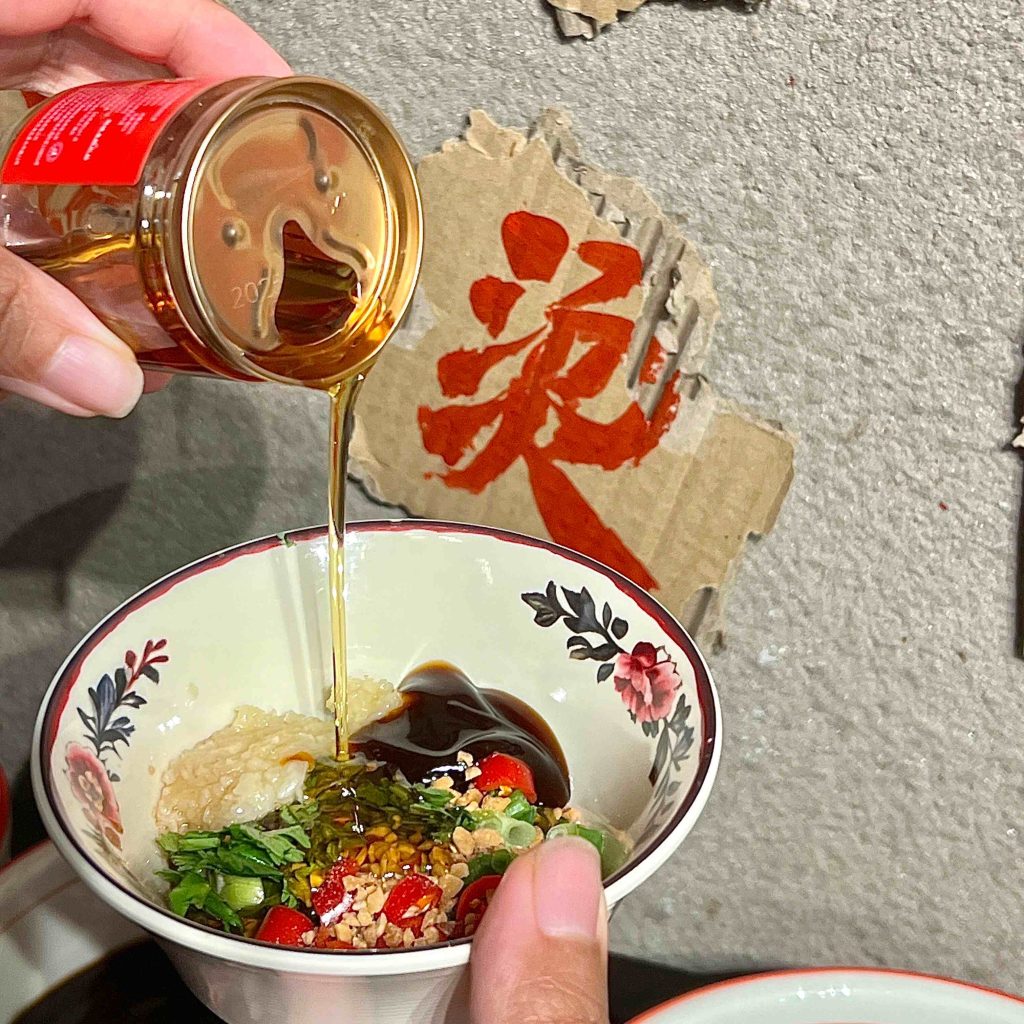
Locals don’t just use the dipping sauce for flavor; they use it for protection. The traditional Chongqing dip consists of Sesame Oil and Minced Garlic.
- How it works: The sesame oil creates a lipid barrier on your stomach lining, slowing down the absorption of capsaicin (the compound that makes chilies hot) and reducing direct irritation.
- Pro Tip: Add a dash of Oyster Sauce or Cilantro to enhance the flavor without adding heat.
3. What to Eat (and What to Avoid)
Not all ingredients react to spice the same way.
- The “Mala Sponges”: Avoid putting leafy greens (like lettuce or spinach) or frozen tofu into the spicy side. These act like sponges, soaking up the heavy chili oil and delivering a concentrated dose of spice directly to your tongue. Cook these in the mild broth instead.
- Safe Choices: Thinly sliced beef or lamb, shrimp, and enoki mushrooms are easier to manage.
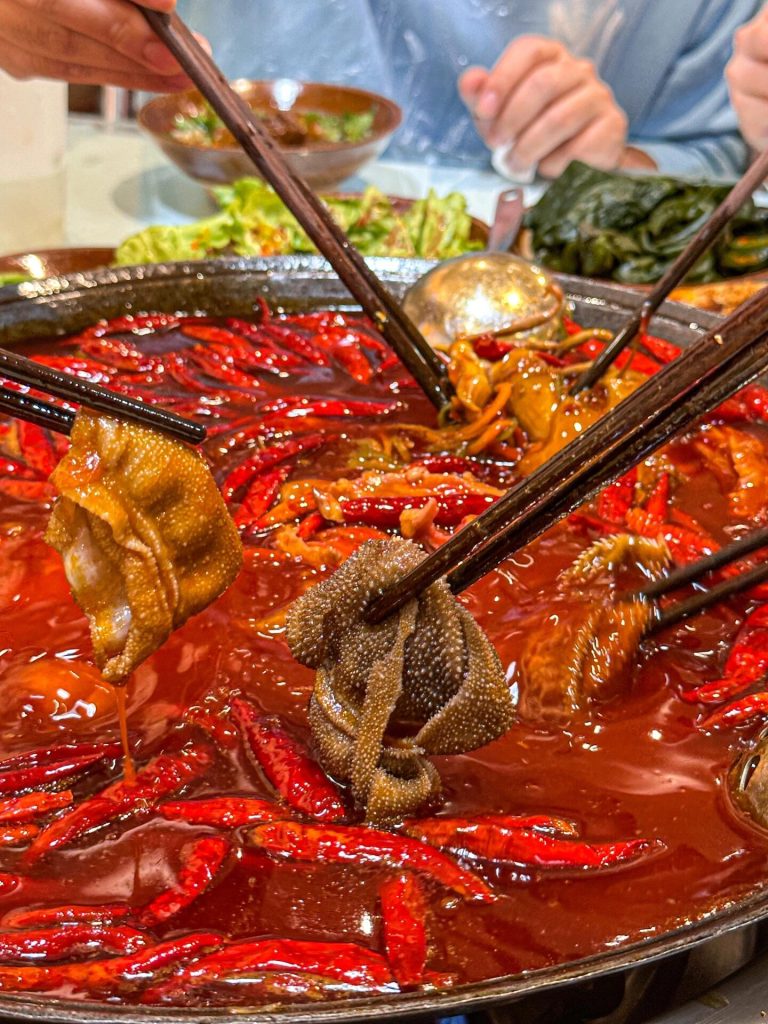
- The 15-Second Rule: For local favorites like Beef Tripe (毛肚), use the “7 up, 8 down” technique. Dip it in the boiling broth for exactly 15 seconds. Any longer and it becomes rubbery; any shorter and it’s undercooked.
4. How to Handle a “Spice Emergency”
If your mouth feels like it’s on fire, water won’t help—it only spreads the oil around. Try these neutralizers instead:
- Whole Milk or Soy Milk: The fat in milk helps dissolve the spicy oils.
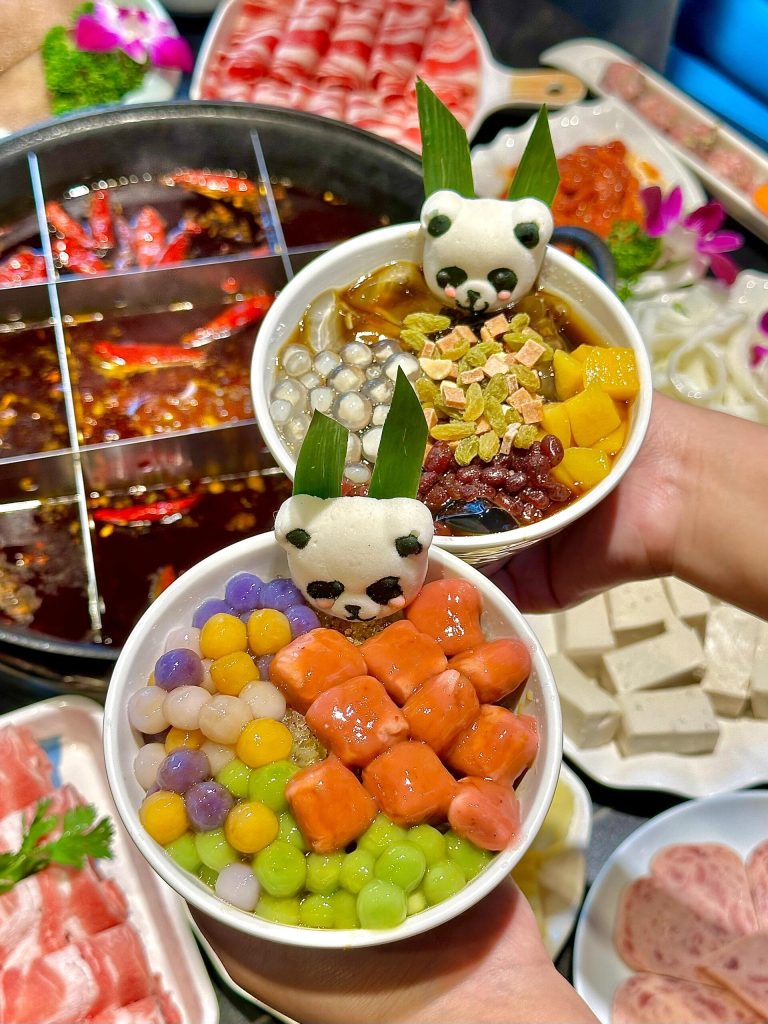
- Bingfen (冰粉): A sweet, cold jelly dessert that is a staple at every hotpot table. It is the perfect cooling agent for your palate.
- Peanut Butter: Some restaurants offer peanut paste. The fatty oils can wash away the fiery sensation effectively.
- The Rice Buffer: Eating plain steamed rice alongside your hotpot provides a physical buffer in your stomach.
5. Where to Go: Beginner-Friendly Recommendations
If you are nervous about your first time, these spots are highly rated for international tourists:
- Haidilao (海底捞): Famous for world-class service. They offer English menus and are very accommodating to low-spice requests.
- Zhoushixiong (周师兄): A tourist-friendly favorite that balances authentic flavor with a comfortable, clean environment.
- Cygnet Hotpot (小天鹅): Located in Hongyadong, it offers incredible river views and a very accessible spice level for foreigners.
If you want a deeper look at what Chongqing offers culturally and historically, our 2026 Chongqing Travel Guide provides a complete overview of the city’s main sights and experiences.