Where China meets Southeast Asia — a Theravada Buddhist civilization of golden temples, stilted bamboo houses, and a New Year festival that turns entire cities into joyful water battlegrounds.
Cross into Xishuangbanna and you leave the China you thought you knew. The temples are golden-spired pagodas, not curved-roof pavilions. The monks wear saffron robes, not gray. The food tastes of lemongrass and fish sauce, not soy and ginger. And the New Year — celebrated not with firecrackers but with massive, gleeful, city-wide water fights — is unlike any festival in the Chinese calendar.
This is the world of the Dai people — approximately 1.2 million strong in Yunnan, concentrated in Xishuangbanna and the Dehong prefecture near Myanmar. Linguistically and culturally, the Dai are cousins of the Thai and Lao peoples, sharing roots in the ancient Tai language family and a common practice of Theravada Buddhism. Their civilization in Xishuangbanna — which the Dai call “Sipsongpanna,” meaning twelve rice-growing districts — has flourished for over 800 years, creating a distinctive culture that is simultaneously Chinese, Southeast Asian, and uniquely its own.
This guide explores Dai culture in depth — the religion, the architecture, the food, the dance traditions, and above all, the Water Splashing Festival. For how the Dai fit into Yunnan’s broader cultural mosaic, see our ethnic minorities guide and Yunnan culture guide. For Xishuangbanna travel planning, including transport and accommodation, see our destination guide.
What this guide covers: Who the Dai are → Theravada Buddhism → Temple architecture → Dai villages → Water Splashing Festival → Dance & music → Dai cuisine → Festivals calendar → Where to experience Dai culture → FAQ.
Theravada Buddhism: The Spiritual Foundation
The defining characteristic of Dai culture — the thread that runs through every aspect of daily life — is Theravada Buddhism. Unlike the Mahayana Buddhism practiced by most Chinese communities, the Dai follow the Theravada tradition common to Thailand, Laos, Myanmar, Cambodia, and Sri Lanka. The differences are immediately visible: temples feature golden stupas rather than pagoda towers, monks practice daily alms-rounds through villages, and young Dai men traditionally spend a period as novice monks — a rite of passage that remains widely observed.
In Dai villages, the temple (called a “wat” — the same word used in Thai and Lao) is the center of community life. It’s where children learn to read Dai script, where festivals are organized, where disputes are mediated, and where the rhythm of the Buddhist calendar structures the year. The intimacy of this relationship — between the temple and daily life — is what strikes visitors most powerfully.
The morning alms-giving ceremony (tān fàn) is the most accessible way to witness this intimacy. Each dawn, monks walk silently through the village, and families place rice, fruit, and prepared food into their bowls. The exchange is sacred: the monks receive sustenance, and the givers earn spiritual merit. In the villages of Ganlanba (Xishuangbanna), visitors can observe this ceremony from a respectful distance.
Dai Temple Architecture
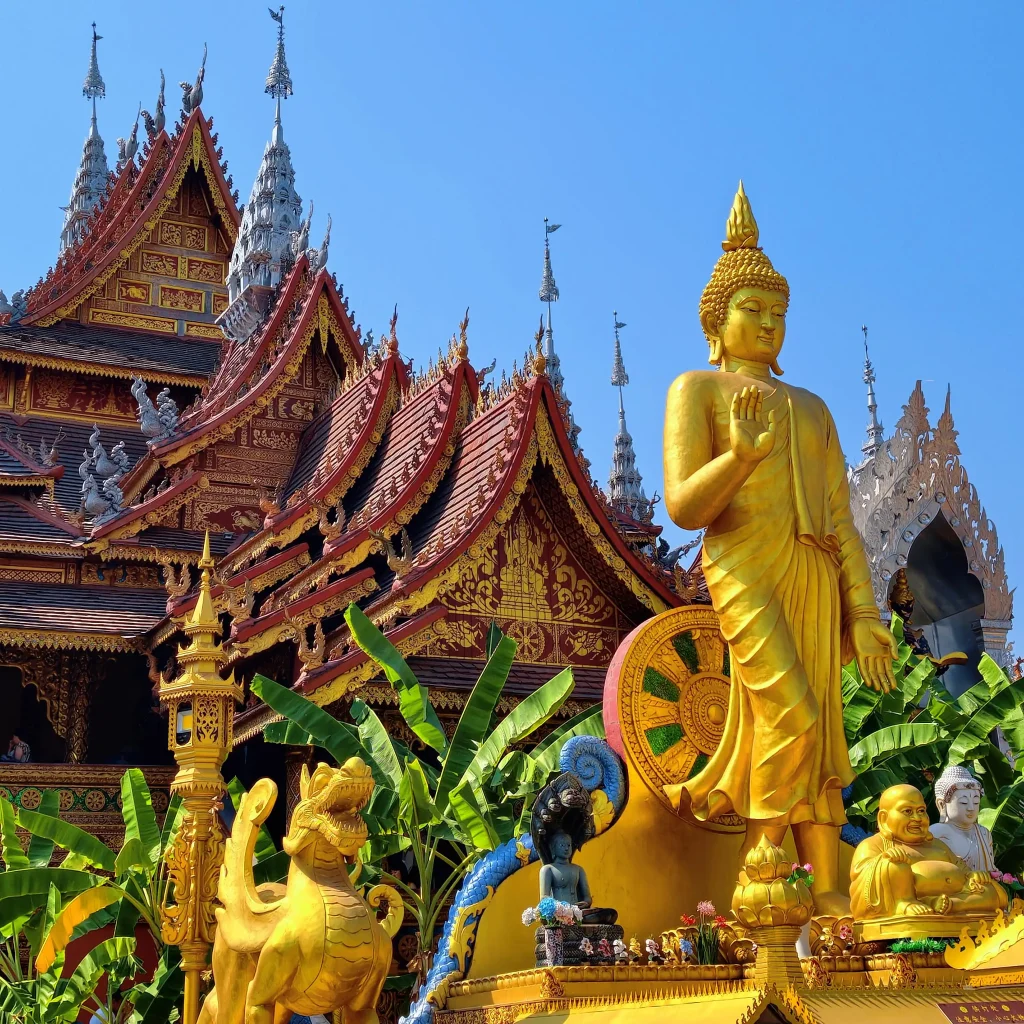
Dai temples are visually unlike anything else in China — and more closely resemble the wats of Chiang Mai or Luang Prabang. The key features:
Golden stupas (tǎ): The signature element — conical spires covered in gold leaf or gold paint, tapering to a needle-sharp point. The most famous is the Manfeilong White Pagoda near Menghai, where nine stupas cluster on a hilltop.
Multi-tiered roofs: Temple halls feature stacked, upswept roofs that create a cascading silhouette. The roof edges are often decorated with naga (serpent spirit) finials — borrowed from the shared mythological heritage of mainland Southeast Asia.
Naga staircases: Temple entrances are flanked by stairway balustrades carved as sinuous serpents — the naga, a protective water spirit that appears throughout Dai religious art.
Interior murals: Temple walls are painted with scenes from the Jataka tales (stories of the Buddha’s previous lives), local legends, and depictions of daily Dai life. Some temples — particularly older ones in Menghai and Jinghong — have murals several hundred years old.
Notable temples to visit: Zong Fo Temple (General Buddhist Temple) in Jinghong — the most important Theravada temple in Banna. The Octagonal Pavilion (Bǎ Jiǎo Tíng) in Jingzhen — a 14th-century wooden structure considered the finest surviving example of Dai religious architecture. And the village temples of Ganlanba, which are smaller, less restored, and more authentically active.
Dai Village Life
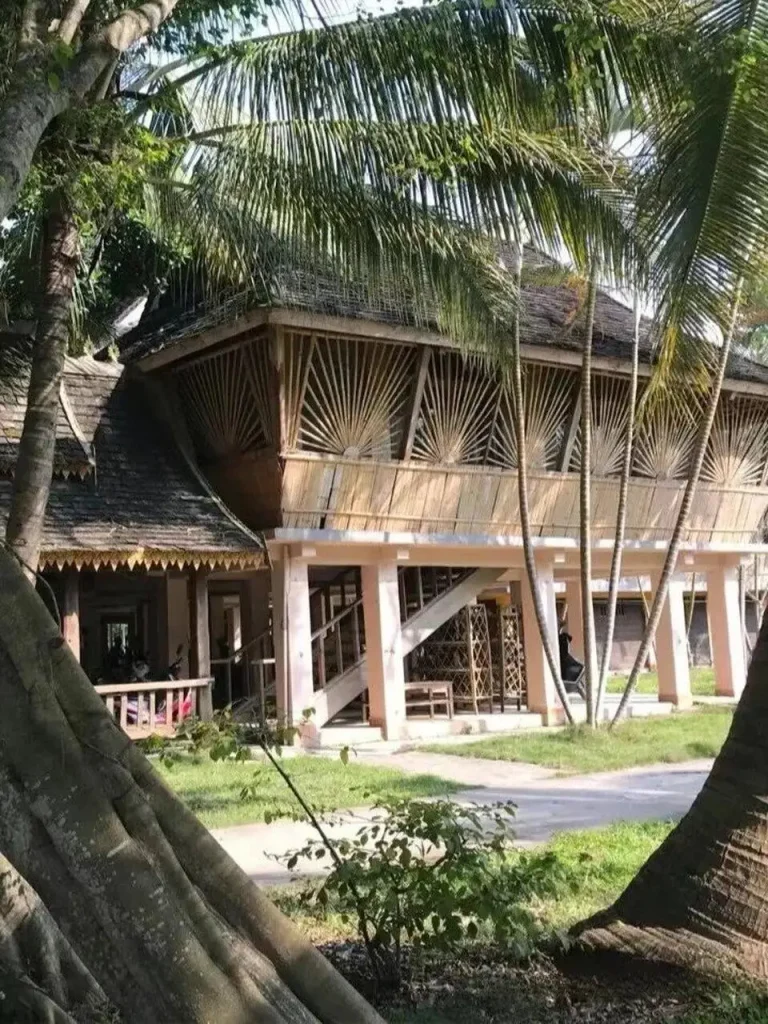
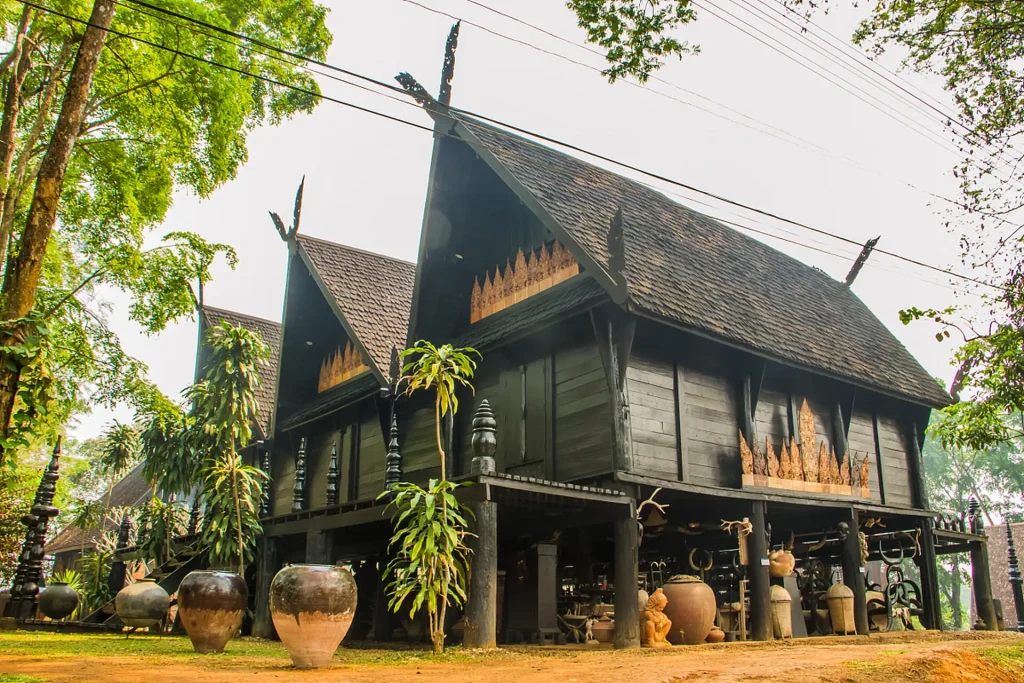
The traditional Dai dwelling is the stilted bamboo house (zhú lóu) — raised on posts with the living space on the upper floor and the ground level used for storage, livestock, and shade. The design is perfectly adapted to Banna’s tropical climate: the elevation catches breezes, the bamboo breathes, and the open ground floor prevents flood damage during monsoon rains. The roof — traditionally thatched, now often tiled — extends wide to shade the veranda where families cook, eat, and socialize.
Visiting a Dai village is an immersion into a way of life that integrates agriculture, religion, and community with remarkable seamlessness. A typical village has a temple at its center, surrounded by family compounds set among gardens of banana, papaya, mango, and coconut trees. Chickens and pigs roam the grounds. Women weave on looms set up under the houses. The rhythm of life follows the Buddhist calendar: planting, harvesting, and festival seasons are all spiritually marked.
Best villages for visitors: Ganlanba (Menghan) Dai Garden — a cluster of five traditional villages organized for tourism but still genuinely inhabited and active. Mengjinglai on the Myanmar border — more remote and less visited, with a spectacular thousand-year-old Bodhi tree and border-town atmosphere. Our Xishuangbanna travel guide has full logistics for both.
The Water Splashing Festival: China’s Greatest Party
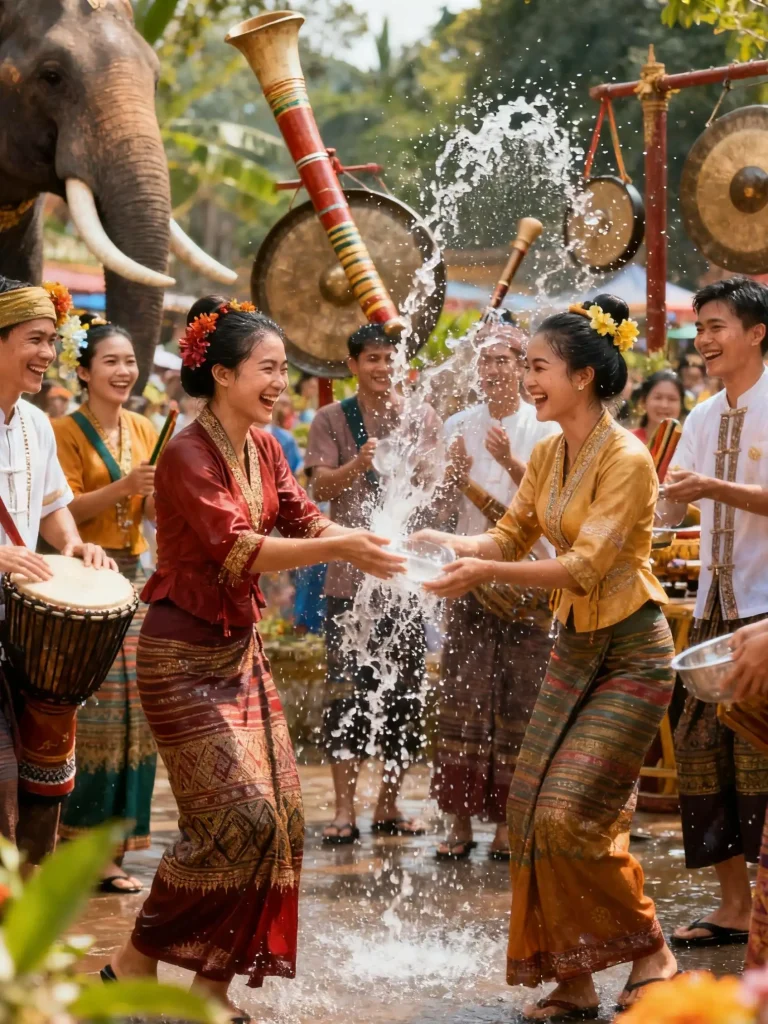
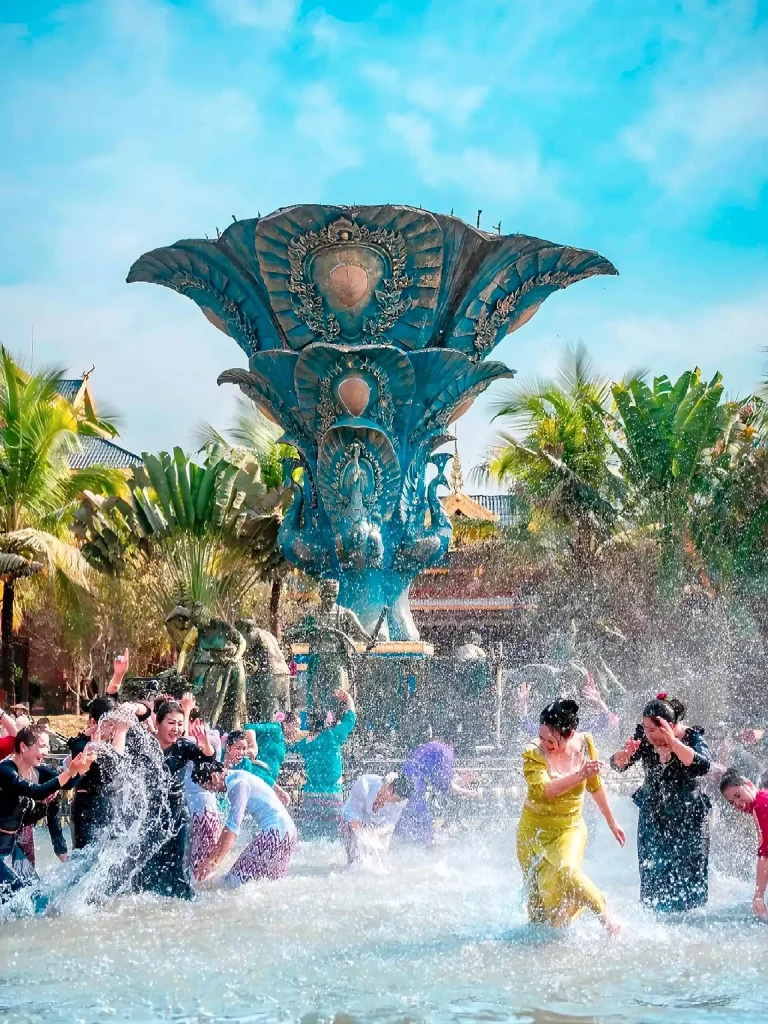
If you visit Xishuangbanna at any time, you’ll have a remarkable experience. But if you visit during the Water Splashing Festival (Pō Shuǐ Jié, April 13–15), you’ll have an unforgettable one. The Dai New Year celebration is, without exaggeration, the most joyous festival in China — three days where the normal rules of public behavior dissolve and the entire population engages in enthusiastic, equalizing, inescapable water warfare.
The core ritual is simple: splashing water on someone is a blessing. The more water, the more good luck. What starts as a graceful temple ceremony — monks gently pouring scented water over Buddha images — escalates rapidly into a city-wide water battle. Buckets, hoses, water guns, pickup trucks with barrels — nothing and no one is spared. Monks get splashed. Police officers get splashed. Grandmothers gleefully ambush passing tourists. Everyone is soaked. Everyone is laughing.
The Three Days
Day 1 (Sǎng Hān): The farewell to the old year. Markets open, temple ceremonies begin. The atmosphere builds. In the evening, paper lanterns are released over the Lancang River.
Day 2 (Sǎng Ěn): The “empty day” between years. Dragon boat races on the Lancang River are the centerpiece — long, narrow boats powered by dozens of paddlers, racing through cheering crowds on the riverbanks.
Day 3 (Sǎng Hān Mǎ): The New Year — and the main water-splashing day. The entire city of Jinghong becomes a water arena. The celebrations last all day and well into the evening, with dancing, music, and feasting.
Practical Tips for the Festival
Waterproof your phone and passport (ziplock bags or a waterproof pouch — essential). Wear light clothes you don’t mind getting soaked. Bring a towel and dry change for the evening. Don’t carry anything that can’t get wet. Join in — refusing water is considered impolite. Book accommodation 2–3 months in advance (the festival draws visitors from across China). And smile: this is the most fun you’ll have on your entire Yunnan trip.
For the full festival calendar and other Yunnan celebrations worth planning around, see our top 5 Yunnan festivals guide.
Dai Dance & Music
Dai performing arts are the most visually elegant in Yunnan — and the Peacock Dance (Kǒngquè Wǔ) is their crown jewel. Inspired by the peacocks that live in Banna’s forests, the dance features solo female performers in shimmering costumes who mimic the bird’s movements with extraordinary precision — fanning fingers to suggest tail feathers, arching the back in a display pose, turning with the weightless grace that has made the dance a national symbol of Dai culture.
The Peacock Dance was elevated to global fame by the legendary dancer Yang Liping, a Bai woman who grew up in Yunnan and created a contemporary interpretation that became one of China’s most celebrated artistic works. Traditional village versions — performed during festivals and temple ceremonies — are less polished but more spiritually grounded.
Elephant-Foot Drum Dance: A male counterpart to the Peacock Dance — vigorous, rhythmic, performed with a large drum shaped like an elephant’s foot. The dancer simultaneously plays the drum and executes acrobatic movements. It’s a staple of festival celebrations and village gatherings.
Where to see performances: Manting Park in Jinghong hosts nightly cultural shows with Peacock Dance, Elephant-Foot Drum, and other Dai performances (¥200–300 including dinner). For more authentic but less predictable encounters, attend temple festivals in village wats or visit during the Water Splashing Festival when community performances happen spontaneously.
Dai Cuisine: Where China Meets Southeast Asia
Dai food is the most distinctive regional cuisine in Yunnan — and for many travelers, it’s the most exciting. Built on lemongrass, galangal, chili, lime, fish sauce, and banana-leaf cooking, Dai cuisine shares more DNA with Thai and Lao food than with any other Chinese regional tradition. For the full Xishuangbanna food guide, see our dedicated article. Essentials:
Grilled Fish (Kǎo Yú): The signature dish. Whole fish stuffed with lemongrass, chili, and wild herbs, wrapped in banana leaves or grilled directly over charcoal. Smoky, sour, spicy.
Pineapple Rice: Sticky rice steamed with pineapple inside a carved-out pineapple shell. Sweet, fragrant, photogenic.
Bamboo-Tube Rice: Glutinous rice cooked inside bamboo segments over fire — the bamboo imparts a subtle smoky sweetness.
Sour Ant Egg Soup: For the adventurous — a sour soup made with red ant eggs. It’s a protein-rich delicacy with a tangy, citrus-like flavor that’s surprisingly delicious.
Night Markets: The Manting Road night market and the more local Gasa Road market in Jinghong are Banna’s culinary epicenters. Go after 7 PM with an empty stomach.
Dai food reflects the same cultural bridge as everything else in Xishuangbanna — Chinese ingredients and Southeast Asian techniques meeting in a tropical landscape. For the broader Yunnan food picture, see our province-wide guide.
Where to Experience Dai Culture
Xishuangbanna (Jinghong): The capital and main gateway. Zong Fo Temple, Manting Park, night markets, and easy access to surrounding villages.
Ganlanba (Menghan): The best cluster of traditional Dai villages — active temples, stilted houses, morning alms, and home-cooked Dai meals. 30 km from Jinghong.
Mengjinglai: A Dai village on the Myanmar border with a thousand-year-old Bodhi tree and ornate temple complex. More remote, less tourist infrastructure, more authentic atmosphere.
Menghai & surrounding tea mountains: Dai communities in the tea-growing highlands who combine Dai culture with ancient Pu’er tea cultivation. The intersection of Dai village life and tea culture is fascinating.
Dehong Prefecture: A less-visited Dai region near the Myanmar border (separate from Xishuangbanna), with Dai communities that have distinct local traditions, including the Dai opera tradition of Luxi.
Yes. The Dai are part of the broader Tai language family that also includes the Thai, Lao, and Shan peoples. They share linguistic roots, Theravada Buddhist practice, and many cultural traditions including the Water Splashing Festival (similar to Thai Songkran and Lao Pi Mai). However, the Dai have developed a distinct identity shaped by 800+ years in Yunnan’s specific context.
Usually April 13–15, though exact dates can shift slightly based on the Dai calendar. The main celebrations are in Jinghong (Xishuangbanna’s capital). Book accommodation 2–3 months in advance. Arrive a day early to enjoy the build-up atmosphere and temple ceremonies.
Cover your shoulders and knees — no tank tops or shorts. Remove shoes before entering any temple building. Walk clockwise around religious structures. Don’t touch Buddha images or point your feet toward them. Photography is usually permitted in courtyards but ask before shooting inside halls. These are the same customs observed in Thai and Lao temples.
Yes. In Ganlanba and some other villages, families offer simple guesthouse rooms or homestays. The experience — sleeping in a traditional stilted house, eating home-cooked Dai food, watching village life unfold — is one of the most authentic cultural encounters in Yunnan. Book through your Jinghong hotel or arrive and ask locally.
Both. The Peacock Dance has deep traditional roots in Dai culture — it’s performed at temple festivals and village celebrations throughout Xishuangbanna. The modern version, popularized by dancer Yang Liping, is a contemporary interpretation that became internationally famous. Village performances are more spiritually grounded; stage versions are more technically polished.