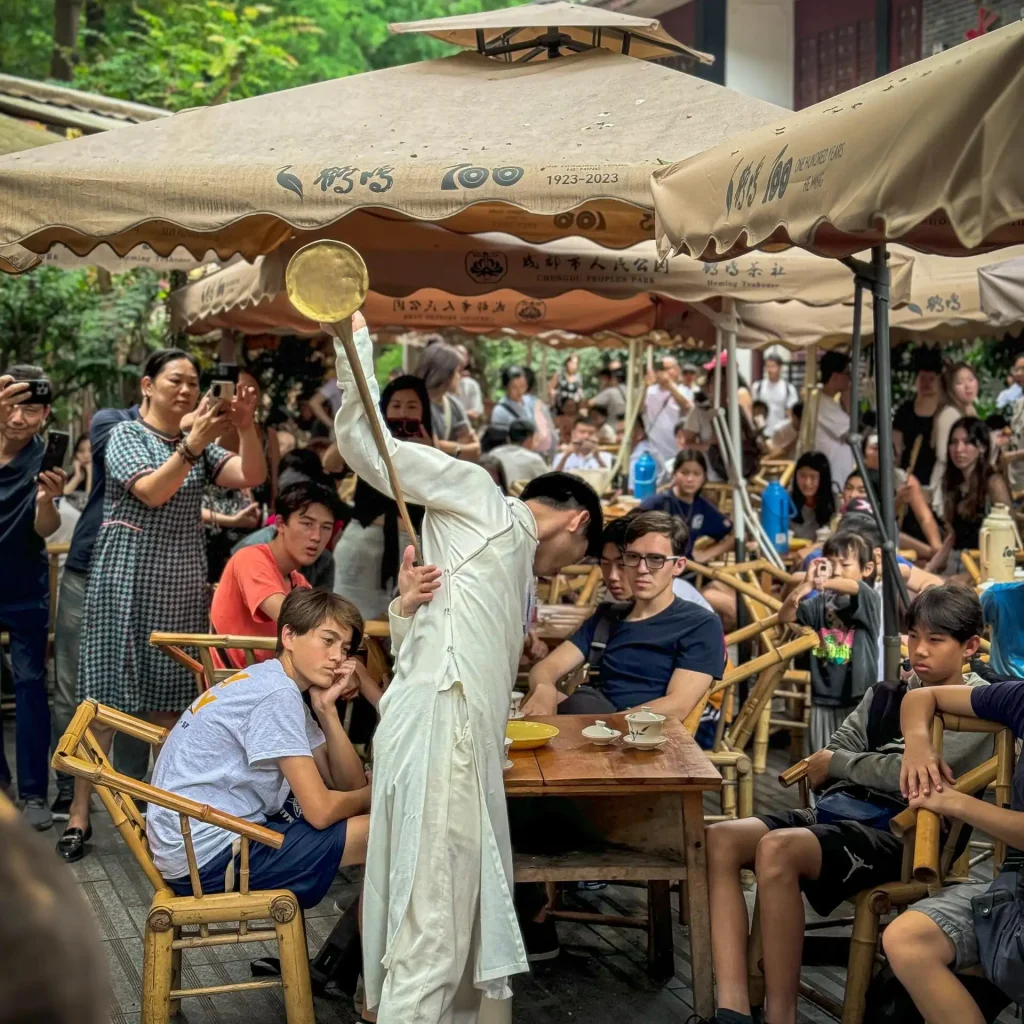
If Beijing is the head of China and Shanghai is the wallet, Chengdu is undoubtedly the heart. And that heart beats slowest at the Heming Teahouse (鹤鸣茶社) in People’s Park. For a first-time visitor, this sprawling outdoor space—filled with bamboo chairs and steam—can look like a scene of pure chaos. But to a local, it is a highly organized “social living room” with its own unspoken rules.
1. The Sociology: More Than Just a Cup of Tea
Historically, teahouses in Chengdu served as vital community hubs long before the existence of modern shopping malls or theaters. They were the “Third Space” of the city, performing several critical sociological functions:
- Mediation Centers: Historically, disputes were often settled at teahouses rather than in courts. The losing party would pay for the tea.
- Information Hubs: They acted as unofficial newsrooms for gossip, business deals, and job hunting.
- Social Equality: In a teahouse, everyone sits on the same bamboo chairs. It is a space where a billionaire and a street cleaner can sit side-by-side, “shooting the breeze” for hours.
2. Gaiwan Etiquette: Decoding the Porcelain
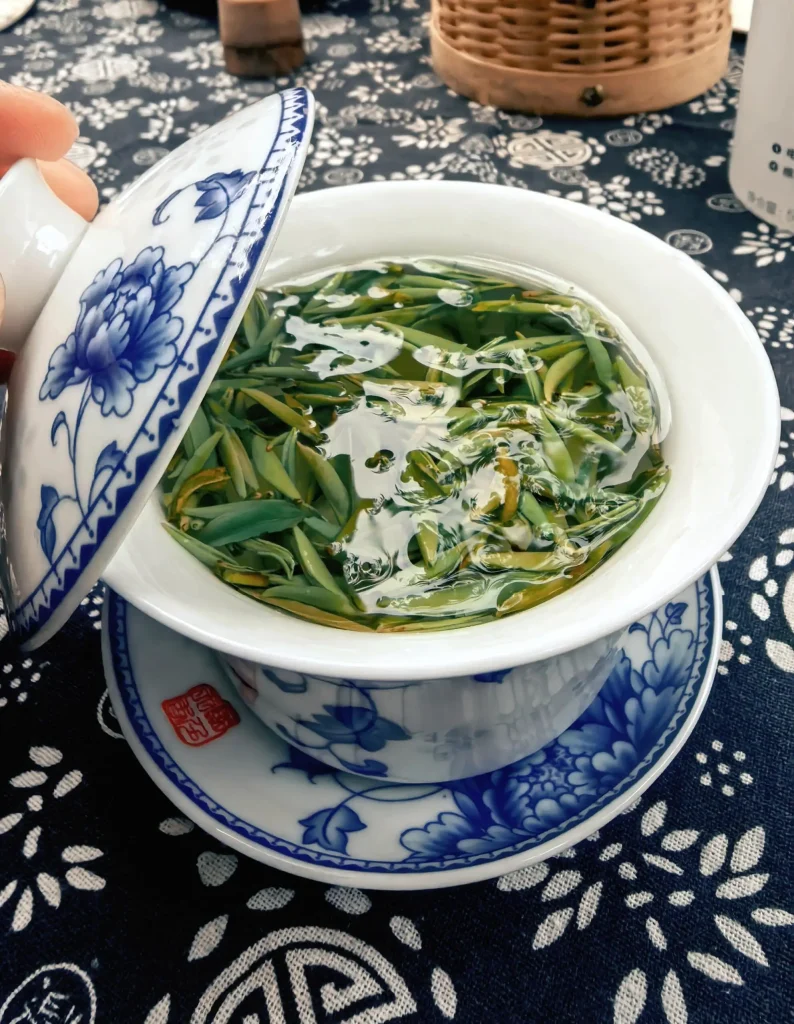
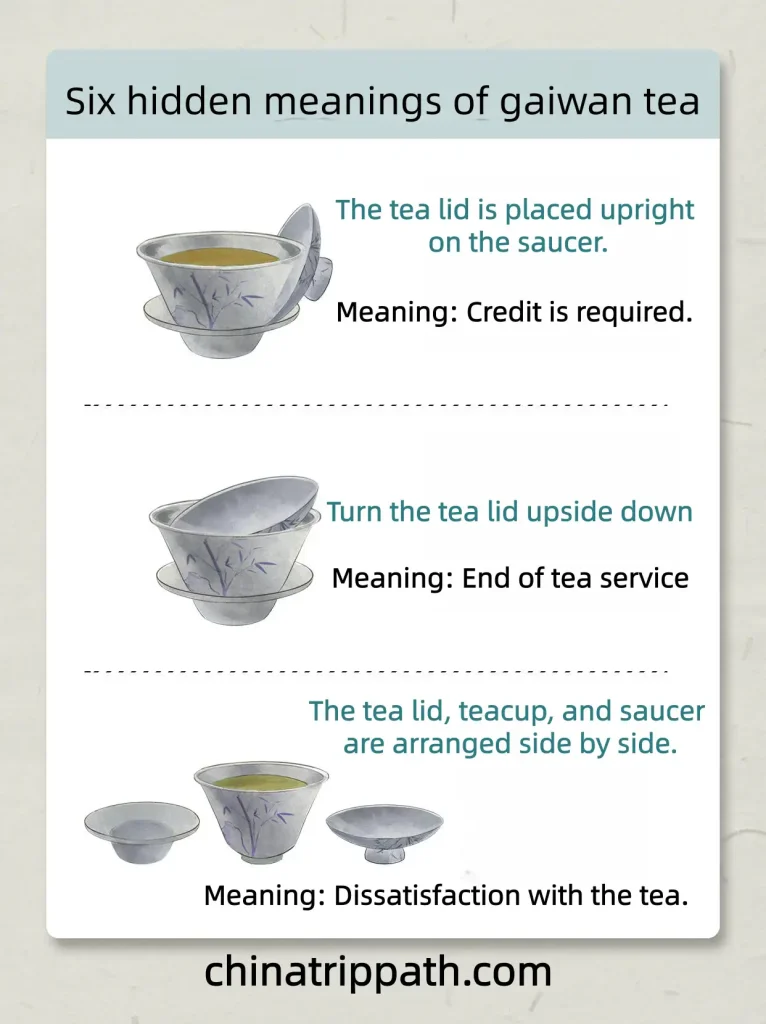
When you order tea at Heming, it will arrive in a Gaiwan (盖碗)—a three-piece porcelain set. This is not just a cup; it is a microcosm of the universe.
- The Lid (Gai): Represents Heaven.
- The Bowl (Wan): Represents Humankind.
- The Saucer (Tuo): Represents Earth. When the three are joined, it symbolizes the “harmony of existence”.
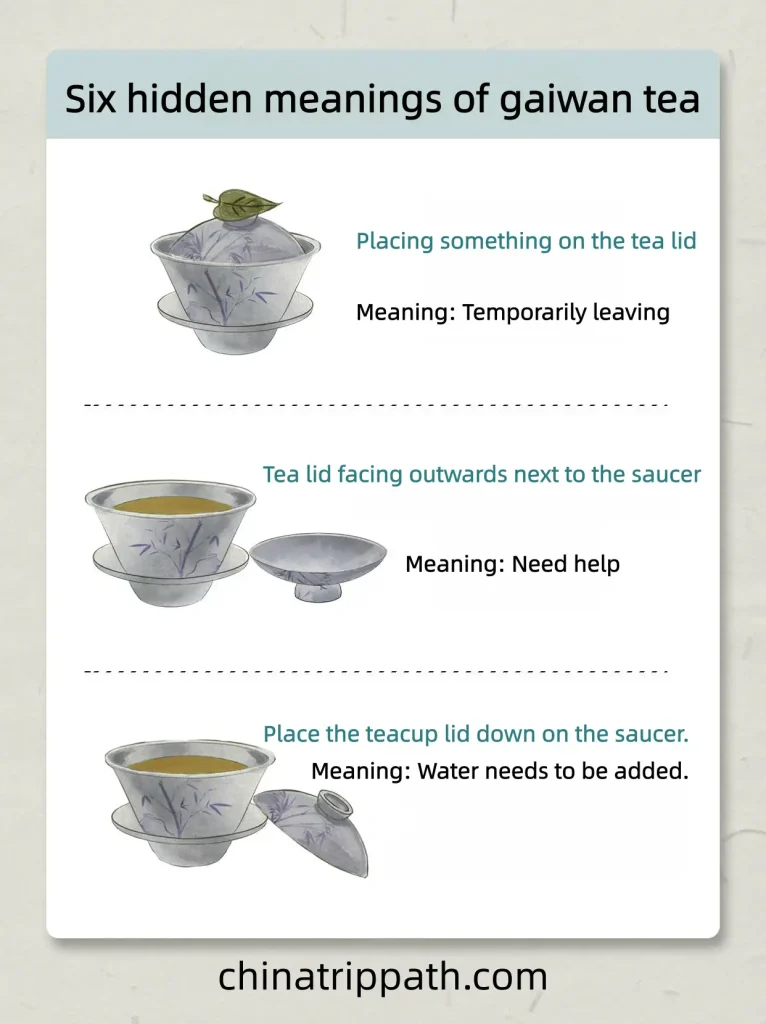
Pro-Tip: To drink, use the lid to gently brush the tea leaves away and create a small opening. Never take the lid off and put it on the table—this is often a signal to the “Tea Master” that you need a hot water refill.
3. The “Touch Art” of Ear-Cleaning
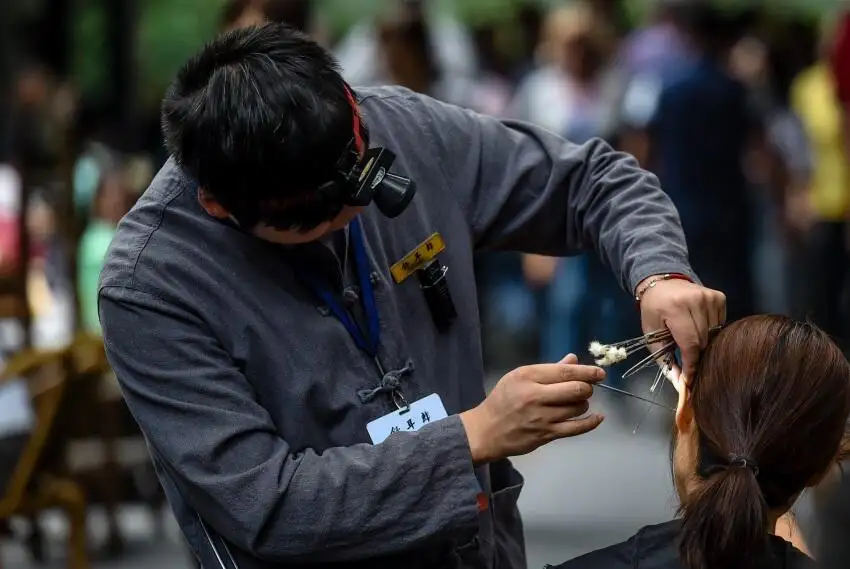
One of the most startling sights for Westerners at Heming is the Ear-Cleaners (采耳师). Clad in headlamps and carrying a kit of long, vibrating metal tools, these practitioners provide a traditional grooming service that is part-massage, part-meditation.
- The Sensation: Using goose feathers and fine needles, the goal is to stimulate the nerve endings in the ear canal. Locals describe the sensation as a “shiver of relaxation”.
- Sociological Context: Like getting a haircut in a public square, ear-cleaning is a form of public intimacy that highlights the “unhurried” mode of Chengdu life where personal well-being is communal.
4. The Western Perspective: “Chill” vs. Productivity
For many Western visitors, sitting in a teahouse for four hours feels like “wasted time.” However, as the Australian Consul-General in Chengdu noted, a teahouse invitation is akin to being invited to “watch the cricket or footy”—it is a genuine extension of friendship without the rigid protocols of a formal business dinner. It is “chill” time, designed for “idle reverie” and escaping the turbo-speed of modern life.
5. Practical Survival at Heming
- Cost: Limitless refills of jasmine or green tea usually cost between 20–30 RMB ($2–4).
- Finding a Seat: In 2026, Heming remains packed on weekends. If you see someone getting up, move quickly!
- Refills: If you want more hot water, simply leave the lid of your Gaiwan leaning against the bowl or placed upside down on the saucer. A staff member with a long-spouted kettle will appear almost magically.
Conclusion
Heming Teahouse is not just a tourist attraction; it is a living museum of the “Land of Abundance”. By mastering the Gaiwan and observing the rhythm of the park, you aren’t just visiting Chengdu—you are participating in its soul.