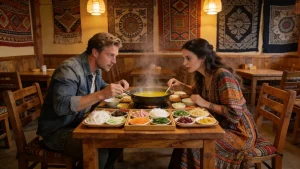
Beyond Dali and Lijiang lies another Yunnan — ancient scholar towns, the world’s deepest gorges, forgotten Tea Horse Road outposts, and villages where the only tourists are you.
Here’s a secret that long-term Yunnan travelers know: the famous places — Dali, Lijiang, Shangri-La — are famous for a reason, and they deserve every bit of their reputation. But the province is so vast and so culturally rich that some of its most extraordinary destinations have barely registered on the international tourism radar. These are the places where you’ll find yourself the only foreign visitor in town, where grandmothers press bowls of rice wine into your hands because they’ve never met someone from your country, where the architecture hasn’t been renovated for tourists because there aren’t enough tourists to justify the renovation.
This guide covers Yunnan’s best hidden gems — the destinations that reward travelers willing to go a little further, stay a little longer, and navigate the occasional Chinese-only bus station. They range from easy day trips from Kunming to multi-day adventures in the province’s most remote corners. For the big-picture planning, see our ultimate Yunnan travel guide and our Yunnan itinerary guide for how to incorporate these gems into a broader route.
What this guide covers: Shaxi → Jianshui → Nujiang Valley → Dongchuan Red Land → Tengchong → Weishan → Pu’er City & Tea Mountains → Practical tips for off-the-beaten-path travel.
Shaxi: The Tea Horse Road Time Capsule
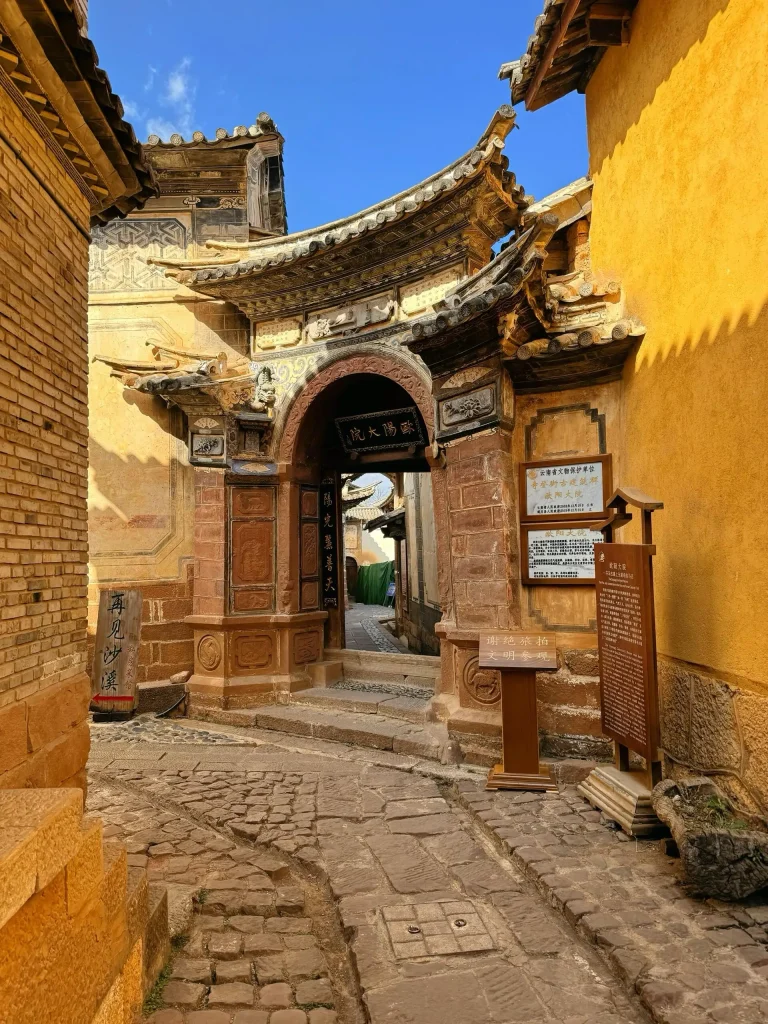
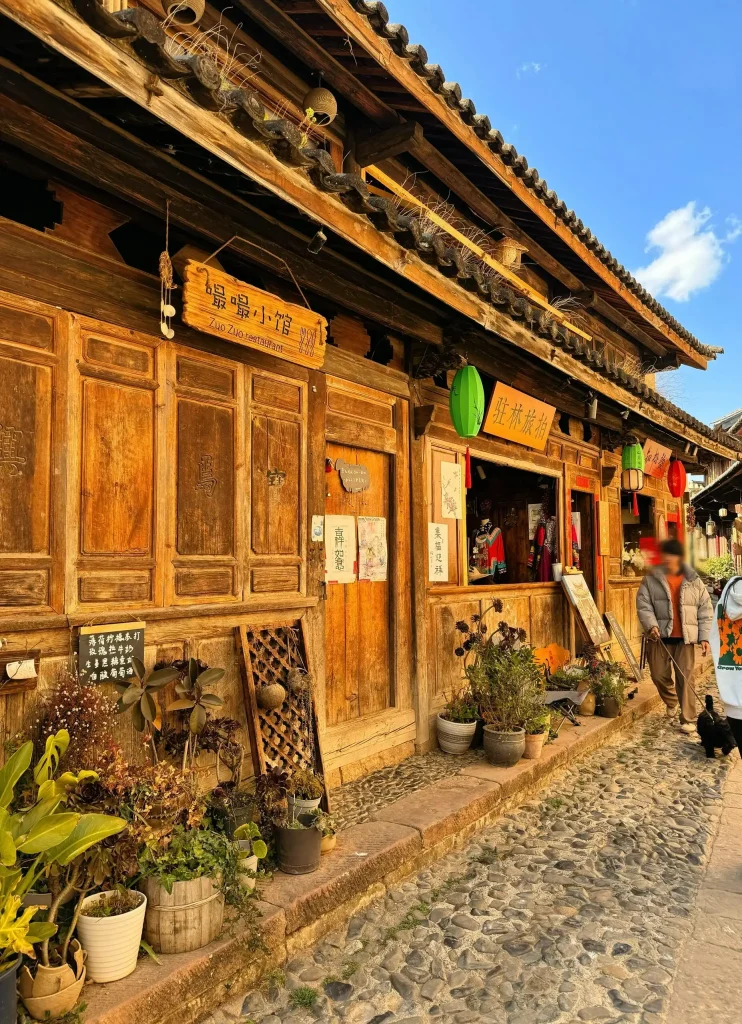
If you visit only one hidden gem in Yunnan, make it Shaxi. This small town in the Jianchuan Valley, two hours north of Dali, is the best-preserved caravan town on the ancient Tea Horse Road — the network of mule trails that once carried Pu’er tea from Yunnan’s mountains to Tibet.
Shaxi’s cobblestone market square — the Sideng Market — has been in continuous use for over 500 years. The 600-year-old Xingjiao Temple anchors one side; old merchant houses line the others. The restoration, led by a Swiss-Chinese preservation team, is a masterclass in sensitive conservation: the stones are original, the buildings repaired rather than rebuilt, the atmosphere authentic rather than manufactured.
On Friday market days, the square fills with Bai and Yi traders selling vegetables, handicrafts, and livestock — a scene that hasn’t fundamentally changed in centuries. The surrounding valleys offer excellent hiking and cycling through tobacco fields, walnut groves, and small Bai villages where traditional architecture survives intact.
Getting there: Bus from Dali to Jianchuan (2 hours), then local minivan to Shaxi (30 minutes). Or hired car from Dali (2 hours direct). Stay at least 2 nights — one isn’t enough to absorb the atmosphere.
Where to stay: Several beautifully converted Bai courtyard guesthouses around the market square (¥150–500/night). The Old Theatre Inn, built in a converted Qing Dynasty theater, is the standout.
Jianshui: The Scholar’s Town
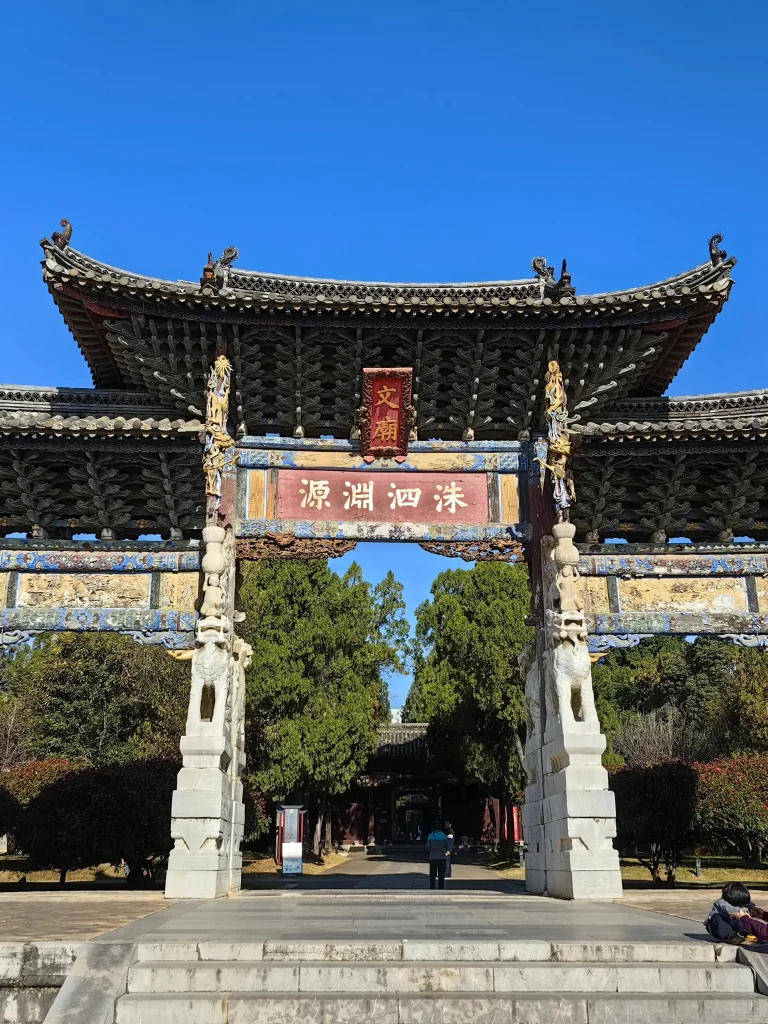
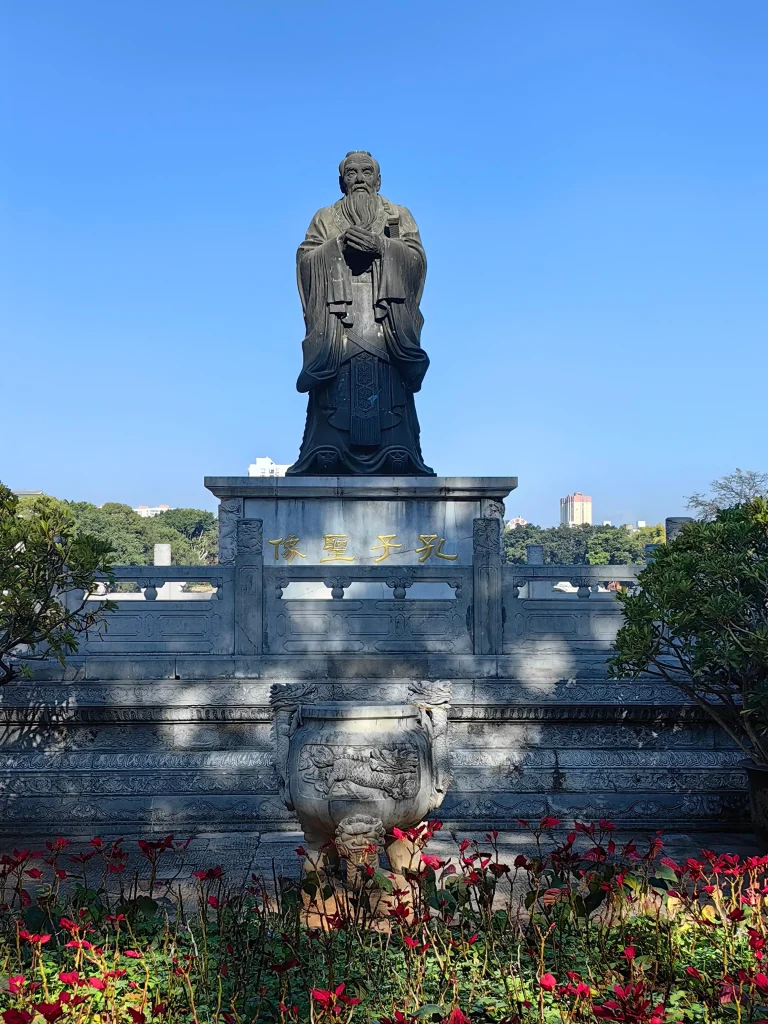
Ninety minutes south of Kunming by high-speed train, Jianshui is a town that most international travelers have never heard of — and that most Chinese cultural historians consider one of the most important heritage sites in the southwest. For 600 years, Jianshui was a center of Confucian scholarship, and the legacy is written in its architecture: the Jianshui Confucius Temple is the second largest in China (after the one in Qufu), and the town’s Qing Dynasty courtyard mansions rival anything in Beijing or Suzhou.
What to See
Jianshui Confucius Temple (Wén Miào): A vast complex of ceremonial halls, courtyards, and gardens that embodies 600 years of Chinese scholarly tradition. The main hall, with its double-eaved roof and carved stone columns, is architecturally stunning.
Zhu Family Garden (Zhū Jiā Huāyuán): A 20,000-square-meter Qing Dynasty mansion complex with 42 courtyards, carved wooden screens, and gardens that took three generations of the Zhu family to complete. It’s the finest residential architecture in Yunnan.
Shuanglong Bridge (Double Dragon Bridge): A beautiful 17-arch stone bridge stretching across the confluence of two rivers just outside town. The bridge, built in 1839, is most photogenic at sunset.
Chaoyang Gate: Jianshui’s iconic city gate — built in 1389, predating Beijing’s Tiananmen — is strikingly similar in design. Locals sometimes call it “Little Tiananmen.”
The Grilled Tofu
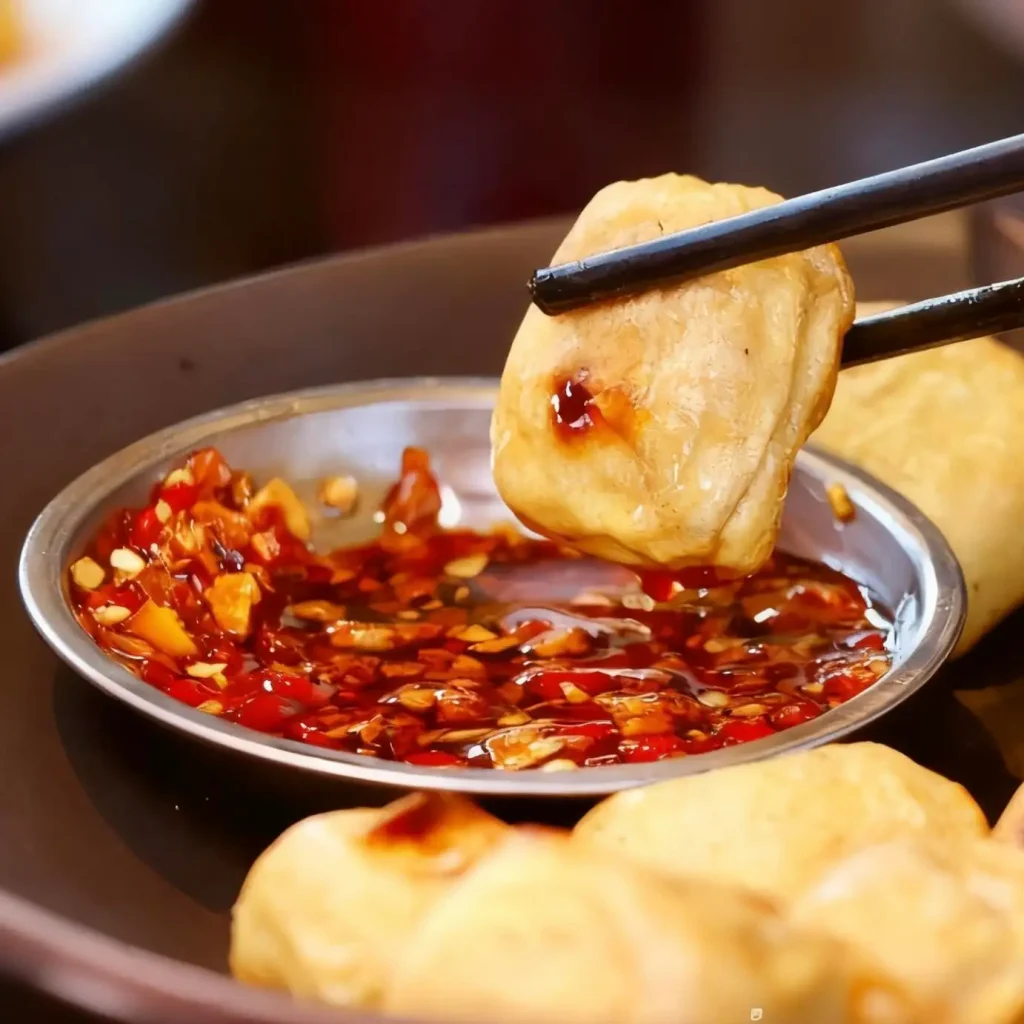
Jianshui’s culinary claim to fame is its grilled tofu — and it’s no exaggeration to say that these tiny, charcoal-blistered cubes of tofu are worth the trip alone. Made from local well water that gives the tofu a unique texture, they’re grilled until the outside is crispy and the inside turns custardy-soft, then dipped in dry chili-and-cumin powder. The night market on Lin’an Road is tofu central — vendors grill thousands of cubes nightly, each one costing about ¥0.50. You’ll eat dozens. It’s one of the best street food experiences in the province.
Getting there: High-speed train from Kunming (1.5 hours, ~¥60). Combine with Yuanyang Rice Terraces (2.5 hours further south by bus) for an excellent 3–4 day southeastern Yunnan trip.
The Nujiang Valley: China’s Last Frontier
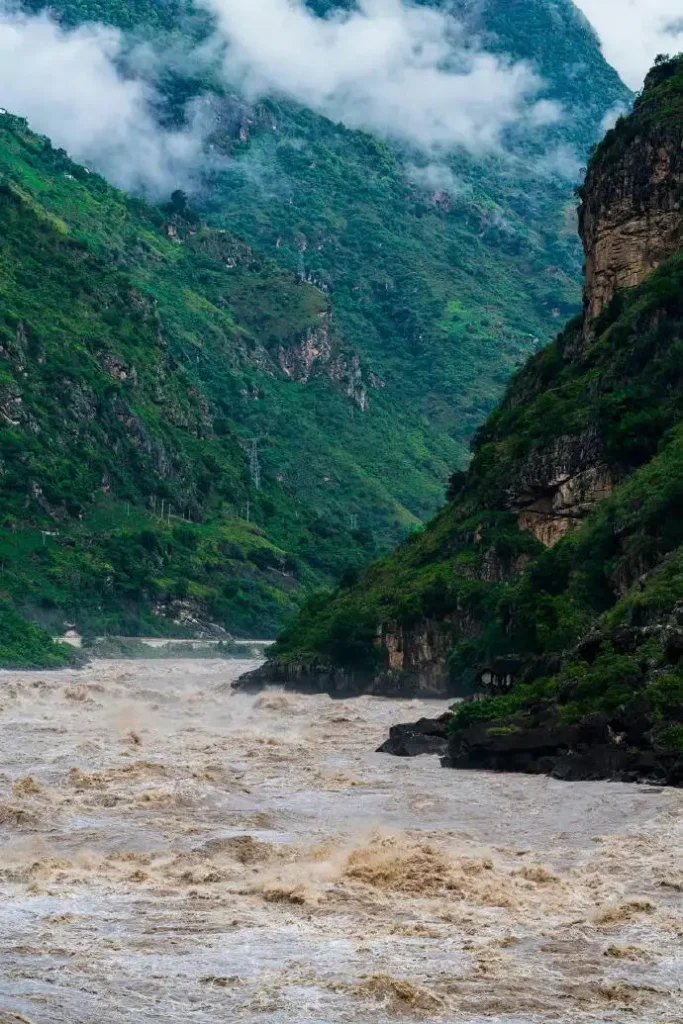
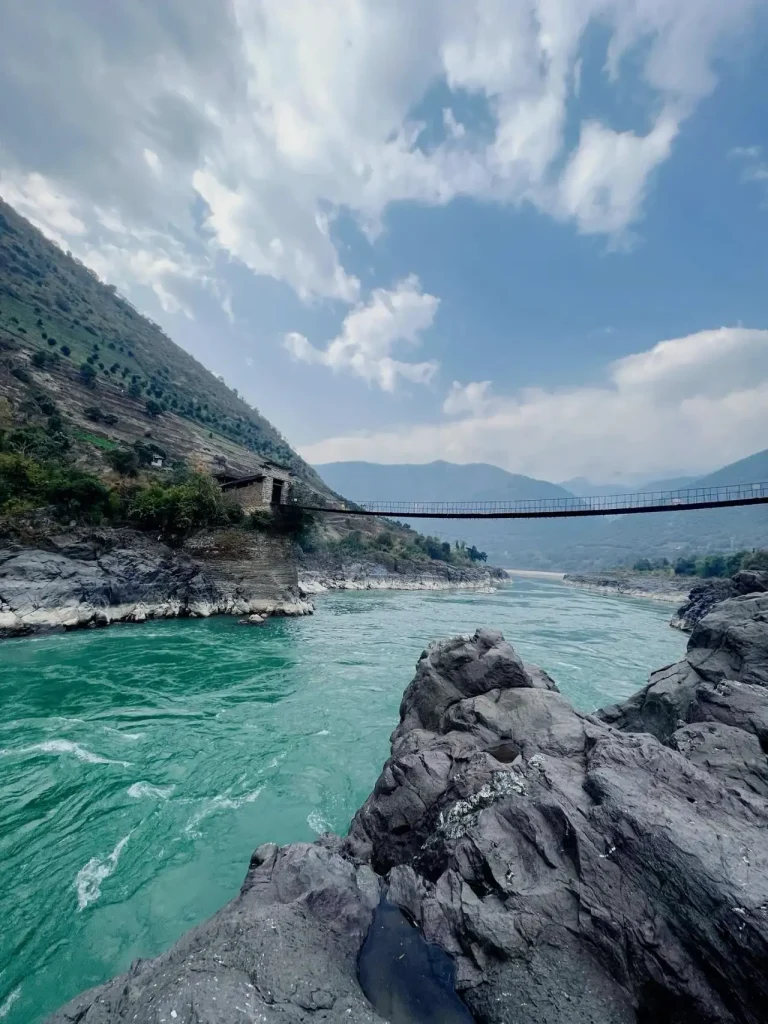
For travelers seeking genuinely remote, culturally rich, and visually spectacular territory, the Nujiang (Salween) Valley in Yunnan’s far northwest is unmatched. The Nu River — one of the world’s last major undammed rivers — cuts through a gorge deeper than the Grand Canyon, flanked by 4,000-meter peaks. The valley is home to the Lisu, Nu, and Dulong ethnic groups, whose villages cling to near-vertical hillsides and whose traditions have been barely touched by outside influence.
The Nujiang is not easy to reach or navigate — the roads are winding, the infrastructure is basic, and English speakers are essentially nonexistent. But for adventurous travelers, it offers experiences unavailable anywhere else in Yunnan: the Lisu Knife-Pole Festival in February (where barefoot men climb poles studded with sharp blades), river-crossing via hand-pulled zip lines, hot springs at the edge of the Nu River, and the extraordinary Bingzhongluo area — a hidden valley at the road’s end where the river makes a dramatic omega-shaped bend through terraced farmland backed by snow peaks.
Getting there: Fly to Baoshan (from Kunming, 1 hour), then bus to Liuku (3 hours) and onward up the valley. The full valley road from Liuku to Bingzhongluo takes 6–8 hours. Budget 4–5 days minimum for the Nujiang experience.
Best time: October–April (dry season). The roads can be impassable during rainy season (June–September).
Dongchuan Red Land
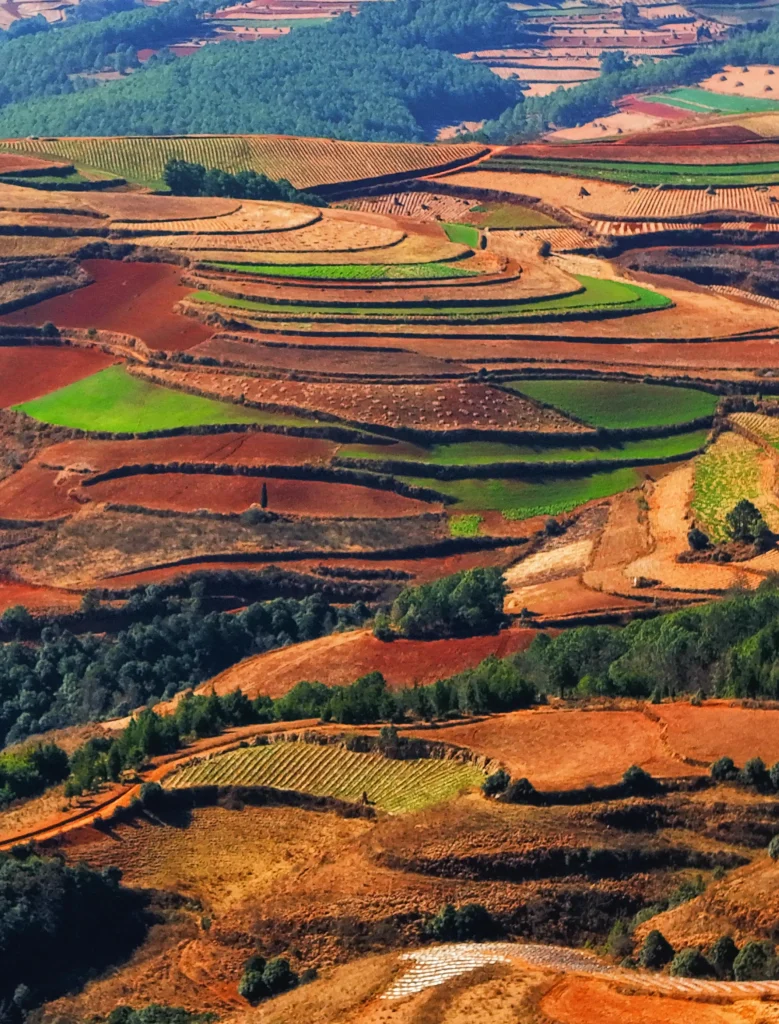
Four hours northeast of Kunming, the Dongchuan Red Land is a photographer’s fever dream. Rolling hills of deep crimson iron-rich soil are planted with crops that create bands of vivid color — green wheat, golden buckwheat, white canola flowers — against the red backdrop. The effect, especially in slanting afternoon light, is so vivid that first-time visitors routinely assume their camera’s saturation is broken.
The main photography area is centered around Lexiaguo village, where several viewpoints offer different perspectives on the colored hillscapes. The best months are September–November (post-harvest reds + remaining crop greens) and February–March (canola flower season). Sunrise and sunset are the magic hours.
Getting there: Hired car from Kunming (4 hours, ¥600–800 return) is the most practical option. Some Kunming tour operators run day trips. Public buses are available but infrequent and don’t serve the viewpoints directly.
Combine with: A Kunming day trip or overnight extension. Our Yunnan itinerary guide includes Dongchuan options.
Tengchong: Hot Springs & WWII History
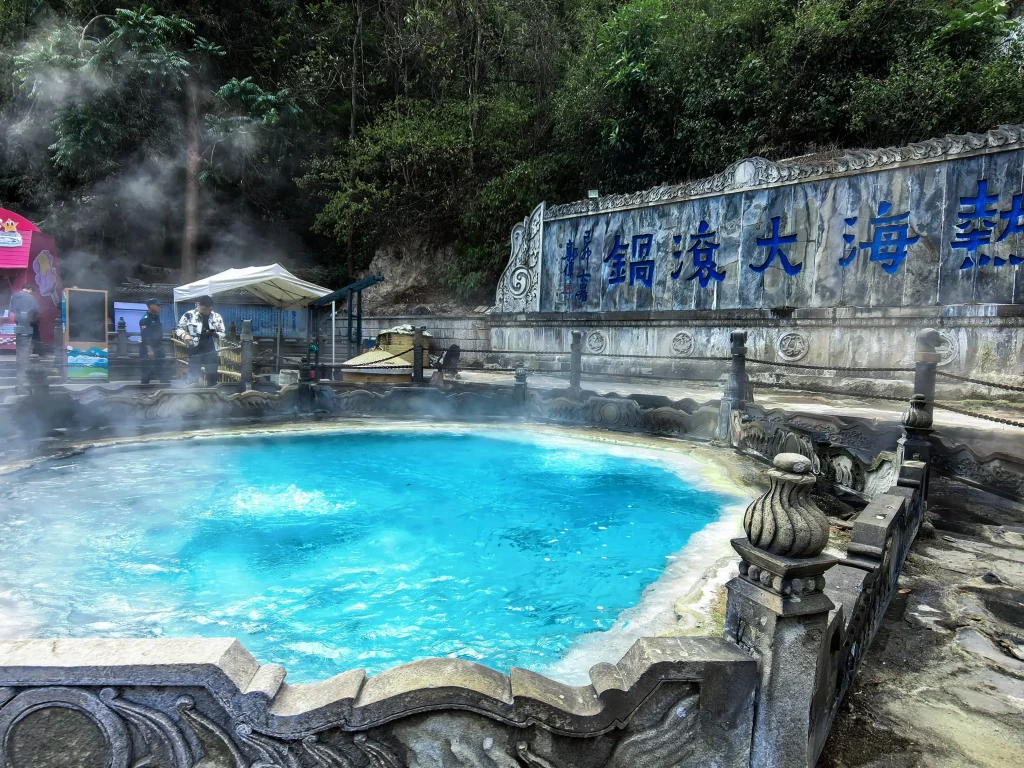
In Yunnan’s far west, near the Myanmar border, Tengchong is a small city built on volcanic geology — and one of the most culturally layered places in the province. Geothermal activity feeds dozens of natural hot springs, volcanic craters dot the surrounding hills, and the town’s WWII history (it was the site of fierce fighting between Chinese and Japanese forces) gives it a gravitas that most Yunnan destinations lack.
Highlights: The Rehai (“Hot Sea”) geothermal area — boiling springs, steaming pools, and a geyser that erupts regularly. Heshun Ancient Town — a beautifully preserved village of overseas Chinese merchant mansions, libraries, and ancestral halls that tells the story of Yunnan’s diaspora. The National Cemetery, commemorating the Chinese soldiers who died liberating Tengchong in 1944 — one of China’s most poignant war memorials. And the volcanic park at Heikongshan, where you can hike to the rim of a dormant volcanic crater.
Getting there: Flight from Kunming (1 hour) to Tengchong Tuofeng Airport. Or bus from Dali (7 hours) or Baoshan (2.5 hours). Budget 2–3 days.
Weishan: The Nanzhao Kingdom’s Birthplace
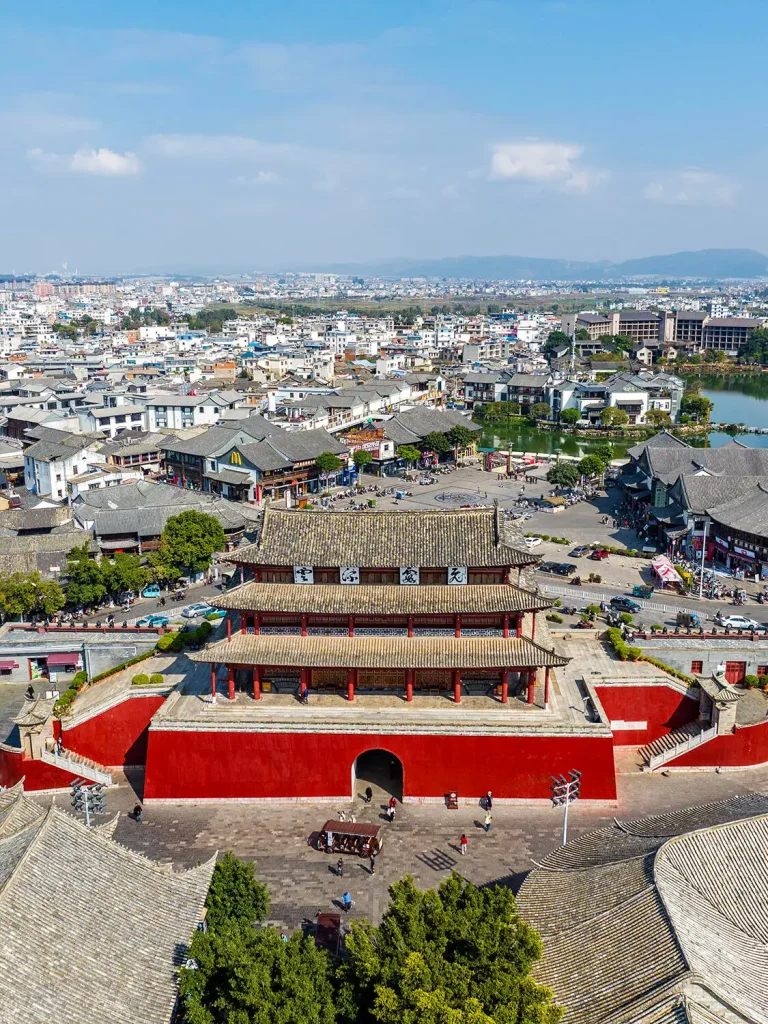
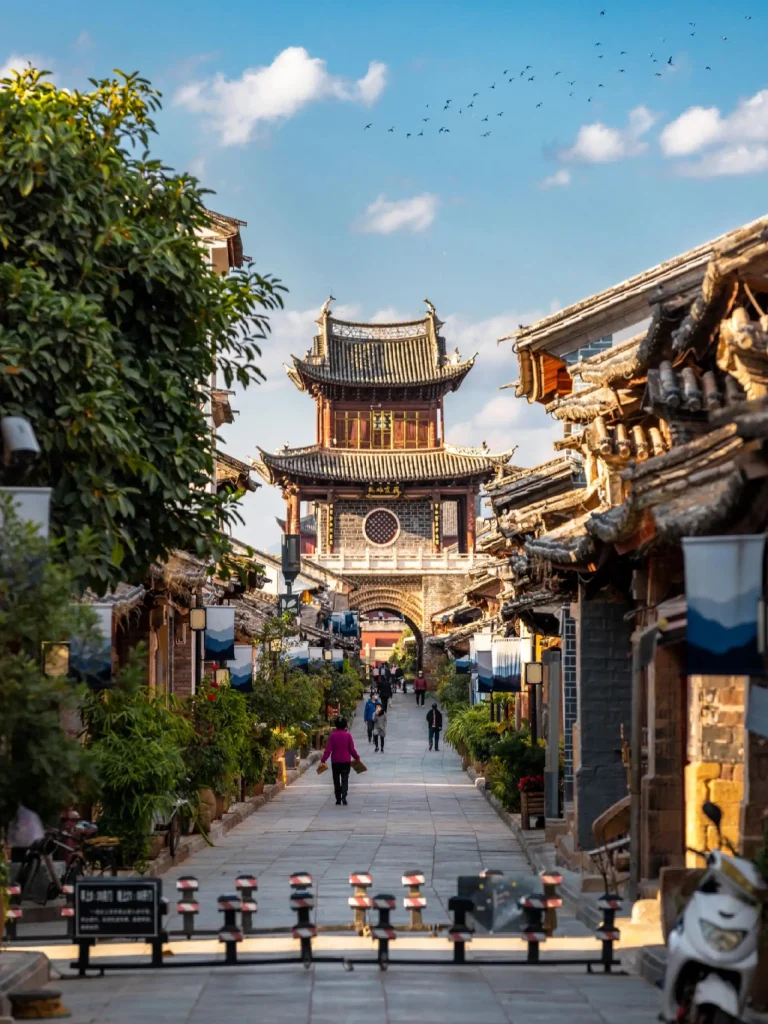
One hour south of Dali, the small town of Weishan is where the Nanzhao Kingdom — the powerful empire that once ruled Yunnan — was founded in 738 AD. Today, Weishan is a remarkably intact Ming Dynasty town: a grid of original cobblestone streets lined with traditional wooden buildings, anchored by a drum tower and surrounded by Yi and Hui villages.
What makes Weishan special is its complete lack of tourism infrastructure. There are no souvenir shops, no backpacker bars, no English menus. The morning market — where Yi women in full traditional dress sell produce, herbs, and handmade tofu — is an experience of pure, unfiltered Yunnan that’s becoming increasingly rare in the province’s more visited towns.
Getting there: Bus from Dali (1 hour, ¥20). An easy day trip, or stay overnight for the morning market. Combine with Weibaoshan — a Taoist mountain temple complex 10 km from town with Qing Dynasty murals.
Pu’er City & the Ancient Tea Mountains
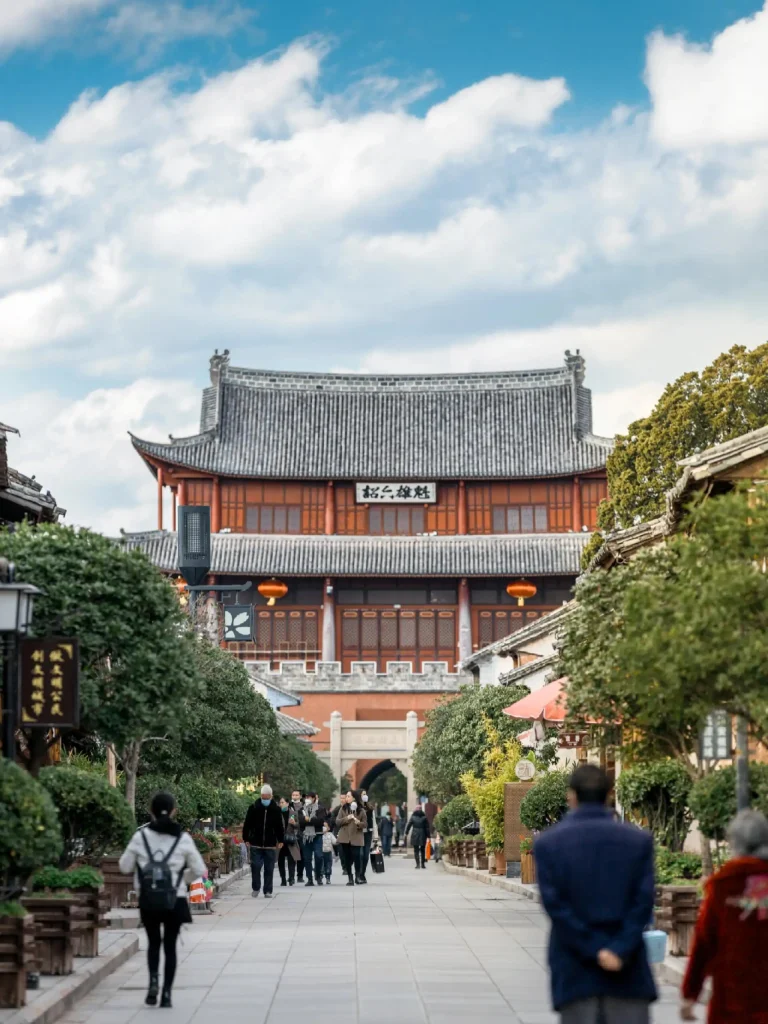
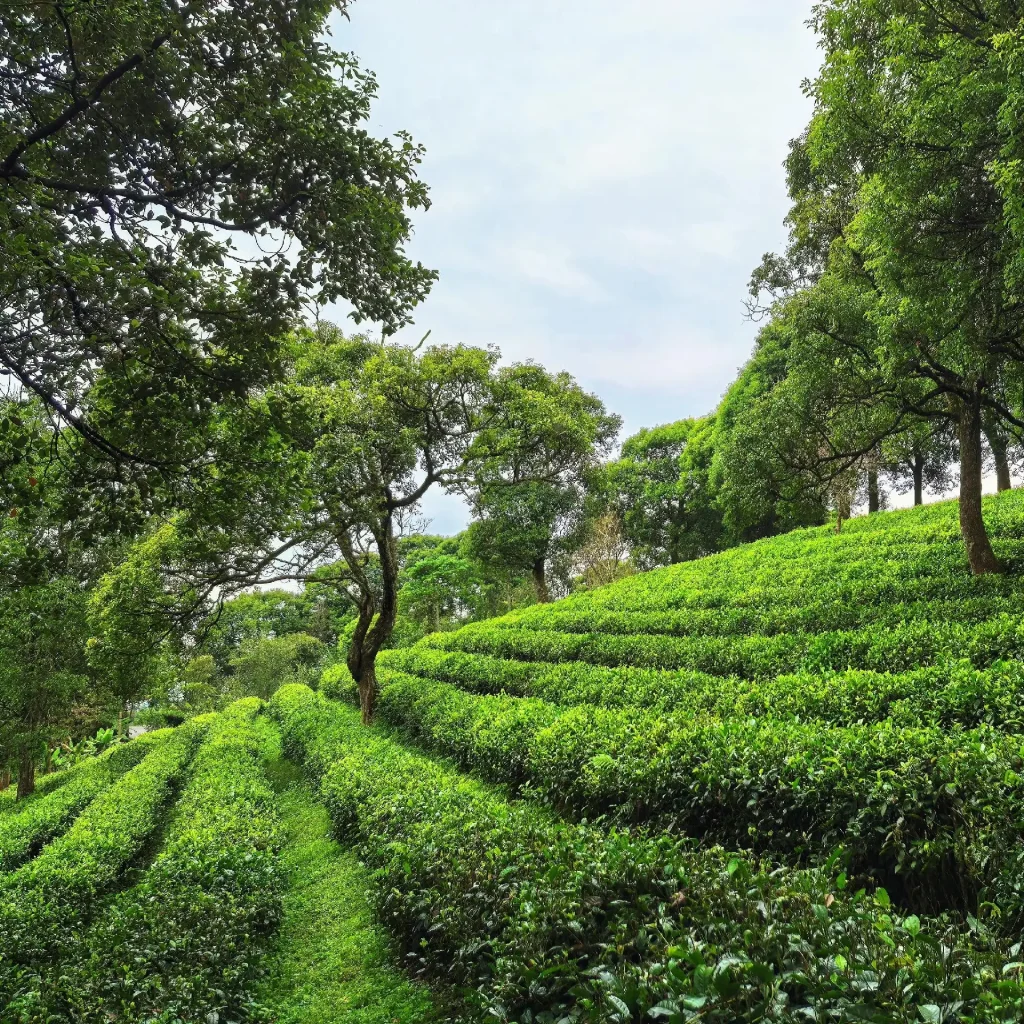
The city that gave its name to the world’s most famous fermented tea is, ironically, one of Yunnan’s least visited destinations by international tourists. Pu’er tea connoisseurs know it well — the ancient tea mountains of Jingmai, Kunlu, and Bangwei in the surrounding countryside contain some of the oldest cultivated tea trees on Earth, including the famous Jingmai Ancient Tea Forest, a UNESCO-listed landscape where 1,000+ year-old tea trees grow in a forest ecosystem tended by Bulang and Dai communities.
Visiting the tea mountains is a genuine cultural immersion: you’ll drink tea brewed from leaves picked that morning, stay in simple village guesthouses, and watch the entire production process from leaf to cake. The town of Pu’er itself has a relaxed, small-city vibe with excellent local food.
Getting there: Flight from Kunming (45 min) to Pu’er Simao Airport. Or bus/drive from Xishuangbanna (3 hours). Budget 2–3 days for the tea mountains. For the full tea guide — varieties, tasting, buying advice — see our Pu’er and Yunnan tea guide. For the cultural history of the trade route, read our Tea Horse Road guide.
Practical Tips for Off-the-Beaten-Path Yunnan
Language: Outside the major tourist cities, English is essentially nonexistent. Download Google Translate (with offline Chinese) or Pleco before you go. Learn basic Mandarin survival phrases: nǐ hǎo (hello), xièxie (thank you), duōshao qián (how much?), wǒ yào zhège (I want this one).
Cash: WeChat Pay and Alipay work in surprisingly remote places, but carry cash (¥500–1,000) as a backup. ATMs are available in county towns but not always in villages.
Transport: Public buses serve most destinations but schedules can be irregular. Hiring a car with a local driver (¥300–500/day) gives the most flexibility and lets you stop at viewpoints, markets, and villages along the way. Ask your guesthouse to arrange one.
Accommodation: Expect simple guesthouses (¥80–200/night) rather than boutique hotels in most hidden-gem destinations. Rooms are clean but basic — hot water, Wi-Fi (usually), and a comfortable bed. Homestays in villages like Shaxi and Yuanyang offer more character.
Mindset: Hidden gems reward flexibility. Buses may be late. Menus may be in Chinese only. The “attraction” may be a grandmother making tofu on her doorstep. The best moments in off-the-beaten-path Yunnan are unscripted — and that’s exactly the point.
For the Yunnan food experiences you’ll find in these lesser-known destinations — from Jianshui tofu to Tengchong local cuisine — see our food guide. And for the ethnic cultures you’ll encounter away from the tourist trails, our culture guide provides essential context.
Shaxi. A beautifully preserved Tea Horse Road caravan town 2 hours north of Dali with a 500-year-old market square, restored Bai courtyard guesthouses, and an atmosphere of authentic calm that Dali and Lijiang have largely lost. It’s easily accessible and rewarding enough to justify 2–3 nights.
Absolutely. One of Yunnan’s most underrated destinations — a 600-year-old scholar’s town with China’s second-largest Confucius Temple, spectacular Qing Dynasty mansions, and the best grilled tofu in the province. Just 1.5 hours from Kunming by high-speed train, it’s an easy 1–2 day addition to any itinerary.
Yes, though it’s remote and infrastructure is basic. The main road up the valley is paved and reliable in dry season (October–April). Rainy season (June–September) can bring landslides and road closures. The people are warm and welcoming. Hire a local driver for the valley road and carry cash.
Yes — and you should. Take the high-speed train from Kunming to Jianshui (1.5 hours), spend a day there, then bus to Yuanyang (2.5 hours). It’s one of Yunnan’s best 3–4 day side trips, covering ancient architecture, legendary street food, and world-class rice terrace photography.
Not strictly necessary for Shaxi, Jianshui, or Dongchuan. But for the Nujiang Valley, Pu’er tea mountains, and remote areas, a local guide or driver who speaks some English is highly recommended — both for logistics and cultural context. Your guesthouse can usually arrange one.