The city where spring never ends, where every regional cuisine in Yunnan converges, and where your journey into China’s most diverse province begins.
Most travelers treat Kunming as a layover — the airport where you land before catching a bus to Dali or a flight to Shangri-La. That’s a mistake. Yunnan’s capital is a city that rewards those who stay: a mild-mannered metropolis of 8 million where the temperature rarely dips below 10°C or climbs above 25°C, where Pu’er tea shops outnumber Starbucks, and where the food scene alone is worth a two-day detour.
Kunming is the gateway to everything in Yunnan. From here, trains and flights fan out to Dali, Lijiang, Shangri-La, and Xishuangbanna. But the city itself — with its ancient temples, lakeside promenades, legendary noodle shops, and a World Heritage stone forest on its doorstep — has earned its nickname as the Spring City, and it deserves your attention before you head into the mountains.
If you’re still planning your overall trip, our ultimate Yunnan travel guide covers visas, transport, and budgeting, while our top things to do in Yunnan helps you prioritize your time across the province.
What this guide covers: Why Kunming matters → Top things to see → Day trips (Stone Forest & beyond) → Food highlights → Getting around → Where to stay → Practical tips → How to connect to the rest of Yunnan.
Why Kunming Deserves More Than a Layover
Kunming has been Yunnan’s capital for over 600 years, and it occupies a unique position in Chinese geography. Sitting at 1,890 meters on the Yunnan-Guizhou Plateau, it’s high enough to escape the suffocating heat of lowland China but low enough to avoid the altitude sickness that hits visitors in Shangri-La. The result is a climate so consistently pleasant that the city has been called “Spring City” (Chūnchéng) since the Ming Dynasty — and the nickname isn’t marketing. Average temperatures hover around 15°C year-round, flowers bloom in every season, and the light has a clarity that photographers love.
But Kunming’s real appeal isn’t meteorological — it’s cultural. As Yunnan’s capital and largest city, it’s where all 25 ethnic minority groups send their cuisines, crafts, and traditions to converge. The city’s restaurants serve everything from crossing the bridge rice noodles to Dai grilled fish to Tibetan yak stew. The markets sell Bai tie-dye alongside Yi embroidery. And the teahouses brew Pu’er from ancient trees you can visit in person a few hours south.
Kunming is also the logistical hub where the new high-speed rail network connects to nearly every major destination in the province. Understanding the city means understanding Yunnan — and that starts with knowing what to see.
Top Things to See & Do in Kunming
Green Lake Park (Cuìhú Gōngyuán)
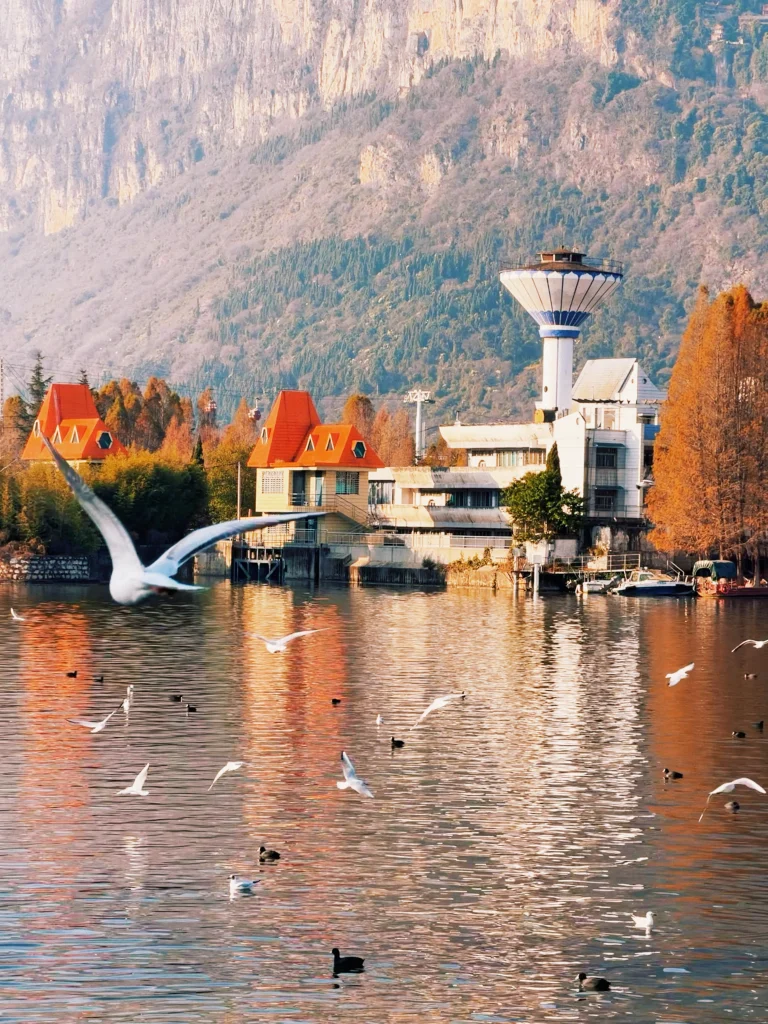
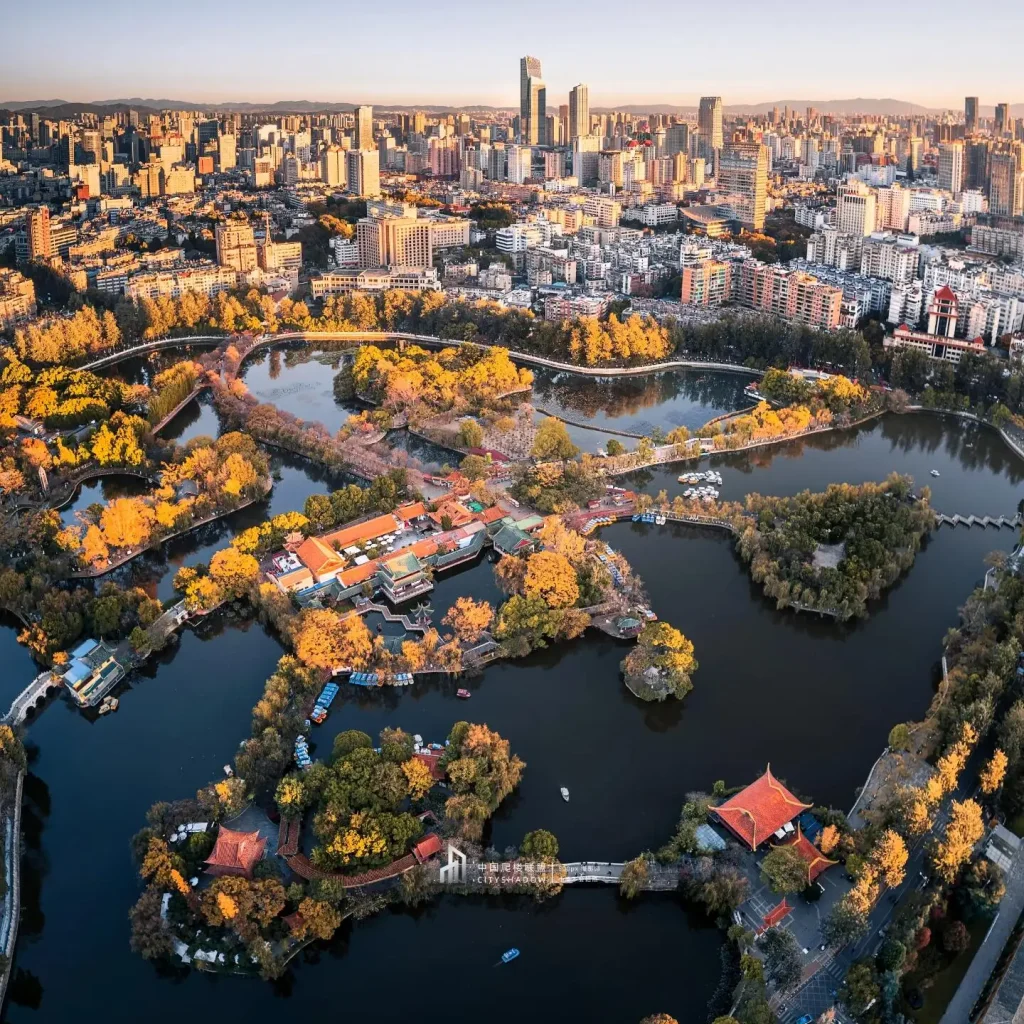
Green Lake is Kunming’s living room — a historic park in the city center where elderly men play erhu under willow trees, couples paddle boats across water dotted with lotus blossoms, and between November and March, thousands of black-headed gulls migrate from Siberia to spend the winter. The gulls have become so iconic that feeding them is practically a civic activity: locals buy bags of bread from vendors and hold pieces aloft, and the birds swoop down to pluck them from outstretched hands. It’s a surreal, joyful experience that perfectly captures Kunming’s easy-going personality.
Surrounding the lake, the Cuihu neighborhood is Kunming’s most walkable area — tree-lined streets with independent coffee shops, bookstores, and the campus of Yunnan University, whose historic buildings were designed by an American architect in the 1920s and are worth a wander.
Yuantong Temple
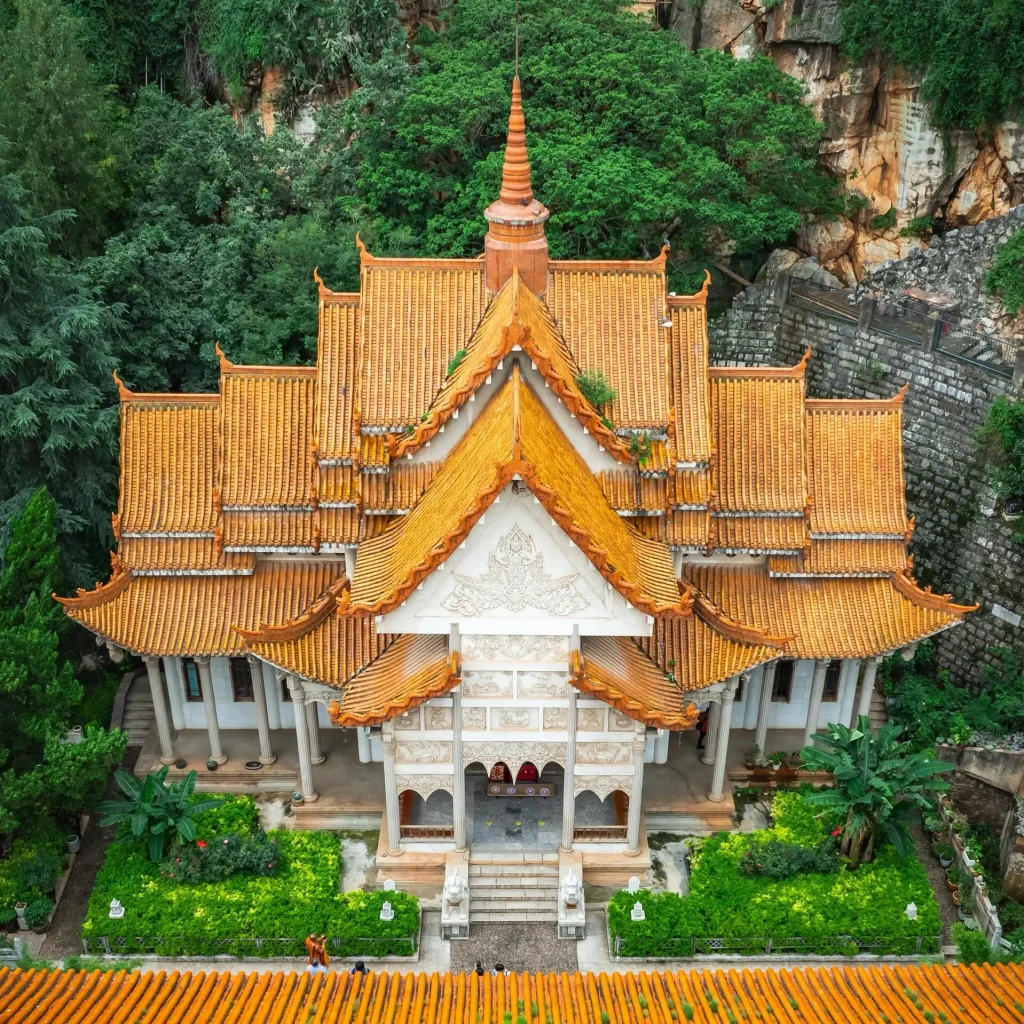
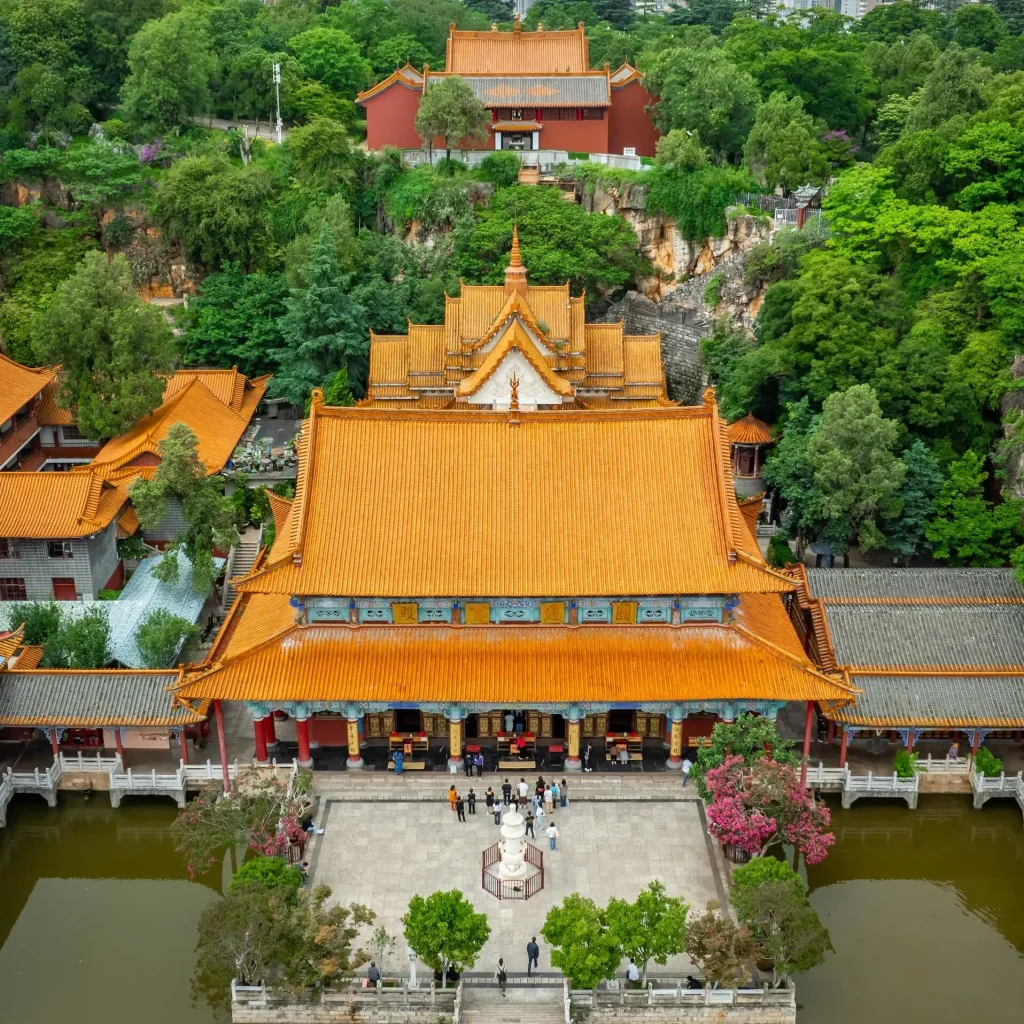
Kunming’s oldest and largest Buddhist temple, founded over 1,200 years ago during the Nanzhao Kingdom period. Unlike most Chinese temples that ascend hillsides, Yuantong descends — you walk down into a valley, crossing a stone bridge over a pond of koi fish, toward the main hall. The architecture blends Han Chinese, Tibetan, and Theravada Buddhist styles — a perfect microcosm of Yunnan’s multi-ethnic religious landscape. The temple is active: monks chant in the mornings, incense smoke curls through centuries-old courtyards, and during festivals the atmosphere is electric.
The Bird & Flower Market (Niǎo Huā Shìchǎng)
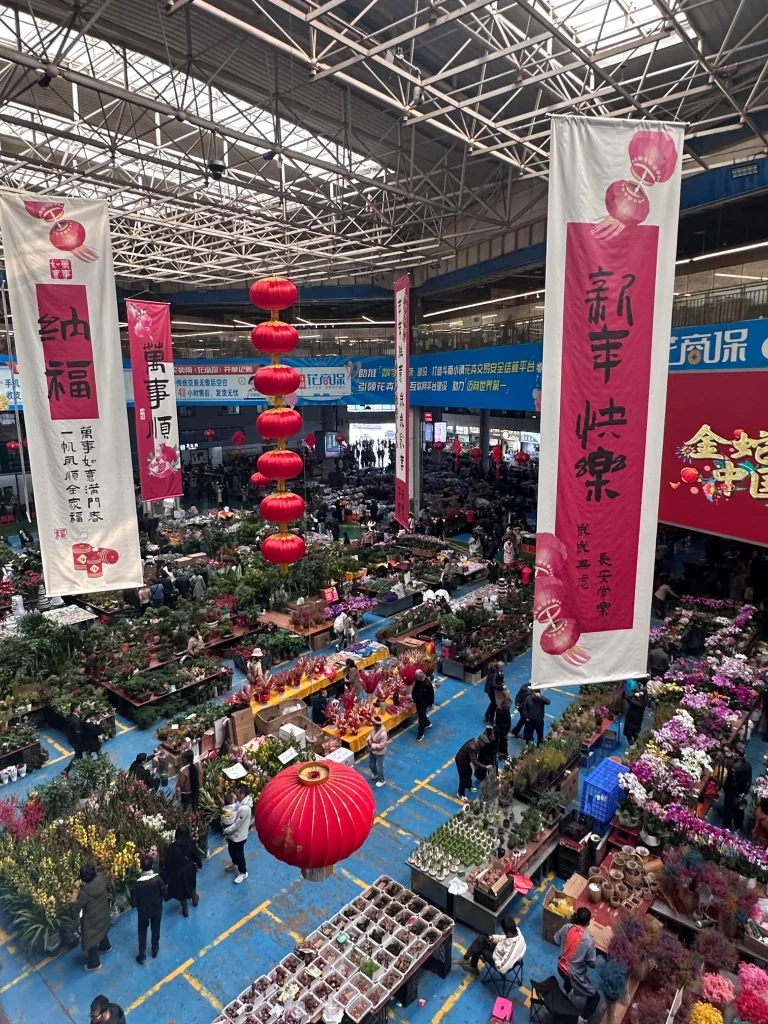
Less a market and more a sensory overload, Kunming’s Bird and Flower Market sprawls across several blocks near the city center. Despite the name, it sells everything: orchids, jade, antiques, Buddhist prayer beads, dried mushrooms, Pu’er tea, pet crickets, handmade jewelry, and yes — birds and flowers. The surrounding streets are packed with street food stalls serving Yunnan street snacks from grilled erkuai to doufen (chickpea jelly). Budget at least two hours to wander without a plan. It’s the best free entertainment in the city.
Western Hills (Xīshān) & Dragon Gate
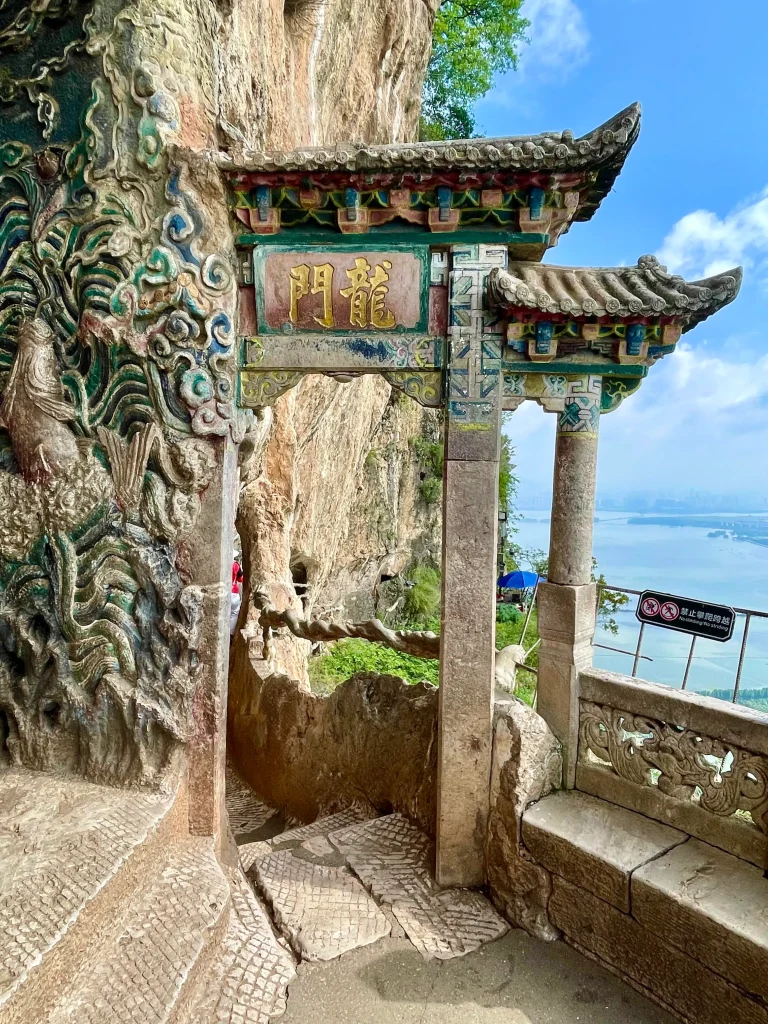
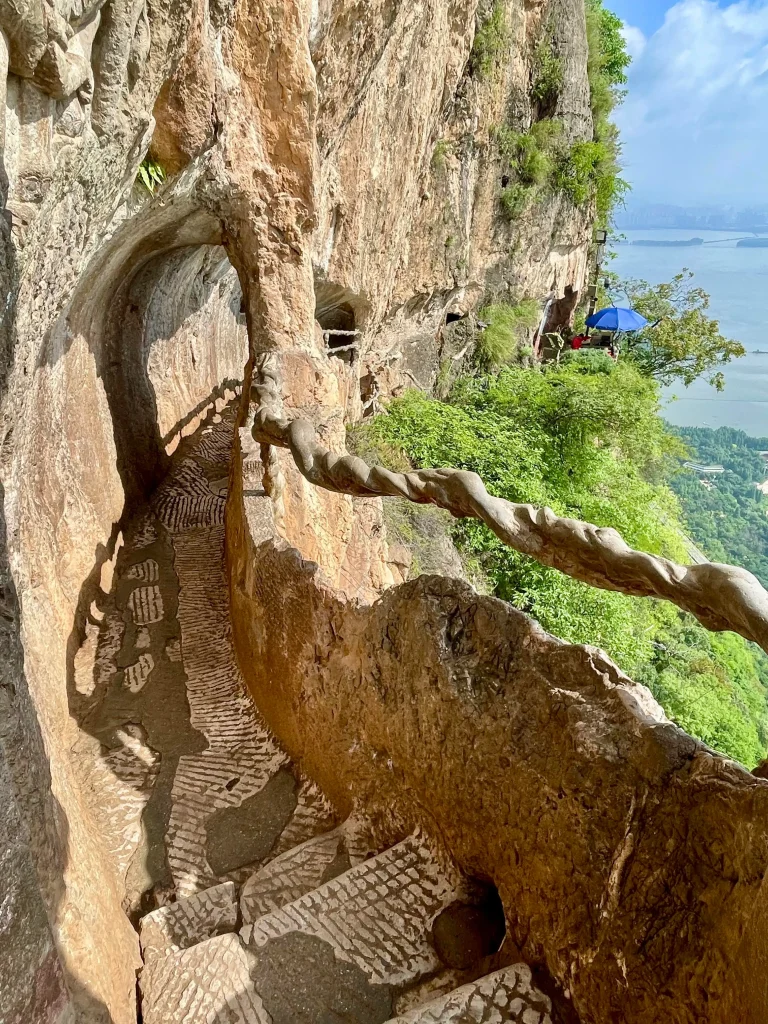
Rising along the western shore of Dianchi Lake, the Western Hills are Kunming’s signature panoramic viewpoint. A winding trail — much of it carved directly into a limestone cliff face — leads to the Dragon Gate (Lónɡmén), a series of grottoes, shrines, and tunnels chiseled by hand over 72 years during the Qing Dynasty. The views from Dragon Gate, looking out over the vast expanse of Dianchi Lake with the city skyline in the distance, are among the most dramatic in any Chinese city. Take the cable car up and walk down for the best experience.
Dianchi Lake (Diānchí)
China’s sixth-largest freshwater lake stretches for 40 kilometers south of the city. The lakeside promenade at Haigeng Park is Kunming’s most popular sunset spot — local families stroll, kite-flyers fill the sky, and the Western Hills glow orange in the fading light. For a more active experience, rent a bike and ride along the eastern shore, stopping at fishing villages where you can eat fresh lake fish cooked on the spot.
Day Trips from Kunming
The Stone Forest (Shílín) — UNESCO World Heritage Site
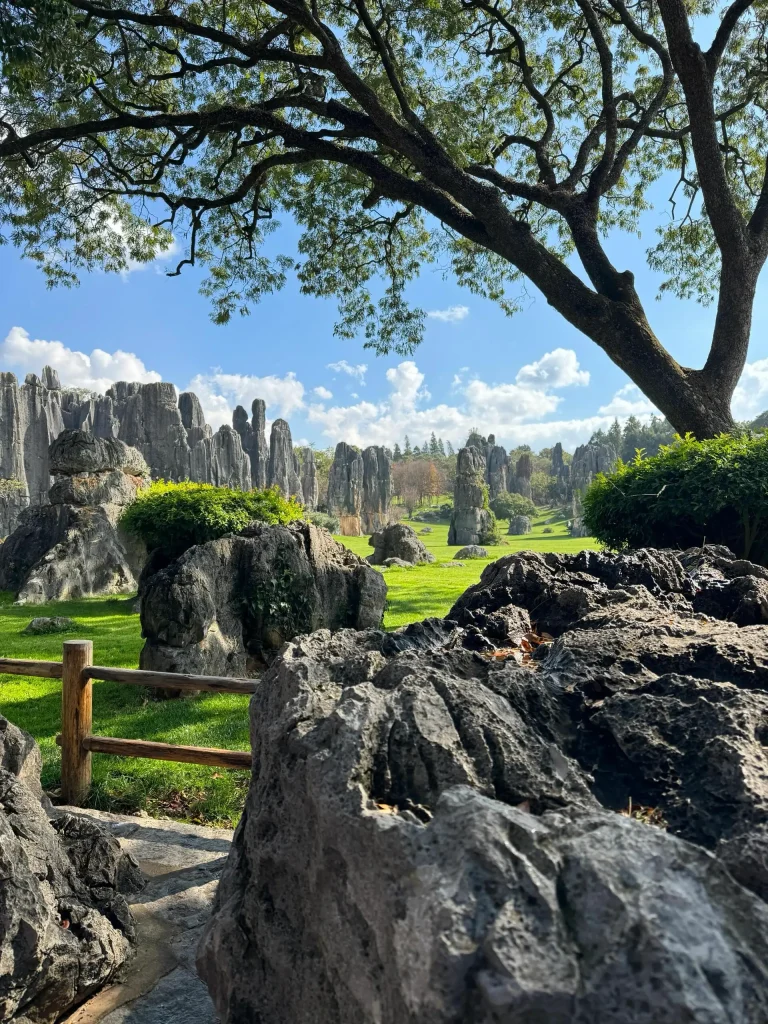
Eighty kilometers southeast of Kunming, the Stone Forest is one of the world’s most extraordinary geological formations — a labyrinth of razor-sharp limestone pillars, some towering 30 meters high, that look like a petrified forest planted by giants. The formations are 270 million years old, sculpted by eons of wind and water, and walking among them feels genuinely otherworldly.
The Stone Forest is also culturally significant: the surrounding area is home to the Sani people (a branch of the Yi ethnic group), whose fire-worship traditions and the legend of Ashima — a Sani girl turned to stone — are woven into the landscape. Budget a full day, arrive early before tour groups, and consider exploring the less-crowded Naigu Stone Forest nearby for a quieter experience. Our Stone Forest visitor’s guide has the complete breakdown.
Jianshui Ancient Town
Three hours south of Kunming by train, Jianshui is one of Yunnan’s most underrated destinations — a scholarly town with 600 years of history, a Confucius temple second in size only to the one in Qufu, and the best grilled tofu in the province. The Zhu Family Garden, a sprawling Qing Dynasty mansion, and the 17-arch Shuanglong Bridge are architectural highlights. But the real draw is the night market, where vendors grill tiny cubes of tofu over charcoal until blistered and custardy — one of Yunnan’s most addictive street snacks.
Dongchuan Red Land
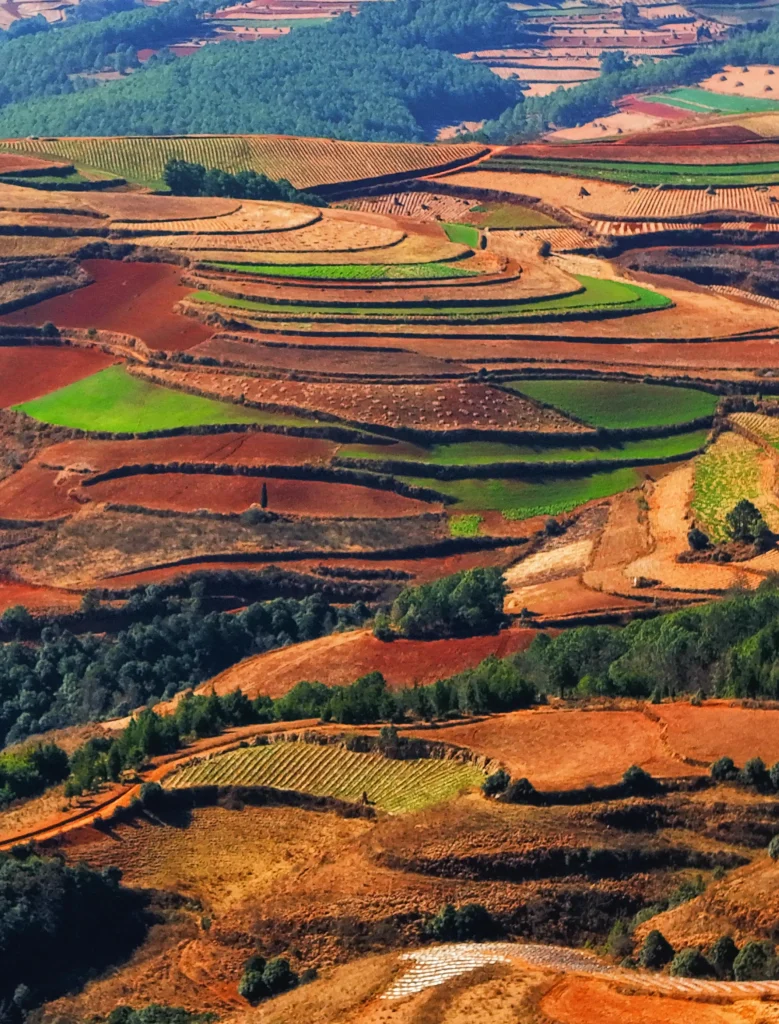
Four hours northeast of Kunming, the red terraced earth of Dongchuan creates a landscape so vivid it looks digitally enhanced. Rolling hills of deep crimson soil are planted with crops that create bands of green, gold, and white against the red backdrop. Photographers come from around the world, especially in September–November when the colors peak. It’s one of Yunnan’s most rewarding hidden gems.
What to Eat in Kunming
Kunming is where all of Yunnan’s regional cuisines converge, making it the best single city for sampling the province’s full culinary range. For a comprehensive guide, read our Yunnan food guide. Here are the essentials:
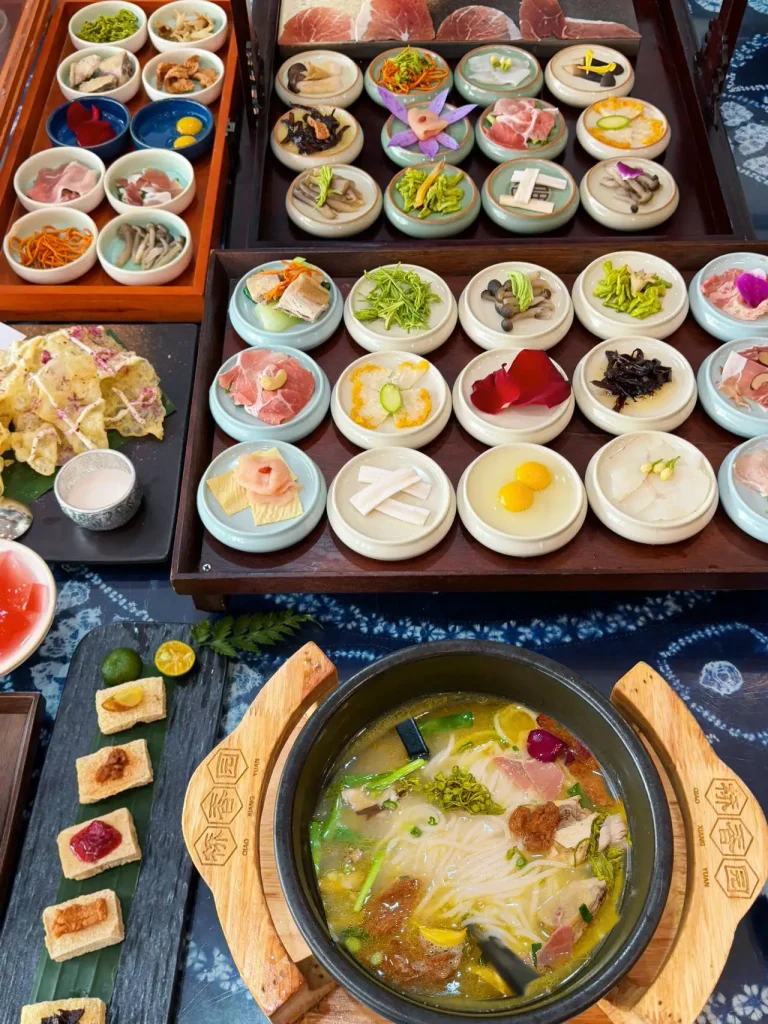
Crossing the Bridge Rice Noodles (Guòqiáo Mǐxiàn): Yunnan’s most iconic dish was born here. A bowl of scalding broth arrives sealed with a layer of oil, and you add paper-thin slices of raw meat, quail eggs, vegetables, and silky rice noodles — the hot broth cooks everything in seconds. Jianxin Garden on Baita Road is a local institution. Read our crossing the bridge noodles guide for the full story and top restaurant picks.
Wild Mushroom Hot Pot: Between June and October, Kunming goes mushroom-mad. The Guanshang neighborhood is the epicenter — dozens of restaurants dedicated solely to wild mushroom hot pot, with species you’ve never seen before. The umami depth is extraordinary. Eat only at established restaurants (some species are toxic if undercooked).
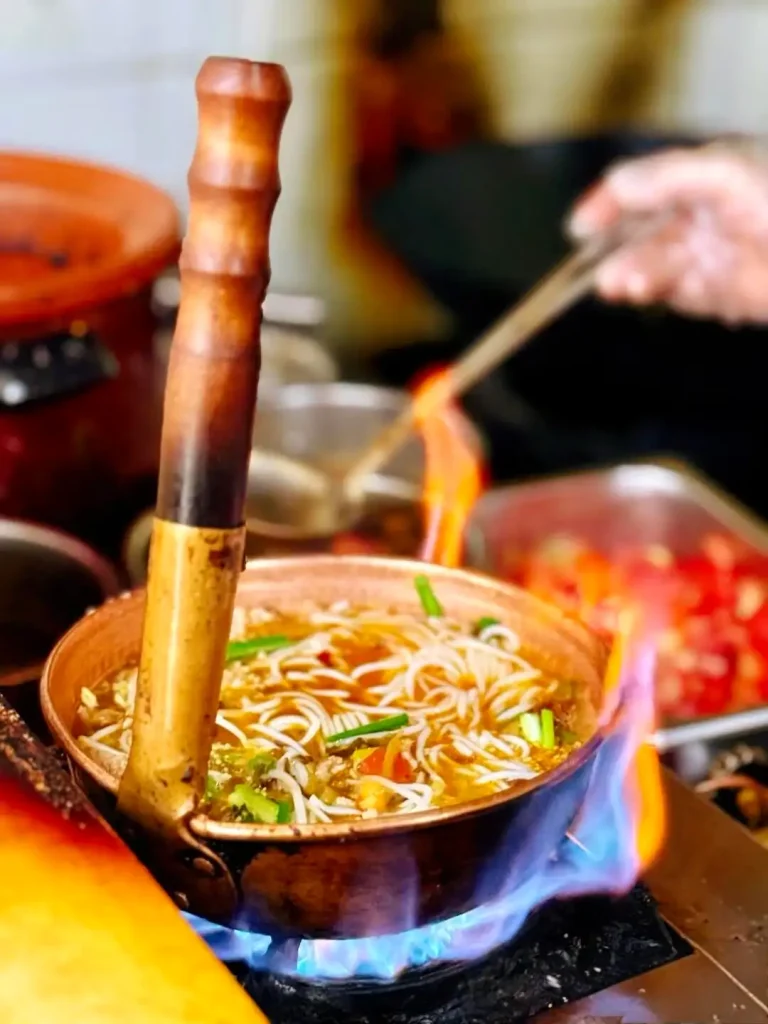
Small Pot Rice Noodles (Xiǎo Guō Mǐxiàn): Kunming’s own signature — a single-serve clay pot of noodle soup cooked over a roaring flame at blinding speed, arriving at your table still bubbling. Faster, spicier, and more casual than crossing the bridge noodles — this is what locals actually eat for breakfast.
Steam Pot Chicken: The purest chicken soup you’ll ever taste, made in a Jianshui clay pot with no water added — only steam. Read about the technique in our steam pot chicken guide.
Rose Cakes (Méiguī Bǐng): Flaky pastries filled with fragrant edible rose paste — Yunnan’s most popular souvenir food. Buy from Jiahua or Pan Xiangli bakeries, not the tourist shops. Part of Yunnan’s street food culture.
Getting Around Kunming
Metro: Kunming’s metro system (6 lines as of 2024) covers the main city areas efficiently. Line 3 runs from the train station through the city center; Line 1 connects to Dianchi Lake area. Single rides cost 2–7 yuan. The metro is the fastest way to get around the city center.
Didi (Chinese Uber): The most convenient option for door-to-door travel. Most rides within the city cost 15–30 yuan. Set up Didi before arriving (it works with international phone numbers). Our Yunnan travel guide explains how to set up Chinese apps.
Cycling: Kunming is flat and bikeable. Shared bikes (Meituan, Hello Bike) are everywhere — scan the QR code with WeChat or Alipay. Great for the Dianchi lakeside promenade and the university district around Green Lake.
For day trips: High-speed trains to Jianshui (1.5 hours) and buses to Stone Forest (1.5 hours) depart from Kunming’s main stations. Dongchuan Red Land is best reached by hired car or organized day tour.
Where to Stay in Kunming
Best area for first-timers: Cuihu (Green Lake) district. Walking distance to the lake, Yuantong Temple, the Bird and Flower Market, and dozens of restaurants. The neighborhood has Kunming’s best mix of international hotels, boutique guesthouses, and local atmosphere. Chains like Pullman and Crowne Plaza operate here alongside Chinese boutique brands.
Near the train station: More budget-friendly, convenient for early departures to Dali, Lijiang, or Jianshui. Less charming but practical. The Kunming South Railway Station (for high-speed trains) is connected by metro.
Budget: 150–300 yuan/night for a clean guesthouse or 3-star hotel. Mid-range: 400–800 yuan/night for international-standard 4-star hotels. Luxury: 800+ yuan/night at properties like the Park Hyatt or Kunming Wyndham Grand.
How to Connect from Kunming to the Rest of Yunnan
Kunming is the hub from which all Yunnan routes radiate. Here are your main connections:
To Dali: High-speed train (2 hours, ~150 yuan) — the fastest and most scenic option. Trains run frequently from Kunming South Station.
To Lijiang: High-speed train (3–3.5 hours, ~220 yuan) or flight (1 hour). The train is comfortable and affordable; the flight saves time if you’re short on days.
To Shangri-La: Flight (1 hour) is the most practical option. Alternatively, train to Lijiang then bus to Shangri-La (4 hours) — a scenic route through mountain passes.
To Xishuangbanna: Flight (1 hour) or the new Yumo Railway (3.5 hours) — one of China’s most scenic rail journeys, descending from plateau to tropical lowland.
To Yuanyang Rice Terraces: Bus from Kunming South Bus Station (5–6 hours) or drive via Jianshui (combine both in a 3-day trip).
For detailed route planning and multi-city combinations, check our Yunnan itinerary guide for 7, 10, and 14 days.
Practical Tips for Visiting Kunming
Best time to visit: Year-round — that’s the whole point of the Spring City. But if forced to choose: March–May for the best flowers, June–October for mushroom season, November–March for the Siberian gulls at Green Lake.
How many days: 2–3 days is ideal. One day for the city (Green Lake, Yuantong Temple, Bird and Flower Market), one day for Stone Forest, and an optional third day for the Western Hills, Dianchi Lake, or a food-focused wander.
Altitude: At 1,890 meters, Kunming is high enough that you might notice slightly faster breathing on arrival. It’s not enough to cause altitude sickness, but it’s good acclimatization if you’re heading to Shangri-La (3,300m) later.
Language: English is limited outside international hotels. Having a translation app (like Google Translate with offline Chinese downloaded) is essential. Basic Mandarin phrases go a long way.
Understand the culture: Kunming is a melting pot of Yunnan’s 【ethnic diversity】Sub-B. You’ll encounter Bai, Yi, Dai, and Hui influences in the architecture, food, and markets — our Yunnan culture guide provides the context to understand what you’re seeing.
Kunming is absolutely worth 2–3 days. The food scene alone — crossing the bridge noodles, wild mushroom hot pot, street snacks — is the best concentrated sampling of all Yunnan cuisine in one city. The Stone Forest day trip is world-class, and the city’s parks, temples, and markets have a relaxed energy that’s a great introduction to Yunnan’s pace.
Two to three days is ideal. Day 1: city sights (Green Lake, Yuantong Temple, Bird & Flower Market). Day 2: Stone Forest day trip. Optional Day 3: Western Hills, Dianchi Lake, or a deeper food exploration of the Guanshang mushroom district and Nanqiang Jie street food area.
The high-speed train is the best option — 2 hours, around 150 yuan, frequent departures from Kunming South Station. It’s faster than driving (4–5 hours) and more scenic than flying. Book tickets on Trip.com or the 12306 app.
Yes. Kunming is one of China’s safer large cities. Violent crime is extremely rare, the metro system is efficient and well-lit, and the overall atmosphere is relaxed. Standard travel precautions apply: watch for pickpockets in crowded markets, and be cautious with taxis (use Didi instead for transparent pricing).
Kunming’s nickname ‘Spring City’ is accurate — average temperatures range from 8–15°C in winter to 19–25°C in summer. It rarely gets truly cold or hot. The rainy season (June–September) brings afternoon showers that pass quickly. Pack layers and a light rain jacket year-round.
Yes. The Stone Forest (1.5 hours by bus), Jianshui Ancient Town (1.5 hours by high-speed train), and Dongchuan Red Land (4 hours by car) are all excellent day or overnight trips from Kunming. The city’s central location and transport connections make it the best base for exploring eastern and southern Yunnan.