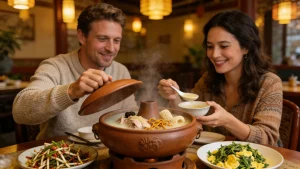
Lijiang’s food reflects its crossroads position — Naxi home cooking meets Tibetan highland fare and Han Chinese influences, creating a cuisine where copper pots, yak meat, and thousand-year-old preservation techniques share the same table.
Lijiang‘s food scene gets an unfair reputation. Tourist-street restaurants serving overpriced, generic Chinese food have colored many visitors’ perceptions — but look beyond the Sifang Square area and Lijiang has a genuinely distinctive cuisine shaped by Naxi culture, Tibetan highland influence, and centuries of Tea Horse Road commerce.
The key is knowing where to look. The best Naxi food is found in the residential lanes of the northern Old Town, in Baisha and Shuhe ancient towns, and in the local restaurants that Naxi families actually eat at. This guide covers the essential dishes and where to find them. For the full Yunnan food picture, see our Yunnan food guide.
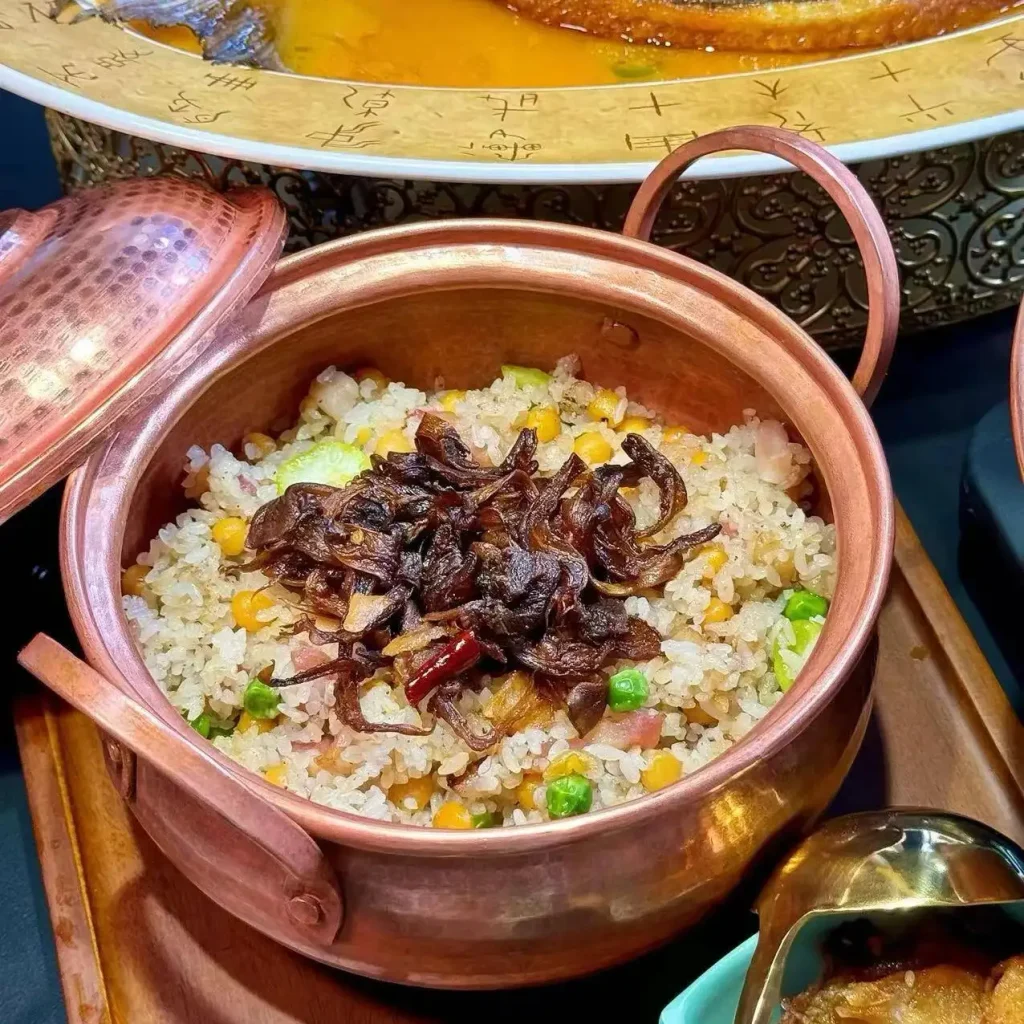
Naxi Copper Pot Rice (Tóng Guō Fàn)
Lijiang’s signature dish — rice cooked in a traditional Naxi copper pot with layers of cured ham, sausage, vegetables, and sometimes wild mushrooms (in season). The copper pot conducts heat evenly, creating a crispy, golden rice crust (guō bā) on the bottom that’s the most prized part. The lid is lifted at the table with ceremony — a burst of fragrant steam, the reveal of the golden crust, the communal digging in.
Where: A Mama Naxi Snack in the Old Town is a long-standing favorite. Multiple restaurants in Shuhe and Baisha serve excellent versions. ¥40–80 per pot (serves 2–3).
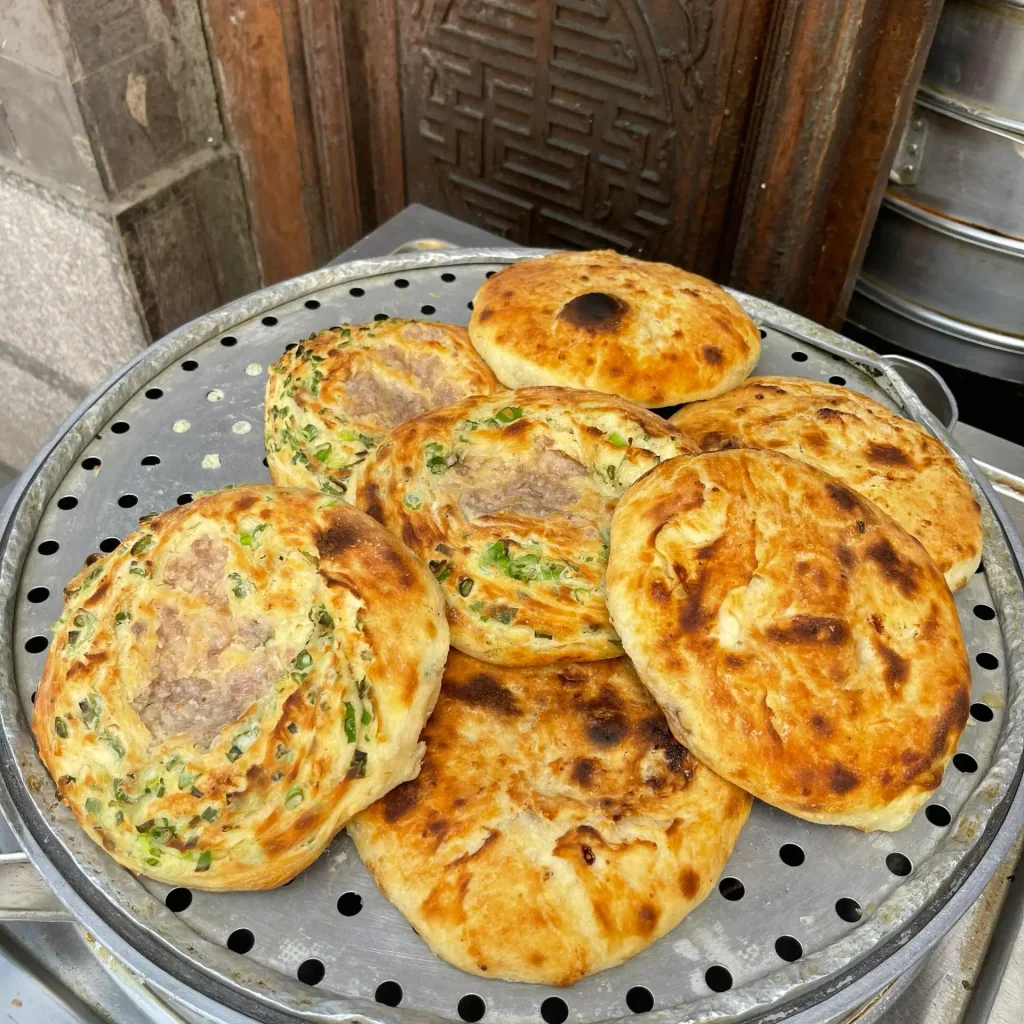
Lijiang Baba
Lijiang’s flatbread — thicker and denser than Dali’s Xizhou baba, with a chewy, layered texture. Sweet versions use brown sugar and rose; savory versions use scallion and ham. Traditionally cooked on a flat stone, now usually pan-fried. Available at street stalls and breakfast spots throughout the Old Town (¥5–10).
Yak Meat (Máoniú Ròu)
Lijiang sits at the transition between lowland and highland Yunnan, and yak from the Tibetan plateau near Shangri-La is a staple protein. Yak meat is richer, darker, and more complex than beef — the animals graze on wild highland herbs, giving the meat subtle botanical notes.
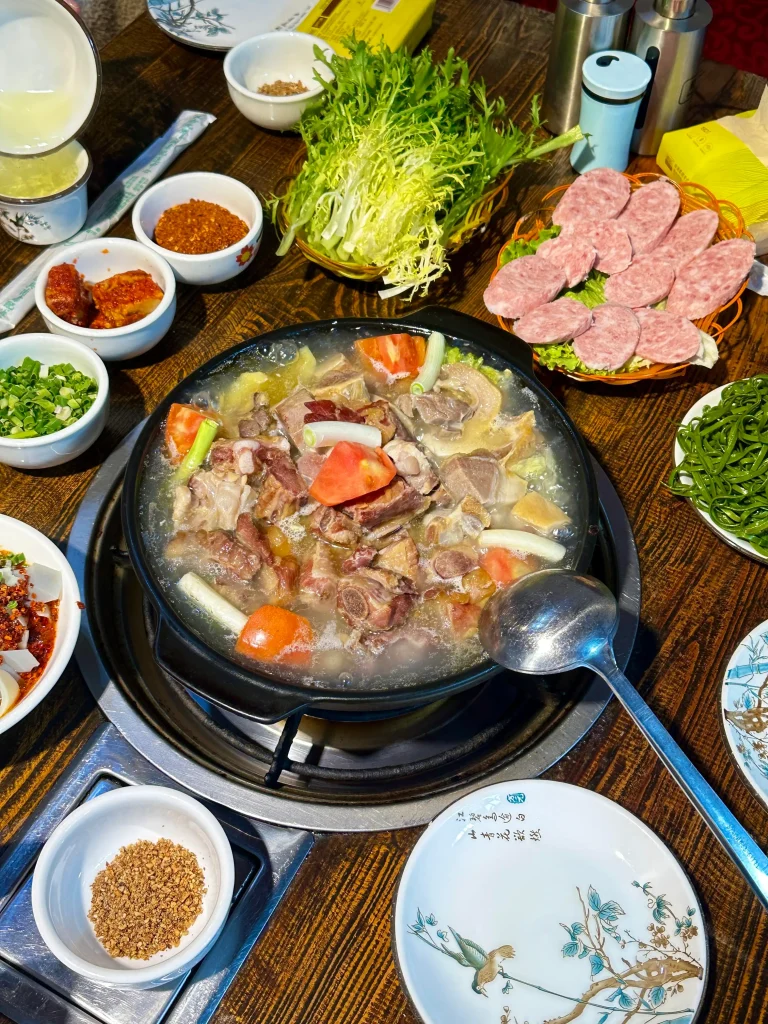
Yak hot pot (máoniú huǒ guō): Thin-sliced yak meat cooked at the table in a rich bone broth. The most popular yak preparation in Lijiang — restaurants on Wuyi Street specialize in it.
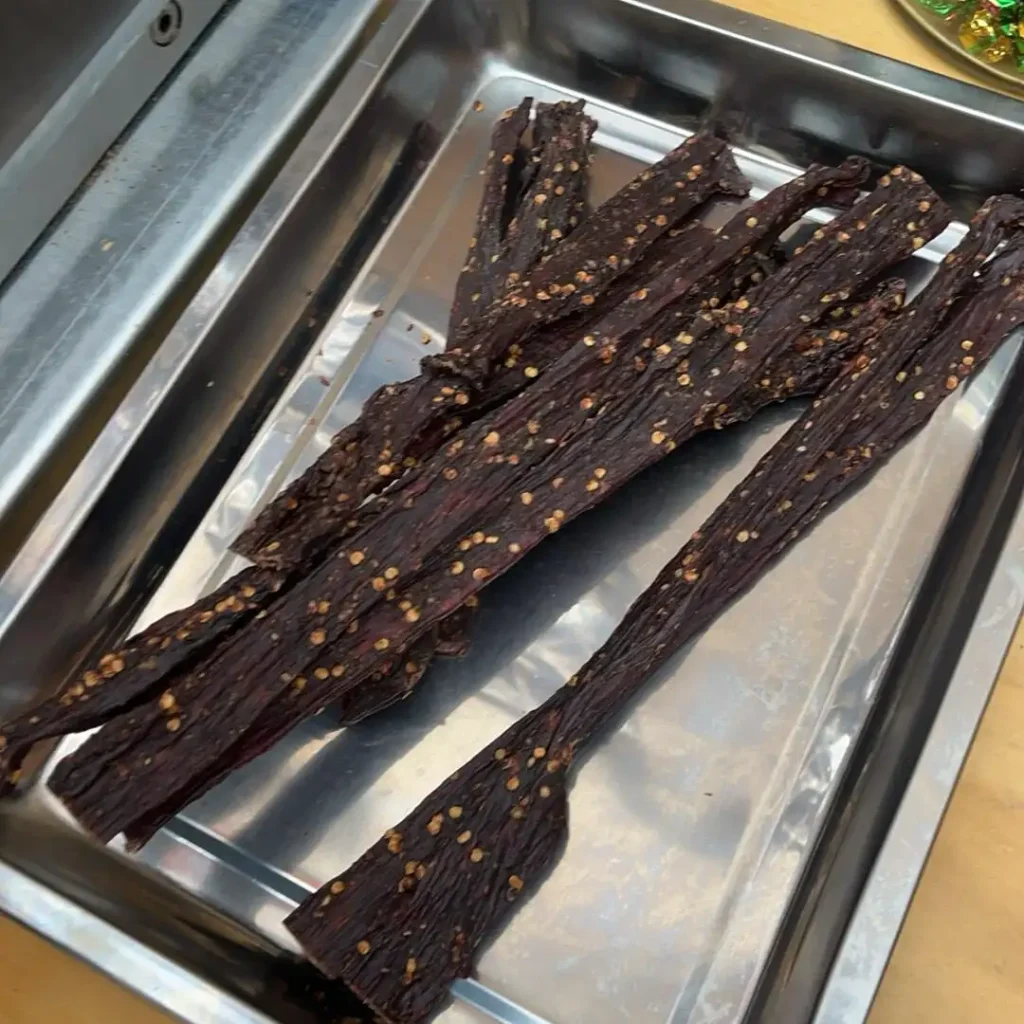
Dried yak meat (máoniú ròu gān): Strips of yak jerky, often spiced with chili and Sichuan pepper. Sold everywhere as a snack and souvenir. Quality varies wildly — buy from shops that let you taste first.
Cured Pork Ribs Hot Pot (Là Páigǔ Huǒ Guō)
Lijiang’s most beloved winter comfort food — pork ribs cured with salt for several months, then simmered in a large pot with potatoes, cabbage, tofu, and sometimes wild mushrooms. The slow curing gives the ribs a concentrated, almost ham-like flavor. Restaurants in the Old Town and Shuhe serve this as a communal dish for groups (¥60–120). The broth improves as you eat — the last bowl of soup is the best.
Other Lijiang Essentials
Naxi Stir-fried Rice Blood Sausage (Mǐ Guàn Cháng): Rice mixed with fresh pig’s blood, stuffed into intestine casing, steamed and then sliced and pan-fried. Sounds challenging, tastes excellent — crispy outside, soft inside, with a rich, iron-y depth. A traditional Naxi preservation technique.
Jī Dòu Liáng Fěn (Chickpea Jelly): A cold jelly made from chickpea starch, sliced into strips and dressed with chili oil, vinegar, and scallions. Refreshing, tangy, and a perfect afternoon snack. Available at market stalls throughout the Old Town.
Shuhe Fish (Shùhé Kǎo Yú): Grilled freshwater trout from the streams near Shuhe Ancient Town. Simple, clean, and excellent with a cold beer on a Shuhe riverside terrace.
Butter Tea: As you move from Lijiang toward Shangri-La, the food shifts toward Tibetan — and butter tea (sū yóu chá) becomes increasingly common. Try it in Lijiang’s northern neighborhoods or at Tibetan restaurants in the Old Town.
For the Naxi cultural context behind this cuisine and for Lijiang travel planning, see our dedicated guides. For a broader street food tour, our Yunnan street food guide covers Lijiang’s best stalls.
Naxi copper pot rice (tóng guō fàn) — rice cooked in a copper pot with cured ham and vegetables, creating a crispy golden crust. Cured pork rib hot pot (là páigǔ huǒ guō) is the other essential — salt-cured ribs simmered with potatoes and tofu. Both are uniquely Lijiang.
Avoid the most touristy restaurants around Sifang Square. Head to the northern residential lanes of the Old Town, or to Shuhe and Baisha ancient towns for more authentic Naxi cooking. A Mama Naxi Snack is a reliable Old Town option. Wuyi Street is good for yak hot pot.
Yes — richer and more complex than beef, with subtle herbal notes from the highland grasses the yaks graze on. Yak hot pot is the best introduction. Dried yak jerky is excellent too — taste before buying to check quality.