The world’s most storied tea begins in the misty mountains of southern Yunnan, where trees older than most civilizations still produce leaves that improve with every passing decade — and where the journey from leaf to cup is a pilgrimage in itself.
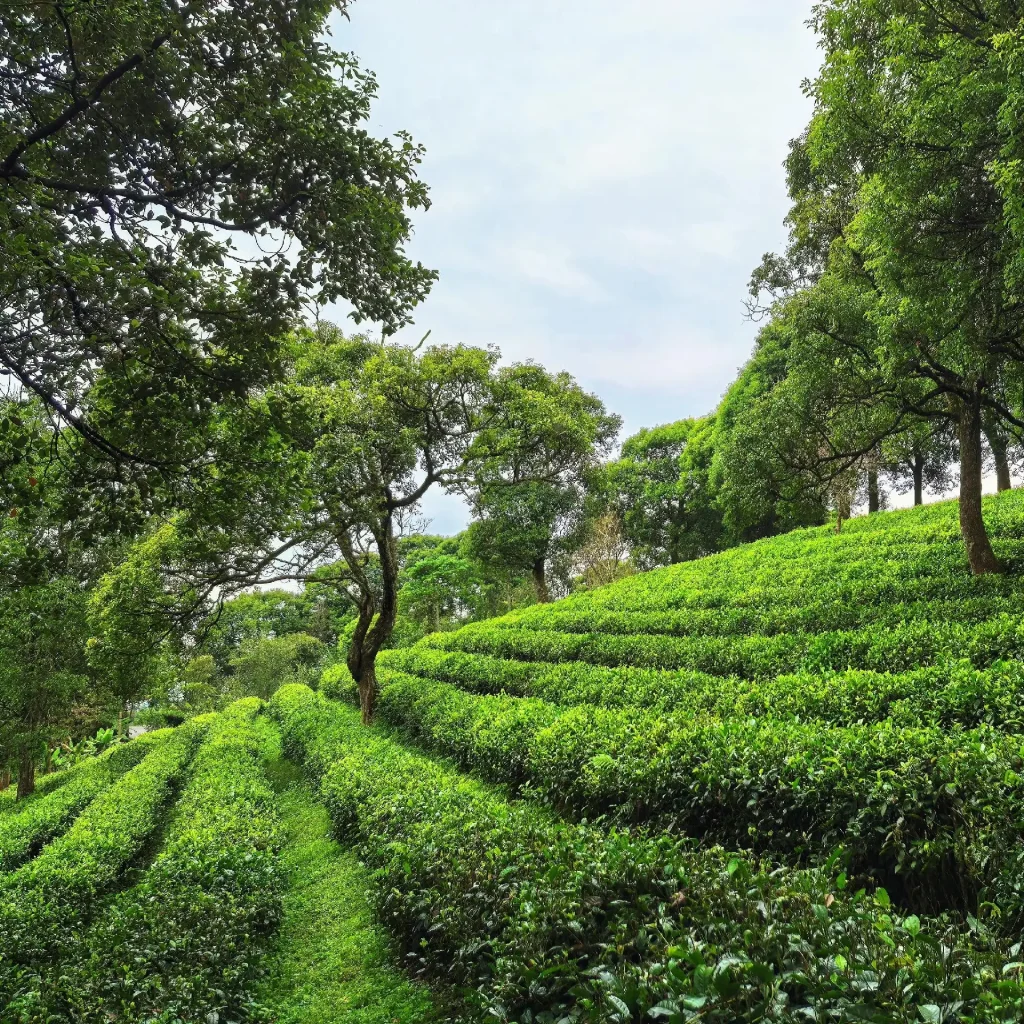
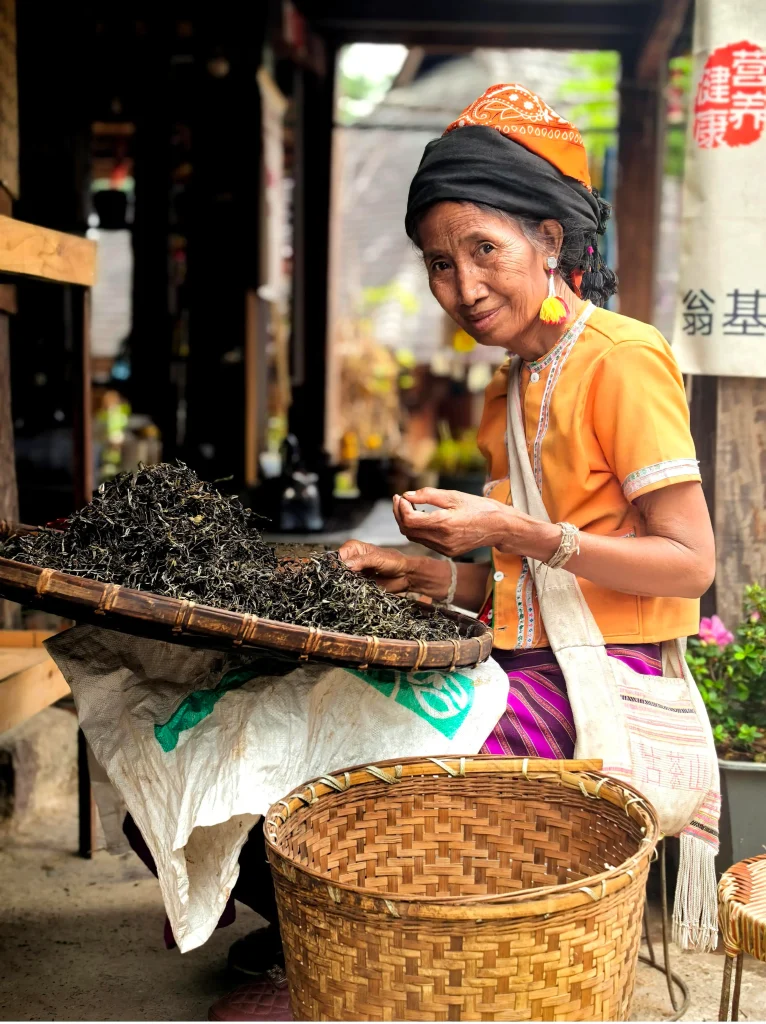
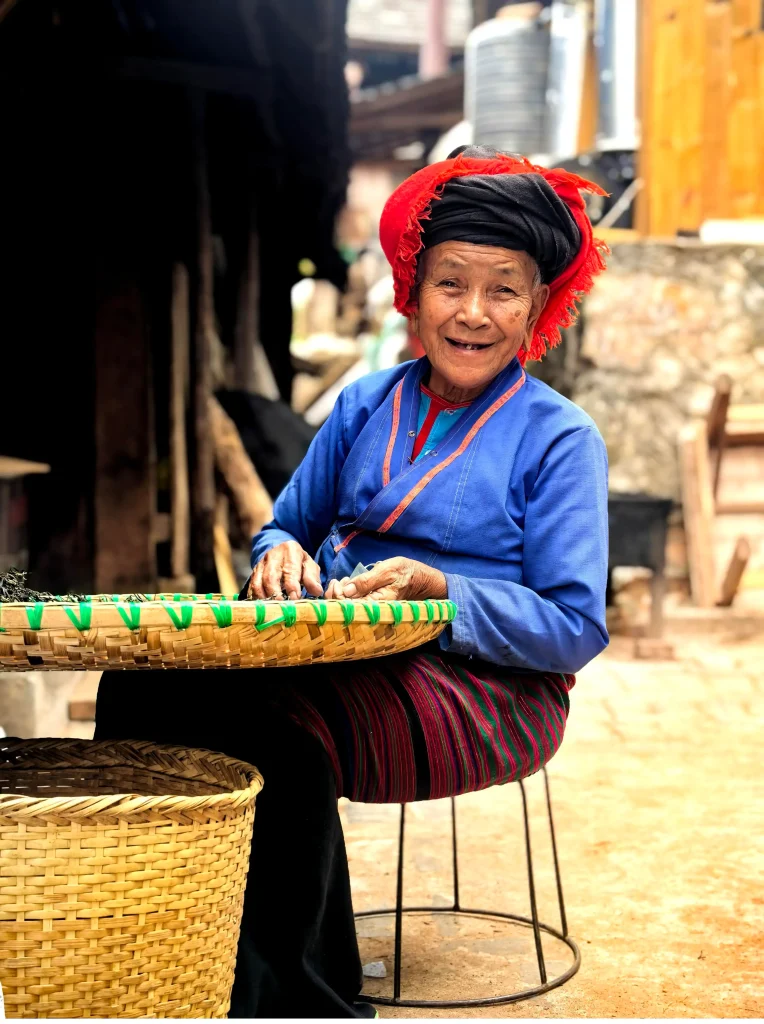
Every tea has a story. Most are short: picked, processed, packaged, sold. Pu’er’s story stretches back over a thousand years and crosses some of the most extreme terrain on Earth. It begins in the ancient tea forests of southern Yunnan — where trees 500, 800, even 1,000+ years old still produce leaves that are hand-picked by Bulang, Dai, Hani, and Wa communities who have tended them for generations. It travels along the Tea Horse Road — the network of mule trails that once carried compressed tea cakes from Yunnan to Tibet, where the tea was literally a matter of survival. And it continues today in the teahouses, markets, and collectors’ vaults where properly aged Pu’er is traded for prices that rival fine wine.
Pu’er is not just a beverage. It’s a living cultural artifact — a tea that improves with age, tells you where it grew and who made it, and connects you to a history that shaped the entire geography of Southwest China. This guide covers everything from the tea forests to your cup: how Pu’er is made, the difference between sheng and shu, how to visit the tea mountains, how to taste and buy, and why this one tea has inspired an almost religious devotion among its followers.
For the broader Yunnan food and drink picture, see our Yunnan food guide. For the historical trade route that made Pu’er famous, read our Tea Horse Road guide.
What this guide covers: What makes Pu’er unique → Sheng vs. Shu → The ancient tea mountains → How Pu’er is made → How to taste & buy → Visiting the tea regions → Tea culture etiquette → FAQ.
What Makes Pu’er Unique
Pu’er (pǔ’ěr chá) is different from every other tea in the world in three fundamental ways:
It ages. While most teas lose flavor over time, properly stored Pu’er improves for decades — even centuries. Like fine wine, aging transforms the tea’s character: rough young flavors soften, complexity develops, and the best aged Pu’er achieves a depth and smoothness that simply cannot be replicated by any shortcut. A well-stored 30-year-old Pu’er cake can sell for thousands of dollars.
It ferments. Pu’er undergoes microbial fermentation — either slowly over years (sheng/raw) or accelerated in controlled conditions (shu/ripe). This fermentation process creates the distinctive dark liquor, earthy aroma, and complex flavor profile that Pu’er is known for. No other major tea category uses microbial fermentation as a defining characteristic.
It’s terroir-driven. Like wine, Pu’er’s character is shaped by where it grows. Different mountains, different villages, even different sides of the same hill produce teas with distinct personalities. The concept of “shan tóu” (mountain head) — identifying tea by its specific geographic origin — is the Pu’er equivalent of wine’s “terroir,” and serious Pu’er drinkers can identify a tea’s origin by taste the way a sommelier identifies a vineyard.
Sheng vs. Shu: The Two Faces of Pu’er
All Pu’er falls into one of two categories, and understanding the difference is essential:
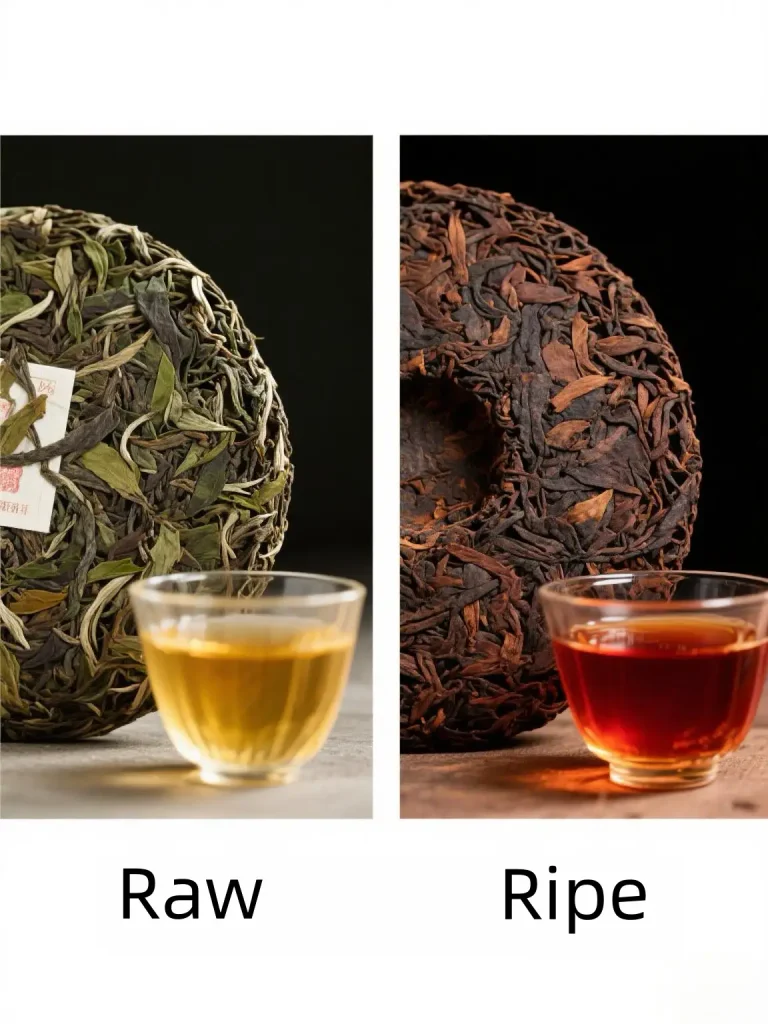
Sheng Pu’er (Raw)
The original and traditional form. After picking and initial processing, the tea is compressed into cakes, bricks, or other shapes and left to age naturally. Young sheng (1–5 years) is bright, astringent, and sometimes bitter — with floral, grassy, and sometimes smoky notes. As it ages (10, 20, 30+ years), the flavor transforms: the bitterness softens, the body deepens, and complex notes of honey, dried fruit, camphor, and old wood emerge. Drinking a well-aged sheng is one of the great sensory experiences in the tea world.
Sheng Pu’er is the collector’s tea — the one that’s aged, traded, and treasured. Vintage sheng cakes from famous factories (like the legendary Tongqing Hao or Song Pin Hao) fetch tens of thousands of dollars at auction.
Shu Pu’er (Ripe)
Invented in 1973 by the Kunming Tea Factory, shu Pu’er uses an accelerated fermentation process (wò duī — pile fermentation) to replicate the flavors of aged sheng in weeks rather than decades. The tea leaves are piled, moistened, and turned repeatedly in controlled conditions, encouraging microbial activity that darkens the leaf and transforms the flavor. The result: a dark, smooth, earthy tea with notes of wet earth, mushroom, and chocolate. Shu Pu’er is ready to drink immediately, though it also improves with modest aging (5–15 years).
Shu is the everyday Pu’er — more affordable, more accessible, and the type most non-Chinese tea drinkers encounter first. Good shu is smooth, warming, and comforting. Cheap shu can taste muddy or “fishy” — quality matters.
The Ancient Tea Mountains
Pu’er’s soul lives in the tea mountains of southern Yunnan — the ancient forests where tea trees have been cultivated (and in some cases, growing wild) for centuries. These mountains are the source of Pu’er’s finest and most valuable material, and visiting them is one of Yunnan’s most rewarding cultural experiences.
The Six Famous Tea Mountains (Liù Dà Chá Shān)
The historical core — six mountains east of the Lancang (Mekong) River that produced the tea for the imperial court and the Tea Horse Road trade. They are: Yiwu, Gedeng, Yibang, Mangzhi, Manzhuan, and Mansa. Of these, Yiwuis the most famous and accessible today. Yiwu tea is prized for its sweetness, floral fragrance, and exceptional aging potential — a 20-year-old Yiwu sheng is widely considered one of the pinnacles of the Pu’er world.
The New Six Mountains
West of the Lancang River, a second group of mountains has risen to equal or surpass the fame of the originals: Bulang Shan, Nannuo Shan, Mengsong, Jingmai, Ba Da, and He Kai. These produce some of the most sought-after Pu’er today.
Jingmai Mountain is the standout — and a UNESCO World Heritage site since 2023. The Jingmai Ancient Tea Forest is the best-preserved example of an ancient tea cultivation landscape on Earth: 1,000+ year-old tea trees growing in a managed forest ecosystem tended by Bulang and Dai communities who combine tea cultivation with sustainable forestry. Walking through the Jingmai forest — ancient tea trees draped in moss and orchids, mist drifting through the canopy, Bulang villagers picking leaves by hand — is one of the most profound encounters with living agricultural heritage anywhere in the world.
Bulang Shan is famous for Laobanzhang — a tiny Bulang village that produces what many consider the single most powerful and complex Pu’er in existence. Authentic Laobanzhang tea is ferociously expensive (spring-picked leaves can reach ¥10,000+ per kg), but tasting it — even a single cup — reveals why Pu’er commands such devotion.
Nannuo Shan & the King of Tea Trees
Nannuo Mountain, 20 km from Menghai, is home to one of the oldest known cultivated tea trees — an estimated 800-year-old giant known as the “King of Tea Trees” (Chá Wáng Shù). The tree, still living and producing leaves, stands as physical evidence of Yunnan’s claim as the birthplace of all cultivated tea.
How Pu’er Is Made
The production process from leaf to cake:
Picking: Hand-picked from large-leaf varietal tea trees (Camellia sinensis var. assamica) — ideally, one bud and two leaves. Spring picking (March–April) produces the most prized material. Ancient tree material (gǔ shù) from trees over 100 years old is valued far above plantation tea (tái dì chá) for its depth and complexity.
Withering & Kill-green (shā qīng): Fresh leaves are spread to wilt, then pan-fried in a large wok to halt oxidation — the same “kill-green” step used in green tea production. This is the most skill-intensive stage: too much heat destroys the microbial potential needed for aging; too little leaves the tea grassy and thin.
Rolling & Sun-drying: The leaves are hand-rolled to break cell walls and release juices, then spread on bamboo mats to dry in the sun. Sun-drying (rather than machine-drying) is essential for Pu’er — it preserves the enzymes and microbes that enable long-term fermentation.
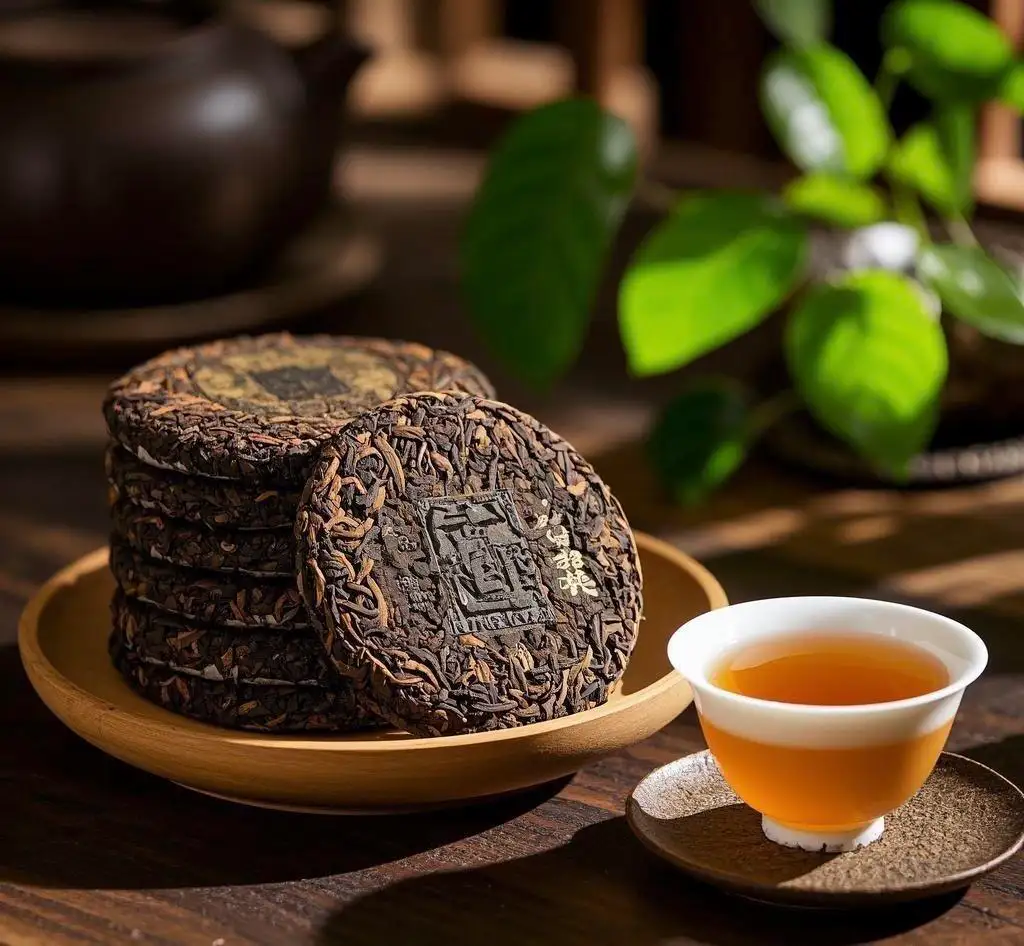
Compression: The dried loose tea (máo chá) is steamed to soften it, then pressed into the distinctive Pu’er shapes: round cakes (bǐng chá, typically 357g), bricks (zhuān chá), nests (tuó chá), or mushroom shapes (jǐn chá). The compression is functional: compact shapes are easier to transport and store, and the interior tea ages differently from the exterior, adding complexity.
Aging (sheng) or Pile Fermentation (shu): Sheng cakes are wrapped in paper and stored in controlled environments to age naturally for years or decades. Shu undergoes the 45–60 day wò duī process before compression.
How to Taste & Buy Pu’er
Tasting Like a Pro
Pu’er is brewed gōngfū style — small teapot or gaiwan, lots of leaf, short infusions, many rounds. A single serving of good Pu’er can be brewed 10–15 times, with the flavor evolving across each infusion. Pay attention to:
Huí gān (回甘 — returning sweetness): The sweetness that rises in the throat after swallowing. Great Pu’er has powerful huí gān — the sweetness arrives seconds after the initial sip and lingers for minutes. This is the single most prized quality.
Chá qì (茶气 — tea energy): The physical sensation old-tree Pu’er produces — warmth spreading through the body, a tingling in the scalp, a feeling of relaxation and clarity. Chá qì is almost mystical in Pu’er culture, and while skeptics attribute it to caffeine, experienced drinkers insist it’s something more.
Body & texture: The weight and feel of the tea in your mouth — silky, thick, oily, or thin. High-quality Pu’er has a substantial, almost viscous mouthfeel.
Buying Tips
Start with shu if you’re new to Pu’er. It’s more approachable, more affordable, and gives you a baseline before exploring sheng.
Buy from reputable sources. The Pu’er market is plagued by fakes and mislabeled products — especially for “ancient tree” and “aged” designations. In Yunnan, buy directly from tea farmers in the mountains, from established tea shops in Kunming (the Xiongda or Kangle tea markets), or from the tea markets in Menghai town near Xishuangbanna.
Budget guide: Decent shu cakes start at ¥50–100. Good sheng from known mountains: ¥200–1,000. Premium ancient-tree single-origin sheng: ¥1,000–10,000+. Properly aged vintage (15+ years): ¥2,000–50,000+. If a price seems too good to be true, it probably is.
Sample first. Any reputable tea shop will brew samples before you buy. Taste at least 3–4 teas before committing. And don’t be intimidated — the best tea sellers in Yunnan are patient teachers who enjoy sharing their knowledge.
Visiting the Tea Regions
Jingmai Ancient Tea Forest (UNESCO): The essential tea mountain visit. 3 hours from Xishuangbanna (Jinghong) or 4 hours from Pu’er city. Stay in a Bulang village guesthouse, walk the forest trails, watch tea processing from leaf to cake, and taste tea brewed from leaves picked that morning. Budget 2–3 days.
Yiwu: The most historically important tea mountain. Accessible from Jinghong (5 hours by car) or Mengla (2 hours). The town has several tea workshops that welcome visitors. Yiwu’s old-town architecture — crumbling Tea Horse Road merchant houses — adds historical atmosphere.
Menghai & Laobanzhang: The center of modern Pu’er production. The Menghai Tea Factory (Dayi brand — the world’s largest Pu’er producer) offers limited tours. Laobanzhang village, 40 minutes from Menghai, is the most famous single-origin tea village in the world — visiting during spring picking season (March–April) is extraordinary.
Pu’er City (Simao): The city that gave the tea its name. A pleasant small city with good tea shops, a tea culture museum, and access to surrounding tea mountains. Fly from Kunming (45 min) or drive from Xishuangbanna (3 hours).
Kunming tea markets: If you can’t reach the mountains, Kunming’s wholesale tea markets — particularly the Xiongda Tea City (Xióngdá Cháchéng) — are the province’s largest tea trading centers. Hundreds of shops selling every variety and vintage. Go with a knowledgeable guide if possible.
For incorporating tea visits into a broader Yunnan trip, see our Yunnan itinerary guide. For the full Xishuangbanna experience beyond tea, see our Xishuangbanna travel guide.
Tea Culture Etiquette
Accept tea graciously. In Yunnan, offering tea is a fundamental gesture of hospitality. Accept at least a cup, even if you’re not a tea drinker. Refusing is considered impolite.
Tap the table. When someone pours you tea, tap two fingers on the table twice as a thank-you. This gesture (kòu shǒu lǐ) is universal in Chinese tea culture and will be noticed and appreciated.
Pour for others first. In a group tea session, always pour for others before filling your own cup. Pour the eldest or most honored guest first.
Don’t rush. A proper Pu’er tasting session can last 1–2 hours over 10+ infusions. The tea unfolds gradually, and the experience is as much about conversation, atmosphere, and slowing down as it is about flavor. In Yunnan, tea time is never hurried.
Pu’er is a fermented tea from Yunnan province, made from large-leaf tea trees. It’s unique among teas for improving with age — properly stored Pu’er can develop for decades, gaining complexity and value. It comes in two forms: sheng (raw, naturally aged) and shu (ripe, accelerated fermentation). Pu’er’s origins trace back over 1,000 years to the Tea Horse Road trade.
Sheng (raw) Pu’er ages naturally over years or decades, transforming from bright and astringent to smooth and deeply complex. Shu (ripe) Pu’er uses accelerated pile fermentation (invented in 1973) to produce a dark, smooth, earthy tea that’s ready to drink immediately. Sheng is the collector’s tea; shu is the everyday drinker.
Yes. The Jingmai Ancient Tea Forest (UNESCO site) is the most rewarding visit — ancient trees, Bulang village homestays, and tea processing demonstrations. Yiwu, Menghai, and Laobanzhang are other accessible options. Most tea mountains are 3–5 hours from Xishuangbanna or Pu’er city. Budget 2–3 days for a meaningful tea mountain experience.
The range is enormous. Decent shu cakes: ¥50–100. Good sheng from known mountains: ¥200–1,000. Premium ancient-tree sheng: ¥1,000–10,000+. Vintage aged Pu’er (15+ years): ¥2,000–50,000+. Buy from reputable sources — the market has many fakes. Always taste before buying.
Best options: directly from tea farmers in the mountains (Jingmai, Yiwu, Menghai), Kunming’s Xiongda Tea City for variety and competitive prices, established tea shops in Dali and Lijiang for convenience. Always taste before buying. Avoid tourist shops that sell heavily marked-up generic cakes. A knowledgeable guide or tea-savvy friend makes a huge difference.