Often described as an “alien civilization” due to its bizarre aesthetic, the Sanxingdui Museum is the ultimate destination for those who want to see a side of China that defies traditional history books. Located in Guanghan, about 40km northeast of Chengdu, this site represents the capital of the ancient Shu Kingdom, which flourished 3,000 to 5,000 years ago.
After “sleeping for thousands of years,” these relics woke up in the 1980s to amaze the world. In July 2023, a massive new museum building was opened to house these treasures.
1. The 2023 New Museum: “The Eye of Ancient Shu”
The new facility is a masterpiece of modern architecture, featuring a facade that mimics the “eyes” of the bronze masks within.
- Exhibition Area: Over 22,000 square meters housing 1,500+ precious artifacts.
- The Vibe: The route is well-designed, allowing you to walk through three themed areas—”Century Dream Chasing,” “Majestic Royal Capital,” and “Heaven, Earth, Man and God”—naturally without getting lost.
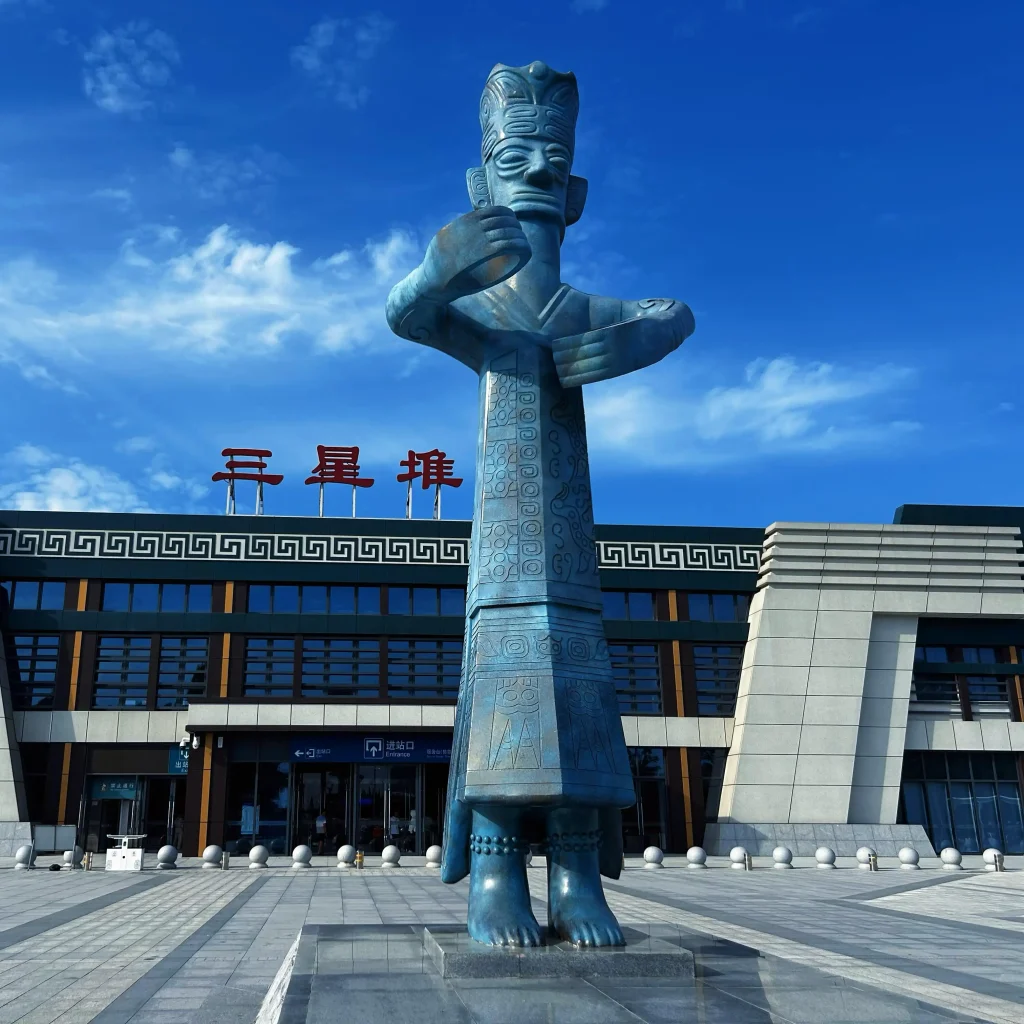
2. Iconic Artifacts You Cannot Miss
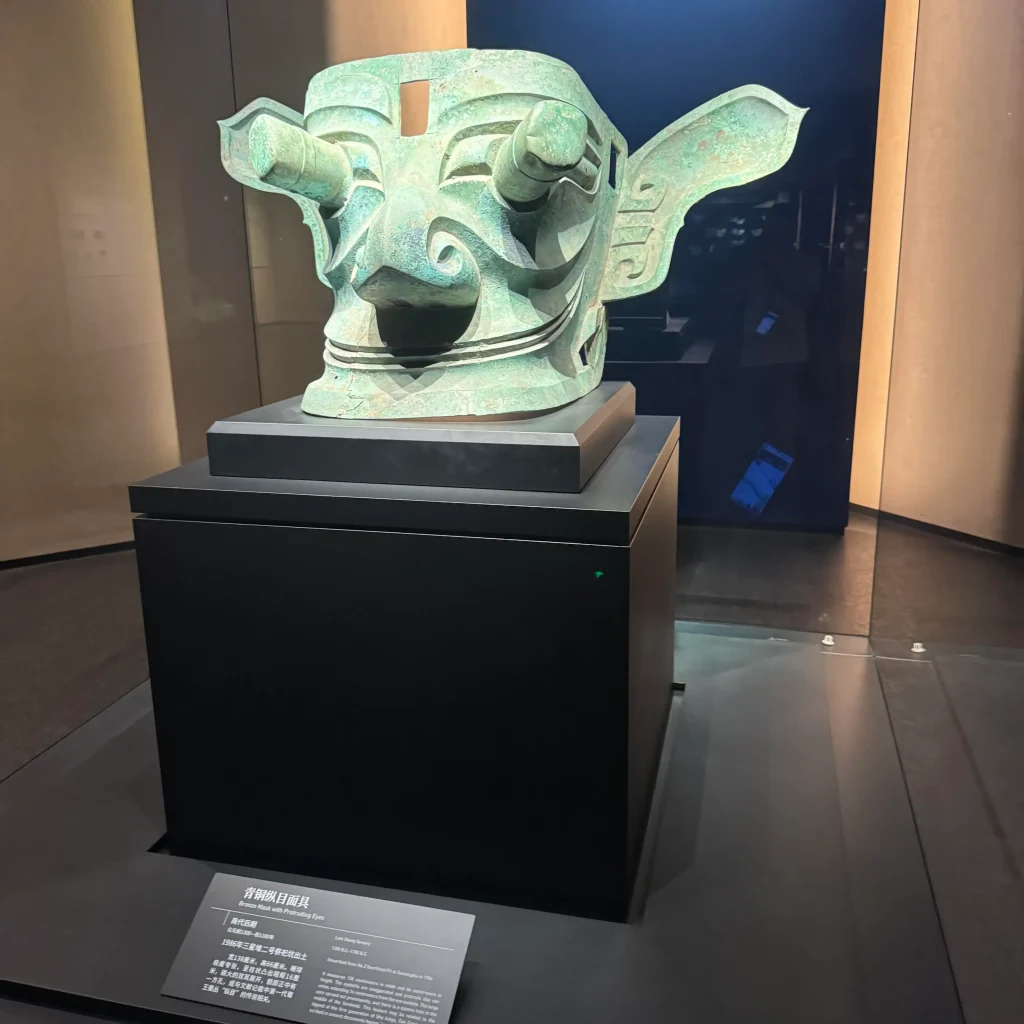
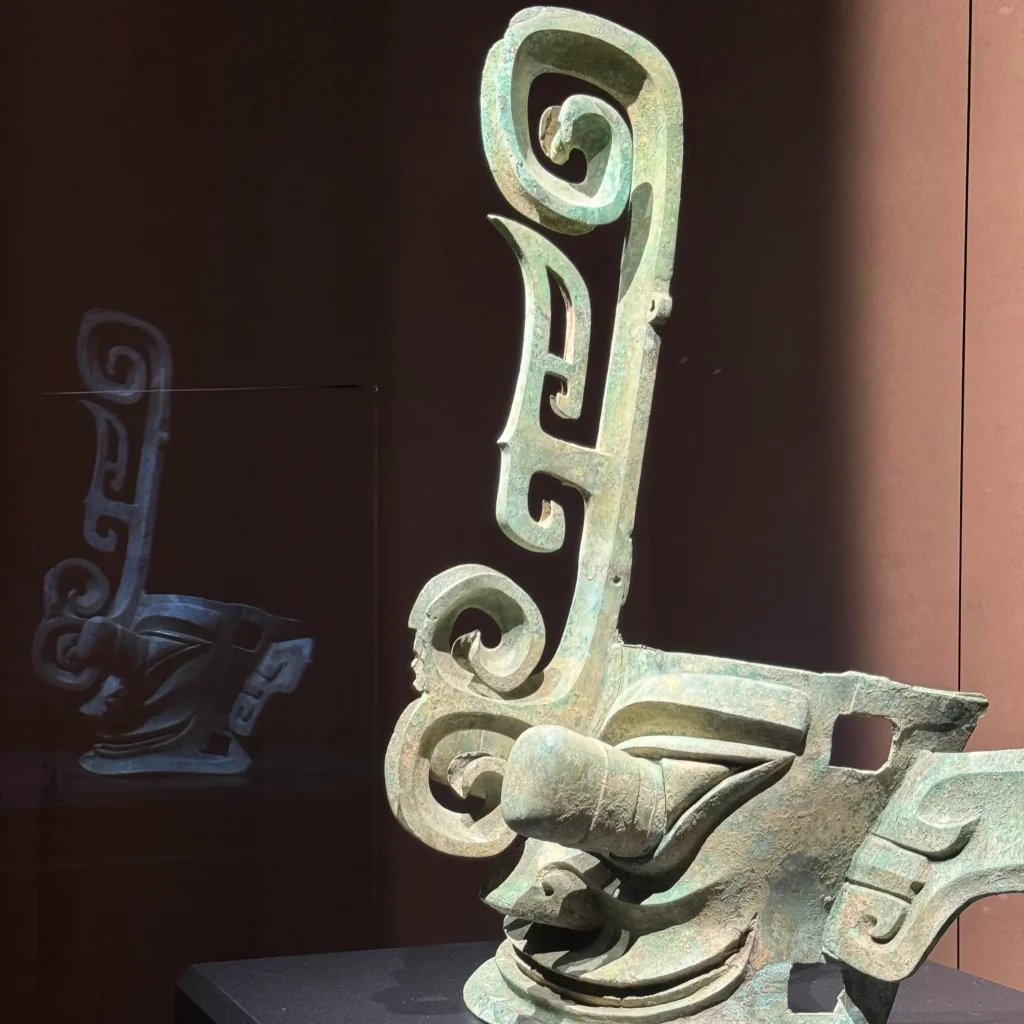
The Protruding-Eye Bronze Masks
These are the museum’s most famous residents. The massive masks feature eyes that extend outwards like telescopes, suggesting a civilization that prioritized “infinite vision” or a connection to the supernatural.
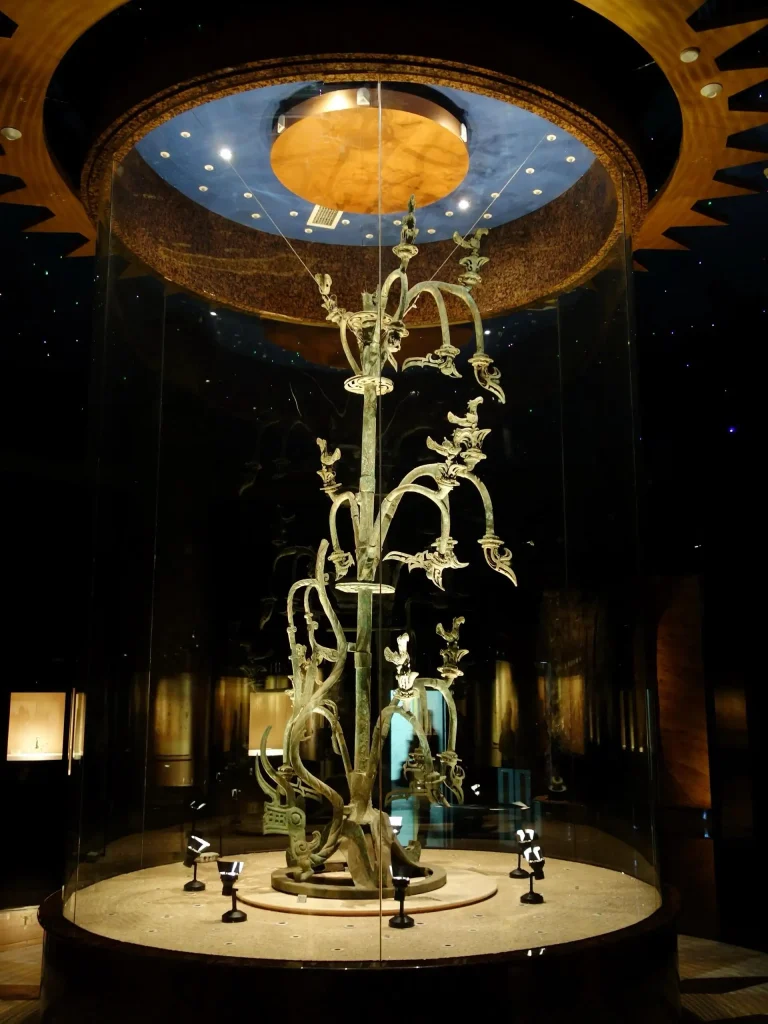
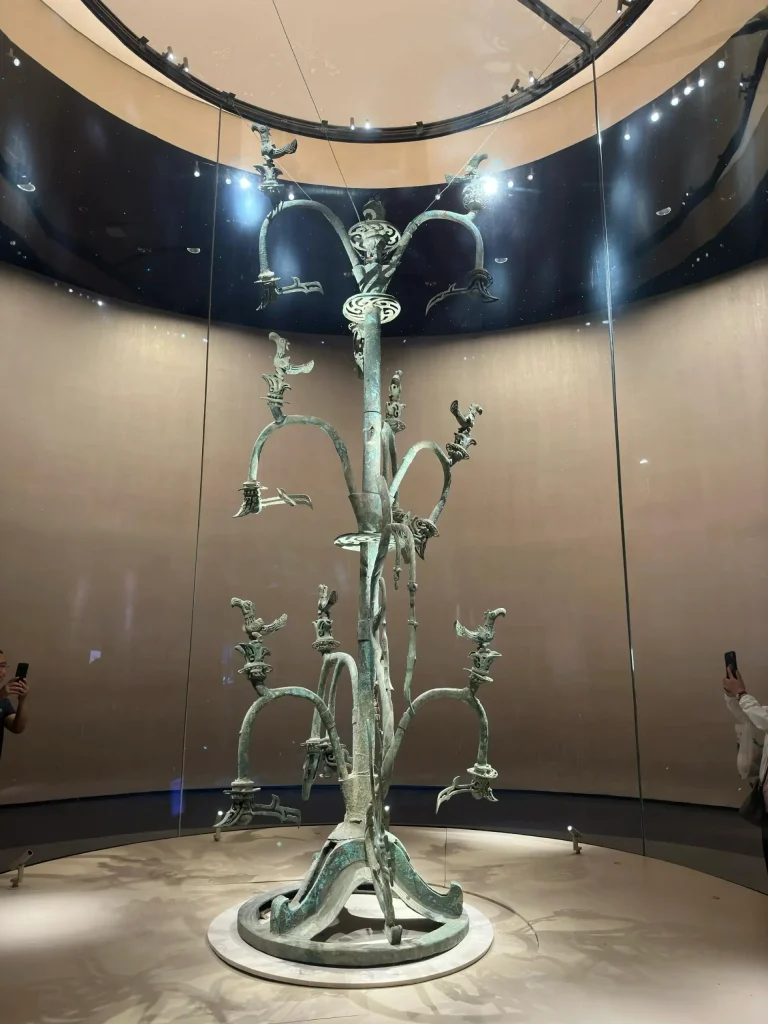
The Bronze God Tree (Shenshu)
Standing nearly 4 meters tall, this is the largest Bronze Age artifact ever discovered. It matches the “Fusang Tree” described in the ancient mythic text Shan Hai Jing. Look for the nine bronze birds perched on its branches—according to legend, they represent the nine suns resting at night while the tenth flies across the sky.
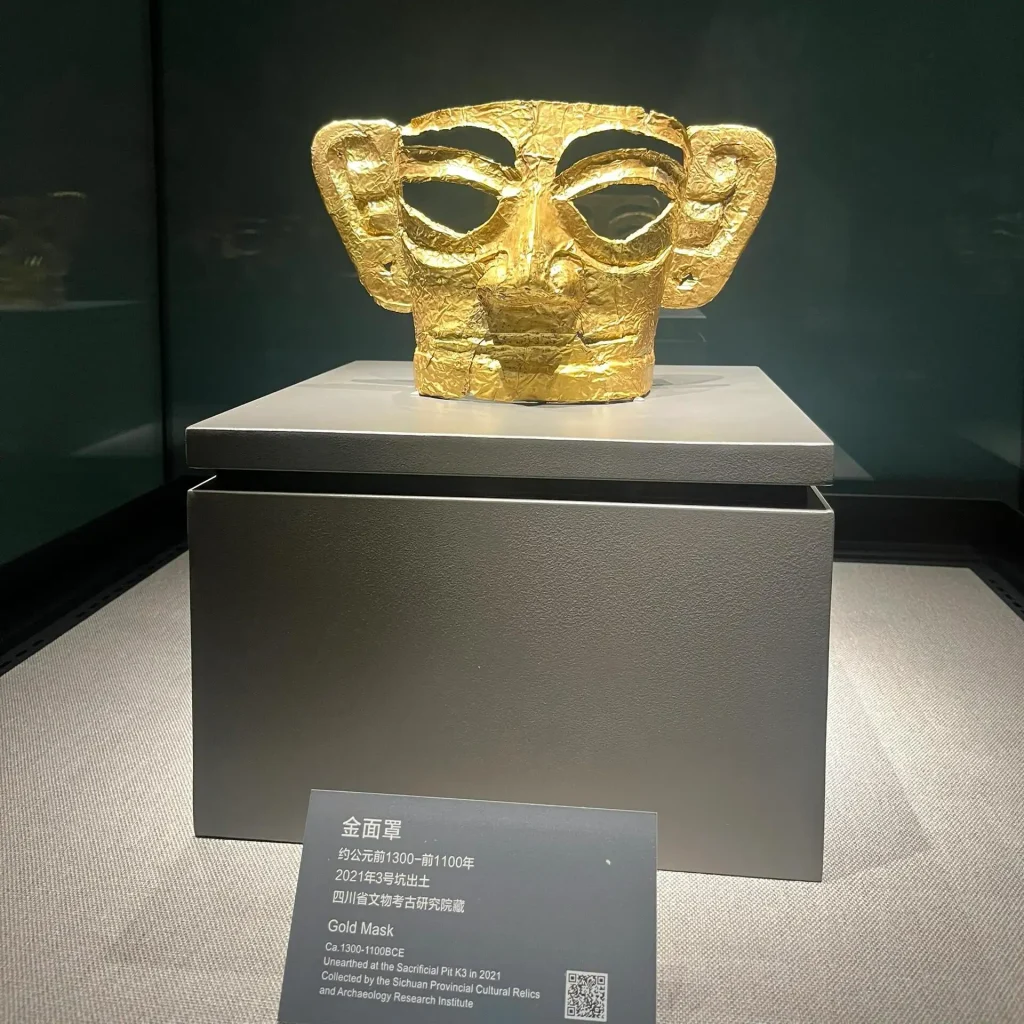
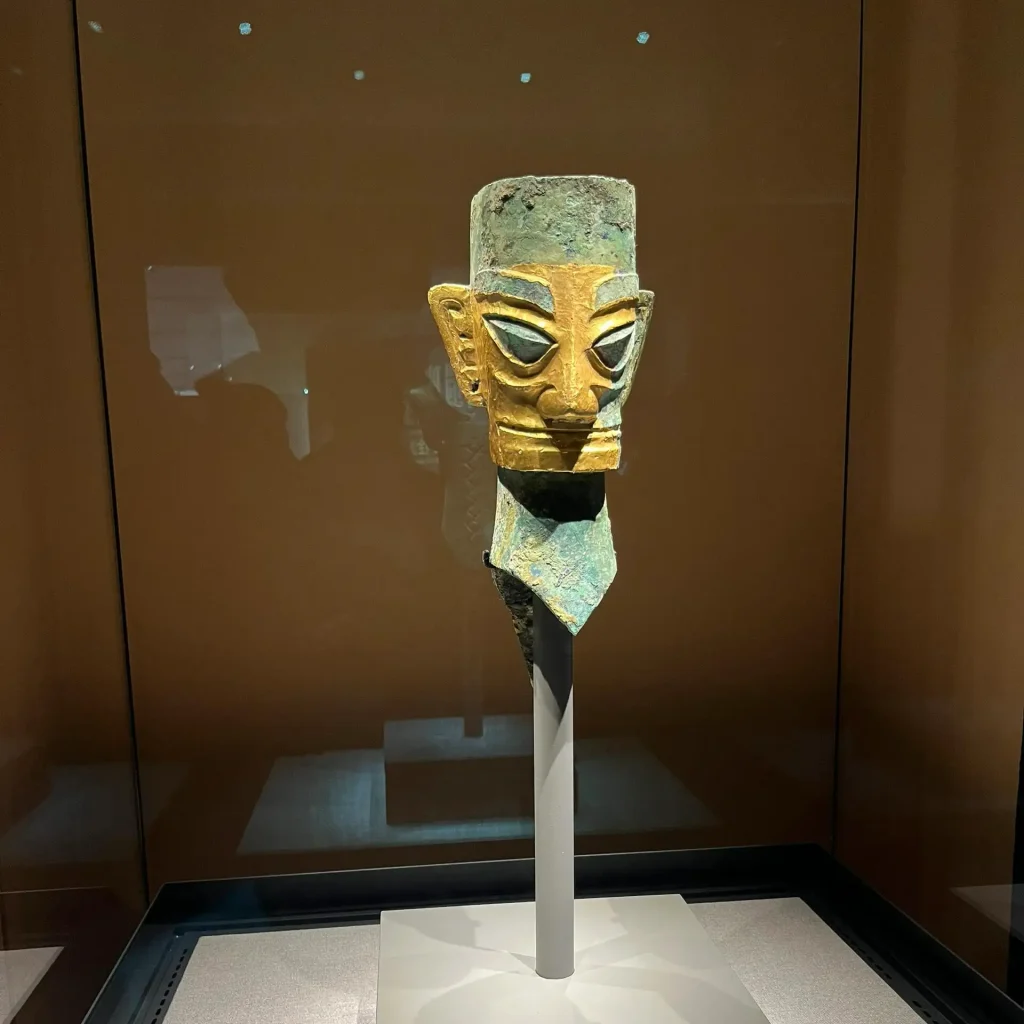
The Bronze Figure with Golden Mask
The Shu people were masters of gold. The thin gold foils applied to bronze heads indicate a high-level ritualistic culture that was distinct from the Central Plains (Yellow River) civilizations of the same era.
3. Practical Survival Tips for 2026
- Tickets: The entrance fee is 72 RMB.
- Avoid the Crowd: Sanxingdui is notoriously crowded. Avoid the first weeks of January, May, and October, as well as the entire months of July and August.
- English Support: Digital audio guides are available for 50 RMB, while professional human English guides cost approximately 400 RMB (booking on-site is recommended).
- How to Get There: You can take a 20-minute high-speed train from Chengdu to Guanghan North and then a short taxi ride, or book a private car from Chengdu.
4. Connecting the Archaeological Dots
Sanxingdui is not an isolated mystery; it is the first chapter of a much larger story. As this civilization evolved and shifted, its legacy moved closer to modern-day Chengdu.
To understand how the Sanxingdui people influenced the later Jinsha site and the heroic Three Kingdoms era that followed, explore our primary history guide: A Journey from the Alien-Like Masks of Sanxingdui to the Heroic Legends of Wuhou Shrine
Conclusion
Sanxingdui offers a glimpse into a ‘lost world’ that feels more like myth than reality. Whether you are mesmerized by the dragon-climbing God Tree or the telescopic eyes of the bronze kings, this museum is proof that China’s cultural roots are far more diverse and mystical than we once believed.