Before London was a city or New York was a dream, Xi’an (then known as Chang’an) was the center of the known world. As the eastern departure point of the Silk Road, this ancient capital functioned as the world’s first global engine, driving an exchange of goods, religions, and technologies that permanently altered human civilization.
In 2026, thanks to the expanded 240-hour visa-free transit policy, international travelers can spend 10 full days retracing these ancient footsteps through Shaanxi province without a traditional visa.
The Accidental Dawn: Zhang Qian’s “Opening of the West”
The Silk Road didn’t start with merchants, but with a soldier. In 138 BC, Emperor Wu of the Han Dynasty dispatched an envoy named Zhang Qian from Chang’an to find military allies against nomadic tribes.
Though his mission was military, Zhang Qian returned with intelligence about advanced civilizations in Persia and the Mediterranean. This “accidental exploration” sparked the first official trade routes between China and the West, eventually bringing Chinese silk to the backs of Roman Senators and Roman glassware to the imperial courts of Chang’an.
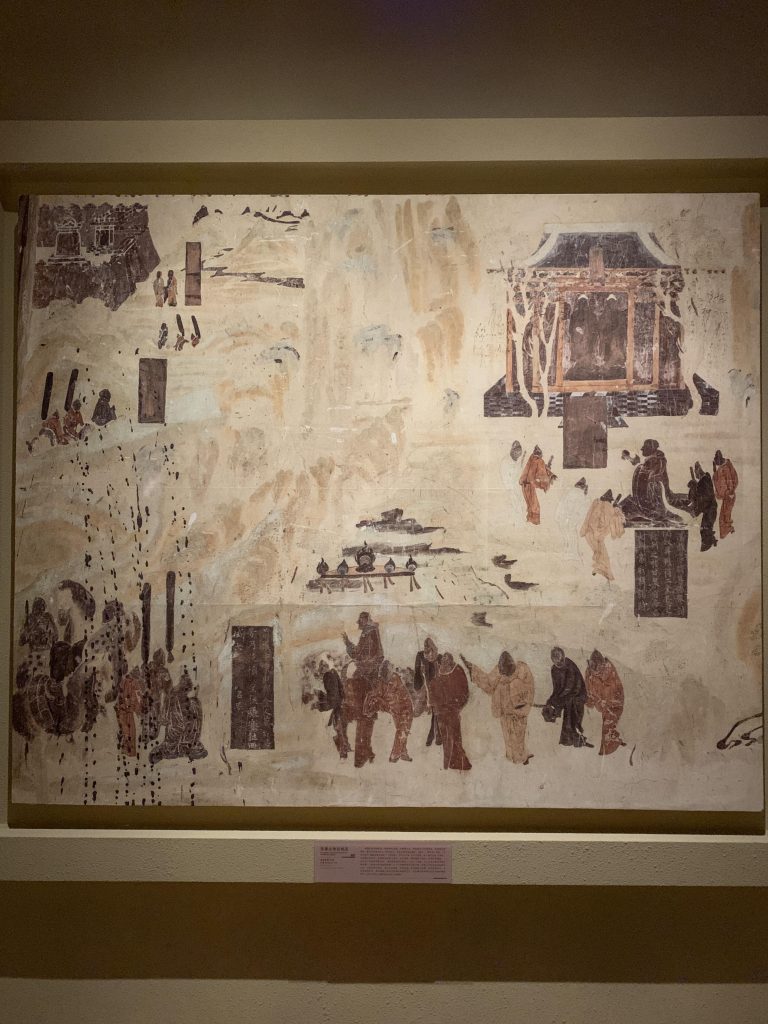
Tang Dynasty Chang’an: The Medieval Global Hub
Between 618 and 907 AD, Xi’an was the most cosmopolitan city on Earth, with a population exceeding one million.
- A Tapestry of Faiths: The city was an unprecedented haven of religious pluralism. Beyond Buddhism, Chang’an welcomed Nestorian Christianity (documented on the Nestorian Stele), Zoroastrianism, and Manichaeism.
- Sogdian Middlemen: Merchants from Central Asia (modern-day Uzbekistan) were vital agents who brought Samarkand peaches, Middle Eastern spices, and “Western” fashions that became the obsession of the Tang elite.
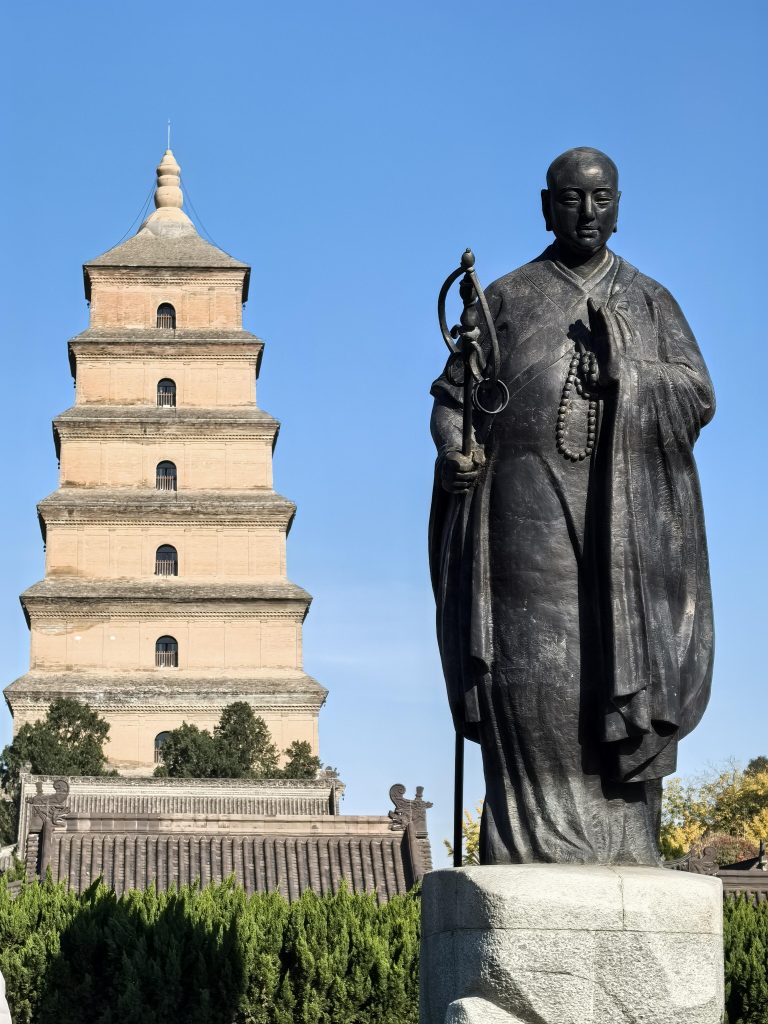
- The Scientist-Monk: The iconic Big Wild Goose Pagoda was built in 652 AD specifically to house 657 Sanskrit scriptures brought back from India by the monk Xuanzang via the Silk Road.
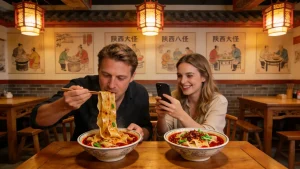
You can still taste the Silk Road today. The flavor profile of Xi’an—defined by heavy use of cumin, peppercorns, and lamb—is a direct inheritance from Middle Eastern traders. When you eat a Yangrou Paomo (pita bread stew), you are eating a 1,000-year-old dish born from the meeting of Arab flatbread traditions and Shaanxi’s wheat culture.
Essential 2026 Stops for History Buffs
- Shaanxi History Museum: To see Silk Road treasures like the Sancai (tri-color) glazed camels and Hejia Village gold artifacts. (Tip: Paid tickets for the Mural Hall are your best bet to skip the crowds).
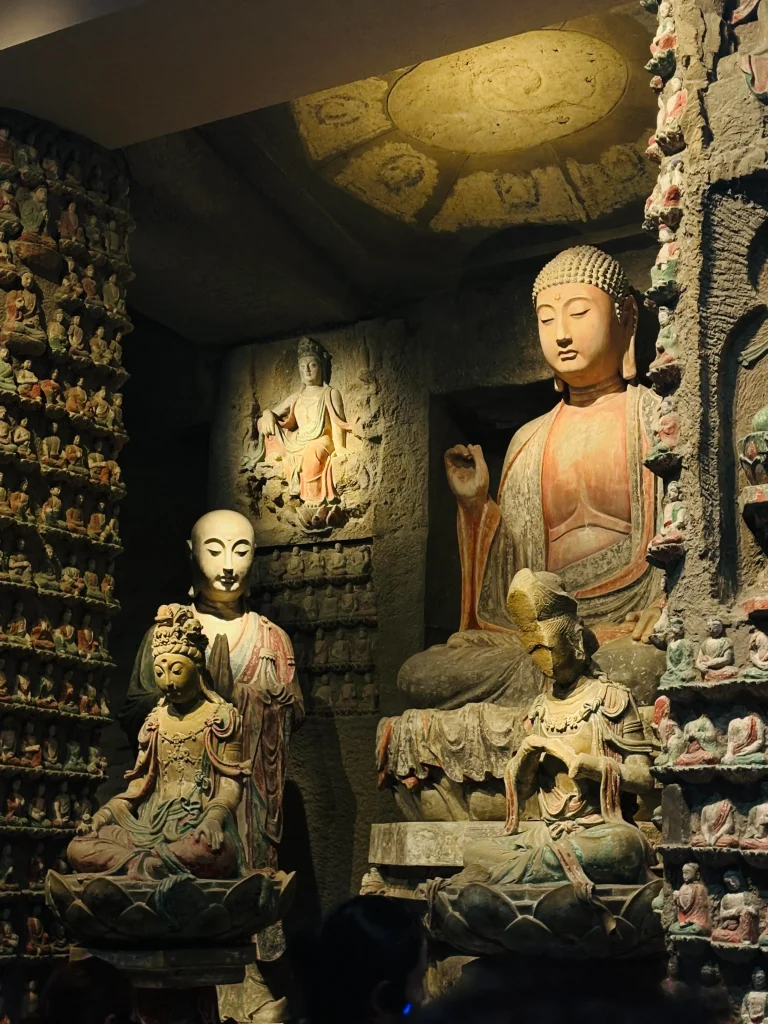
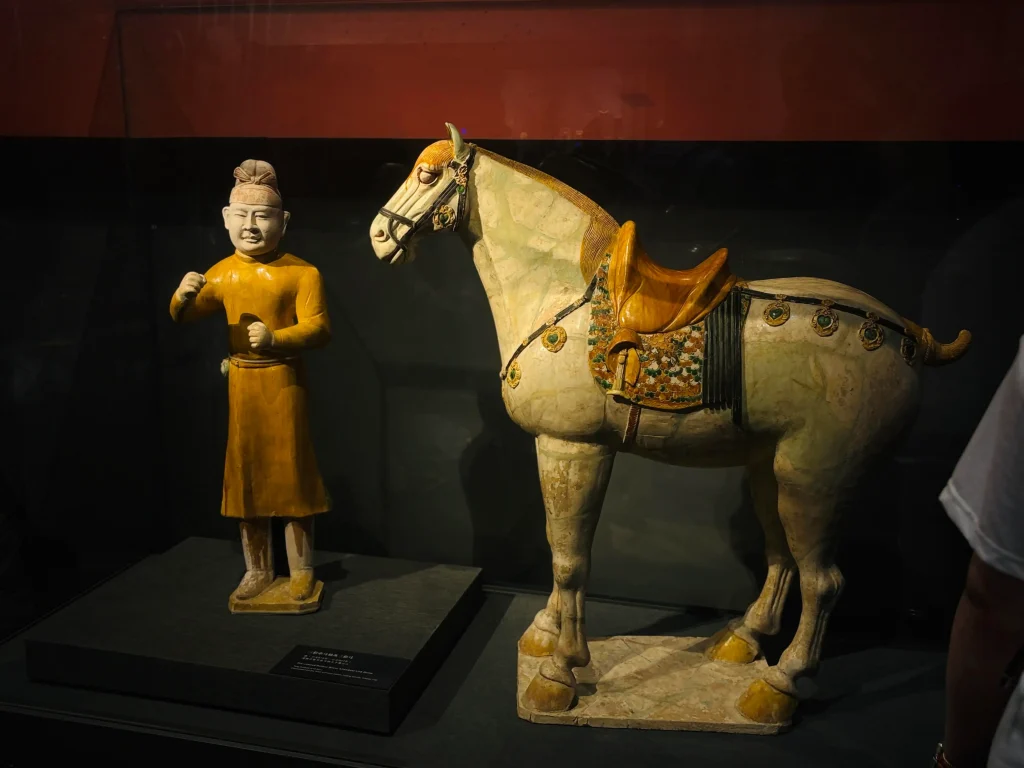
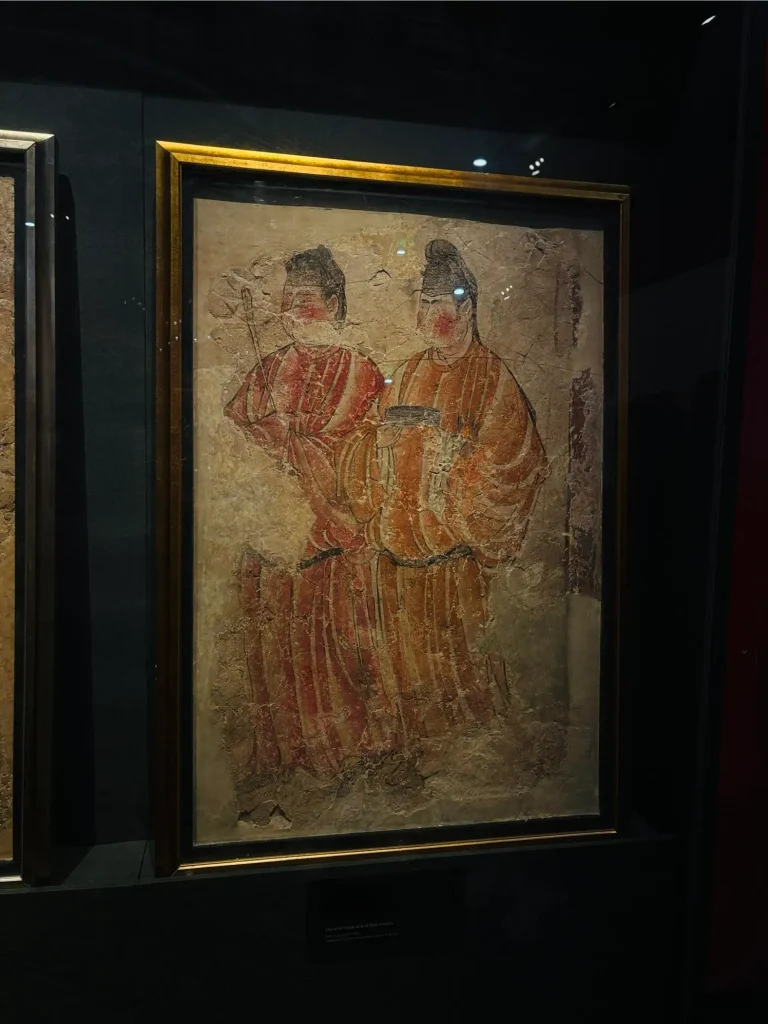
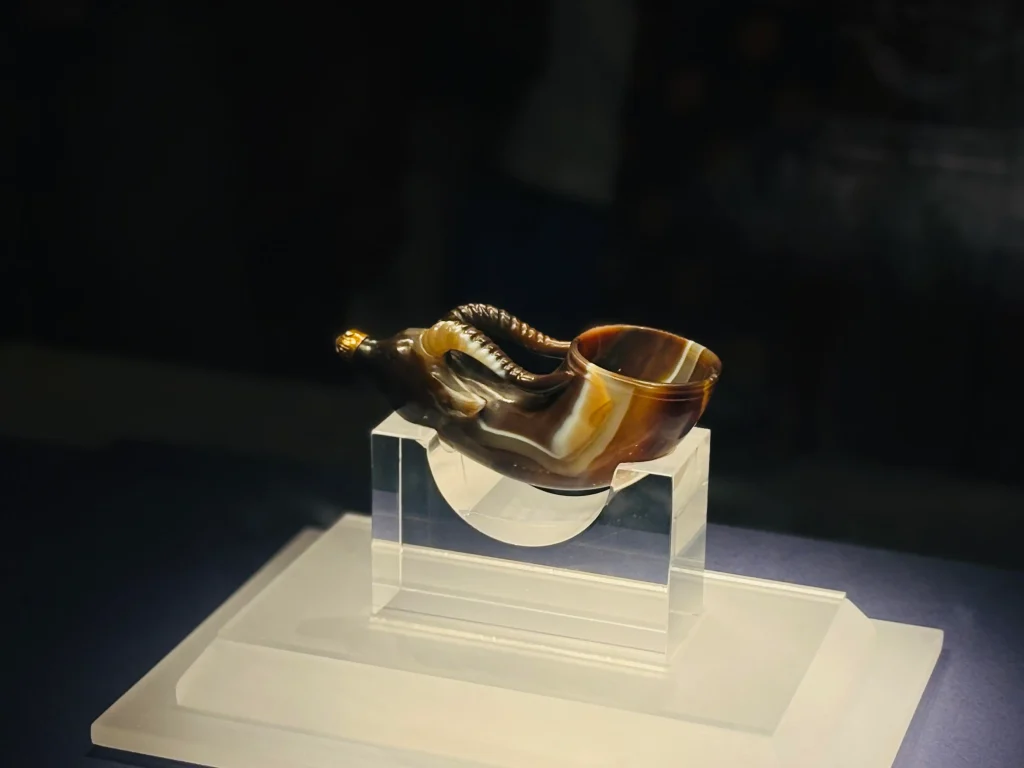
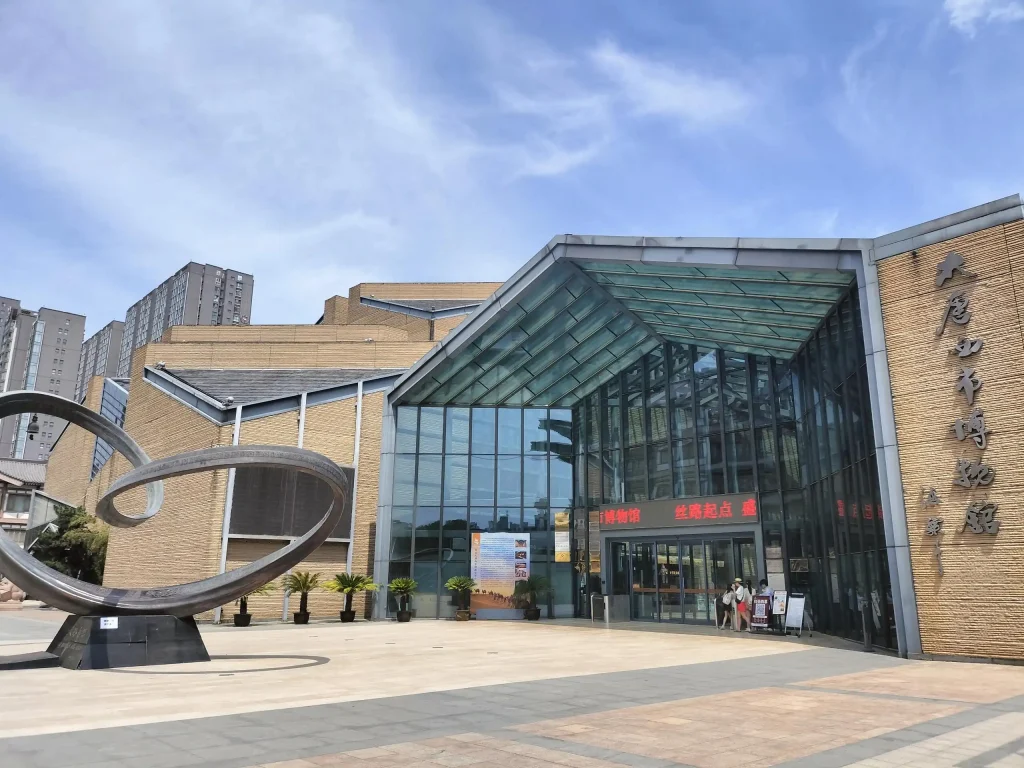
- The West Market Museum: Built over the original site of the Tang-era “International Market,” where caravans from Central Asia first arrived.
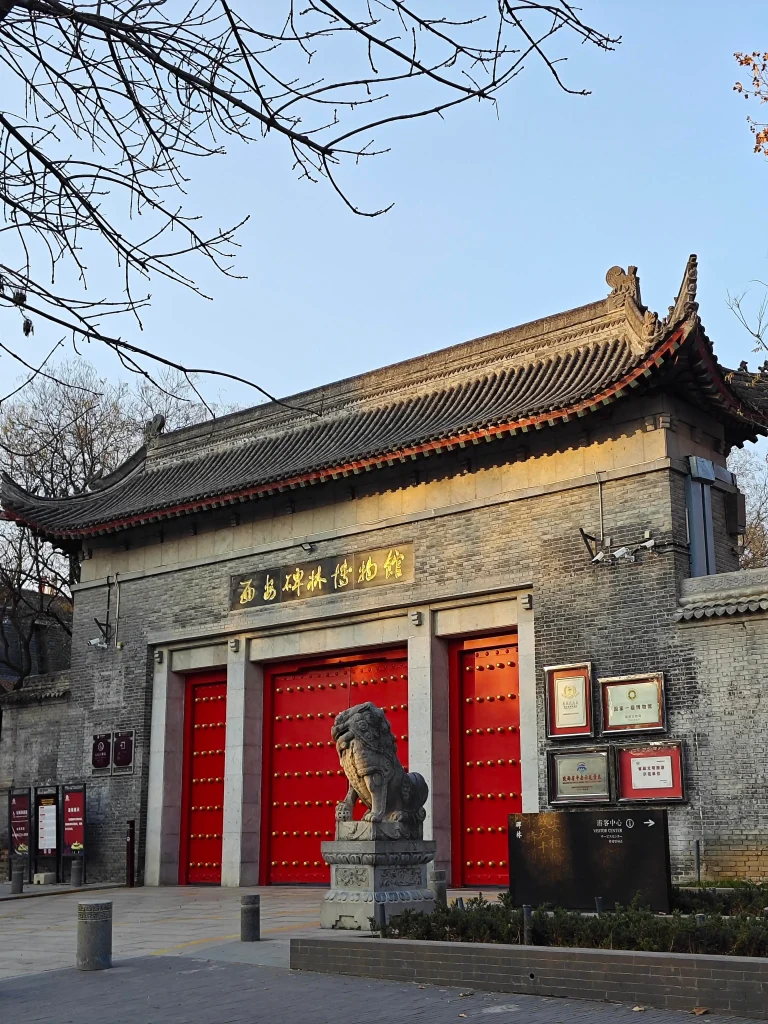
- Beilin Museum (Forest of Stone Steles): Home to the Nestorian Stele, which details how Christianity arrived in China via the Silk Road in 635 AD.
👉 If you’re planning your first visit, start with our Ultimate Xi’an Travel Guide for First-Time Visitors, which shows how food fits into sightseeing days.