Where saffron-robed monks chant at dawn in a monastery the size of a small city, yak herds drift across golden meadows, and prayer flags carry wishes into a sky so blue it aches.
Yunnan’s northwest corner — the area centered on Shangri-La and extending north to Deqin and the sacred Meili Snow Mountain — is culturally Tibetan. The language is Tibetan. The religion is Tibetan Buddhism. The food is yak butter tea and tsampa. The architecture is stone-and-timber fortress-like homes with prayer flags on the roof. And the spiritual landscape — monasteries, sacred mountains, pilgrimage circuits — operates according to a cosmology that has shaped daily life here for centuries.
Approximately 150,000 Tibetans live in Yunnan’s Diqing Prefecture, making it the southernmost extension of the Tibetan cultural world. While geographically part of Yunnan, culturally this region belongs to the vast Tibetan Plateau — a fact that becomes immediately apparent when you step off the bus from Lijiang and feel the cold, thin air, hear the deep resonance of monastery horns, and see the prayer wheels spinning in the hands of passing elders.
This guide explores the Tibetan culture you’ll encounter in Yunnan — the religion, the daily rituals, the festivals, and the etiquette that will help you engage respectfully. For Shangri-La’s travel logistics, see our Shangri-La travel guide. For how Tibetan culture fits into Yunnan’s broader ethnic mosaic, see our ethnic minorities guide and Yunnan culture guide.
What this guide covers: Tibetan Buddhism in Yunnan → Songzanlin Monastery → Daily life & rituals → Sacred mountains → Festival calendar → Highland cuisine → Etiquette & respectful engagement → FAQ.
Tibetan Buddhism in Yunnan
The Tibetan communities of Yunnan practice Gelug (“Yellow Hat”) Tibetan Buddhism — the school headed by the Dalai Lama and characterized by monastic discipline, scholastic rigor, and the distinctive golden-roofed monastery architecture. Buddhism arrived in this region through the Tea Horse Road, carried by monks and merchants who traveled between Lhasa and Yunnan’s lowland trading centers. By the 17th century, the Gelug school was firmly established, and the construction of Songzanlin Monastery in 1679 — commissioned by the Fifth Dalai Lama himself — made Shangri-La a major center of Tibetan Buddhist learning and practice.
The Buddhism practiced here is not a historical relic — it’s the organizing principle of daily life. The monastery sets the community calendar. Monks serve as teachers, counselors, and spiritual guides. Families send at least one son into monastic training as a matter of tradition and spiritual merit. Religious practice — spinning prayer wheels, circumambulating sacred sites, making offerings, chanting mantras — is woven into every ordinary action.
For visitors from non-Buddhist backgrounds, encountering this depth of lived spiritual practice is often the most powerful aspect of a Shangri-La visit. The key is approaching it with openness and respect, rather than treating it as spectacle.
Songzanlin Monastery: Yunnan’s Spiritual Heart
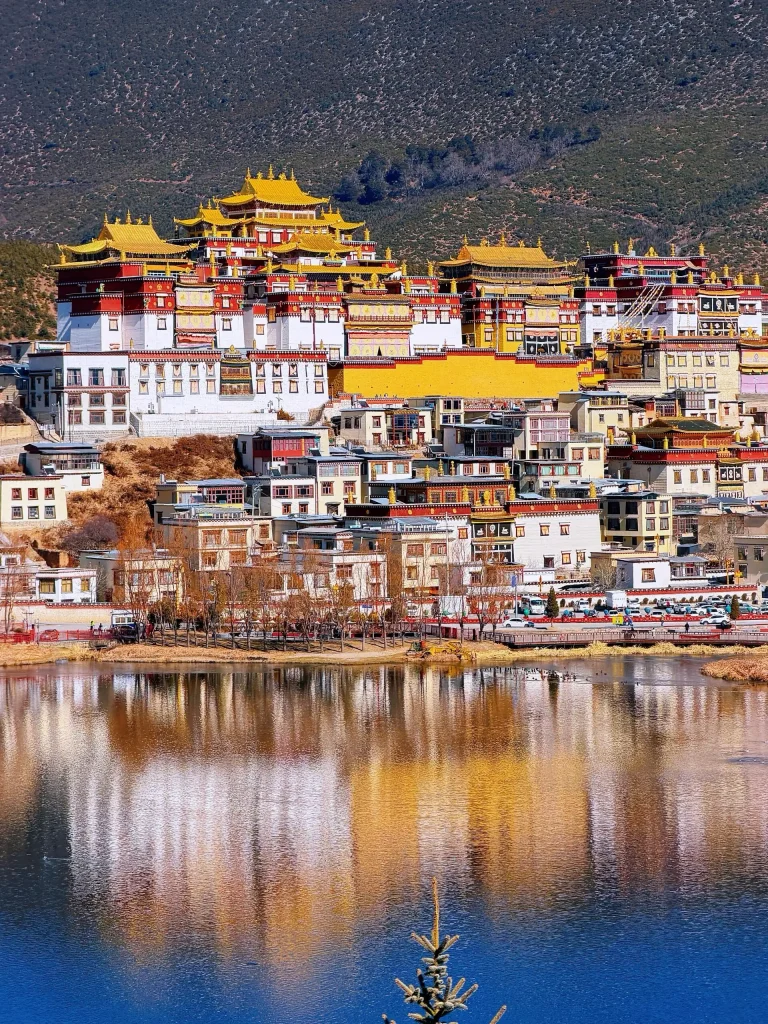
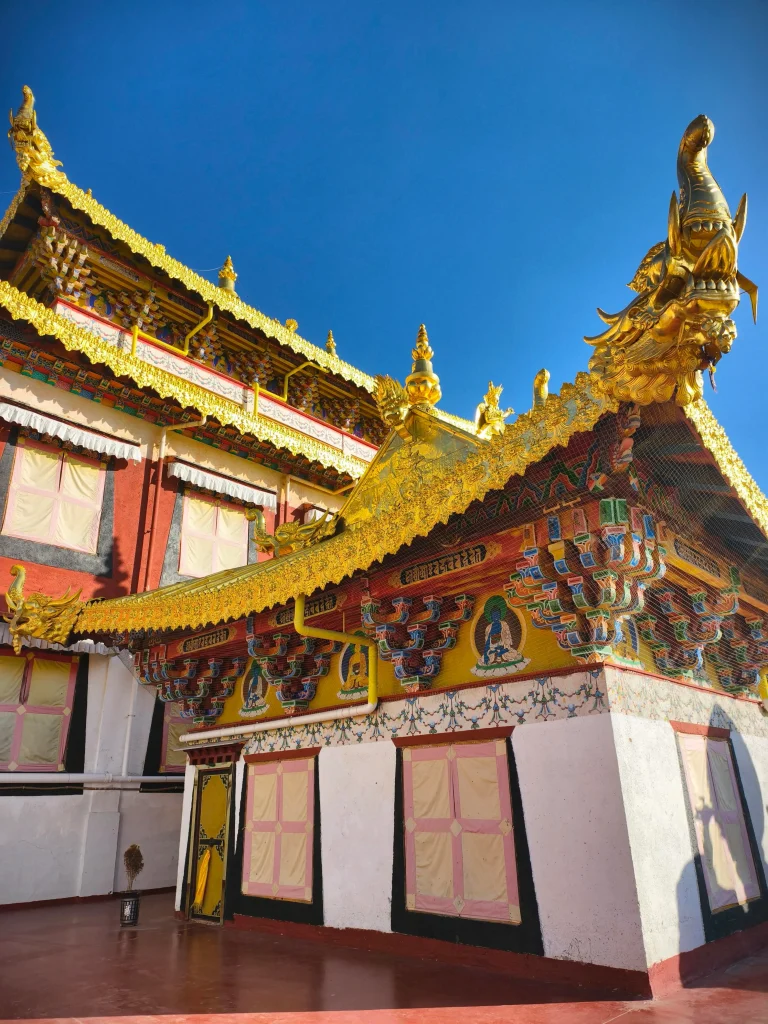
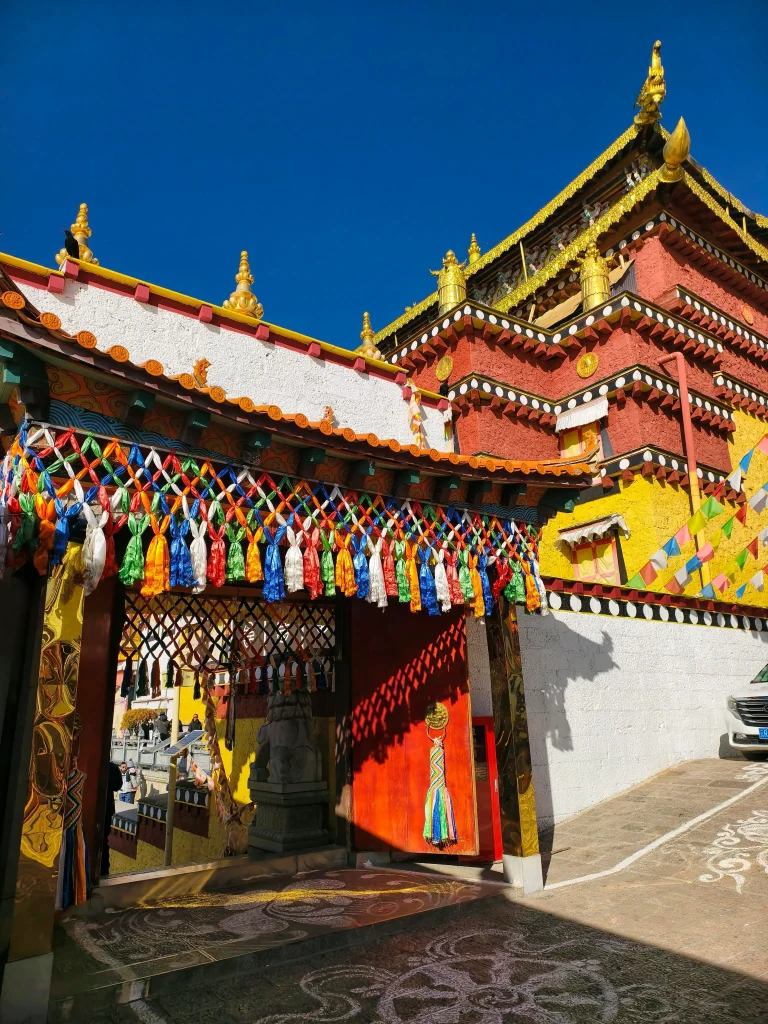
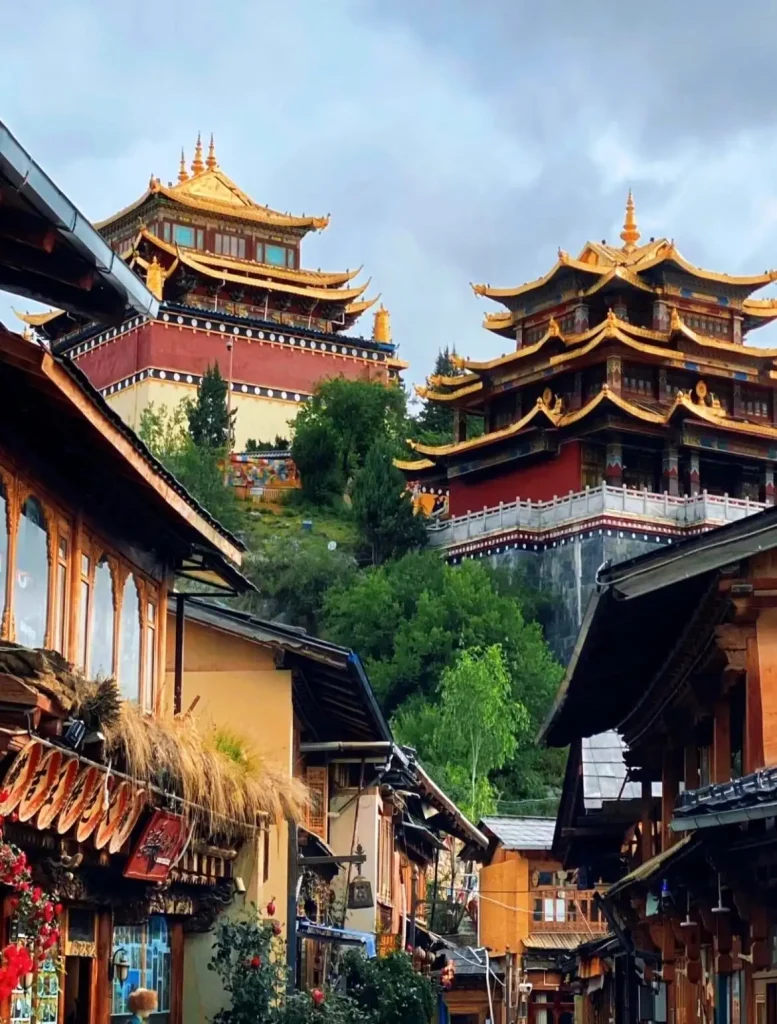
Songzanlin (Ganden Sumtseling) is the largest Tibetan Buddhist monastery in Yunnan and one of the most visually dramatic religious complexes in China. Built on a hillside 5 km north of Shangri-La town, it houses approximately 700 monks and comprises a vast campus of assembly halls, residential quarters, courtyards, and golden-roofed temples that cascade upward in a silhouette often compared to a miniature Potala Palace.
What to See
The Main Assembly Hall (Tsokchen): A towering hall with a massive golden Buddha as the centerpiece, walls covered in thangka paintings depicting Buddhist cosmology, and rows of monks’ cushions where daily prayer services are held. The hall’s interior — dimly lit by hundreds of yak-butter lamps — is profoundly atmospheric.
The Two Main Temples: Zhacang and Jikang temples flank the assembly hall, each with their own golden roofs and religious treasures. Jikang houses ancient manuscripts and relics.
The Monk’s Quarters: The residential buildings, housing the monastery’s 700 monks, spread across the hillside in a network of lanes and courtyards that feel like a small town. Walking through these areas — monks studying in doorways, prayer wheels spinning, the smell of yak-butter tea — is as meaningful as visiting the main halls.
Visiting Etiquette
Dress modestly: cover shoulders and knees. Walk clockwise around all religious structures and prayer wheels — the clockwise direction follows the path of the sun and is considered auspicious. Don’t touch Buddha images, thangkas, or religious objects. Photography is usually permitted in courtyards but not inside the main assembly hall — always ask first. Remove shoes before entering any prayer hall.
Hire a Tibetan guide: Available at the monastery entrance (included in the ¥90 admission ticket group option, or negotiate privately). A guide transforms the visit from architectural appreciation into genuine spiritual understanding — they explain the iconography, the daily rhythms, the meaning of the rituals, and the monastery’s 350-year history.
Daily Life & Rituals
Tibetan daily life in Yunnan follows a rhythm shaped by Buddhism, altitude, and the seasons. Understanding these patterns helps you see beyond the surface:
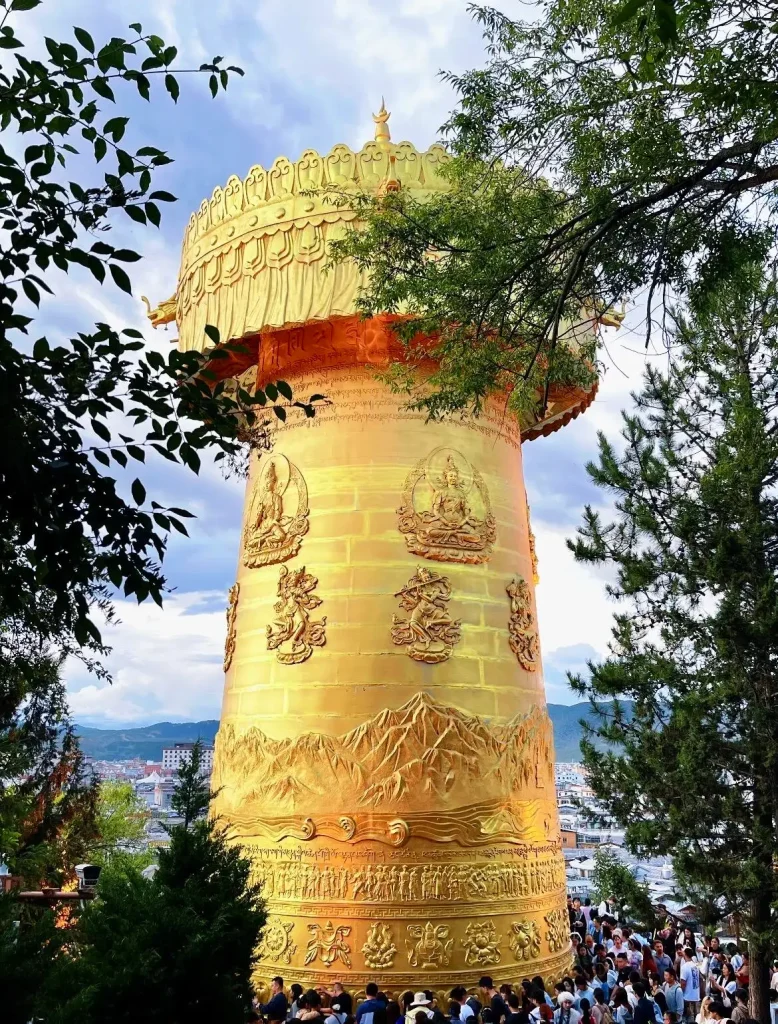
Prayer wheels (mání lún): Cylindrical devices containing printed mantras — spinning them is equivalent to reciting the prayers inside. You’ll see them everywhere: handheld wheels carried by elders, rows of large wheels outside temples, and the giant 21-meter prayer wheel on Guishan Hill in Dukezong Old Town. Spin them clockwise with your right hand.
Prayer flags (lónɡdá): Colorful flags printed with Buddhist mantras and sutras, strung across mountain passes, rooftops, and bridges. The five colors represent the five elements: blue (sky), white (air), red (fire), green (water), yellow (earth). As wind passes through the flags, the prayers are believed to be carried to all beings. You’ll see them everywhere in the Shangri-La region — a constant visual reminder of the spiritual landscape.
Kora (circumambulation): Walking clockwise around sacred sites — a monastery, a stupa, a sacred mountain — is one of the most important Tibetan Buddhist practices. The outer kora around Songzanlin Monastery takes about 45 minutes and offers beautiful views of the monastery and surrounding mountains. Join the locals on the path — it’s one of the most meditative experiences available to visitors.
Butter lamps: Yak-butter lamps (sū yóu dēng) burn in every temple and many homes, symbolizing the light of wisdom dispelling the darkness of ignorance. Making a butter lamp offering (a few yuan at any temple) is a simple way to participate in local spiritual practice.
Guozhuang dance: On most evenings, Tibetan families and visitors gather in the central square of Dukezong Old Town to dance the guozhuang — a communal circle dance performed to traditional music. The steps are simple, the atmosphere is joyful, and visitors are warmly welcome to join. No tickets, no stage — just community.
Sacred Mountains & Pilgrimage
In Tibetan Buddhism, certain mountains are considered sacred — abodes of protective deities, sites of spiritual power, and destinations for pilgrimage. Yunnan’s Tibetan region has two of the most important:
Meili Snow Mountain (Kawagebo, 6,740m)
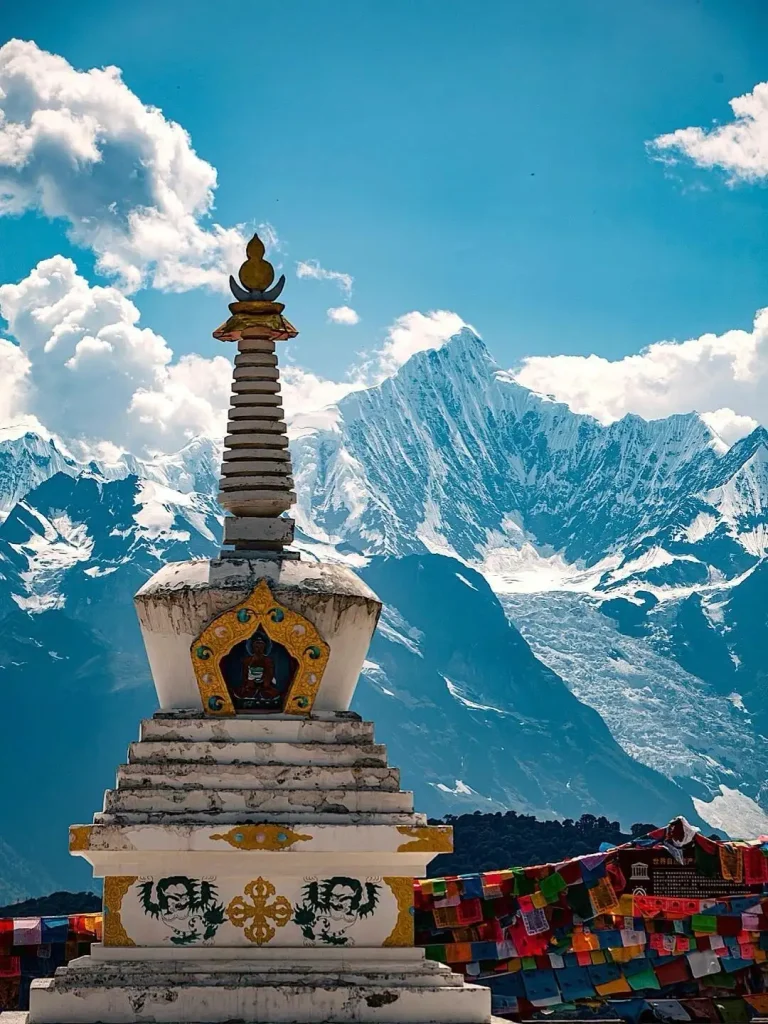
The highest peak in Yunnan and one of the most sacred mountains in the Tibetan Buddhist world. Kawagebo is considered a warrior deity who protects the surrounding communities. The mountain has never been successfully climbed — all attempts have been banned since 1991, when an avalanche killed 17 climbers. Tibetans consider the ban spiritually correct: some mountains are not meant to be conquered but revered.
The pilgrimage circuit around Meili Snow Mountain — the outer kora — takes 7–11 days on foot and is one of the great pilgrimages of the Tibetan world. For non-pilgrims, the viewpoint at Feilai Temple offers the famous “sunrise gold” — when the first light hits Kawagebo’s peak and turns it blazing gold against a dark sky. It’s the single most sacred mountain view in Yunnan. Our Shangri-La travel guide has the logistics for visiting Meili.
Baimang Snow Mountain (Baima Xueshan)
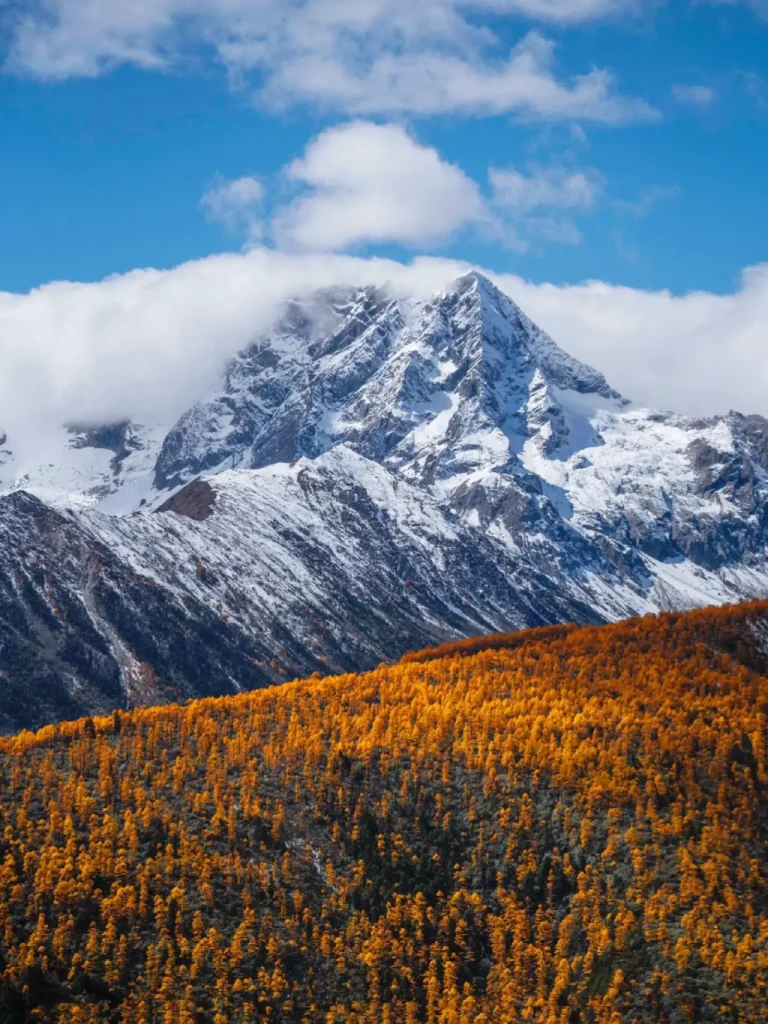
The pass between Shangri-La and Deqin crosses the Baimang range at 4,292 meters — one of the most dramatic mountain passes in the province. The pass is marked with prayer flags and cairns, and the surrounding alpine meadows — home to rare golden monkeys and black-necked cranes — are part of a national nature reserve.
Highland Cuisine
Tibetan food in Yunnan is built for altitude — dense, warming, and rich in the calories needed for life at 3,300+ meters. For the broader Yunnan food picture, see our province-wide guide.
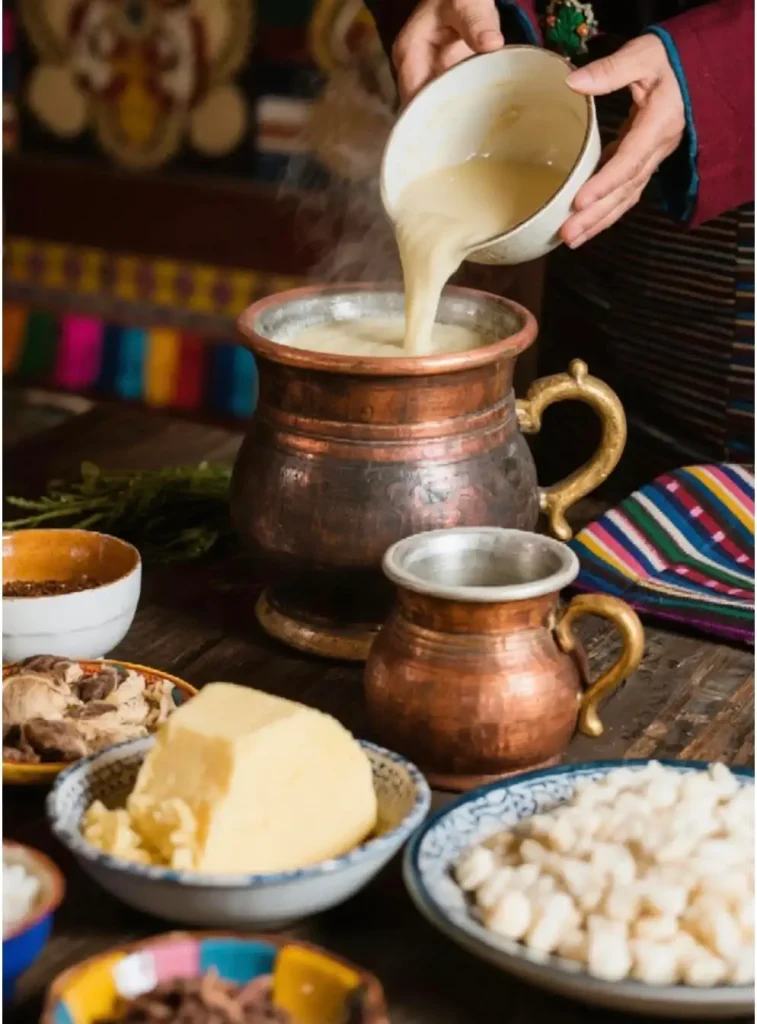
Yak butter tea (sū yóu chá): The foundational Tibetan beverage — tea churned with yak butter and salt into a rich, savory brew. Tibetans drink it all day as sustenance against cold and altitude. The taste surprises most first-timers (it’s salty, not sweet), but by the third cup, many visitors are converted.
Tsampa (zānba): Roasted highland barley flour mixed with butter tea into a dough-like ball. The staple carbohydrate of Tibetan life — portable, filling, and deeply tied to Tibetan identity. Every Tibetan household will offer you tsampa alongside butter tea.
Yak meat: Served dried, stewed, grilled, or in hot pot. Yak meat is richer and more complex than beef — the animals graze on wild highland herbs, which infuse the meat with subtle botanical flavors. Yak hot pot restaurants in Dukezong Old Town are the most popular introduction.
Momos: Tibetan dumplings filled with yak meat and vegetables — steamed or pan-fried. A comfort food found in restaurants and homes throughout the Shangri-La region.
Highland mushrooms: The forests around Shangri-La produce prized matsutake mushrooms (sōngróng), which Japanese buyers purchase for premium prices. During season (July–September), local restaurants serve them fresh.
Tibetan Festivals in Yunnan
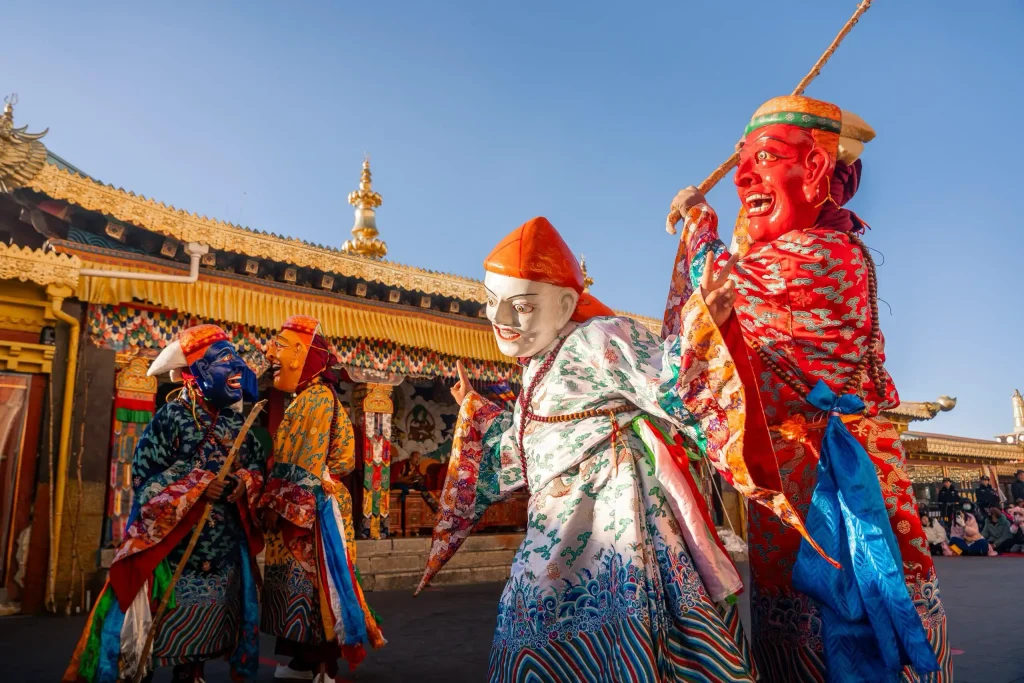
Losar (Tibetan New Year): Celebrated in February or March (varying by the Tibetan calendar). Monasteries hold special prayer ceremonies, families prepare elaborate feasts, and communities gather for masked Cham dances — dramatic performances depicting the triumph of good over evil, with monks in elaborate deity costumes dancing to the resonance of long horns and drums. Losar is the most culturally immersive time to visit Shangri-La.
Saga Dawa (Buddha’s Birthday): The 15th day of the 4th Tibetan month (usually June). Considered the holiest day of the Tibetan Buddhist calendar, marking the Buddha’s birth, enlightenment, and passing. Pilgrims gather at Songzanlin for prayers and circumambulation. Meat is avoided for the entire month in observant households.
Geden Namchoe (Butter Lamp Festival): The 25th of the 10th Tibetan month (usually December). Thousands of yak-butter lamps are lit at Songzanlin and throughout the old town, commemorating Tsongkhapa, the founder of the Gelug school. The monastery at night, illuminated by thousands of flickering lamps, is one of the most beautiful sights in Yunnan.
For the broader Yunnan festival calendar, see our festivals guide.
Etiquette & Respectful Engagement
Always walk clockwise around monasteries, stupas, prayer wheels, and sacred sites. This is non-negotiable and deeply meaningful.
Dress modestly at monasteries and in villages. Cover shoulders and knees. Remove shoes before entering prayer halls.
Don’t photograph without asking. Monks are generally approachable, but always ask permission first. Never photograph private prayer sessions, sky burials, or rituals that feel closed.
Accept hospitality graciously. If offered butter tea or tsampa in a home, accept at least a sip — refusing hospitality is considered rude. You don’t need to finish the cup, but tasting is expected.
Respect sacred objects. Don’t touch Buddha statues, thangka paintings, religious manuscripts, or altar objects. Don’t sit on religious structures or point your feet toward a Buddha image.
Be mindful of political sensitivity. The relationship between Tibetan communities and the Chinese government is complex. Visitors should avoid making political statements, asking provocative questions, or photographing sensitive sites (such as government buildings). Engage with genuine cultural interest rather than political curiosity.
Support the community. Stay in Tibetan-run guesthouses, eat at local restaurants, hire Tibetan guides, and buy handicrafts from local artisans. Your spending supports cultural continuity.
Yes. Shangri-La (formerly Zhongdian) and the surrounding Diqing Prefecture are culturally Tibetan — the language, religion (Tibetan Buddhism), food, architecture, and daily customs are all Tibetan. Approximately 150,000 Tibetans live in the region, and Songzanlin Monastery has been the area’s spiritual center for over 340 years.
Yes. Songzanlin is open to visitors daily. Admission is ¥90 (includes shuttle bus). Dress modestly, walk clockwise, and consider hiring a Tibetan guide for deeper understanding. The monastery is active — monks live, study, and pray here — so respectful behavior is essential.
A Tibetan staple beverage made by churning tea with yak butter and salt. It’s salty and savory, not sweet — which surprises most first-timers. Tibetans drink it throughout the day as sustenance against altitude and cold. Accepting a cup when offered in a Tibetan home is an important gesture of respect.
Losar (Tibetan New Year, February/March) offers the most immersive cultural experience — Cham masked dances, special ceremonies, and festive atmosphere. The Butter Lamp Festival (December) transforms Songzanlin into a sea of light. Saga Dawa (June) is the holiest day. Check the Tibetan calendar for exact dates each year.
Walk clockwise around all structures and prayer wheels. Dress modestly (cover shoulders and knees). Remove shoes before entering prayer halls. Don’t touch religious objects or statues. Ask before photographing monks. Don’t point feet toward a Buddha image. Accept hospitality (tea, tsampa) graciously. Hire a local guide for deeper understanding.