Terracotta Army

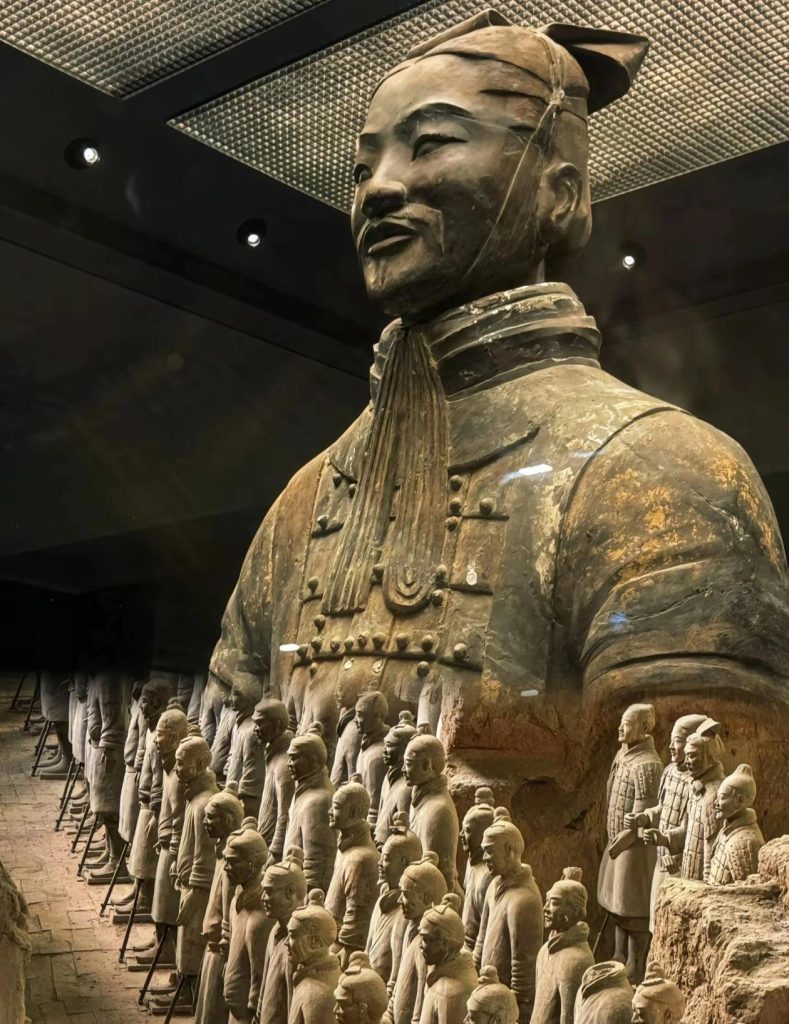
The Terracotta Army, one of the most extraordinary archaeological discoveries of the 20th century, lies inside the Emperor Qin Shi Huang’s Mausoleum Site Museum in the Lintong District of Xi’an. Often called the Terracotta Warriors and Horses, this vast underground army was built over 2,200 years ago to guard the mausoleum of China’s first emperor, Qin Shi Huang. Today, it stands as a UNESCO World Heritage Site and one of the most visited attractions in China.

Terracotta Army

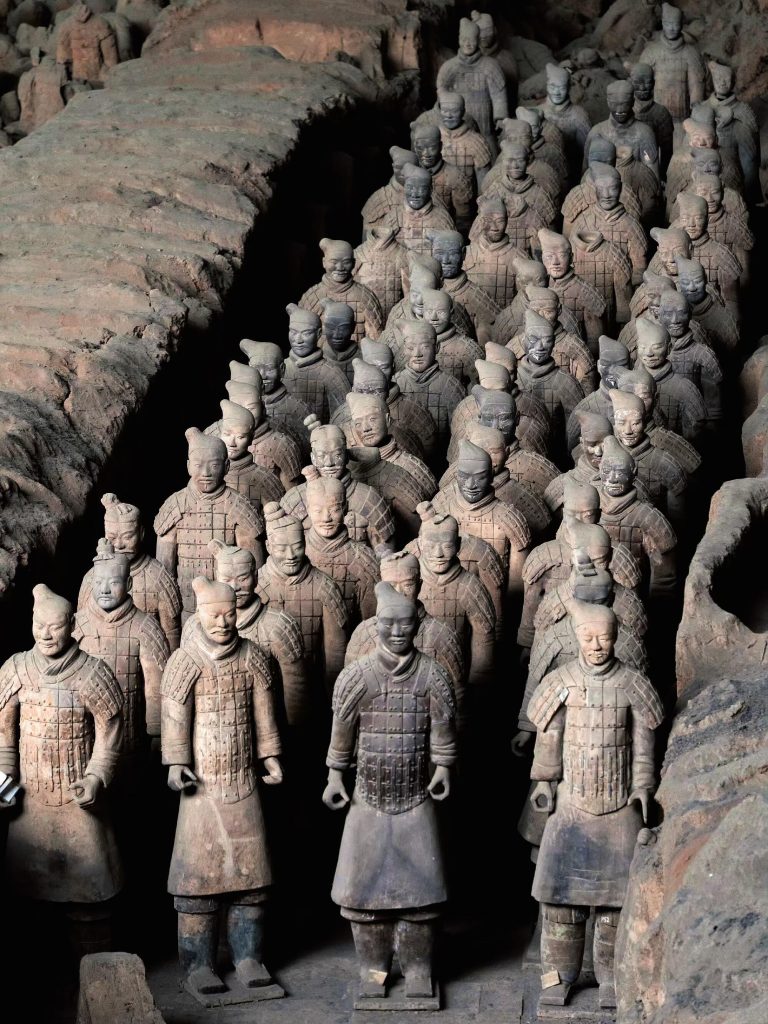
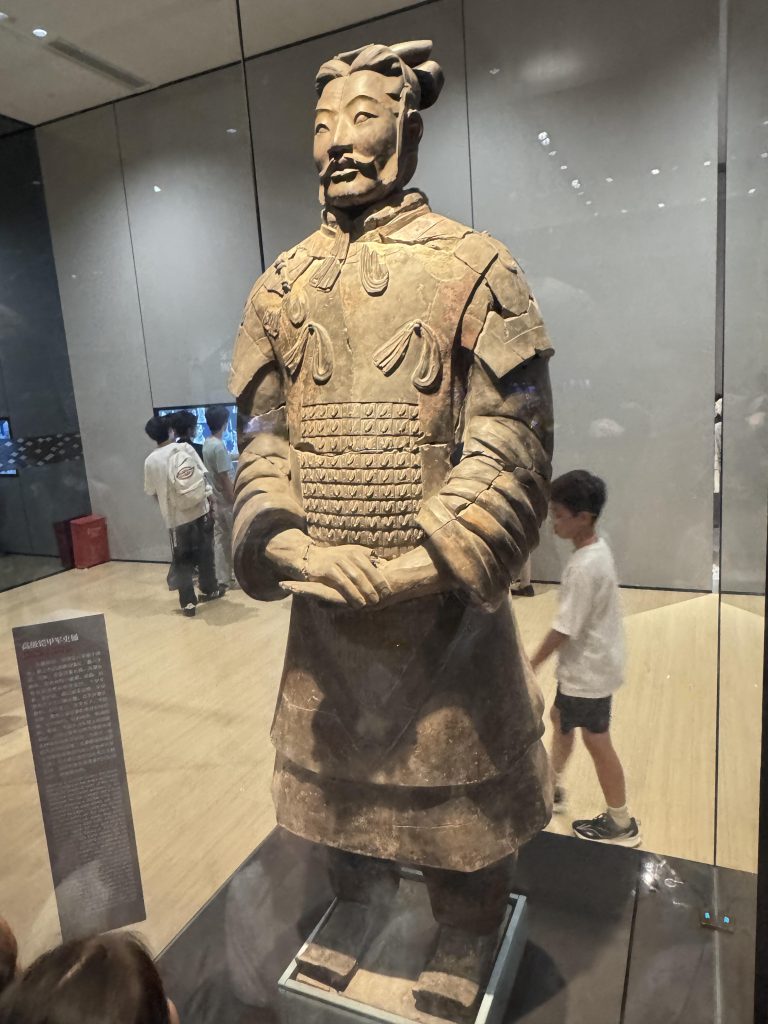
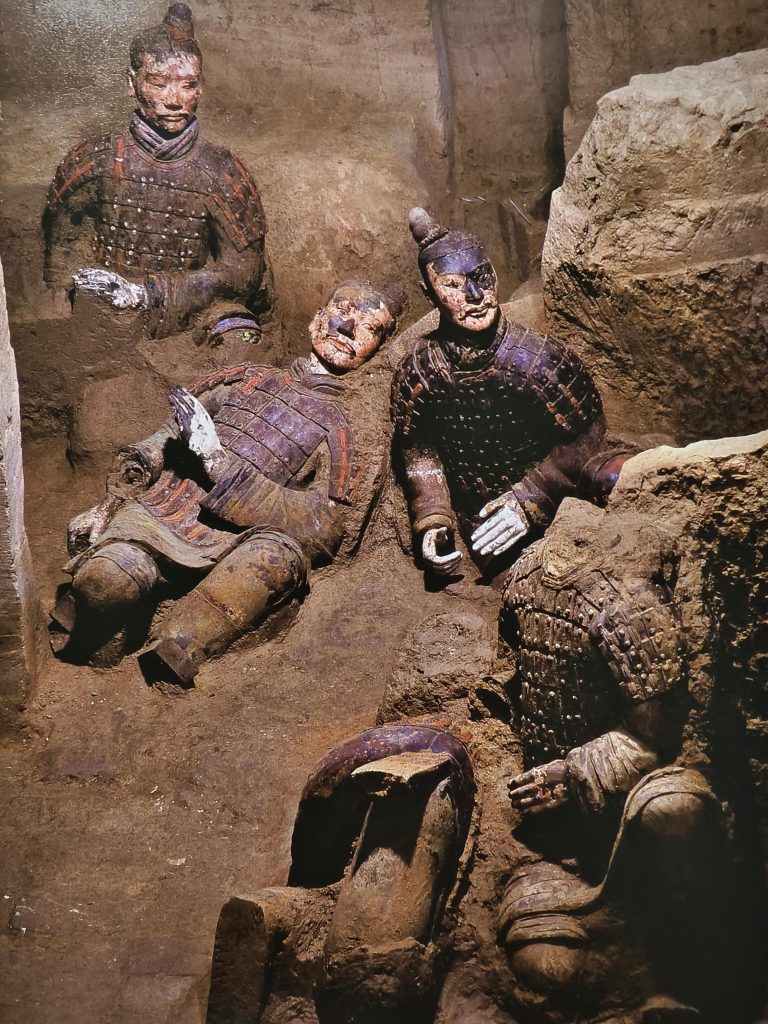
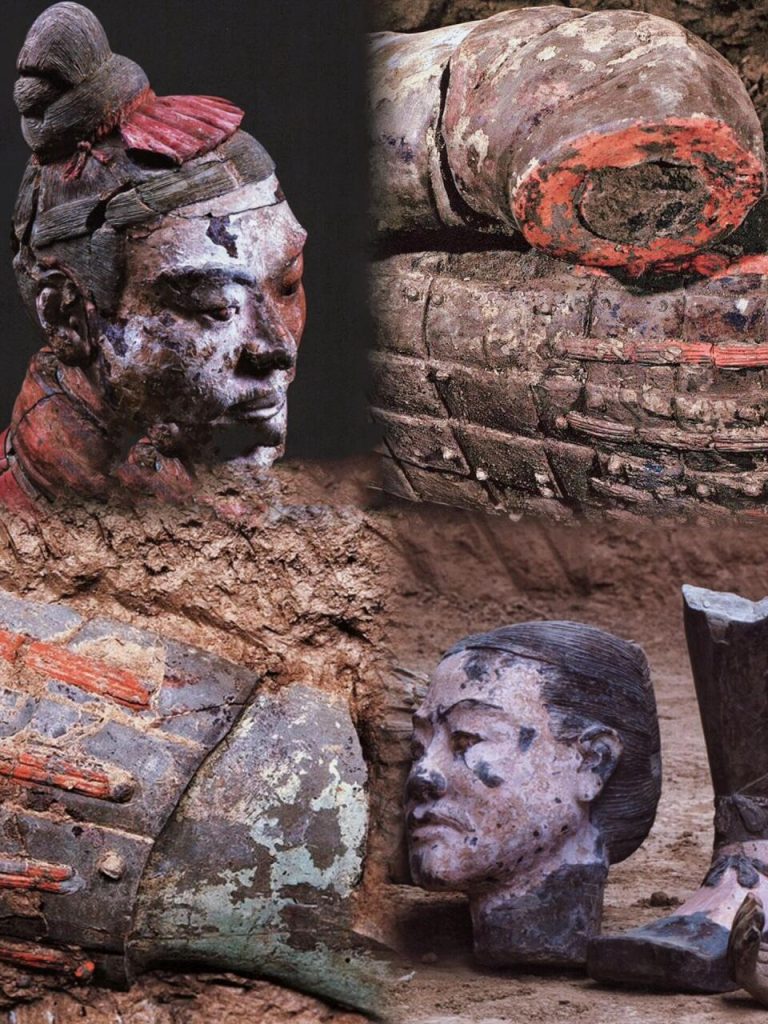
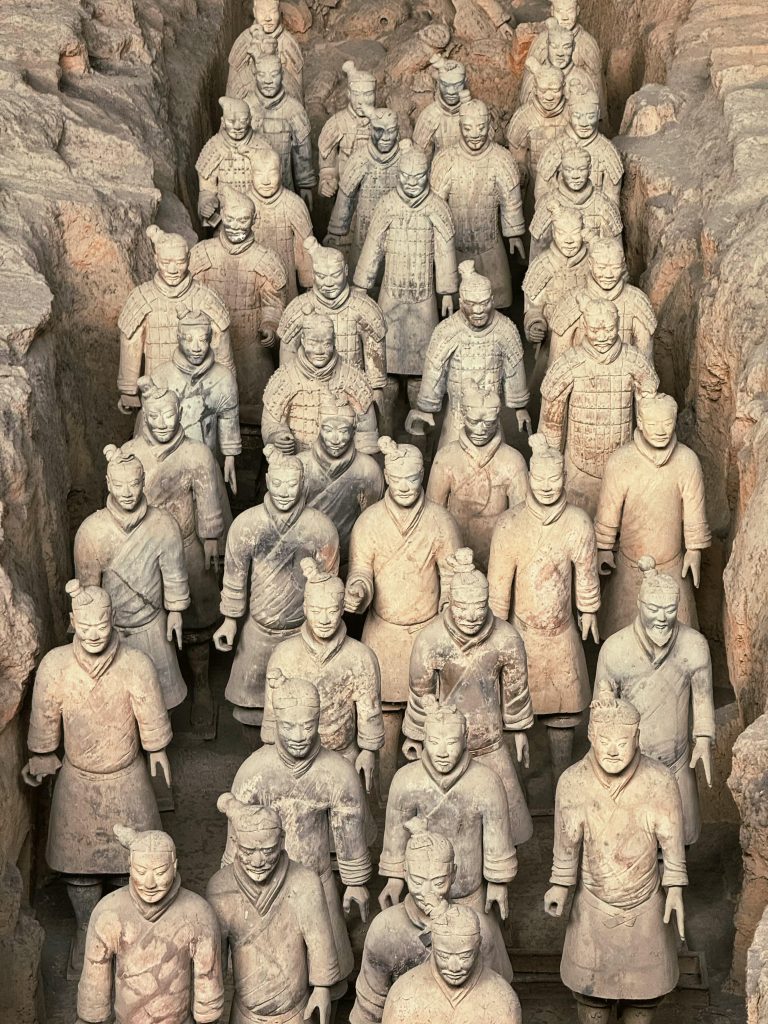
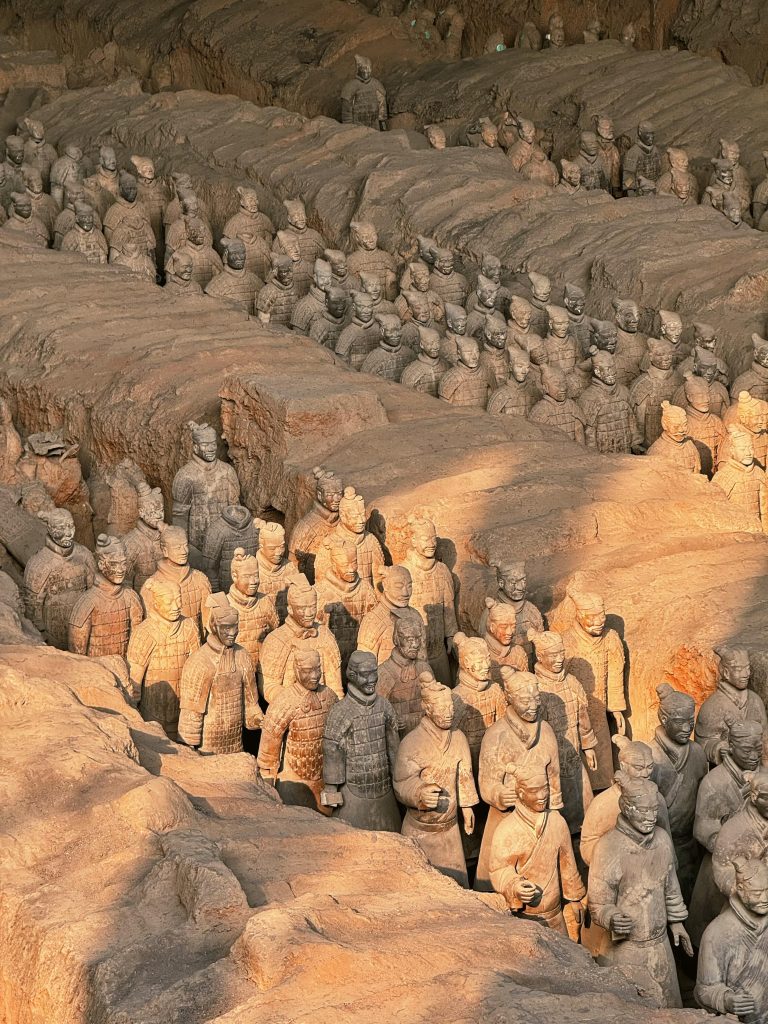
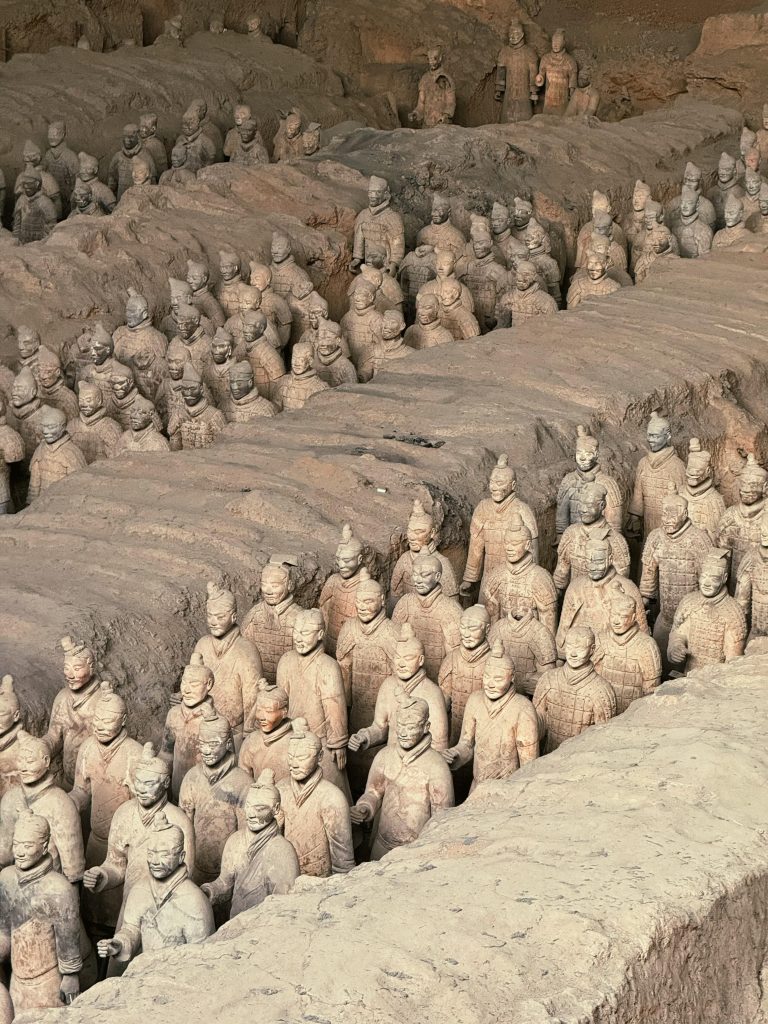
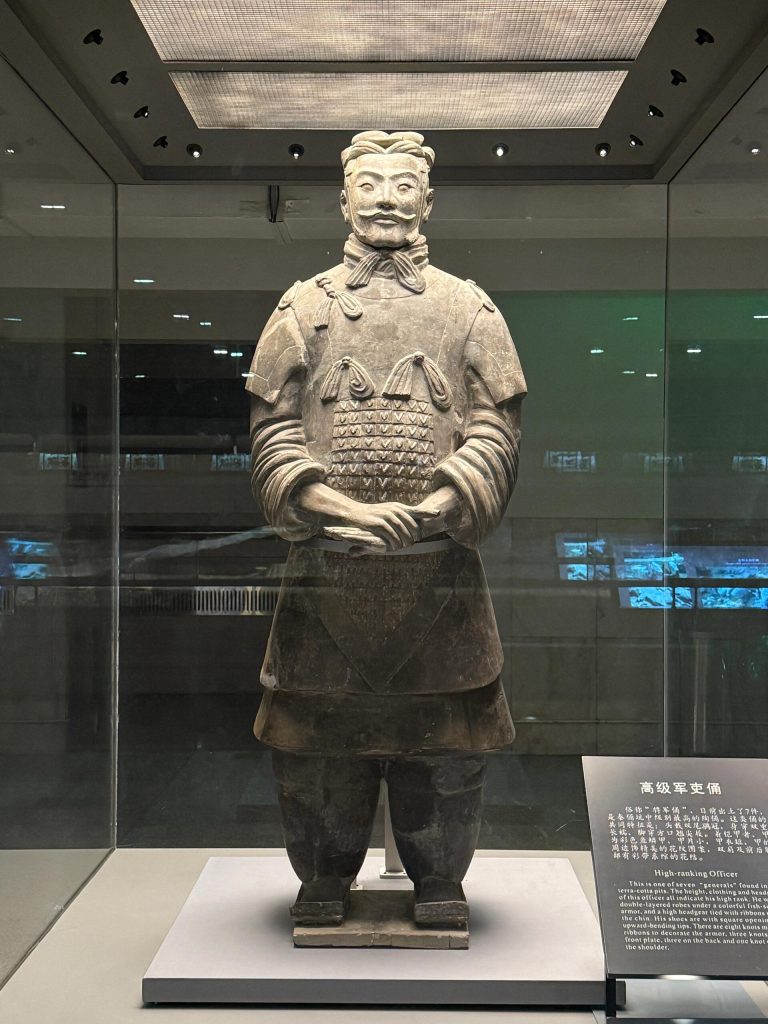
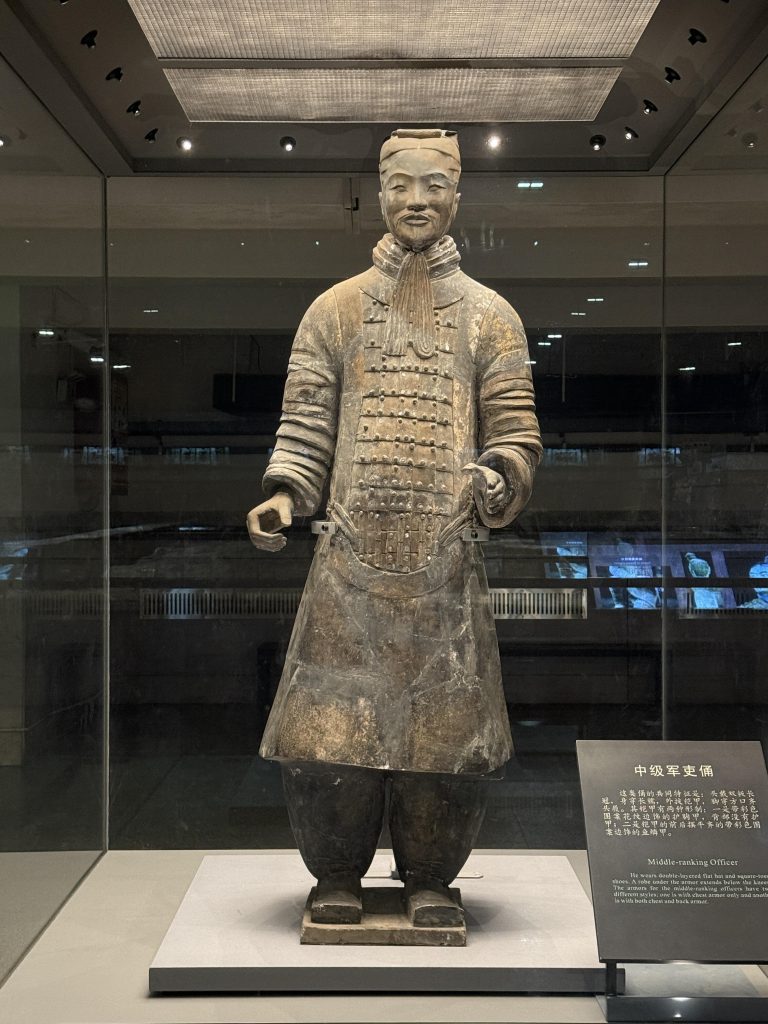
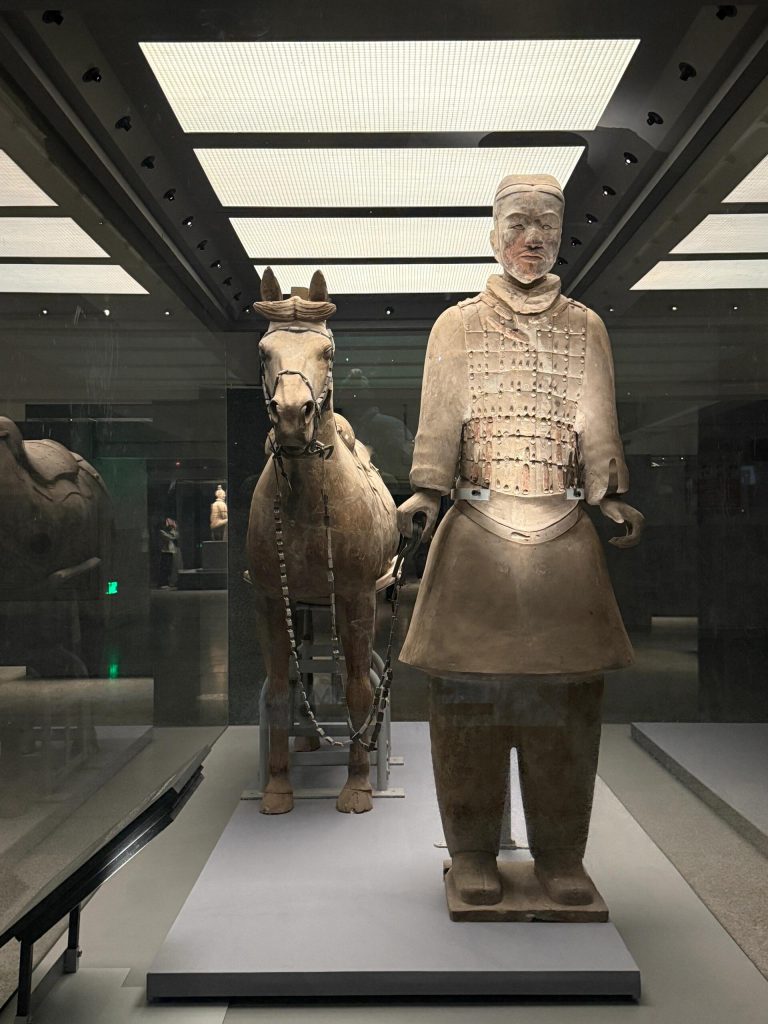
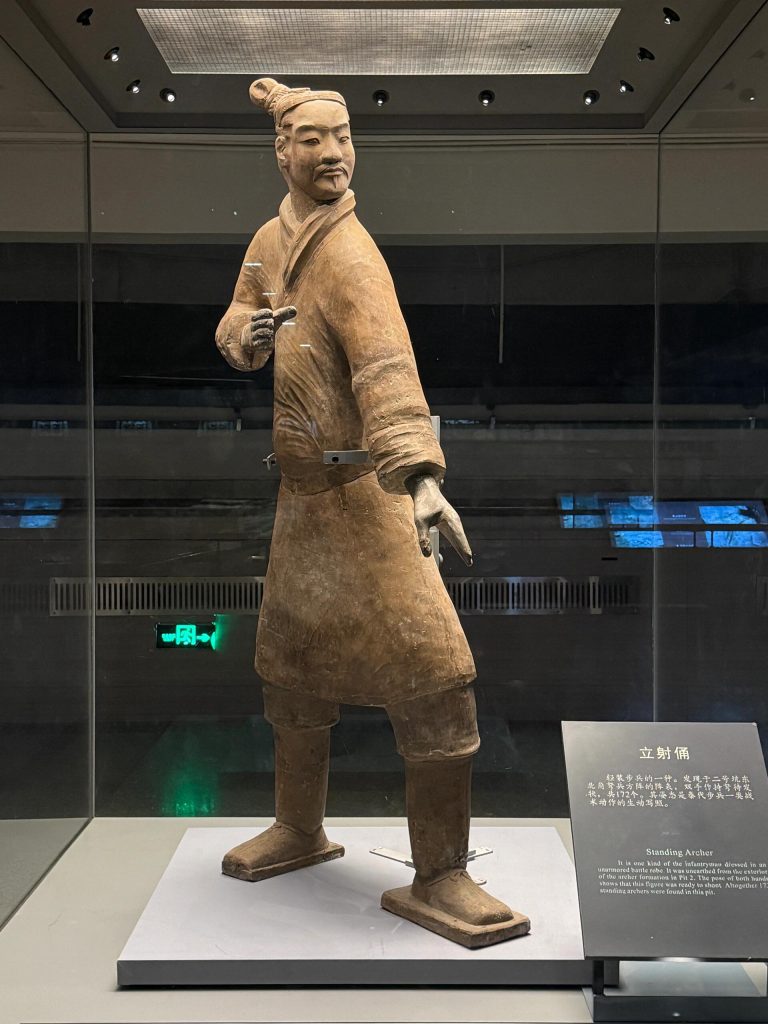
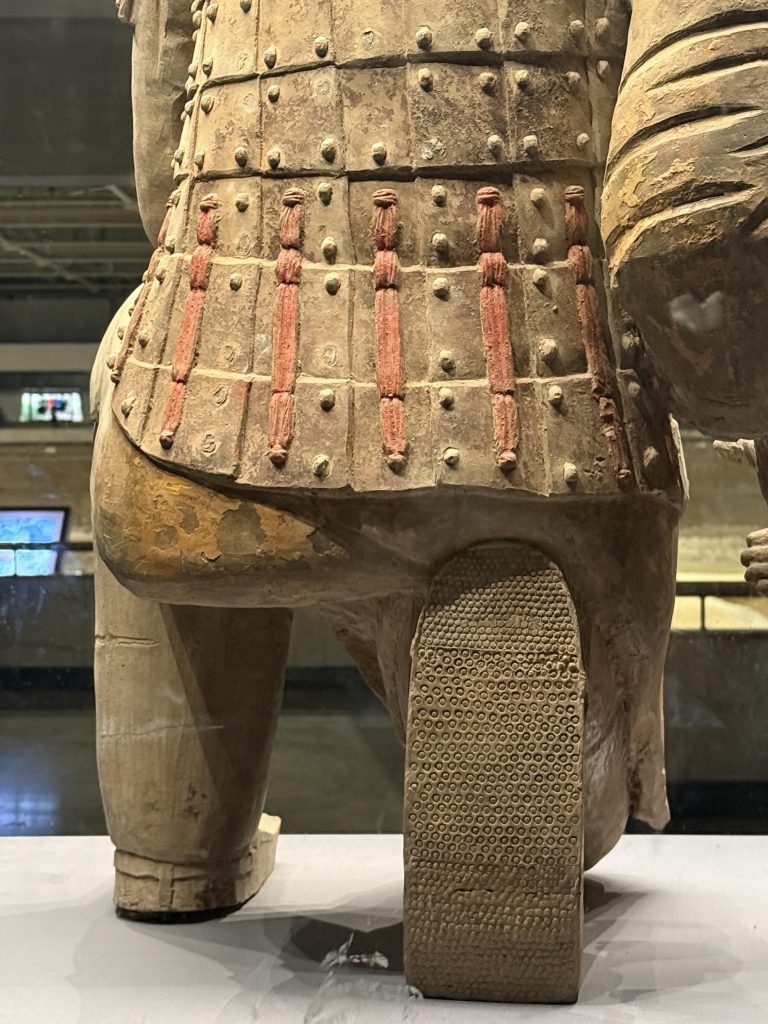
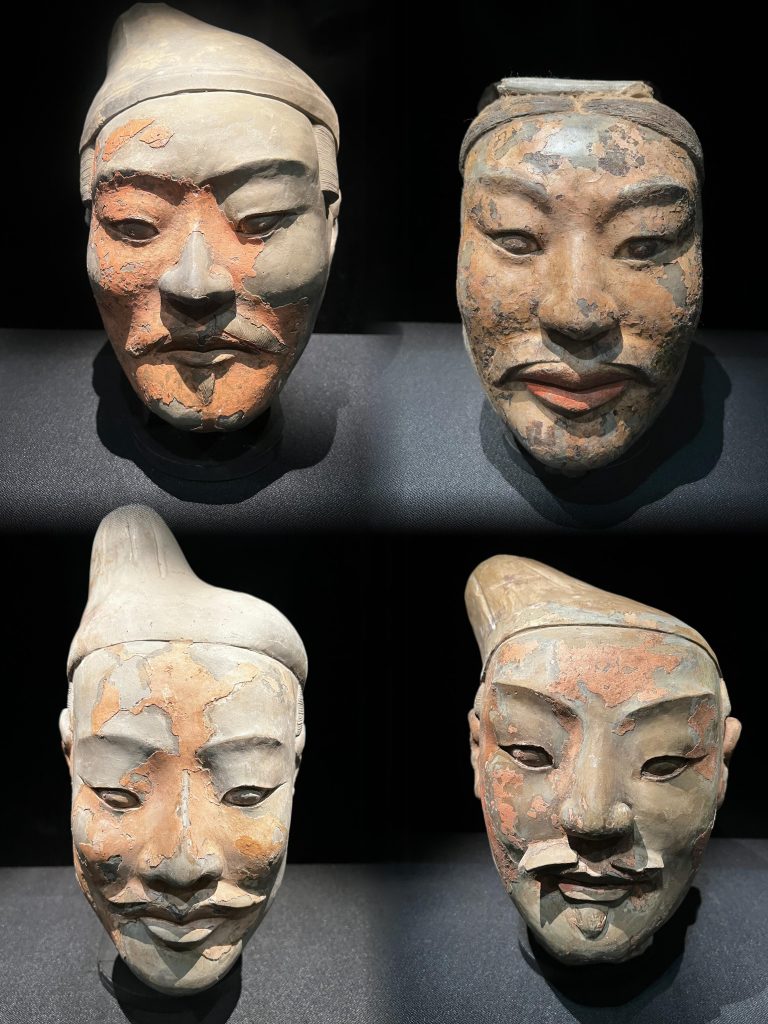
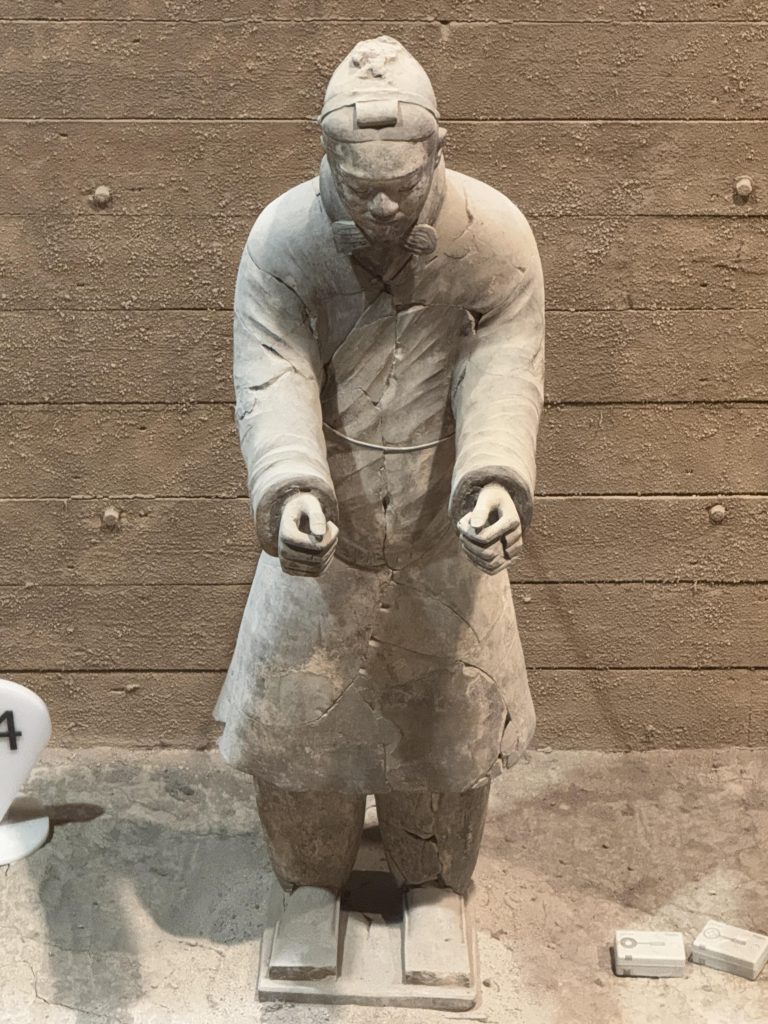
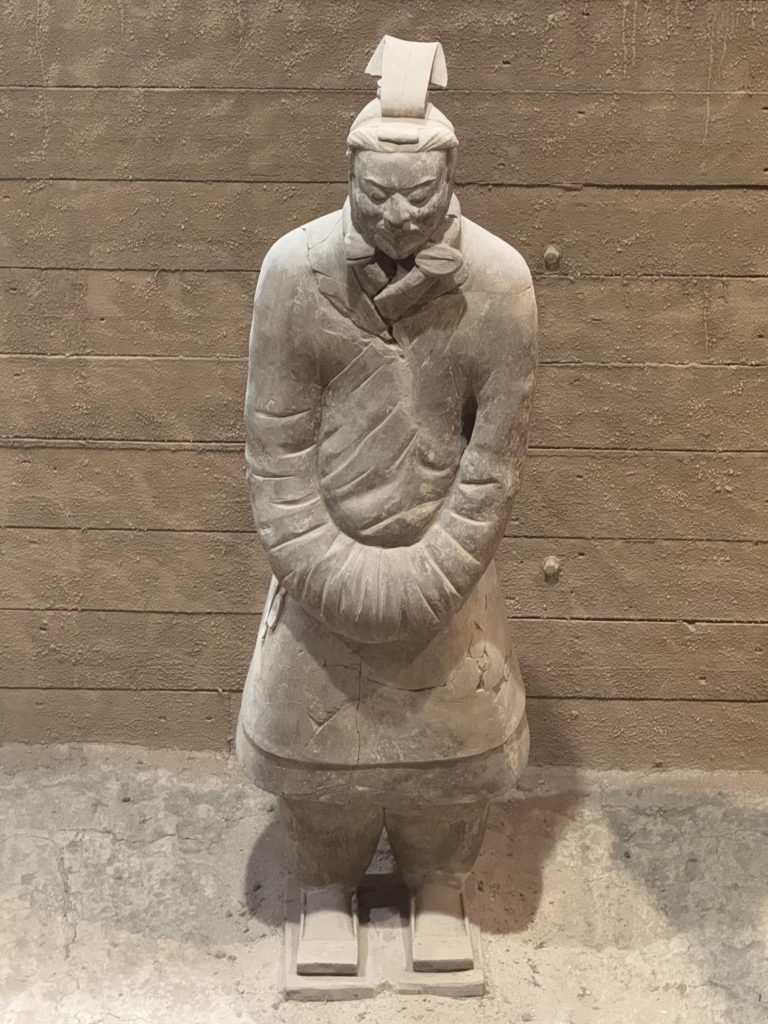
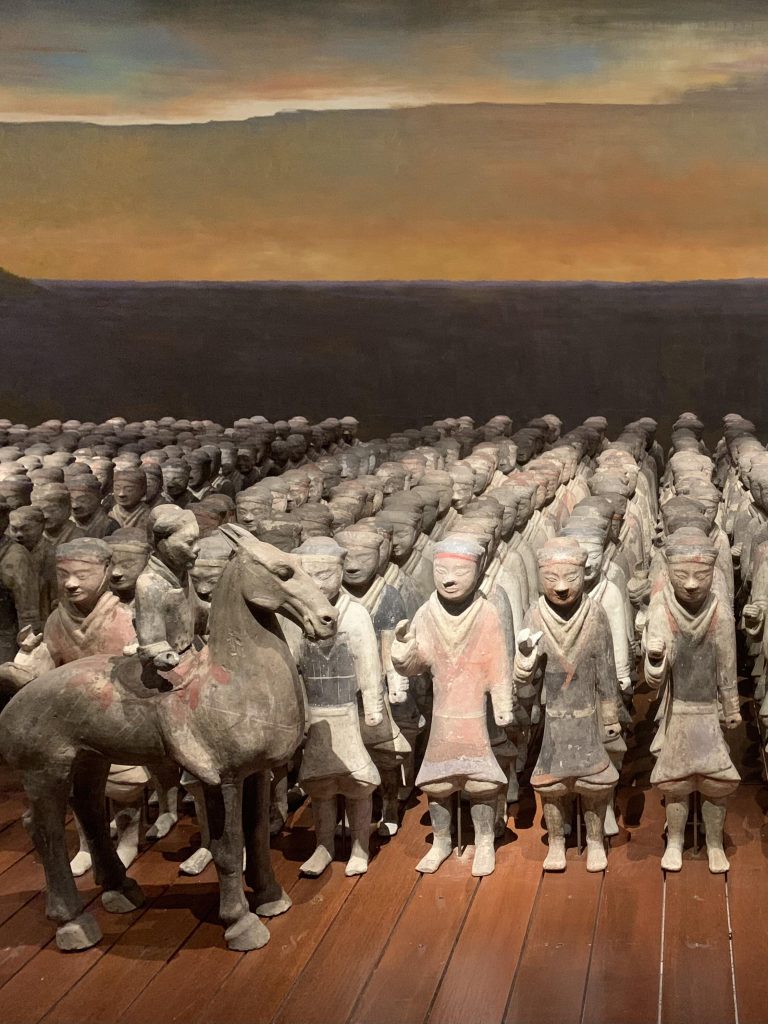
Located about one hour from downtown Xi’an, the Terracotta Army consists of thousands of life-size clay soldiers, horses, and chariots arranged in precise military formation. Each warrior features unique facial expressions, hairstyles, and clothing details—no two are identical. Although originally painted in bright colors, most pigments faded quickly upon excavation, leaving the familiar terracotta hue seen today.Since its accidental discovery by local farmers in 1974, the site has become a symbol of ancient Chinese civilization and a must-see destination for travelers from around the world.

What to See

Pit 1 – The Largest and Most Impressive Battlefield

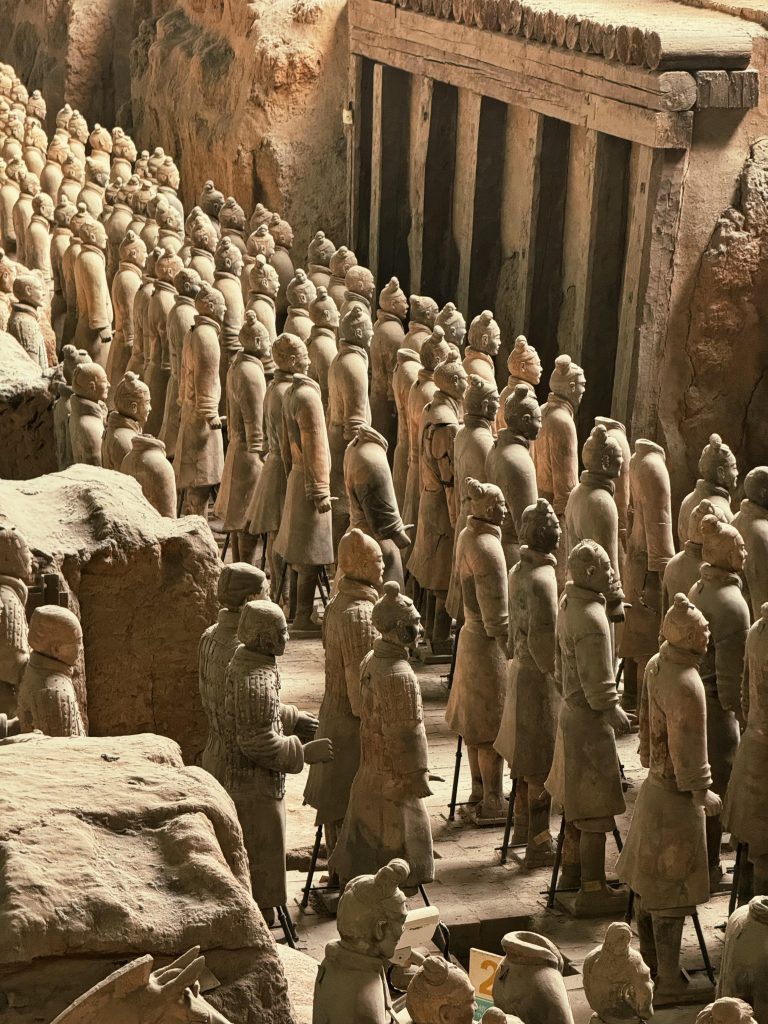
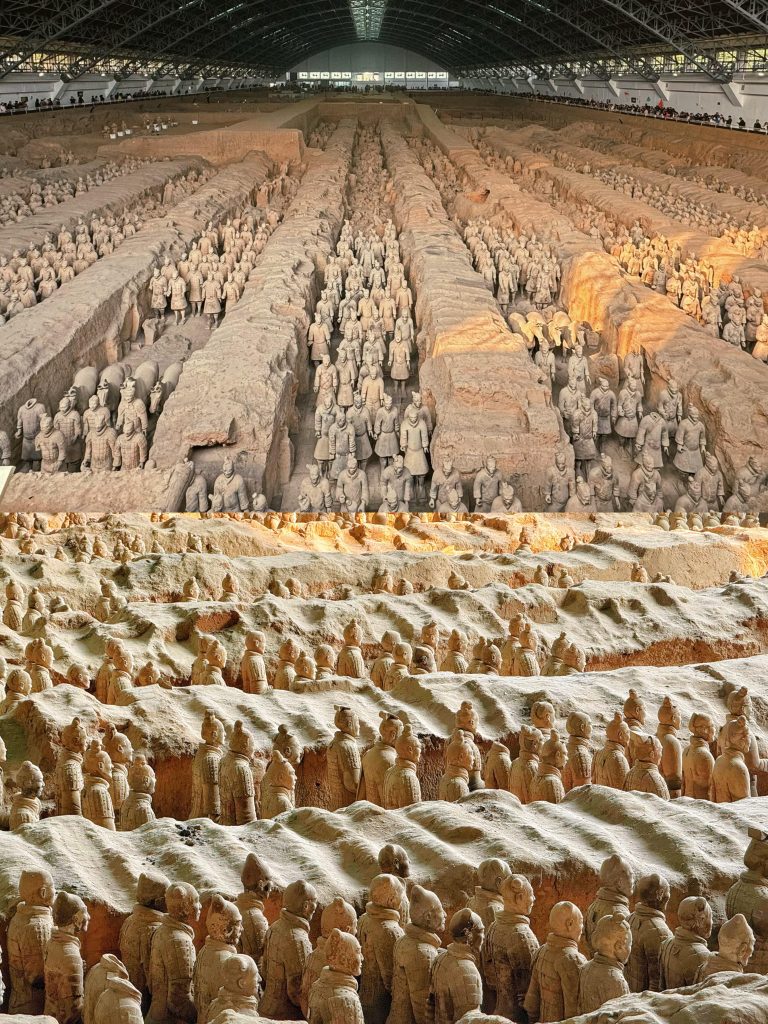
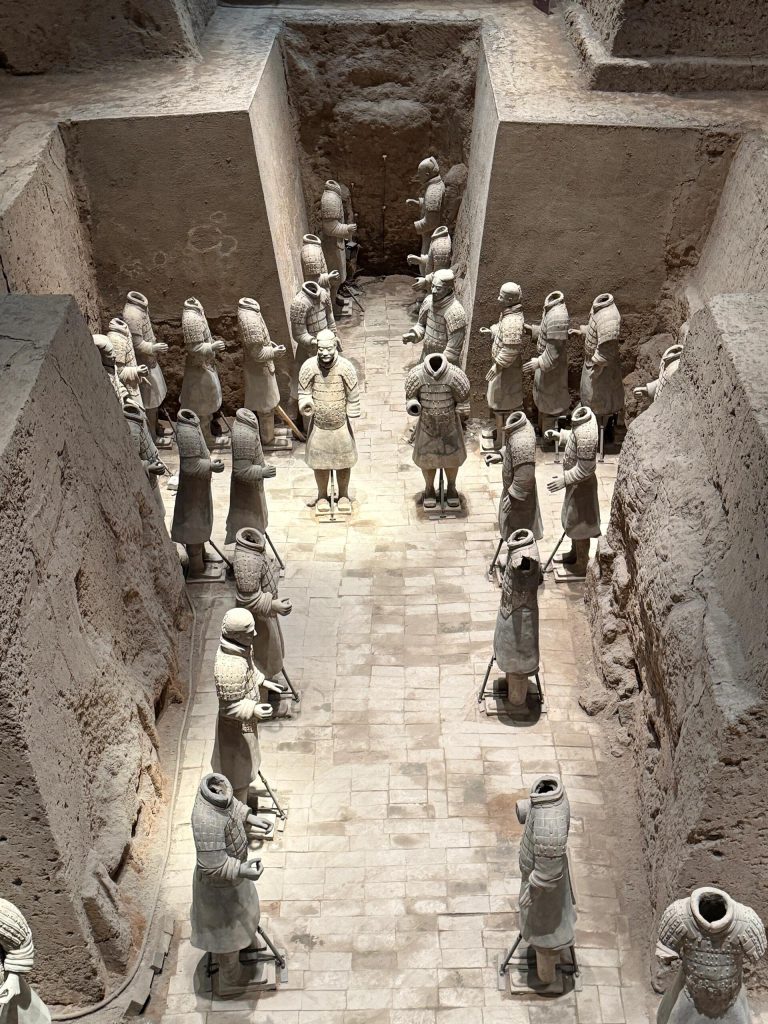
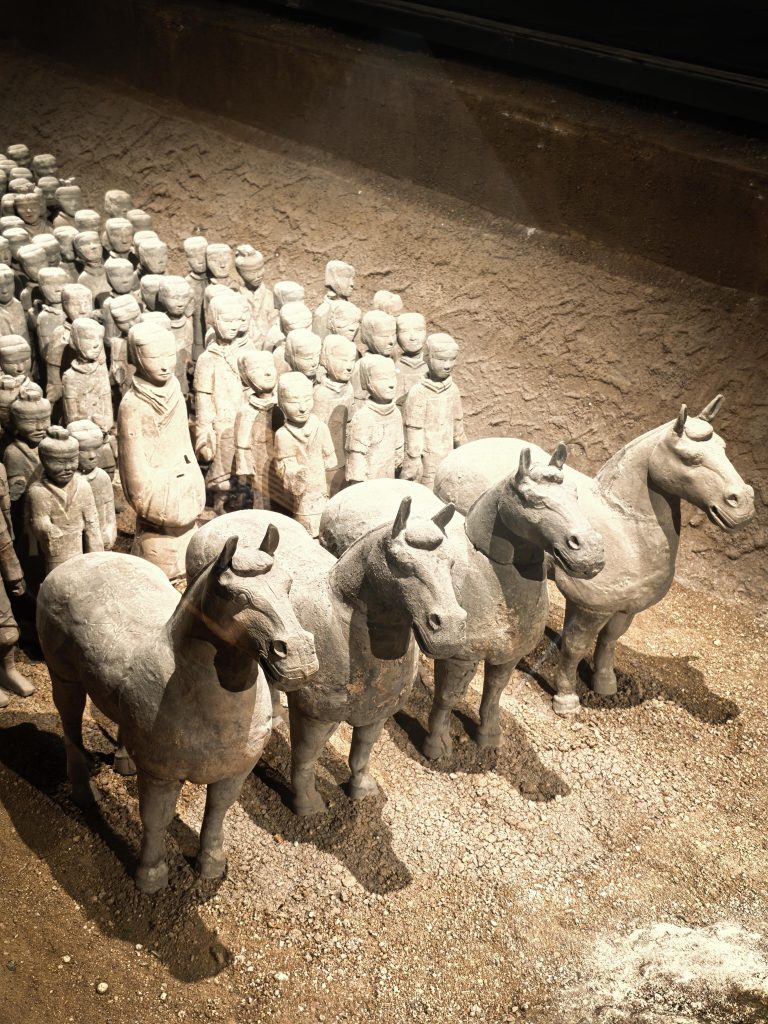
Pit 1 is the biggest and most iconic excavation hall. Covering over 14,000 square meters, it contains an estimated 6,000 warriors arranged in formation as if ready for battle. Infantry, archers, and horses are positioned with remarkable precision, showcasing the military strength of the Qin Dynasty.

Pit 2 – The Most Diverse Military Units

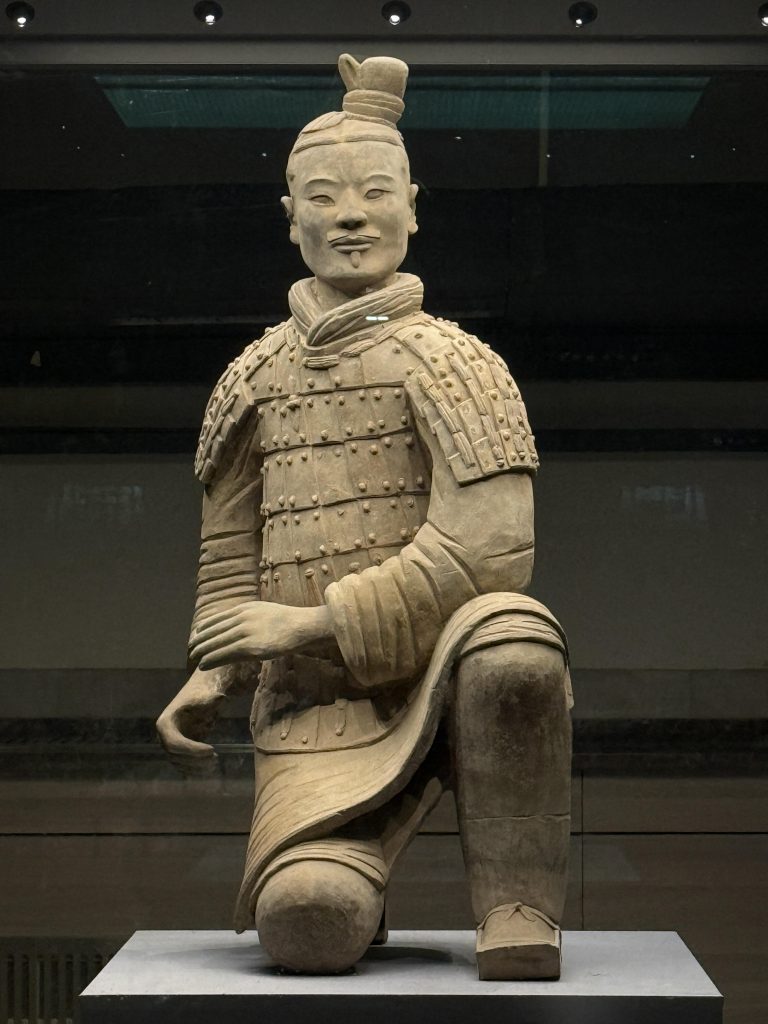
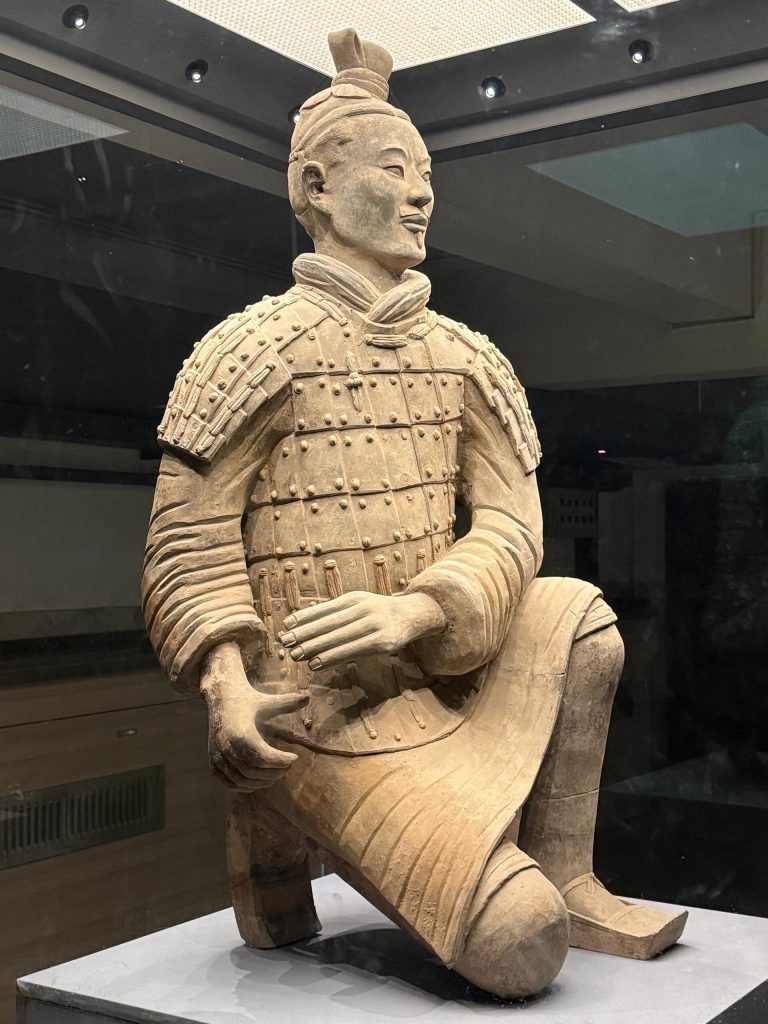
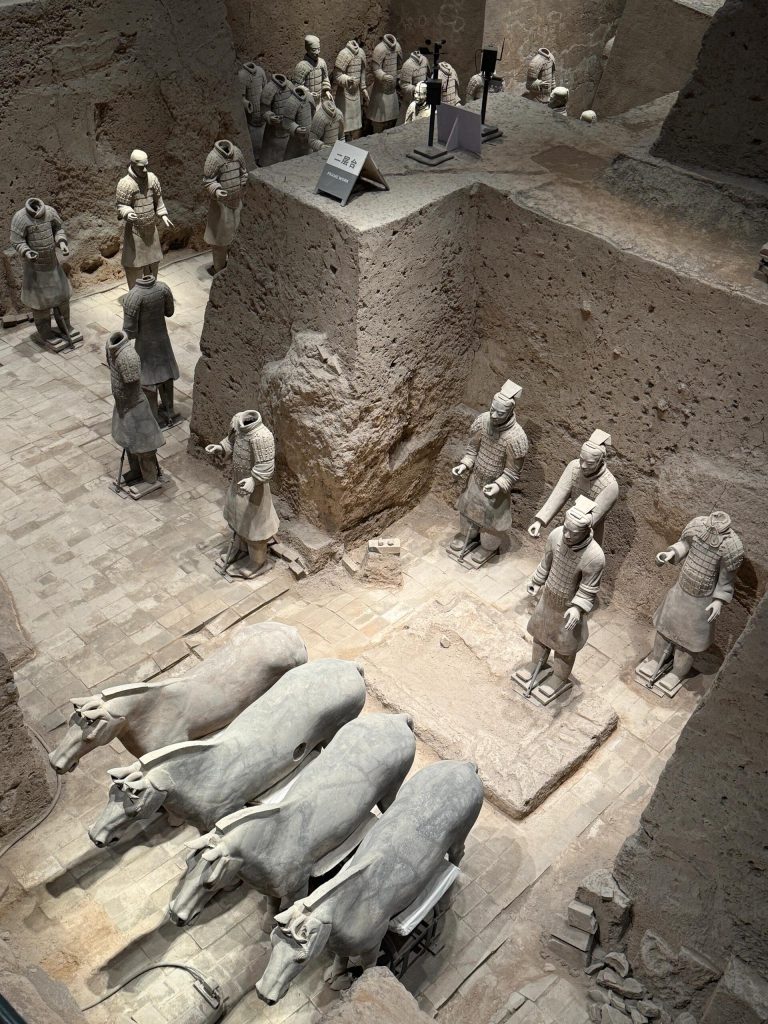
Pit 2 displays a rich combination of cavalry, chariots, and archers. Excavations here are still ongoing, allowing visitors to witness real-time archaeological work. Glass displays showcase some of the most well-preserved figures, including the famous kneeling archer.

Pit 3 – The Command Center

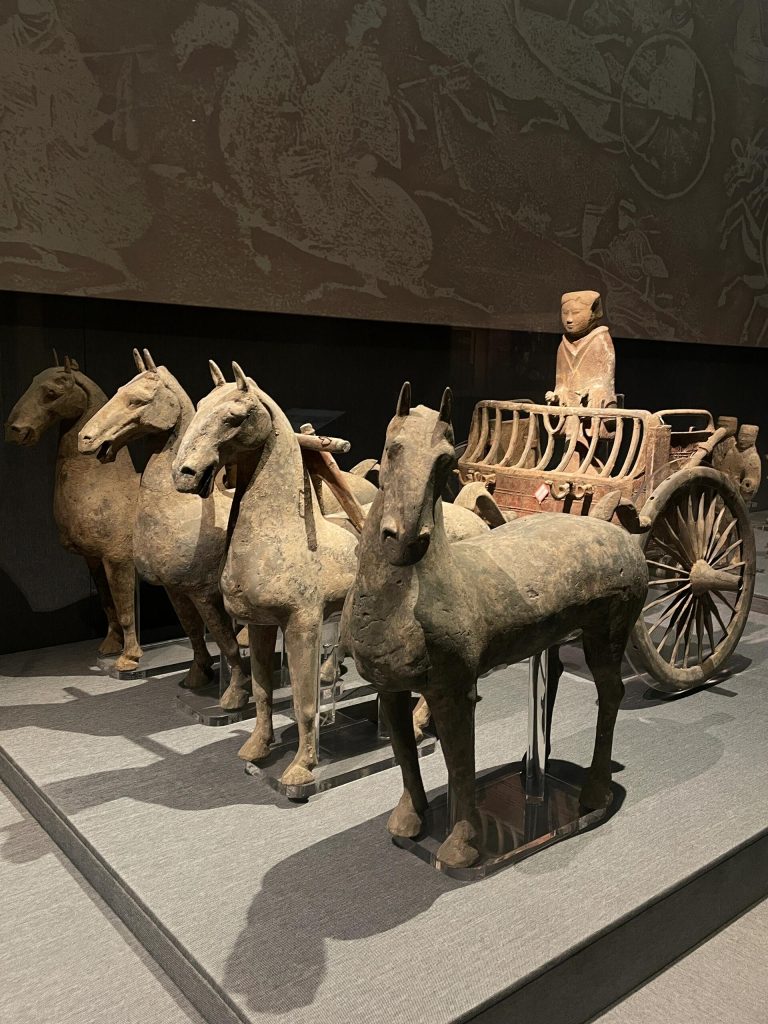
Smaller than the other pits, Pit 3 is believed to represent the army’s command headquarters. It contains high-ranking officers, a ceremonial chariot, and several horses. Because it was not damaged by ancient fires, traces of original paint remain visible on some statues.

Exhibition Hall of Cultural Relics

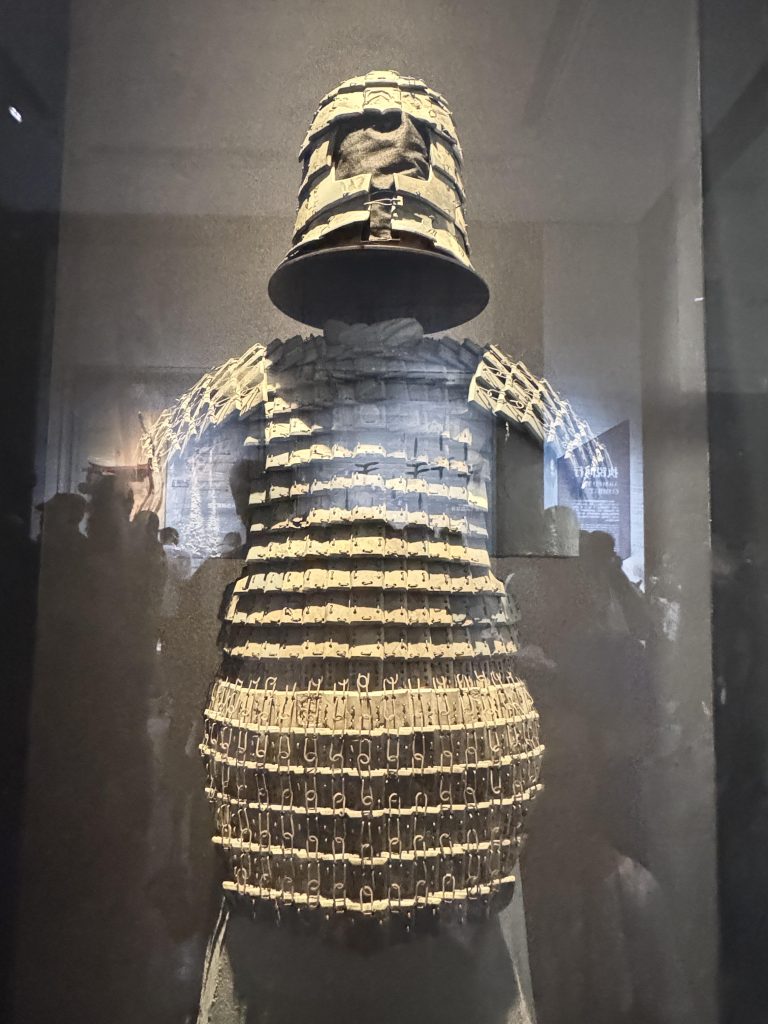
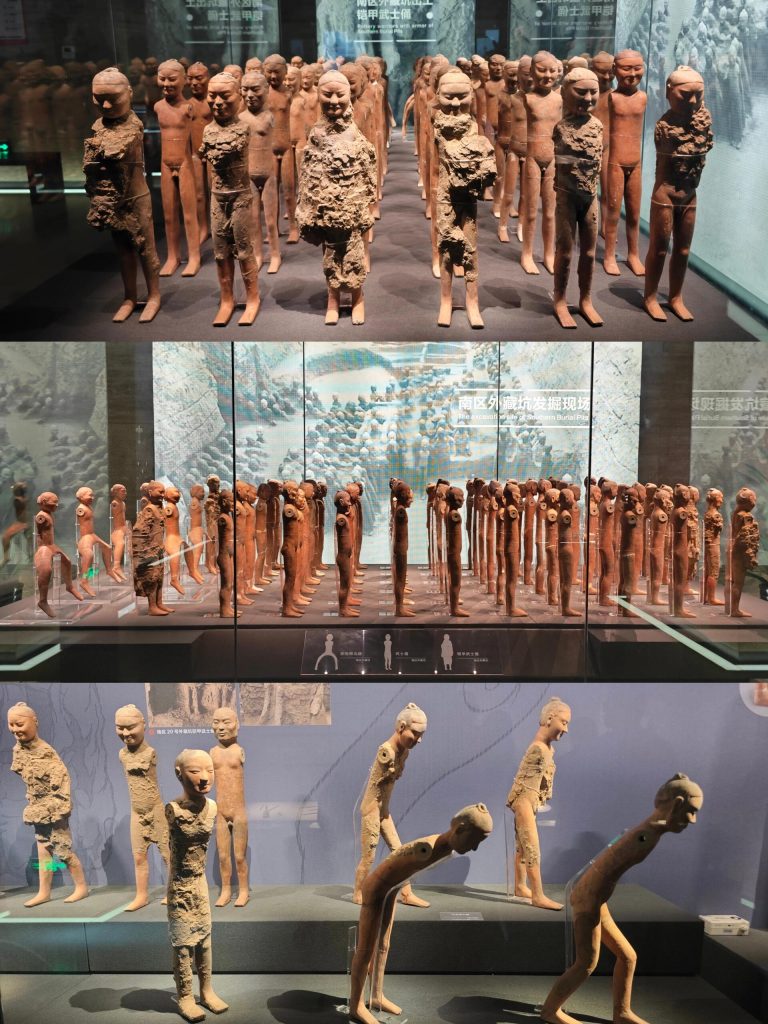
This museum-style exhibition features a curated selection of artifacts uncovered from the mausoleum site. Bronze weapons, chariot components, and painted warrior fragments provide deeper insights into ancient craftsmanship and imperial burial traditions.


Terracotta Army figures

Lishan Garden

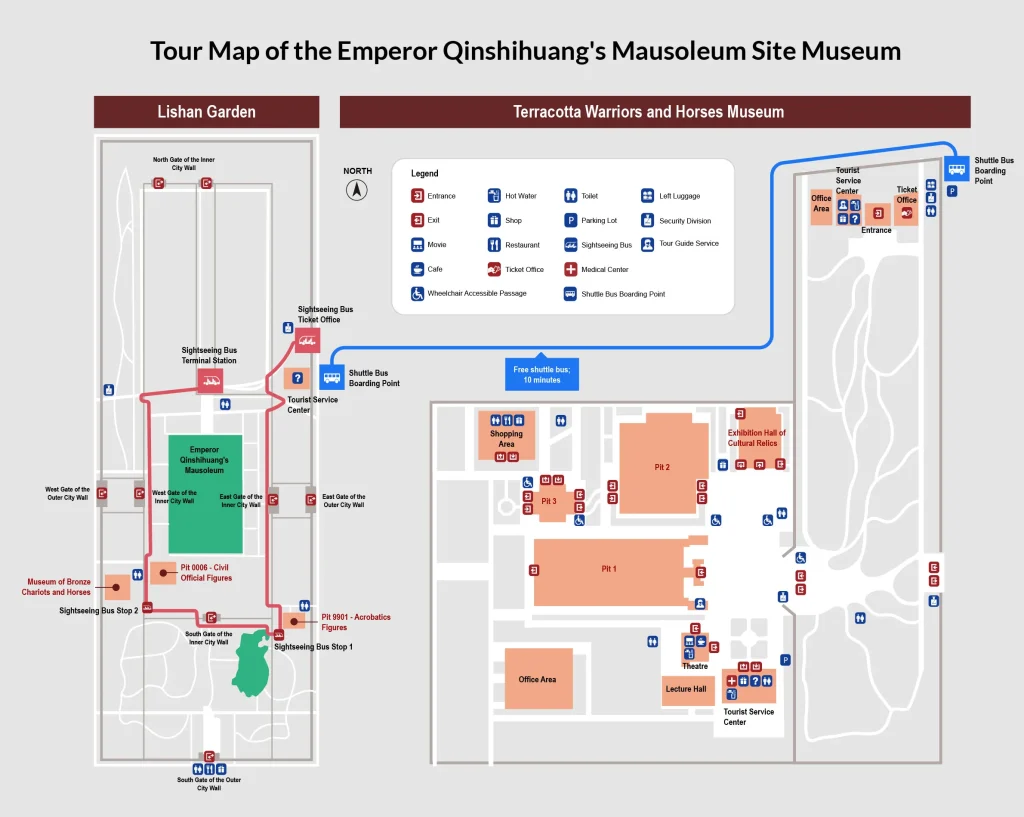
Situated within the broader mausoleum area, Lishan Garden includes additional exhibition halls:

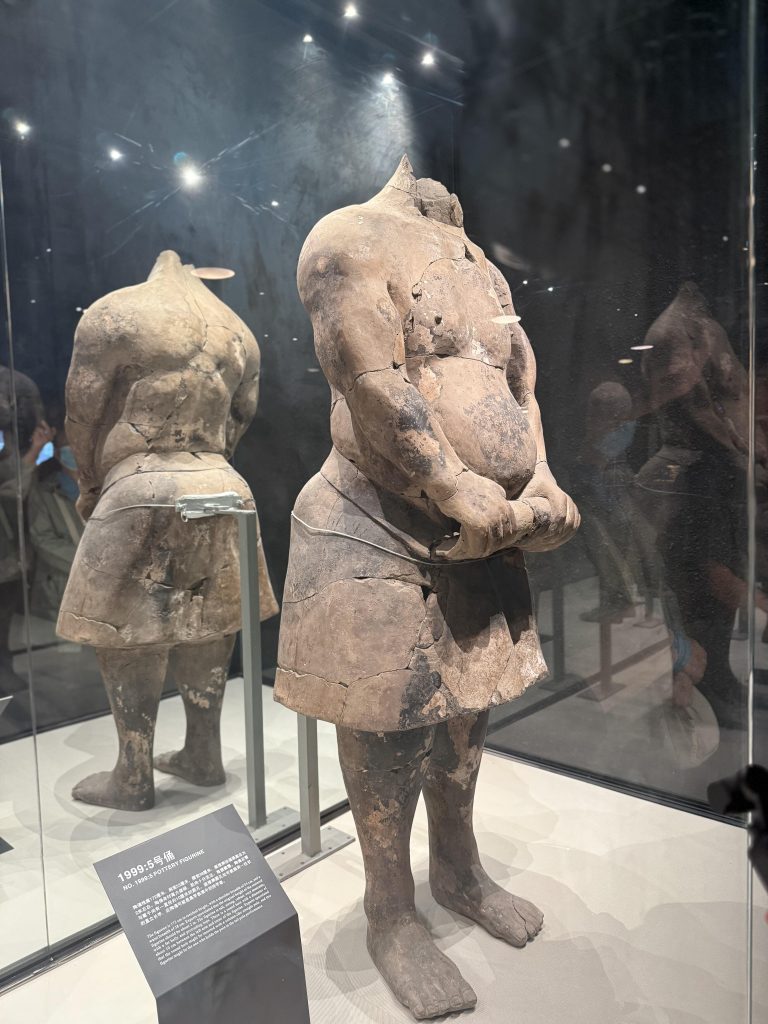
  • Pit 9901 – Acrobat figurines representing imperial entertainment.

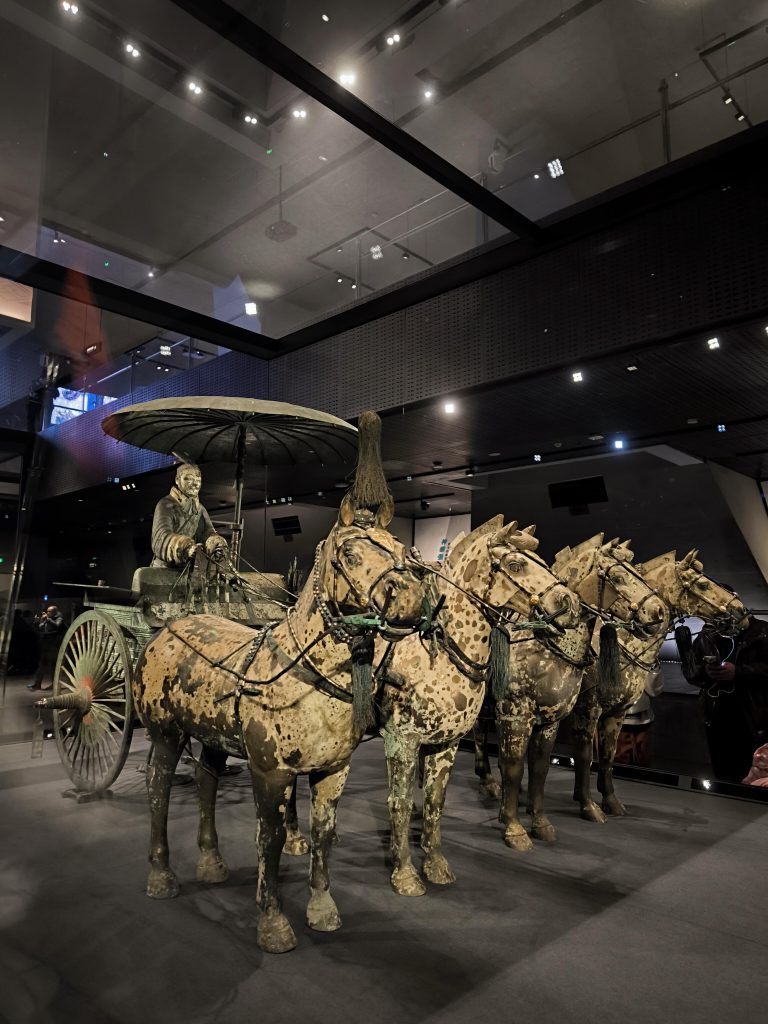
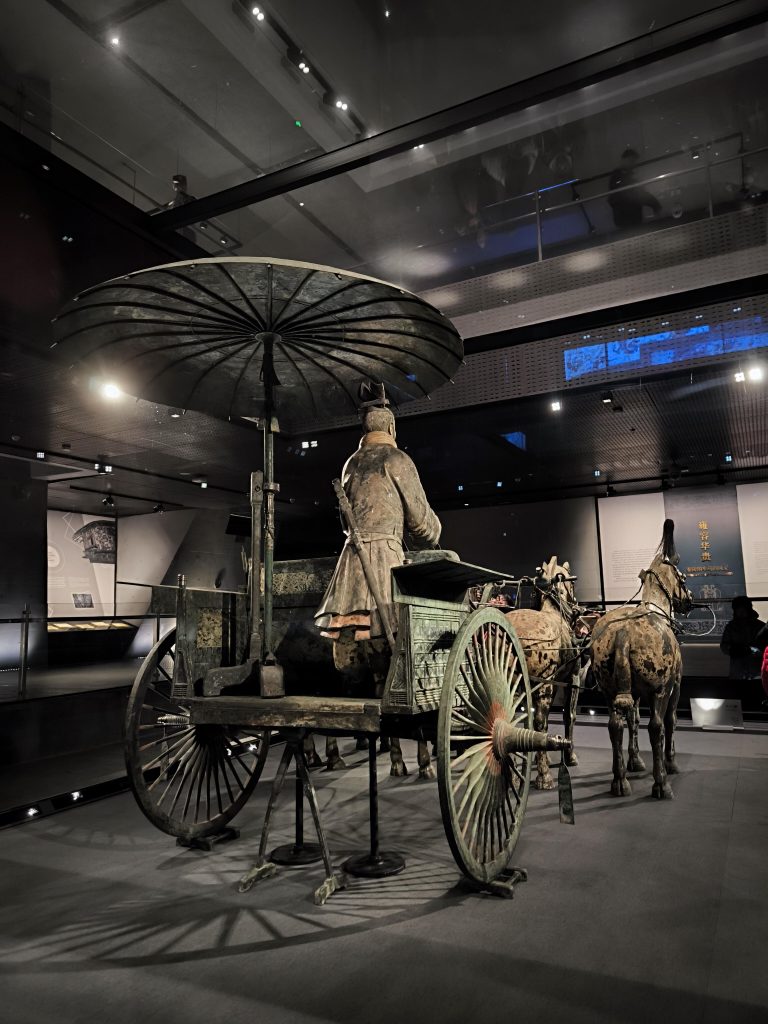
  • Museum of Bronze Chariots and Horses – Home to two exquisitely crafted bronze chariots, famously known as the Crown of Bronzes.

  • Pit 0006 – Civil official figurines showing non-military representations of Qin society.


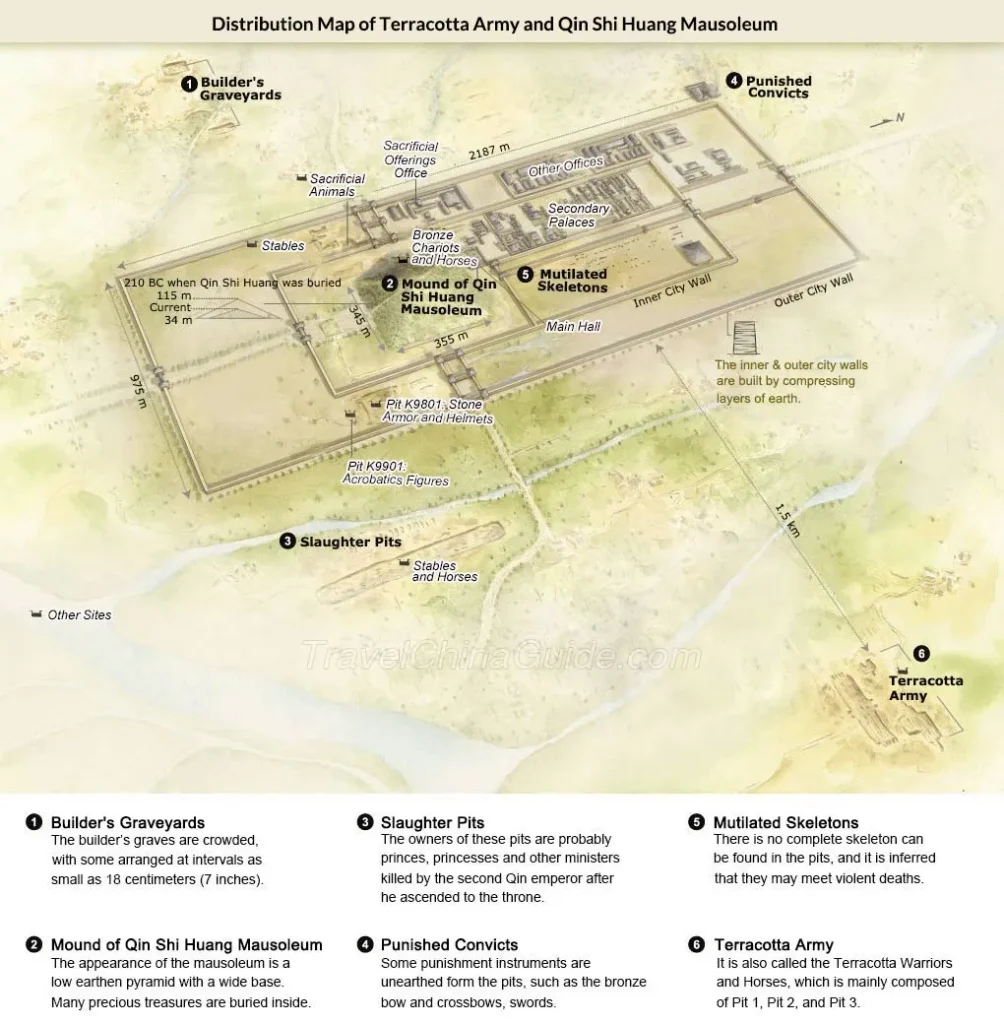
Tourist Maps

terracotta-army-tour
qinshihuang-mausoleum-map

How to Visit the Emperor Qinshihuang's Mausoleum Site Museum?

Route 1: The Classic & Most Frequently Chosen Route

Route: Pit 1 → Pit 3 → Pit 2 → Exhibition Hall of Cultural Relics
Suggested Duration: 2.5 – 3 hours
• Pit 1: 1 – 1.5 hours
• Pit 3: about 30 minutes
• Pit 2: about 30 minutes
• Exhibition Hall of Cultural Relics: about 30 minutes

After entering the Emperor Qinshihuang’s Mausoleum Site Museum, visitors will travel approximately 1 km (0.6 miles) to reach the Terracotta Army exhibition area. You may choose to walk or take the internal sightseeing shuttle. Once inside the main area, begin your visit with Pit 1—the grandest and most impressive—before continuing to the command center in Pit 3, followed by the diverse formations in Pit 2. Finally, explore the Exhibition Hall of Cultural Relics to learn more about archaeological discoveries and cultural relics uncovered around the mausoleum.

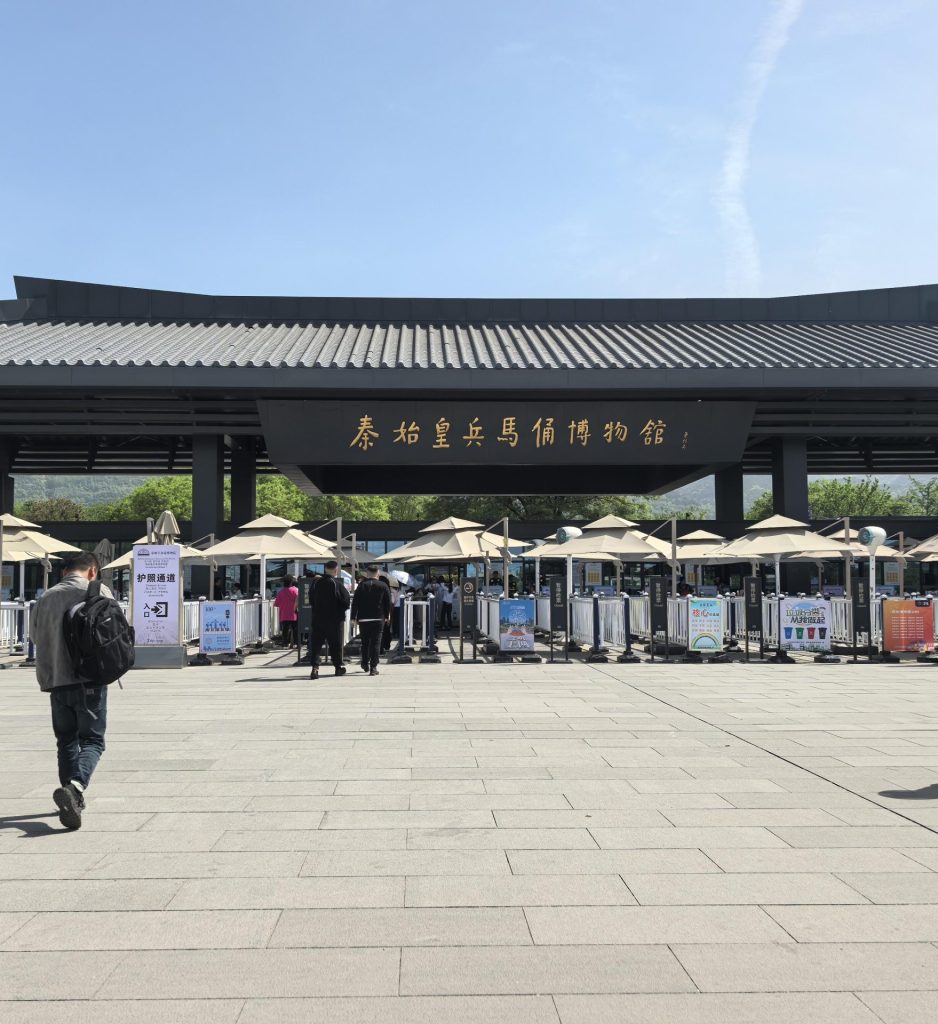
Entrance of the Terracotta Warriors and Horses Museum

Route 2: In-Depth Exploration of the Terracotta Army & Lishan Garden

Route: Pit 1 → Pit 3 → Pit 2 → Exhibition Hall of Cultural Relics → Lishan Garden → Pit 9901 → Museum of Bronze Chariots and Horses → Pit 0006
Suggested Duration:
• Terracotta Army: Around 3 hours
• Rest & lunch: About 1 hour
• Lishan Garden: About 2 hours

This recommended route suits visitors who wish to gain a deeper understanding of the Qin Dynasty’s imperial mausoleum. After finishing the Terracotta Army section, take a break for lunch within the scenic area. Then board the free shuttle bus heading to Lishan Garden. Once inside, use the sightseeing bus to visit three major exhibition halls in order:
• Pit 9901 – Acrobat figurines representing Qin imperial entertainment
• Museum of Bronze Chariots and Horses – Featuring two world-famous bronze chariots known as the “Crown of Bronzes”
• Pit 0006 – Figures of civil officials, offering a contrast to the military formations in the main pits

After completing the circuit, take the shuttle bus back to the Terracotta Army exhibition area.

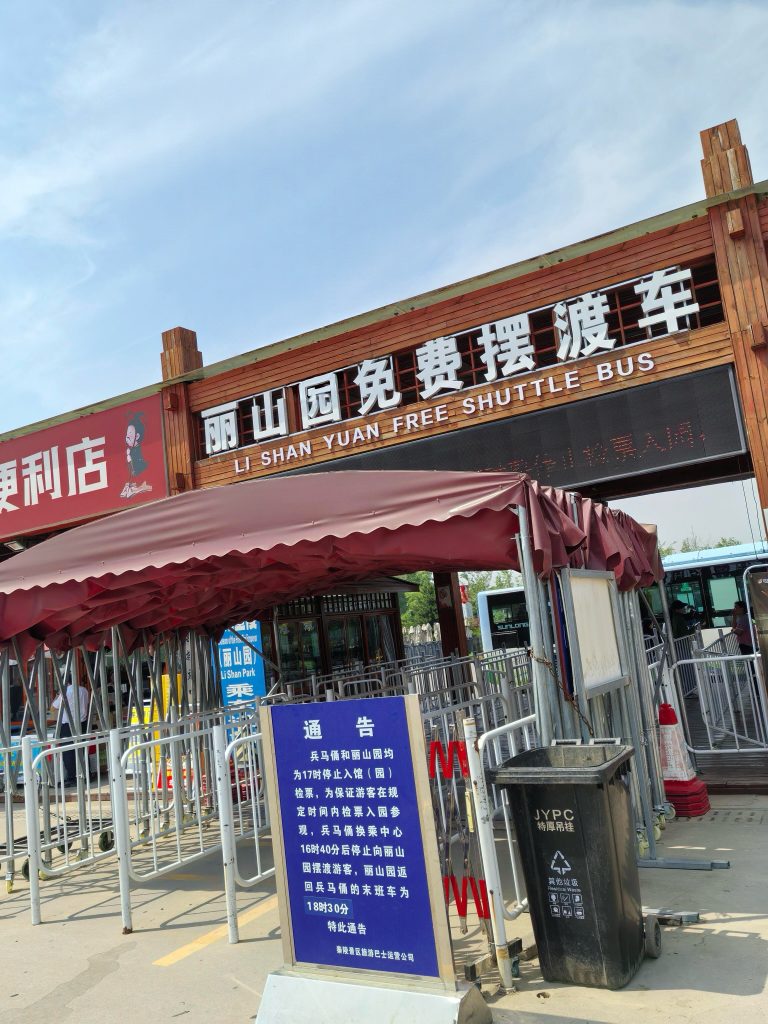
Shuttle Bus Station to Lishan Garden

Tip for Avoiding Crowds

For travelers hoping for a quieter sightseeing experience, it is advisable to start your visit at Lishan Garden first and then return to the Terracotta Army later in the day. This reverse sequence helps you avoid peak crowds and enjoy a more relaxing tour.

Opening Hours

  • March 16 – November 15: 08:30–18:30 (last entry 17:00)

  • November 16 – March 15: 08:30–18:00 (last entry 16:30)

The best time to visit is after 3:00 PM on weekdays, when crowds are lighter.

Tickets & Fees

  • Entrance Ticket: CNY 120
    (Includes both Terracotta Warriors Museum and Lishan Garden)

  • Sightseeing Bus:

    • Museum area: CNY 5

    • Lishan Garden: CNY 15

  • Audio Guide: CNY 40 (deposit CNY 100)

Ticket Booking Tips

Tickets are released 7 days in advance and sell out quickly. Foreign visitors may find it easier to book through a reliable travel agency, as the official site and WeChat mini-program are in Chinese only.

How to Get to the Terracotta Army from Xi’an City Center

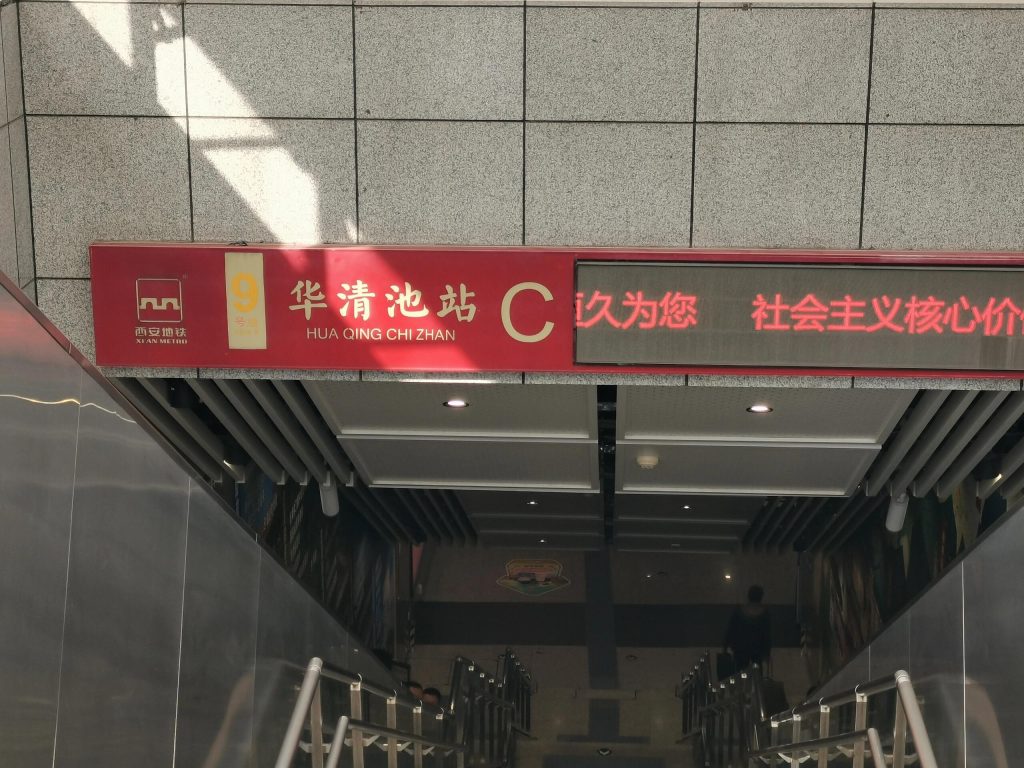
1.By Metro (Most Affordable – ~1.5 hours)

Take Metro Line 1 → transfer to Line 9 → exit at Huaqingchi Station → take Bus 602 or 613 directly to the site.

Huaqingchi Station, Metro Line 9

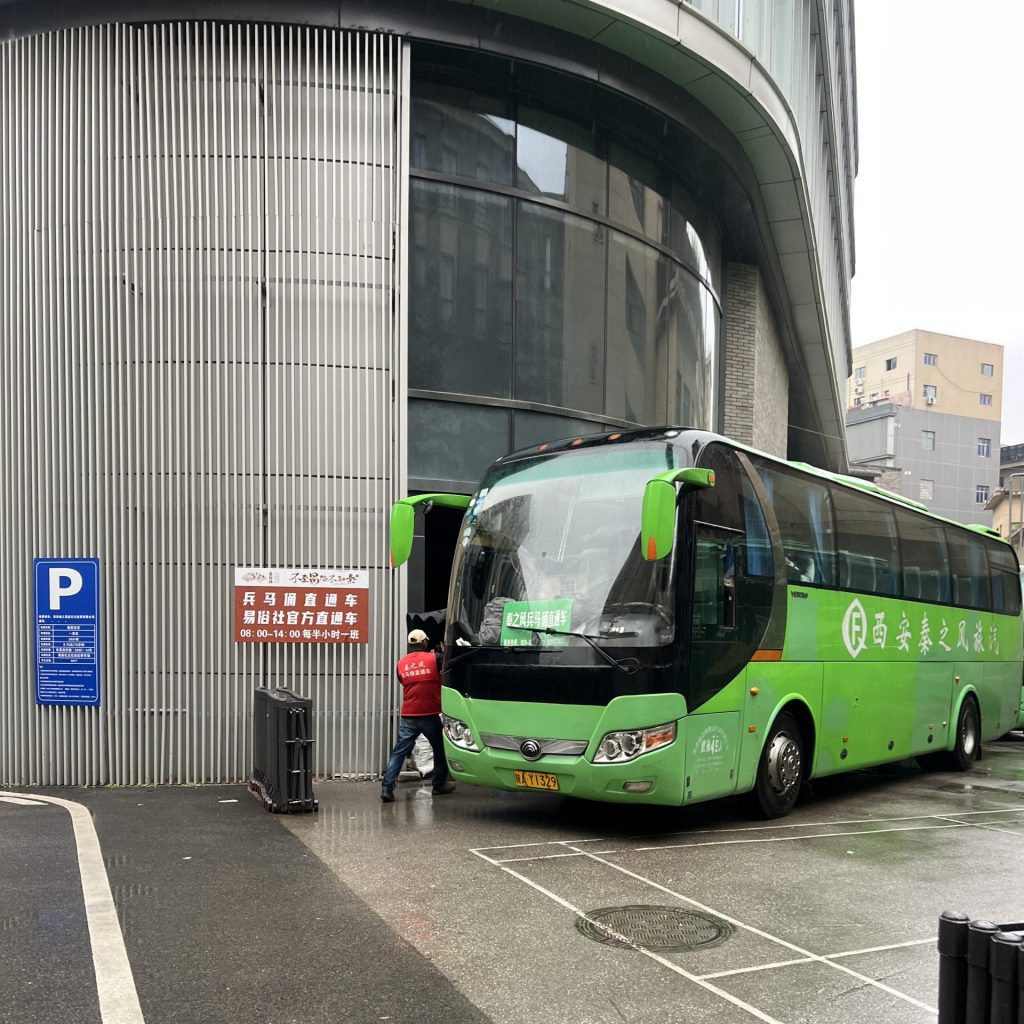
2.By Tourist Bus (Convenient – ~1 hour)

Direct tourist buses depart from several major locations including:

  • Bell Tower area

  • Giant Wild Goose Pagoda

  • Sajinqiao Station
    Price: CNY 25–30
    Operating hours: 08:00–12:00 (to Terracotta Army)

Tourist Bus to Terracotta Army

3.By City Bus (Budget option)

Route You 5 (306) from Fangzhicheng Bus Station
Price: CNY 5

4. By Taxi (Fastest)

Duration: 40 minutes
Cost: CNY 120–150
Best for small groups or travelers with luggage.

Travel Tips

  • Wear comfortable walking shoes—distances between pits can be long.

  • Bring water and light snacks.

  • Luggage lockers are available near the ticket center.

  • Avoid buying jade products from outside stalls—counterfeits are common.

  • Hiring an English-speaking guide greatly enhances understanding of the site’s history.

Besides Xi'an, Where Else Can You See Terracotta Army?

Although Xi’an’s Terracotta Army is the most famous, similar sites exist in:

Xianyang (Yangjiawan Terracotta Warriors)

Xuzhou (Shizishan Terracotta Warriors)

Hanyangling Mausoleum Terracotta Warriors

Jinan (Weishan Terracotta Warriors)