For anyone who has ever played a Three Kingdoms video game or seen a Chinese historical epic, Wuhou Shrine is hallowed ground. Located in the southwestern heart of Chengdu, this 1,800-year-old complex is not just a museum; it is a monument to the ultimate human virtues: wisdom, loyalty, and a partnership that shaped the history of ancient China.
Whether you are a history buff or just here for the perfect “Instagrammable” photo, this beginner’s guide will help you navigate the heart of the Shu Han Kingdom.
1. The Story: A Masterclass in Loyalty
To understand Wuhou Shrine, you must understand two men: Liu Bei (the benevolent founder of the Shu Han state) and Zhuge Liang (his brilliant, “Sleeping Dragon” strategist).
- The Three Visits: Legend has it that Liu Bei, a man of noble character but struggling for power, visited Zhuge Liang’s humble cottage three times in the winter of 207 AD before the strategist agreed to join his cause.
- Devotion Until the End: Zhuge Liang’s loyalty didn’t end with Liu Bei’s death. He served Liu’s young successor with such dedication that he eventually died in camp during a military campaign, forever becoming China’s symbol of “bowing and scraping until the very end”.
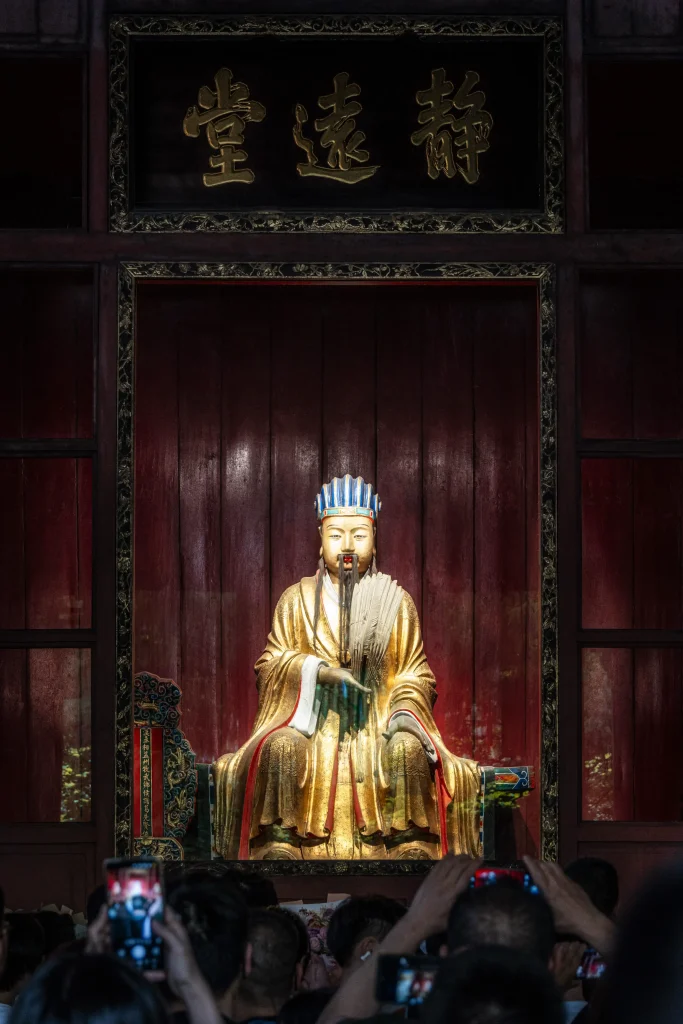
2. A Rare Cultural Oddity: Monarch and Minister Together
Wuhou Shrine holds a unique distinction: it is the only temple in China where an emperor (Liu Bei) and his minister (Zhuge Liang) are enshrined together.
Usually, Chinese protocol dictates strict separation between royalty and subordinates. However, the bond between these two was so deep that since the Ming Dynasty, they have shared this 150,000-square-meter sanctuary—a layout that creates a rare “joint worship” experience for visitors.
3. Photography Guide: The Iconic “Red-Wall Path”
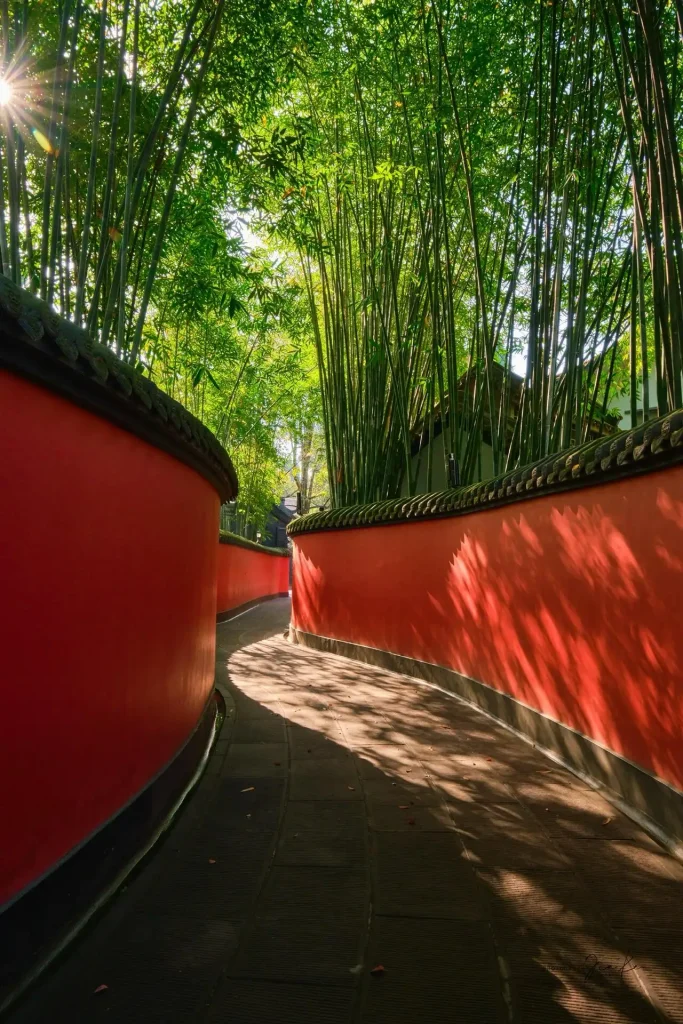
While the statues and steles are historically vital, the “visual soul” of the shrine for modern travelers is the Red-Wall Path .
- Where to Find it: This narrow, winding S-curve path is located beside the Huiling Mausoleum (Liu Bei’s tomb).
- The Contrast: The deep vermilion of the walls, framed by the bright green of the towering Phoenix bamboo and the dappled shadows of ancient cypresses, creates a dreamlike, ancient atmosphere.
- Pro-Tips for 2026:
- Timing: Arrive right at opening (8:00 AM) or in the late afternoon (4:00 PM) to catch the soft, ethereal light and avoid the heavy crowds.
- The Angle: Hold your phone low and angle it slightly upward to capture the bamboo canopy meeting the red sky.
- Hanfu: Many nearby shops offer traditional Hanfu rentals. Wearing a light-colored or white outfit will make you “pop” against the saturated red walls.
5. Practical Visitor Information
- Tickets: 50 RMB (pre-booking 14 days in advance via official channels is recommended).
- How to Get There: Take Metro Line 3 to Gaoshengqiao Station (Exit D) and follow the signs for a 10-minute walk.
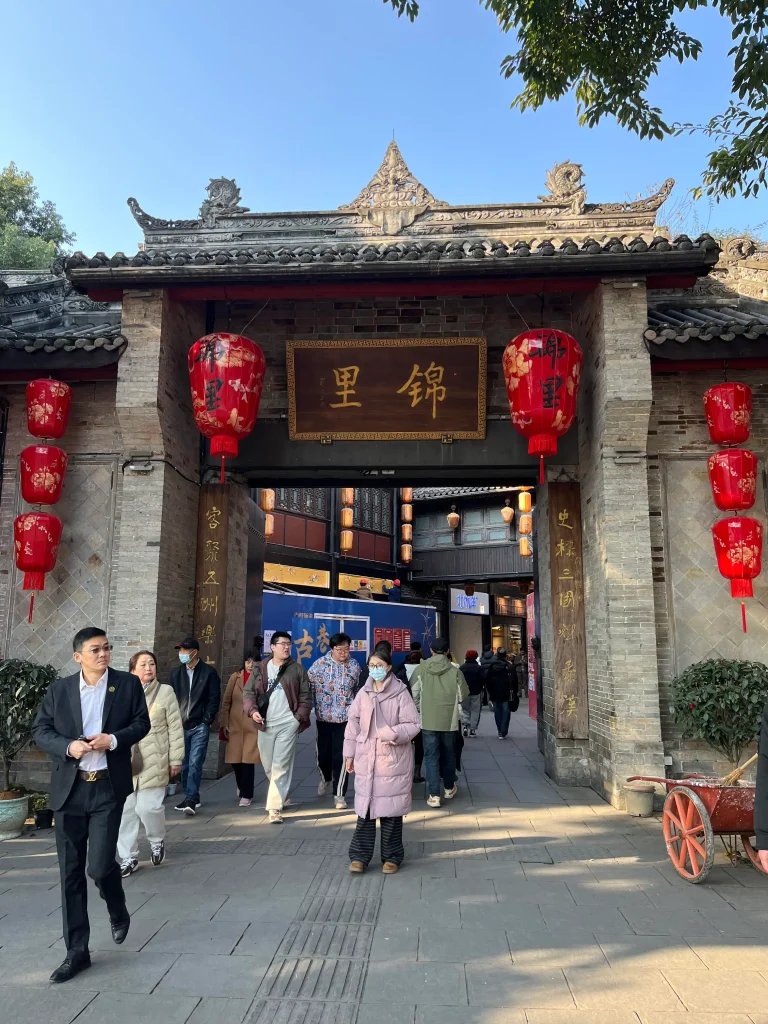
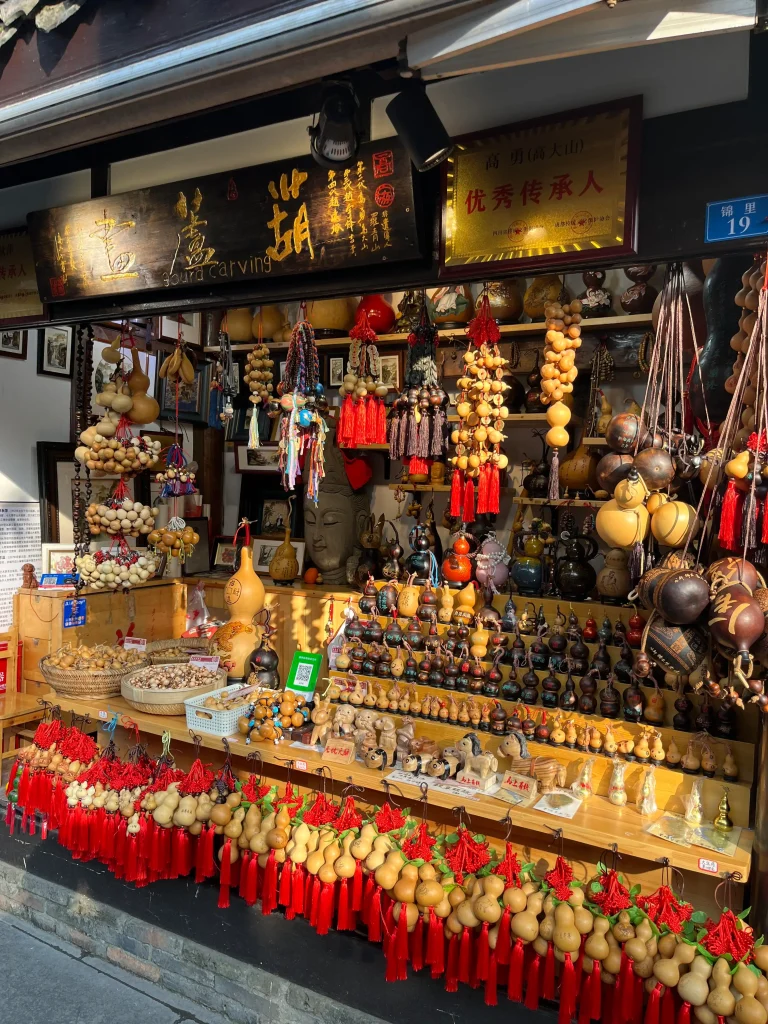
- The Connection: The shrine connects directly to Jinli Ancient Street. Plan to explore the quiet shrine in the afternoon and walk straight into the lantern-lit bustle of Jinli for snacks in the evening.
Conclusion
Wuhou Shrine is the emotional anchor of Chengdu. It is where ancient chivalry meets modern photography. Whether you are there to pay respects to the “Sleeping Dragon” or to capture the play of bamboo shadows on red brick, you are touching a spirit of loyalty that has refused to fade for nearly two millennia.
Wuhou Shrine is the grand finale of Chengdu’s ancient story. To understand the mysterious civilization that existed thousands of years before these heroes, don’t miss our primary guide: Unearthing the Unknown: A Journey from the Alien-Like Masks of Sanxingdui to the Heroic Legends of Wuhou Shrine.