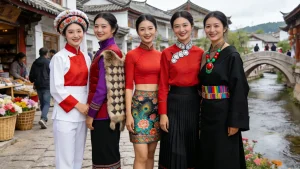
Where China ends and Southeast Asia begins — golden Buddhist temples, night markets that smell of lemongrass, wild Asian elephants in the rainforest, and a Dai New Year festival that turns cities into water battlegrounds.
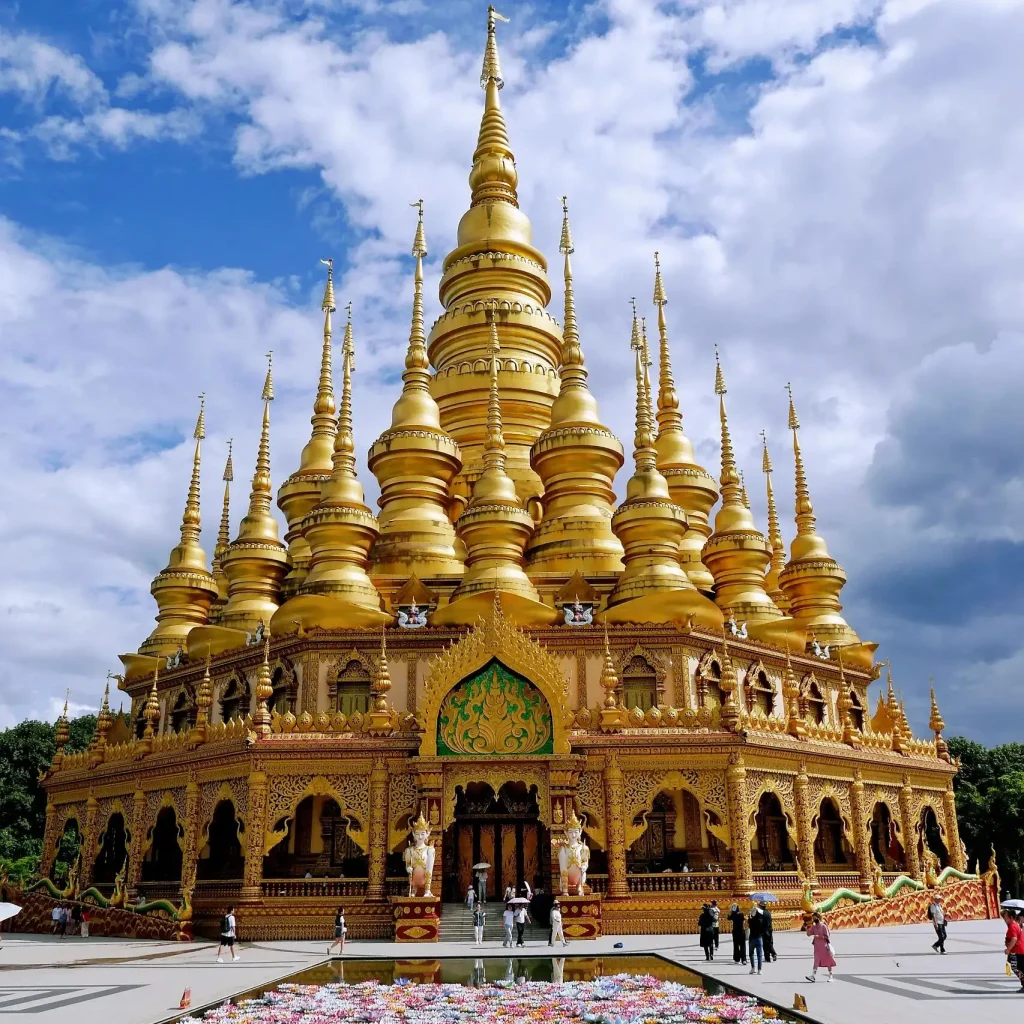
Cross into Xishuangbanna and you leave China — or at least everything you thought China was. The air turns tropical-heavy. Palm trees replace pine forests. The architecture shifts from Chinese courtyard homes to stilted bamboo houses with curved rooflines. The food tastes of lemongrass and fish sauce. And the temples — golden-spired Theravada Buddhist pagodas glittering in the equatorial sun — look like they’ve been transported from northern Thailand.
That’s because, culturally speaking, they have been. Xishuangbanna (known locally as “Banna”) sits on China’s border with Laos and Myanmar, and the Dai people who form the region’s largest ethnic group share deep linguistic, religious, and culinary roots with the Thai and Lao peoples. It’s a place where Southeast Asian and Chinese cultures overlap in ways that surprise and delight — and where the natural world delivers its own spectacle: Yunnan’s last remaining tropical rainforests, home to wild Asian elephants, hornbills, and an astonishing diversity of plant life.
This guide covers everything you need to plan your time in Banna: where to go, what to eat, when to visit, and how to understand the Dai culture that makes this place unlike anywhere else in China. For the big-picture Yunnan planning, see our ultimate Yunnan travel guide and our top things to do in Yunnan.
What this guide covers: Why Banna is unique → Jinghong city → Dai villages & temples → Tropical rainforest → Wild elephants → Water Splashing Festival → Night markets & food → Tea mountains → Getting there & around → Practical tips.
Jinghong: Banna’s Tropical Capital
Jinghong, the capital of Xishuangbanna Dai Autonomous Prefecture, is a mid-sized city on the banks of the Lancang River (the Chinese name for the Mekong). It’s where most visitors base themselves, and while it lacks the ancient-town charm of Dali or Lijiang, it has something those cities don’t: a completely different cultural energy. The streets are lined with palm trees and bougainvillea. Dai-script signs appear alongside Chinese characters. Monks in saffron robes walk to morning alms. And the night markets — more on those below — are some of the best street food experiences in all of Yunnan.
Key sights in Jinghong: Manting Park, a former royal garden of the Dai kings that’s now a public park with temples, peacocks, and nightly cultural performances. The Zong Fo Temple (General Buddhist Temple), the most important Theravada Buddhist temple in Xishuangbanna. And the Lancang River waterfront, particularly pleasant in the early evening when locals gather to walk, exercise, and eat grilled snacks along the promenade.
Dai Villages & Temples
The best way to experience Dai culture is to visit the villages outside Jinghong, where traditional life continues with striking continuity.
Ganlanba (Menghan) & the Dai Garden
Thirty kilometers southeast of Jinghong, Ganlanba is a cluster of riverside Dai villages that has been organized into a cultural park — but one with more authenticity than the label suggests. The “Dai Garden” encompasses five traditional villages where Dai families still live in stilted bamboo houses, tend gardens of banana and papaya trees, and practice daily Buddhist rituals. You can visit active temples where young novice monks study, watch traditional weaving, and eat home-cooked Dai meals in family courtyards.
The morning alms-giving ceremony — villagers placing rice and food into monks’ bowls as they walk silently through the village — is a deeply moving experience and a direct cultural connection to the Buddhist traditions of Thailand and Laos.
Mengjinglai: The First Village of China
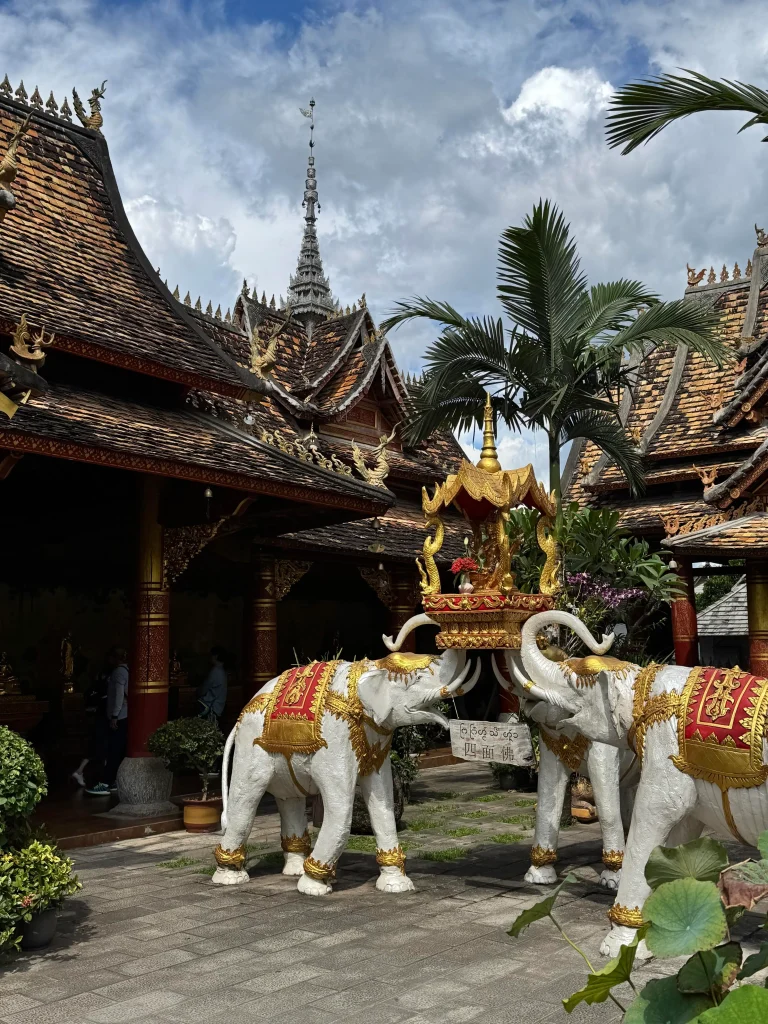
On the Myanmar border, the village of Mengjinglai (sometimes called the “First Dai Village”) sits at the very edge of China. The village’s 1,000-year-old Bodhi tree, its ornate Buddhist temple complex, and its border location give it a sense of being between worlds. You can literally see Myanmar across the river. The village is also home to a small gemstone market reflecting the cross-border jade and ruby trade.

Temple Architecture
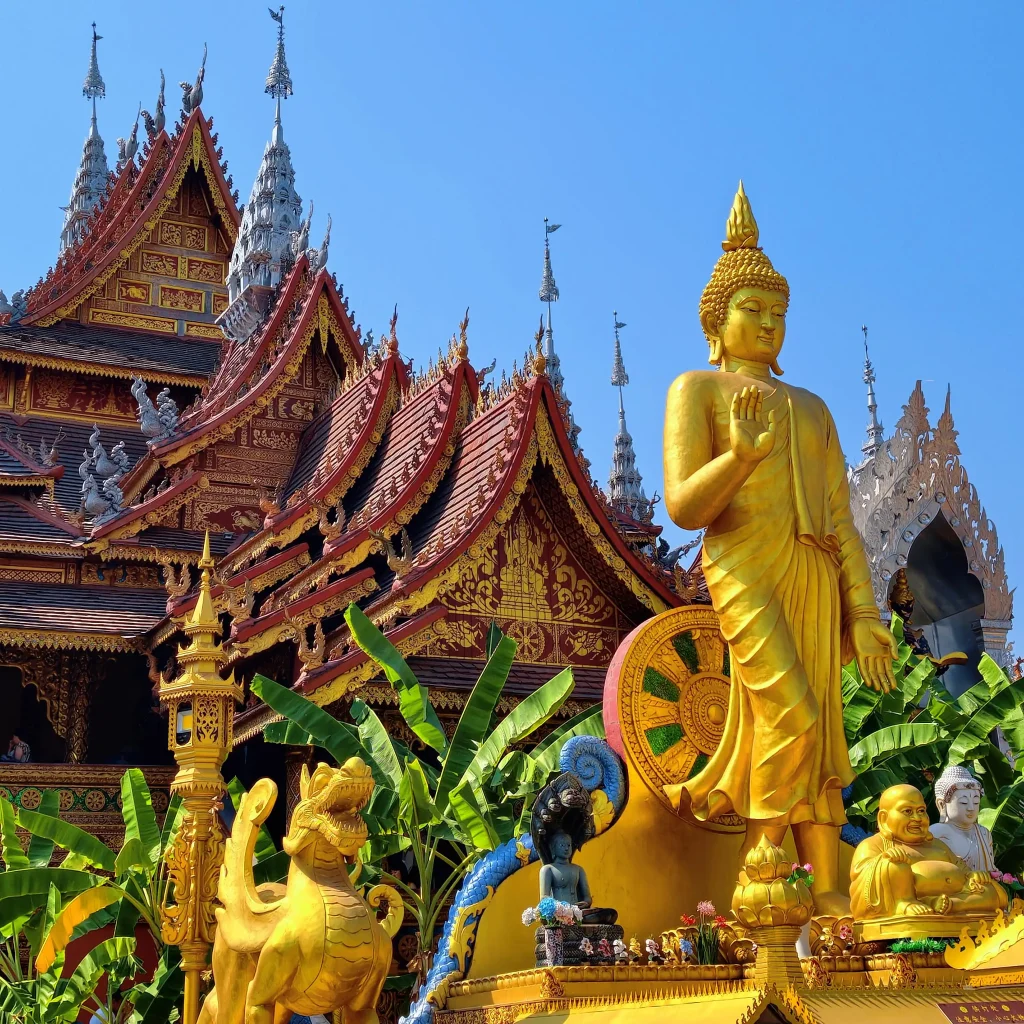
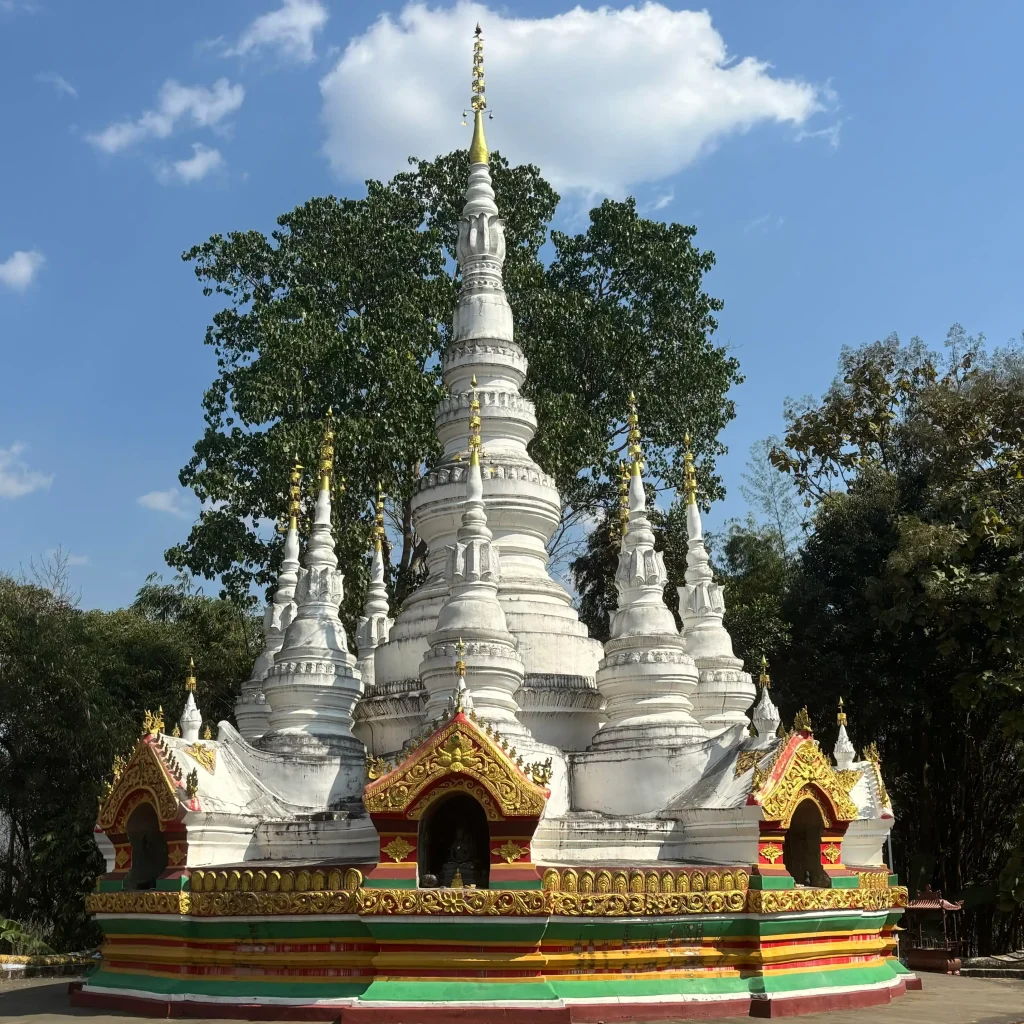
Dai Buddhist temples in Xishuangbanna are visually distinct from anything you’ll see elsewhere in China — and more closely resemble temples in Chiang Mai or Luang Prabang. Golden spires, multi-tiered roofs with upturned eaves, and ornate naga (serpent) stairway guardians are the defining features. The most photogenic examples include the White Pagoda (Manfeilong Pagoda) near Menghai, and the Octagonal Pavilion in Jingzhen — both dating from Banna’s pre-modern Dai kingdoms.
Tropical Rainforest & Wild Elephants
Xishuangbanna Tropical Botanical Garden
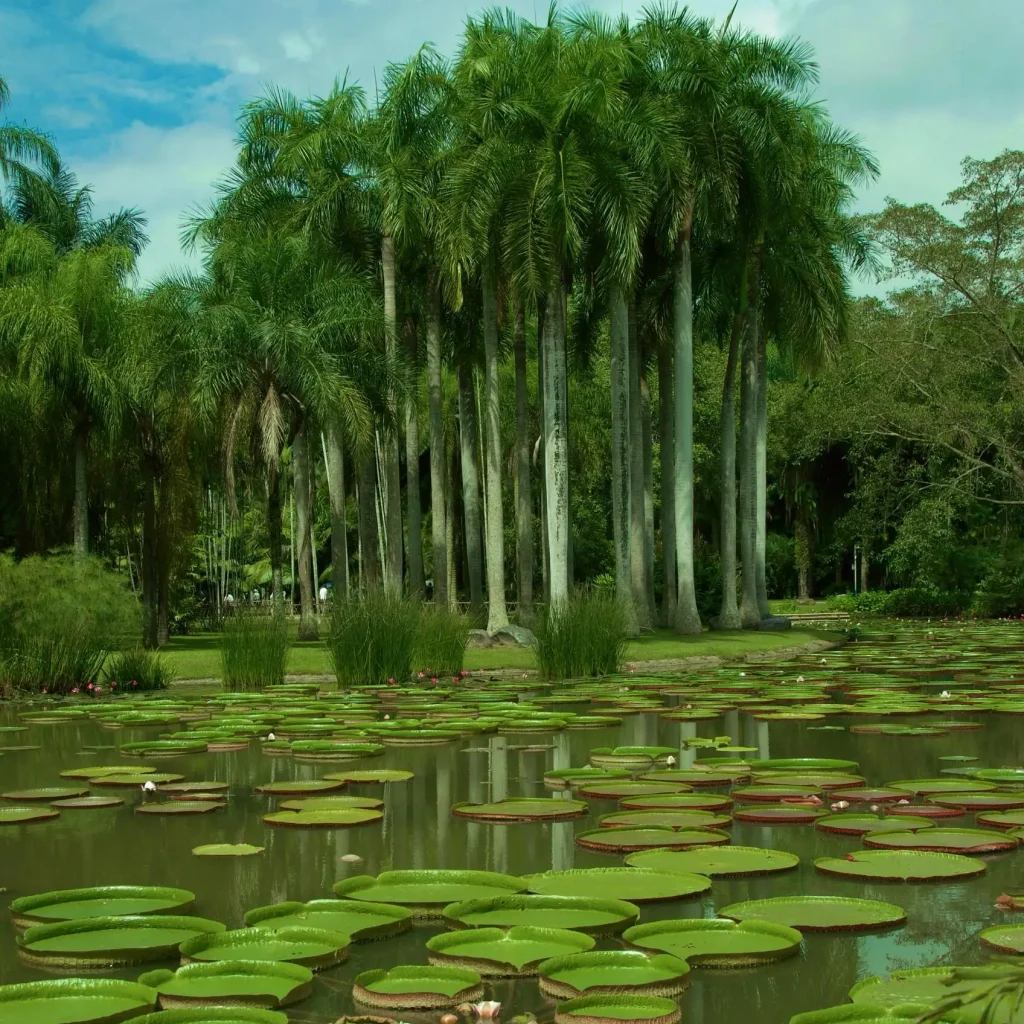
Run by the Chinese Academy of Sciences, this 900-hectare garden on a peninsula in the Luosuo River is one of the most impressive botanical collections in Asia. Over 13,000 plant species grow here, organized into themed gardens: tropical rainforest, palms, aquatic plants, medicinal herbs, and the extraordinary “dancing plants” and “cannonball trees.” Budget at least half a day; the garden is vast and genuinely fascinating even for non-botanists.
Wild Elephant Valley (Yě Xiàng Gǔ)
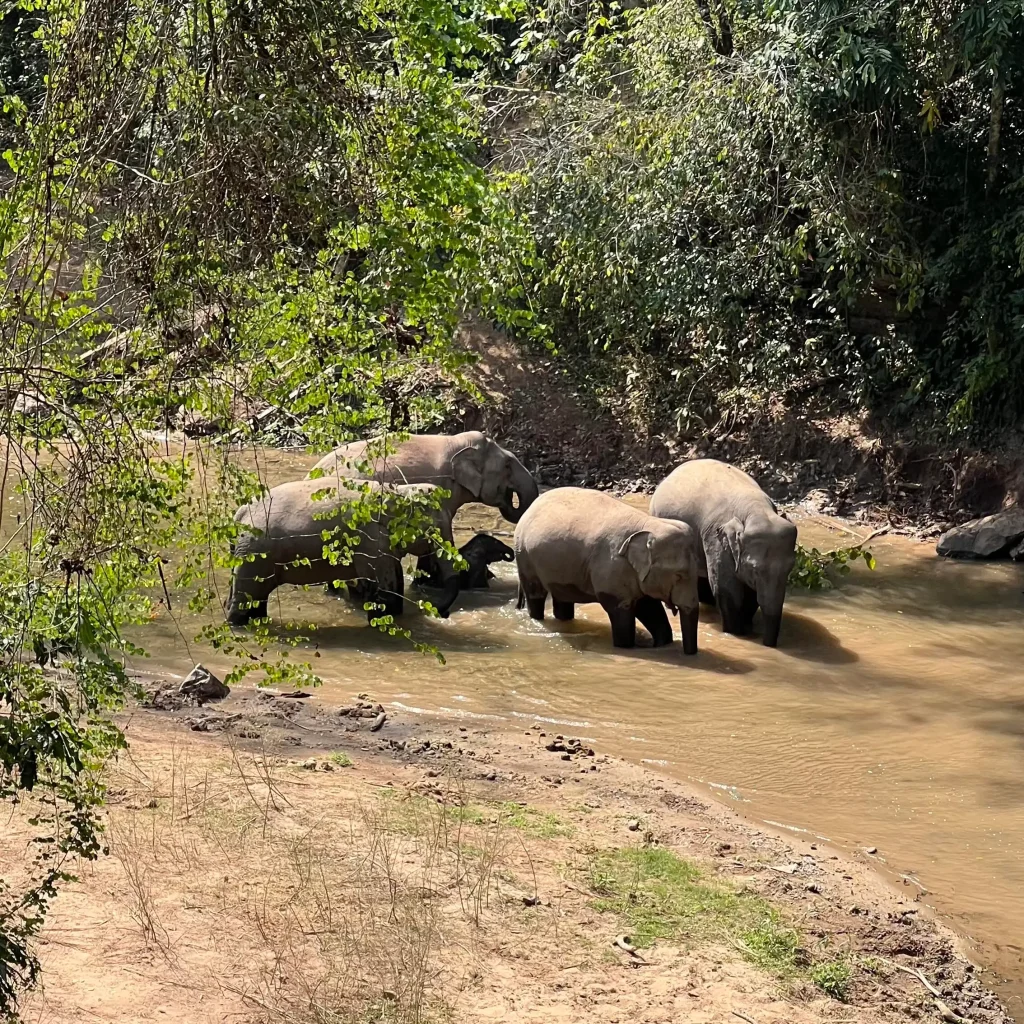
Xishuangbanna is the last refuge of wild Asian elephants in China — approximately 300 remain in the forests here. Wild Elephant Valley, 45 kilometers north of Jinghong, is the best chance to see them. An elevated walkway and observation platforms extend through the forest, and a feeding station in a clearing regularly attracts herds. Sightings are most reliable in the morning (before 9 AM) and late afternoon. You can even stay overnight in the park’s treehouse hotel for the best chances.
Recent years have seen dramatic elephant-related news — in 2021, a herd of wild Banna elephants walked 500 kilometers north, captivating China and the world. The elephants are a powerful symbol of Xishuangbanna’s ecological significance.
Wangtianshu Rainforest
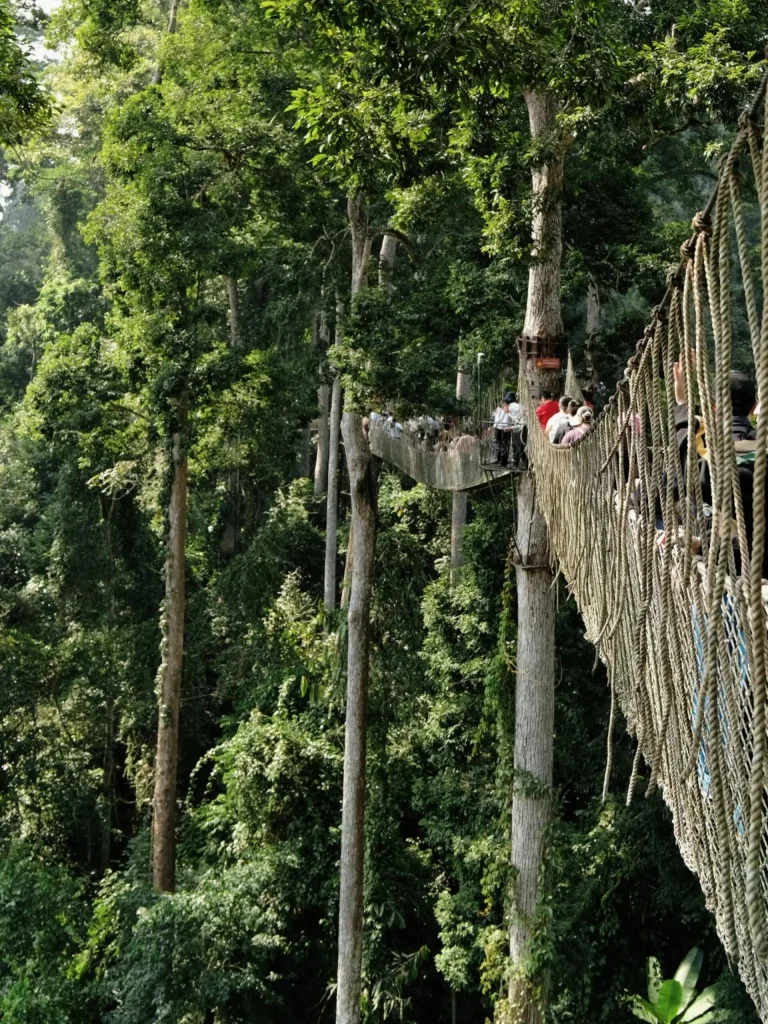
The “Rainforest Canopy Walkway” at Wangtianshu (36 kilometers from Jinghong) takes you 36 meters above the forest floor on a suspended bridge that sways gently between giant tropical trees. It’s the closest you’ll get to the feeling of being inside the rainforest canopy — toucans call, butterflies drift past at eye level, and the forest floor is a distant green carpet below. The adjacent Philip Trail is a peaceful 2-hour walk through old-growth jungle.
The Water Splashing Festival
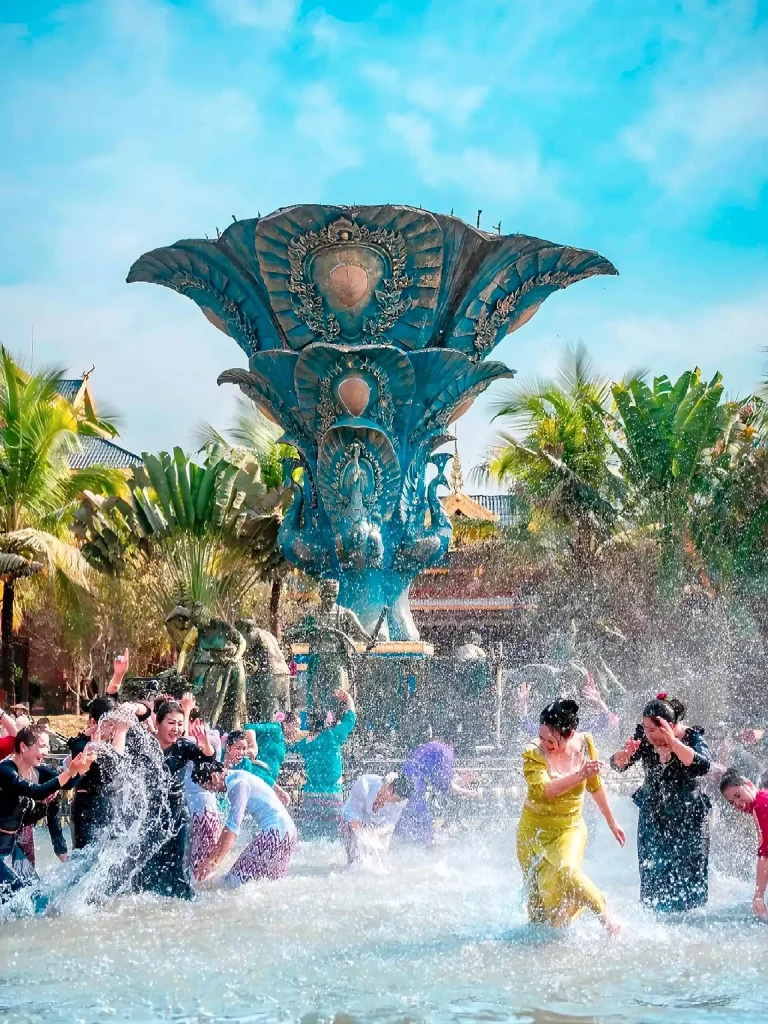
If you can time your visit around a single event, make it the Water Splashing Festival (Pō Shuǐ Jié) — the Dai New Year celebration held every April (usually April 13–15) that is, without exaggeration, the most joyous festival in China.
The concept is simple: splash water on everyone you see. Getting soaked is a blessing — the more water, the more good luck. For three days, the entire city of Jinghong and surrounding villages dissolve into gleeful aquatic chaos: water guns, buckets, hoses, trucks with water tanks. Nobody is spared — tourists, monks, government officials, passing trucks — everyone gets drenched, and everyone is laughing.
Beyond the water fights, the festival includes dragon boat races on the Lancang River, paper lantern releases, traditional Dai dancing, market fairs, and elaborate Buddhist ceremonies. The atmosphere is electric — a city-wide party where locals and visitors celebrate together without any barriers.
Practical tips: waterproof your phone and passport (ziplock bags), wear clothes you don’t mind getting soaked, bring a towel and dry change for the evening, and surrender to the experience completely. For more details, see our Yunnan festivals guide— and book accommodation months in advance, as the festival attracts visitors from across China.
What to Eat in Xishuangbanna
Banna’s food is Yunnan’s most exotic — more Southeast Asian than Chinese. For the full guide, see our Xishuangbanna food guide and our broader Yunnan food guide.
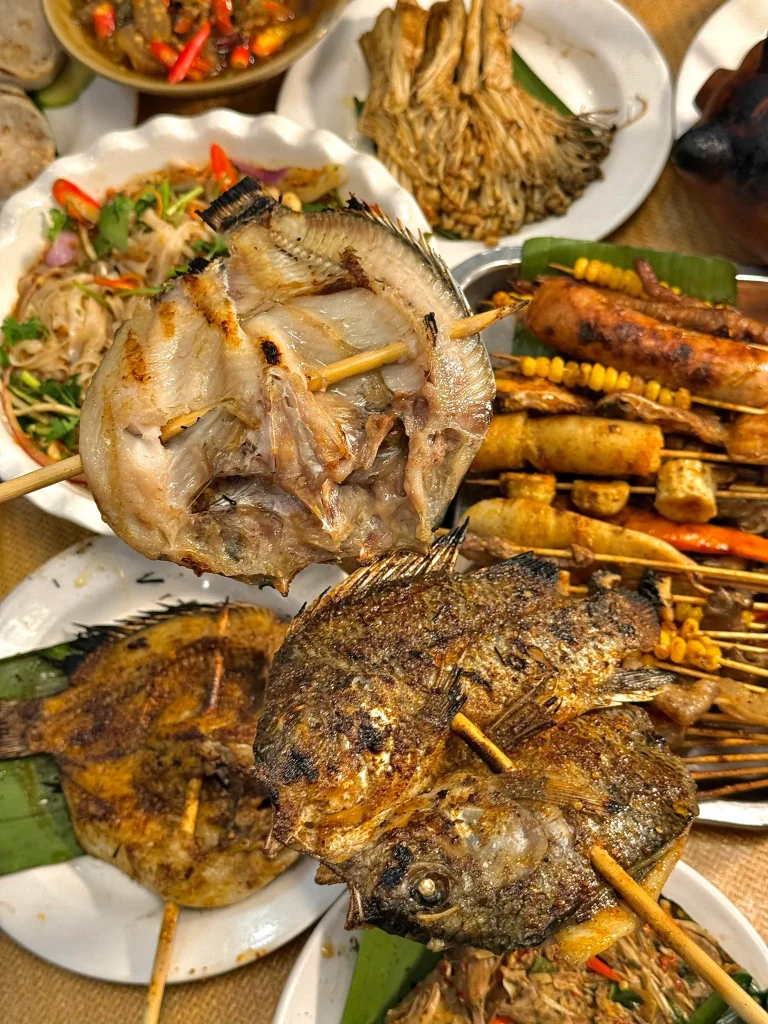
Dai Grilled Fish (Kǎo Yú): The signature dish — whole fish stuffed with lemongrass, chili, and wild herbs, grilled over charcoal. Smoky, sour, spicy, and utterly addictive.
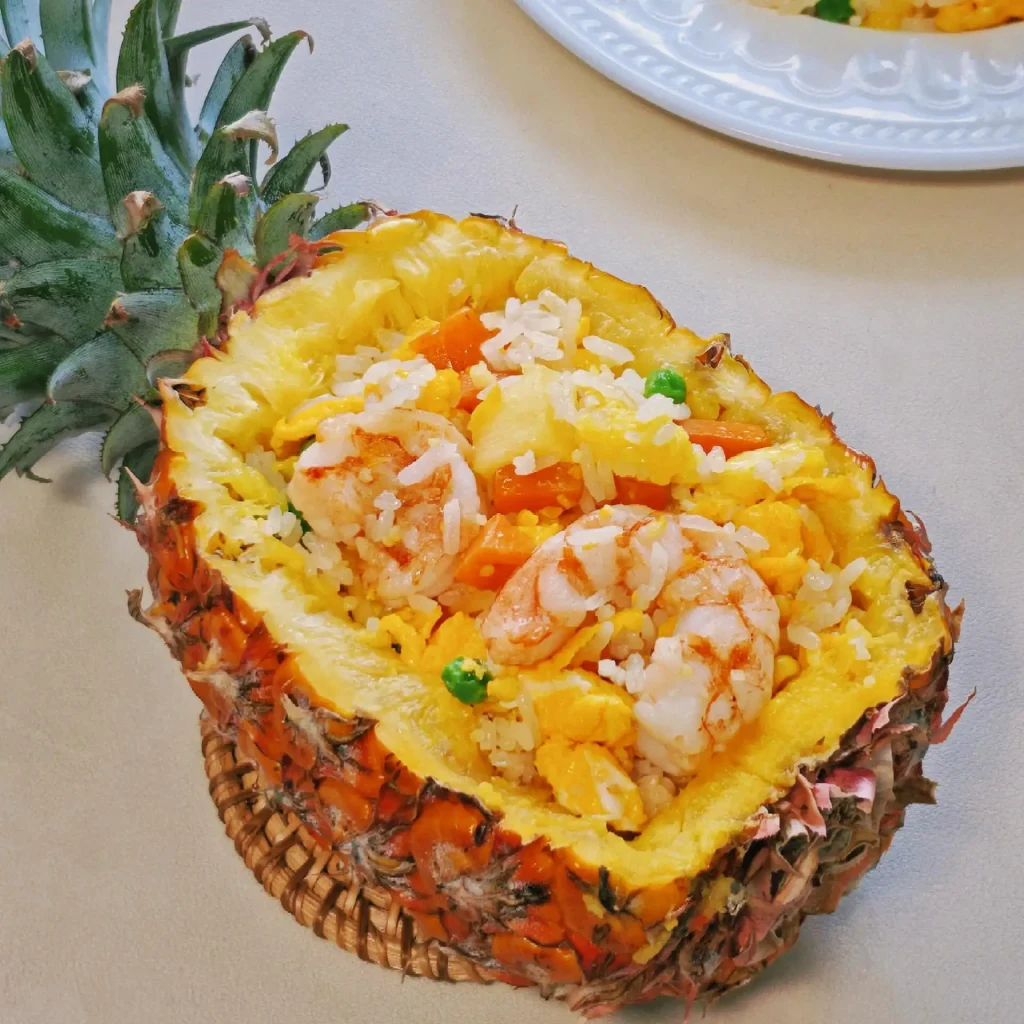
Pineapple Rice: Sticky rice steamed with pineapple chunks inside a carved-out pineapple shell. Sweet, fragrant, and photogenic.
Bamboo Tube Rice (Zhútǒng Fàn): Sticky rice stuffed into a bamboo tube and roasted over fire. The bamboo imparts a subtle smoky-sweet flavor.
Night Market Feasting: The Manting Road night market and the more local Gasa Road market are Banna’s food epicenters. Grilled meats in banana leaves, barbecue skewers, tropical fruit shakes, fried insects (for the adventurous) — go after 7 PM with an empty stomach.
Tropical Fruit: Banna’s tropical climate produces fruit you won’t find anywhere else in Yunnan: mangosteen, rambutan, jackfruit, dragon fruit, and passion fruit — all sold at markets for a fraction of international prices.
Pu’er Tea: The ancient tea mountains of Xishuangbanna — including the legendary Yiwu, Menghai, and Banzhang areas — are where the world’s most prized Pu’er tea originates. Visiting a tea mountain and tasting fresh leaves from trees that are 500+ years old is a pilgrimage for tea lovers.
The Ancient Tea Mountains
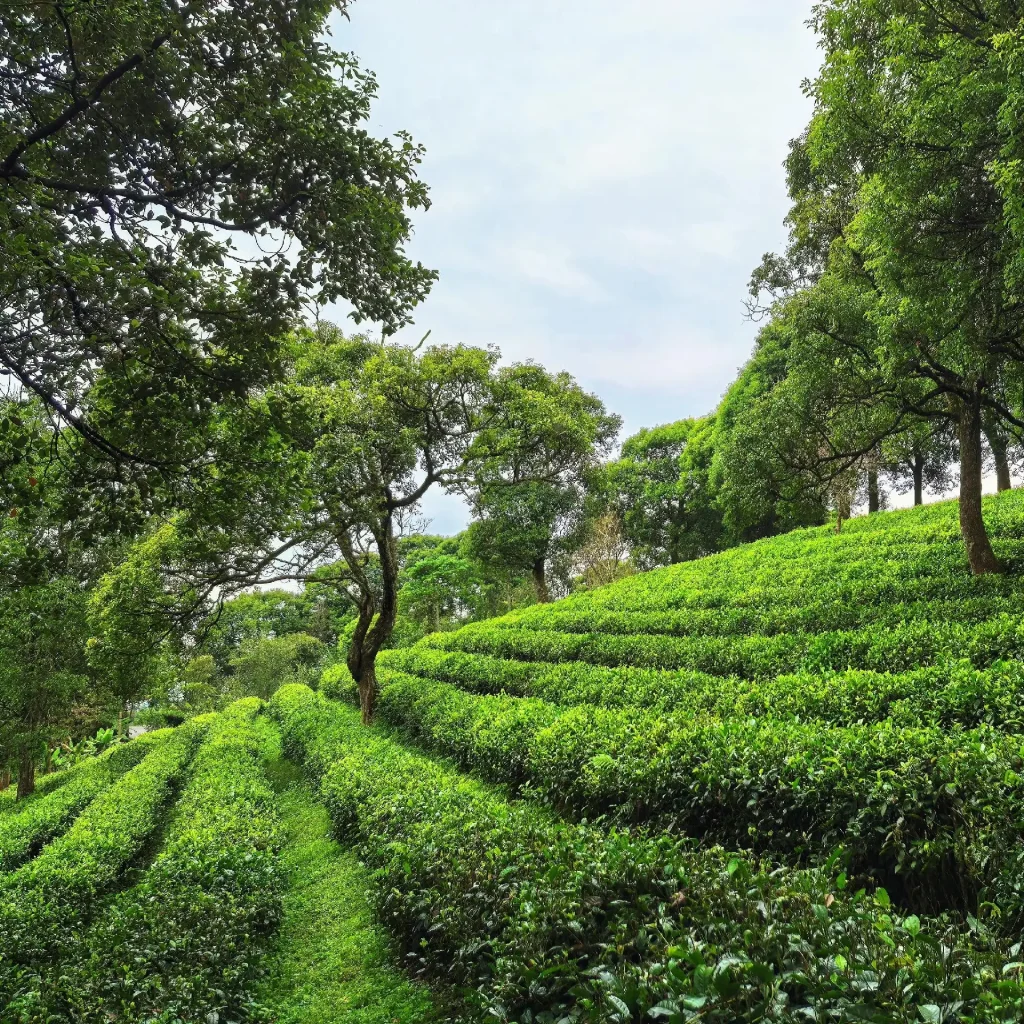
Xishuangbanna is the birthplace of Pu’er tea, and the ancient tea mountains here are to tea what Burgundy is to wine — the origin, the standard, and the obsession. Villages like Laobanzhang, Yiwu, and Jingmai sit in misty mountain forests where tea trees — some 500 to 1,000+ years old — are tended by ethnic minority communities (Bulang, Hani, Dai) whose families have been making tea for generations.
Visiting a tea mountain is one of Banna’s most rewarding experiences beyond the tourist trail. You’ll drink tea brewed from leaves picked that morning, walk among ancient trees whose trunks are thick with moss, and understand why Pu’er connoisseurs are willing to pay thousands of dollars for a single cake from a specific mountain. The town of Menghai (45 minutes from Jinghong) is the gateway — and home to the Menghai Tea Factory, where some of the world’s most famous Pu’er brands are produced.
For the full tea guide — tasting notes, buying advice, and how to avoid scams — see our Pu’er and Yunnan tea guide. For the cultural history of the trade route that carried tea to Tibet, read our Tea Horse Road guide.
Getting to Xishuangbanna & Getting Around
From Kunming: Flight (1 hour, frequent and affordable) to Jinghong Gasa Airport. Alternatively, the new Yumo Railway (completed 2024) covers the route in about 3.5 hours — one of China’s most scenic rail journeys, descending from the plateau through tunnels and viaducts to the tropical lowlands.
From Laos/Thailand: Xishuangbanna is increasingly connected to Southeast Asia. The China-Laos Railway links Jinghong to Vientiane and Luang Prabang. Border crossings at Mohan-Boten are open to international travelers with proper visas.
Getting around Banna: Jinghong is manageable by Didi or shared bike. For destinations outside the city — Ganlanba, Wild Elephant Valley, the Botanical Garden, tea mountains — you’ll need to hire a car, join a day tour, or use the local bus system (affordable but slow). Renting a scooter (with valid license) is popular for exploring at your own pace.
For multi-city route planning, our Yunnan itinerary guide shows how Banna fits into longer Yunnan circuits.
Practical Tips for Visiting Xishuangbanna
Best time to visit: November–April is dry season — warm, sunny, and ideal. April brings the Water Splashing Festival (book early). June–October is wet season — hot, humid, with afternoon downpours, but the rainforest is at its lushest and fruits are in peak season.
How many days: 3–4 days. Day 1: Jinghong (temples, Manting Park, night market). Day 2: Dai villages + Botanical Garden or Wild Elephant Valley. Day 3: Rainforest canopy walk or tea mountain visit. Day 4: Deeper tea exploration or relaxed riverside day.
Climate: Banna is tropical — temperatures range from 15–25°C in winter to 25–35°C in summer. Pack light clothing, mosquito repellent, sunscreen, and a rain layer. The heat and humidity are significant April–September.
Cultural sensitivity: When visiting Dai temples, remove your shoes, cover your shoulders and knees, and walk clockwise. In Dai villages, ask before photographing homes or people. During the Water Splashing Festival, it’s polite to splash back (refusing water is considered bad form). Our Yunnan culture guide has broader cultural etiquette advice.
Health: Mosquito-borne diseases (dengue, malaria) are low-risk but present. Use repellent, especially at dusk. The tropical heat means dehydration is a real concern — carry water and drink frequently.
Absolutely. Banna is completely different from the rest of Yunnan — tropical climate, Dai culture, Southeast Asian flavors, rainforest wildlife, and ancient tea mountains. It feels like visiting a different country. The flight from Kunming takes 1 hour, and the new railway makes the trip even more accessible.
Usually April 13–15 each year (based on the Dai calendar, so dates shift slightly). The main celebrations are in Jinghong. Book accommodation months in advance — the festival is extremely popular. Arrive a day early to soak in the pre-festival atmosphere.
Yes. Wild Elephant Valley (45 km from Jinghong) is the best location. A feeding station in a forest clearing regularly attracts herds, and elevated walkways allow observation. Morning visits (before 9 AM) give the best chances. Overnight stays in the park’s treehouses further improve your odds.
Yes. Xishuangbanna is one of the safer parts of Yunnan. The main health concerns are tropical: use mosquito repellent, stay hydrated in the heat, and eat at busy stalls to avoid food issues. Road conditions in mountainous tea areas can be challenging — use an experienced driver.
Yes. The Mohan-Boten border crossing is open to international travelers with valid Chinese exit documents and a Laos visa (available on arrival for most nationalities). The China-Laos Railway now connects Jinghong to Luang Prabang and Vientiane, making cross-border travel easier than ever.
Pu’er tea from the local mountains (buy from reputable shops, not street vendors — our tea guide explains how). Dai handicrafts: silver jewelry, bamboo woven items, and handmade paper. Tropical dried fruits (mango, jackfruit) are excellent portable souvenirs.