A province where pictographic scripts are still written by hand, kingdoms once rivaled the Tang Dynasty, and grandmothers dye indigo fabric the same way their ancestors did 600 years ago.
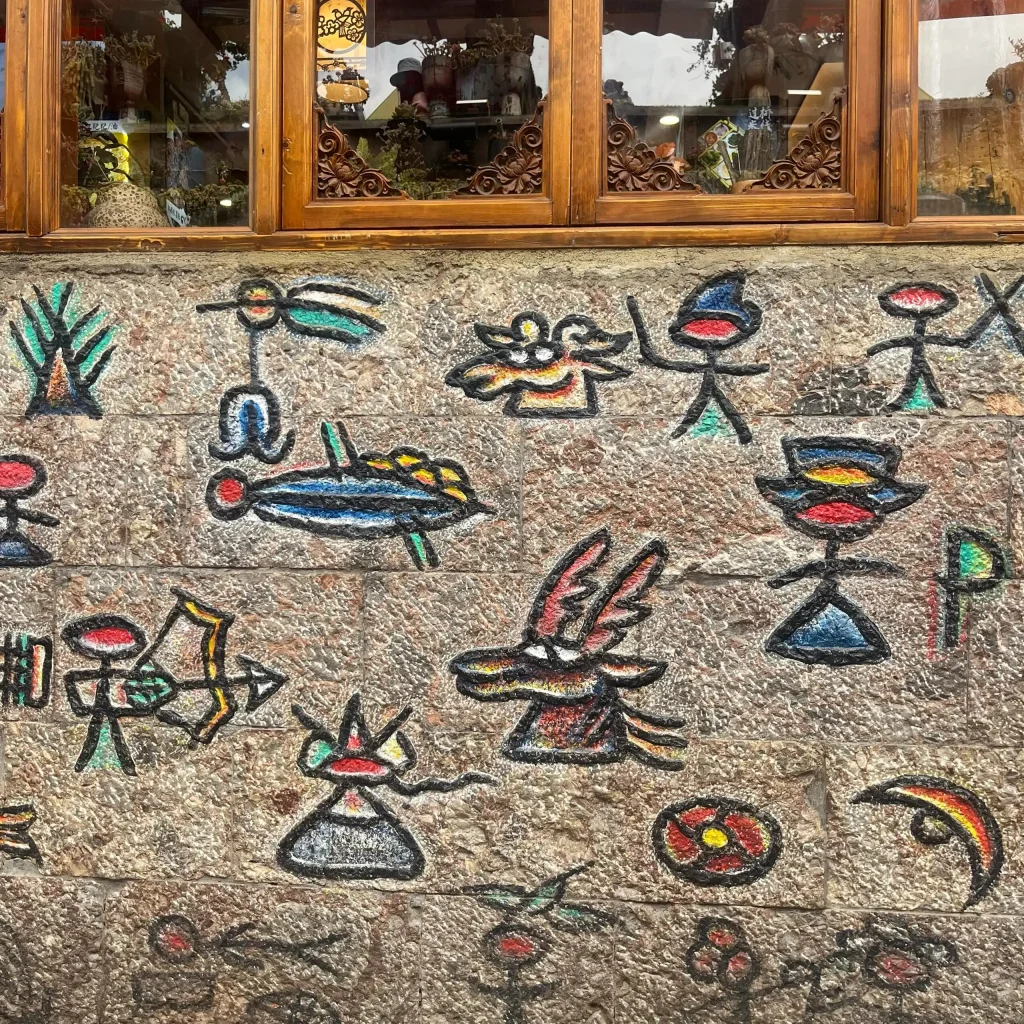
Most people come to Yunnan for the mountains and stay for the people. It’s a line you’ll hear from long-term expats in Dali, from backpackers who extended their visa in Lijiang, from food bloggers who only meant to spend a week in Xishuangbanna. And they all mean the same thing: Yunnan’s culture is not something you read about in a guidebook and then tick off a list. It’s something that happens to you — in the taste of a bitter first cup of Bai tea, in the sound of Naxi elders playing music on instruments older than most European nations, in the spray of water on your face during a Dai New Year celebration where an entire city has decided to soak you.
This is the most ethnically diverse province in China, and it isn’t even close. 25 distinct ethnic minority groups call Yunnan home — nearly half of all recognized minorities in the country — and their traditions aren’t preserved behind museum glass. They’re woven into everyday life: in the architecture you sleep in, the food you eat, the festivals you stumble into, and the way a grandmother in a Hani village wordlessly hands you a bowl of rice wine because you looked thirsty.
This Yunnan culture guide will take you through the major ethnic groups you’ll encounter, the ancient kingdoms that shaped the province’s history, the trade routes that connected it to the wider world, and the living traditions — from tea ceremonies to fire festivals — that make traveling through Yunnan feel less like sightseeing and more like time travel. If you’re still in the planning stage, start with our ultimate Yunnan travel guide for the big picture on logistics, or browse the top things to do in Yunnan for a curated list of must-visit experiences.
What this guide covers: Why Yunnan’s culture is unique → The 25 ethnic minorities → Major groups you’ll meet → Ancient kingdoms of Nanzhao & Dali → The Tea Horse Road → Pu’er tea culture → Festivals → Living crafts & traditions → How to engage respectfully → Planning your cultural journey.
Why Yunnan’s Culture Is Different from Anywhere Else in China
Before you visit, it helps to understand why Yunnan is the way it is — because the answer isn’t obvious.
Most of China’s vast interior was shaped by millennia of centralized imperial rule: the same script, the same Confucian philosophy, the same administrative system stretching from Guangzhou to Beijing. Yunnan was different. For most of recorded history, it was too mountainous, too remote, and too geographically fractured for any central government to fully control. While the rest of China unified, Yunnan remained a patchwork — hundreds of valleys, each separated by mountain ranges, each developing its own language, its own customs, its own way of life.
The result is something that feels, to the visitor, more like Southeast Asia than eastern China. The Dai people in the south share cultural roots with Thailand and Laos. The Tibetan communities in the northwest practice a form of Buddhism nearly identical to what you’d find in Lhasa. The Bai people of Dali developed their own architectural style, their own cuisine, and a tea ceremony that doubles as a philosophy lesson. And the Naxi people of Lijiang invented a writing system so unique that UNESCO has designated it a Memory of the World treasure.
This isn’t diversity for diversity’s sake. It’s the natural consequence of geography meeting history — and it’s what makes Yunnan one of the most culturally rewarding destinations on the planet.
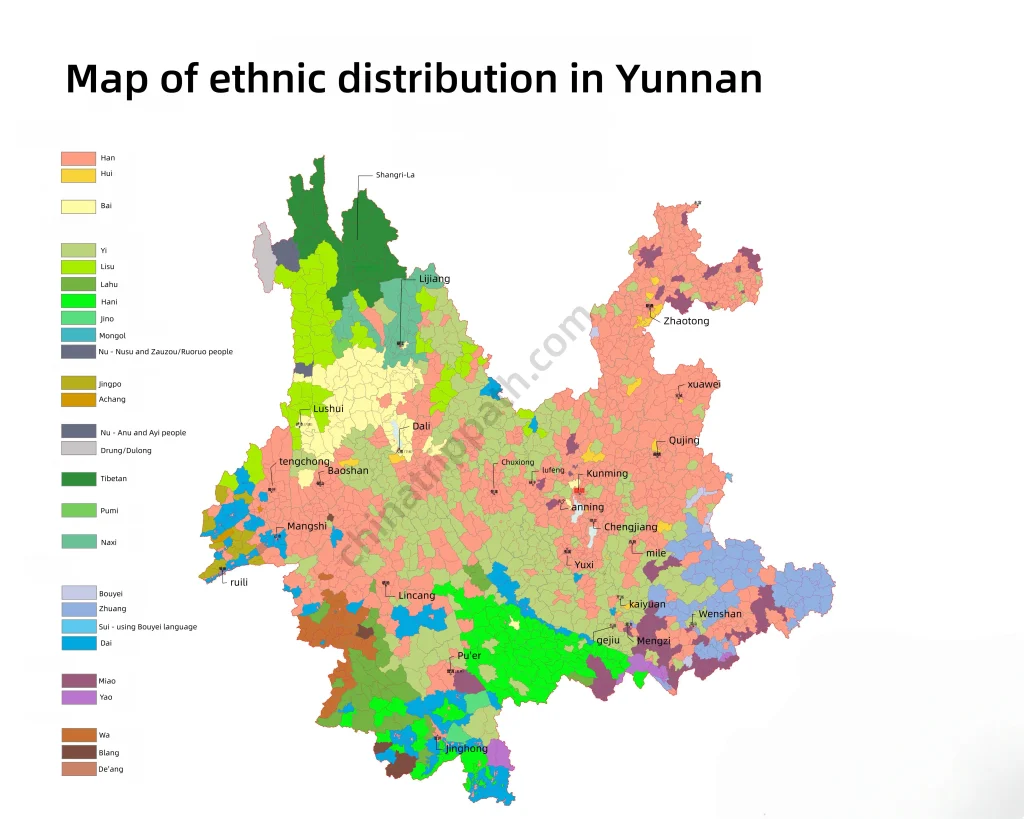
Yunnan’s 25 Ethnic Minorities: A Living Mosaic
China officially recognizes 56 ethnic groups. Yunnan alone is home to 25 of them — more than any other province, and each with its own language, dress, cuisine, religious practice, and worldview. Some groups number in the millions; others are communities of just a few thousand people living in a single valley.
For a comprehensive look at all 25 groups — including population figures, locations, and the cultural highlights unique to each — our Yunnan ethnic minorities guide goes into full detail. Here, we’ll focus on the groups you’re most likely to encounter as a traveler and the cultural experiences that make each one unforgettable.
The Naxi People & Dongba Culture — Lijiang
Population in Yunnan: ~1.2 million. You’ll encounter them in: Lijiang Old Town, Baisha Village, Shuhe Ancient Town.
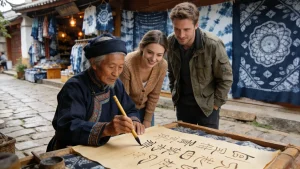
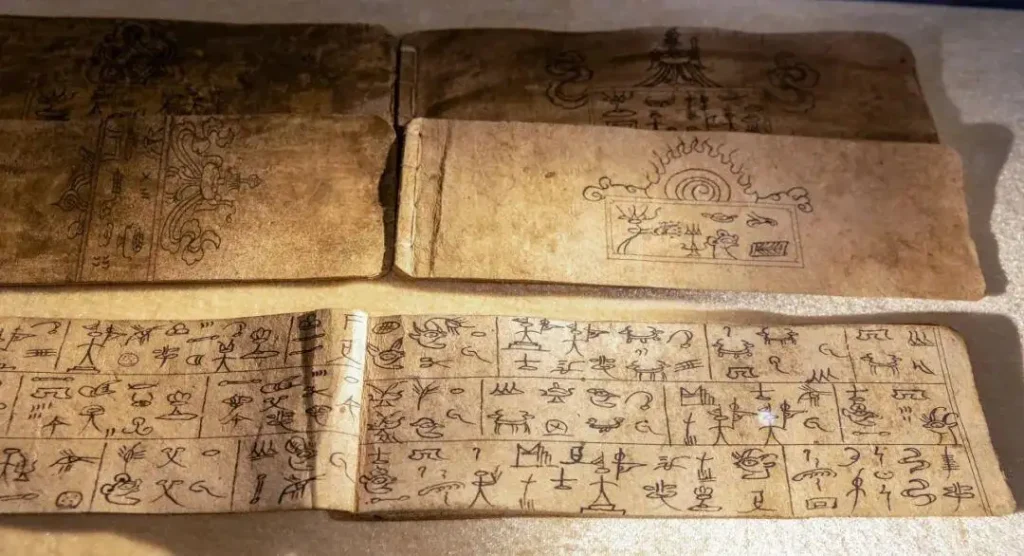
The Naxi are the soul of Lijiang, and their Dongba culture is unlike anything else on Earth. At its center is the Dongba script — a pictographic writing system where each symbol is a tiny drawing of the thing it represents: a man, a tree, the sun rising over a mountain. It’s the only pictographic writing system still in active ceremonial use anywhere in the world, and watching a Dongba priest paint these symbols with a brush — each one a miniature work of art — is one of those experiences that rewrites your assumptions about what “writing” can be.
But the Naxi are more than their script. Their ancient music — performed by elderly musicians using instruments and scores that date back centuries — has been called a “living fossil” of Chinese musical history. Their architecture, with its distinctive carved wooden facades, gives Lijiang its UNESCO character. And their religious tradition, Dongba, blends animism, Tibetan Bon, and Taoism into something entirely its own.
The best place to experience Naxi culture up close is Baisha Village, a 20-minute bike ride from Lijiang Old Town. Here, away from the commercial buzz of the main tourist streets, you can visit Dongba priests in their workshops, see the remarkable 500-year-old Baisha Murals, and feel the quieter, more authentic side of Naxi life. For everything from the murals to the music to practical visiting tips, read our Naxi Dongba culture guide.
The Bai People — Dali
Population in Yunnan: ~1.5 million. You’ll encounter them in: Dali Ancient Town, Xizhou, Zhoucheng, villages around Erhai Lake.
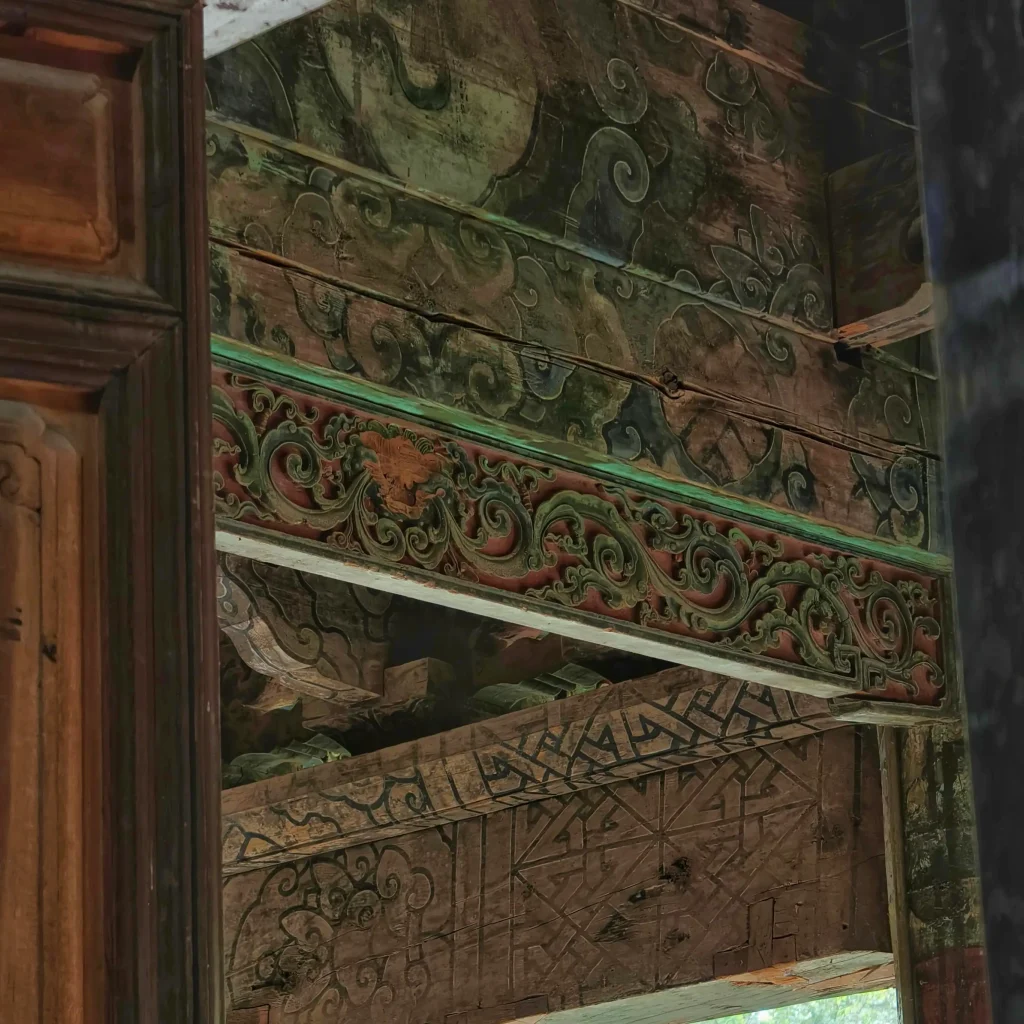
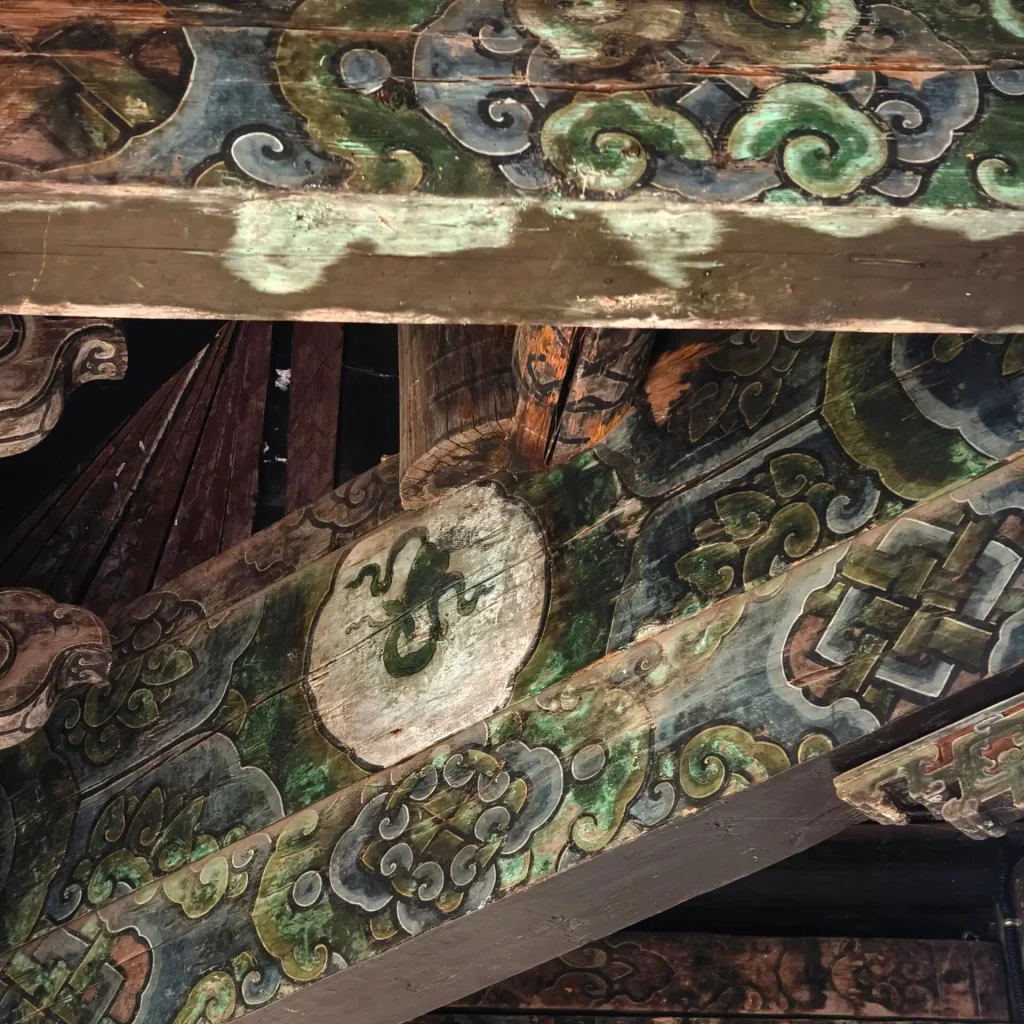
If the Naxi define Lijiang, the Bai define Dali — and their influence runs deep. The Bai are master builders: their traditional homes, with white walls, gray tile roofs, and intricately painted eaves (the famous “three rooms and one screen wall” layout), give Dali its architectural character. They’re also one of the few ethnic groups in China with a dairy tradition — the Bai-made goat’s milk cheese called rubing and the thin stretched-milk “fan” called rushan are unique in Chinese cuisine.
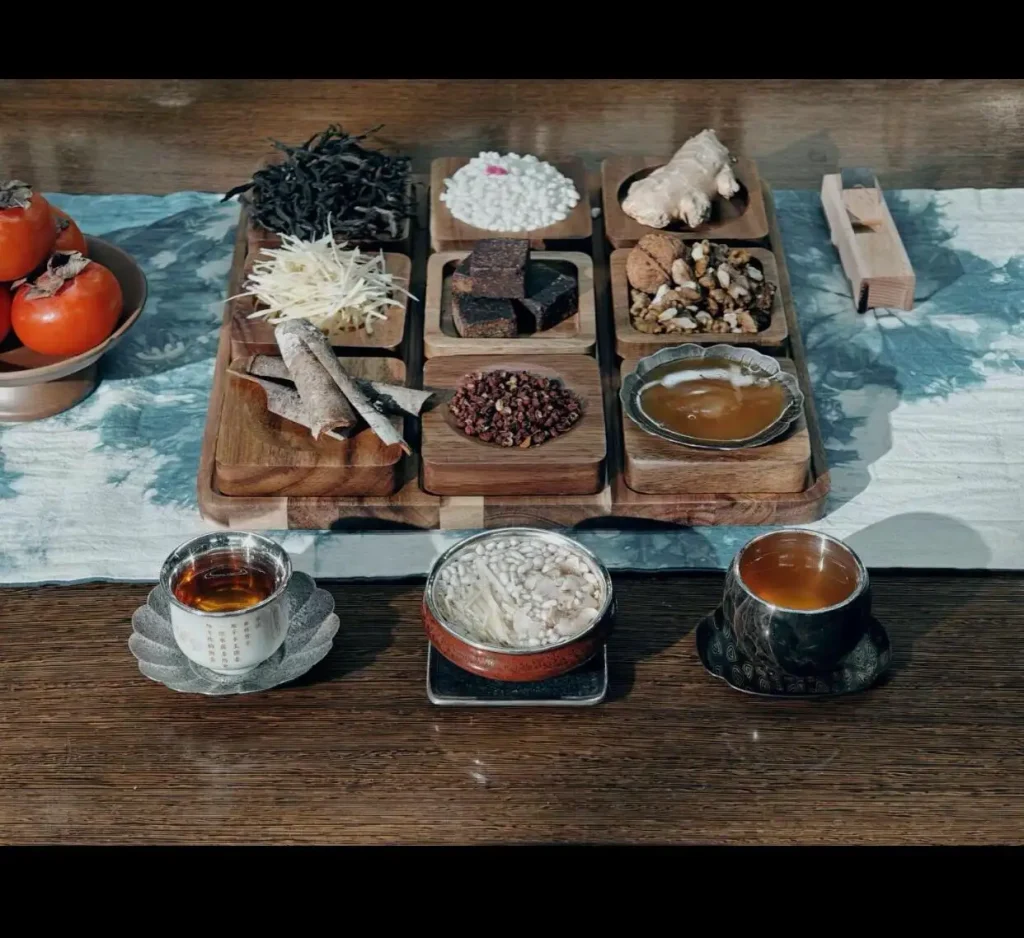
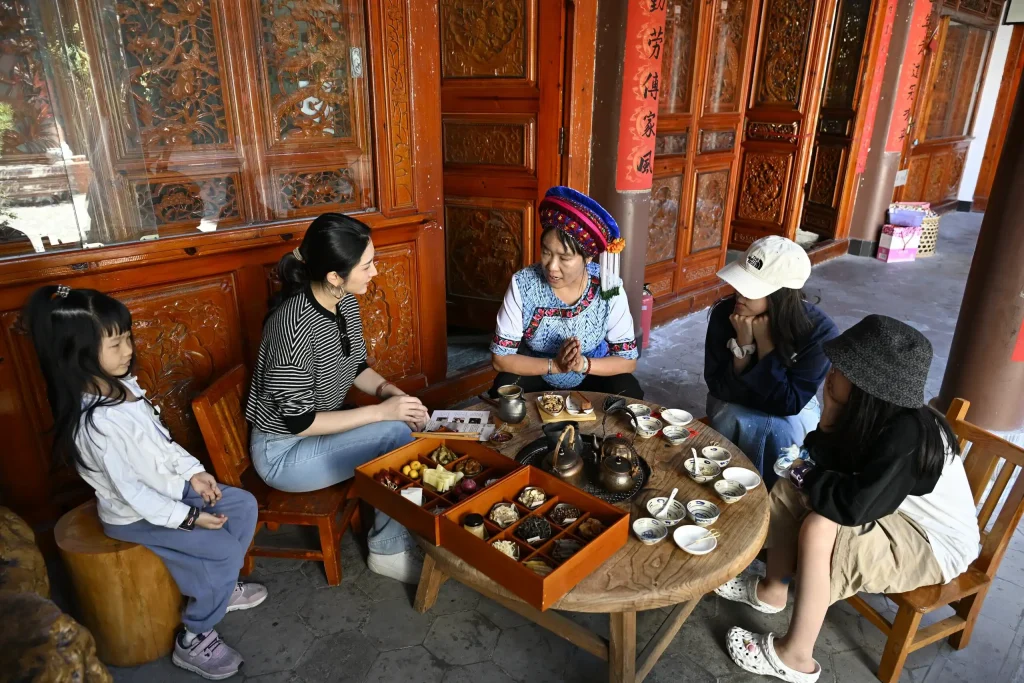
But the cultural experience that stays with most visitors is the three-course tea ceremony (sān dào chá). The first cup is bitter, brewed from raw tea leaves. The second is sweet, blended with walnuts, brown sugar, and sesame. The third is “reflective” — a subtle, lingering flavor meant to represent the fullness of life after you’ve known both hardship and joy. It’s part ritual, part philosophy lesson, and part excuse to sit in a beautiful Bai courtyard for an hour and let the world slow down. The village of Xizhou, on the western shore of Erhai Lake, is the best place to experience it.
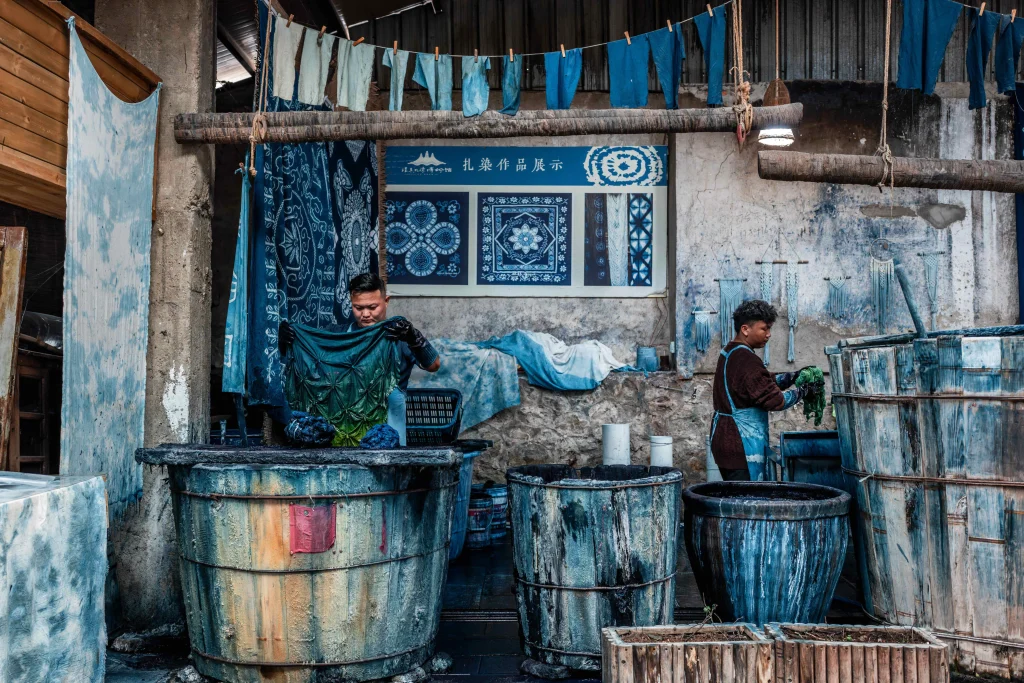
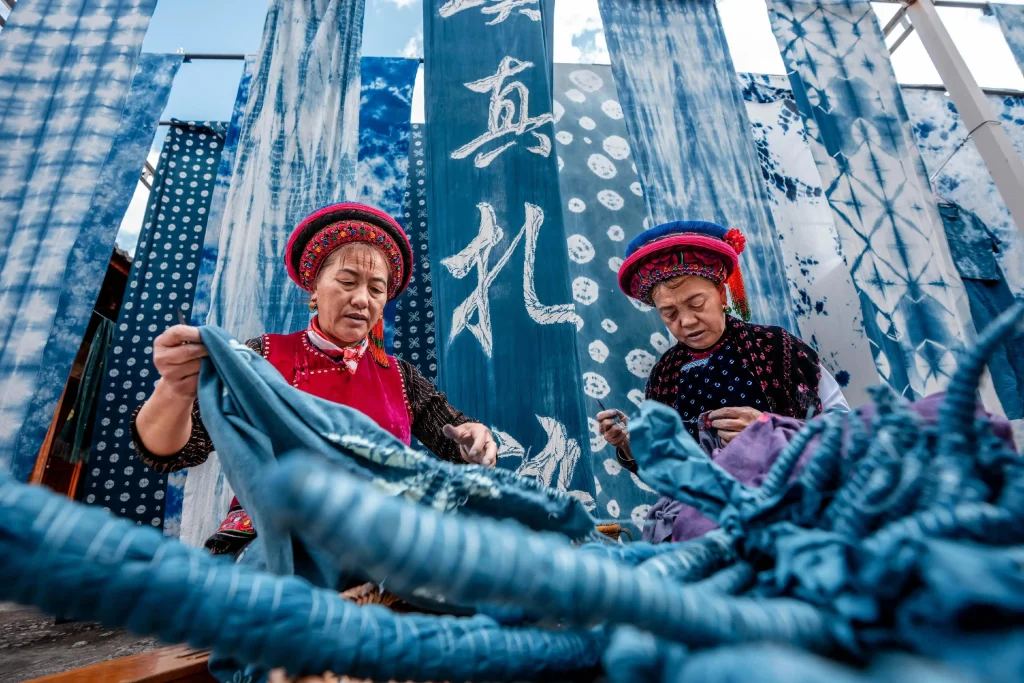
The Bai are also renowned for their tie-dye (zhā rǎn) craft — a tradition that goes back more than a thousand years. In the village of Zhoucheng, near Dali, you can watch Bai women dip hand-tied fabric into vats of plant-based indigo dye, producing the deep blue-and-white patterns that have become Dali’s visual signature. For a deep dive into Bai architecture, crafts, cuisine, and ceremonies, see our Bai people of Dali guide.
The Dai People — Xishuangbanna
Population in Yunnan: ~1.2 million. You’ll encounter them in: Jinghong, Menghan, Dai villages throughout Xishuangbanna.
Cross into Xishuangbanna and you could be forgiven for thinking you’ve left China entirely. The Dai people share deep cultural and linguistic roots with the Thai and Lao peoples — the architecture, the Theravada Buddhist temples with their glittering golden spires, the script, and the cuisine all carry a distinctly Southeast Asian character.
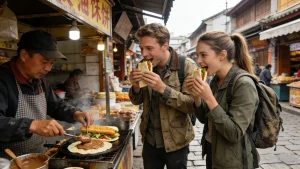
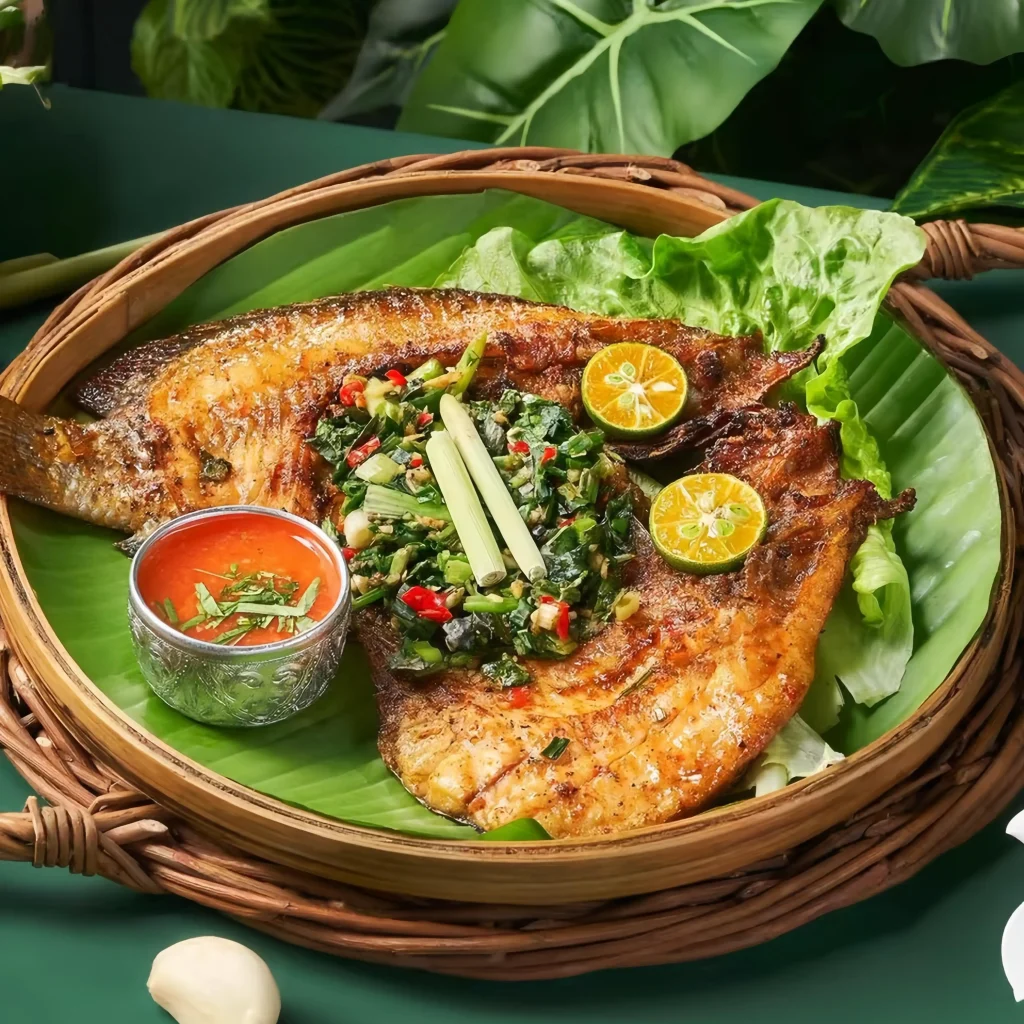
Dai villages are beautiful: stilted bamboo houses raised above the ground to catch breezes, surrounded by tropical gardens and overlooked by graceful temple pagodas. The Dai are devout Buddhists, and young Dai men traditionally spend a period as novice monks — you’ll see them in saffron robes walking the morning streets of Jinghong. The cuisine is equally distinctive: lemongrass, banana leaves, wild herbs, and fermented flavors that bridge the gap between Chinese and Southeast Asian cooking. The Dai grilled fish and night market food of Xishuangbanna are essential eating.
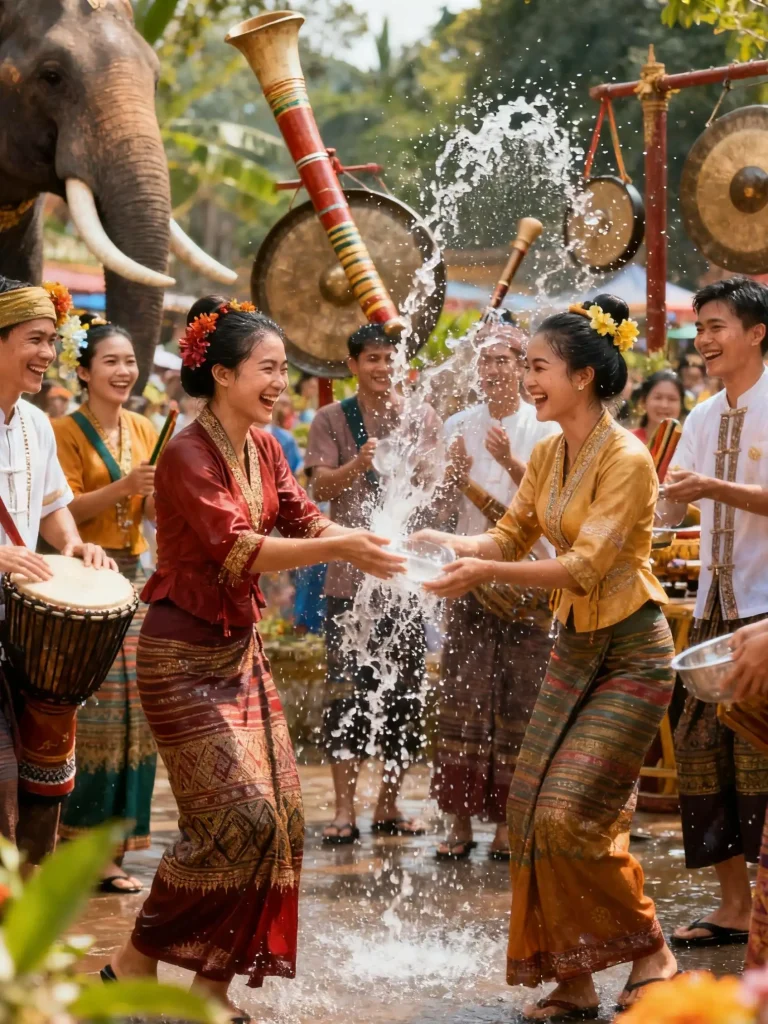
But the single most famous Dai cultural event — and arguably the most joyous festival in all of China — is the Water Splashing Festival (Pō Shuǐ Jié), held every April. It’s the Dai New Year celebration, and the central ritual is simple: splash water on everyone you see. Getting drenched is a blessing, and entire cities descend into three days of gleeful aquatic chaos. Read more in our Yunnan festivals guide and plan accordingly.
The Tibetan Communities — Shangri-La & the Northwest
Population in Yunnan: ~150,000. You’ll encounter them in: Shangri-La, Deqin, Weixi, and the high-altitude northwest.
Yunnan’s northwest corner — the Diqing Tibetan Autonomous Prefecture — is Tibetan country. At 3,300 meters and above, the landscape shifts from green valleys to golden grasslands, vast sky, and snow-dusted peaks, and the culture shifts with it. Prayer flags flutter from every pass. Yak-butter tea replaces Pu’er. The enormous Songzanlin Monastery, often called the “Little Potala Palace,” houses hundreds of monks and is the largest Tibetan Buddhist monastery in Yunnan.
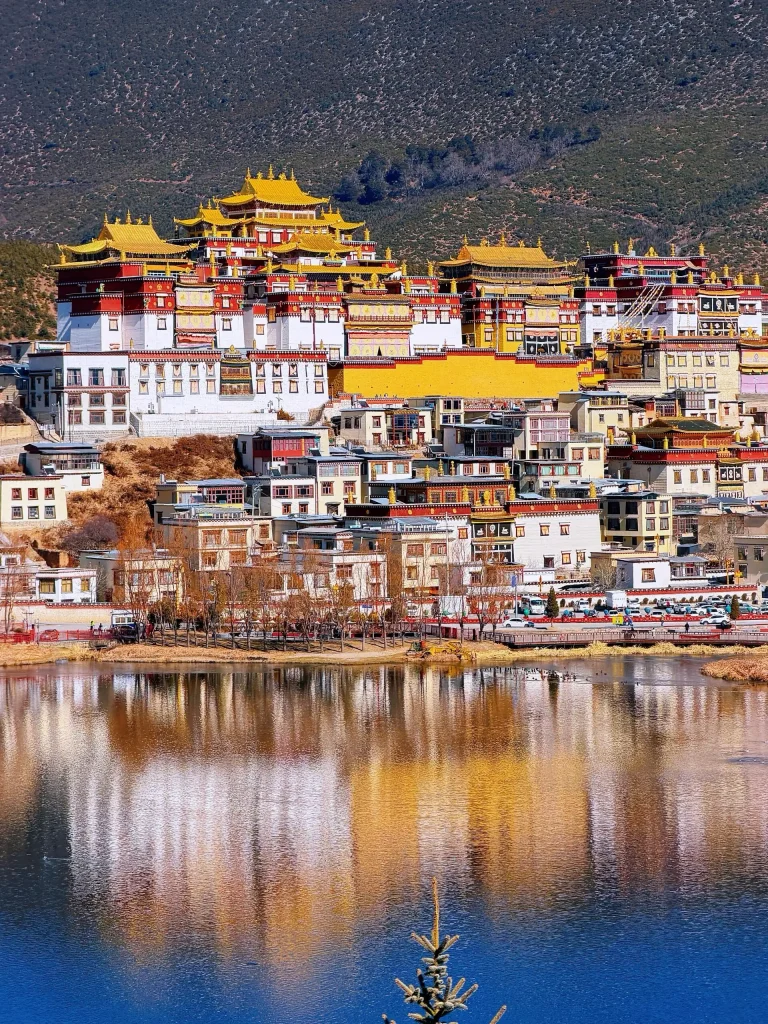
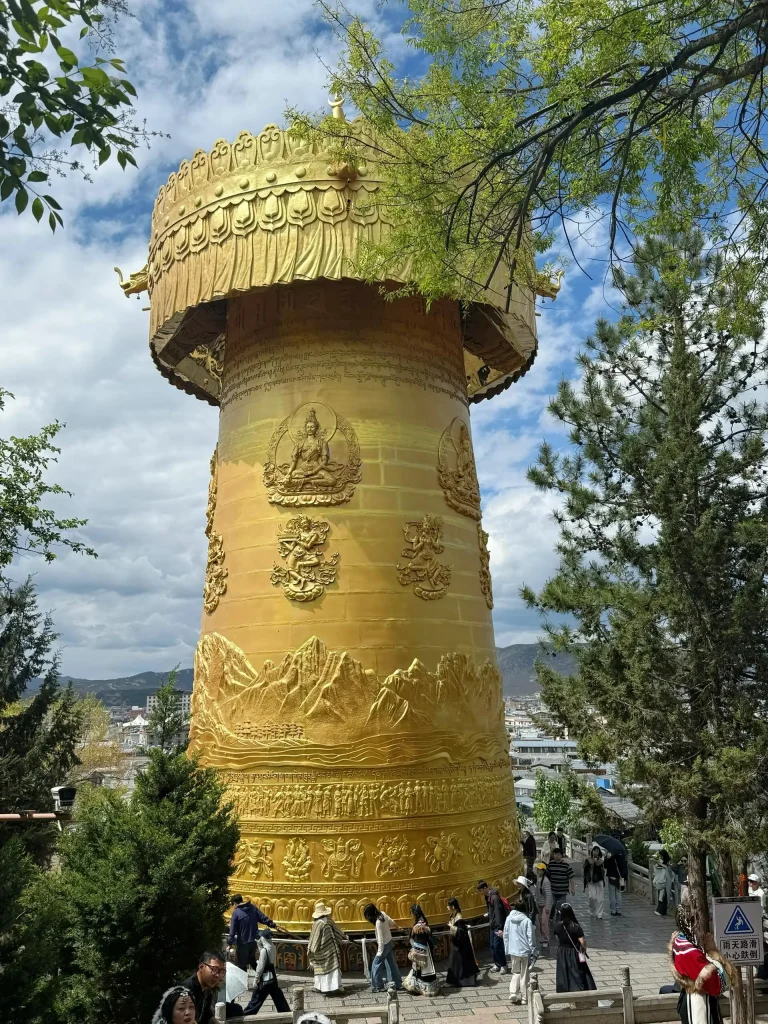
Tibetan culture in Shangri-La is not a museum exhibit — it’s daily life. You’ll see monks debating scripture in monastery courtyards. You’ll smell juniper incense drifting from family shrines. You’ll hear the deep, resonant chanting from temple halls at dawn. And on Guishan Hill in old Dukezong town, you can join other visitors in spinning the world’s largest prayer wheel — a 21-meter, 60-ton copper cylinder that requires at least four people to turn.
The Tibetan communities here also have their own culinary traditions — yak meat dried and served in strips, butter tea (an acquired taste, but try it), and tsampa (roasted barley flour) — which feel worlds apart from the food in the rest of Yunnan.
The Yi People — Fire Worshippers of Central Yunnan
Population in Yunnan: ~5 million. You’ll encounter them in: Chuxiong, Stone Forest area, Ailao Mountain region.
The Yi are one of Yunnan’s largest ethnic minority groups and among the most culturally distinctive. Historically, Yi communities in the mountains of central and southern Yunnan maintained their own aristocratic social system, their own writing script (one of the few indigenous scripts in China besides Dongba), and a cosmology centered on the worship of fire.
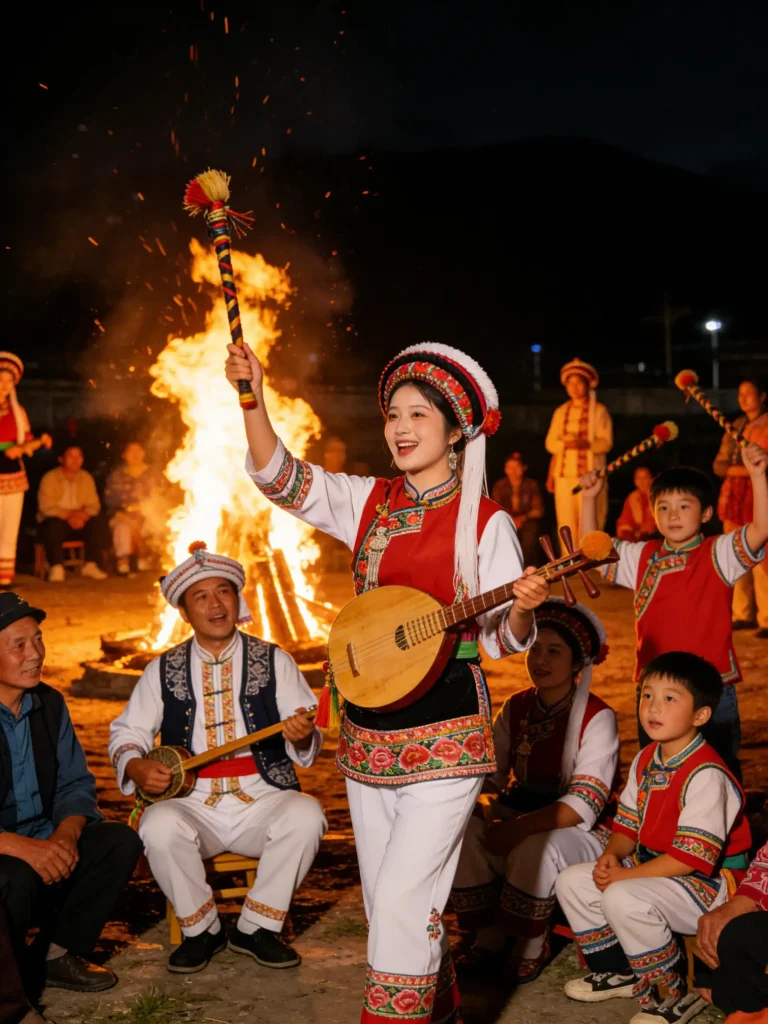
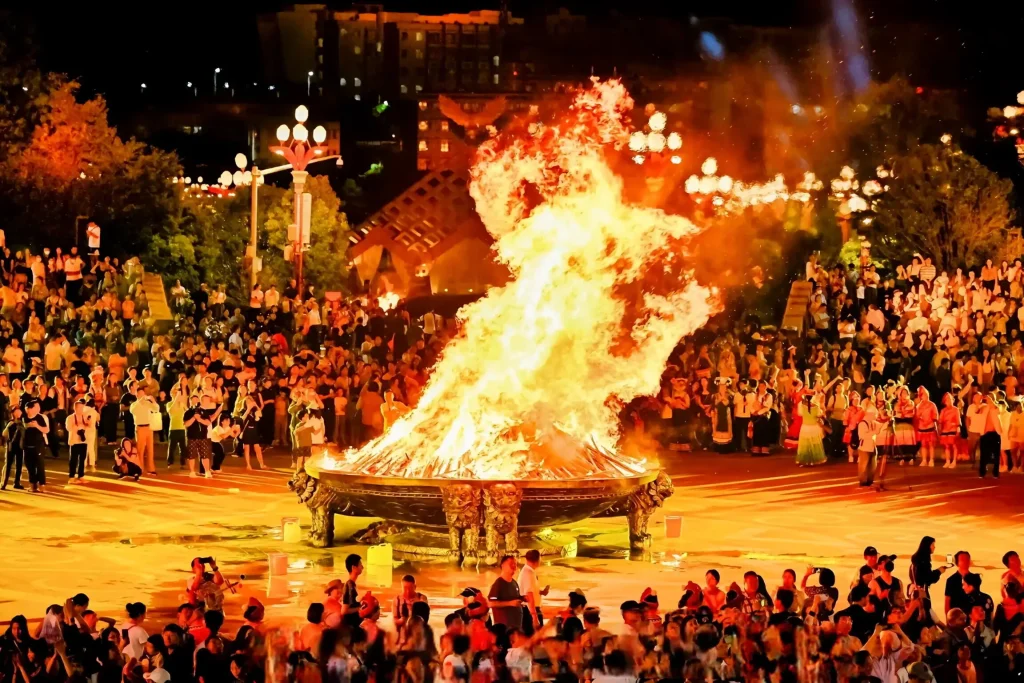
That fire worship lives on — spectacularly — in the Torch Festival (Huǒbǎ Jié), held in late July or early August. For three days, Yi communities light massive torches, parade through towns, stage wrestling matches and bullfights, and dance around bonfires that throw sparks into the mountain night. The largest celebrations happen in Chuxiong and near the Stone Forest outside Kunming. It’s been called the “Oriental Carnival,” and unlike some of China’s more internationally known festivals, the Torch Festival remains relatively unknown to foreign tourists — which makes it feel all the more authentic. Our Yunnan festivals guide has details on dates and how to attend.
The Hani People — Architects of the Yuanyang Rice Terraces
Population in Yunnan: ~1.6 million. You’ll encounter them in: Yuanyang, Honghe, Lüchun, Mojiang.
If you’ve seen a photograph of the Yuanyang Rice Terraces — those staggering cascades of water-filled paddies carved into mountainsides — you’ve seen the Hani people’s greatest achievement. Over 1,300 years, the Hani hand-carved an estimated 3,000+ terraces into the slopes of the Ailao Mountains, creating a self-sustaining ecosystem that UNESCO has recognized as a World Heritage site. The terraces aren’t just beautiful; they’re an engineering marvel, with a water management system that channels mountain springs through forests, villages, terraces, and back into rivers in a closed loop.
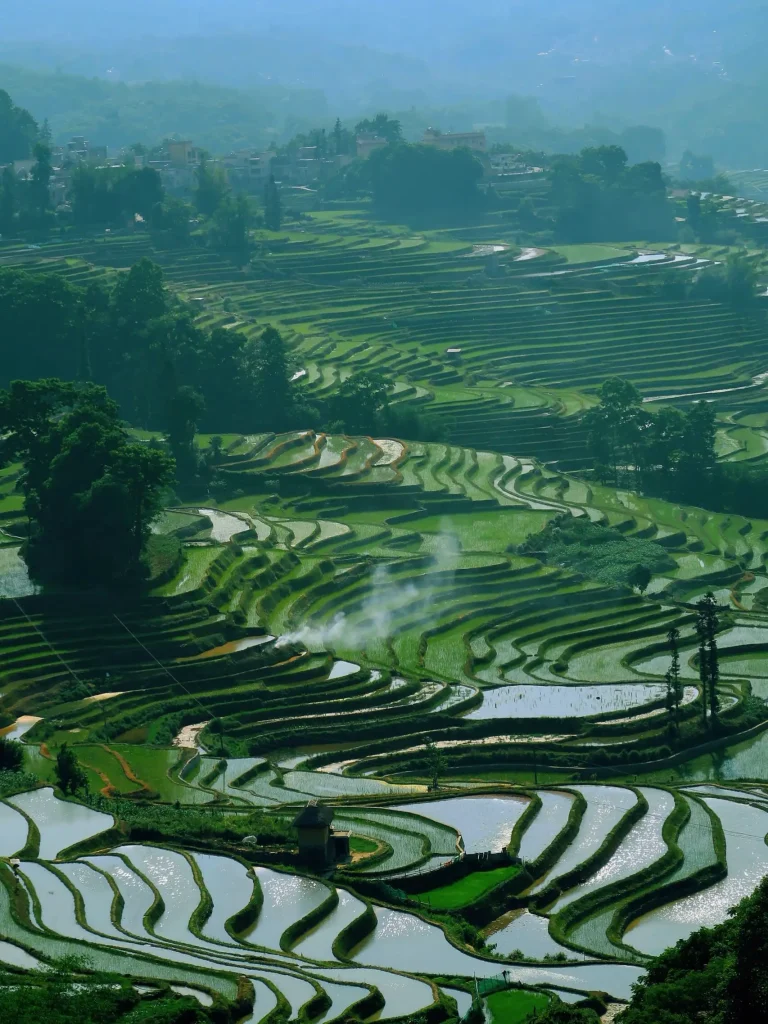
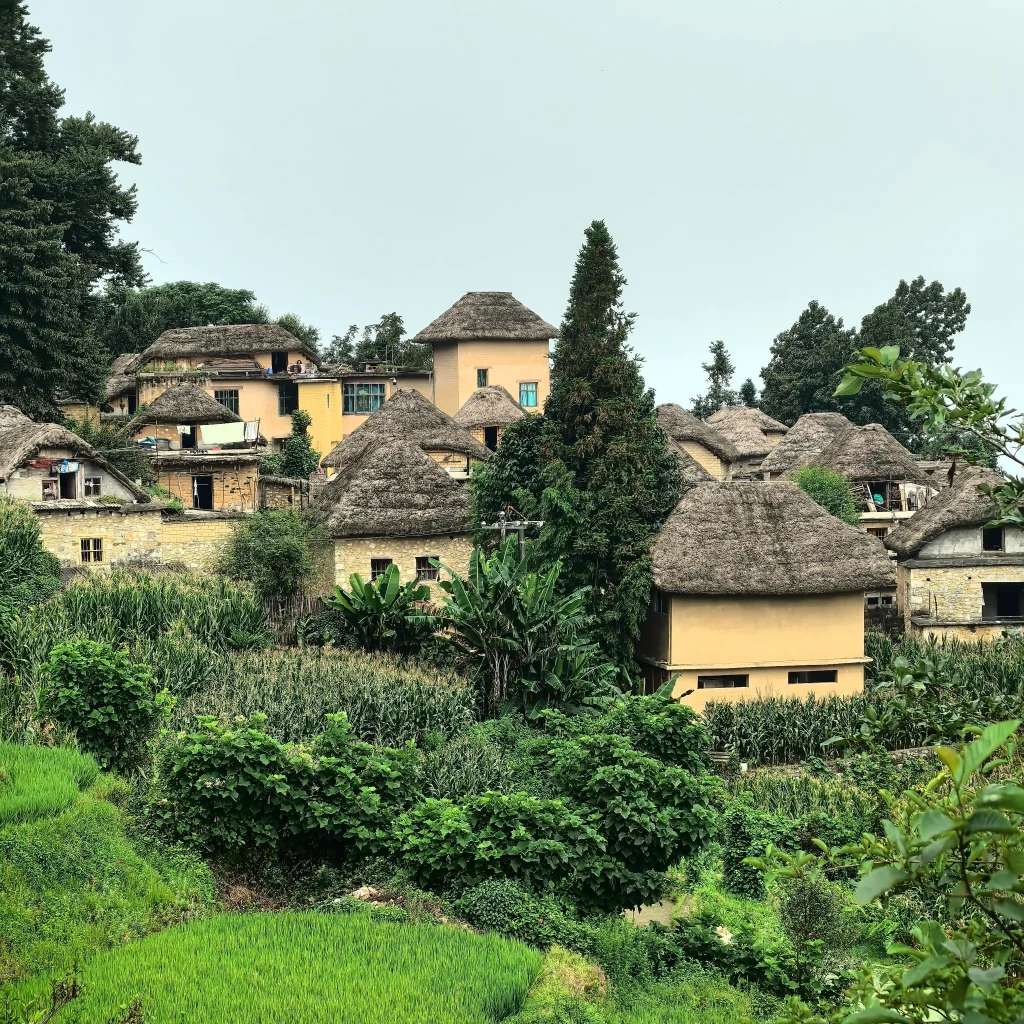
Hani villages are built into the mountain slopes above the terraces, and their traditional mushroom-shaped houses (with thatched or tile roofs) are instantly recognizable. The Hani calendar, festivals, and agricultural rituals are all tied to the rice-growing cycle — visit during the Angmatu festival (around December) and you’ll see villages celebrating the harvest with communal feasts, songs, and swinging competitions. For the full photography guide, viewpoint maps, and the best time to visit, see our Yuanyang Rice Terraces guide.
The Mosuo People — China’s Last Matriarchal Society
Population in Yunnan: ~40,000. You’ll encounter them in: Lugu Lake (Yunnan-Sichuan border).
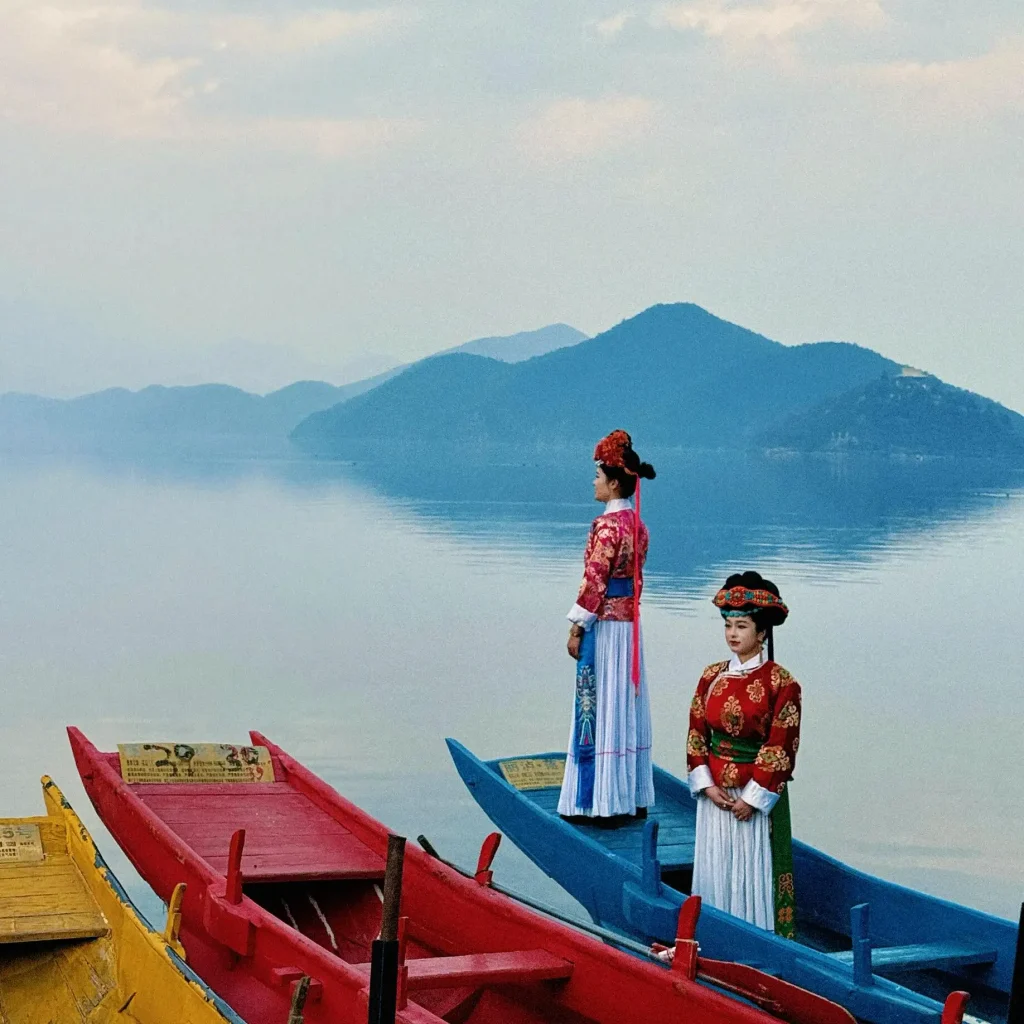
On the shores of Lugu Lake — a deep blue alpine lake ringed by forested mountains — the Mosuo people practice a social structure that challenges virtually everything most visitors assume about traditional societies. The Mosuo are matrilineal: property passes through the female line, the eldest woman heads the household, and children take their mother’s family name.
Most strikingly, the Mosuo practice “walking marriage” (zǒu hūn). Romantic partners don’t live together — the man visits the woman’s home at night and returns to his own family’s house in the morning. There are no wedding ceremonies, no in-law dynamics, and either partner can end the relationship simply by not opening the door. It’s a system that has fascinated anthropologists for decades, and it exists — in a living, breathing community, not a textbook — right here at Lugu Lake.
The most respectful way to experience Mosuo culture is to stay in a family-run guesthouse in Lige or Luoshui village, share a home-cooked meal, and ask questions with genuine curiosity. Paddle a traditional dugout canoe (zhūchí chuán) on the lake at sunset, and you’ll have one of Yunnan’s most serene and thought-provoking evenings. For everything you need to know, see our Mosuo people of Lugu Lake guide.
Ancient Kingdoms: The Nanzhao & Dali Empires That Once Rivaled the Tang
Most visitors don’t realize that Yunnan was once the seat of powerful independent kingdoms — empires that controlled territory stretching into modern-day Myanmar, Laos, and Vietnam, and that at their peak rivaled the Tang and Song dynasties in military might and cultural sophistication.
The Nanzhao Kingdom (738–902 AD)
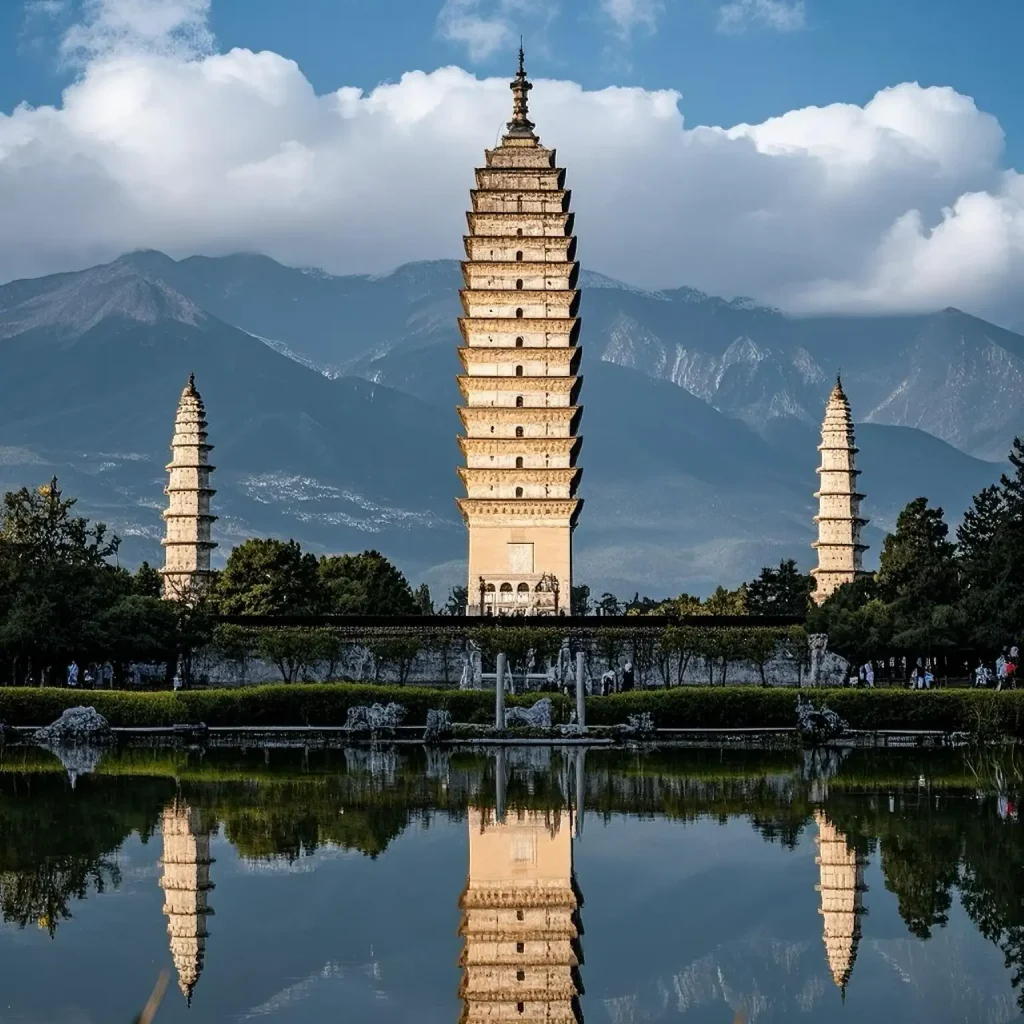
The Nanzhao Kingdom rose from the Erhai Lake region — the same area where Dali sits today — when a local Bai chieftain named Piluoge unified six smaller kingdoms (the “Six Zhao”) into a single power. At its zenith, Nanzhao controlled a vast swathe of territory from Sichuan to northern Vietnam, defeated multiple Tang Dynasty invasions, and maintained diplomatic ties with Tibet and the Southeast Asian kingdoms. The Chongsheng Three Pagodas in Dali, built during the Nanzhao period, still stand as the province’s most iconic architectural landmark.
The Dali Kingdom (937–1253 AD)
After Nanzhao’s collapse, the Dali Kingdom rose in its place — and proved even more enduring. For over 300 years, the Dali Kingdom governed Yunnan as a Buddhist state, developing a distinct court culture that blended Bai, Chinese, and Theravada Buddhist influences. The kingdom fell only when Kublai Khan’s Mongol armies invaded in 1253, incorporating Yunnan into the Yuan Dynasty for the first time.
The legacy of these kingdoms is everywhere in modern Dali: in the Three Pagodas, in the Bai architectural style that echoes Nanzhao aesthetics, in the Buddhist traditions that still shape daily life. For the full history — including the military campaigns, the cultural achievements, and what you can still see today — read our Nanzhao and Dali Kingdom history guide.
The Ancient Tea Horse Road: Yunnan’s Silk Road
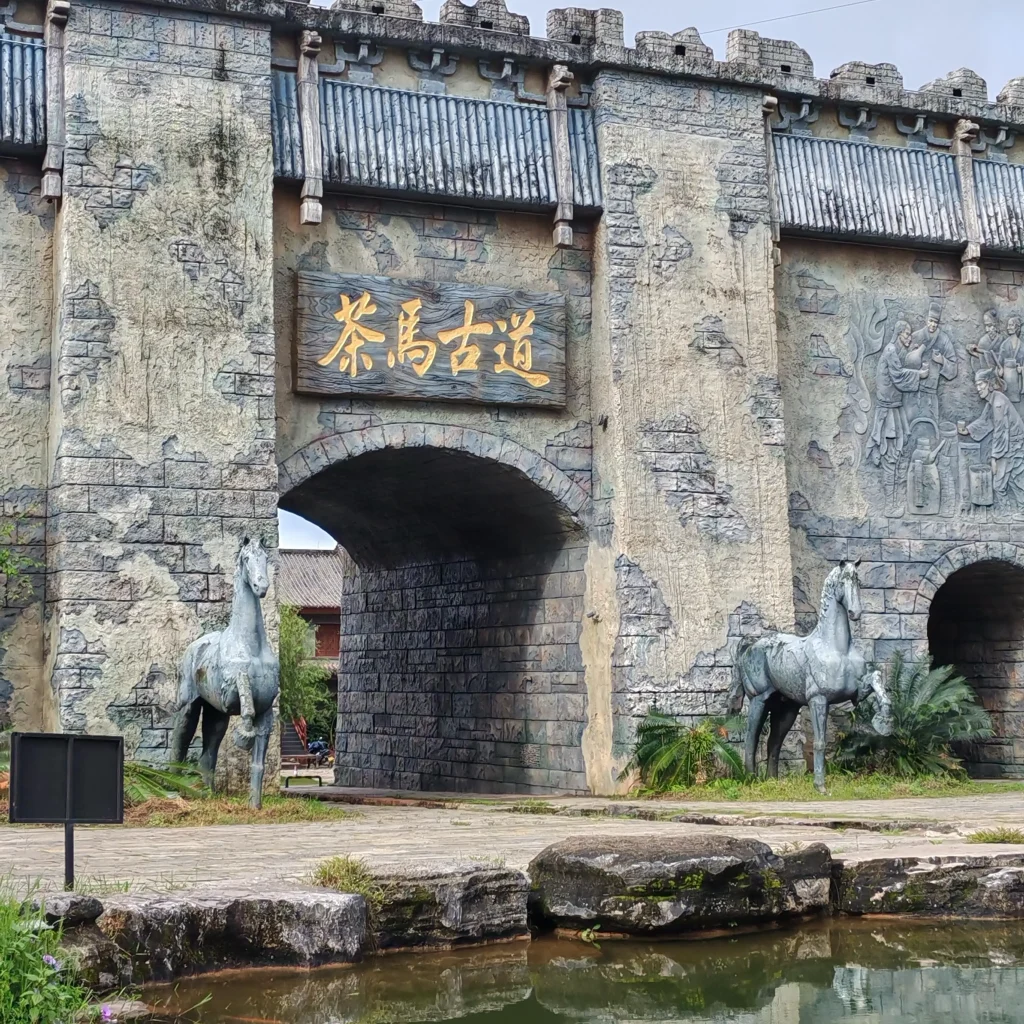
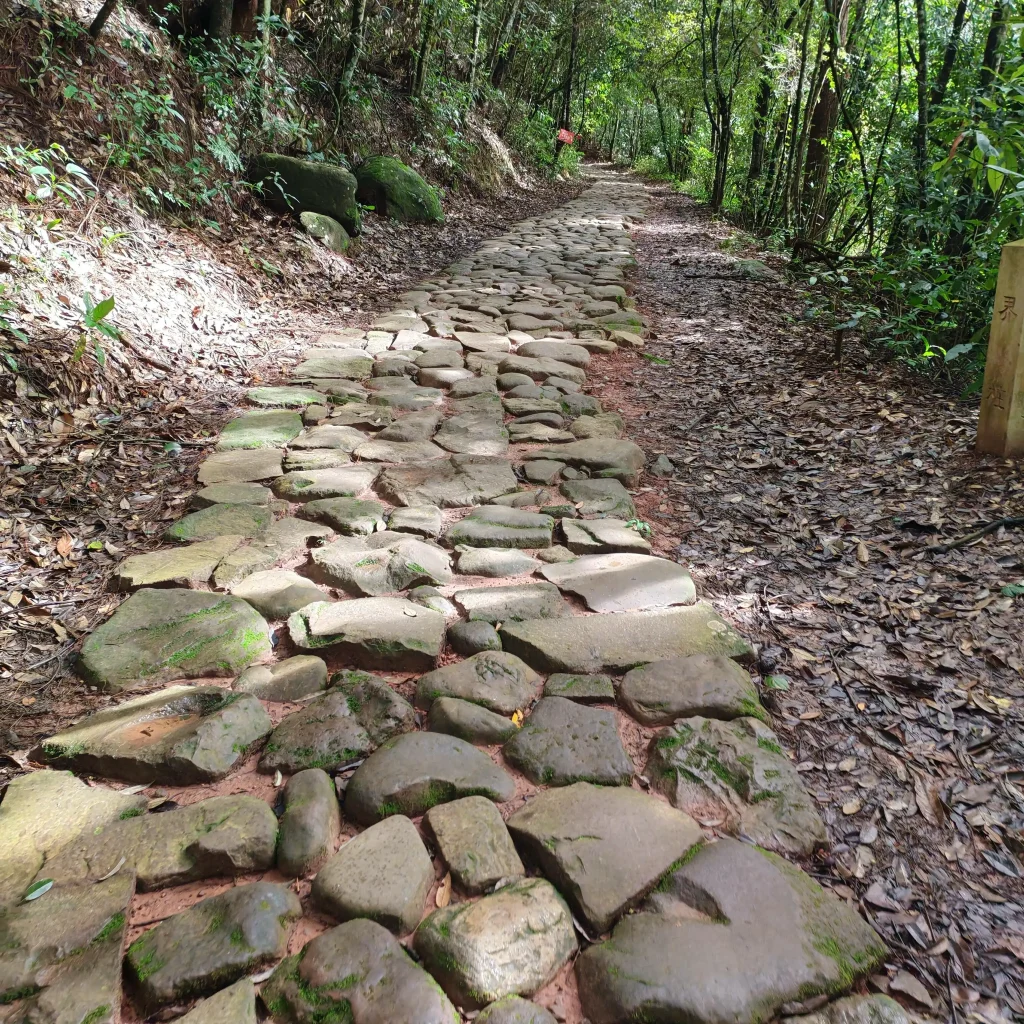
Long before the highways and high-speed trains, Yunnan was connected to the outside world by one of history’s most remarkable trade routes: the Tea Horse Road (Chámǎ Gǔdào). Starting from Yunnan’s tea-producing mountains, this network of mule caravan trails wound through some of the planet’s most extreme terrain — over 4,000-meter mountain passes, through dense gorges, across rivers with no bridges — to deliver Pu’er tea to Tibet, where it was traded for warhorses.
The Tea Horse Road wasn’t just a trade route. It was a cultural highway. Along its length, Han Chinese merchants, Tibetan traders, Bai tea brokers, and Naxi caravan leaders exchanged not just goods but languages, religions, recipes, and ideas. Towns that served as caravan stops — places like Shaxi, Weishan, and Sideng — developed unique cultural identities that blended the traditions of everyone who passed through.
Today, the best place to feel the Tea Horse Road’s legacy is the town of Shaxi, a former caravan hub that has been carefully restored to its historical character. The cobblestone market square, the 600-year-old Xingjiao Temple, and the restored caravanserai make Shaxi feel like stepping directly into the era of the mule trains. It’s one of Yunnan’s most rewarding hidden gems — and a highlight of any culturally focused itinerary.
Pu’er Tea: The Culture in Every Cup
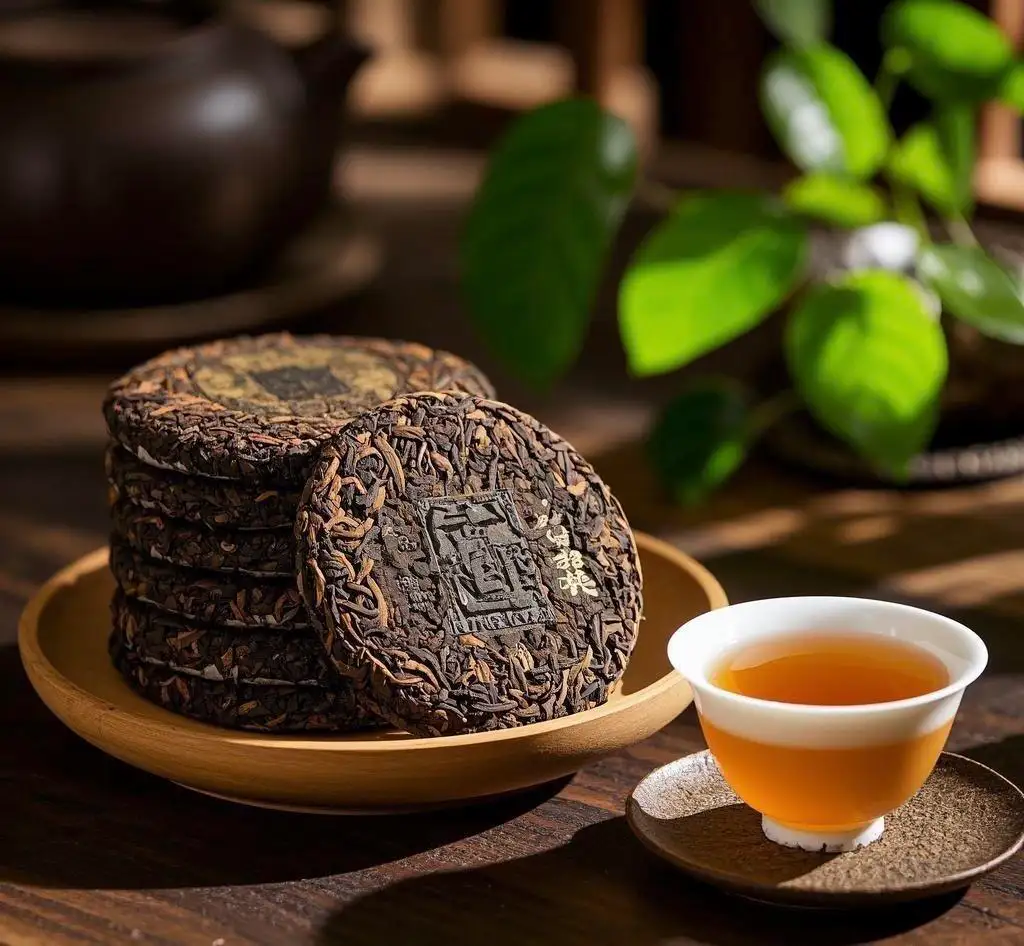
You cannot understand Yunnan without understanding tea. This province is the birthplace of Pu’er tea — the aged, fermented tea that has been produced in Yunnan’s mountains for over a thousand years and that today commands prices rivaling fine wine at international auctions.
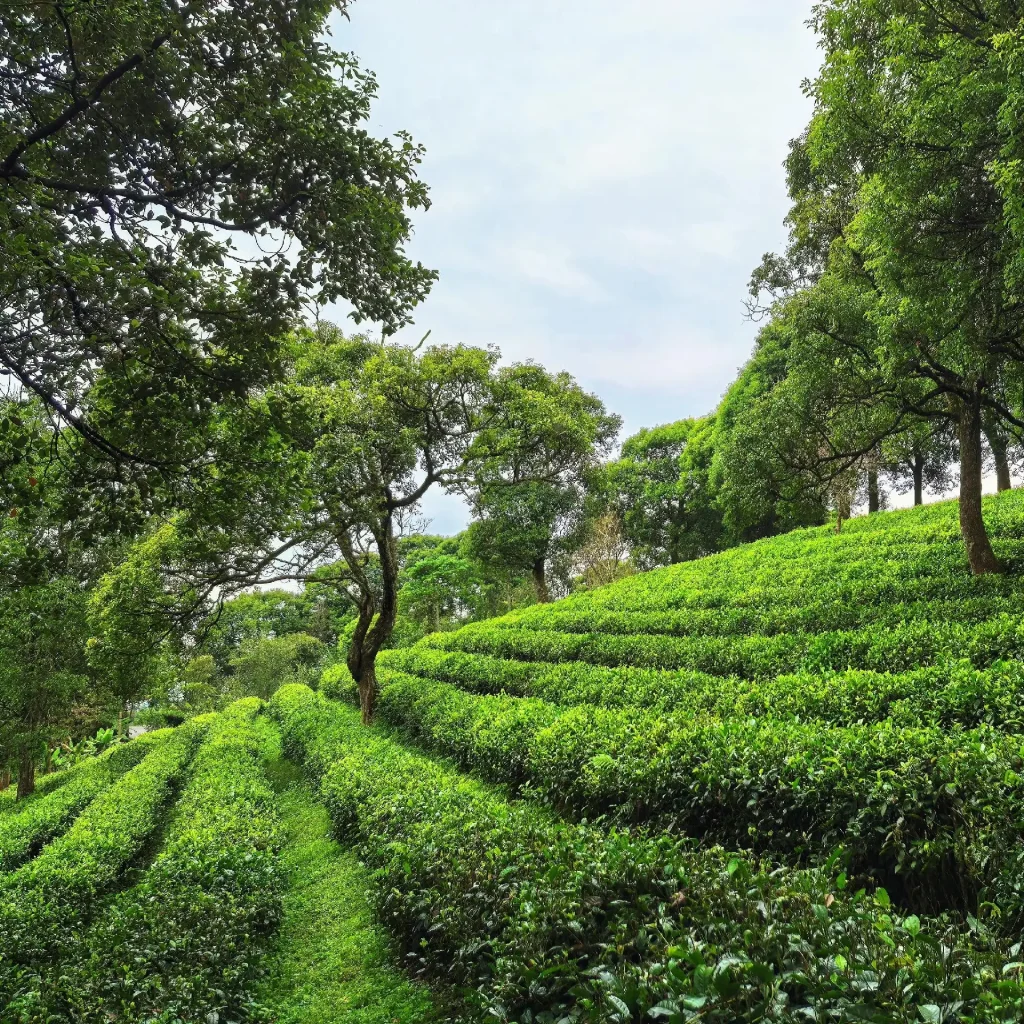
Pu’er isn’t just a drink; it’s a cultural system. The ancient tea mountains of Xishuangbanna and Pu’er city are home to tea trees that are 500, 800, even over 1,000 years old — still producing leaves, still tended by the same ethnic minority communities (Bulang, Hani, Dai) whose ancestors planted them. The entire lifecycle of Pu’er — from the hand-picking of leaves, to the sun-drying, to the compression into cakes, to the years (sometimes decades) of aging in controlled conditions — is a craft tradition as refined as any in the world.
For travelers, the tea culture manifests in two ways. First, the teahouse experience: in virtually every Yunnan town, you can sit down in a traditional teahouse and participate in a gongfu cha ceremony, watching a skilled tea master brew Pu’er through multiple steepings, each one revealing different flavors — earthy, sweet, floral, woody. It’s meditative, social, and deeply embedded in local life.
Second, the tea mountains themselves. Visiting an ancient tea garden — walking among gnarled, moss-covered tea trees that were producing leaves when the Dali Kingdom still existed — is an experience that puts Yunnan’s cultural continuity into visceral, physical perspective. For a complete guide to tasting, buying, and visiting Yunnan’s tea mountains, see our Pu’er tea culture guide. And if you’re interested in the broader beverage experience, our Yunnan tea tasting and buying guide covers the practical side.
Festivals That Define Yunnan
If you can time your visit around a festival, do it. Yunnan’s ethnic festivals aren’t staged performances for tourists — they’re living celebrations that entire communities pour their hearts into, and being present for one will be the highlight of your trip. Here are the ones worth planning around. For exact dates, locations, and practical logistics for each, check our dedicated Yunnan festivals guide.
The Dai Water Splashing Festival (April)
The most famous of all Yunnan festivals, and for good reason. The Dai New Year celebration in Xishuangbanna turns entire cities into gleeful water battlegrounds. Getting soaked isn’t a risk — it’s the point. Three days of water fights, dragon boat races, paper lanterns, and Dai dancing. The main event happens in Jinghong around April 13-15.
The Yi Torch Festival (July/August)
Three days of fire worship, torch parades, wrestling, bullfighting, and bonfire dancing in the mountain darkness. The largest celebrations are in Chuxiong and near the Stone Forest. It’s visceral, spectacular, and still largely unknown to international visitors.
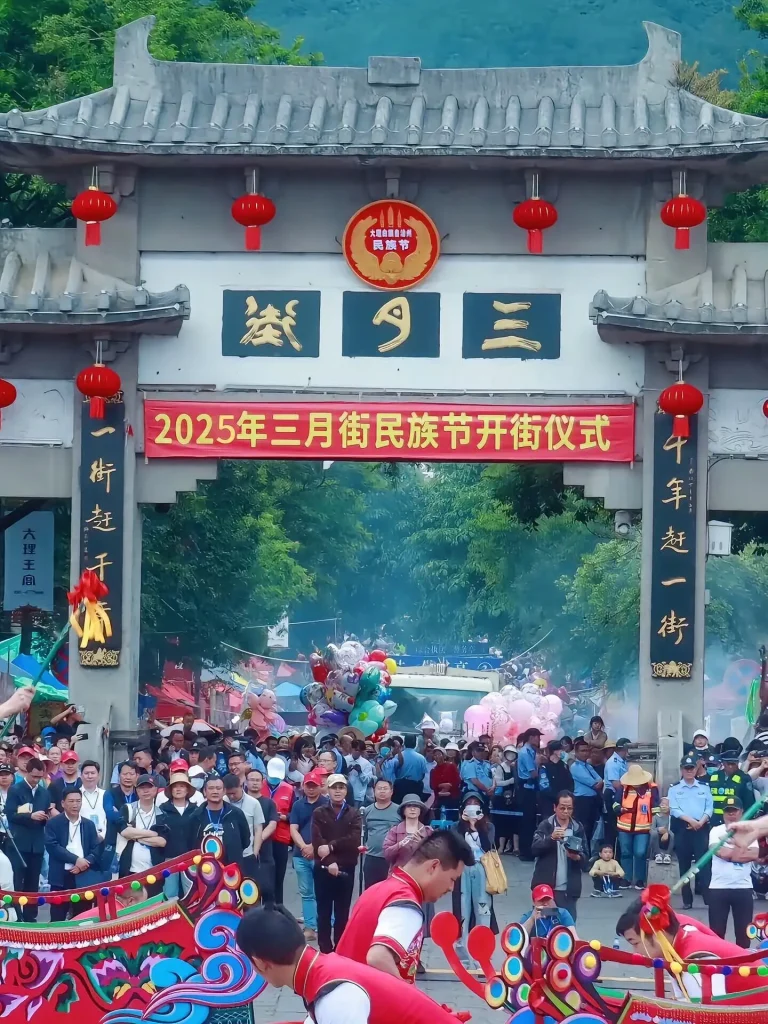
The Third Month Fair (San Yue Jie) — Dali (March/April)
The Bai people’s biggest annual gathering: a massive market, horse-trading fair, and cultural festival that has taken place in Dali for over 1,000 years. Music, traditional Bai opera, food stalls, and merchants from across the province converge below the Cangshan Mountains.
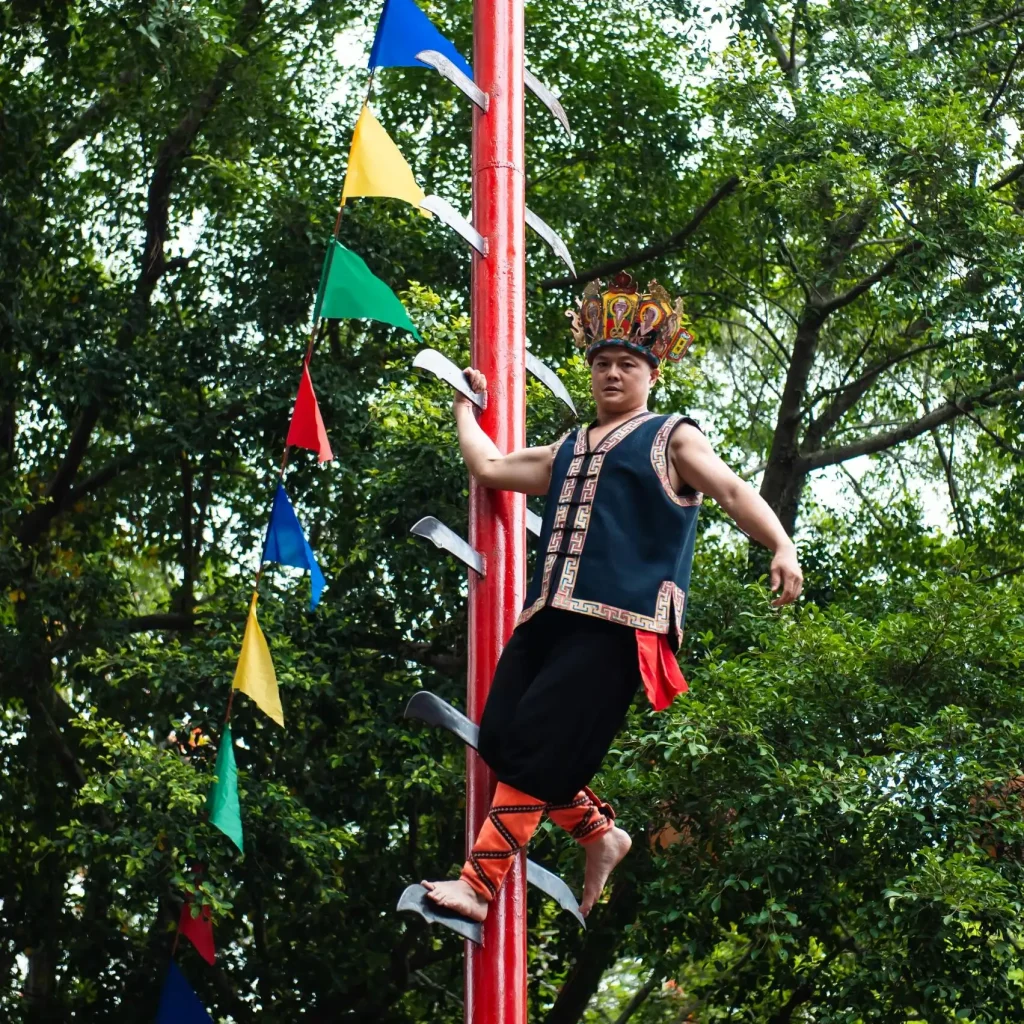
The Knife-Pole Festival (Dāo Gān Jié) — Lisu People (February)
In one of Yunnan’s most hair-raising traditions, Lisu men climb 20-meter poles studded with sharp knife blades — barefoot — as a demonstration of courage and spiritual protection. It takes place in the Nujiang Valley, one of Yunnan’s most remote and culturally fascinating areas.
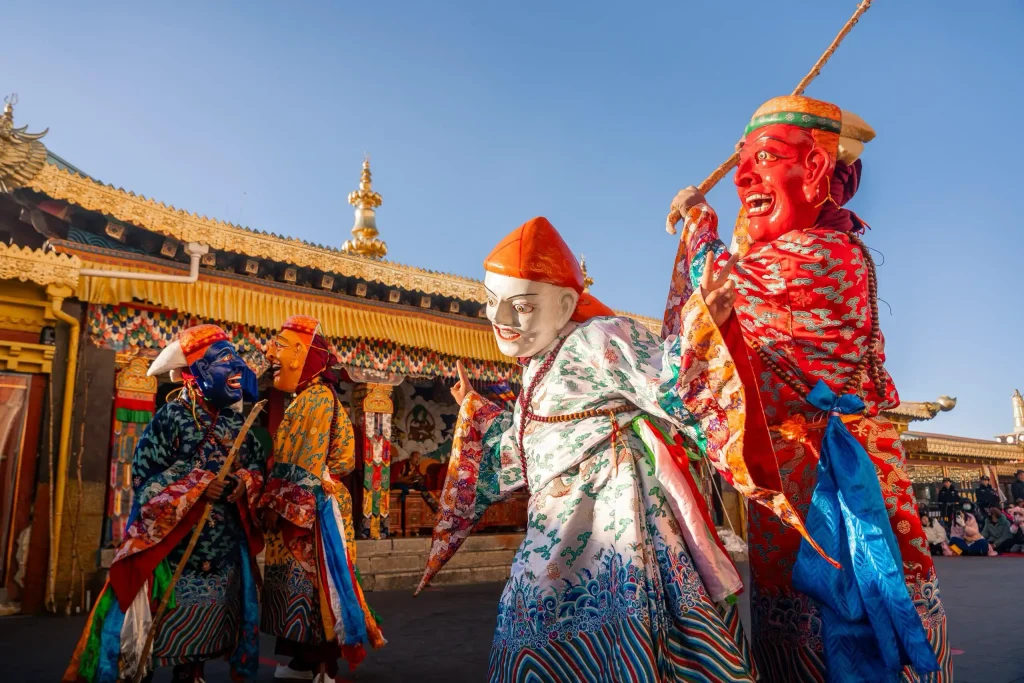
Nadaam & Tibetan New Year — Shangri-La
Horse racing, archery, traditional Tibetan opera, and communal celebrations on the grasslands outside Shangri-La. The Tibetan New Year (Losar) in February or March brings monastery rituals, masked dances, and a festive energy that transforms the highland towns.
Living Traditions: Crafts, Music & Art You Can Still Experience
What sets Yunnan apart from many cultural destinations is that its traditions aren’t frozen in time — they’re still being practiced, taught, and evolved by the communities that created them. Here are some living traditions worth seeking out.
Bai Tie-Dye (Zhā Rǎn): In the village of Zhoucheng near Dali, Bai women still hand-tie fabric and dip it into vats of plant-based indigo dye, producing the deep blue-and-white patterns that have become the visual signature of the region. Several workshops offer hands-on experiences where visitors can try the technique themselves. Read more in our Bai people of Dali guide.
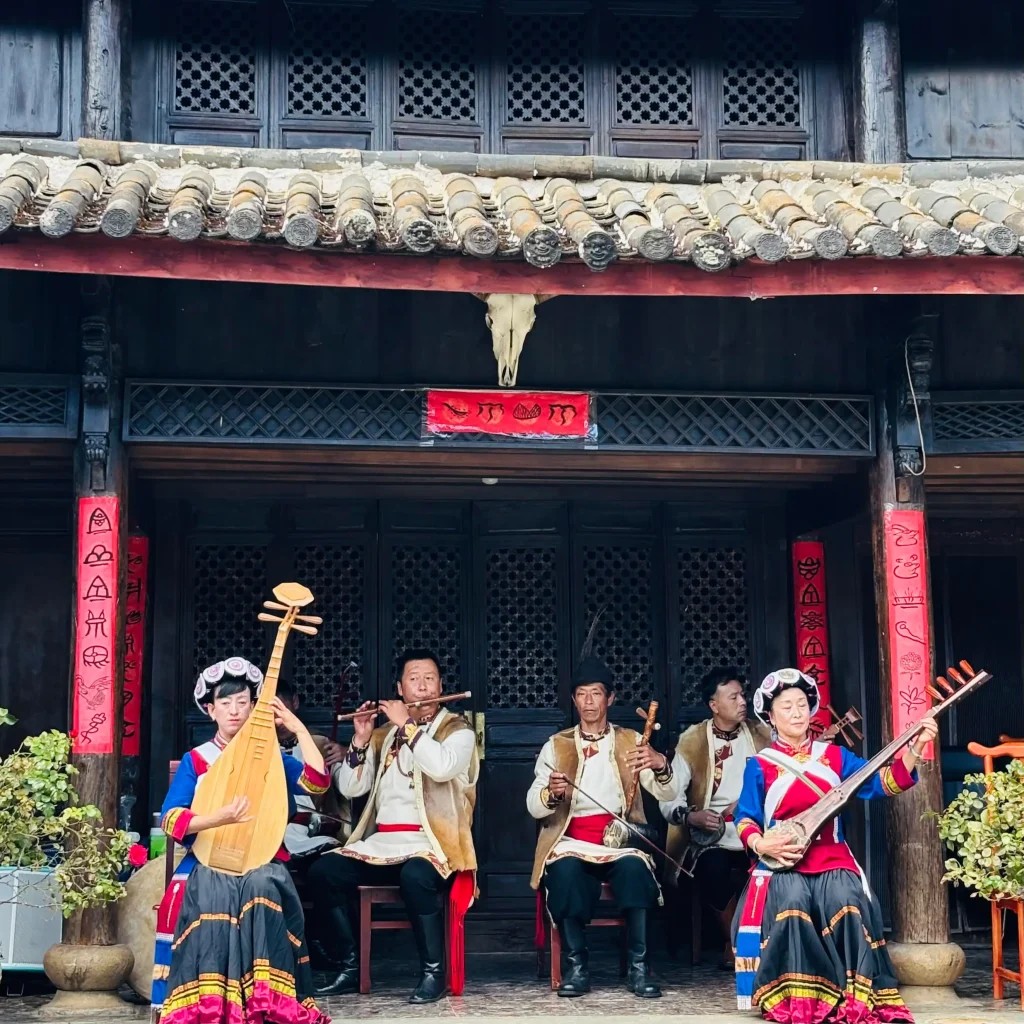
Naxi Ancient Music: In Lijiang, ensembles of elderly Naxi musicians perform orchestral pieces using instruments and scores that date back to the Tang and Song dynasties. Some of the pieces in their repertoire have been lost everywhere else in China and survive only here, passed down through oral tradition. Performances take place nightly in Lijiang Old Town. Our Lijiang travel guide has venue details.
Dongba Paper-Making: The Naxi Dongba tradition includes a remarkable papermaking technique using local tree bark. In Baisha and Dayan, a handful of artisans still produce this handmade paper — which is then used for Dongba manuscripts and art. It’s one of the quietest, most meditative craft experiences in Yunnan.
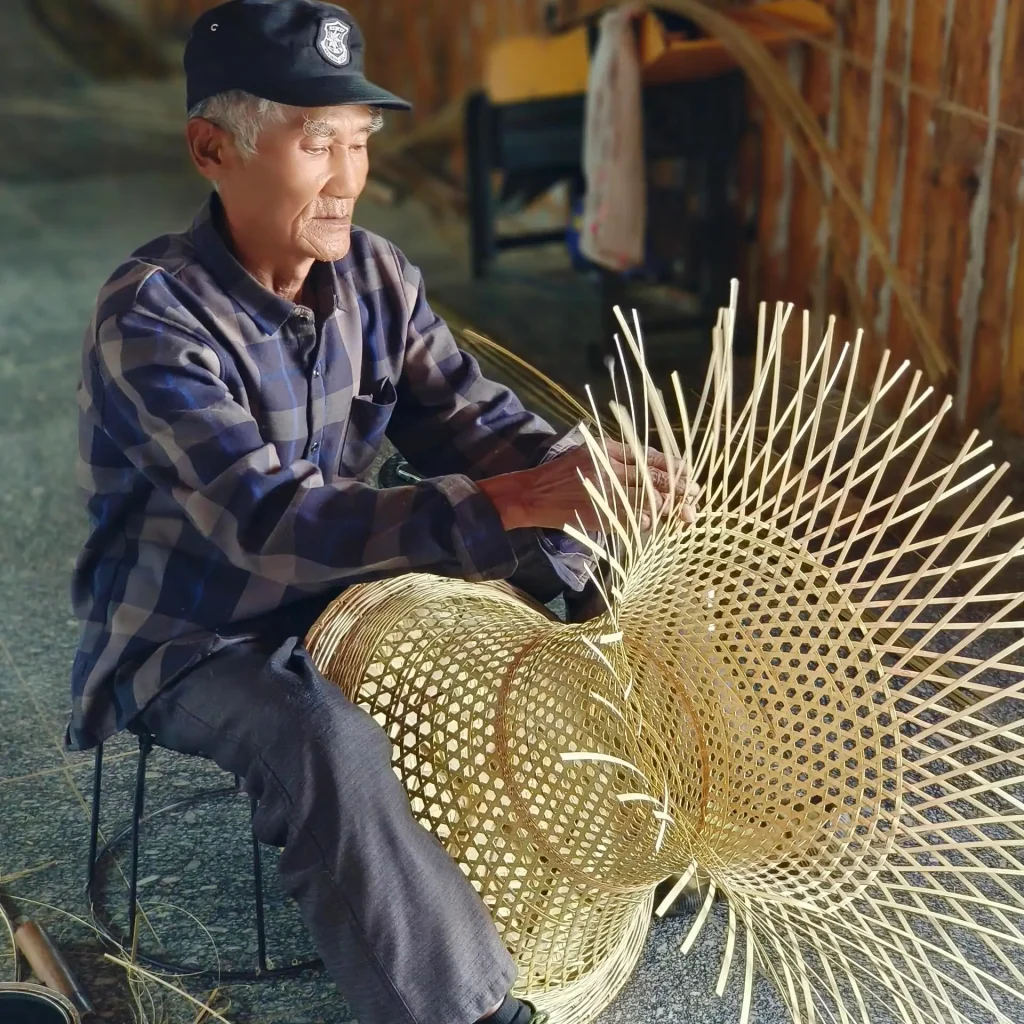
Dai Bamboo Weaving & Pottery: In Xishuangbanna’s villages, Dai craftspeople produce beautiful bamboo-woven items and distinctive unglazed pottery. The pottery village of Manding, near Jinghong, is a great stop for seeing traditional techniques in action. Combine it with our Xishuangbanna travel guide for a full itinerary.
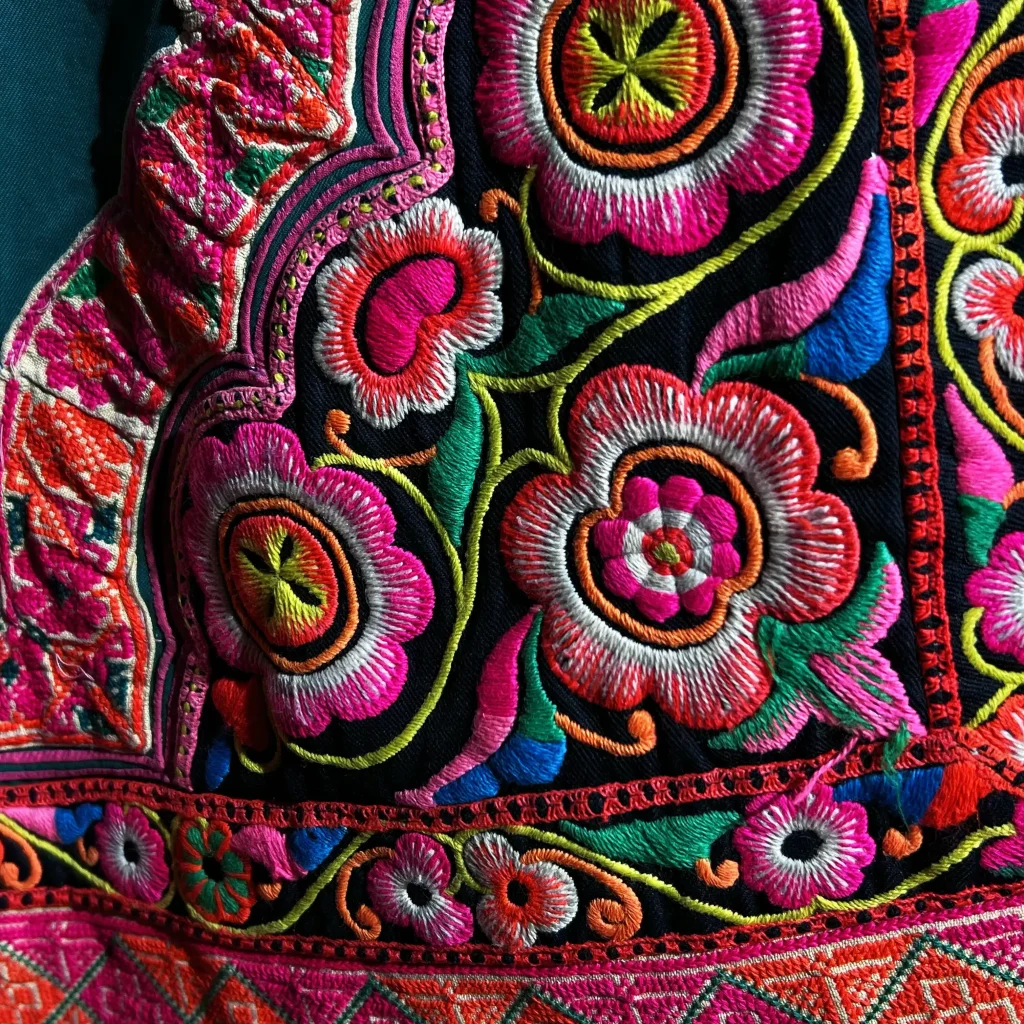
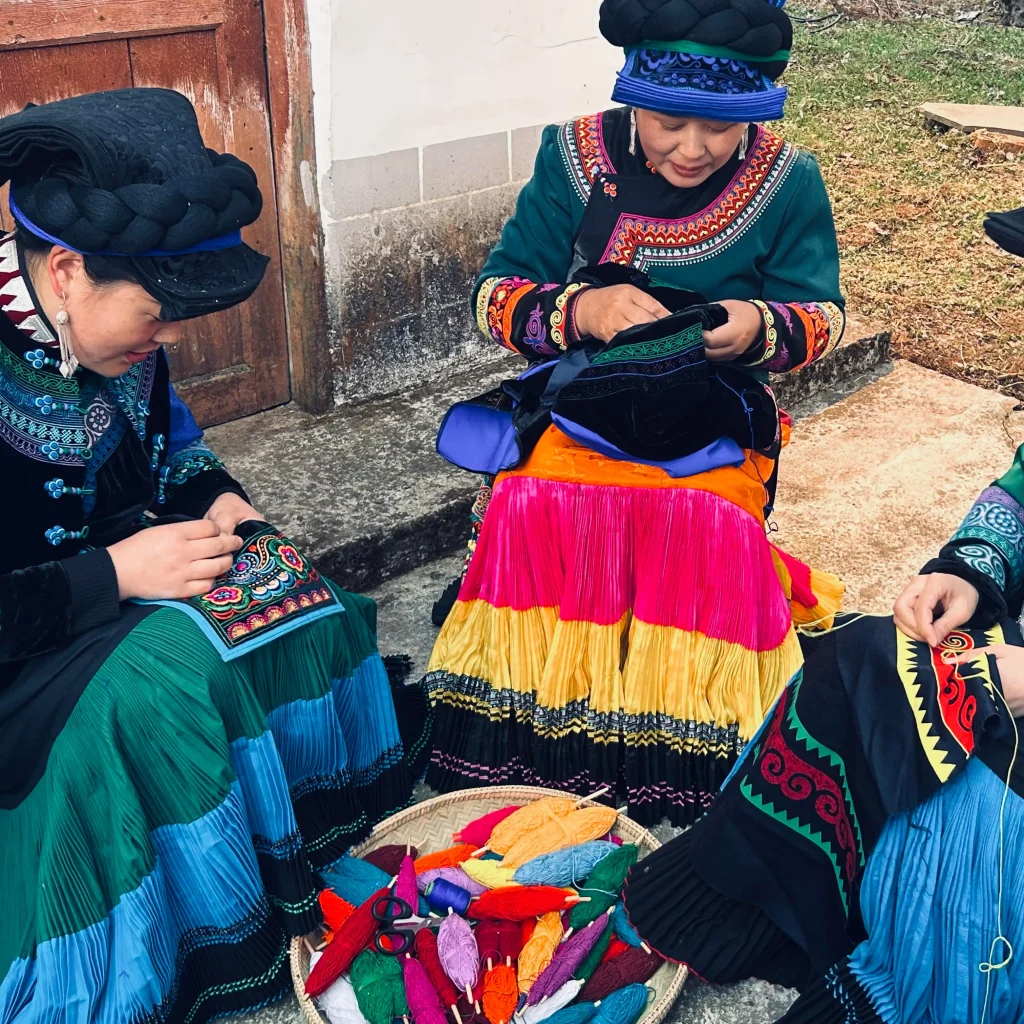
Yi Embroidery: The Yi people are famous for their intricate, brightly colored embroidery — geometric patterns in red, yellow, and black that adorn everything from hats to bags to festival jackets. Markets in Chuxiong and the Stone Forest area are the best places to find authentic, handmade Yi textiles.
How to Experience Yunnan’s Culture Respectfully
Yunnan’s ethnic communities are generous with their culture, but they’re not tourist attractions. A few guidelines will help you be a welcome guest rather than an awkward spectator.
Ask before photographing. Many minority communities are comfortable with photos, but always ask first — especially with the elderly, with religious figures, and during ceremonies. A smile and a gesture toward your camera is usually enough. If someone shakes their head, respect it immediately.
Participate, don’t just observe. When a Bai grandmother offers you the bitter first cup of tea, drink it. When a Dai family invites you to take off your shoes and sit on the floor, sit down. When the water starts flying during the Water Splashing Festival, leave your phone in a waterproof bag and splash back. Yunnan’s cultures are participatory — the best experiences happen when you join in.
Learn a few words. Even a single word in the local language — “thank you” in Bai (gua xi), a greeting in Dai — earns disproportionate warmth. Your Yunnan travel guide has essential phrases for each region.
Be thoughtful about purchases. When buying crafts, buy directly from artisans or community cooperatives rather than from mass-market tourist shops. In Zhoucheng (tie-dye), Baisha (Dongba art), and Manding (Dai pottery), you can buy directly from the maker — and often watch them work.
Respect sacred spaces. Remove your shoes before entering Dai temples. Walk clockwise around Tibetan monasteries and prayer wheels. Don’t point your feet at Buddha images. Cover your shoulders and knees in religious spaces. These are small gestures that show you understand you’re a guest in someone’s spiritual home.
Plan Your Yunnan Cultural Journey
Yunnan’s cultural depth means you could spend a month here and barely scratch the surface — but even a week, thoughtfully planned, will give you encounters that stay with you for years.
Here’s where to go next:
Explore each group in depth: Our detailed guides cover the Naxi and Dongba culture, the Bai people of Dali, the Dai people of Xishuangbanna, Tibetan culture in Shangri-La, and the Mosuo people of Lugu Lake.
Time your trip around a festival: Our Yunnan festivals guide covers the five biggest events with exact dates, locations, and planning tips.
Walk the ancient trade route: The Tea Horse Road guide traces the route from the tea mountains to the Tibetan plateau.
Understand the history: Our Nanzhao and Dali Kingdom guide brings the empires that shaped Yunnan to life.
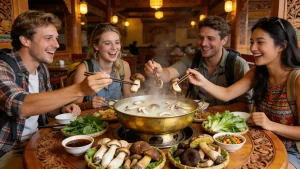
Taste the culture: Culture and cuisine are inseparable in Yunnan. Our Yunnan food guide covers the dishes, flavors, and dining traditions born from this ethnic diversity — from crossing the bridge rice noodles to Bai cheese to Pu’er tea tastings.
Build your route: Check our recommended Yunnan itineraries for 7, 10, and 14 days for sample routes that balance culture, scenery, and cuisine.
A : Yunnan is famous for being China’s most ethnically diverse province, home to 25 distinct ethnic minority groups with living traditions. Key cultural highlights include the Naxi Dongba pictographic writing system, Bai tie-dye and tea ceremonies, Dai Buddhist temples and the Water Splashing Festival, the ancient Tea Horse Road trade route, and Pu’er tea culture that dates back over a thousand years.
Q : Yunnan is home to 25 of China’s 56 officially recognized ethnic minority groups — the highest concentration of any province. These include the Bai, Naxi, Dai, Yi, Hani, Tibetan, Mosuo, Lisu, Wa, and many others. Each has its own language, dress, cuisine, and cultural practices.
Q : Yes. Yunnan’s major ethnic festivals — including the Dai Water Splashing Festival, the Yi Torch Festival, and the Dali Third Month Fair — are public celebrations, and tourists are warmly welcome to participate. In fact, at the Water Splashing Festival, locals will actively seek you out to splash you. No tickets or special arrangements needed — just show up and join in.
Q : Yes, when done thoughtfully. Many communities welcome visitors and have developed homestay or cultural experience programs. The key is to approach with genuine curiosity rather than treating people as exhibits — ask before photographing, participate in activities when invited, and buy crafts directly from artisans. Hiring a local guide in more remote areas helps ensure your visit is respectful and meaningful.
Q : The Tea Horse Road (Chamagudao) was an ancient network of mule caravan trails that connected Yunnan’s tea-producing mountains with Tibet. For centuries, Pu’er tea was transported over high mountain passes and traded for Tibetan warhorses. The route shaped the culture, economy, and ethnic identity of every town along its length. Today, towns like Shaxi preserve the Tea Horse Road’s heritage as living cultural sites.
Q : Dongba is the indigenous religious and cultural tradition of the Naxi people in Lijiang. Its most famous element is the Dongba script — the world’s only pictographic writing system still in active ceremonial use. Dongba also encompasses a rich tradition of music, ritual, dance, and paper-making. UNESCO has recognized Dongba manuscripts as a Memory of the World treasure.